


PrEP or Truvada Before FUE Belongs in a Private Medication Review
A patient can list every medicine clearly on the FUE intake form and still pause when they reach PrEP. The worry is not only medical. It is privacy, culture, testing, embarrassment, and the fear that a preventive medicine will be misunderstood.
If you are HIV negative and you take PrEP, including Truvada or a generic emtricitabine and tenofovir medicine, I do not treat that as a character issue. I treat it as medication information. The useful question is not who you are, who your partner is, or why you take it. The useful question is whether the surgical record is accurate before local anesthesia, post operative medicines, blood test review, and travel timing are planned.
The practical paperwork path is simple. Name the medicine, keep private details out, and do not stop PrEP quietly before a hair transplant.
PrEP is prevention, not a diagnosis
PrEP means medicine used before possible HIV exposure to reduce the risk of HIV infection. Some patients use the brand name Truvada. Some use a generic version. Some use a different PrEP medicine. The exact name matters because each record should be clear, but the label PrEP itself does not mean the patient has HIV.
That distinction matters in a hair transplant clinic. A patient with diagnosed HIV or hepatitis needs a separate surgical safety review, which belongs with HIV and hepatitis hair transplant safety. A patient who is HIV negative and using PrEP needs a medication disclosure review. Those are related, but they are not the same conversation.
The tone should be calm. Standard infection control thinking does not depend on guessing who might have what. Every patient deserves careful handling, clean technique, and a private medical record. PrEP should not become a shortcut for stigma.
Disclosure can stay limited to the relevant medical facts. Kidney monitoring, recent HIV testing, hepatitis B history, missed doses, and other medicines may affect coordination with the prescriber or surgical team. Private details that do not change the operation do not belong in the surgical consultation.
The reason I still want it in the medication list
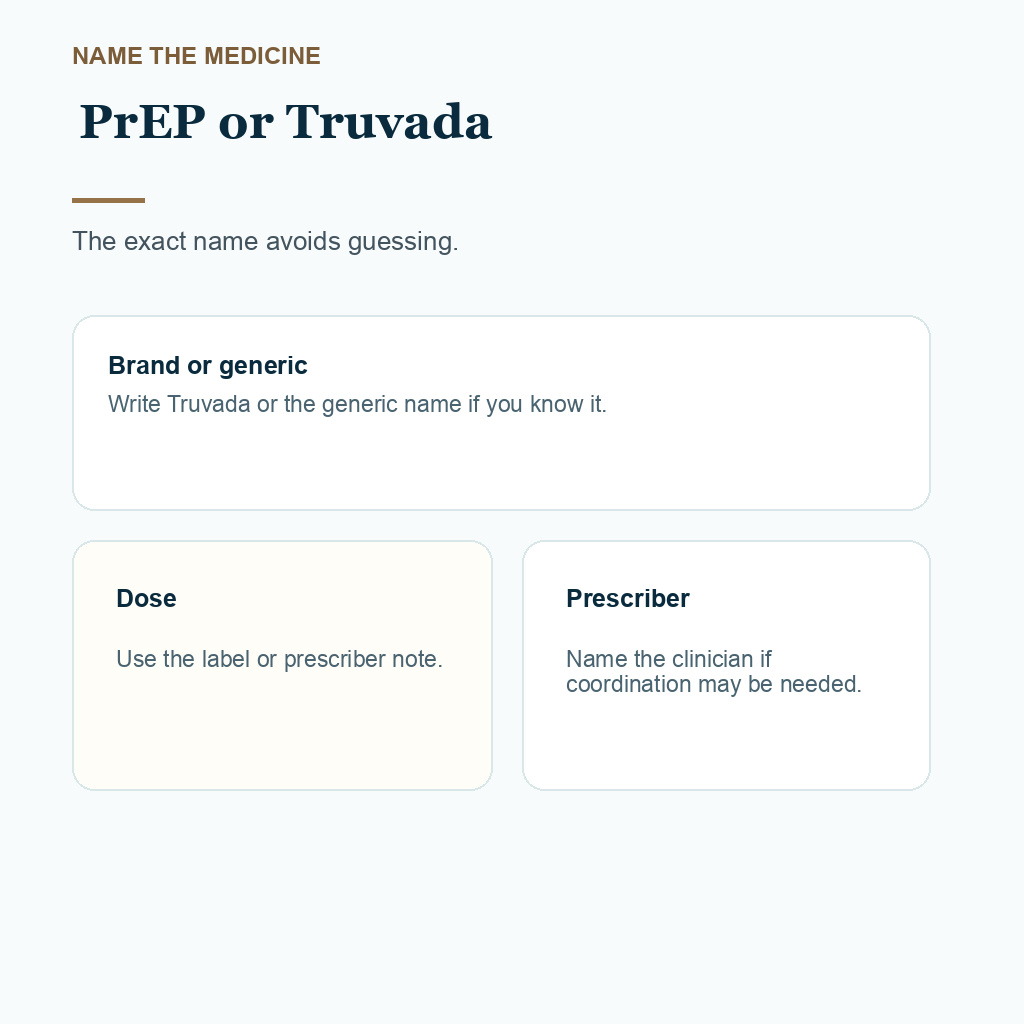
I still want to know about PrEP before FUE because it is a prescription medicine, not because I need a personal story. FUE is performed under local anesthesia. The surgery day may include antibiotics, swelling control, pain relief planning, aftercare instructions, and a long period in the chair. A complete medication list helps the team avoid guessing. The disclosure can stay clinical and brief by naming the medicine, dose, prescriber, recent test context, and any kidney or liver monitoring.
That is the same reason I ask about blood pressure medicine, diabetes medicine, acne medicine, supplements, allergies, and previous reactions. The broad rule is covered in medication before a hair transplant, because the clinic can only plan around what it knows.
Disclosing PrEP does not mean you need to disclose partners, orientation, sexual history, or anything that does not change the operation. A good medication review asks for medically useful facts and keeps them inside the clinical record.
The useful message is short
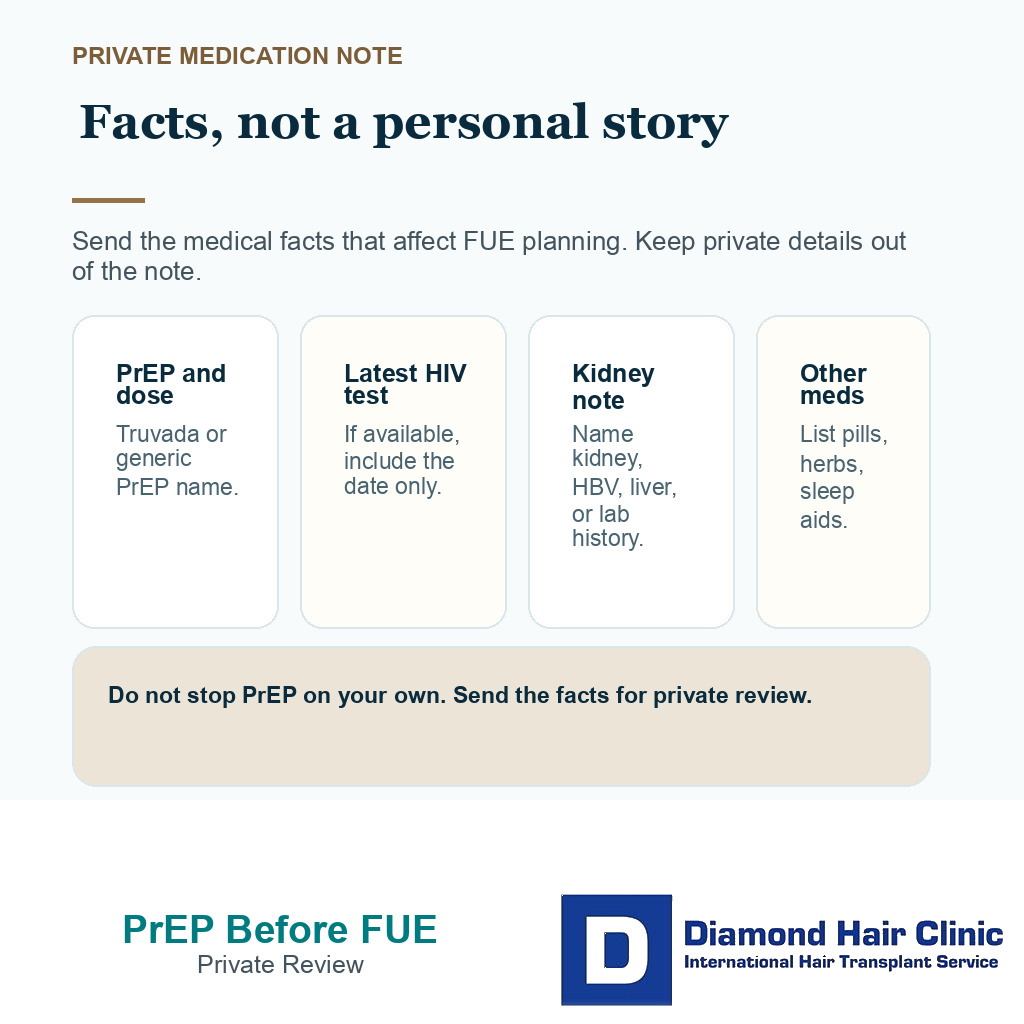
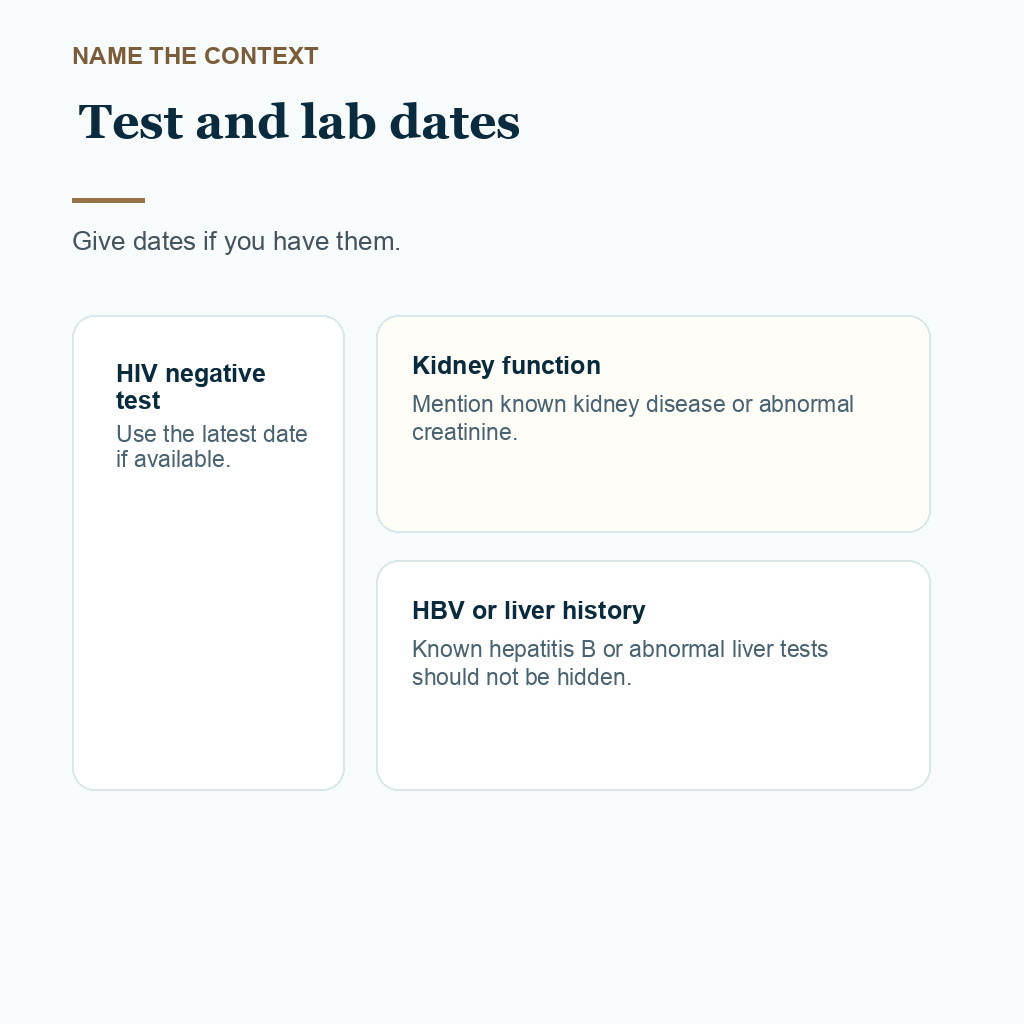
The best disclosure is simple. Say that you take PrEP, give the exact product name and dose, name the prescriber, and include the date of your most recent HIV negative test if you know it. Also say if the result is overdue, unclear, positive, or if repeat testing is pending after a recent exposure or flu symptoms. That is not routine paperwork. It needs the PrEP prescriber or HIV clinician involved before the surgical plan is treated as settled.
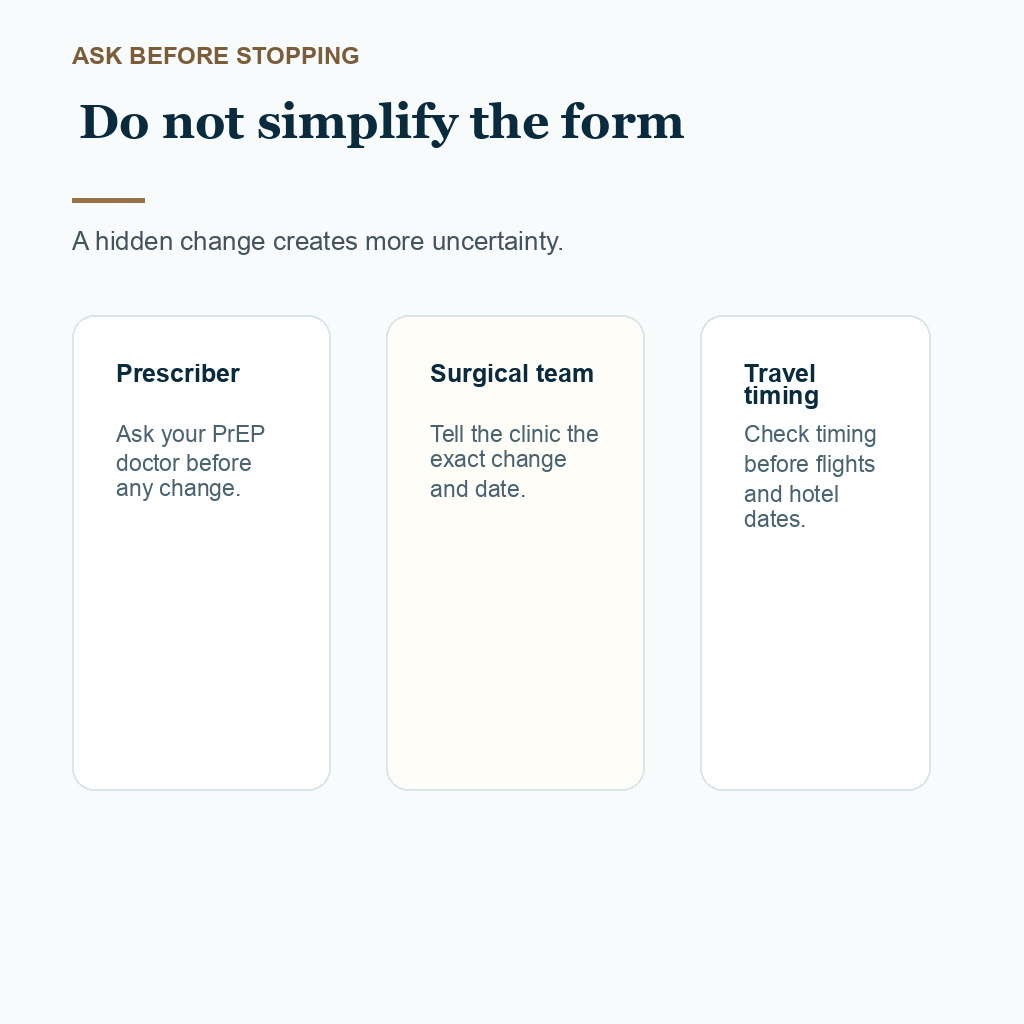
Do not pause PrEP quietly to make the form feel simpler. The surgeon needs the true medication list, and the prescribing clinician should guide any change in HIV prevention medicine.
If you do not remember every detail, say that. A partial but clear note is better than a blank medication form. The clinic can ask for the missing part. Lab context before surgery belongs with blood tests before a hair transplant, and the exact product name belongs with the same practical habit described in medicine names on FUE surgery day.
Stopping PrEP is not the paperwork shortcut
Do not stop PrEP on your own just to avoid a difficult conversation with the clinic. If PrEP is protecting you from HIV exposure, stopping it can reduce that protection. If you have active hepatitis B, or your PrEP prescriber follows liver tests because of hepatitis B, stopping oral emtricitabine and tenofovir can have medical implications and may need blood test monitoring. Do not turn PrEP into a start and stop plan around surgery unless the prescriber and surgeon agree.
The safest path is not secrecy. The safest path is coordination. If your PrEP prescriber says you should continue, pause, switch, or check a lab, that information should be part of the surgical review. If the hair transplant clinic needs a recent test or a prescriber note, it should explain why and handle it respectfully.
Hiding the medicine creates a larger problem than naming it. It can make kidney history, liver history, other medicines, or recent test timing harder to interpret on the day of surgery.
Kidney history changes the conversation
For many patients, oral PrEP is tolerated well and the medicine list simply needs to be accurate. Still, PrEP that contains tenofovir can make kidney function part of the medical review. This does not mean PrEP automatically damages the kidneys or that FUE is automatically unsafe. It means kidney context should not be hidden.
Tell the clinic if you have known kidney disease, a recent abnormal creatinine, eGFR, or creatinine clearance result, urine protein monitoring, dehydration or vomiting, heavy NSAID use, or another medicine your doctor monitors because of kidney function. If your PrEP clinic has recent kidney monitoring, send the date and result rather than only writing that it was normal. If the history is more complex, the planning belongs closer to the approach used for kidney disease before a hair transplant.
This also matters after surgery. Pain relief choices are not the same for every patient, especially when kidney history or other medicines are involved. If you already know there are restrictions around ibuprofen, naproxen, or other pain medicines, say so before the aftercare pack is planned. The general recovery medicine context is discussed in painkillers after a hair transplant.
Hepatitis B and liver history need context
Some oral PrEP medicines contain drugs that can also affect hepatitis B management. That does not turn this article into a hepatitis article. It simply means known hepatitis B, abnormal liver enzymes, or previous liver monitoring should be mentioned before FUE.
If you have active hepatitis B, past hepatitis B treatment, abnormal liver enzymes, or a recent doctor warning about liver tests, send that information with the medication list. For a broader surgical planning frame, see high liver enzymes before hair transplant.
The point is not to alarm you. It is to prevent the clinic from seeing only the word PrEP and missing the reason your prescriber may be watching kidney, liver, or hepatitis B markers.
Other medicines can matter more than the PrEP label
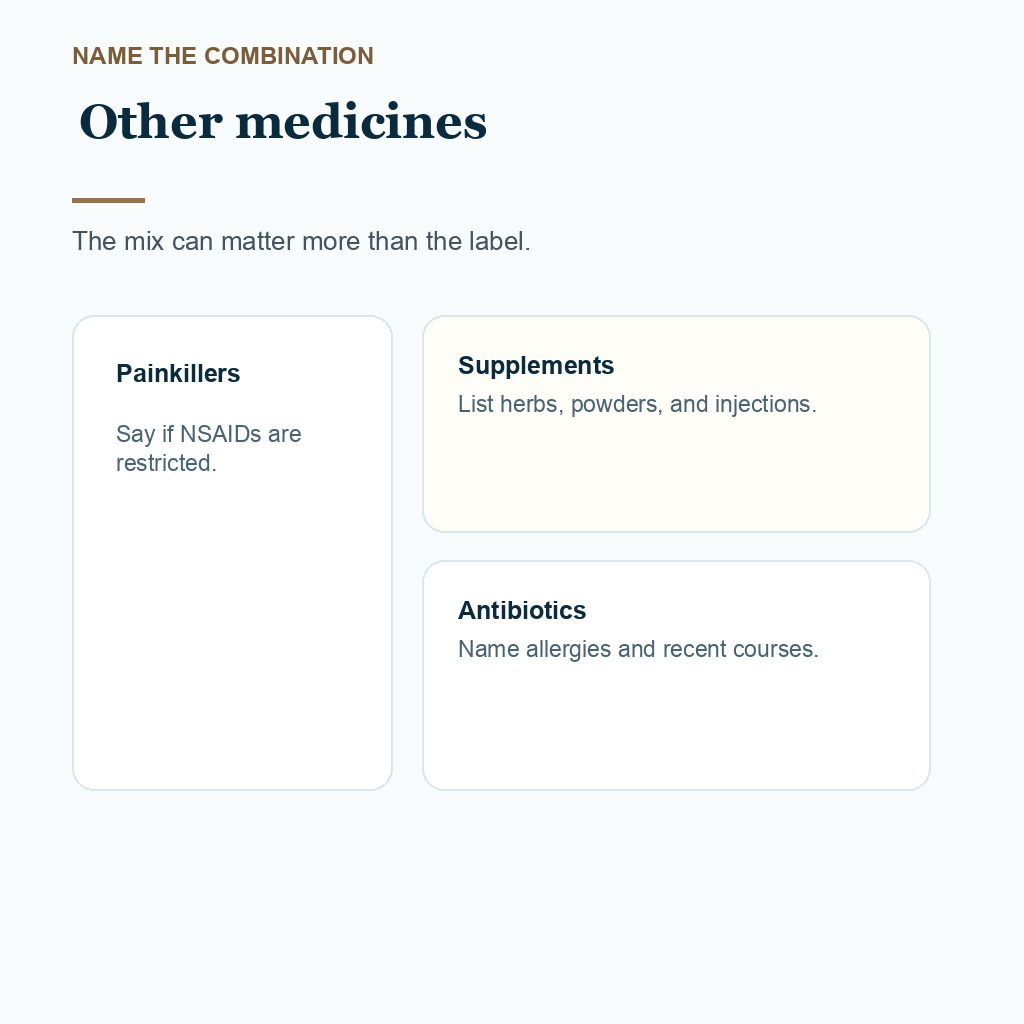
Sometimes the PrEP label is not the main issue. The combination is. A patient may also take antibiotics, acne treatment, oral minoxidil, finasteride, supplements, stimulants, painkillers, sleep medicine, or recreational substances. Those details can change what the team asks, what it avoids, or what it asks the prescribing doctor to confirm. PrEP should be listed beside finasteride, minoxidil, antibiotics, and supplements when those medicines are part of the same recovery week.
For that reason, I do not want a medication list that says only that you take PrEP. I want the whole relevant list. Local anesthesia and surgery day medicines have their own planning logic, especially for patients who worry about pulse, anxiety, or drug interactions. The procedure day context is explained in local anesthesia and adrenaline during hair transplant.
If the only issue is stable PrEP with current routine care, the surgery plan may not change. If PrEP is one item inside a more complex medication history, the plan may need more review. That is a normal surgical safety process, not punishment.
Use a private message instead of guessing
If you feel uncomfortable writing a long explanation, use a private medical note. It should be short, factual, and free of personal details that do not affect surgery. The message builder below is not a clearance tool. It only helps you choose what to say before the clinic reviews your record.
Possible outcomes after you disclose it
After you disclose PrEP, several outcomes are possible. The clinic may simply record it and make no change. It may ask for the exact medicine name. It may ask whether your HIV negative testing is current. It may ask about kidney function, hepatitis B history, liver tests, or other medicines. It may ask you to confirm something with the prescribing clinician.
After you disclose PrEP, a delay is usually considered only when the medical picture is unclear, a required test is missing, there are symptoms or active infection concerns, or another condition makes the surgery day plan unsafe to finalize. Most useful disclosures lead to clearer planning, not punishment.
On surgery day, routine PrEP should not be hidden or skipped casually. Take or hold the dose only according to your prescriber or surgeon’s instructions, bring the exact medicine name or package, and tell the team if you missed doses, vomited after a dose, became dehydrated, or used extra NSAIDs or painkillers. That information affects HIV prevention coverage and aftercare medicine planning more than the hair transplant technique itself.
Send it before travel, not at the chair
If you are traveling to Istanbul for FUE, send the medication note before flights and hotel plans become rigid. A sensitive medicine is easier to handle when there is time to ask one careful question. It is harder when you are already in the chair and the team is trying to keep the day moving.
This is especially important if you started, stopped, switched, or missed PrEP after booking. That kind of update belongs with the broader process for medical changes after booking a hair transplant. International patients also benefit from the same clarity before travel described in case review before international hair transplant travel.
You do not need to make the message dramatic. Send the medicine name, dose, prescriber, latest relevant test date if available, kidney/HBV/liver context if known, and the rest of your medication list. Then ask whether the clinic needs anything else before travel.
Privacy does not change the medication list
PrEP use is a normal preventive health detail. It belongs in the private medication record with the same respect as any other prescription, without asking the patient to explain personal history.
The surgeon needs the actual medicine name, dose, timing, kidney or hepatitis B history if relevant, and other medicines that may interact with perioperative care. Stopping PrEP quietly can create more risk than naming it.
A private medication review lets the team protect confidentiality while still planning FUE around real health information. Prevention should never be turned into stigma or guesswork.

Read this review excerpt
Every single one of my questions was answered and they made sure I had all the details I needed to make an informed decision.