Tell Me the Exact Allergy Medicine Before FUE
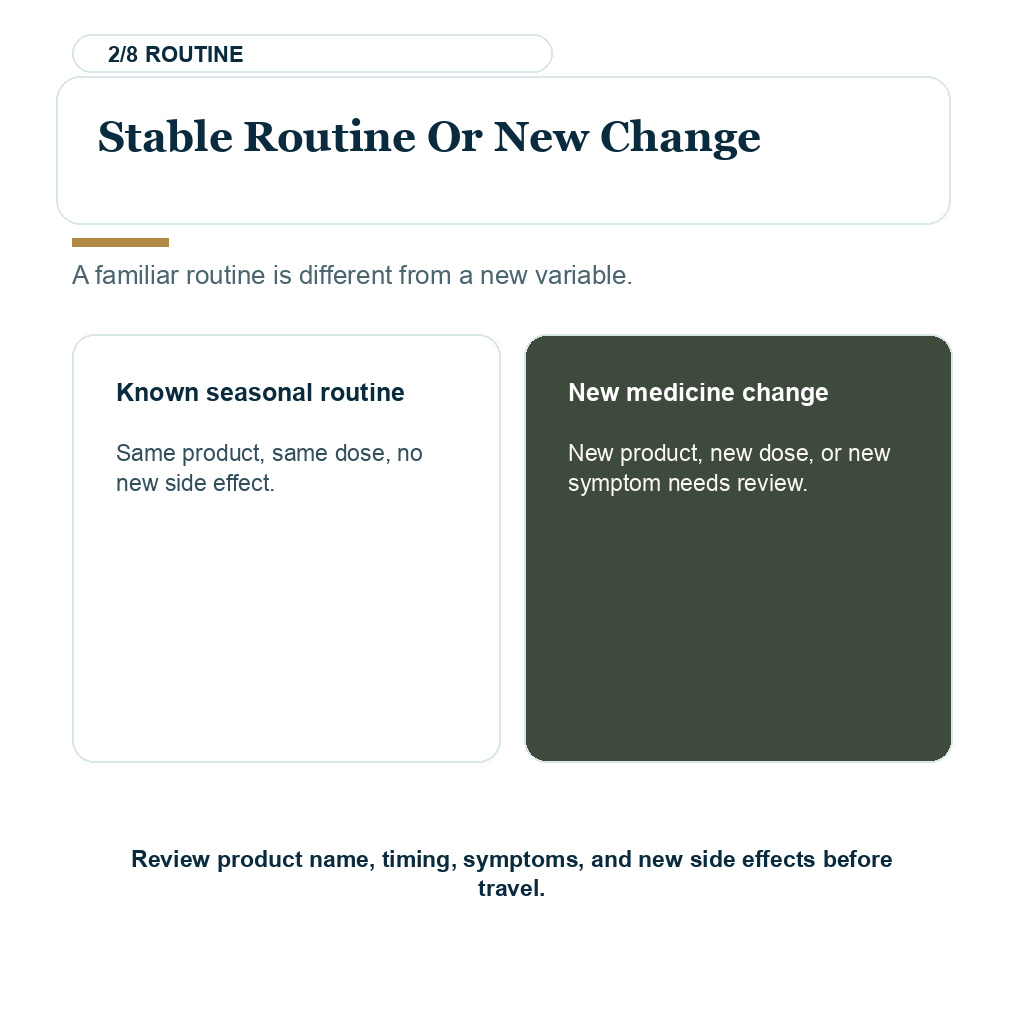
A familiar hay fever tablet is not usually the detail that decides a hair transplant date by itself. The decision changes when the medicine is new, makes you sleepy, contains a decongestant, or is being used because symptoms are active now.
A stable daily tablet you know well is different from a tablet you have never used before, a night tablet that makes you sleepy, a cold and allergy combination, or medicine taken after hives, swelling, wheeze, fever, or infection signs. I need the exact allergy medicine, dose, timing, reason, sleepy side effects, decongestant ingredients, and current symptoms before travel.
If the allergy problem now needs steroid tablets, steroid cream near the scalp, or rescue medicine, tell the clinic before travel instead of treating it as routine hay fever.
My starting point is the exact product before I judge the surgery plan. Do not stop, continue, or start allergy medicine just because you read a general rule online. Send the medicine name and a photo of the package before travel, then let the clinic decide whether your FUE plan is unchanged or needs review.
The answer depends on the exact product
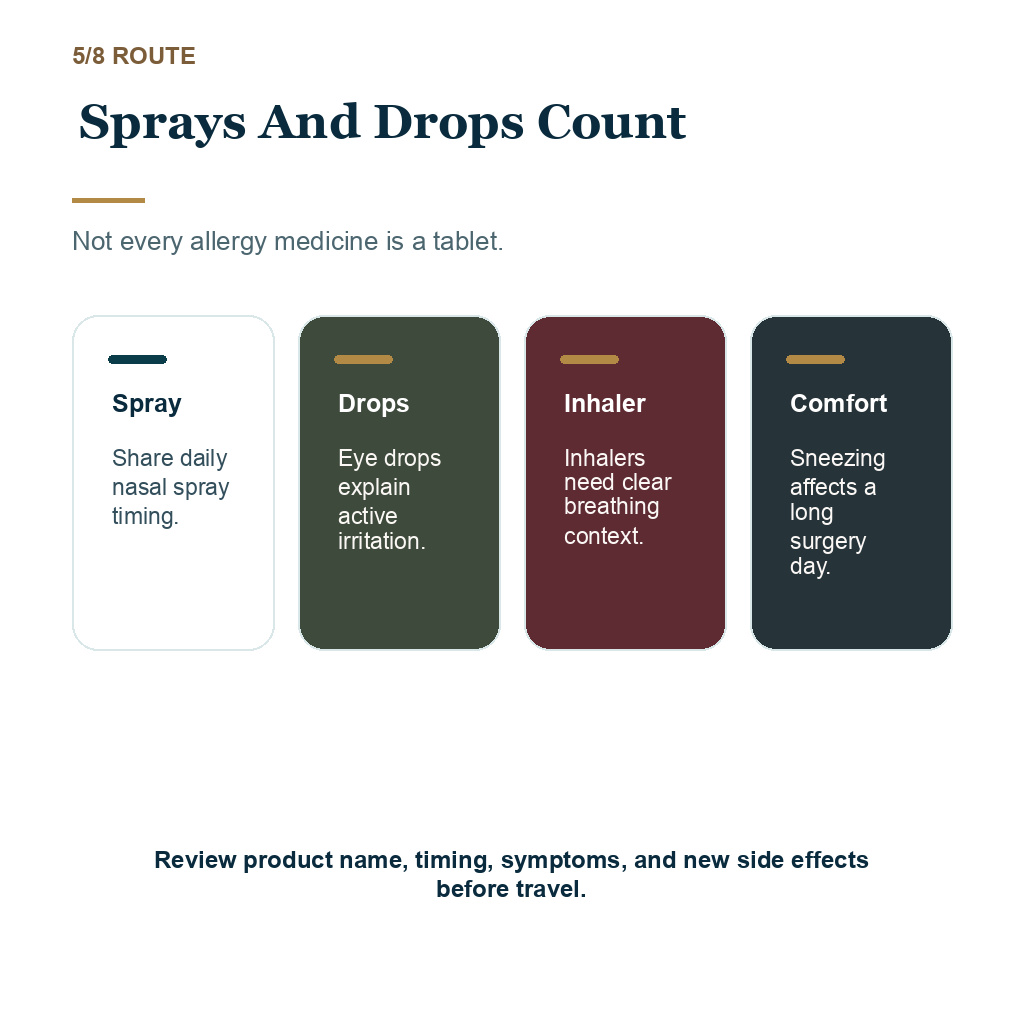
Patients often ask me, “Can I take antihistamines before FUE?” I cannot answer from that single word. Antihistamine can mean a daily tablet that does not make you drowsy, a night tablet that makes you sleepy, a cold and allergy combination, a nasal spray, eye drops, or a medicine taken because hives or swelling appeared last week.
Those are not the same situation. What matters is why you are taking it and what else is inside it. One situation may only need to be recorded. Another needs closer review because of sleepiness, blood pressure, heart racing, a new reaction, or active illness. For that reason, I treat allergy medicine as part of the wider medication review before a hair transplant, not as a small side note.
I am focusing here on the before surgery question. If your transplant is already done and you are trying to control itching during recovery, the aftercare decision is different. For recovery itching, antihistamines after a hair transplant is the better boundary.
Brand, dose, timing, and reason all matter
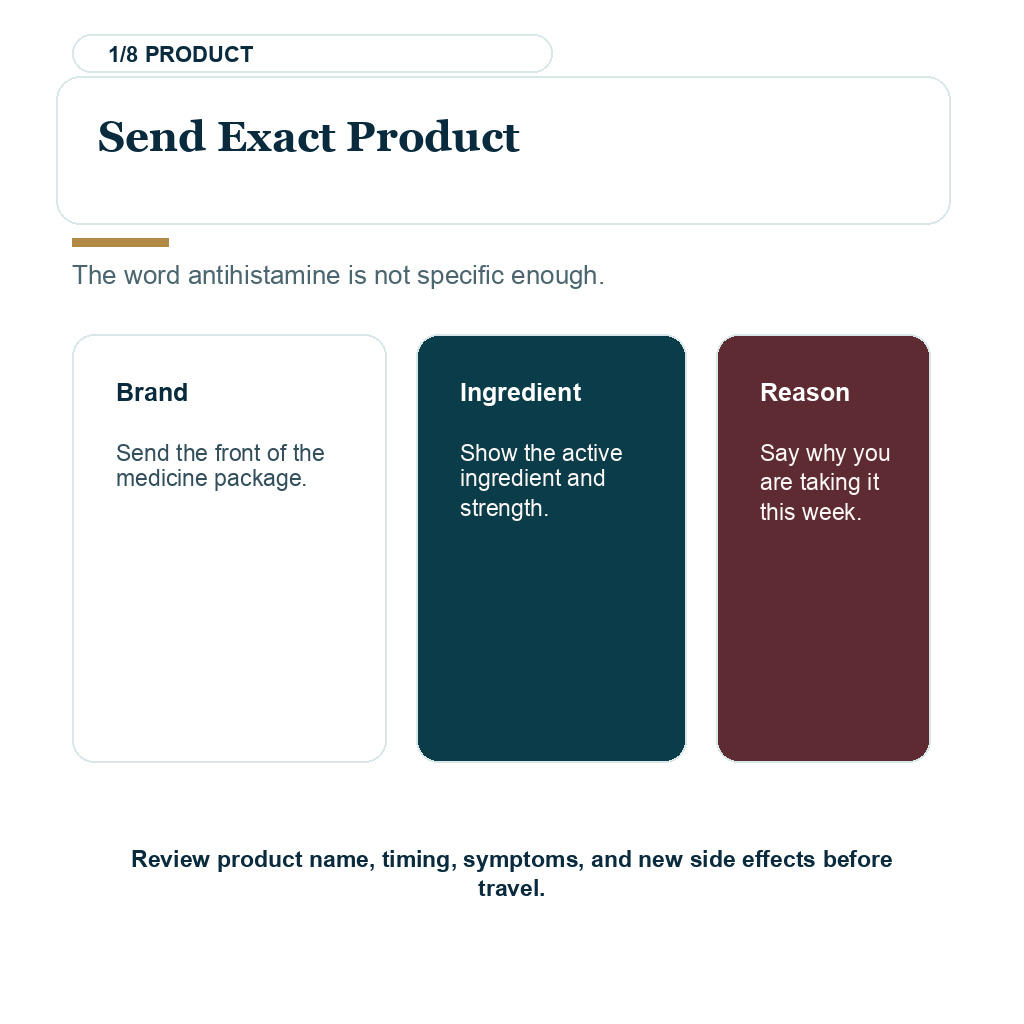
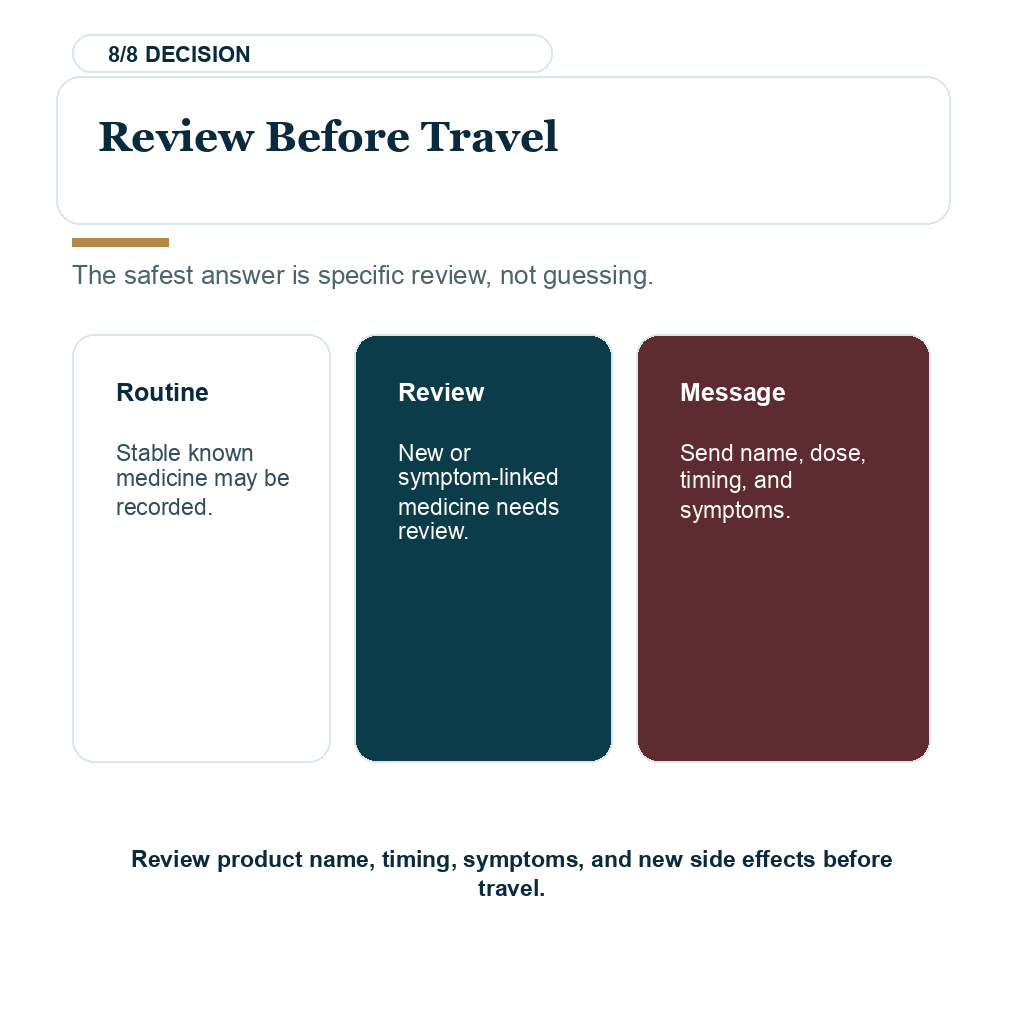
A message that says, “I take allergy medicine,” is not enough for surgical planning. A useful message says the brand name, the generic name if you know it, the strength, how often you use it, when you last took it, and why you are taking it. A photo of the front and back of the box can be more helpful than a description written from memory.
Use the medicine package, not memory, when you send details. A clear photo of the front label and active ingredient panel is often more useful than saying it is a small white tablet or the usual allergy pill.
The reason matters because the same tablet can mean different things. A patient who takes the same spring allergy tablet every year without sleepiness is different from a patient who started medicine yesterday because of sudden hives. A night tablet used for itching and sleepiness is different from a mild eye drop during pollen season.
Clinic paperwork should be selective too. I do not need a pile of unrelated documents. I need the details that change a decision. If you are deciding what to send, hair transplant documents and their purpose is useful background. For allergy medicine, the useful document is often just a medicine photo and a short symptom note.

Drowsy allergy medicine changes the surgery day conversation
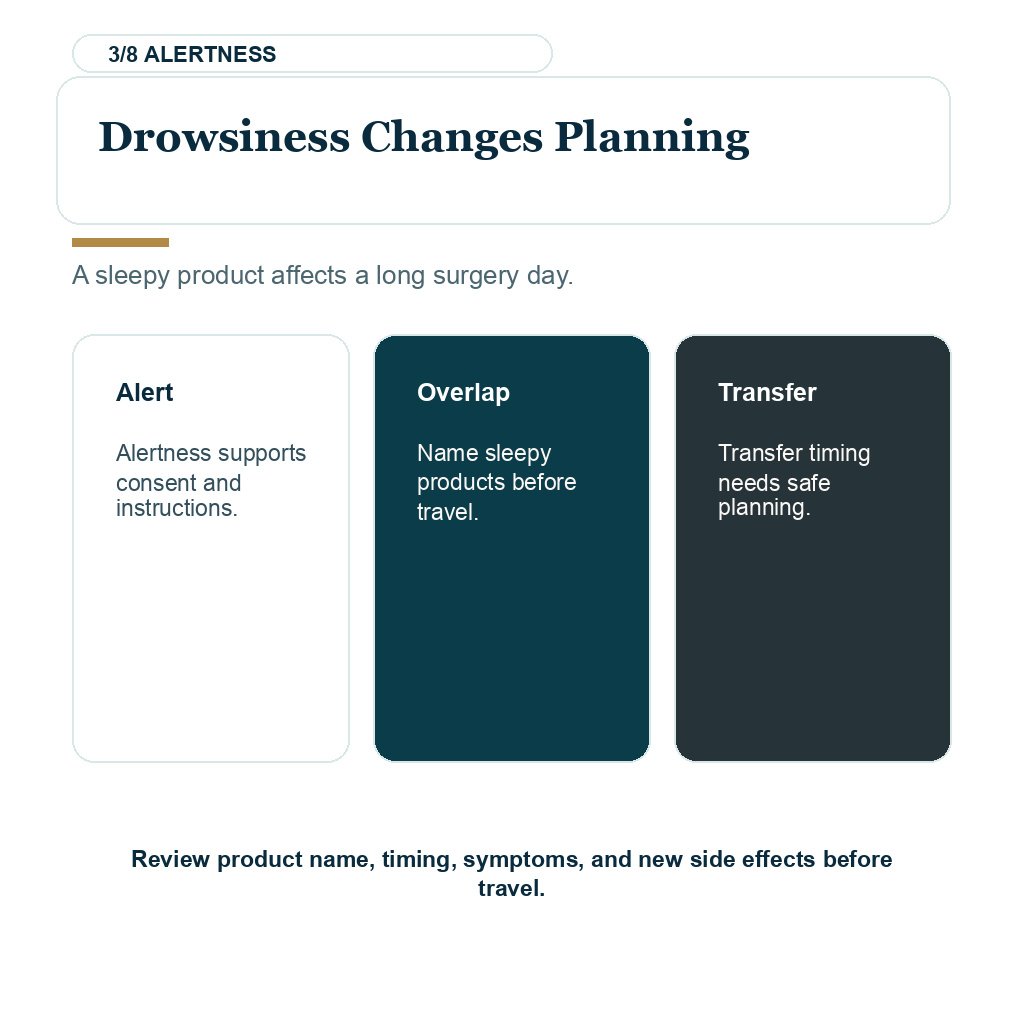
Some allergy medicines are more likely to cause drowsiness than others. That matters before FUE because surgery day is already long. You need to arrive alert enough for instructions, consent, design review, positioning, breaks, and safe transfer back to the hotel.
A sedating antihistamine also matters if it overlaps with alcohol, sleep medicine, anxiety medicine, pain medicine, or any sedation plan. This does not mean the medicine is automatically forbidden. It means I want the full list before the day of surgery. If you are also asking about sedation during hair transplant, the sedating allergy product belongs in the same conversation.
Do not hide a sleepy side effect because you worry the date will be cancelled. Hiding it makes planning less safe. Naming it early gives us time to decide whether it is a routine note, a timing change, or a reason to coordinate with your own doctor.
Medication review board
Which allergy medicine detail changes the review?
Choose the lane that best matches your situation. The point is not to diagnose yourself, but to see which detail I need before travel.
Stable daily medicine
Use this lane for a medicine you take regularly, with a known dose and no new side effect. The main job is to name it accurately before travel.
Drowsy product
Choose this lane when the tablet makes you sleepy, or when it sits near alcohol, sleep medicine, anxiety medicine, or pain medicine. Alertness matters on a long procedure day.
Cold and allergy blend
This lane fits a combination product that may contain a decongestant. It needs more detail if you have high blood pressure, heart racing, thyroid disease, diabetes, or poor sleep.
Current reaction signs
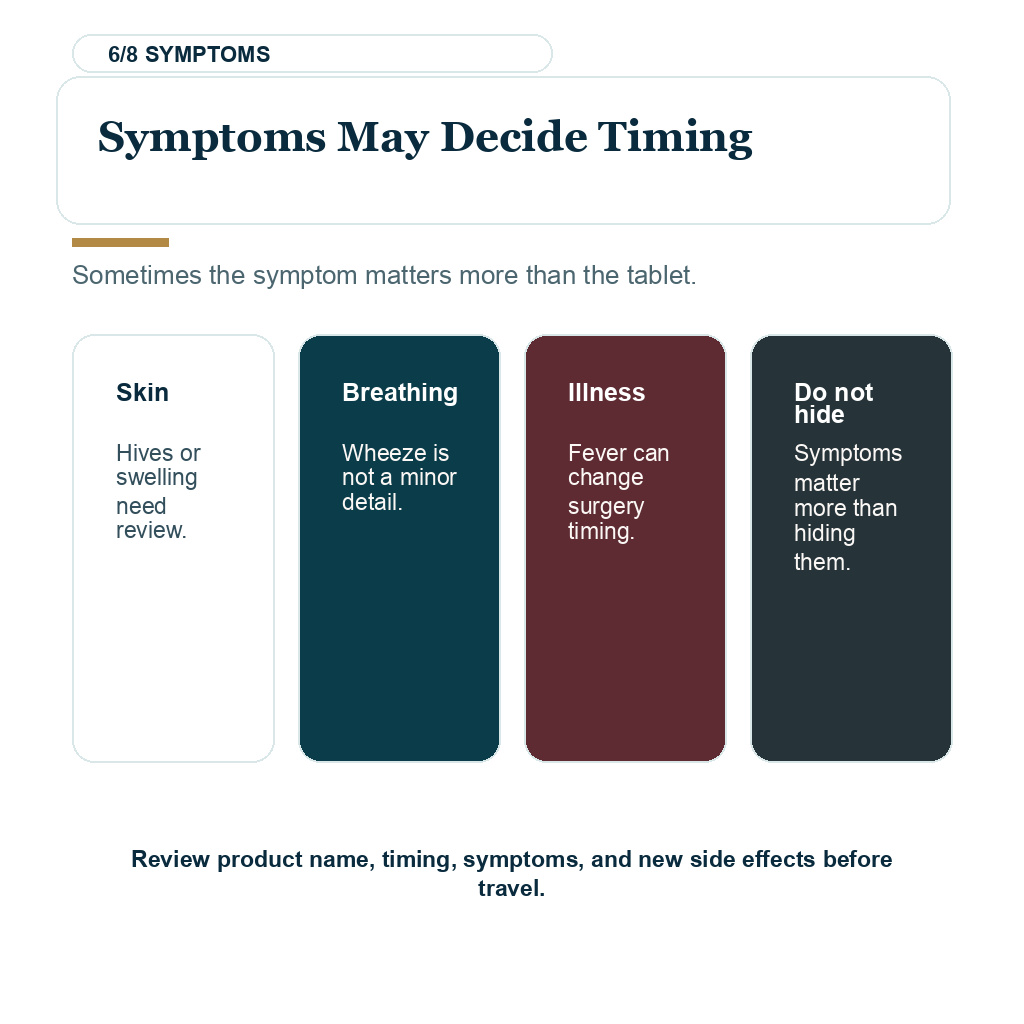
Use this lane when hives, rash, swelling, wheeze, breathing symptoms, fever, or signs of infection are present around the same time as the medicine. Then the symptom may matter more than the tablet.
First time morning medicine
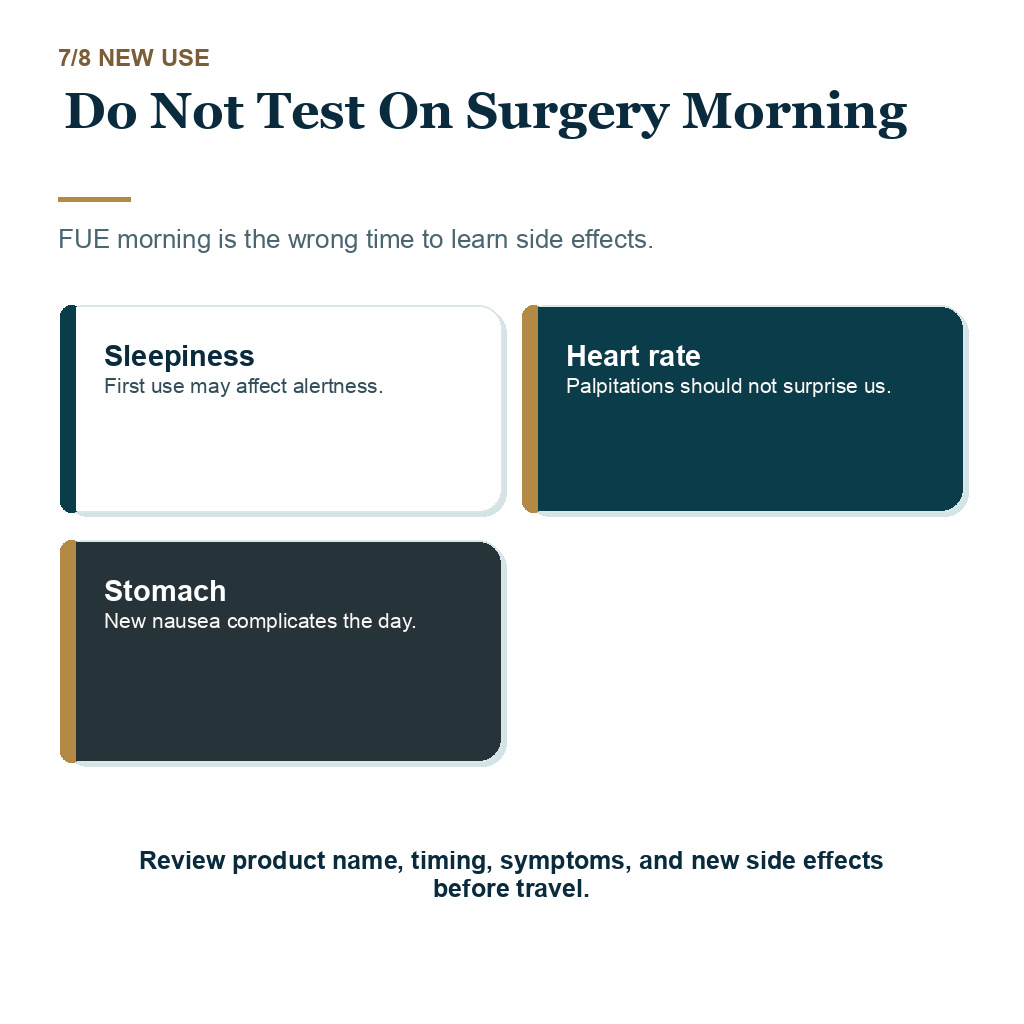
Choose this lane if you are thinking of trying a tablet for the first time on the morning of FUE. Surgery day is the wrong moment to learn how your body reacts.
Cold and allergy combinations need extra review
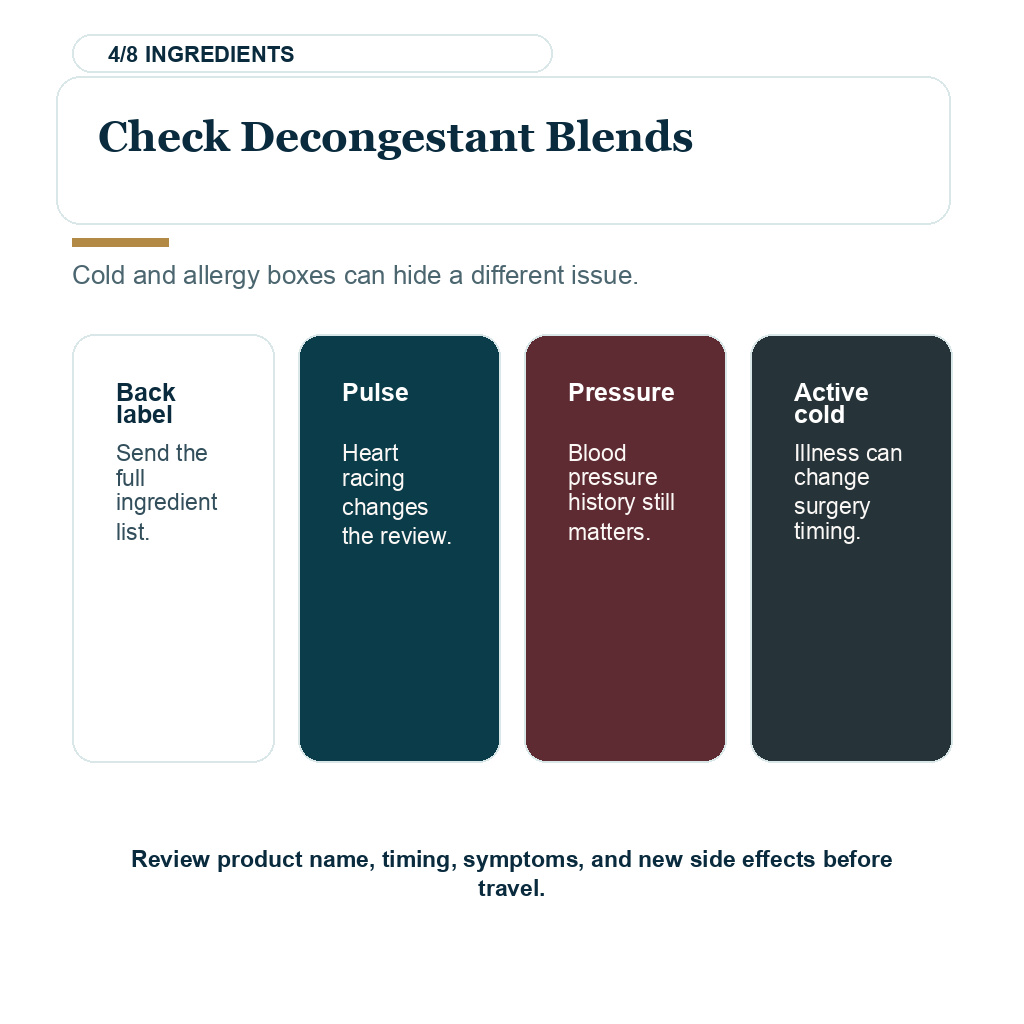
Many products sold for cold, sinus, or allergy symptoms combine more than one ingredient. A patient may call it an allergy tablet, but the box may also include a decongestant. I treat that as a separate decongestants before FUE question because blood pressure, pulse, stimulant ingredients, and active illness can all change the review.
A decongestant can be relevant when a patient has high blood pressure, heart disease, palpitations, thyroid disease, diabetes, sleep problems, or a history of feeling a fast heartbeat after cold medicine. If this applies to you, the medicine belongs in the same review as high blood pressure and hair transplant planning or palpitations or heart racing before surgery.
Patients should not have to guess from the marketing name on the front of the package. Send the back of the box too. The ingredient list can change the conversation even when the front label looks harmless.
These 8 allergy medicine review slides separate exact product details, stable routine checks, drowsiness, decongestant blends, sprays or drops, active symptoms, first use, and travel review triggers. Swipe sideways, use the arrows one slide at a time, or choose a number below the image.