


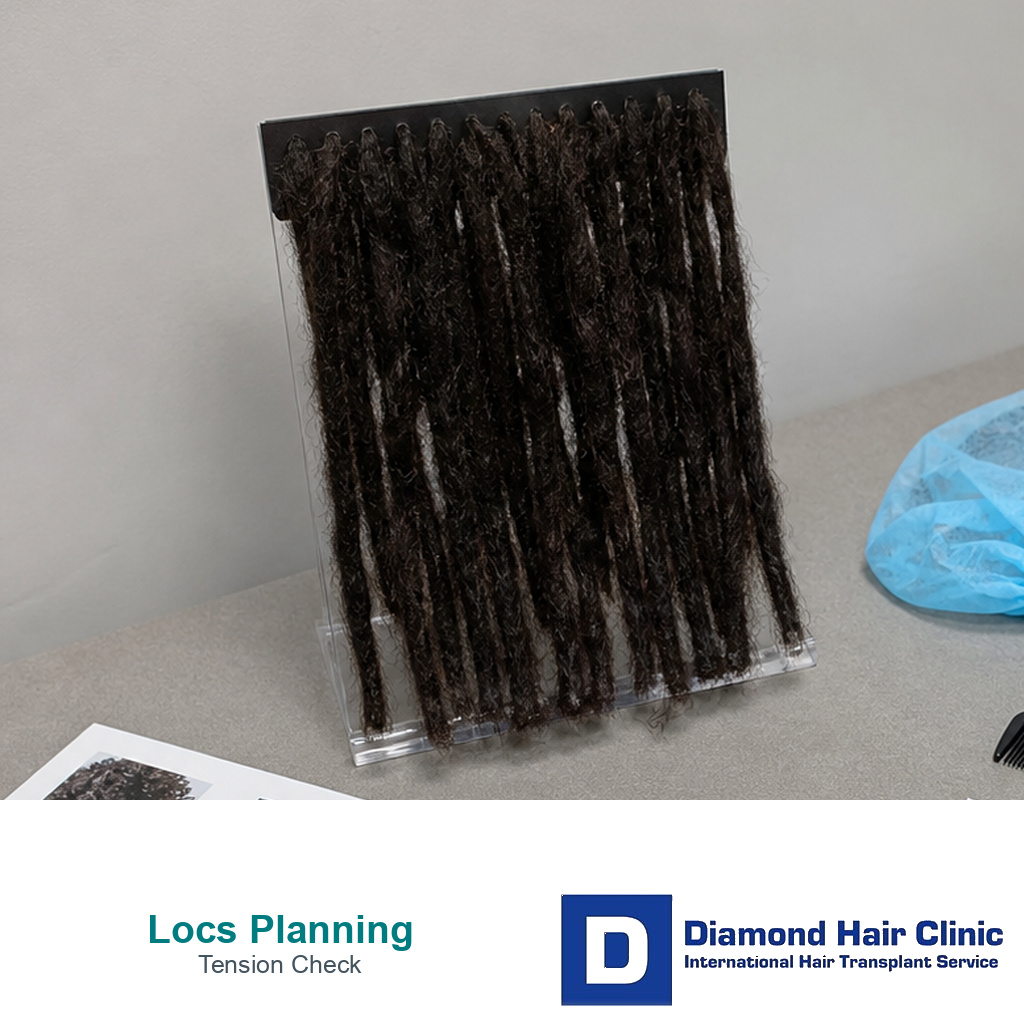
Locs Change the Hair Transplant Planning Conversation
A hair transplant can still be planned around locs or dreadlocks, but the planning conversation becomes more specific. Before I decide whether FUE is safe, I need to see the scalp, the donor, the tension history, the parting pattern, and the way the patient actually wears the hair. Style goals have to be weighed against the tension history, not treated as a separate cosmetic request.
For many patients, locs are not only a hairstyle. They can be part of identity, routine, privacy, and confidence. I do not answer that with a careless instruction to cut everything, and I also do not pretend the style has no surgical effect. Good planning protects the style conversation while making the scalp visible enough for a safe surgical decision.
The first question is not whether locs are allowed
The first question is what the locs are hiding or revealing. A patient may have a strong donor area that is simply hard to photograph because dense locs cover the back and sides. Another patient may have thinning, traction, central scalp irritation, or donor weakness that looks less obvious because the style gives coverage. Those are different surgical situations.
I separate the style from the scalp for that reason. Afro and very curly hair in FUE surgery already requires careful handling because the curl can continue below the skin. Locs add another layer because I also need parted views, normal style views, and clear tension history before I can judge the plan.
Locs can hide the donor view
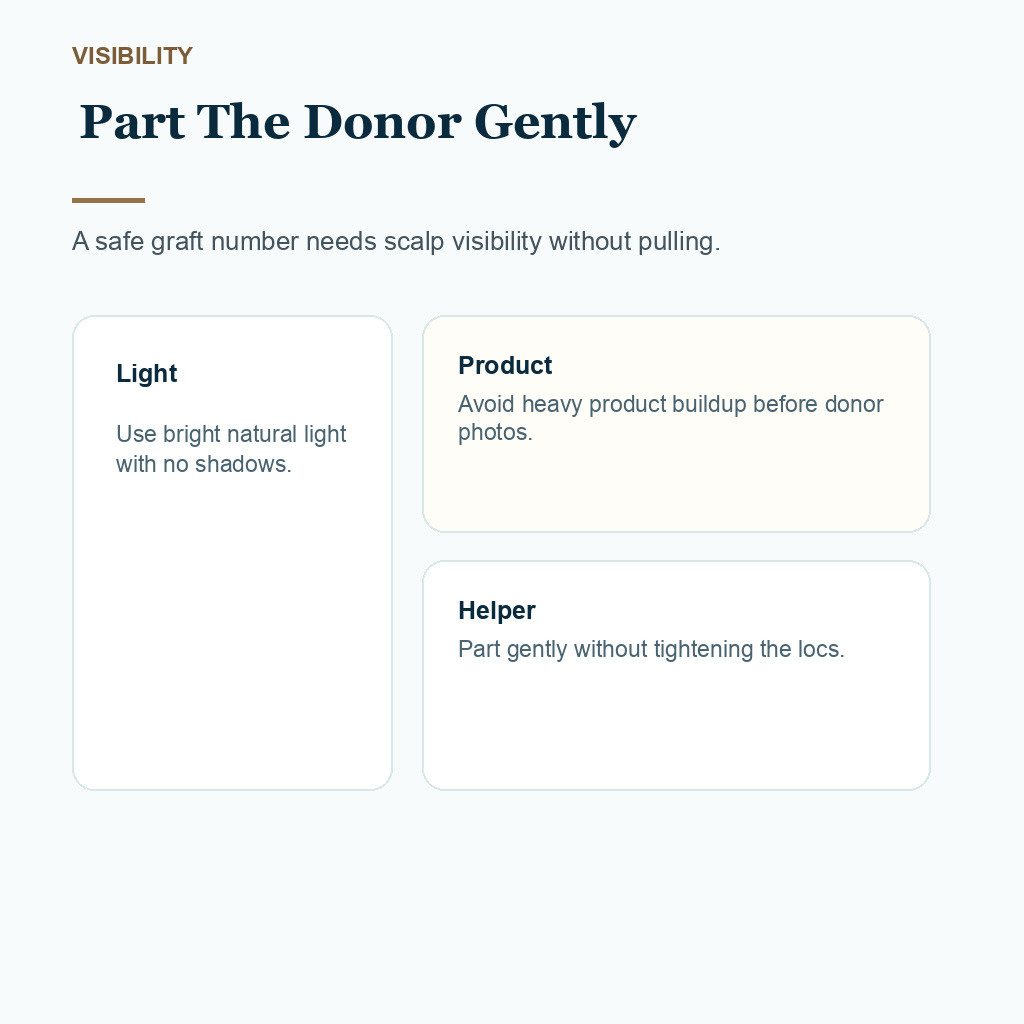
Donor visibility is one of the main practical issues. If the back and sides cannot be seen clearly, a graft number is just a guess. I need to see density, caliber, miniaturization, previous scars, patchy thinning, and how the hair sits when separated. A photo with locs hanging over the donor can make a weak donor look safer than it is.
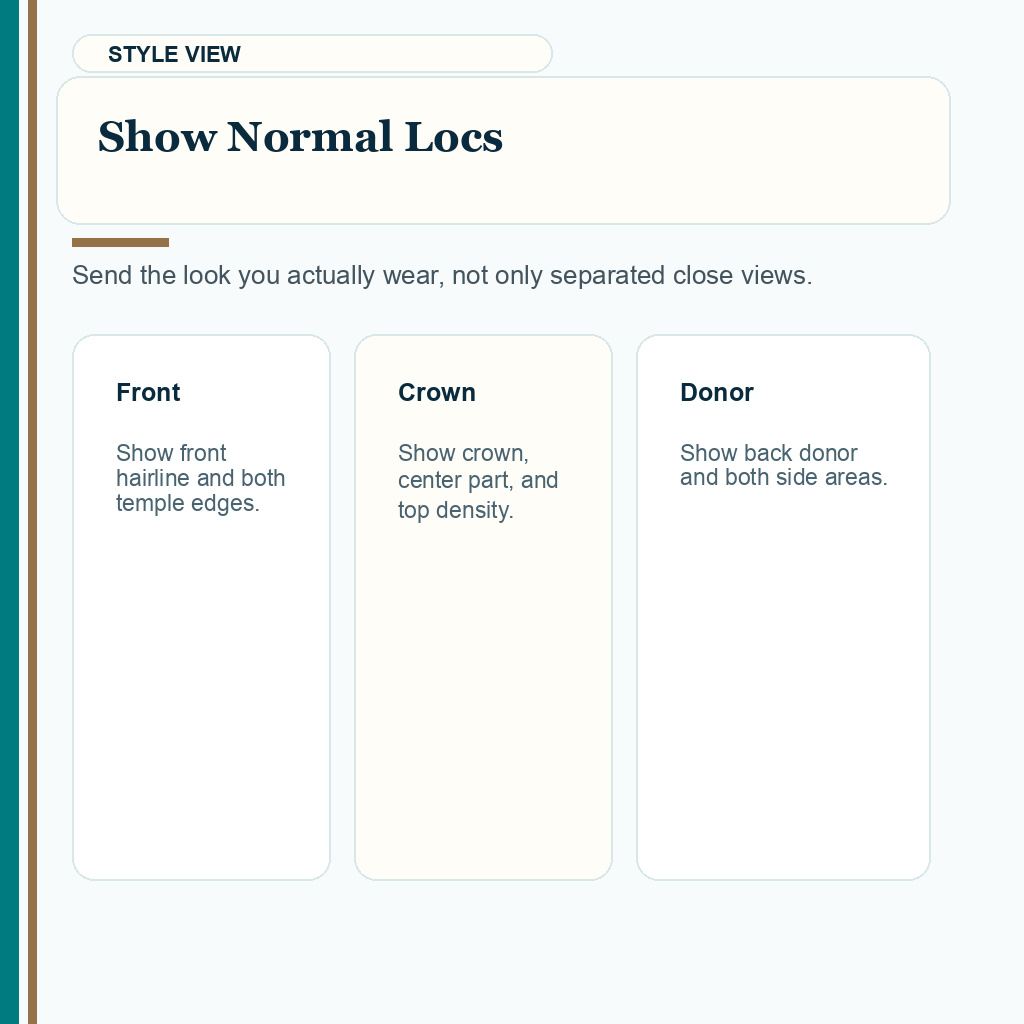
Send two kinds of photos. First, show the hair as you normally wear it, because that is the daily result the transplant must fit. Second, send parted donor views from the back and both sides in ordinary light, without heavy product covering the scalp. If someone helps you take the photos, they should part gently rather than pulling the locs tight. A useful view shows scalp access without pulling the locs tighter than the patient normally wears them.
The photos are not meant to make the hair look bad. They give the surgeon enough detail to protect the donor. A style can give beautiful coverage and still hide details that decide whether surgery should be smaller, staged, delayed, or refused.
Tension history changes candidacy
Locs can be worn without damaging the scalp, but heavy locs, tight retwisting, interlocking, extensions, tight edge work, or repeated pulling can contribute to tension in some patients. When hair loss sits at the temples, edges, or hairline, I have to ask whether traction alopecia hair transplant planning is part of the case. When donor access means cutting locs, decide before travel and tell the team whether you want them saved for your stylist.
If the pulling is still active, grafts should not be used as a cosmetic patch over the same force that caused the loss. The first treatment may be reducing tension, changing maintenance, treating inflammation, and watching whether the area improves. A transplant belongs later, when the cause is controlled and the empty area is truly stable.
Agree on the handover before cutting starts. The saved locs should be kept dry, grouped clearly, and returned separately from clinical waste. A loctician can later assess whether they are suitable for reattachment, but the transplant team should not promise a date or outcome before the scalp and new growth can be reviewed.
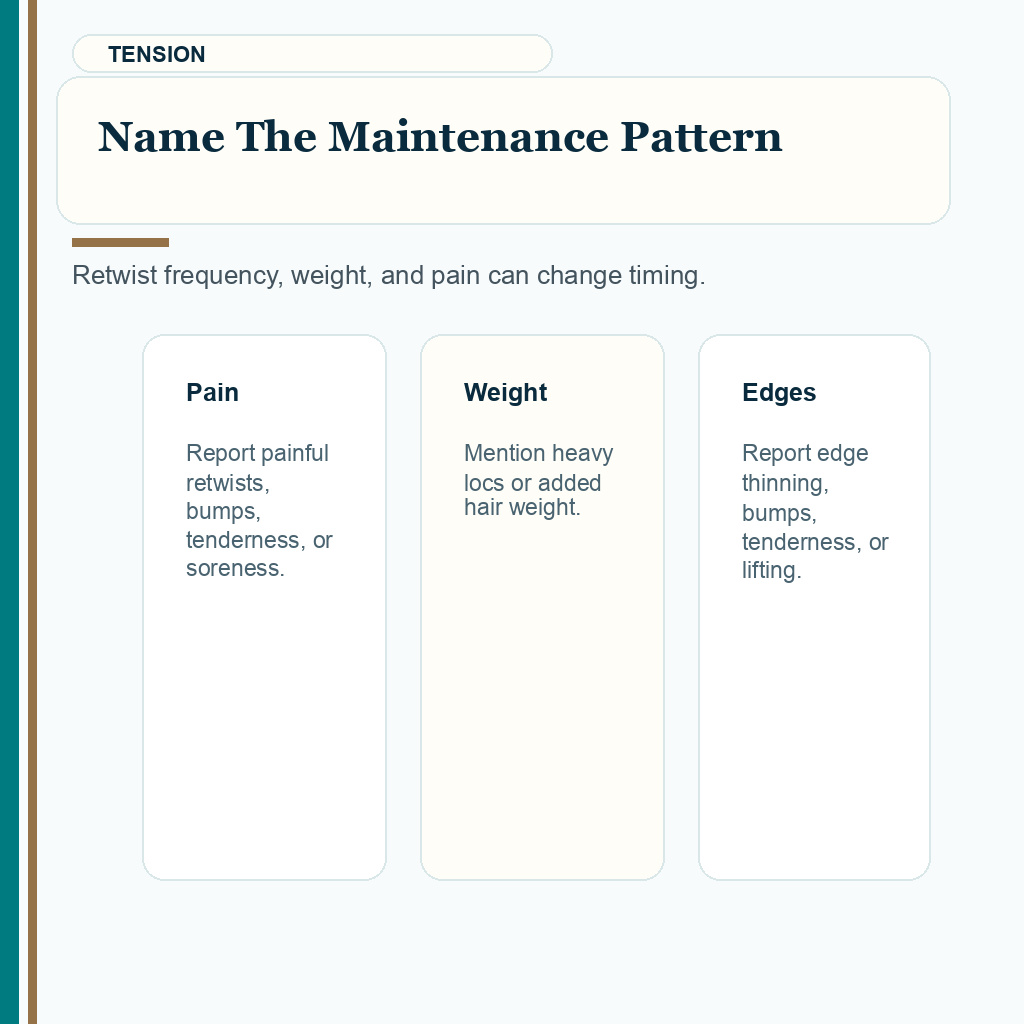
The patient may say, “I will be careful after surgery.” I still need to know what careful means. If the locs are very heavy, if retwisting is painful, if the edge lifts after maintenance, or if bumps and tenderness appear after styling, the plan must become more conservative.
Cutting, shaving, and sectioning should not be guessed
Some locs patients can be planned with limited shaving. Some need a wider donor view. Some need sectioning before travel. Some should not decide until the donor has been examined in person. The unsafe move is promising surgery without shaving or cutting locs before anyone can see what the donor can safely provide. If you would not cut or loosen any locs, say that before booking, because the consultation may need a scalp access decision in the clinic rather than a fixed graft promise.
Do not treat a plan to preserve most locs as final until donor access, washing, and the graft placement area have all been mapped.
I do not start with the patient’s fear of cutting. I start by checking donor exposure without damaging surrounding locs, clean graft removal, opening the recipient area without catching or pulling, and an early washing plan the patient can follow. If those points are unclear, the plan should not be sold as simple.
For many patients, the best compromise is a deliberate sectioning plan. That may mean loosening or separating selected areas, documenting how the locs normally fall, and deciding which hair must stay untouched for coverage. The style can stay part of the plan while the scalp is made visible enough for safe judgment.
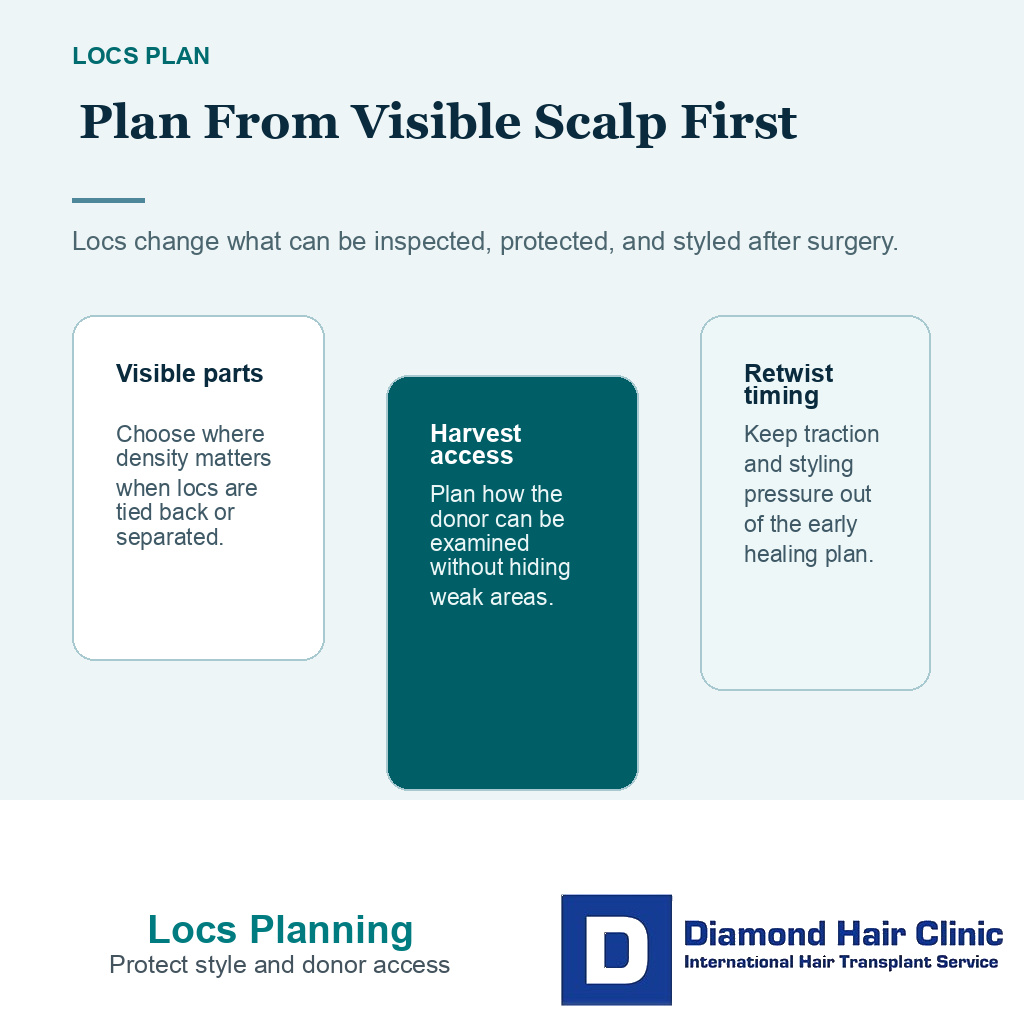
Retwisting and maintenance need healing space
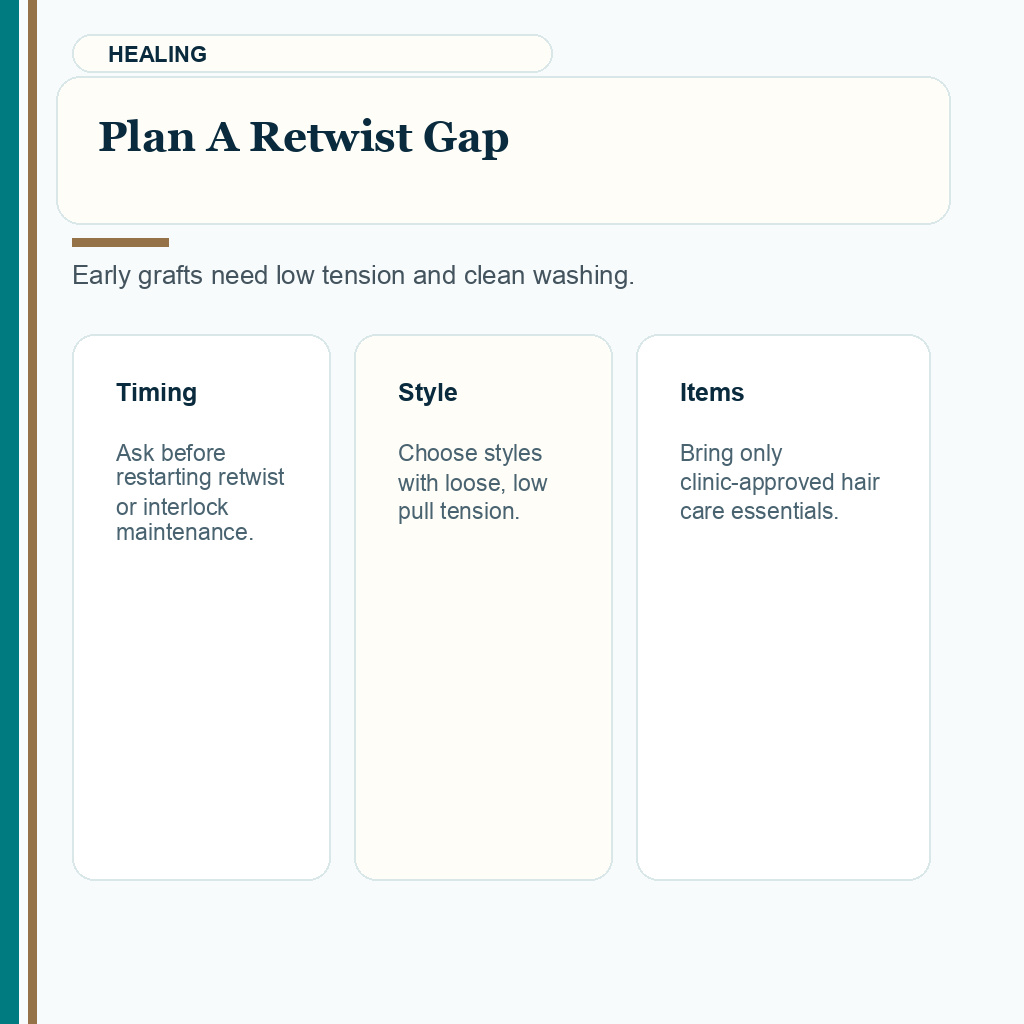
After surgery, loc maintenance has to respect the grafts. Retwisting, palm rolling, interlocking, styling weight, and added hair can all create tension. This does not mean a patient can never maintain locs again. It means early maintenance has to wait until the scalp is ready and the clinic has cleared the timing.
A similar rule applies when patients return to braids that need low tension while grafts heal. If a style creates pain, stinging, pulling, crust catching, or visible lift at the hairline, it is too much for healing skin. Loc maintenance should not be treated as an exception just because it is familiar to the patient.
Plan the first maintenance gap before surgery. Ask what can be washed, what should be left alone, how to avoid product buildup, and when a stylist can touch the area. If you need to look presentable for work or travel, discuss low tension options before the operation, not when the scalp is already tender.
Diagnosis matters when thinning sits under a style
When the concern is crown thinning, central scalp thinning, tenderness, scaling, or slow breakage under locs, the diagnosis must come before graft numbers. CCCA and hair transplant planning is a good example. Active scarring inflammation is a different problem from a stable hairline gap.
Locs do not cause every diagnosis, and the style should not be blamed by default. The history still matters. I want to know about tight styles, retwist frequency, products, relaxers, color, heat, glue, itching, tenderness, flakes, breakage, and whether a dermatologist has examined the scalp. Chemical relaxers before FUE are one part of that wider textured hair history.
If the scalp is inflamed or the diagnosis is unclear, surgery should wait. Donor grafts are limited. Spending them into active disease or poorly understood thinning can waste the donor and still fail to solve the real problem.
Use the locs planning board before travel
The easiest way to prepare is to sort the case into the factor that changes the plan most. Is the issue visibility, tension, maintenance timing, or diagnosis? More than one can apply, but one is usually the first blocker.
Locs planning board
Which factor changes the transplant plan?
- Donor visibilityShow what locs may hide
- Tension historyPulling changes timing
- Maintenance timingRetwist later, not early
- Scalp diagnosisInflammation must stay visible
Show what locs may hide
Why this detail matters Parted donor and recipient views help separate true density from coverage created by the style.
Planning action Send normal style photos plus parted close views before graft numbers.
Pulling changes timing
Why this detail matters Heavy locs, tight retwists, interlocking, extensions, and edge tension can matter when traction is part of the history.
Planning action Stop harmful tension and confirm stability before treating the edge as a graft target.
Retwist later, not early
Why this detail matters Fresh grafts and sore donor skin should not be pulled into a tight maintenance session.
Planning action Plan a low tension style gap and ask when maintenance can safely restart.
Inflammation must stay visible
Why this detail matters Tenderness, scale, breakage, CCCA suspicion, or active inflammation changes the surgical question.
Planning action Treat and document the scalp first when diagnosis is uncertain.
If visibility is the issue, the planning priority is better photos or in person sectioning. If tension is the issue, the planning priority is reducing pulling and proving stability. If maintenance timing is the issue, the planning priority is a low tension healing plan. If diagnosis is the issue, the planning priority is medical control before surgery.
Consultation photos and style history
For a first review, send front, both temples, top, crown, donor back, and donor sides. Include normal style photos and parted views. Show the locs at the length and weight you actually wear. If the concern is repair, show the style length that exposes the problem, as in Afro hair transplant repair starts with curl and donor review.
Also send a short style history. Include how long you have worn locs, how often they are retwisted or interlocked, whether added hair or extra weight is used, whether the edges have felt painful, bumpy, or pulled after maintenance, and whether relaxers, color, glue, heavy oils, or tight head coverings are part of the routine. Mention any CCCA, traction alopecia, seborrheic dermatitis, or other scalp diagnosis.
For surgery day, keep the hair care items simple and clinic approved. The packing guidance behind what to bring on FUE surgery day applies here. Bring what helps the medical day run quietly, not a full styling kit that creates extra handling around grafts.
Prepare these details to prepare locs photos, tension history, maintenance timing, and surgery day items.
Access and identity both matter
With locs, I do not want the patient to feel that the style has to be dismissed before the scalp is taken seriously. The style is part of daily life, and the scalp still has to be seen clearly enough to judge donor safety, tension, inflammation, and the area that needs coverage.
A good consultation is slower and more visual. I need normal style photos, gently parted scalp views, maintenance history, and a clear discussion about retwisting, weight, edge tension, and scalp symptoms. After that, FUE may fit, a smaller staged operation may fit, or waiting may be the more respectful answer.
Locs do not make the transplant impossible. They remove the shortcut of planning from a neat surface photo alone.
Read this review excerpt
He was very thorough in every little detail and I never felt pressure to do anything I wasn’t sure of.