



Migraine History Needs a FUE Surgery Day Plan
If migraine attacks are part of your medical history, I want the long FUE day planned before symptoms appear. This is not something to solve in the chair with a private medicine decision. Tell us the pattern you know, the rescue medicines you use, the triggers that reliably affect you, and the warning signs that would make this different from your usual migraine.
I do not want a patient to improvise with extra tablets on the morning of surgery. I also do not want a familiar migraine label to hide a new problem. Migraine history usually changes preparation, not candidacy, but it has to be discussed before the procedure.
Your usual migraine pattern gives the team a baseline. New pain that keeps intensifying, or appears with vomiting, weakness, confusion, fever, or unusual vision changes, belongs in a separate review from the migraine pattern you already know.
The first answer is planning, not automatic refusal
A known migraine history does not mean a patient cannot have FUE. Many patients with migraine can proceed when the pattern is stable, the medicines are understood, and the surgery day is planned calmly. The problem starts when the clinic learns about migraines only after the patient is already uncomfortable, hungry, sensitive to light, nauseated, or reaching for a rescue tablet.
The first question is not “Can I take this tablet?” The first question is whether we understand the migraine pattern well enough to plan an elective surgical day. I want to know what your usual attack feels like, how often it happens, whether you get aura, whether you vomit, what medicine you normally use, what side effects you have had, and whether blood pressure or heart history has ever been part of the discussion.
The focus here is preparation before FUE. If headache appears during recovery, it has to be judged in its own context, which is why headache after a hair transplant is handled separately. A question about sumatriptan and migraine attacks after hair transplant belongs in the recovery medicine conversation. Here, the planning conversation happens before the long chair day.
Details to send before arrival
Send the exact medicine names, not only “migraine pills.” Include tablets, nasal sprays, injections, preventive medicines, nausea tablets, beta blockers, antidepressants, seizure medicines, newer migraine injections, NSAID tablets such as ibuprofen, caffeine products, and any sedative or sleeping tablet you sometimes use when migraine is coming. Also tell us what usually helps when the first migraine dose does not settle symptoms, because a long surgery day is different from managing migraine at home.
The useful message is practical. Tell us the medicine name, the route, the dose written on the prescription, when you last used it, how often you use it in a month, what side effects you have felt, and which doctor prescribes it. If you have ever felt chest tightness, neck pressure, faintness, severe sleepiness, palpitations, or a blood pressure problem with a migraine medicine, say that directly.

The medicine record applies to medicines given or offered on the day. The broader rule is explained in medicine names on FUE surgery day. For migraine patients, that standard matters because a familiar rescue medicine can still interact with the day’s stress, food timing, caffeine pattern, blood pressure, and sedation plan.
A long FUE day can push several migraine triggers
FUE can be a long day. Patients may travel, sleep less than usual, change caffeine intake, wait longer than expected, sit under bright clinic lighting, hear equipment sounds, stay still for long periods, and eat or drink differently. Each one may be manageable alone. Together, they can matter for a person who already knows migraine triggers.
Do not solve this by changing clinic instructions privately. If fasting or food timing is part of your instruction sheet, follow the clinic plan and ask before changing it. If skipped breakfast triggers migraine for you, that belongs in the review before travel. The same applies to coffee on surgery morning and fasting before a hair transplant. Caffeine withdrawal, high caffeine intake, dehydration, and stress can all make the day harder, but they should be handled inside the medical plan.
Position can matter too. Some migraine patients are sensitive to neck position, jaw tension, bright light, or prolonged stillness. Tell us what usually starts an attack. A small room adjustment or a clearer break signal may help, but the team needs to know before graft work is active. If a neck pillow usually starts pressure headaches, that belongs in the plan before the first recovery night or flight home.
Use the migraine FUE day planner
There is no single rule for every migraine patient. The planner below separates six different issues, because the migraine response is different for a familiar migraine pattern, a rescue medicine question, aura, nausea, sensory triggers, and blood pressure or chest symptoms.
Migraine FUE day planner
Match the migraine detail to the safe migraine response
- 1Migraine history
- 2Rescue medicine
- 3Aura or neuro signs
- 4Nausea or vomiting
- 5Light and sound
- 6BP or chest symptoms
Share the pattern
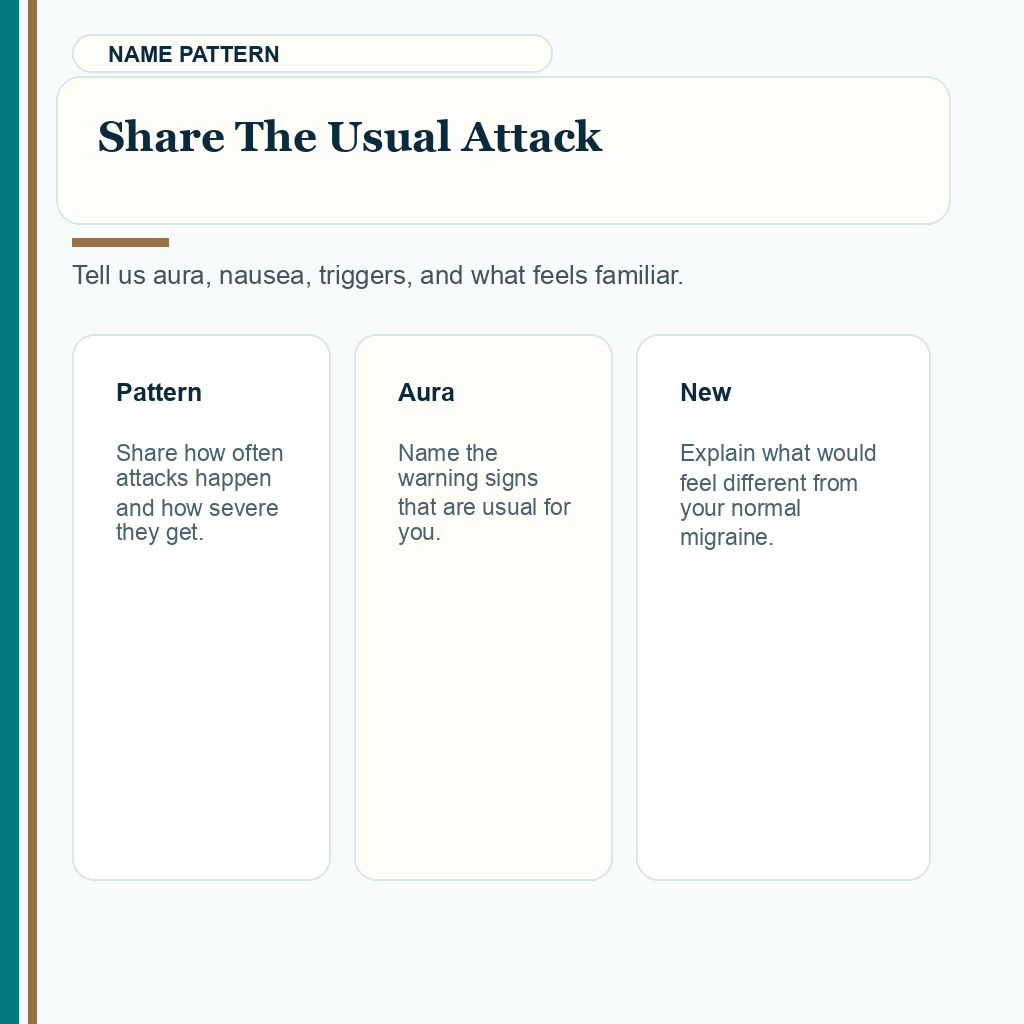
Tell us how often attacks happen, what the usual warning signs are, and what makes this pattern familiar for you.
Plan cue This helps us separate a known migraine pattern from a new warning sign.
Name the medicine
Send the exact rescue medicine, route, dose written on the prescription, last use, side effects, and prescriber.
Plan cue Do not add, skip, or combine tablets privately on the morning of surgery.
Flag the difference
Aura can be familiar, but weakness, confusion, speech trouble, fainting, or the worst headache of your life needs urgent medical review.
Plan cue A known migraine label does not cancel red flags.
Plan hydration
Tell us if migraine usually brings nausea or vomiting, especially if you struggle to keep fluids or medicine down.
Plan cue Repeated vomiting after graft work changes the priority.
Plan the room
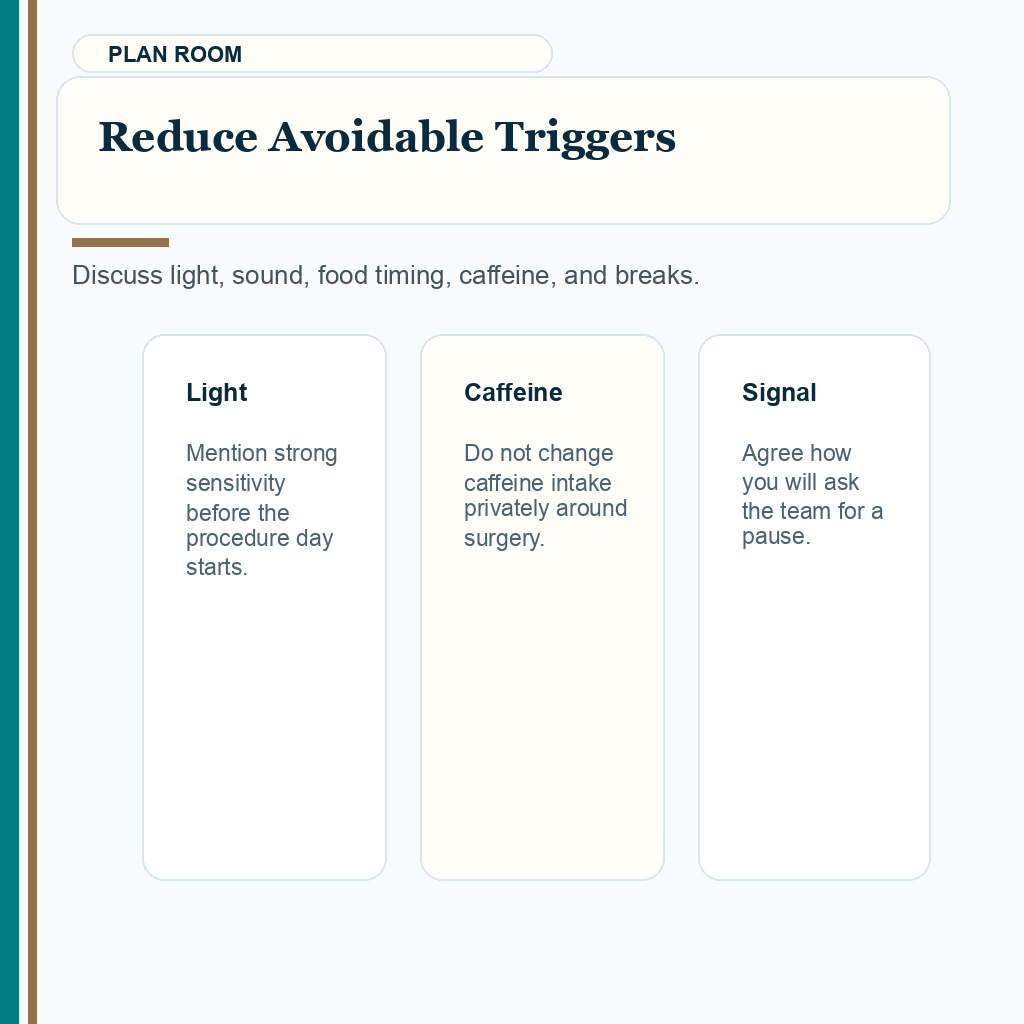
Bright light, sound, waiting, skipped food, caffeine changes, and stress may all matter on a long FUE day.
Plan cue The plan can include practical comfort steps without inventing medicine rules.
Slow the plan
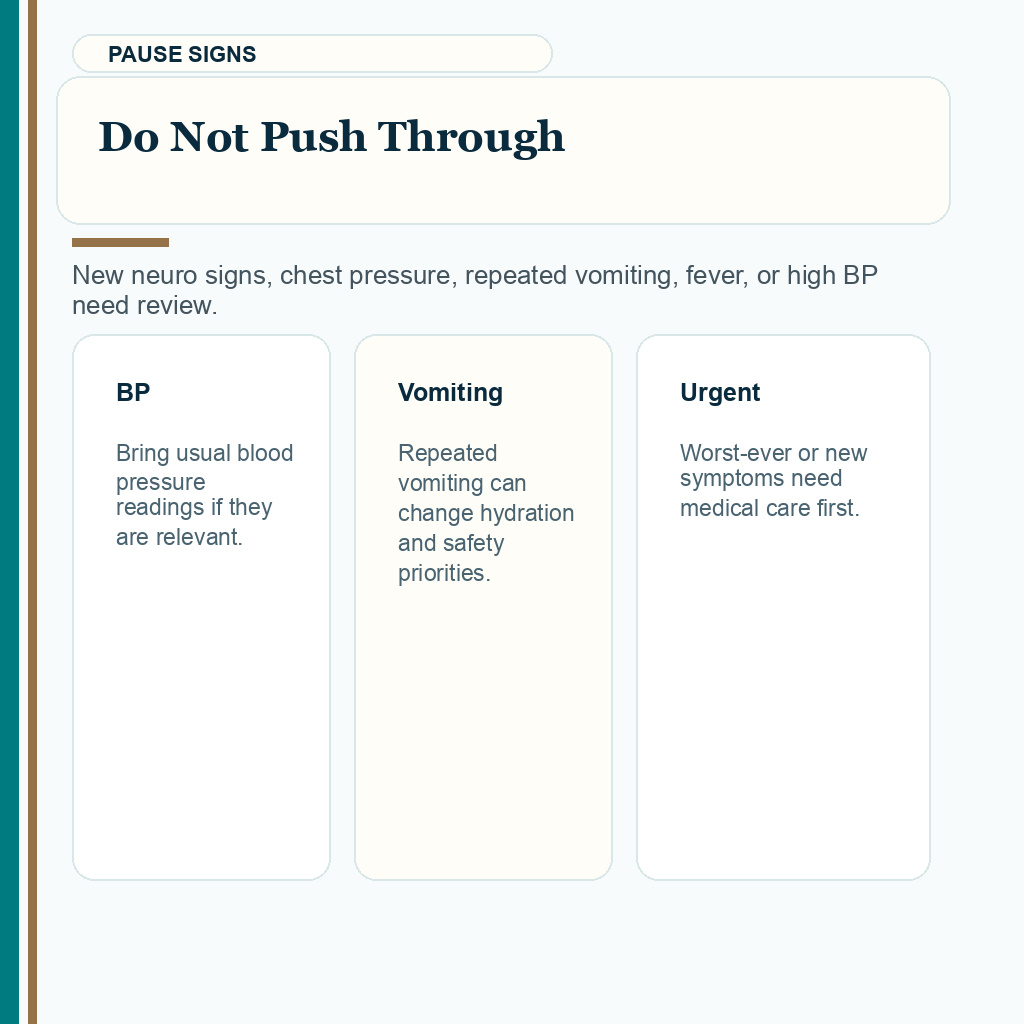
Blood pressure spikes, chest pressure, heart history, or unusual triptan reactions need medical review before the day is treated as routine.
Plan cue This is the point to pause rather than push through.
Use the planner as a conversation structure, not as permission to take medicine on your own. The clinical decision still depends on the patient, the procedure, the medicines, the vital signs, and whether the symptom pattern is familiar or new.
Rescue medicine needs exact names
Triptans are not ordinary painkillers. Some patients use sumatriptan, rizatriptan, zolmitriptan, eletriptan, nasal sprays, injections, or newer migraine medicines. Some also use nausea tablets, ibuprofen or another NSAID medicine, paracetamol, caffeine combinations, antidepressants, beta blockers, or preventive injections. I need the actual names because each category has a different safety conversation.
Do not take extra rescue medicine, NSAID medicine, sedative medicine, or a caffeine product before FUE unless the clinic and the prescribing doctor have approved the exact plan. That is especially important if the history includes heart disease, chest pressure, uncontrolled hypertension, fainting, stroke history, unusual aura, serotonin syndrome concern, severe vomiting, or several medicines taken together.
If ibuprofen or another NSAID is part of your migraine routine, tell us before the day rather than assuming it is harmless. The same private medicine boundary applies to ibuprofen before a hair transplant, because NSAID use should not be improvised around surgery.
Nausea and vomiting are not small details
Migraine nausea is not only an unpleasant symptom. It can affect hydration, food intake, medicine absorption, and how safely the patient protects the scalp after graft placement. If you usually vomit with migraine, say that before FUE. If you have a prescribed nausea medicine, name it. If vomiting happens after the procedure, do not treat it as only a headache problem.
Mild nausea may be manageable when the patient can drink, urinate, stay alert, and keep the required medicine down. Repeated vomiting, dizziness, dehydration, faintness, or bleeding changes the priority. The recovery routes are covered in nausea after FUE and vomiting after a hair transplant. Before surgery, I want to know whether nausea is a common part of your migraine pattern so we are not surprised by it.
Light, sound, and position should be planned
A hair transplant room cannot be turned into a dark bedroom. The team needs visibility, sterility, communication, and safe positioning. Still, a patient who is very light sensitive or sound sensitive should say so. We can plan the conversation around what is practical without promising that every trigger can be removed.
Bring sunglasses only if the clinic has cleared their use outside active graft work. Do not cover the head or touch the scalp without instruction. If sound sensitivity is severe, discuss it before the day, especially if headphones, ear protection, or phone use are part of your comfort plan. If anxiety about the procedure makes migraine more likely, do not borrow or take a sedative privately. The sedation boundary is explained in sedation during a hair transplant.
The goal is a clear signal system. Tell the team if you need a pause for nausea, light sensitivity, neck tension, bladder pressure, or worsening pain. A patient who waits until symptoms are severe may move suddenly or struggle to follow aftercare instructions.
Reasons to slow the plan down
I would slow the plan down when the migraine is not behaving like the patient’s usual pattern. The worst headache of your life, new weakness, numbness, trouble speaking, confusion, double vision, fainting, seizure, stiff neck, fever, fresh chest pressure, shortness of breath, uncontrolled blood pressure, repeated vomiting, or dehydration is not a routine migraine detail. Those symptoms need medical review before an elective hair transplant is treated as routine.
Blood pressure deserves special care because migraine pain, anxiety, caffeine changes, triptans, stimulants, nicotine, travel stress, and poor sleep can all influence readings. A patient with a known migraine history and high readings should not try to push through. The broader decision is covered in blood pressure stability before FUE.
The plan also needs review if the patient has started a new migraine medicine very recently, has had a strong side effect, has been using rescue medicine more often than usual, or cannot describe the medicine clearly. A medicine list is not paperwork. It changes how we judge safety.
Preparation before the long chair day
These four steps are the practical version of the plan. They do not replace medical review, but they make the review easier before travel and before positioning starts.

Keep the list short and accurate. Do not include guesses. A photograph of the prescription box or the medicine screen can be useful if the name is difficult to spell, but do not send private unrelated medical records unless the clinic asks for them.
Migraine details belong in the surgery day file
A long FUE day is easier to manage when migraine history is already visible in the chart. Pattern, triggers, aura, nausea, blood pressure context, usual medicines, and warning signs all matter.
Stable migraine history does not by itself mean surgery must be refused. Hidden or changing symptoms create a different problem because the team may be judging pain, nausea, or medication needs too late.
If symptoms start to build, the plan may need a pause, a quieter room, medication review, or input from the doctor who normally manages the migraine. The useful plan is written early, before pain controls the day.

Read this review excerpt
It was a very long day which you have to prepare yourself for which is probably why I found it challenging. I was constantly being asked if I was alright and could request toilet breaks (thank goodness).