


Sauna Heat Can Make FUE Surgery Day Harder
Avoid sauna, steam room, hot tub, and heavy sweating in the final 24 to 48 hours before a hair transplant. A short sauna earlier in the week is different from sitting in heat the night before surgery after a long flight. The main issue is not that grafts can be harmed before they exist. The issue is surgery day readiness. Dehydration, lightheadedness, poor sleep, scalp irritation, alcohol around the spa, or a flushed body can make the operation day harder than it needs to be.
Keep the final preparation window plain and avoid spa heat close to surgery. Do not plan sauna or steam the night before FUE. If you already used one, report it, drink water, rest, and mention dizziness, fever, sunburn, heavy sweating, or scalp redness before the procedure begins.
Why do I separate pre-op sauna from post-op sauna?
Patients often mix two different questions. Before surgery, there are no implanted grafts yet. The concern is whether the patient arrives stable, hydrated, rested, and medically ready for local anesthesia and a long procedure. After surgery, the concern changes to graft protection, swelling, scalp hygiene, heat, sweat, and infection risk.
A spa day before surgery can create the wrong starting point if it leaves you flushed, dehydrated, or poorly rested. Heat, dehydration, heavy sweating, and poor sleep make the operation day harder to read.
I separate this pre-op question from sauna after hair transplant. After FUE, I think about the recipient area and the newly placed grafts. Before FUE, I think about the body that has to tolerate surgery safely and steadily.
This distinction matters for people travelling to Istanbul. A hotel spa may feel like part of the trip, but it should not create a preventable problem on the morning of surgery.
If a hotel spa is included with the trip, decide before you arrive that the final preparation window stays quiet. You do not need to use every amenity just because it is included.
The final 24 to 48 hours matter most
The closer the heat exposure is to the operation, the less margin there is to recover. A sauna three or four days before surgery, with normal hydration and no scalp irritation, is usually less concerning than a long sauna the evening before surgery. Timing, intensity, and the patient response all matter.
Heavy sweating can leave a patient thirsty, tired, or lightheaded. Heat can also disrupt sleep. Some patients combine sauna with alcohol, a late dinner, travel fatigue, or very little water. That combination is exactly what I do not want before a procedure that can last many hours.
If your clinic gave you a stricter rule, follow the stricter rule. If no instruction was given, treat the final 24 to 48 hours as a preparation window rather than a spa window.
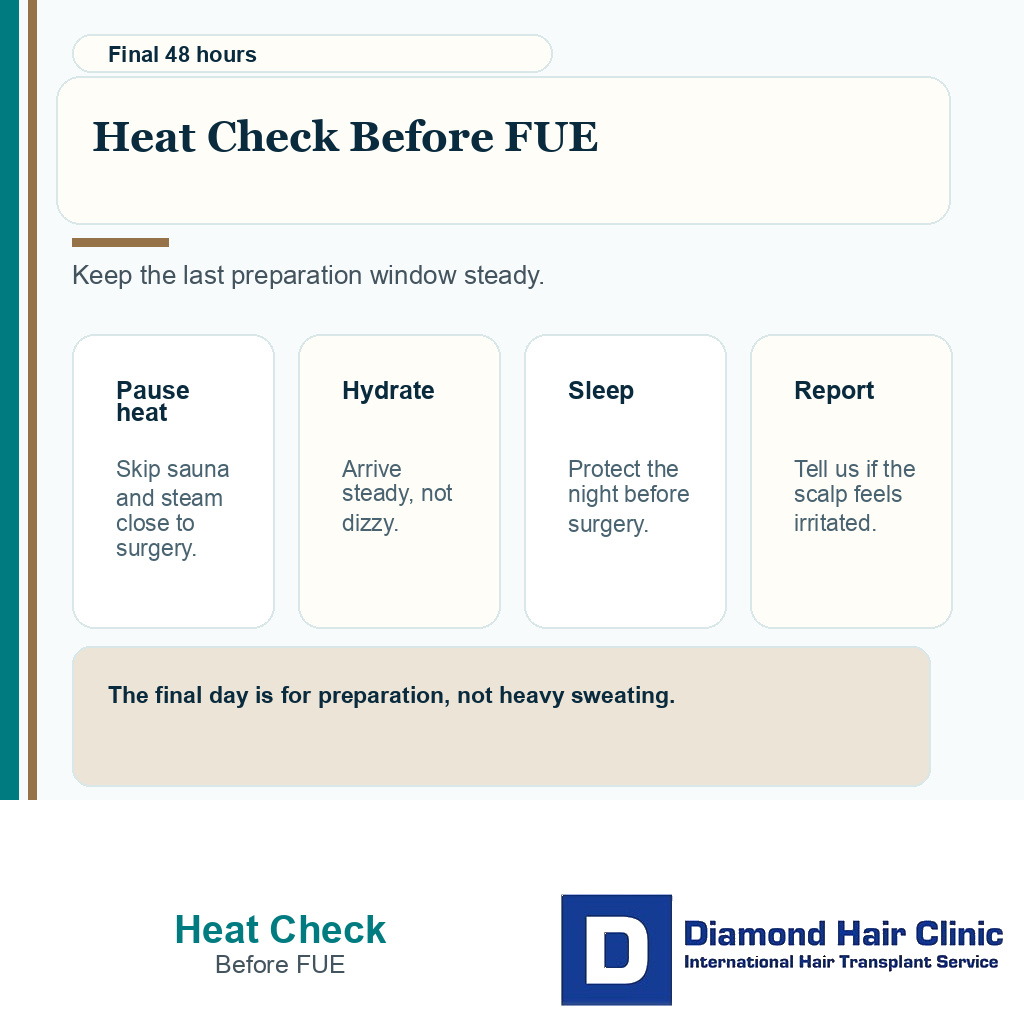
The final 48 hours should protect hydration, sleep, and scalp comfort before surgery.
What can heat and sweating change on surgery day?
Heat exposure by itself does not cancel a hair transplant. The question is what it did to you. I am more cautious when the patient feels dizzy, faint, flushed, unusually tired, nauseated, feverish, or dehydrated. I am also cautious when the scalp is red, itchy, sunburned, scratched, or irritated from heat and sweat.
Local anesthesia is usually used for FUE, and many patients stay awake for a long time. A patient who arrives lightheaded, underfed, or poorly hydrated may have a harder time with positioning, injections, and blood pressure changes. Unnecessary fasting before hair transplant can make that lightheaded, underfed feeling worse when the body should be stable.
I am not judging the word sauna by itself. I am looking at what came with it, such as dehydration, poor sleep, stimulants, alcohol, or symptoms that were ignored.
When is an earlier sauna usually less concerning?
If you used a sauna earlier in the week, felt normal afterward, slept well, drank enough water, and have no scalp irritation, that history is not the same as heavy sweating the night before surgery. It still belongs in the conversation if you are unsure, but it is not usually the same level of concern.
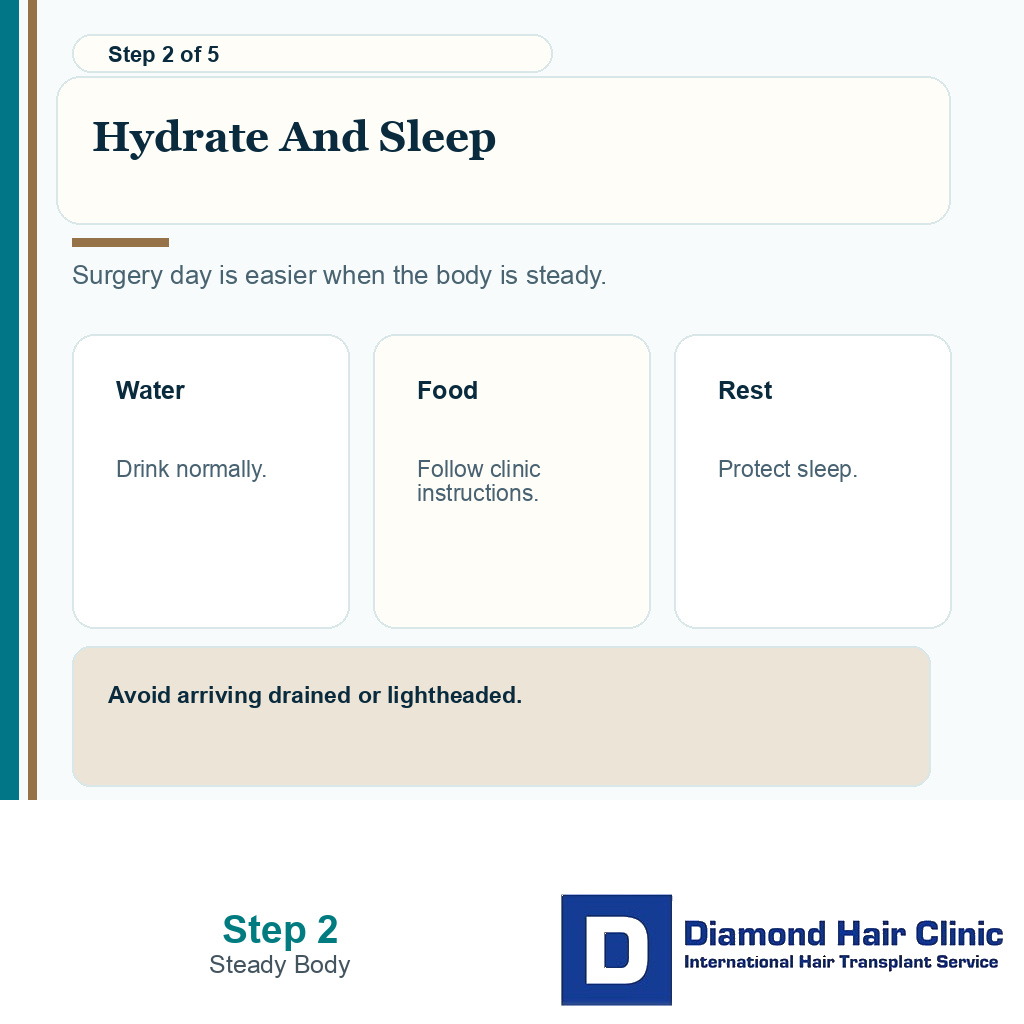
The safer pattern is simple. Finish heat exposure well before the last preparation day, avoid pushing your body, and keep the evening before surgery boring. Eat as instructed, hydrate normally, wash as instructed, and sleep.
If you have blood pressure issues, fainting tendencies, heart racing, or medication changes, high blood pressure and hair transplant becomes part of the pre-op review because stability matters on the day of FUE.
Steam room, hot tub, pool, and cold plunge are different exposures
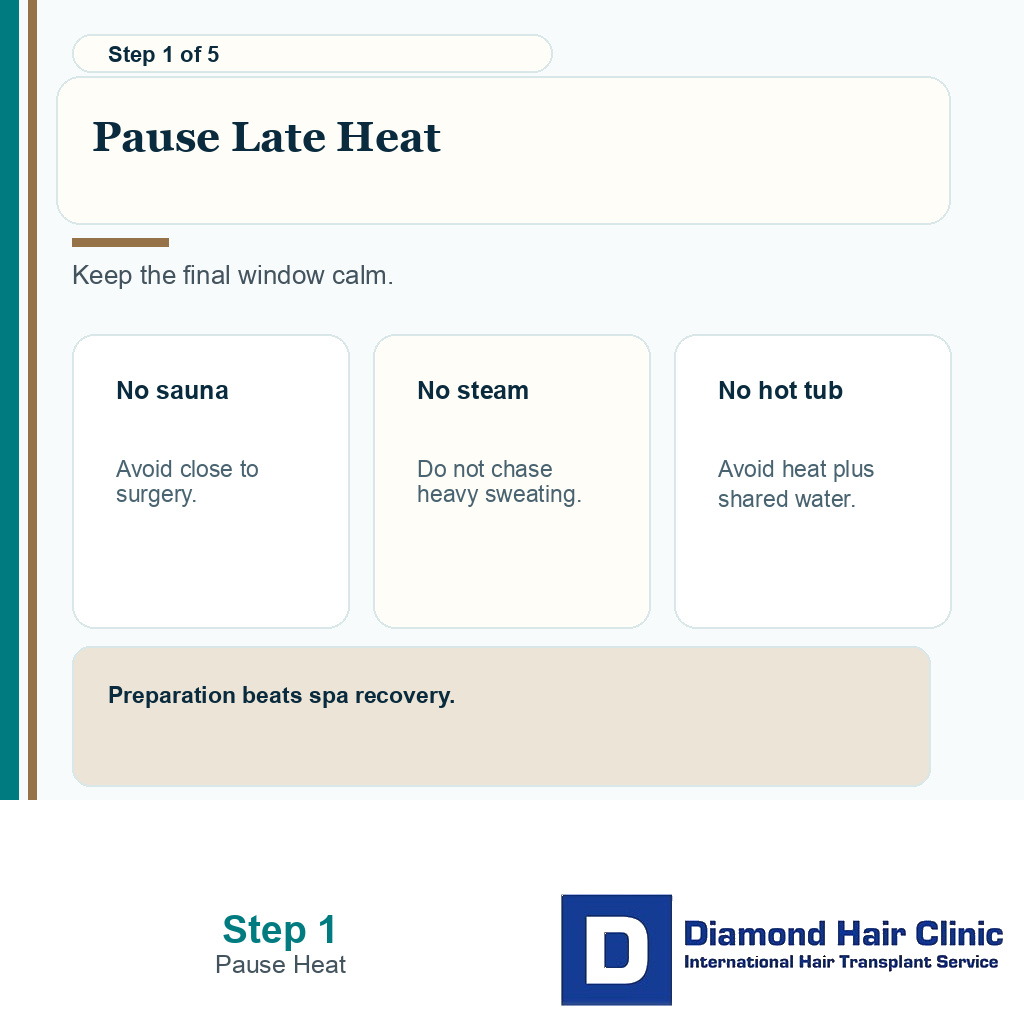
A sauna is dry heat. A steam room adds humidity. A hot tub combines heat, water, and shared surfaces. A pool or cold plunge raises different hygiene and temperature questions. I do not group all of them as one harmless hotel activity before surgery.
Rapid heat and cold changes can matter when they leave you lightheaded, flushed, sleep deprived, or tempted to keep using the spa because it is included with the hotel.
Before FUE, I want the scalp clean and quiet. I do not want irritated skin, heavy sweating, folliculitis, sunburn, or a patient who feels unwell from rapid heat and cold changes. If you are unsure, skip the exposure close to surgery and ask the clinic instead of trying to fit it in.
After surgery, water and heat questions become even stricter. Sweating after hair transplant is handled differently once grafts are placed because heat and moisture are then acting on healing skin.
Before surgery I am checking readiness, because grafts have not been placed yet
How do I judge heat exposure before FUE?
After heat exposure, I look at timing, sweating, alcohol or travel fatigue, and the scalp itself. The same sauna story can mean very different things depending on how close it was to surgery and how the patient feels now.
What should you report before your procedure?
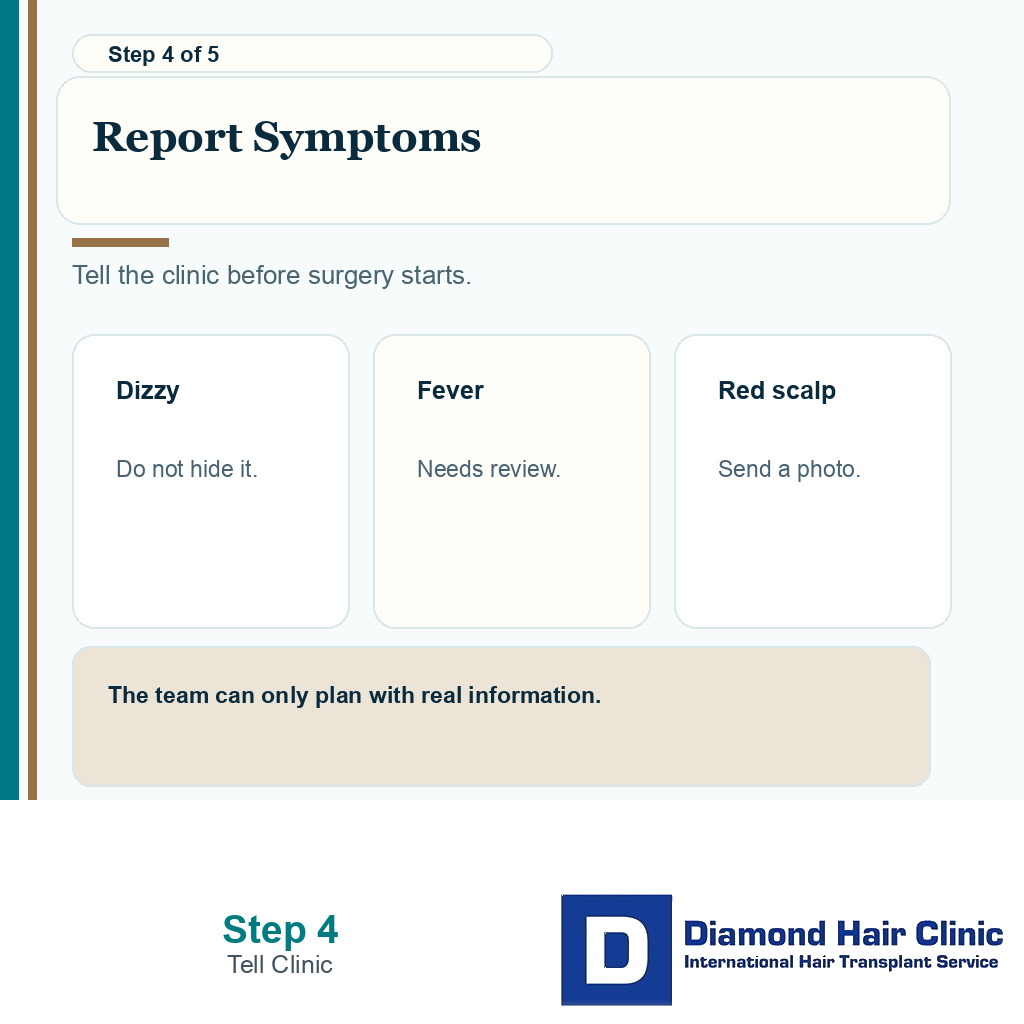
Report when the sauna or steam room happened, how long you stayed, whether you sweated heavily, whether you drank alcohol, and how you feel now. Also mention fever, nausea, dizziness, diarrhea, sunburn, scalp redness, or unusual fatigue. These details are more useful than saying only that you used the spa.
If you used energy drinks, strong coffee, or stimulants around the same time, say that too. The guides to energy drinks before hair transplant and coffee on surgery morning before hair transplant explain why stimulants can affect comfort and monitoring.
If something changed after booking, do not wait until the last minute. New illness, medication changes, and unexpected symptoms belong in the planning conversation. Those medical changes after booking a hair transplant should reach the clinic before the surgical day, not at the last minute.

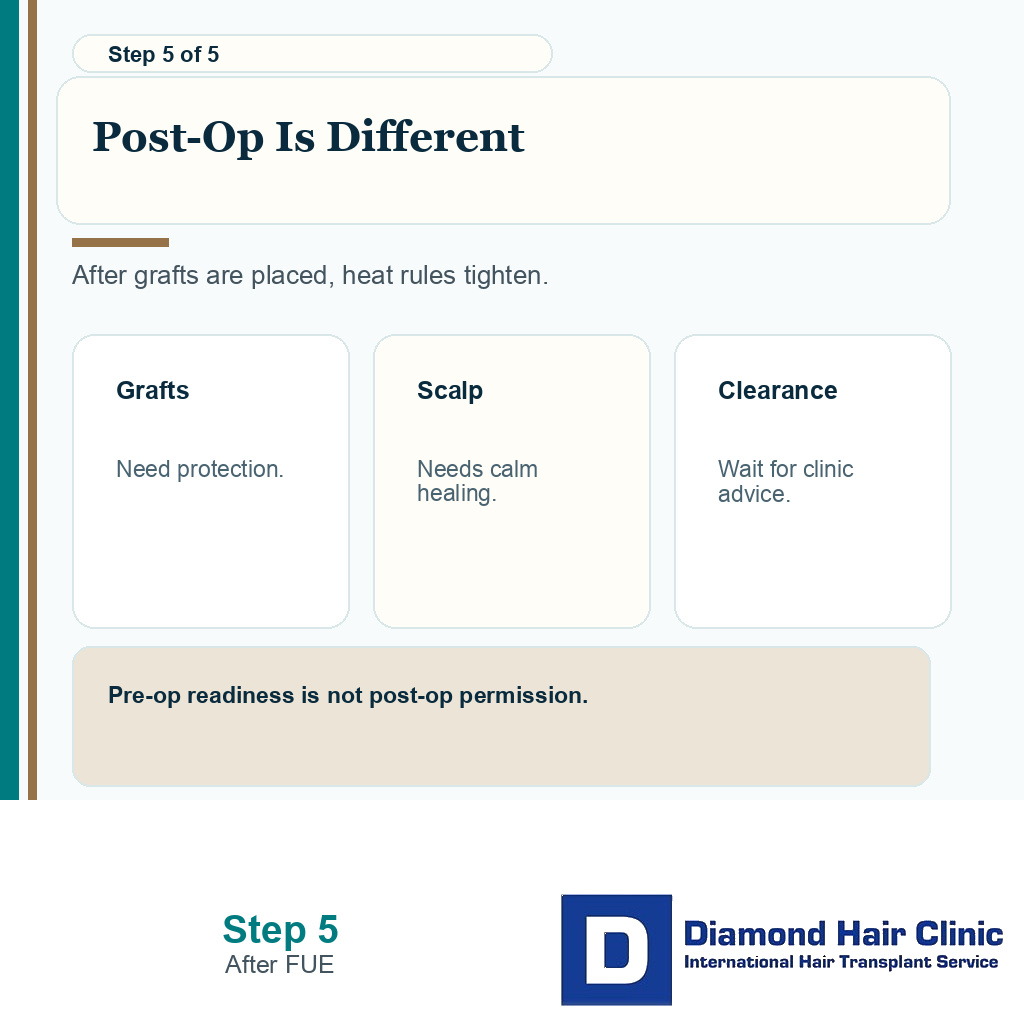
Before surgery the priority is readiness. After surgery the priority is graft and scalp protection.
Alcohol and sauna are a bad pre-op combination
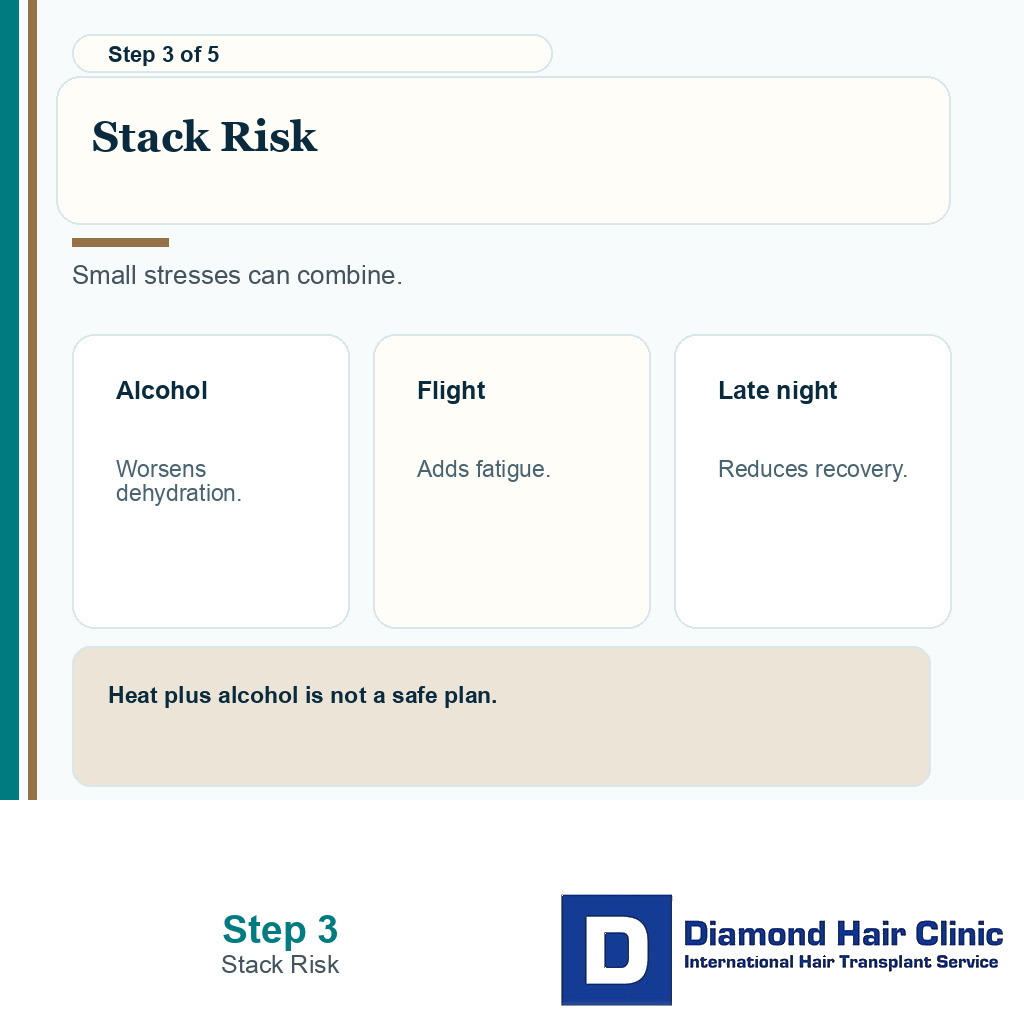
I am much more cautious when sauna is combined with alcohol. Alcohol can worsen dehydration, sleep quality, bleeding tendency, and next day stability. Even if the sauna itself was short, the combination can leave the body less ready for surgery.
If a patient drank near the operation date, alcohol before hair transplant is the better context. Do not balance alcohol with extra sauna or extra sweating. Stop, hydrate, rest, and be direct with the team.
The travel evening does not need to feel strict for no reason. The point is to keep surgery day predictable.
After surgery, the question changes
Once grafts are placed, sauna, steam, pools, hot tubs, and heavy sweating become scalp healing questions. The newly treated skin needs time. Heat can increase swelling and sweating. Shared water can add hygiene concerns. Patient instructions after surgery should be followed exactly.
Pre-op sauna timing should not be treated as permission to use sauna after FUE. The safer post-op route is to follow the clinic timeline and wait for clearance. If the scalp is still red, crusted, itchy, tender, or healing slowly, heat should not be rushed.
This is also where travel planning matters. If you want a spa holiday, schedule it away from the operation window rather than around the operation itself. For travel timing, how many days to stay in Turkey for hair transplant can help with realistic planning.
Keep the last evening quiet
If you are coming to Istanbul for surgery, treat the day before FUE as preparation, not sightseeing recovery. Arrive early enough to settle, drink water normally, eat as instructed, avoid alcohol, avoid heavy sweating, and keep the scalp clean. Use the Istanbul arrival checklist before hair transplant to plan the practical travel day.
Blood tests and pre-op checks should not be competing with fatigue from a late spa night. If your clinic asks for tests, follow the schedule. Blood tests before hair transplant are part of surgery readiness, not paperwork.
For the last evening, losing the spa plan is better than arriving unstable on surgery morning. If sauna makes you feel flushed, tired, dehydrated, dizzy, or leaves the scalp irritated, skip it before hair transplant and say so before the operation begins. If you feel completely well and the heat exposure was not close to surgery, the issue is usually less serious, but clear timing, symptoms, and hydration details still help the team plan.
Read this review excerpt
First wash completed and visual instructions given to my daughter.