


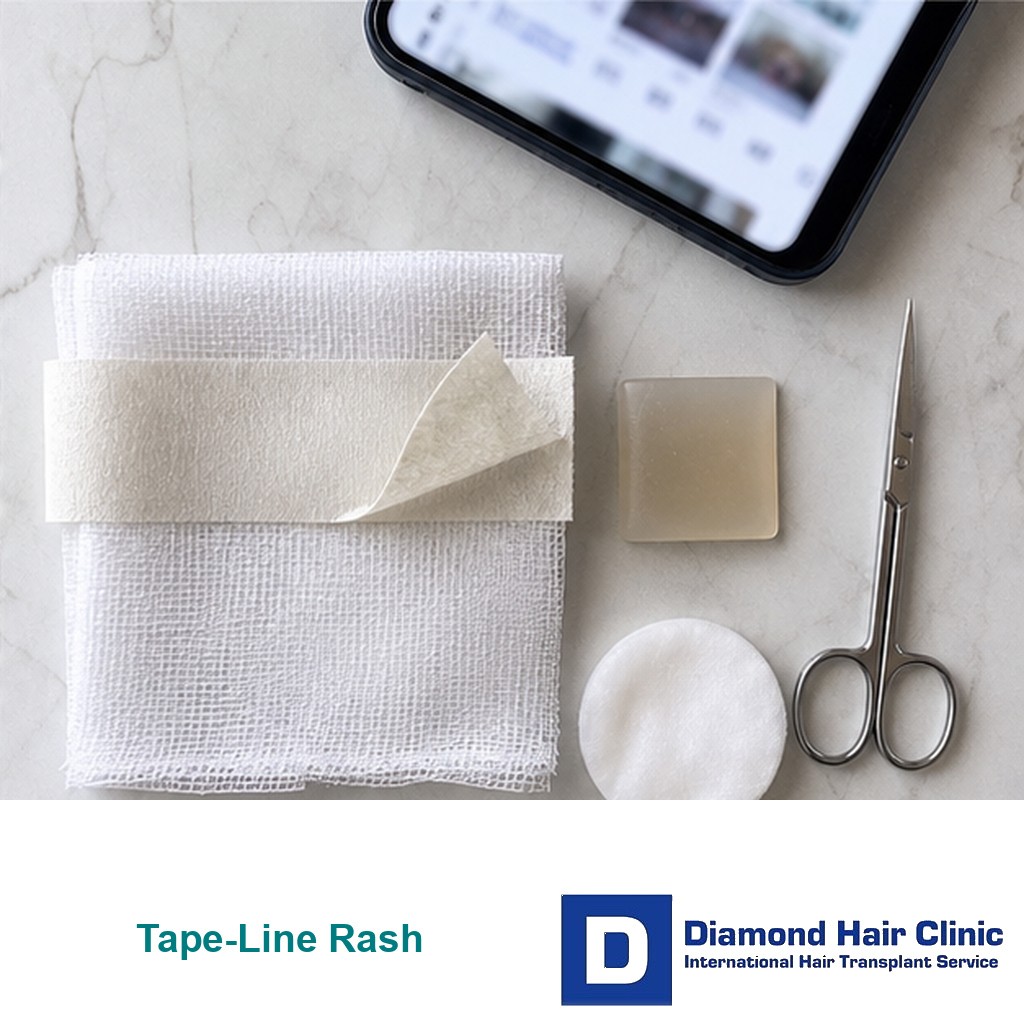
Tape Line Rash Needs Pattern Review Before Creams
When a red mark follows the edge of tape, dressing adhesive, or a product contact area after FUE, I judge the pattern before I judge the grafts. A local tape line rash can still sit outside the graft problem, but spreading heat, worsening pain, pus, fever, widespread hives, swelling, dizziness, or breathing symptoms change the urgency.
The safest first step is simple. Photograph the full border, name what touched the skin, and avoid random creams, adhesive remover, alcohol, oils, or forced peeling near grafts until the clinic reviews it.
A patient often wants one word, allergy or infection. In real recovery, I need the shape, timing, location, symptoms, and trend before I can decide what the next message should be.
The mark shape points to the contact border
A tape line rash usually becomes worrying because it looks drawn on the skin. The mark may follow the edge of a donor dressing, a strip of paper tape, a sticky pad, or a product that sat on one small area. That shape is useful because it tells me what touched the skin.
List every recent contact item when you send photos because the shape matters more when the contact history is clear. Tape, antiseptic spray, adhesive remover, a new cleanser, a pillowcase change, or a travel neck pillow can each make the line easier to interpret.
This is different from asking only when bandage removal after a hair transplant should happen. Bandage timing is the parent question. This article begins after the dressing is off and the skin pattern has appeared.
I still do not diagnose from shape alone. A straight line is useful as a clue, not as a diagnosis. I want to know whether the mark is flat or raised, itchy or painful, stable or spreading, and whether it sits near recipient grafts.
Tape irritation usually follows the contact border
Local irritation usually stays where the tape, dressing edge, or product touched the skin. It may itch, feel dry, look darker on some skin tones, or leave a clear border. That pattern can fit irritation or contact dermatitis, but I still would not diagnose it from one close photo.
For hives, wider swelling, or breathing symptoms, allergy warning signs after a hair transplant is the better guide because the reaction is no longer local.
Itch by itself also has a separate recovery pattern. If the issue is a general healing itch rather than a tape shaped mark, the guide to itching after a hair transplant is the better place to start.
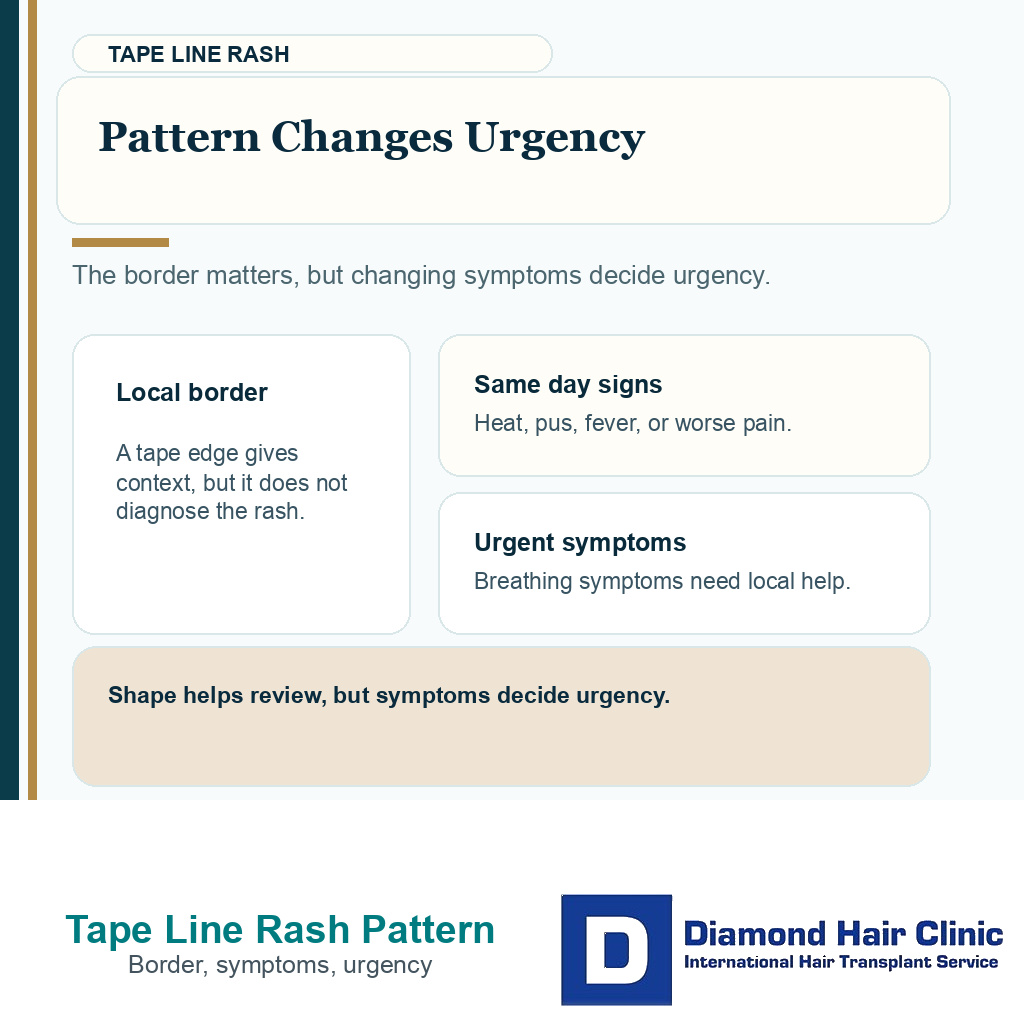
Heat, pain, pus, or fever change the decision
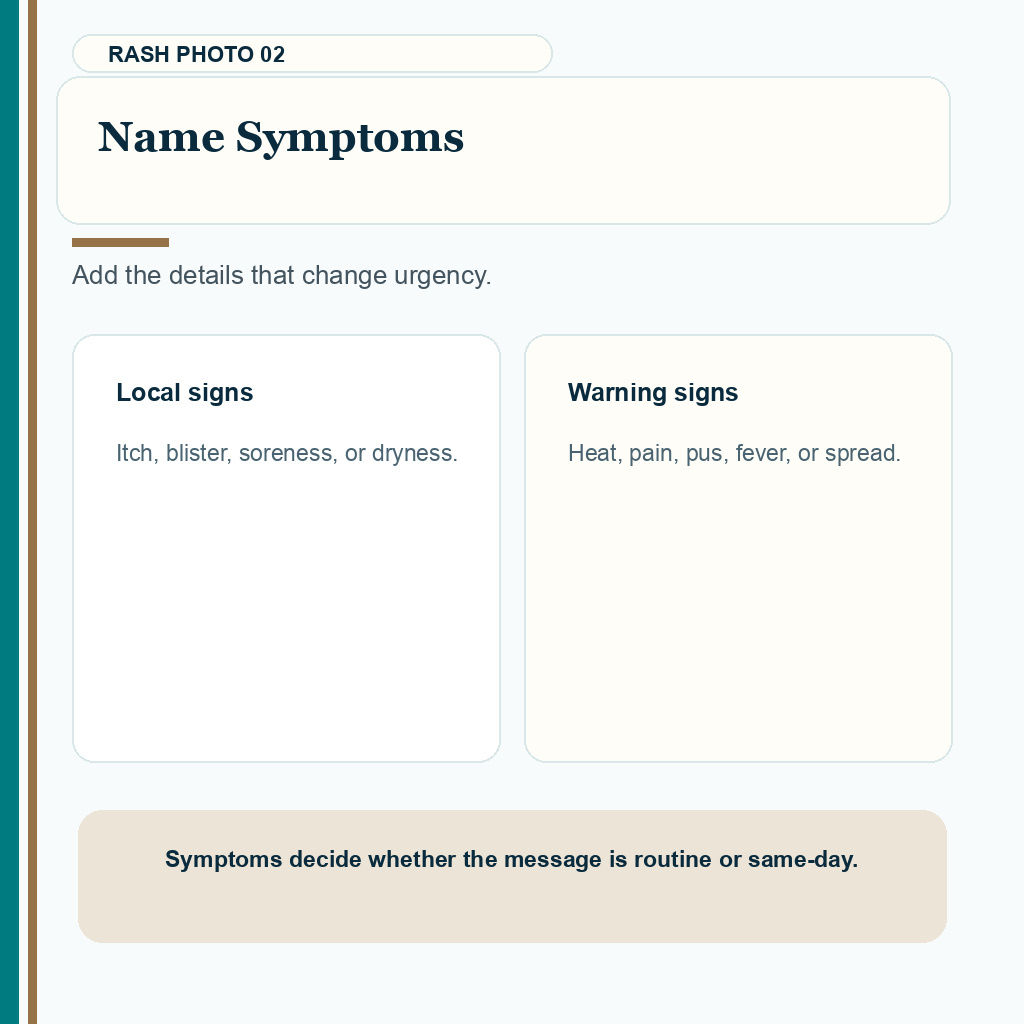
A neat edge pattern becomes less reassuring when the skin is hot, pain is getting worse, yellow or green fluid appears, redness spreads, swelling increases, or fever appears. At that point I stop treating the line as the whole story.
For broader skin changes, redness, scabs, and pimples after a hair transplant helps patients separate expected healing from review signs. If there are pustules, tenderness, drainage, or bumps that suggest infection, folliculitis after a hair transplant is more relevant than a simple tape line explanation.
If warning signs are changing quickly, message the clinic the same day. If symptoms are severe, if fever is strong, or if breathing or facial swelling is involved, seek local medical care instead of waiting for a remote answer.
The graft zone changes what you should touch
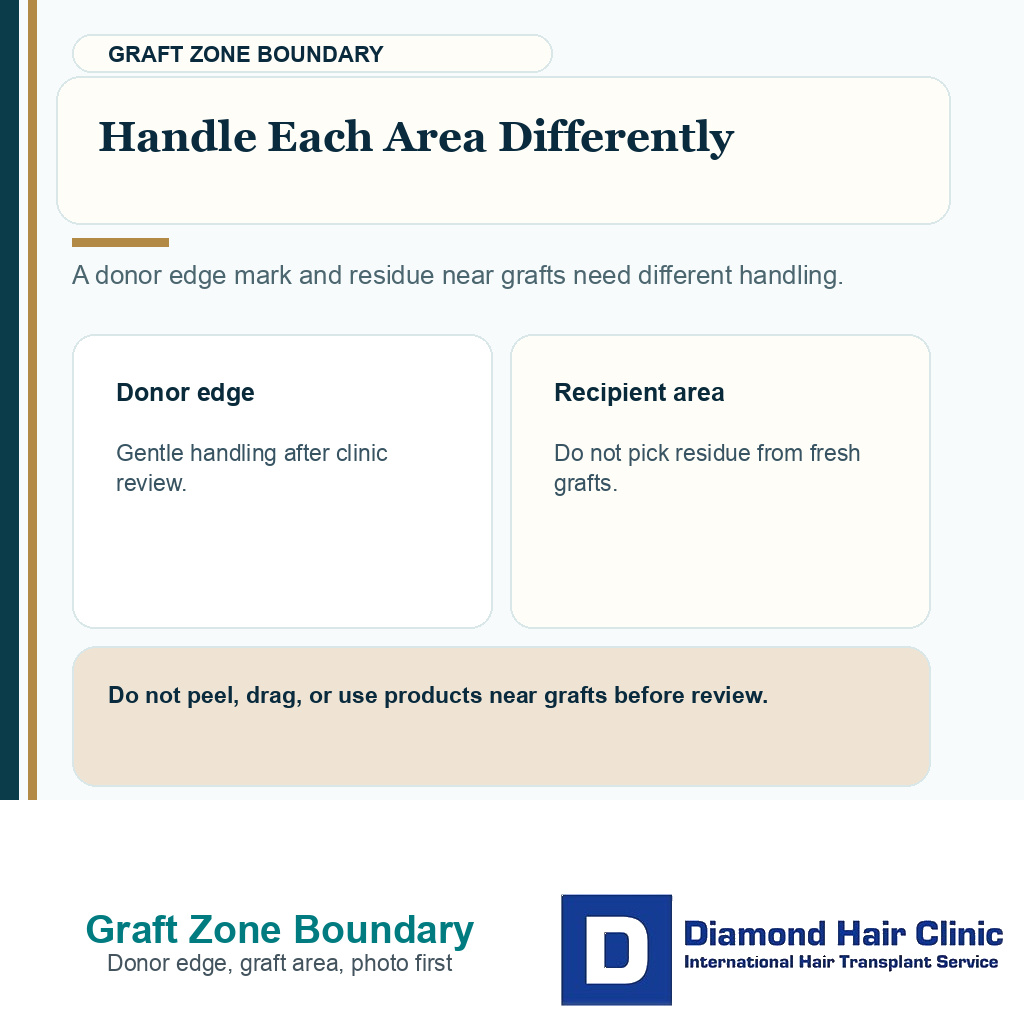
The same tape mark is handled differently depending on where it sits. A donor edge mark may be uncomfortable, but it is not the same as sticky residue caught near fresh recipient grafts. The recipient area is where rubbing, peeling, and repeated checking can create avoidable risk.
If adhesive is near grafts, do not pick at it with nails, cotton buds, tweezers, or a towel. Do not drag tape across the transplanted area to prove it is loose. Repeated contact near grafts during early recovery can make healing harder to judge, especially when adhesive has already irritated the skin.
If the mark is outside the grafts, I still want gentle handling. The donor area can be numb or sore. A patient may press harder than intended because the skin does not feel normal yet.
Random creams can make review harder
Many patients want to calm the skin quickly with whatever is nearby. That is understandable, but it can hide the pattern, irritate the graft area, or introduce a product that was not part of the postoperative plan.
Do not start steroid cream, antibiotic ointment, alcohol, oils, adhesive remover, after sun products, or a new moisturizer near grafts unless the treating clinic has told you to use it. If a pharmacist or local doctor gives advice, tell the transplant clinic exactly what was recommended and where it would be applied.
The issue is not that every cream is dangerous. The issue is that the wrong product in the wrong place can turn a clear pattern into a mixed reaction that is harder to review.
If the skin feels tight or dry, keep the message simple before doing anything. Say where the tightness is, whether the surface is cracked or wet, and whether the feeling changes after washing or sleeping. That information helps the clinic separate discomfort from a product reaction without losing the original border pattern.
Clear photos show the border and trend
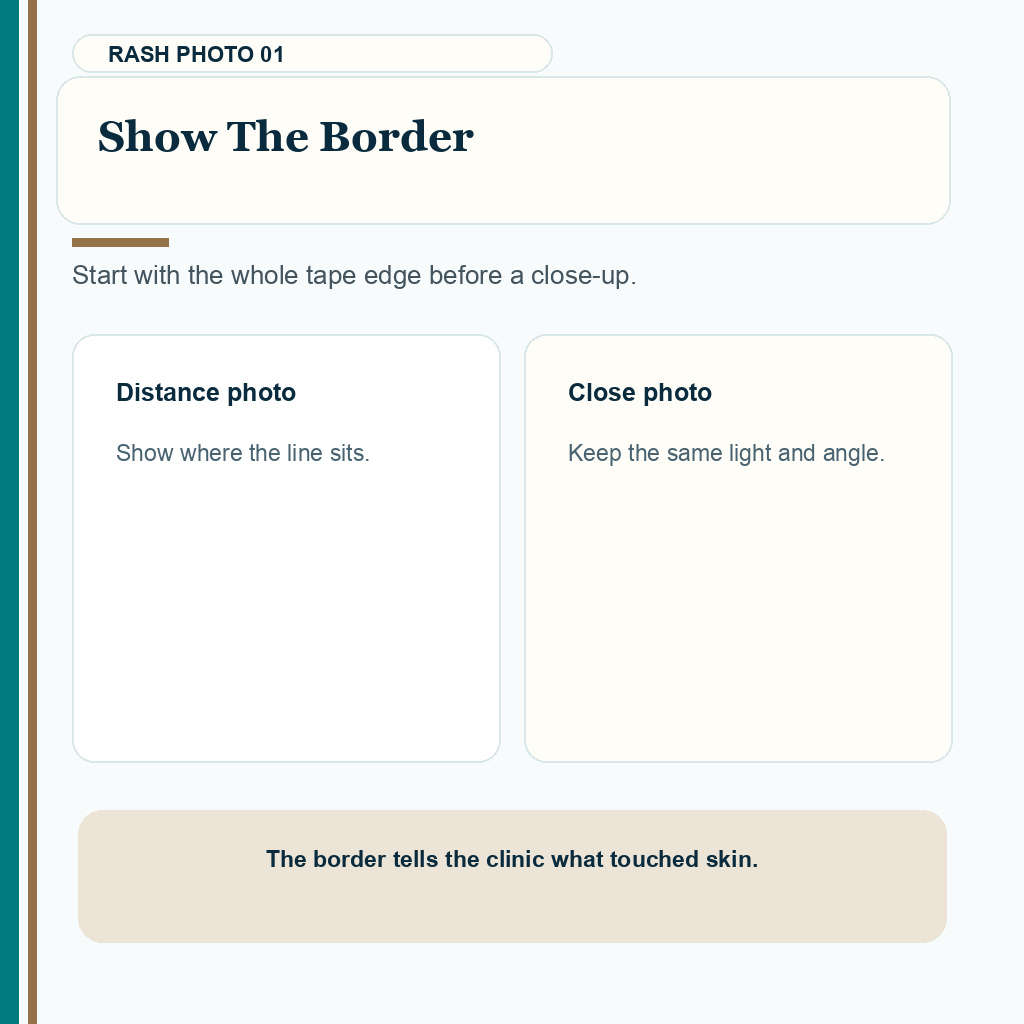
A useful photo set starts with distance, not only a close-up. Send one photo that shows the donor or recipient area in context, one closer photo of the border, and one photo from the same angle later if the mark changes. Use normal light and avoid filters.
Include the day after FUE, when the tape or dressing came off, what touched the skin, whether you used any product, and whether the mark is itchy, painful, hot, wet, blistered, or spreading. Early hair transplant review photos explains why one tight image rarely gives enough context.
Try not to crop away the part that proves the shape. A dramatic close photo can make every red area look worse, while a wider image shows whether the line follows tape, crosses the donor edge, approaches grafts, or spreads beyond the contact area. The boring photo is often the one that answers the question.
A good message does not need drama. It needs the pattern, the timeline, the symptoms, and what has already been applied.
Future dressings should avoid the same trigger
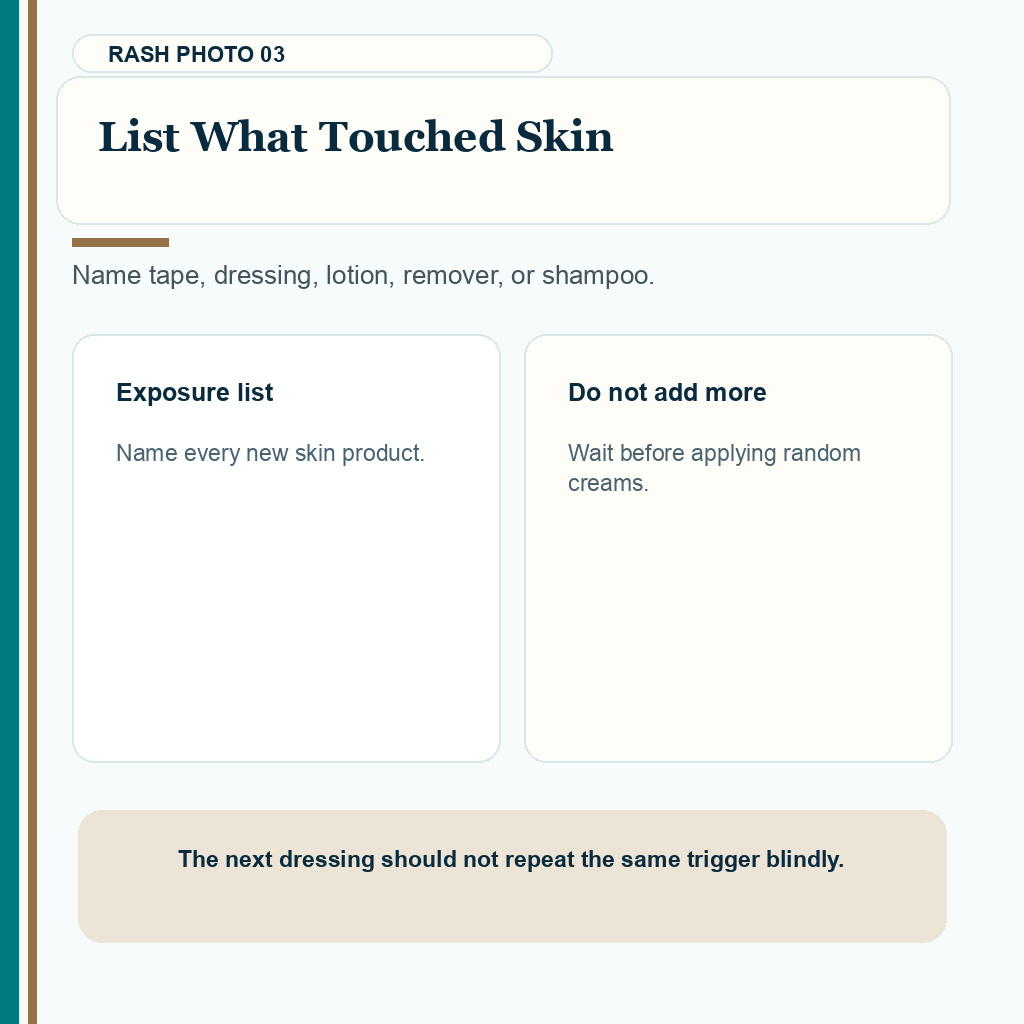
If the pattern follows one tape edge, name that tape before it is used again. If it follows a dressing pad, name the pad. If it appears after lotion, shampoo, adhesive remover, or a cleaning wipe, name the product and when it touched the skin.
Save a clear photo of the mark and the product name if you can. The next dressing decision is easier when the clinic knows whether the first reaction stayed local, blistered, or spread.
Avoiding the possible trigger is often more useful than adding more products. This does not mean the patient has a permanent allergy to every medical adhesive. It means the next dressing decision should respect what the skin just showed, and any test of a new adhesive belongs away from fresh grafts and under medical guidance.
Do not treat this the same way as hair system adhesive safety after surgery. Hair system tape and glue are later, repeated adhesive exposure. A surgical dressing edge in the first recovery days needs a narrower review, especially if it sits close to grafts.
Your next message should be specific
Use the threshold ladder below as a communication filter. It helps you decide whether the rash urgency is a calm photo message, a same day clinic review, or urgent local help. It should not be used to diagnose yourself or to choose medication.
Tape line rash threshold ladder
Choose the closest pattern before deciding how to respond. The ladder cannot diagnose the skin. It helps you send a clearer message and avoid touching the graft area while warning signs are checked.
Local border only
The mark follows tape, gauze, or a dressing edge and is not spreading quickly.
Photograph the full border in the same light and list what touched the skin.
Message the clinic if you are unsure, especially near the recipient area.
The rash border tells the rash urgency
A tape line rash after FUE is read from its shape, border, contact material, symptoms, location, and whether the mark is staying local or spreading.
A local itchy mark outside grafts is different from heat, pain, pus, fever, widespread hives, facial swelling, dizziness, or breathing symptoms. Those signs need faster medical advice.
Take one clear photo of the full border and name the tape, dressing, cleanser, spray, wipe, lotion, or remover that touched the skin. Then keep hands and random products away from grafts until the clinic gives instructions.

Read this review excerpt
Every single one of my questions was answered and they made sure I had all the details I needed to make an informed decision.