


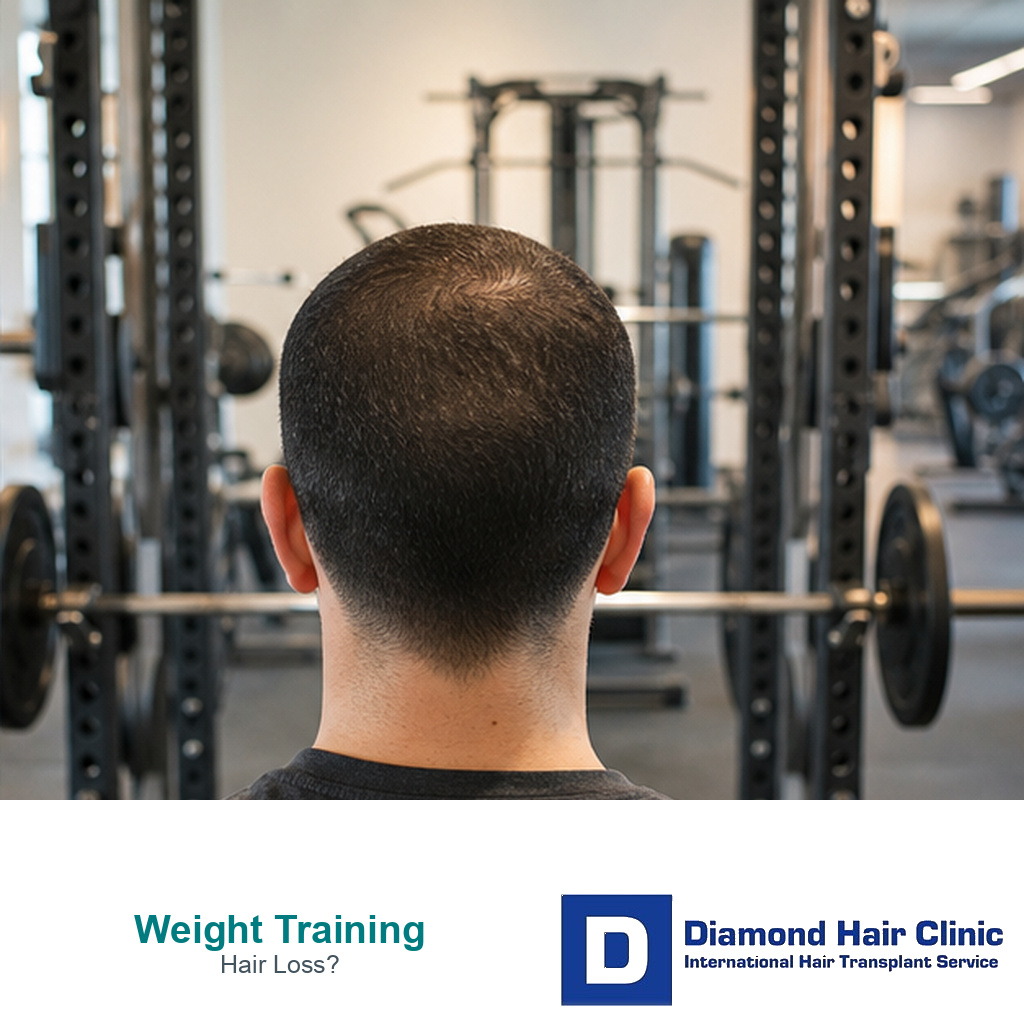
Does Weight Training Cause Hair Loss Around a Hair Transplant?
Ordinary weight training does not prove that you will lose hair faster, and it does not prove that transplanted grafts will fail. A hard session can briefly change testosterone. Some testosterone can convert to DHT. DHT matters in male pattern hair loss, but the transplant plan depends on genetic follicle sensitivity, native hair stability, recovery timing, and hormone exposure, not one workout spike.
I do not ask a patient to stop being active forever because they train. I do ask them to separate normal lifting from early post-op scalp stress, active native hair thinning, creatine or stimulant use, prescribed testosterone, anabolic steroid cycles, and hair loss medication choices. Those are different planning questions.
If you are asking what to do today, I keep the first step simple. Stable hair and ordinary lifting usually do not need a panic response. Early after surgery, recovery rules come first. New shedding, a new supplement stack, a testosterone change, a steroid cycle, or a recent start or stop of hair medication needs a timeline and photos before anyone blames the gym or changes the transplant design.
For patients who lift, start here
If you lift weights and your hair is otherwise stable, I do not treat the gym as the cause of male pattern hair loss by itself. Male pattern loss usually reflects follicles that are genetically sensitive to androgens over time. The same workout can mean nothing for one scalp and become a distraction for another patient whose crown and hairline were already miniaturizing.
The useful first question is not only whether lifting raised testosterone. I want to know whether your hair was changing before the training concern started, whether shedding has a pattern, whether medication was started or stopped, and whether any hormone product was added. That is a different review from simply saying the gym caused the problem or the grafts failed.
After surgery, the answer changes by timing. In the early healing period, gym restrictions are about protecting fresh skin, swelling, sweat, pressure, rubbing, and accidental trauma. Later, the long-term question returns to native hair biology and donor planning.
Keep the first cleared gym session boring on purpose. Holding your breath, straining, or wiping sweat from the graft area means it is no longer a gentle return.
The testosterone to DHT chain needs context
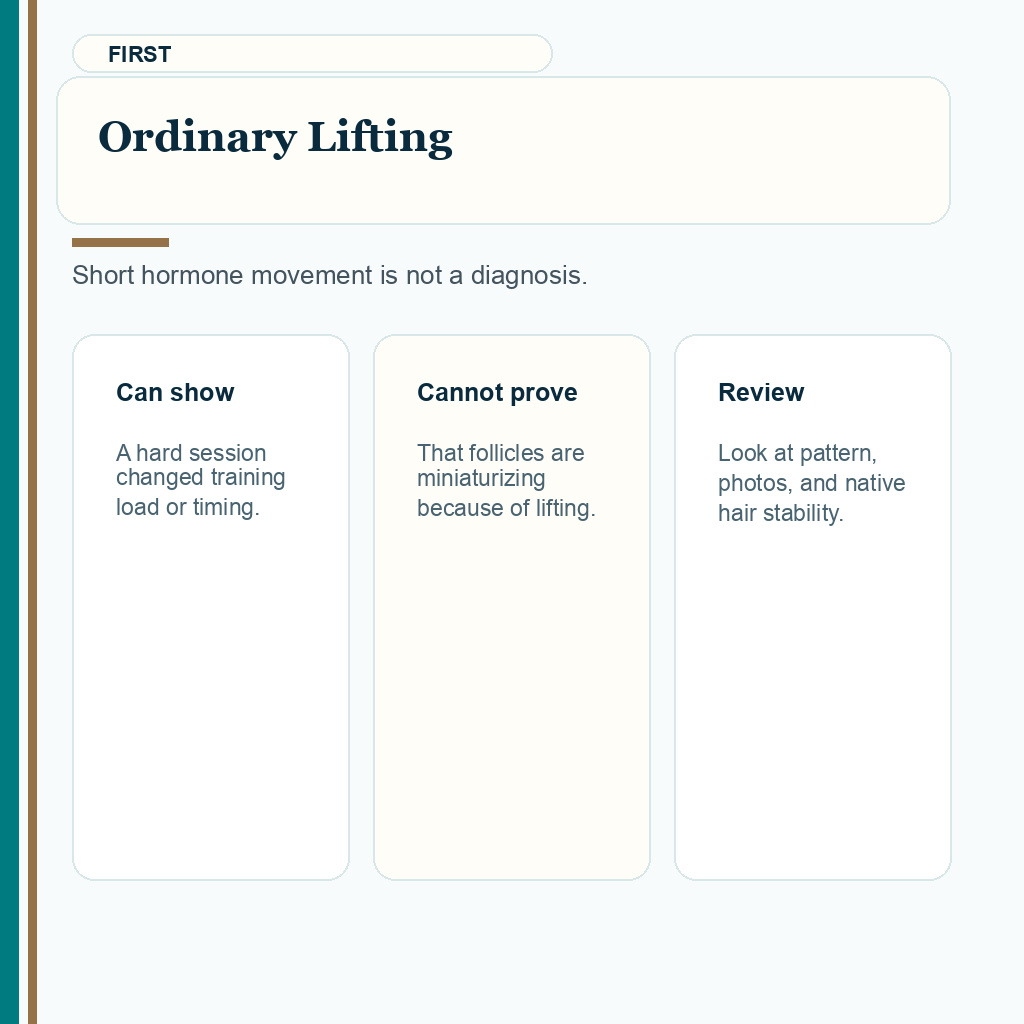
The simplified chain is easy to understand. A hard lifting session can raise testosterone for a short time, some testosterone can convert to DHT, and DHT is involved in male pattern hair loss. The mistake is treating that chain as a complete diagnosis.
DHT does not affect every scalp follicle in the same way. The more important issue is whether the follicles in the hairline, mid scalp, or crown are genetically sensitive and already miniaturizing. A blood number or a gym session cannot replace examination, photo comparison, and the long-term pattern.
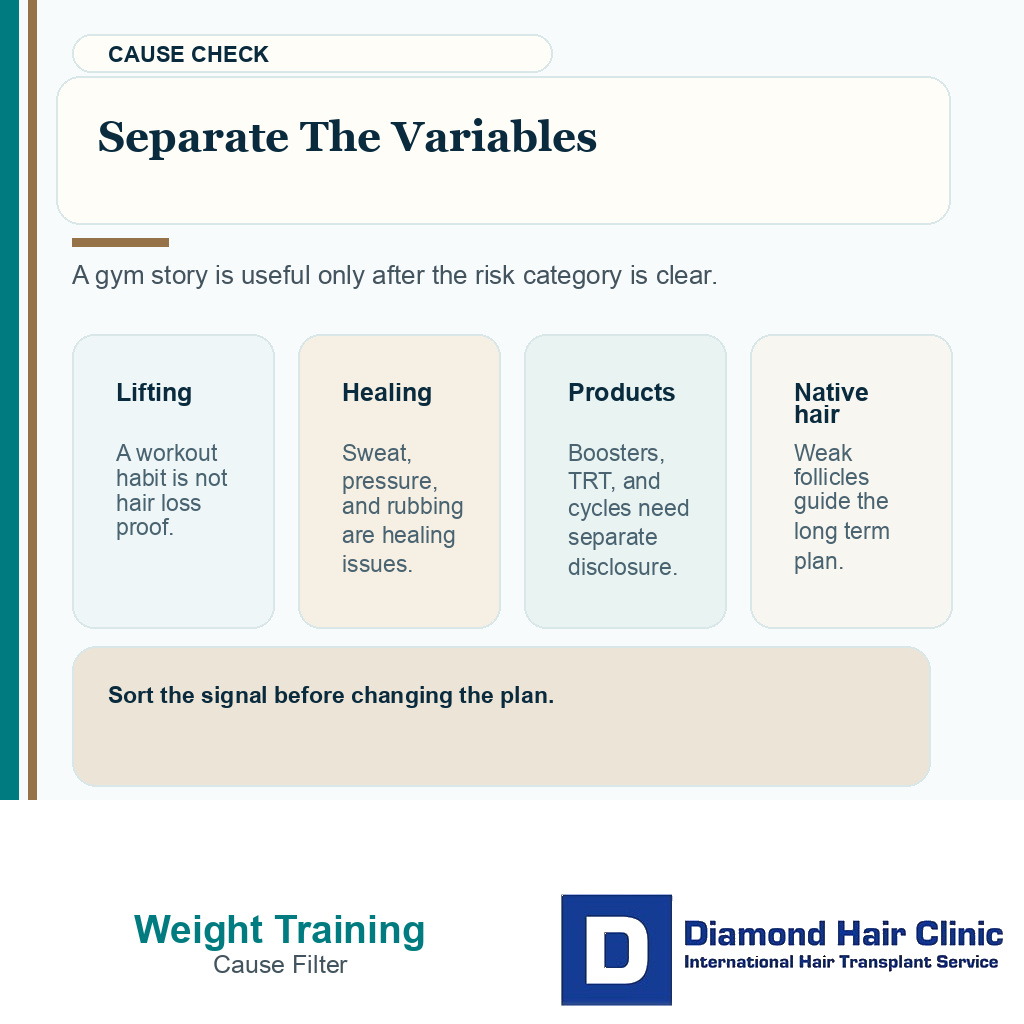
I separate ordinary lifting from medical hormone exposure because the scalp risk is not the same. Normal resistance training and a supervised treatment such as testosterone therapy do not belong in the same risk sentence. A steroid cycle or hormone booster is another category again.
Before transplant, native hair stability matters more than gym habit
Before a transplant, I care more about the hair that remains than the training label. If native hair is actively thinning, the hairline should not be designed as if the patient will never lose more hair. Donor hair is limited, and a low aggressive hairline can become a problem if the crown and mid scalp keep moving.
For a patient who trains hard, I ask about the full picture. That includes weight change, diet changes, sleep, creatine or pre workout, oral hair formulas, hormones, recent shedding, family history, and whether he is using or avoiding hair loss medication. A stable lifter may be easier to plan than someone who does not train but has rapid untreated miniaturization.
For women who lift, I do not use the same male DHT explanation automatically. Diffuse thinning, low iron, thyroid disease, PCOS, birth control changes, postpartum shedding, and menopause can all change the plan, so diagnosis and donor stability come before blaming the gym.
If the patient is worried about planning a transplant without finasteride, I do not turn the gym question into a medication command. I explain the tradeoff. If native hair is sensitive to DHT and likely to keep thinning, and the patient does not want a DHT blocker, the design needs more caution.
After transplant, gym rules are about healing first
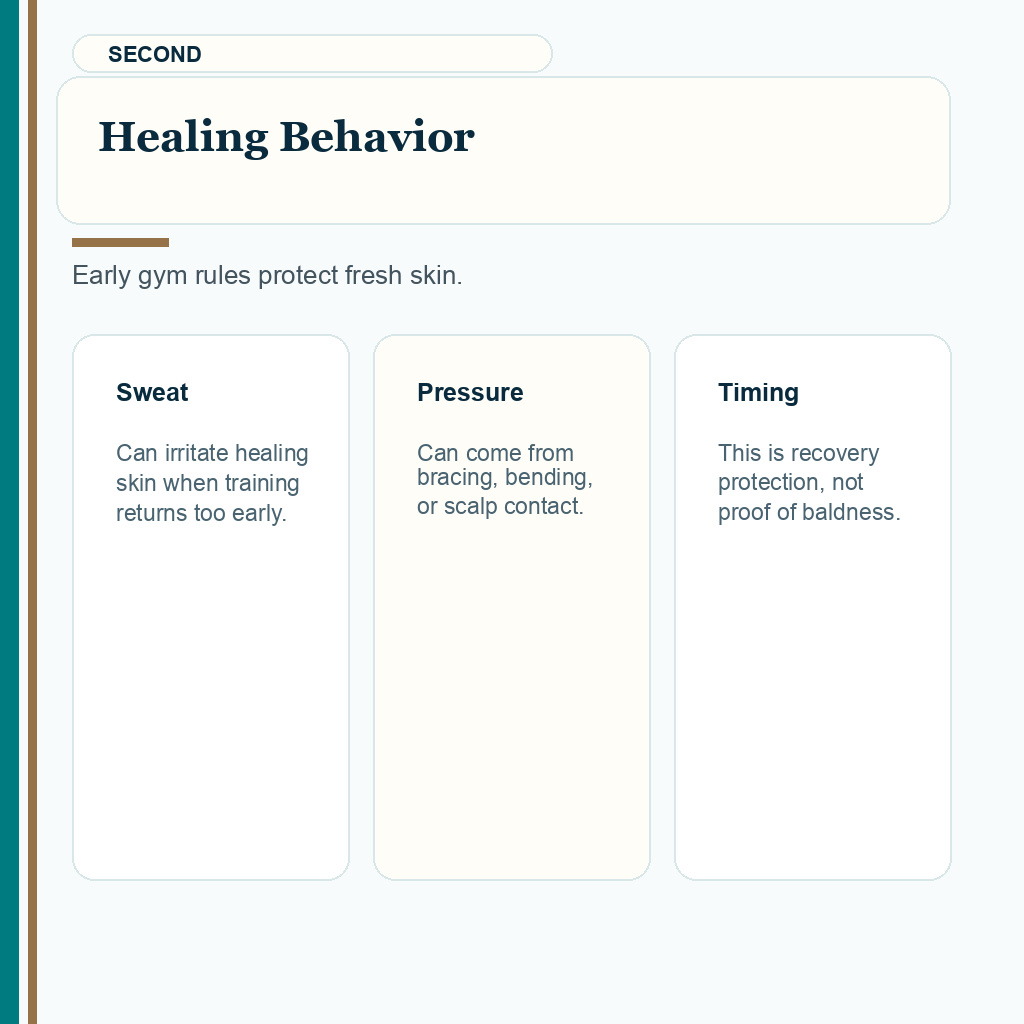
In the first days and weeks after FUE, the gym question is not mainly about long-term DHT. The scalp is the issue. Sweat, heat, bending, breath holding, wiping, tight headwear, benches, bars, towels, and accidental contact can irritate healing skin or increase anxiety when the graft area is still settling.
For that reason, the schedule for exercise after a hair transplant is staged. A careful walk is not the same as heavy squats, deadlifts, hard cardio, or training to failure. If someone asks about one heavy lift after surgery, I look at timing, scalp contact, bleeding, open spots, swelling, and photos rather than blaming DHT.
Those early restrictions do not mean weight training causes baldness. They mean the scalp is recovering from surgery. Once healing is stable, the long-term planning concern becomes native hair, medication choices, and hormone exposure again.
Creatine, pre workout, and hormone products are different questions
Patients often group every gym product together, but that makes the review worse. Plain protein powder is not the same as creatine. Plain creatine is not the same as a high stimulant pre workout. A stimulant product is not the same as prescribed testosterone or an anabolic steroid cycle.
The creatine question already has its own planning route, including plain creatine before FUE and restarting creatine after a transplant. The current evidence does not prove that standard creatine causes hair loss, but I still want to know what changed if shedding started around the same time as a new supplement.
Strong pre workout products raise a different issue after surgery because they can push intensity, sweating, sleep loss, flushing, and blood pressure. Products that claim to boost testosterone or affect hormones need disclosure before planning, even when the label looks harmless. Keep the exact product label in the file when the formula includes stimulants or hormone claims.
Hormone exposure is not the same as ordinary lifting
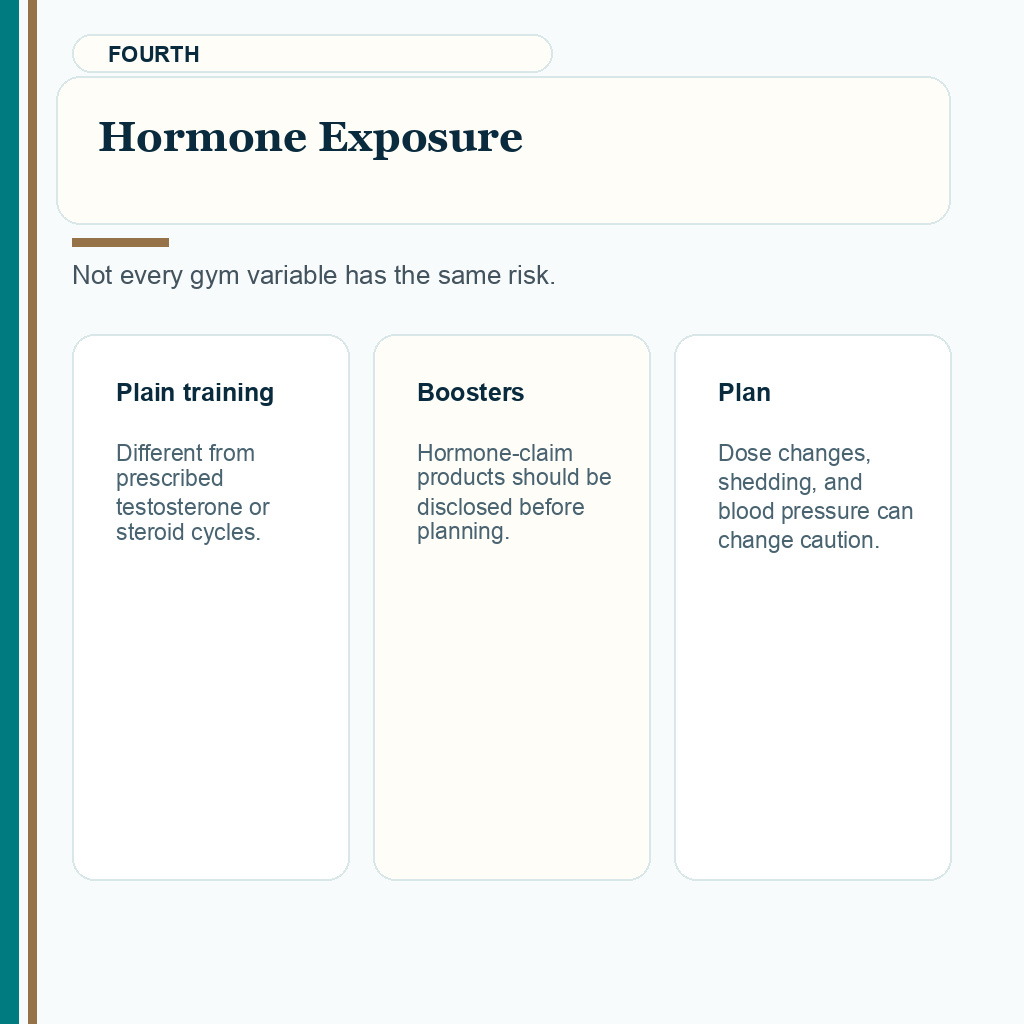
A patient using prescribed testosterone therapy needs a different conversation from a patient who only lifts weights. I want the dose, route, start date, recent changes, blood values if available, blood pressure history, shedding timeline, and the prescribing doctor’s role. I do not want the patient stopping prescribed hormone treatment on their own just to make the hair question simpler.
An anabolic steroid cycle is different again. Dose pattern, acne, blood pressure, rapid body change, sleep, training intensity, and risk tolerance can all change the picture. It would be poor planning to treat that as the same issue as normal training.
This does not mean every patient on testosterone is unsuitable. It means the hair plan must be built around the real exposure, real scalp findings, and future native hair risk. A hidden hormone story is more dangerous to planning than a gym routine that is described clearly.
Use the training cause filter
The sentence, “I started lifting and my hair changed,” can point in more than one direction. It may be ordinary training anxiety, an early return to the gym after surgery, native miniaturization that was already moving, or a new hormone product that changed the risk category.
Four review buckets
Use this board to sort a lifting concern before blaming DHT, changing medicine, or changing the transplant design.
Keep the gym in context
Ordinary lifting may briefly move hormones after a hard session, but that is not the same as proving male pattern hair loss.
Treat early gym problems as healing issues
In the first recovery period, sweat, pressure, bending, wiping, and dirty gym contact matter more than the long-term DHT question.
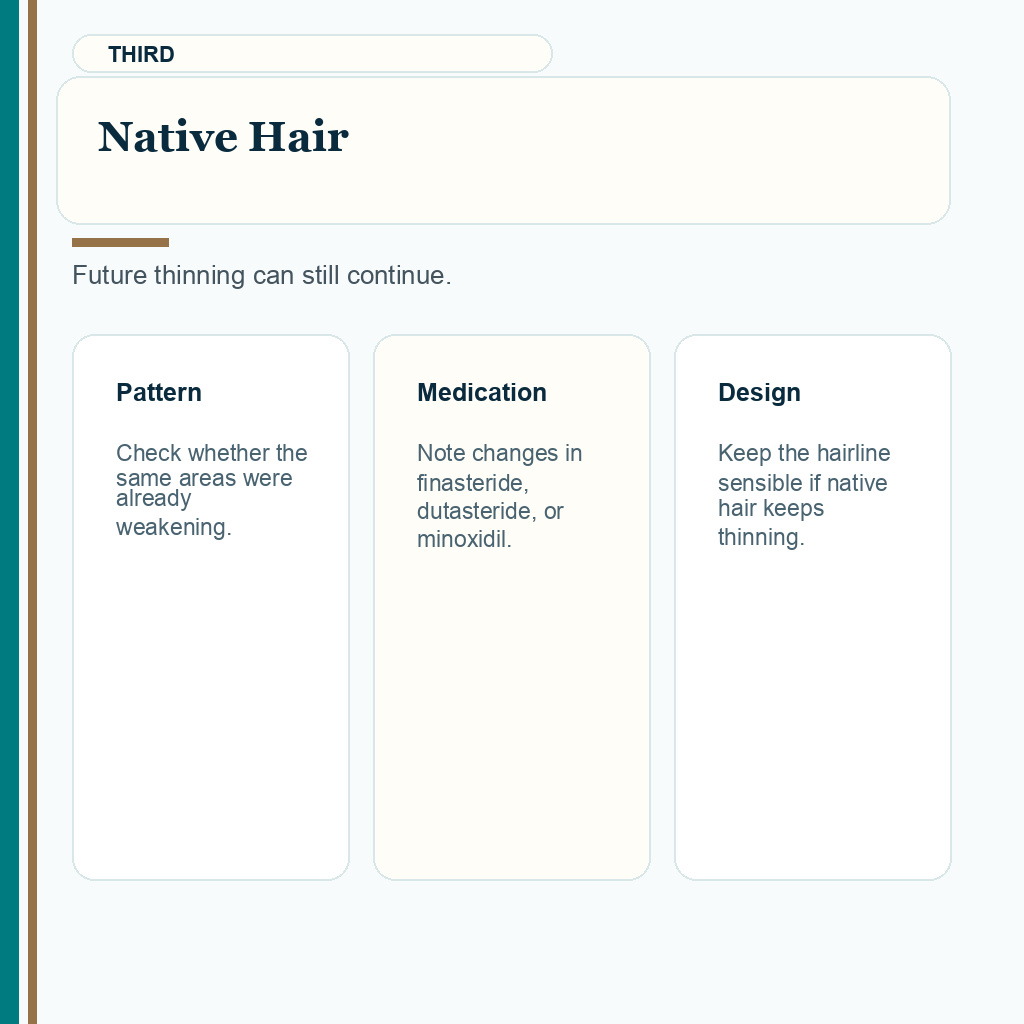
Check the native hair pattern
If hair keeps thinning, the review starts with pattern, photos, medication changes, and miniaturization, not the gym label alone.
Separate hormones from ordinary lifting
Prescribed testosterone, steroid cycles, prohormones, and hormone boosters create a different planning conversation from normal training.
Native hair stability decides more than the gym label
A transplant moves follicles from the donor area. It does not freeze every native hair around them. For that reason, native hair can keep thinning after surgery even when transplanted hair grows well.
If a patient trains, the hairline still has to make sense if future thinning continues. I look at donor strength, crown risk, mid scalp density, age, family history, medication tolerance, and whether the patient wants a very low hairline while the pattern is still moving.
Good planning does not punish training. It protects the donor area from a plan that only works if nothing changes later. The gym is part of the lifestyle discussion. Native hair stability is part of the surgical design.
If shedding appears after gym return
If shedding appears after you return to training, do not decide the cause from memory alone. Compare photos taken in the same light, at the same distance, with the scalp dry. Note the location. Crown thinning, hairline miniaturization, diffuse shedding, and shedding around transplanted or native hair do not all mean the same thing.
Timing matters too. Some shedding after surgery may be native shock loss or part of the post-op course, while later thinning can reflect ongoing male pattern loss. Medication starts, stops, dosage changes, stress, weight change, illness, sleep loss, and hormone products all belong in the same review.
If the scalp is red, painful, bleeding, swollen, crusted in an unusual way, or irritated after exercise, treat that as a recovery question and contact the clinic. If the scalp looks calm but hair density changes over months, treat it as a native hair and planning question.
Training goals should not hide ongoing hair loss
Weight training can stay part of life, but it should not become the simple explanation for every change in the mirror. Native hair miniaturization, recovery behavior, supplement use, hormone exposure, and a hairline set too low for future loss all need to be considered separately.
Bring the whole picture to the consultation. Explain how you train, what you take, what changed, and whether you use hair loss medication. Do not stop prescribed testosterone or treatment on your own just to test a theory. The training plan is to make the surgical plan fit the medical facts, then return to training in stages once the scalp is ready.

Read this review excerpt
Every single one of my questions was answered and they made sure I had all the details I needed to make an informed decision.