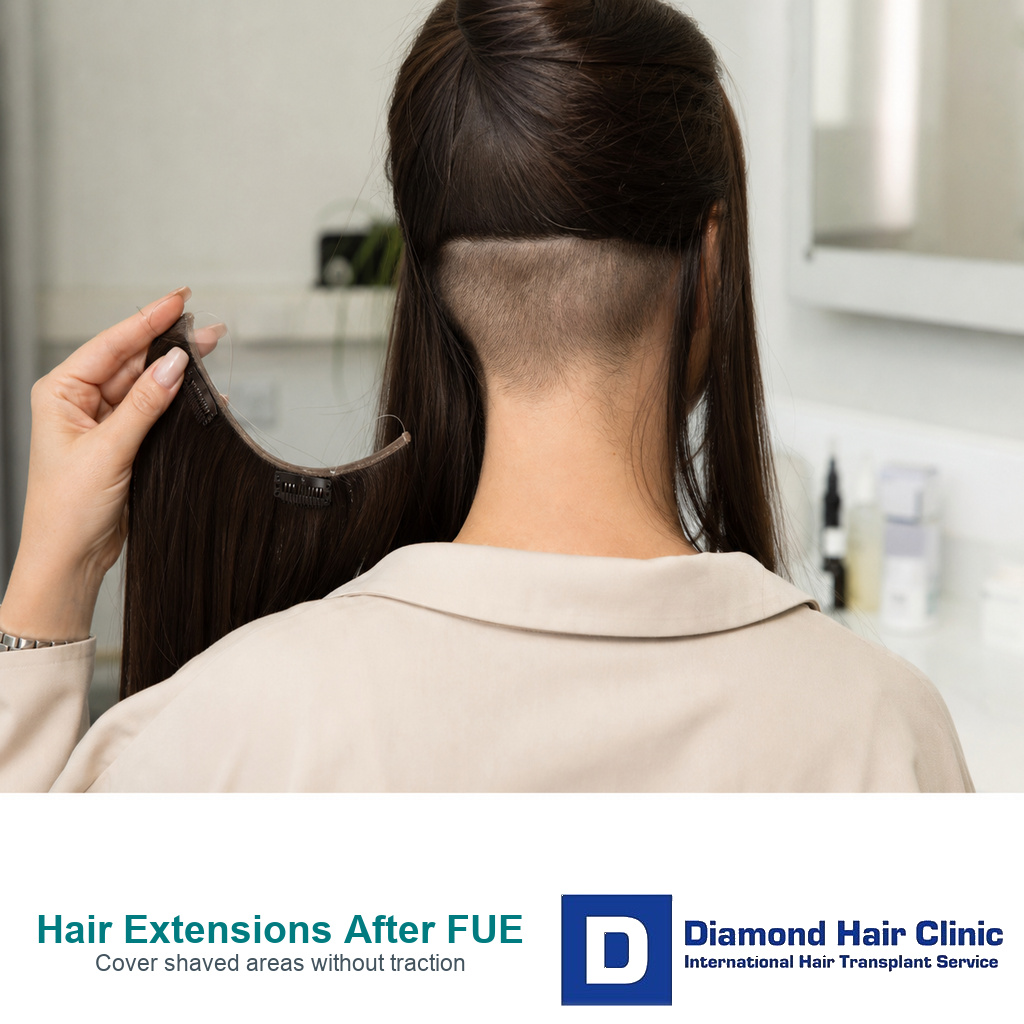
Hair Extensions, Donor Shaving, and FUE Recovery
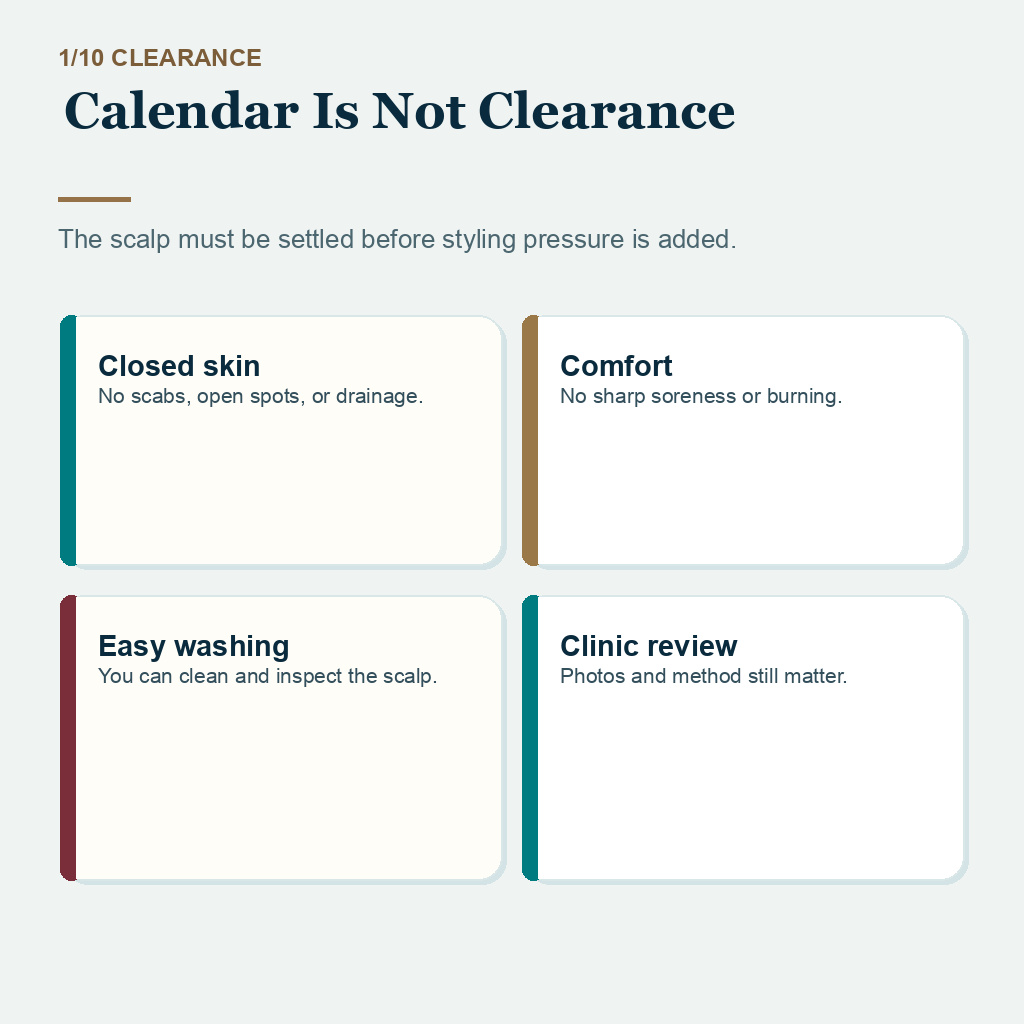
Hair extensions after FUE are not decided by the calendar alone. I first want the scalp closed, comfortable, easy to wash, and free of active irritation. Then I look at where the extension attaches, how much it pulls, how long it stays in place, and how it will be removed.
A light removable halo or carefully placed temporary clip later in recovery is very different from tape ins, glue, beads, keratin bonds, sewn tracks, tight braids, or any style that stays under tension for weeks. With a removable option, you can stop immediately if the scalp reacts. With a fixed or tension method, pulling, trapped sweat, and difficult washing can continue before you notice the problem.
Choose the option that comes off easily when you test it later. If removal needs pulling, solvent, heat, or tight sectioning, it is not a gentle cover.
The visible shaved donor area can be the hardest part to explain at work or socially, especially after a female hair transplant, temple work, or a smaller unshaven looking FUE session that still required trimming in the back. I understand the wish to cover it, especially when the operation was small but the donor trimming feels obvious. Covering the shave is reasonable only if the coverage does not pull on weak native hair or a healing extraction zone. Otherwise the cosmetic solution creates the next problem.
Extensions need caution after FUE
FUE creates thousands of small extraction wounds in the donor area and tiny openings in the recipient area where the grafts are placed. Even when the operation is clean and the early healing looks good, the scalp is still recovering. There may be tenderness, numbness, itching, redness, small bumps, or short hairs growing unevenly through the first months.
Extensions add stress in different ways. Weight can pull on native hair. Attachment points can concentrate tension. Clips or combs can rub the donor area. Glue, tape, beads, sewn tracks, keratin bonds, and tight braiding can trap sweat or make washing harder. Removal matters too. Pulling apart tape, opening beads, dissolving adhesive, or unbraiding tight rows can tug on short hairs and healing skin. These are not the same as a loose scarf or a soft hat that has been cleared by the clinic. Patients comparing salon options should also separate extension traction from keratin and perm timing after FUE.
The transplanted grafts become much safer after the early days, but the surrounding scalp and native hair still matter. You can protect the grafts and still damage fragile native hair with tension. I treat extensions as a recovery decision first and a beauty appointment second.
First weeks are too early for extensions
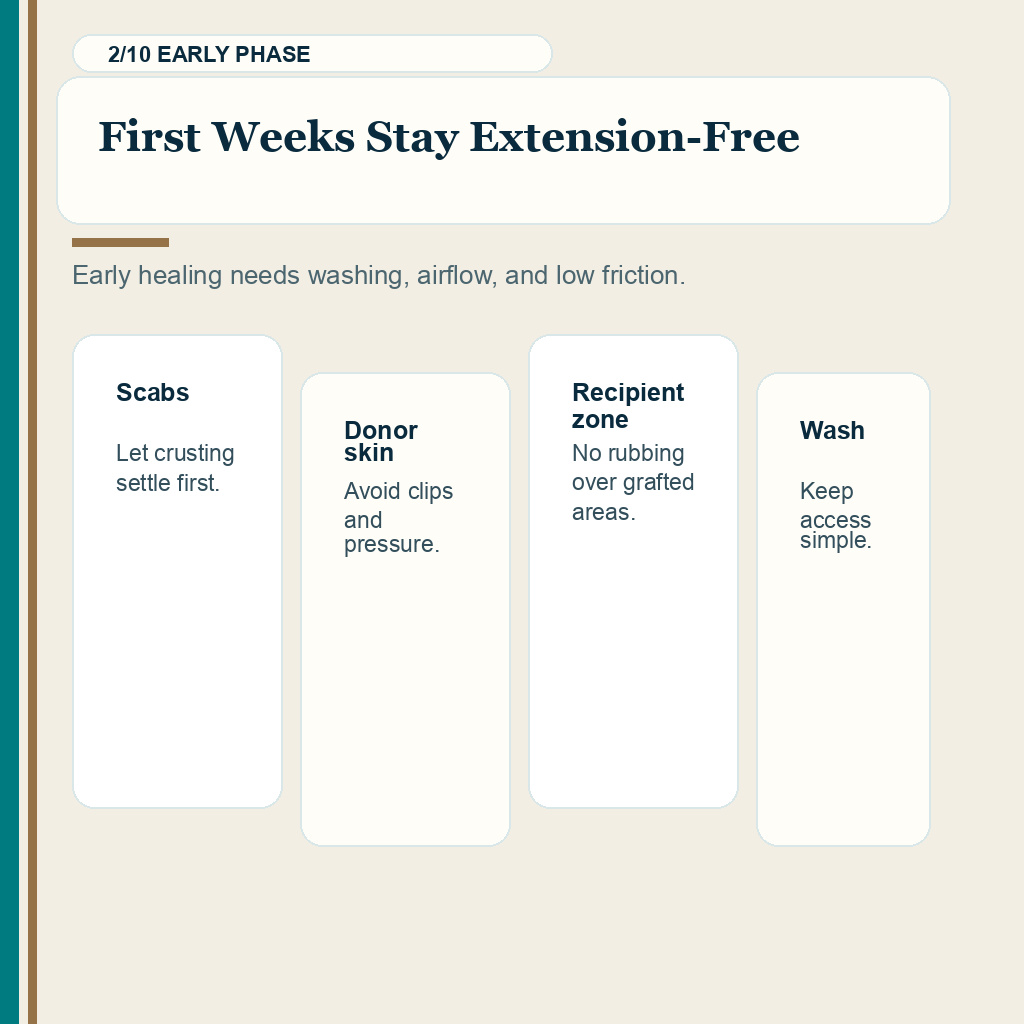
During the early healing period, avoid extensions. The recipient area needs gentle washing, clean airflow, and protection from friction. Donor skin needs to close and settle without clips, adhesive, braiding, tight sectioning, or repeated pressure. If you still have scabs, crusting, open spots, oozing, active pimples, strong redness, or pain, extensions are too early.
This is also the time when you are learning how to wash correctly. A complicated extension system can make washing too cautious in some areas and too rough in others. If washing still feels uncertain, settle washing hair normally after hair transplant before adding anything that changes access to the scalp.
No extension should be placed on a scalp that is still tender, scabbed, infected looking, or difficult to clean. When the patient needs to hide the operation in the first days, safer planning means time off, loose styling, a soft approved covering, or choosing a surgical approach that reduces visible shaving when that is realistic.
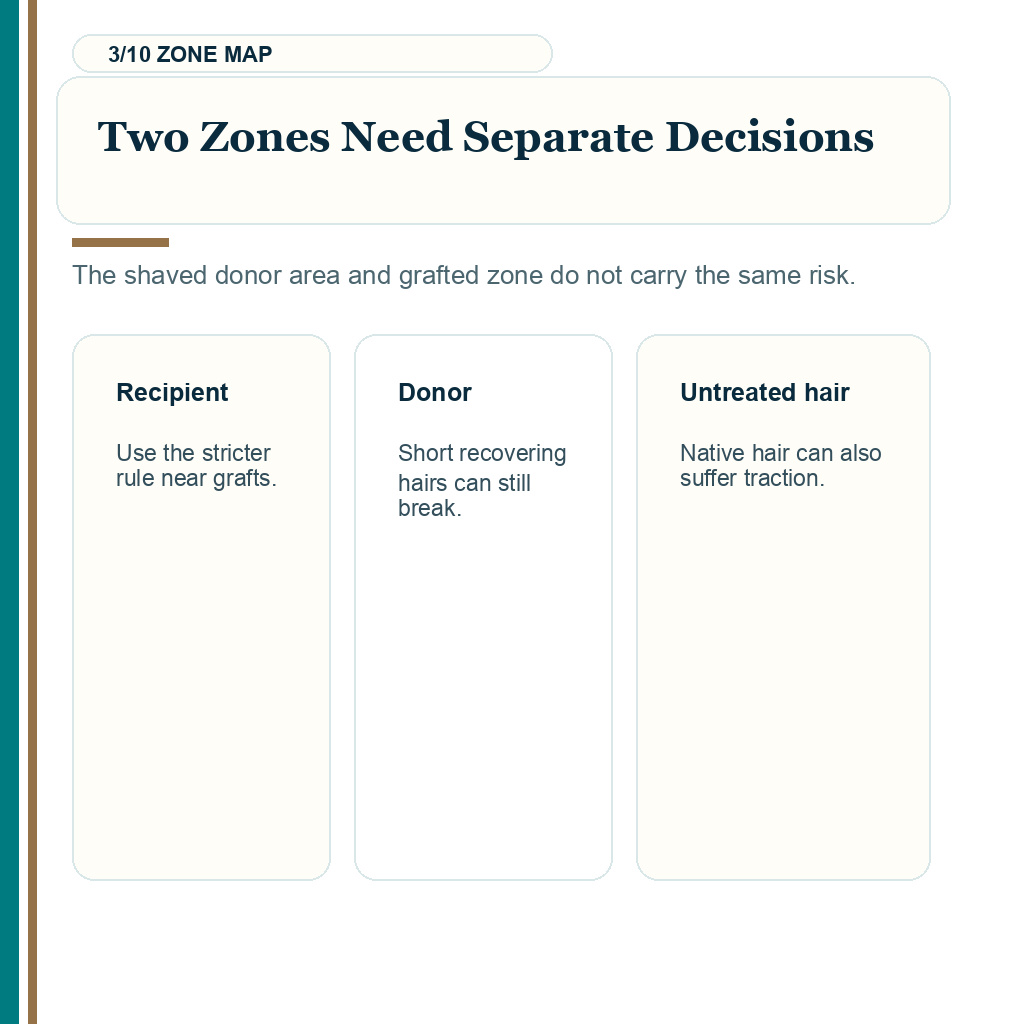
Recipient and donor areas need separate decisions
The donor only version is a different decision from attaching extensions near the new hairline, temples, crown, or implanted zone. The recipient area deserves the stricter rule because the skin has been opened for placement and the grafts are the whole purpose of the surgery.
The donor area may look less dramatic, but it is not untouched skin. The extraction zone can remain sensitive for weeks. Temporary donor thinning, patchiness, or short trimmed hair can make the back of the head more visible. If an extension grips the same recovering hairs, it can cause breakage, soreness, or a traction pattern that makes the donor area look worse.
This matters especially for women, fine hair, and patients who had FUE to the temples or hairline for shape rather than large bald coverage. A small transplant can still create a cosmetic donor shave problem. Pulling the surrounding hair harder is not the solution. Choose coverage that respects healing.
Light removable options are safer than fixed extensions
Once the scalp has healed and I have reviewed the area, the safer category is light, removable, and low tension. A halo style piece or carefully placed temporary clip in may be easier to remove, clean around, and stop using if irritation begins. Before I would consider it, I ask whether it can come off without force, whether the scalp can still be washed and inspected, whether it avoids the donor and recipient zones, and whether it causes any pulling pain after the first hour of wear. Even then, it should not sit directly on sore donor skin or pull at the front hairline.
Tape ins, glued systems, sewn tracks, beads, keratin bonds, and tight braid based extensions require more caution because they stay in place, add continuous pull, and make inspection harder. Adhesive, remover fluid, trapped sweat, and matted hair can also irritate skin that was otherwise healing well. If an extension appointment involves strong traction during installation, tight sectioning, heat, glue, adhesive remover, or removal that cannot be done gently away from the treated zones, I delay it until recovery is clearly stable and the treated areas are no longer part of the styling field.
Tell the stylist exactly where the donor and recipient areas are before any clips, tape, beads, or sewing are placed. A style that feels loose in the chair can still pull when you sleep, wash, or tie the hair back.
I check weaves, wigs or hair systems with clips or adhesive, tight ponytails, and high tension styling. They may seem separate from the transplant, but the hairline and donor zone still carry the load. A style that hurts is not protective. Pain is a sign that the attachment is too tight or the scalp is not ready.

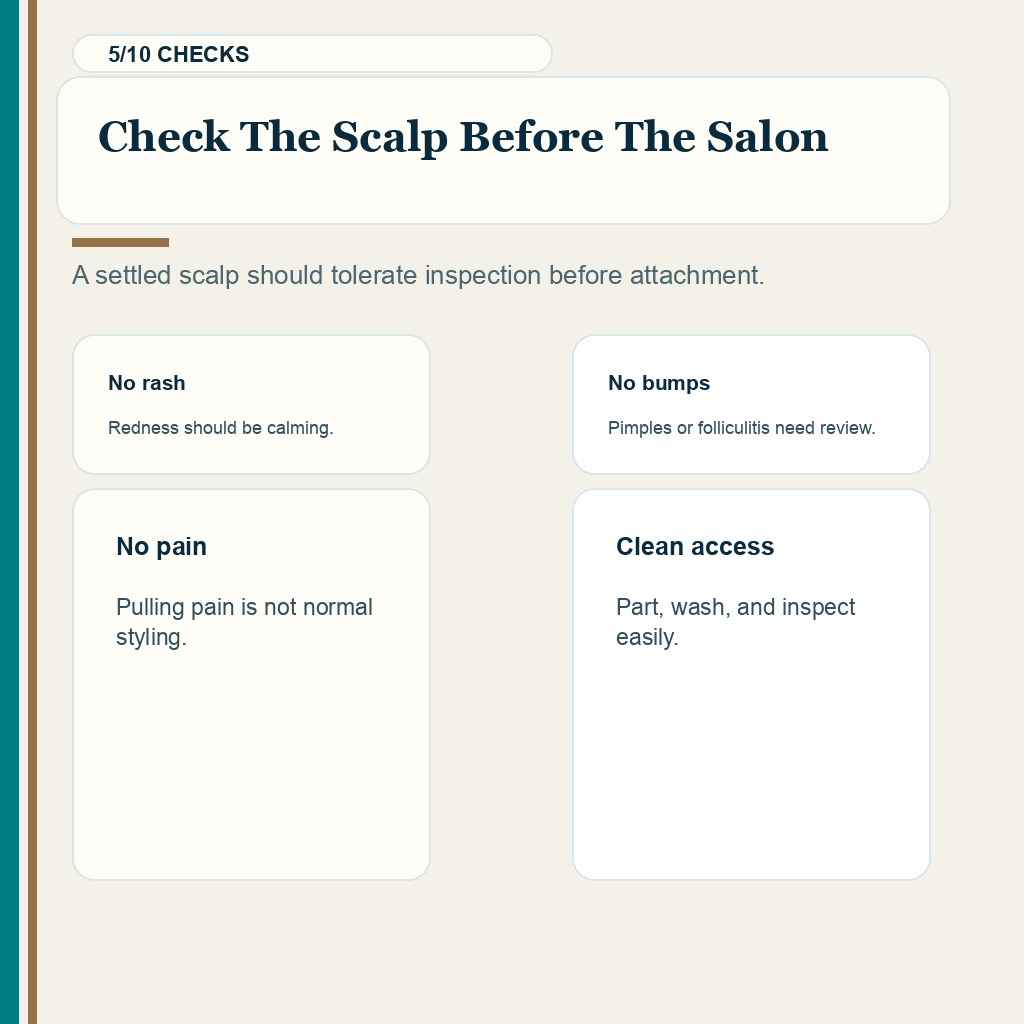
A scalp check should come before clips, adhesive, or tight styling after FUE.
Checks before clearing extensions
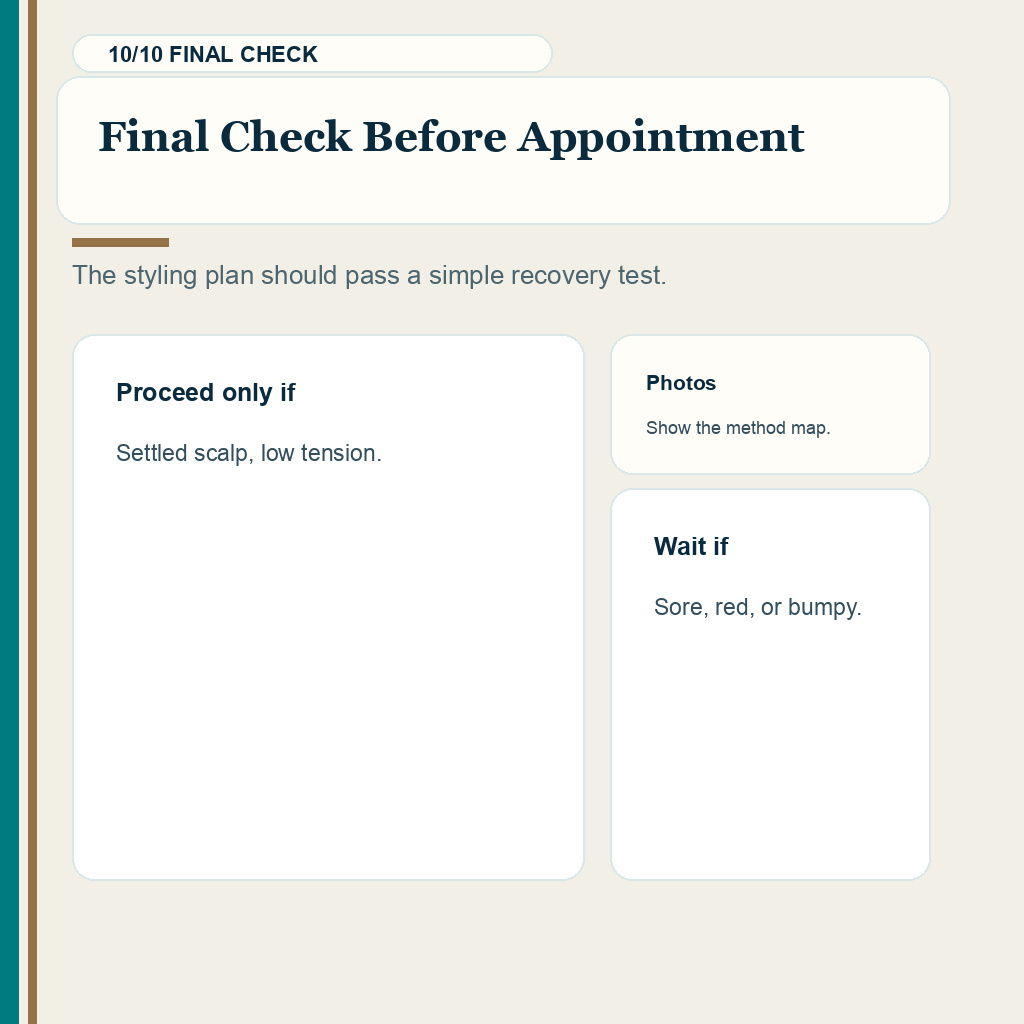
I do not clear extensions by calendar alone. Healing varies. Before clearing them, I want to see a settled scalp, no open healing areas, no active folliculitis, no drainage, no painful donor points, and washing that is already easy. You need to be able to part the hair, inspect the scalp, wash the area, and move the surrounding hair without burning, sharp soreness, or strong itching.
The recipient area should also be past the delicate stage. If there is a new rash, heavy flaking, persistent redness, or small pustules, the priority is diagnosis and treatment, not styling. Tender bumps, crusting, or redness that does not settle can point toward folliculitis and hair transplant surgery or the warning pattern behind redness, scabs, or pimples after hair transplant, so I would review the scalp before any styling is added.
The scalp should be quiet before it carries weight. If the skin is still reacting, extensions can hide the warning signs and make the reaction worse. Clear photos help before you resume anything that attaches to hair or scalp.
Covering a shaved donor area without traction
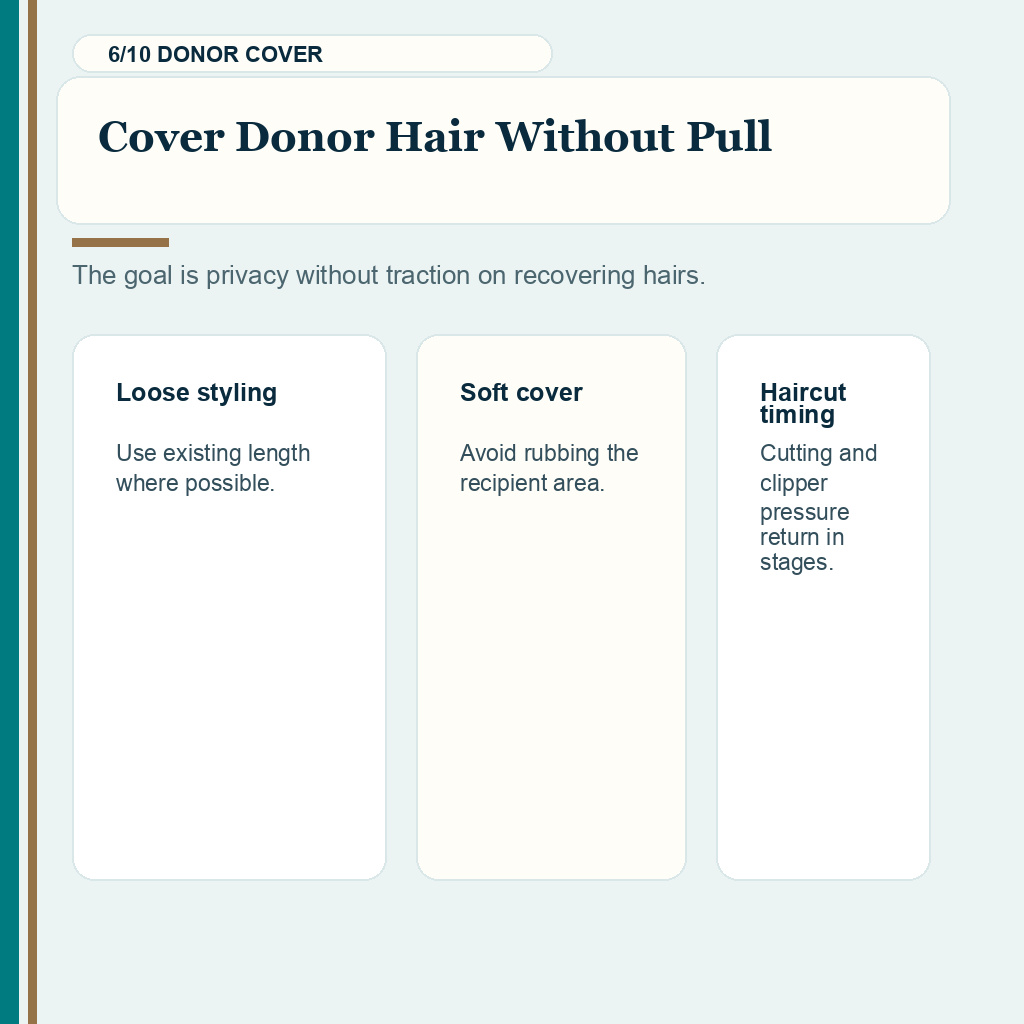
For many female patients, the real concern is not the grafted area. It is the strip or patch of short hair in the donor region. Discuss this before surgery whenever possible. If donor visibility is a major concern, surgical planning may consider trimming patterns, hairstyle length, and whether a no shave hair transplant is technically suitable. No shave methods have limits, but bring privacy into the consultation instead of treating it as an afterthought.
If the donor area is already shaved, the safest early approach is usually to work with existing hair length, loose styling, and soft coverings that do not rub the recipient area. Some patients can use strategic haircut shaping once the donor area is ready. The timing for haircut after hair transplant matters because clippers, scissors, and styling pressure return in stages.
Extensions can sometimes help later, but they should not be used to pull longer hair over the donor area with strong tension. If the attachment has to sit exactly where the extraction zone is sore or thin, that plan is working against recovery.
Traction alopecia matters after a transplant
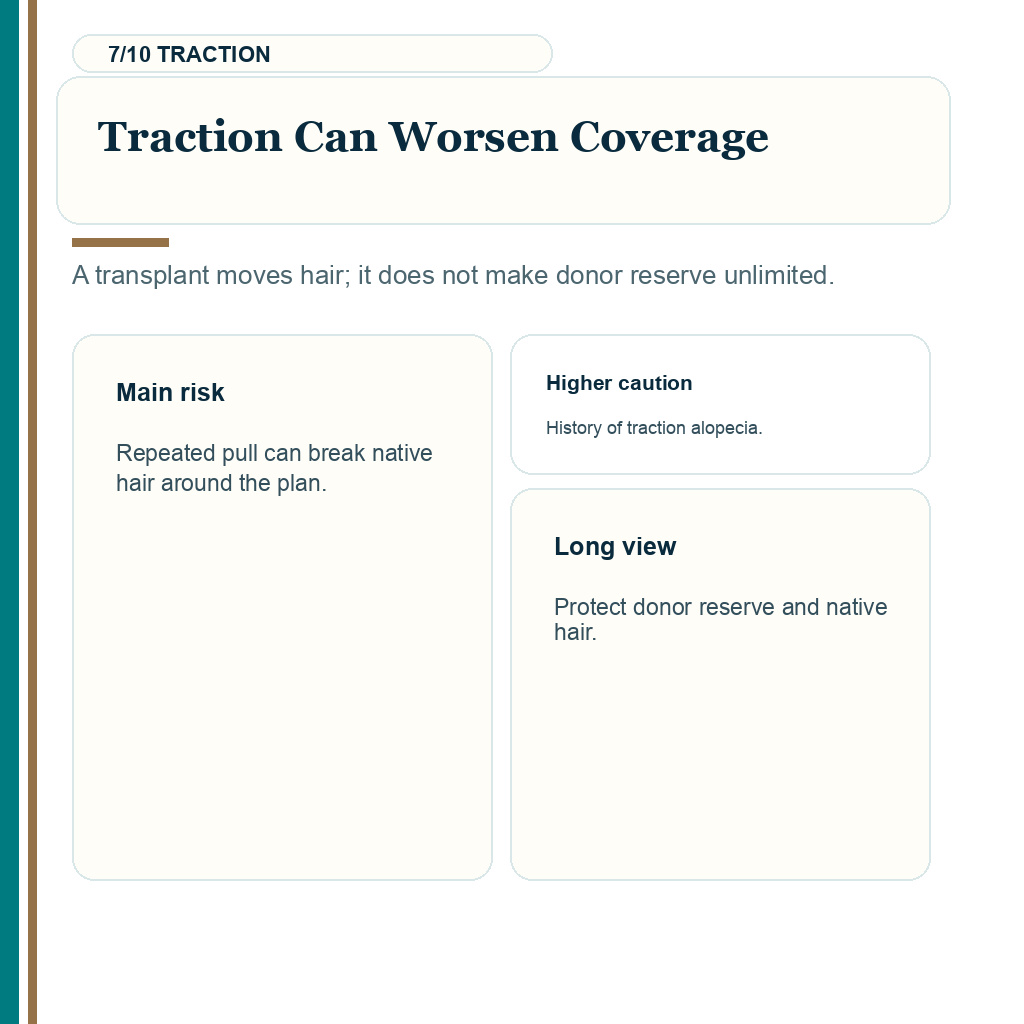
Traction alopecia is hair loss caused by repeated pulling on hair follicles. Extensions, tight braids, weaves, high ponytails, and adhesive systems can contribute when the tension is strong or repeated. This matters after FUE because donor reserve is limited and native hair around the plan may already be fragile.
A hair transplant moves hair. It does not make the donor area unlimited. If extensions create breakage or traction loss in the surrounding native hair, the result may look thinner even if the grafts are growing. This is especially important with a history of traction alopecia, diffuse thinning, or female pattern hair loss, where female hair transplant candidacy depends on diagnosis and stabilization before cosmetic cover up.
Do not trade short term coverage for long term thinning. A good cosmetic solution should protect the surgical plan, not compete with it.
Warning signs after adding extensions
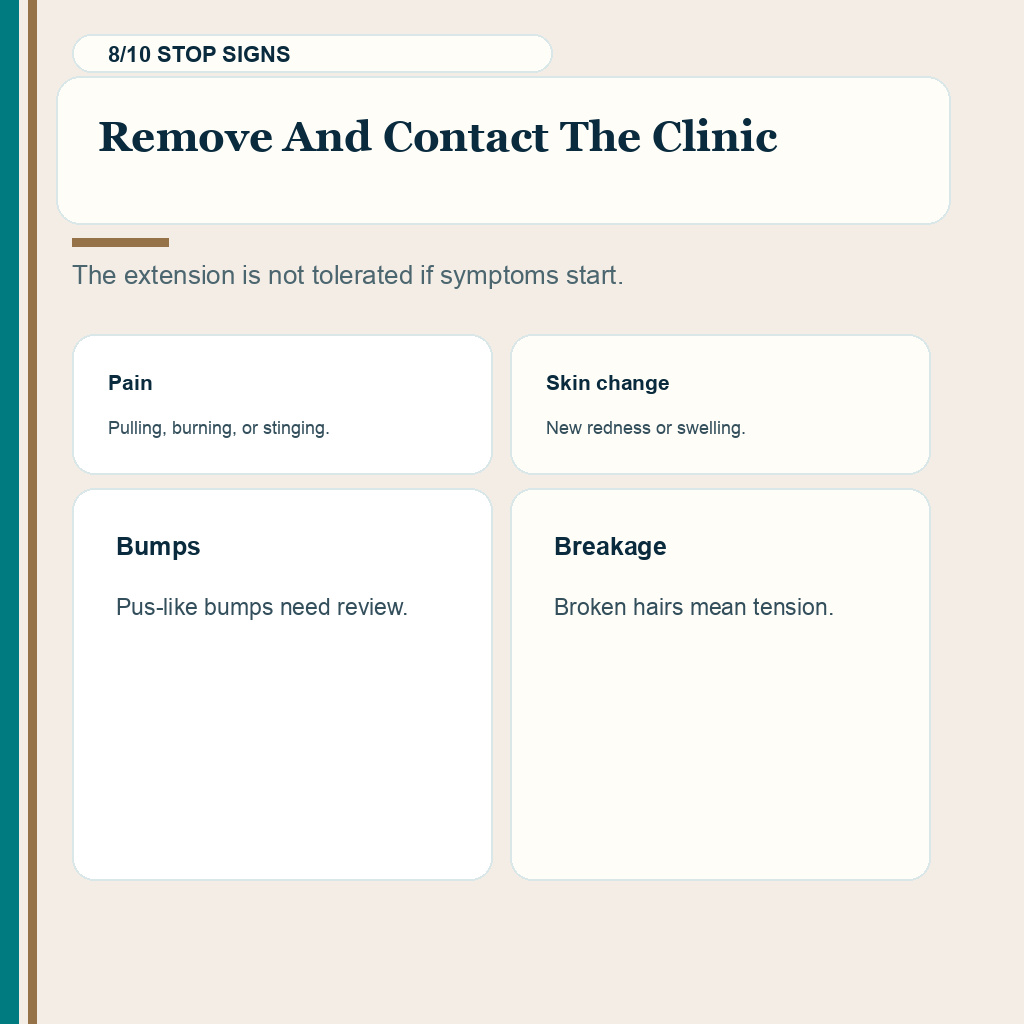
If you add extensions later in recovery, watch the scalp closely. Remove them and contact your clinic if you feel persistent pulling pain, stinging, burning, new swelling, new crusting, bleeding, pus like bumps, worsening redness, or a line of broken hairs around the attachment points. These signs mean the style is not being tolerated.
Do not wait for the next salon appointment if the scalp is painful. A tight style can damage hair before the patient accepts that it is a problem. The same applies to wigs with combs or clips that dig into the donor area. If the device must be forced to stay secure, it is probably too aggressive for a healing transplant scalp.
Photographs help. Send well lit photos of the donor area, the attachment points, and the recipient area. If there is bleeding, pus like bumps, spreading redness, fever, or worsening pain, treat infected hair transplant warning signs as urgent and ask for review.
Stylist instructions before the appointment
Your stylist needs exact surgical information, including where the grafts were placed, where donor hair was taken, and which areas are still sensitive. They should not treat the scalp as a normal styling canvas. Ask for the lightest practical option, minimal tension, no attachment directly on sore donor skin, no backcombing or tight sectioning over the treated zones, and easy removal if the scalp reacts. The attachment map should leave the donor and recipient zones easy to inspect rather than hiding them under rows, tracks, or adhesive. Plan removal before anything is attached.

A stylist should know the FUE zones before adding clip, tape, bead, glue, or tension.
Do not let the appointment become a test of pain tolerance. If the stylist says tightness is necessary for the style to last, that style is not appropriate yet. A scalp after transplant should not be pulled into a cosmetic result that depends on force.
If privacy is the reason for rushing extensions, plan around keeping a hair transplant secret before surgery whenever possible. Privacy planning is better when the haircut, work schedule, travel plans, and recovery window are considered together.
Extensions before a planned hair transplant can affect assessment
Extensions before surgery matter too. If you have tape, glue, beads, sewn tracks, or tight braids near the donor or recipient area, the clinic may not be able to examine the scalp properly. Extensions can hide miniaturization, traction damage, seborrheic dermatitis, folliculitis, or scars. They can also make surgical trimming and cleaning harder. Remove attached systems early enough for glue residue, remover irritation, or traction soreness to settle before the final surgical assessment.
Before a consultation, the scalp needs to be visible enough for proper planning. Before surgery, tell the clinic about any attached system that blocks donor assessment or recipient design. If the hair loss pattern is being disguised, graft planning becomes less reliable, just as it does when hair transplant planning from photos alone misses tension or covered scalp areas.
A history of traction damage has to be stated clearly during planning. If extensions caused the hairline problem, surgery alone may not solve it unless the damaging style stops. Transplanting into an area that will be pulled again is poor planning. The grafts may be placed well, but the native hairs around them can still break or thin if the same attachment pattern returns.
Typical extension timeline after FUE
There is no universal week that makes every extension method safe. In the first weeks, avoid extensions and focus on healing, washing, swelling control, and infection prevention. After the scalp is closed, comfortable, and easy to clean, very light removable cosmetic options may be discussed. Fixed extensions, tight braids, adhesive systems, and anything with constant pull should wait longer and should be cleared only after the donor and recipient areas look stable.
By the time visible growth begins, you may have more styling options, but that does not mean every extension method is wise. If the transplanted hair is short, fragile looking, or uneven, adding weight to make it look fuller can backfire. In those months, gentle styling, careful haircuts, and realistic expectations about the growth calendar are often better. When the main worry is uneven short hair, I use tracking hair transplant growth to separate normal timing from a real concern.
The safest extension is the one you can remove immediately without pain, residue, or pulling. If removal requires force, solvent near irritated skin, or tugging on new growth, it is not a recovery friendly option. Before booking, know who will remove it, how quickly it can be removed if the scalp reacts, and whether removal leaves residue near grafted or donor skin.

Wait for settled skin, then choose the lowest tension coverage possible.
Use the 10 extension safety slides below to separate timing, donor coverage, recipient zone protection, traction, warning signs, stylist instructions, and final review into one decision at a time. Swipe the carousel, use the arrows for one slide at a time, or choose a number below the image to jump to that point.