


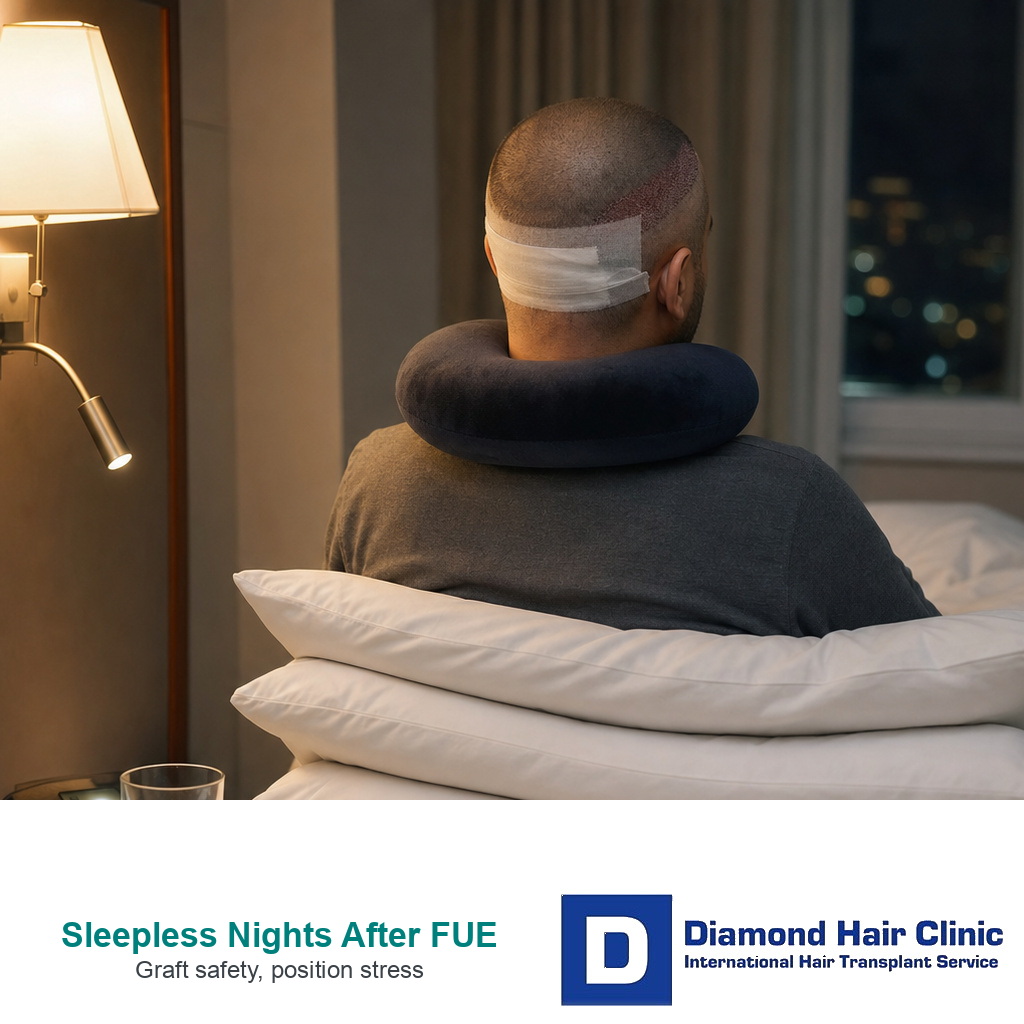
Sleepless Nights Rarely Ruin Graft Growth
A nearly sleepless night after FUE can feel alarming, but the hour count alone does not tell me whether recovery is in trouble. One or two rough nights do not usually ruin graft growth by themselves. If overnight duties are the reason, use night shift work after a hair transplant to plan rest before and after the shift rather than treating it as ordinary insomnia.
What happened while you were awake matters more. The recipient area should remain free from rubbing and pressure, tablets and alcohol should not add risk, and by morning you must still be able to stand, walk, wash, and follow instructions safely. I am looking for protected grafts and a patient who can move and think safely, not a perfect sleep score.
Poor sleep becomes a clinic issue when it is linked with uncontrolled pain, fainting, fever, repeated vomiting, severe anxiety, new bleeding, or the temptation to mix sleep aids with alcohol, painkillers, sedatives, or cannabis.
Bad sleep often comes from the setup as much as anxiety. A stack of pillows can slide, a neck pillow can push the head forward, and donor pressure can keep waking you up. Adjust the bed before you are exhausted so sleep protection does not become another source of irritation. A painful setup can lead to sudden movement instead of safer rest.
A tired night and a dangerous night are not the same. You may be awake yet safely positioned. Rubbing the grafts, falling, unsafe medication, dehydration, or warning symptoms move the night into a different category.
Read the morning, not the sleep score
The first few nights are rarely smooth. The scalp can feel tight, the donor area can press into the pillow, and you may be afraid to turn. That does not mean the recovery has failed.
By morning, I want to know about head position, pillow contact, fresh bleeding, every medicine taken, and any dizziness or confusion on standing. Those details tell me more than the number of hours on the clock.
Position and timing still follow the usual sleep after a hair transplant guidance. Sleeping badly despite following it does not by itself mean the grafts were harmed.
The frustrating middle ground is a correct position, protected grafts, and sleep that still refuses to come.
Check the next morning as well. If poor sleep leaves you dizzy, confused, or too tired to wash carefully, tell the clinic before forcing the routine on your own.
Protecting grafts when sleep is poor
Early graft protection does not depend on a flawless night. It depends on leaving the recipient sites undisturbed while the skin starts to heal. Position, gentle movement, and time do that work.
You can be tired and still protect the grafts. Keep the head elevated when instructed, avoid direct rubbing, keep hands away from the recipient area, and move slowly when getting out of bed. Awake protected rest is different from sleeping deeply in a risky position.
The graft security timeline matters because the first days deserve more protection than later days. If you wake up and think the grafts touched the pillow, do not scrape, wipe, or dig through the area.
Look once for fresh bleeding, a clear trauma point, or visible tissue attached to a hair. If you are uncertain, take one photo for clinic review instead of turning the check into repeated touching.
Neck pillow pain can change the setup
A neck pillow should guide the head, not create a new pain problem. If it forces the head too far forward, presses the donor area, or causes neck spasm, the setup needs adjustment.
Before the first night, test the pillow setup while you are fully awake. If a towel roll or travel pillow protects the grafts but makes the donor area throb, adjust the support before exhaustion makes you move suddenly.
That does not mean throwing the pillow away on the first night. It means changing the support so the shoulders, neck, and head share the pressure better.
A wedge pillow, stacked pillows, or a recliner can sometimes work better than a tight travel pillow. The support should spread pressure through the shoulders, neck, and back of the head instead of forcing one painful point under the donor area.
The decision about when to stop using a neck pillow is separate from adjusting a painful setup on the first night. The support still needs to protect the grafts, but it should not create enough pain to provoke sudden movement.
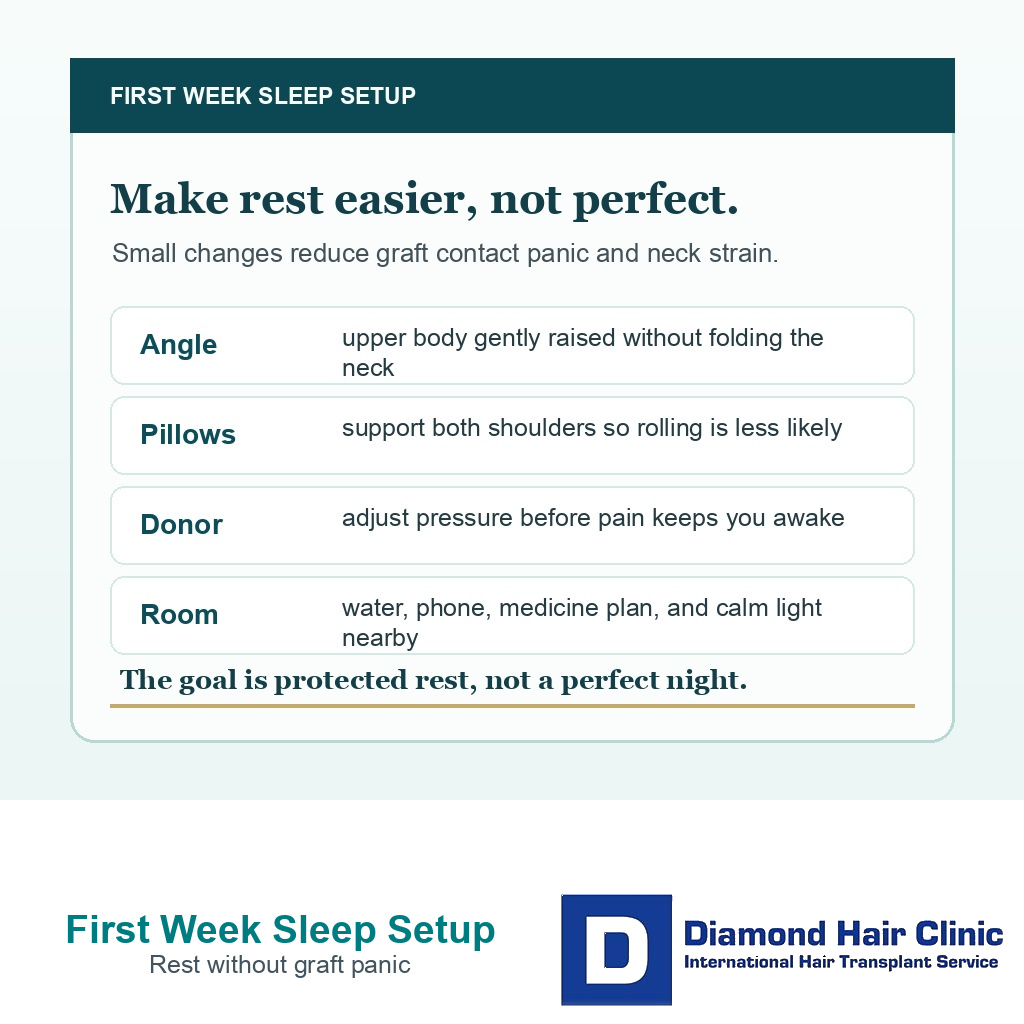
A practical sleep setup can protect the grafts without making the first week harder than necessary.
Exhaustion creates the avoidable mistakes
A rough night does not usually stop graft growth. Fear that every lost hour has killed the grafts is often larger than the medical risk.
The practical danger begins when exhaustion changes behaviour. Standing too quickly, forgetting medicine instructions, scratching without thinking, taking extra tablets, drinking alcohol to sleep, or checking the scalp in panic can all turn fatigue into an avoidable problem.
You can stay awake and still rest safely. Keep the room dim, sip water, sit for a moment before standing, move slowly to the bathroom, and leave the mirror alone unless something has actually changed.
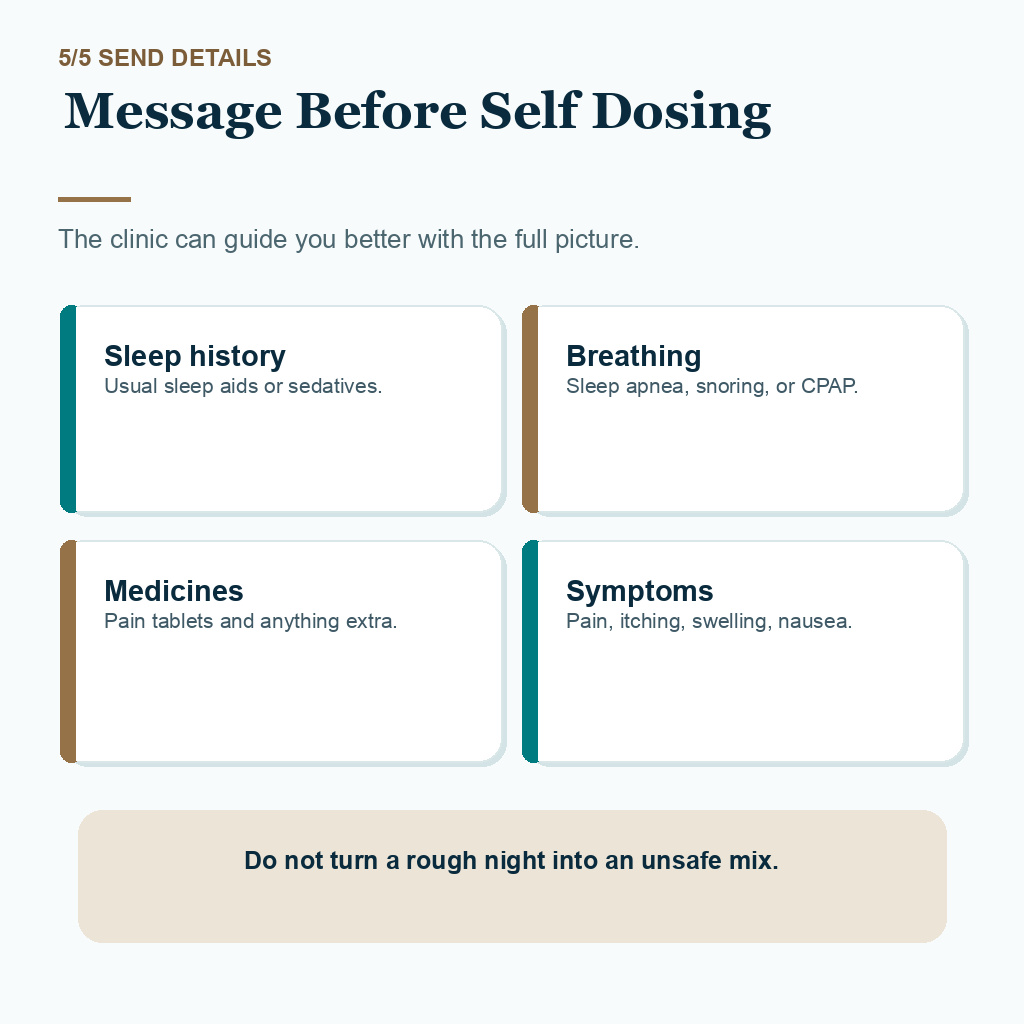
Message the clinic once when there is a real change. Include what happened, every medicine taken, whether the scalp touched the pillow, and whether bleeding, pain, fever, or swelling appeared.
Do not improvise with sleep aids in the hotel room
A sleep aid may sound harmless when you are desperate, but the context matters. Melatonin is not the same as a prescription sedative. An antihistamine sleep tablet is not the same as a benzodiazepine. A familiar, previously tolerated medicine that has been reviewed is different from a new or borrowed hotel room tablet after pain medicine, alcohol, or cannabis.
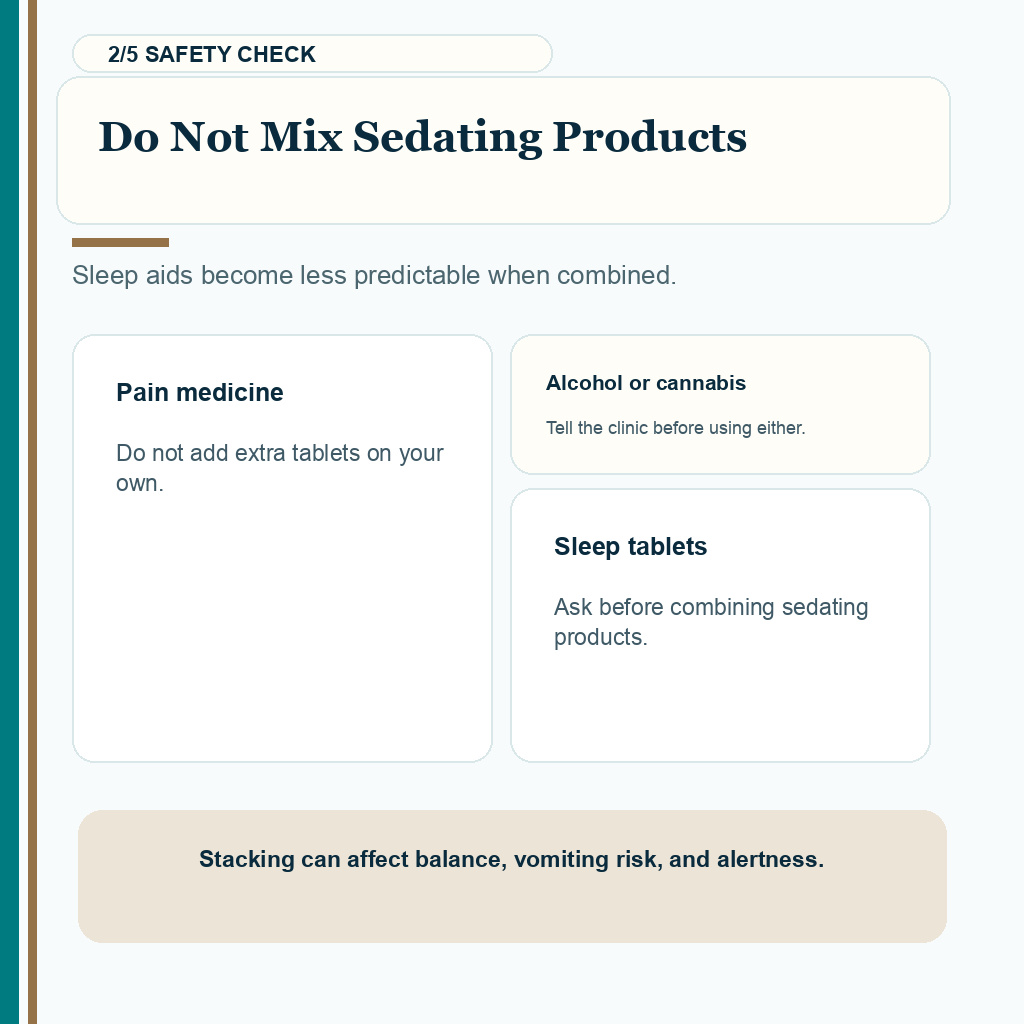
A pill taken with a painkiller, opioid pain medicine, alcohol, cannabis, or another sedating medicine can create more risk than the sleeplessness itself because balance, breathing, vomiting risk, and judgment all matter during the first nights.
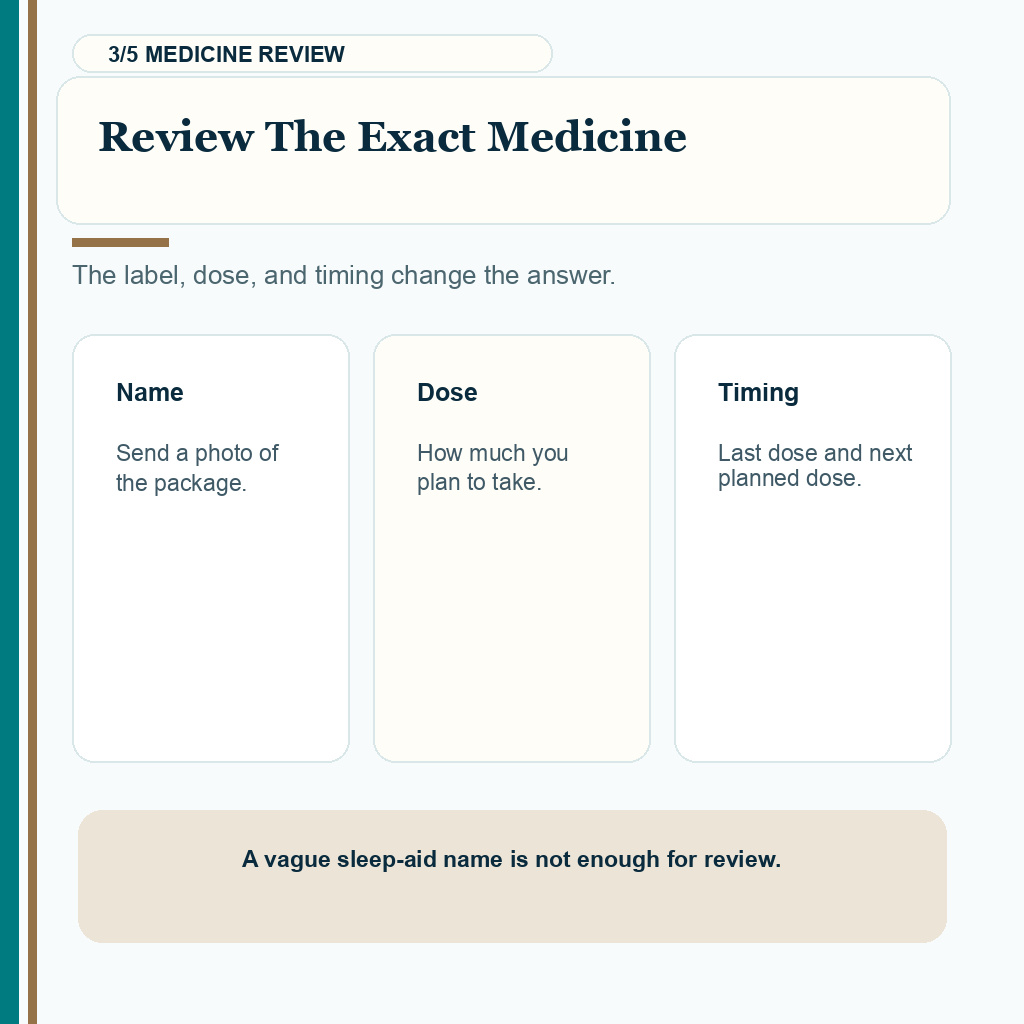
Sleeping pills after a hair transplant need a medication review before use. Share the tablet name, dose, what you already took, alcohol or cannabis use, and whether you will be alone overnight.
Strong sedatives are not a way to manage sleep after FUE on your own. Borrowed tablets and repeat dosing create avoidable risk, especially when the first tablet has not worked quickly.
If you already took Xanax, Valium, or a similar medicine before arriving for surgery, I need that history before any procedure decision. Questions about Xanax and Valium before hair transplant go beyond sleep. Breathing, blood pressure, judgment, consent, and safe travel back to the hotel all matter.
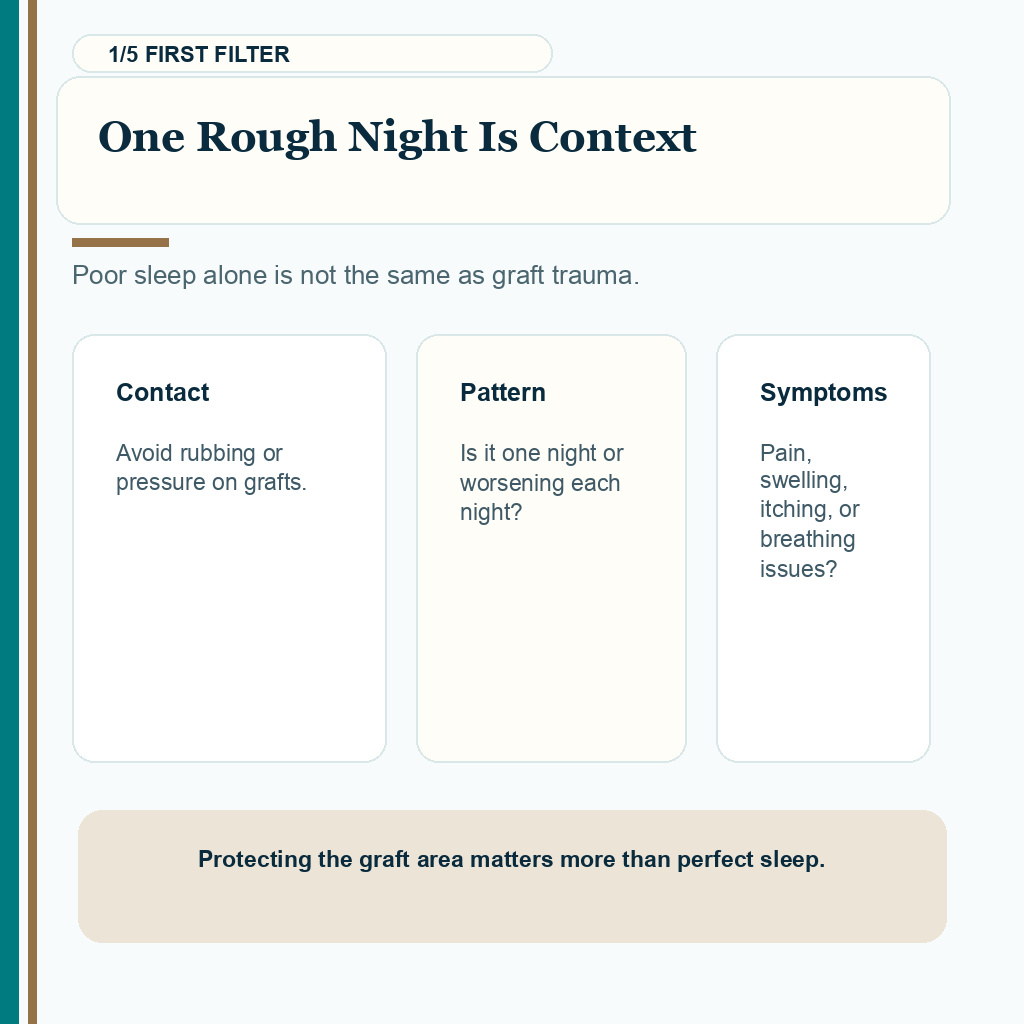

Find the symptom that is keeping you awake
Sleeplessness often points to another problem. Donor tenderness, tightness, forehead swelling, itching, or headache can keep restarting the night. Relief may come from better pain control, a pillow adjustment, water, food, or clinical review of a symptom that has changed, rather than a stronger sleep tablet.
Name the trigger before trying to sedate it. Painkillers after a hair transplant can affect stomach tolerance and drowsiness. Itching raises the chance of scratching, while swelling changes how the pillow and forehead pressure should be handled.
A late sleep schedule usually matters less than safety
Some patients work at night, travel across time zones, or simply cannot fall asleep until late. I do not judge recovery only by the clock. Someone sleeping from 3 a.m. to 10 a.m. may still rest better than someone lying awake from midnight to morning while checking the grafts repeatedly. The body needs rest, fluids, food, and safe movement more than a ceremonial bedtime.
The caution is practical. If late nights lead to missed meals, missed medicine instructions, alcohol, smoking, extra caffeine, or rushed washing, then the schedule is no longer a harmless preference. When the issue started after a long flight, jet lag and long flights before hair transplant can explain why the recovery feels harder than expected.
Sleep apnea, snoring, and CPAP can change the plan
Sleep difficulty is different when there is sleep apnea, heavy snoring, obesity, sedative use, alcohol use, or a history of breathing problems during sleep. In those situations, adding a sleep aid without review can be risky.
A pill that makes one person slightly drowsy can make another person less safe overnight. Breathing safety comes before a perfect pillow position.
If you use CPAP, sleep apnea and CPAP during hair transplant recovery need planning around strap position, sleeping angle, and mask comfort so the recipient and donor areas are protected. Do not trade breathing safety for graft protection by stopping CPAP casually unless the doctor managing your breathing has clearly advised it.
If a clinic is suggesting deep sleep or heavy sedation to solve anxiety, routine sedation during hair transplant deserves caution before accepting that plan.

Sleep aid decisions are safer when I know the full medicine and breathing risk context.
Alcohol, cannabis, or extra tablets can make sleep unsafe
Some patients try to solve a sleepless hotel night with alcohol, cannabis, an edible, a friend’s pill, or an extra painkiller. That is where I become more cautious.
The scalp may be the reason for anxiety, but overall safety is the priority. Sedation, poor balance, vomiting, confusion, or breathing issues can create more danger than one bad night of sleep.
For cannabis, the route and timing matter. Smoking, vaping, edibles, oils, and drinks do not create the same recovery picture, and they can interact with judgment, anxiety, heart rate, and sleep. For cannabis use around hair transplant surgery, tell the clinic how it was taken and when it was used.
Alcohol, cannabis, and borrowed tablets should stay out of the sleep plan. If the night is difficult, make the setup safer and ask for guidance instead of stacking substances.
Sleeplessness can need clinic review
Contact the clinic when poor sleep comes with severe pain, fresh bleeding, worsening swelling, fever, spreading redness, discharge, repeated vomiting, fainting, chest symptoms, confusion, severe headache, or a fall. At that point, the symptom matters more than the number of hours slept.
I need to decide whether you need a medication change, a wound review, local medical assessment, or a different recovery instruction.
If you feel weak, lightheaded, or close to fainting after a sleepless night, fainting and dizziness after hair transplant is a safety problem before it is a pillow problem. Sit or lie down safely, avoid walking alone, and send a clear update with medicines, fluids, food, symptoms, and photos if the scalp changed.
Prepare the room before tiredness takes over
Before the first night, put the pillows in place, keep water and approved medicine within reach, charge the phone, and clear the bathroom path. A prepared room leaves fewer decisions for the hours when you are tired and less likely to move carefully.
When you wake, return to the protected position and deal with the symptom that disturbed you. Check the scalp only after a real change such as fresh bleeding, worsening pain, injury, or swelling outside the instructions. Sleep may return slowly. A quiet, prepared room gives you the best chance of reaching morning without extra medication, a fall, or needless handling of the grafts.
Read this review excerpt
Upon arriving home, I sent 4 photos (of each side of head) after every washing process to doctor for checking where I was given personal advice for how to take care of my healing head.