Coloring Hair Before FUE Should Not Irritate the Scalp
If you color your hair before a hair transplant, I am not only looking at the shade. I am looking at whether the scalp will be clean, settled, and easy to examine on surgery day. Gray or white hair can sometimes be easier to see after controlled coloring, but fresh dye, bleach, burning, itching, staining, or an allergic reaction can make planning harder.
When dye leaves the scalp irritated
The dye schedule only helps if the scalp is clean, settled, and easy to examine. If coloring, bleach, henna, or another cosmetic product leaves burning, itching, staining, or redness, I would review product irritation before FUE before treating it like routine dye timing.
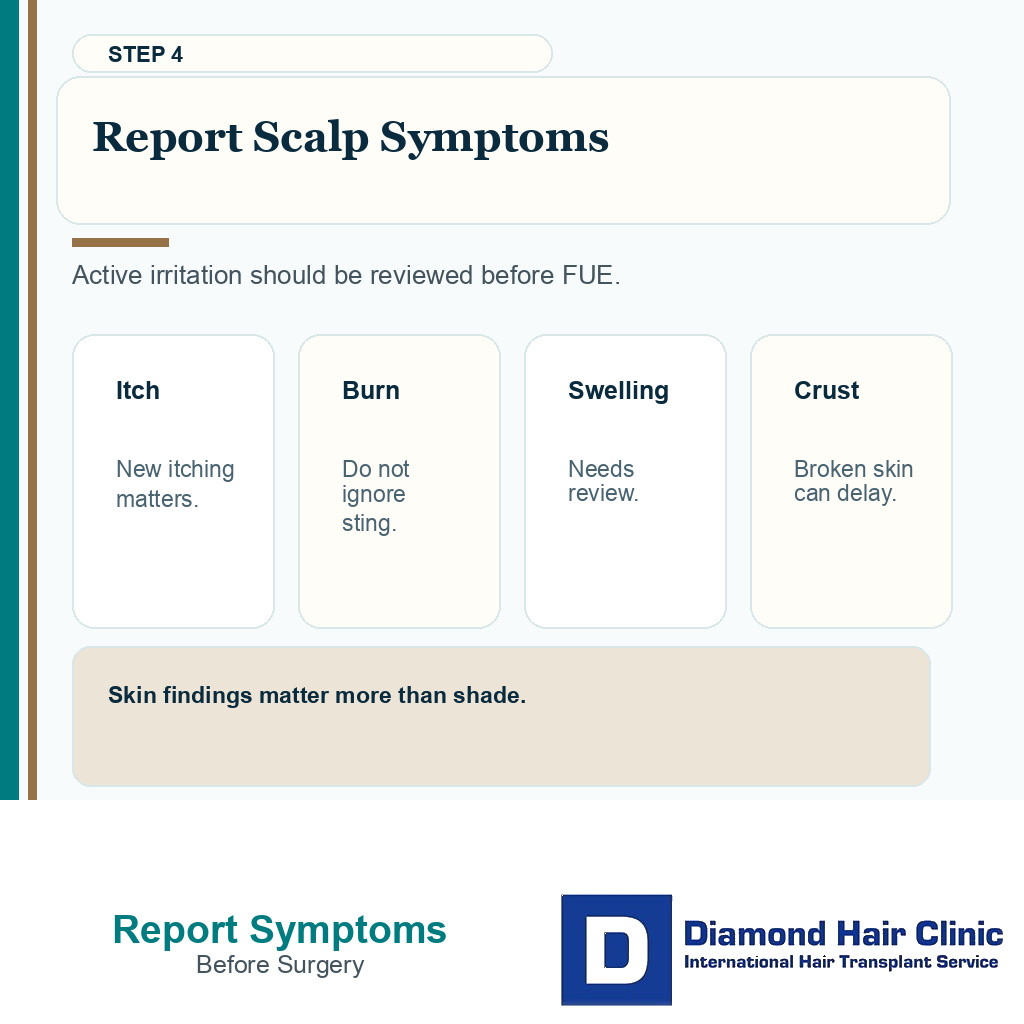
A familiar color refresh done early enough is usually manageable when the scalp stays quiet. A new dye, bleach, black henna, a strong developer, or any product that causes symptoms is a different decision. If there is redness, swelling, crusting, burning, or new itching, tell the clinic before the operation starts.
The scalp matters more than shade
Patients often ask this because they want to cover gray hair before travel, look normal in photos, or help the team see lighter donor hair more clearly. I understand that. A hair transplant is already a visible decision, and many patients want their usual color before they arrive.
Still, I do not plan surgery from cosmetic color alone. I need to see the real donor density, the thinning pattern, the skin surface, the hair direction, and the way the hair sits when it is clean. I treat dye like any other preparation product on the scalp. It may be acceptable in the right situation, but it should not hide the baseline or irritate the skin. That same preparation boundary is broader than dye, and FUE morning starts with clean skin explains what should stay off the skin and hair on the day itself.
This is similar to the reason I ask patients to remove hair fibers before a hair transplant. The issue is not judgment. Planning needs a clean, visible scalp, not color that hides redness, residue, or density limits.
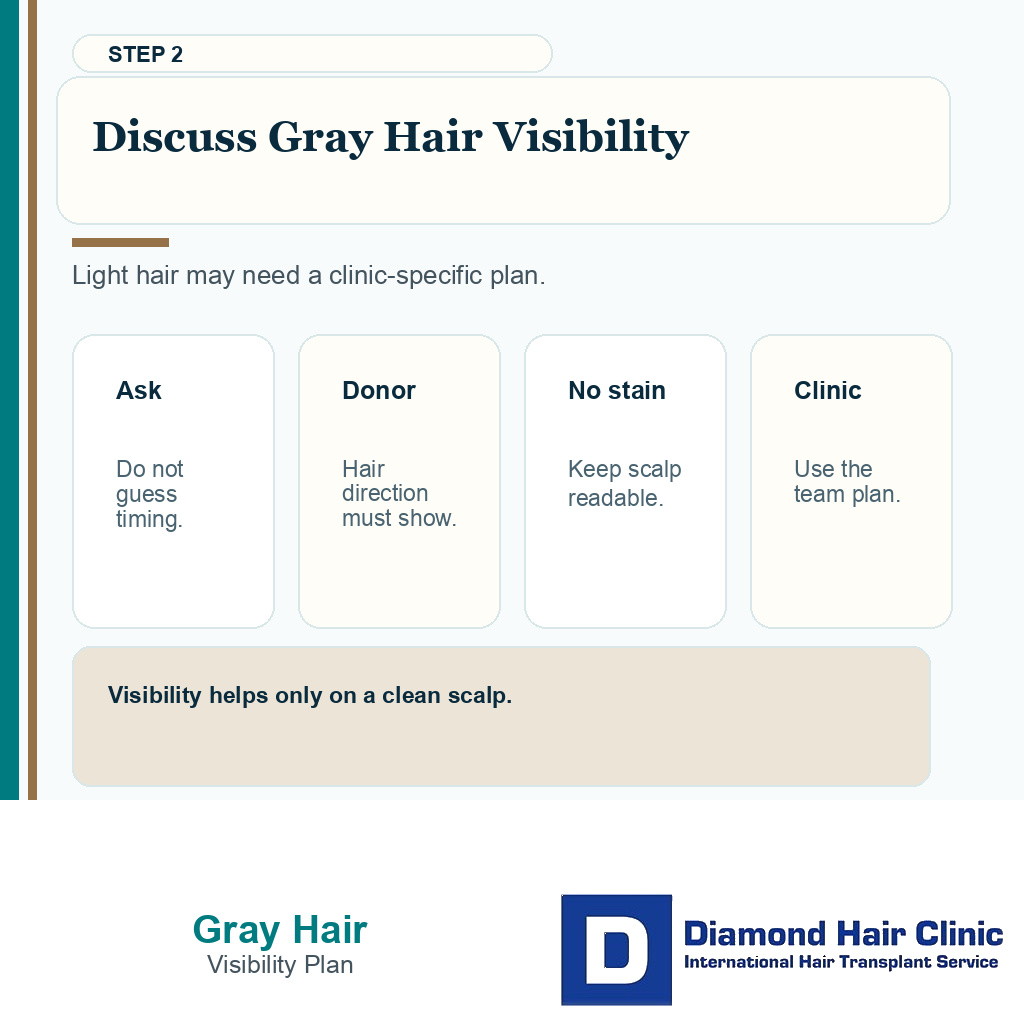
Gray or white hair can change visibility
White, silver, very blond, or low contrast hair can be harder to see during trimming, graft handling, and recipient planning. That does not mean the hair is weak. It means the team may need better visibility while still keeping the scalp safe.
Some clinics ask selected patients to color light hair before surgery. Others prefer to handle visibility in the clinic with lighting, trimming, magnification, or controlled preparation. If gray or white hair is part of your planning question, my guide to gray hair transplant visibility and planning explains why pigment, shaft caliber, and donor pattern must be judged together.
If your clinic wants gray or white hair colored, get the timing, scalp area, and washing instruction in writing. Do not assume that every clinic uses the same preparation.
When color was done mainly for planning photos, keep one photo set from before the change. The older shade can show contrast, donor visibility, and normal styling clues that the new color may hide.
A simple trim is a different issue from chemical color. If the question is haircut length, use the guidance on haircut before hair transplant rather than treating dye and cutting as the same decision. A relaxer is another separate chemical decision, because chemical relaxer timing before FUE depends on burning, breakage, scalp tenderness, and traction history, not only the salon date.
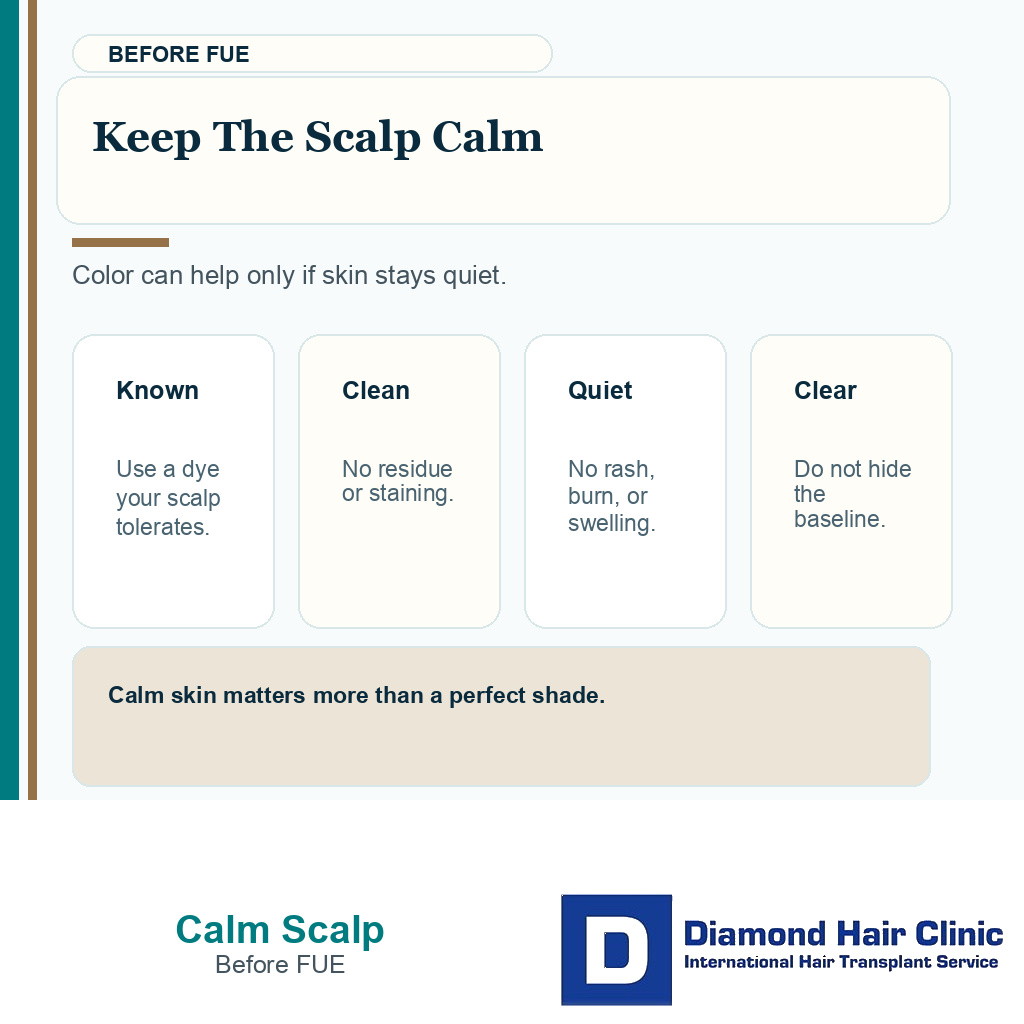
The best pre-op color plan protects visibility without creating scalp irritation.
Color should help the team see hair, not hide the scalp from the team. If the shade leaves stain on the skin, the visibility problem has only changed shape.
What if dye irritates the scalp before surgery?
The strongest reason to avoid last minute dye is the risk of a scalp reaction. Permanent dyes, dark dyes, bleach, developers, fragrances, and home color kits can irritate the skin. Some patients also have allergic contact dermatitis from hair dye ingredients. A reaction can show as itching, burning, redness, swelling, oozing, crusting, or rash around the scalp, ears, neck, or face.
Active inflammation changes the conversation. A mild color refresh on a quiet scalp is different from arriving with scratched, red, hot, or swollen skin. If the scalp is reacting, it is better to review photos, delay if needed, and protect the surgical field than force the date because travel is already booked.
Scalp readiness matters across related skin conditions. When I review scalp eczema before hair transplant, seborrheic dermatitis and hair transplant surgery, or scalp itching before surgery, the diagnosis matters, but the decisive issue is whether the skin is settled enough for safe, precise work.
How close is too close?
There is no single universal number because clinics give different instructions. Some prefer color a few days before surgery. Some prefer a week. Some may ask certain light haired patients to color specific areas the day before or in the clinic. The first rule is to follow the written instruction from the team that will operate on you.
When there is no clear instruction, margin helps. Do not do a new dye or bleach experiment in the final days before travel. Routine color should be scheduled early enough for normal washing, scalp visibility, and any irritation to become obvious before the procedure. Gray coverage for surgical visibility should be confirmed with the clinic instead of guessed.
The closer the dye is to surgery, the less time there is to fix a reaction. One routine color appointment is not the same as repeated bleaching, a new home kit, or a product that burns. The risk is a preventable skin problem appearing exactly when the scalp needs to be examined, cleaned, anesthetized, and treated carefully.
Bleach, dark dye, and black henna need separate judgment
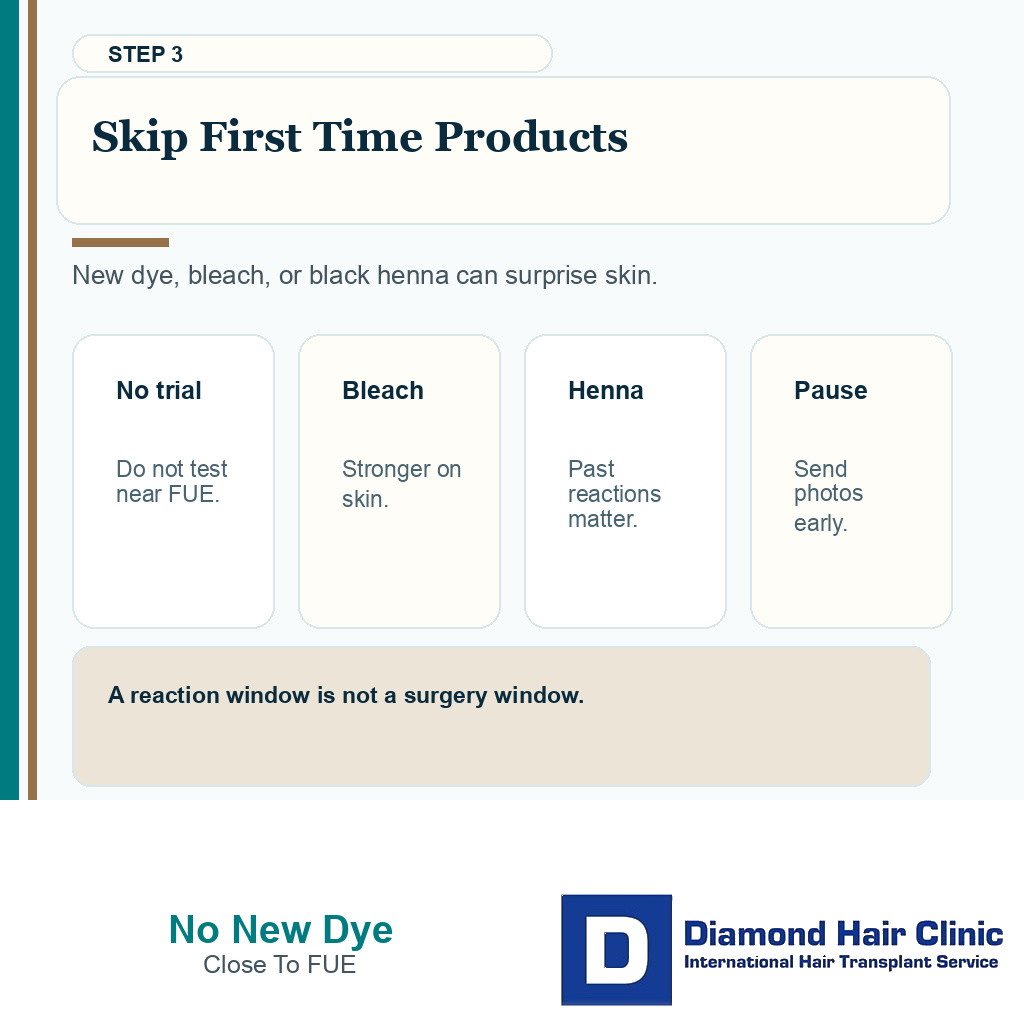
Bleach and strong developer deserve more caution than a familiar gentle color refresh. Bleach can be harsher on the scalp, especially if it touches the skin or if the patient already has sensitivity. Dark permanent dye can also stain the scalp and make incision planning less clear if residue remains.
Black henna deserves special mention because previous reactions to black henna can be a warning sign for future dye reactions. If you have ever had swelling, blisters, severe itching, rash, or facial swelling after black henna or hair dye, do not treat that as a cosmetic detail. Tell the clinic early, even if the reaction happened years ago.
If you also have medication allergies or a history of reactions during medical care, keep those stories separate and clear. With local anesthetic allergy before FUE or any reaction during medical care, the exact reaction story matters before surgery starts.
Scalp Color Timing Gate
Check the scalp before surgery
Use this before travel or before scalp preparation starts. I am not asking only about the shade. I am deciding whether the scalp is calm, visible, and safe to examine.
Usual color on a quiet scalp
If this is your normal color, it was done early enough, and there is no itching, burning, staining, or tenderness, I mainly want the scalp kept clean before surgery. Do not add fibers, powders, heavy styling products, or anything else that hides flakes, residue, or irritation.
Recent color needs disclosure
Record the date, product, whether it touched the scalp, and whether stain or residue is still visible. Even when there are no symptoms, recent color can change photos, scalp inspection, and surgical preparation, so clear pictures may be needed before surgery day.
Irritation changes the decision
Report burning, itching, swelling, crusting, rash, blisters, or broken skin before travel or before the operation starts. Active irritation is not ordinary color preparation, and the plan may need review before the recipient area or donor scalp is touched.
New products need more caution near FUE
A new dye, bleach, strong developer, black henna, or a product linked to a past reaction should not be tested in the final days before surgery. Send that history separately so the clinic can decide whether to wait, keep the hair clean for surgery, or adjust the preparation plan.
This gate is a planning filter, not permission to color hair close to surgery. It helps decide whether the scalp is calm, recently colored but clear, irritated, or too uncertain for routine preparation.
What should you tell the clinic?
Share what product was used, when it was applied, whether it was permanent dye, semi permanent dye, bleach, toner, beard dye, henna, or a salon service, and whether it touched the scalp. Also mention itching, burning, swelling, rash, blisters, crusting, dandruff flare, broken skin, or any need for medication after coloring.
If you have photos from before and after coloring, send them. Photos help separate normal color change from redness, staining, or inflammation. Do not hide a reaction because you are worried the surgery will be postponed. Hiding it creates more risk than reporting it.
Use the same clear record for allergies. An antibiotic reaction, anesthetic reaction, dye reaction, and fainting episode are not the same event. Describe each one separately. For medicine planning, antibiotic allergies and FUE planning gives the type of detail that helps a team prepare.
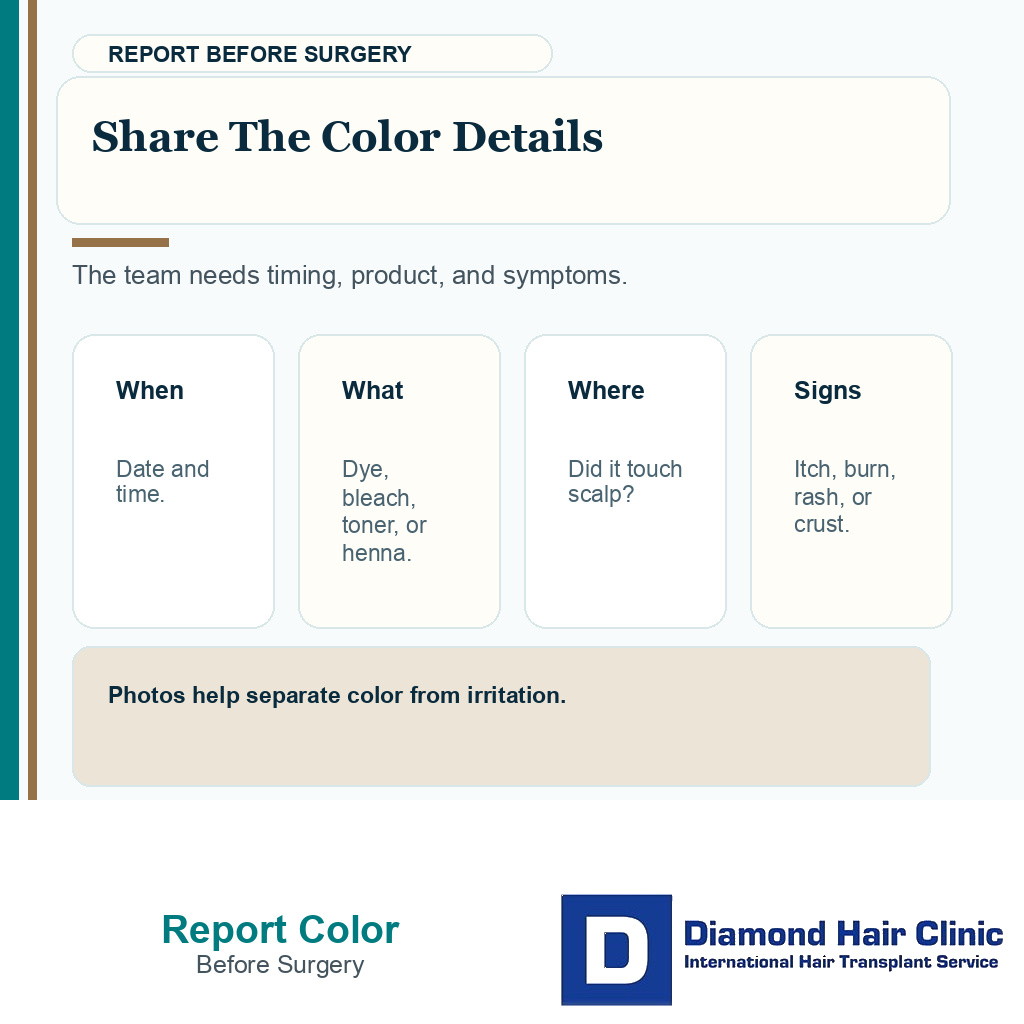
Bring recent color, scalp symptoms, and reaction history into the operation day review.
Keep the planning baseline visible
Hair dye can make hair look thicker because the shaft contrast changes. This can be useful socially, but it can also make thinning look less obvious than it is. I still need to judge miniaturization, donor reserve, recipient area size, and the future pattern of loss.
Appearance tools need to be separated from the surgical baseline. Dye, fibers, styling powder, matte concealer, longer hair, and strategic combing are not wrong. They just need to be separated from the surgical baseline.
Cosmetic color should not become the surgical target by accident. If the scalp exam is unclear, clean hair, wet photos, parted photos, donor photos, or a fresh review at the clinic may be needed. That keeps the surgical preparation medically clear.
After surgery, dye timing changes
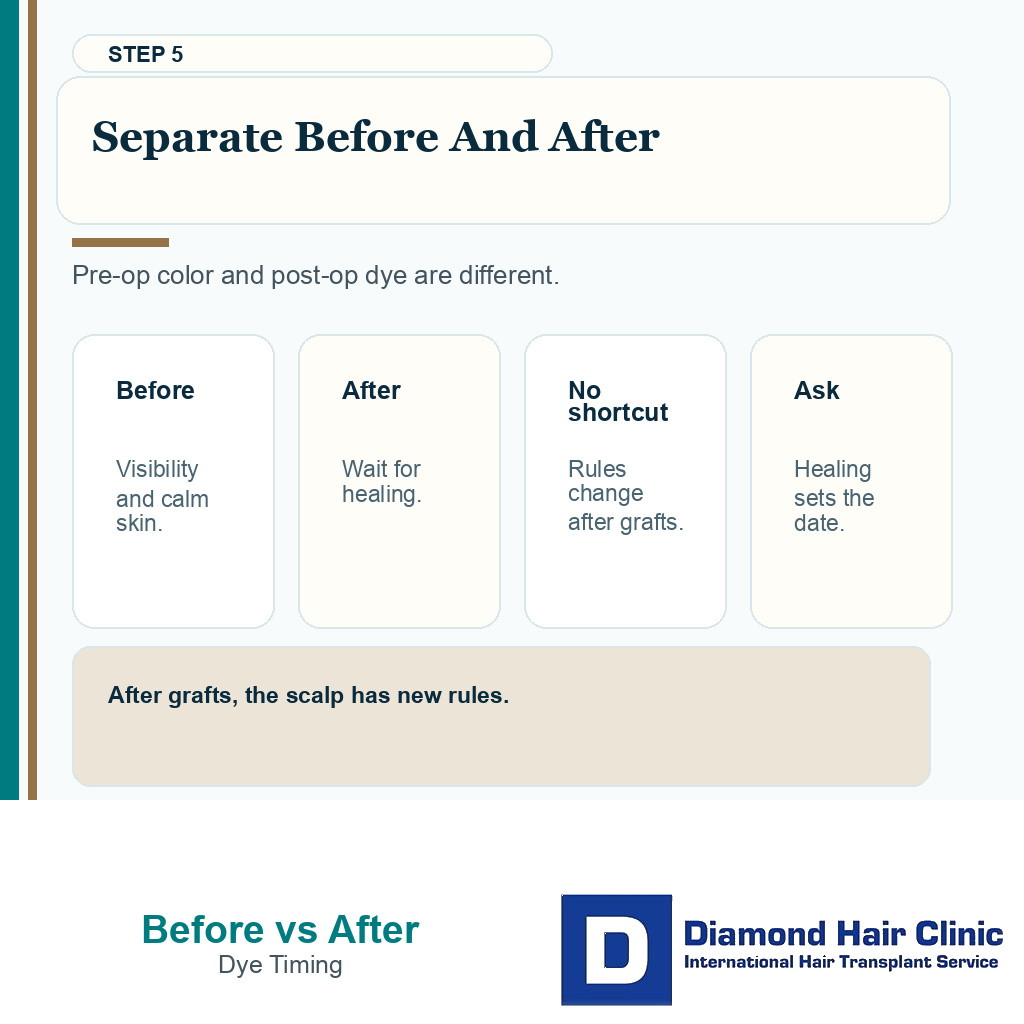
Before surgery, the concern is whether dye leaves the scalp settled enough for FUE. After surgery, the concern becomes healing skin and newly placed grafts. Pre-op dye timing should not be treated as permission to dye soon after the operation.
My threshold after surgery is more cautious because the recipient and donor areas are healing. With hair dye after hair transplant, I usually wait until the scalp is closed, scabs are gone, washing is normal, and redness or tenderness has settled before discussing gentle color again.
If a rash, hives, sudden itching, swelling, or whole body symptoms appear after surgery, that is not just a hair color question. Treat allergy warning signs after hair transplant as a reason for medical review rather than as a styling problem.

Read this review excerpt
Every single one of my questions was answered and they made sure I had all the details I needed to make an informed decision.