
YOU ARE ONLY THREE STEPS AWAY YOUR NEW HAIR
Contact step for a hair transplant consultation in Turkey

Click for Consultation

Appointment step for a hair transplant consultation in Turkey

Book Your Hair Transplant

Full hair result illustration for hair transplant planning

 Enjoy Your New Hair

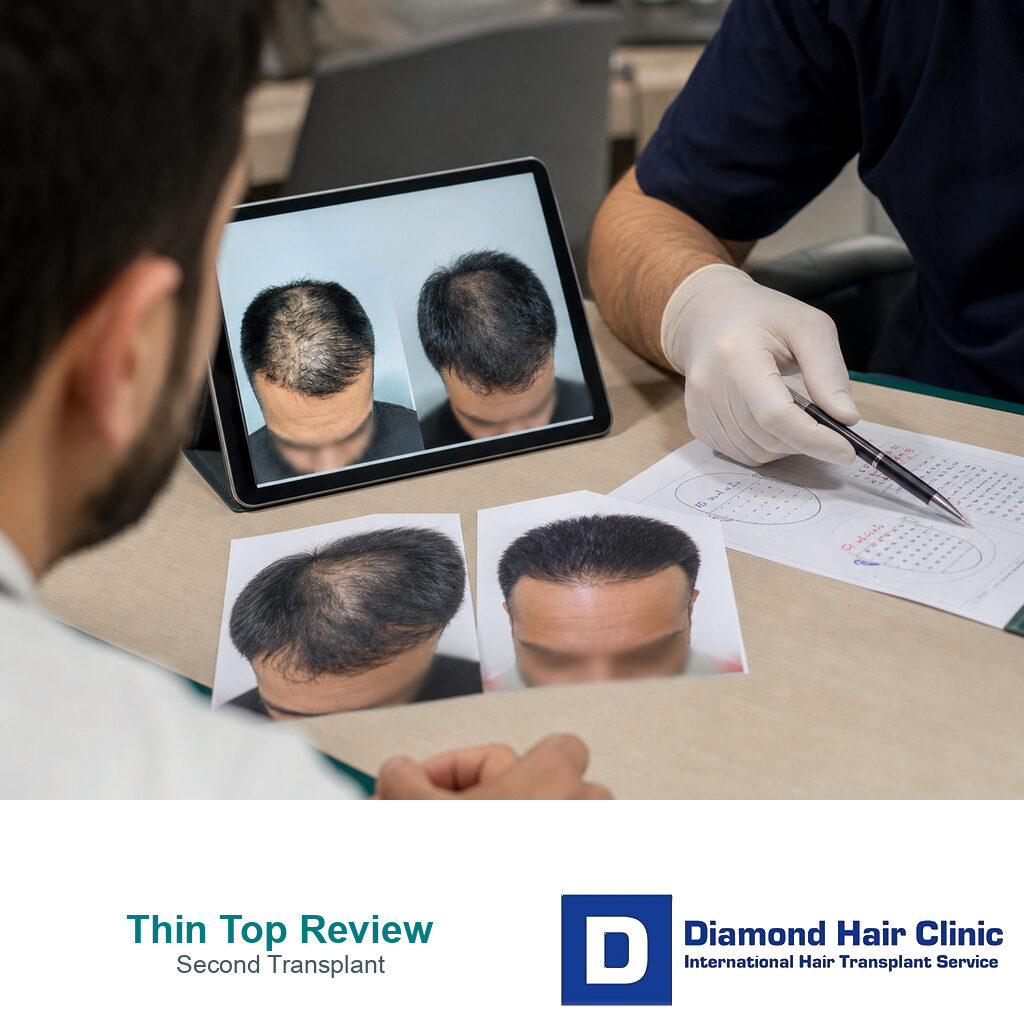
Consultation review of a thin top after hairline surgery before a second transplant plan

Will a Second Transplant Help a Thin Top After Hairline Surgery?

More coverage can help when the first operation rebuilt the front but left the top transparent, but I would not plan it from front and overhead photos alone. The first result should be mature, often close to 12 months, the donor area must still have safe reserve, and the reason for the transparent top has to be clear. If the first operation spent most of the grafts on the frontal frame while the midscalp or crown stayed thin, the next plan is not simply “add more density.” It has to ask where the remaining grafts will give the most useful visual improvement and where surgery should stop.

In a consultation like this, I treat the case as planning for a second session. The patient had a first transplant elsewhere, likes the frontal frame more than the top view, and wants to know whether another session can help. I do not promise that from two photographs. I rebuild the plan with the first graft count, surgery date, implanted zones, medication history, donor area photos, and repeatable top, front, and crown photos in normal light. The question is not only whether more grafts can be placed. The question is whether a better second plan can improve the weak zone without damaging the future plan.

Understand the first plan before adding more grafts

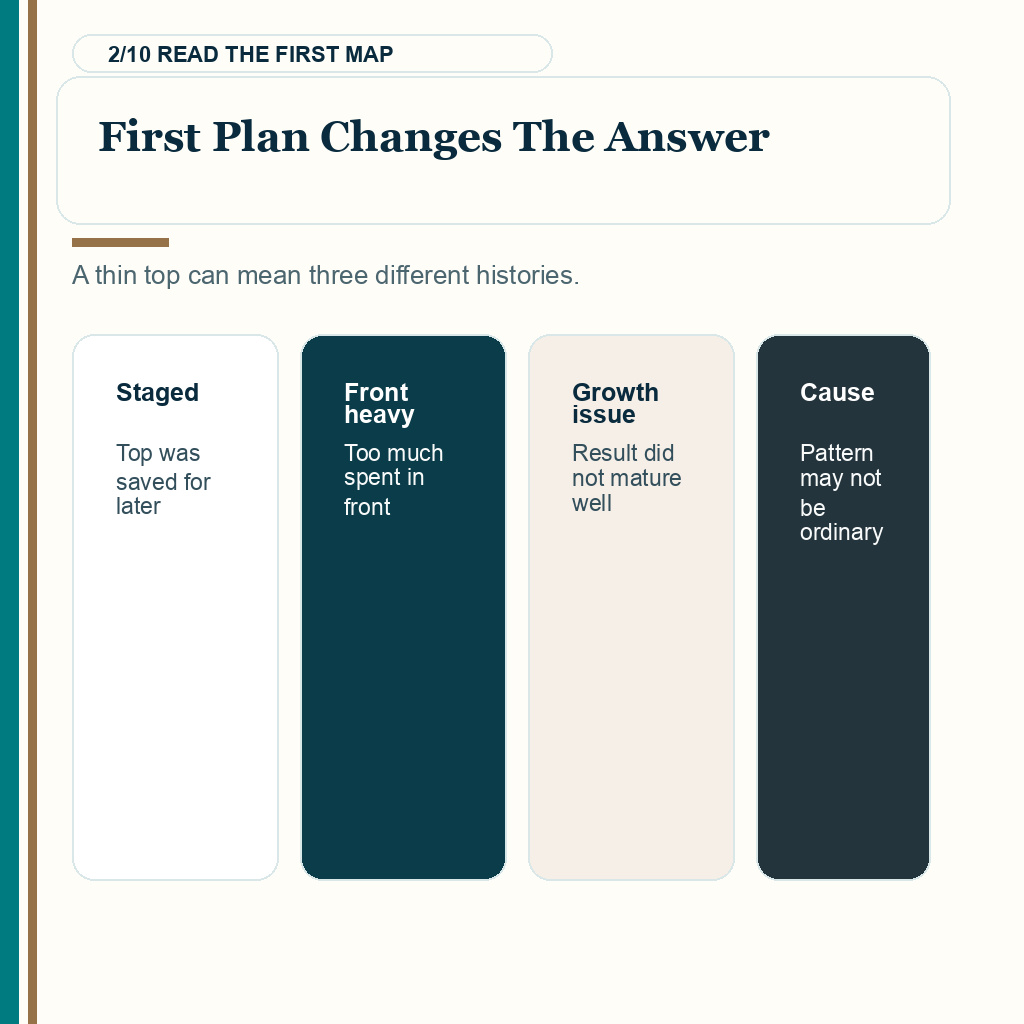
When a patient says, “my hairline looks okay from the front, but the top still looks empty,” I first separate three possibilities. In a planned staged result, the first surgery deliberately rebuilt the hairline and saved the top for later. In a planning imbalance, too many grafts were spent on the front, leaving a large untreated area behind it. In a diagnosis or growth problem, the implanted hair grew poorly, native hair continued to miniaturize, or a cause outside ordinary pattern hair loss is making the scalp visible.

These are not small wording differences. A planned stage two can be reasonable, and it does not mean the first surgery was wasted. A front heavy plan may still be improved, but donor reserve becomes the limit. A diagnosis or growth problem should not be covered with more grafts until the scalp and donor area are examined. A careful second transplant consultation starts with records and examination, not with a sales number.

For the broader question of whether a second transplant is worth it, I use the same donor reserve logic. Here, the focus is narrower. The patient already has a stronger front but still sees a transparent top from above.

The front view can hide the real coverage problem

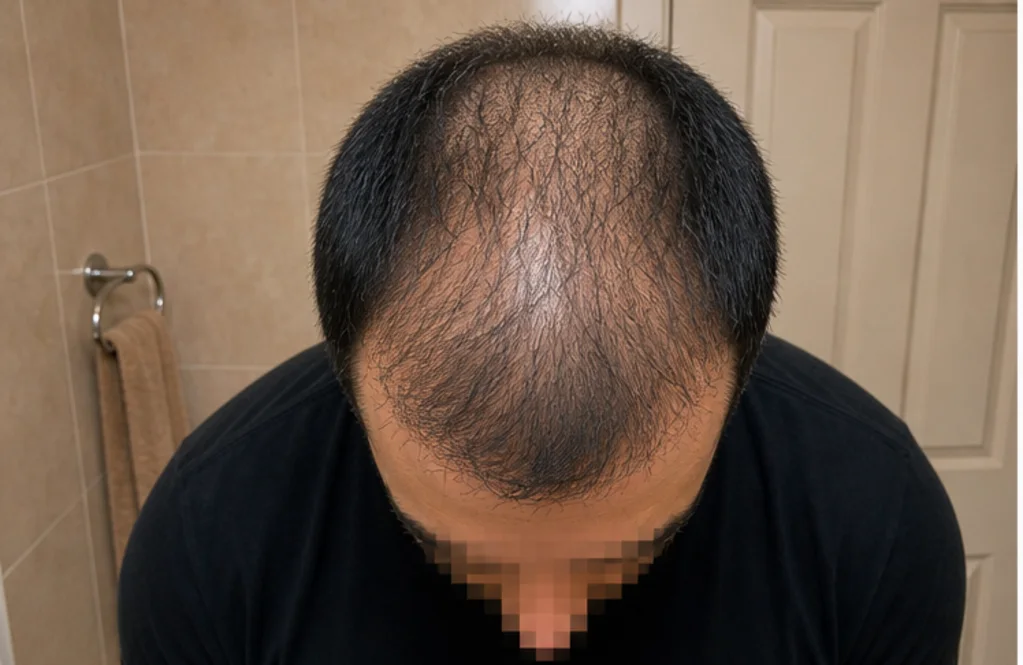
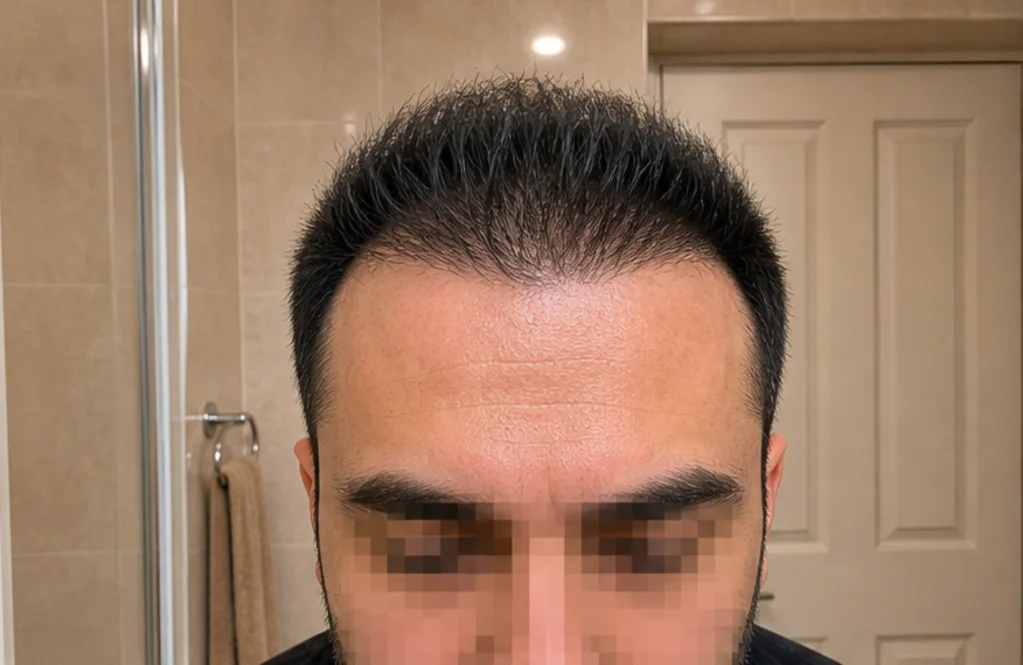
A frontal photograph can be reassuring because the hairline frames the face. A top photograph is less forgiving. It shows the true size of the weak zone, the distance between transplanted hair and native hair, the crown swirl, and the amount of scalp contrast under light. Harsh overhead photos can exaggerate the problem, but they still show something useful. They reveal whether the first plan improved the face frame while leaving too much untreated surface behind it.

This does not always mean the first transplant failed. It may mean the first operation improved the most visible border but did not cover enough area behind it. A hairline can look darker because the hairs are layered forward, while the midscalp and crown need more surface area coverage. The same graft number that looks powerful in a narrow frontal band can look thin when spread across the top.

I compare the two views side by side before discussing another surgery, and I ask whether the top looks thin only in harsh photos or also in normal life.

The two images above are useful because they show the conflict many patients feel. From the front, the frame can look acceptable. From above, the scalp still dominates. The second surgery should not be planned from the more flattering angle only.

The donor area sets the real improvement limit

In a second transplant, the donor area becomes more important than the recipient area. The top may ask for a lot of hair, but the donor area decides what can be taken safely. If the first clinic used a high number of grafts, the remaining donor reserve may be smaller than the patient expects. If the donor was overharvested, patchy, or miniaturized, placing more grafts can create a new problem at the back and sides. In a second transplant, donor reserve is the limit, not the size of the thin area.

The first graft count matters, especially whether the clinic counted grafts or hairs. If the first clinic cannot give reliable records, the donor area becomes the record. I examine extraction pattern, donor density, caliber, retrograde thinning, and any signs of donor miniaturization. This is where lifetime graft budgeting, weak donor area planning, and donor miniaturization change the answer.

If the donor reserve is good, a second transplant may improve the visual transition behind the hairline and selected midscalp areas. If donor reserve is limited, the better plan may be a smaller strategic operation, SMP for contrast, medication review, or no surgery. Adding grafts under donor pressure can create a new problem instead of solving the thin top.

Diagnosis comes before more grafts

Some overhead photos look like ordinary androgenetic pattern loss. Others look patchy, irregular, inflamed, or inconsistent with the expected pattern. If I see unusual islands of loss, scalp redness, scaling, burning, tenderness, sudden change, or a pattern that does not match male pattern hair loss, I do not rush to implant more grafts. The next step may be trichoscopy, dermatology review, blood work, or in selected cases a biopsy. If the pattern looks patchy or inflamed, diagnosis comes before graft placement.

Transplanted hair does not solve every cause of scalp visibility. Diffuse thinning can make surgery riskier because native hairs are still present and vulnerable. Scarring or inflammatory alopecias can damage both native and transplanted hairs if the disease is active. Alopecia areata can create patchy loss that should not be treated like a simple density shortage. The safer order is diagnosis first, graft plan second.

Why a transplant can look thin becomes the first question before planning more grafts. In this situation, where a second session is being considered, surgery should pause if the thin top does not behave like stable pattern loss.

The second surgery must protect the whole thinning area

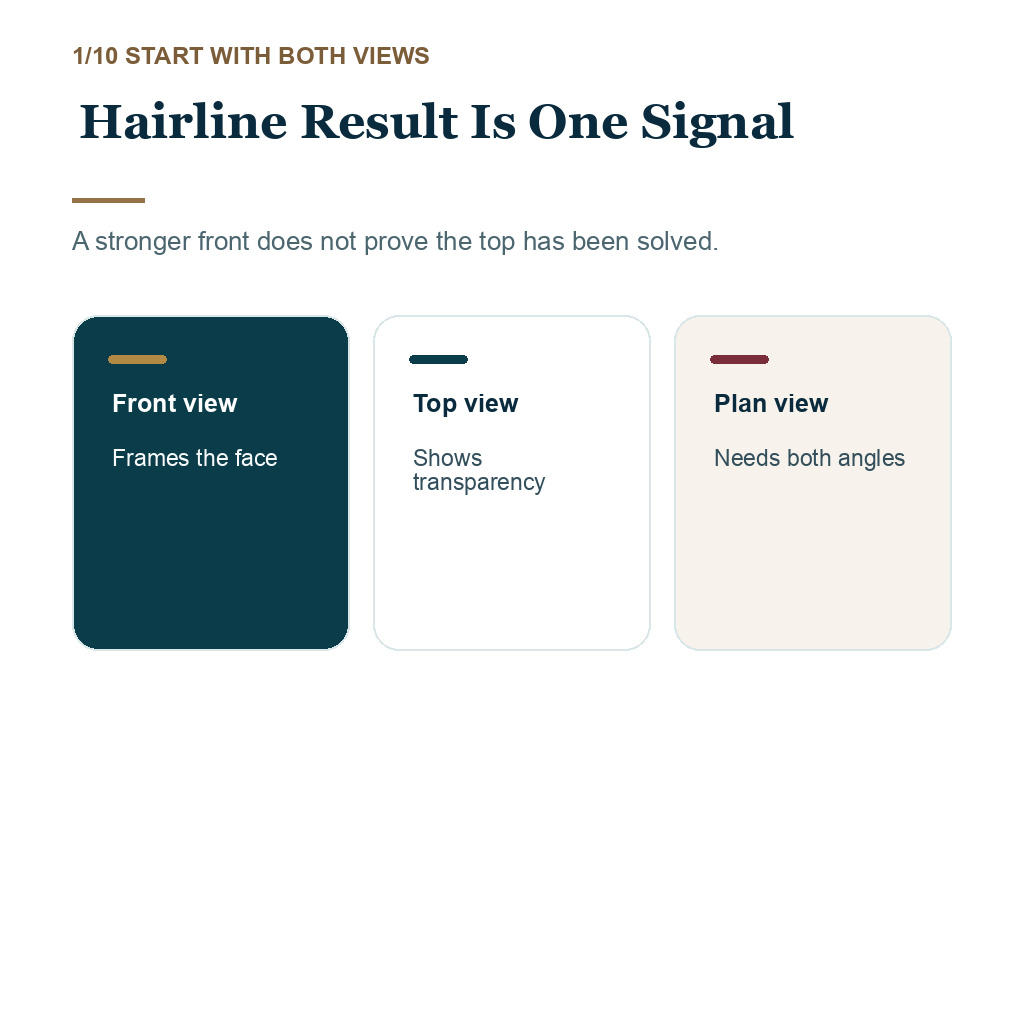
Diamond Hair Clinic support card showing second hair transplant planning checks for a thin top
A second plan should spend grafts where they protect the whole thinning area.

One common mistake is trying to make the previously treated hairline even denser while the top remains weak. That can make the front look darker for a short time, but it can also make the contrast behind it worse. A dense wall in front and a transparent midscalp behind it is not a natural long term result. A second surgery should not spend scarce grafts making an already strong hairline even darker.

Often, the second plan should not lower the hairline or chase a very dense frontal border. The usual priority is the transition behind the hairline first, then the midscalp, and the crown only as far as the donor reserve allows. This is the same priority problem as deciding hairline or crown first, but the version for a second surgery is stricter because some donor has already been spent.

I also look at the direction and caliber of the existing transplanted hair. If the front has harsh angles, multiple hair grafts in the first row, or an unnatural border, the plan may become a repair plan rather than a density plan. If the frontal frame is acceptable, I usually protect it and spend any safe grafts where they reduce the most obvious transparency.

Second plan priority router

Where should a second plan spend grafts first?

A thin top after a hairline procedure can mean wait, cover behind the front, diagnose first, protect donor reserve, or repair the frame.

Result still maturingThe first transplant may not be ready for a fair second plan decision.
Top needs transition coverageThe useful grafts may belong behind the hairline, not in the front row.
Scalp diagnosis comes firstPatchy, itchy, scaly, painful, or quickly changing thinning needs review.
Donor reserve is limitedWeak donor density or visible old extraction changes the graft budget.
Front repair is the real issueSometimes the concern is unnatural framing, not top density alone.

Timing

Result still maturing

Signal The first surgery is still changing, especially when the worry appears mainly in overhead light.

Plan meaning Another operation can spend donor hair before the first result has declared itself.

Review timing first Use stable photos and the correct review month before choosing more grafts.

Avoid rushing surgery Do not book a second density plan just because the top looks weak during early recovery.

Zone

Top needs transition coverage

Signal The hairline frames the face, but the area behind it stays thin in normal light.

What it changes The plan needs to name the transition zone, midscalp, or crown reserve before lowering or darkening the front again.

Name the target zone Ask which zones change the visible result and which areas will be left for later.

Avoid spending the front again Do not spend grafts inside the front edge if the open top is the part that bothers you.

Diagnosis

Scalp diagnosis comes first

Signal The thin area is patchy, inflamed, itchy, scaly, painful, or changing quickly.

Pause trigger More grafts can disappoint if the underlying scalp or hair loss diagnosis is active.

Check the diagnosis Ask whether trichoscopy, dermatology input, blood work, or biopsy is needed before surgery.

Avoid treating every thin top the same Do not treat every thin top as a simple density shortage.

Donor

Donor reserve is limited

Signal The donor area is already reduced, visibly harvested, or too weak for an aggressive second plan.

Plan meaning The operation has less room for error, so the plan must keep reserve instead of chasing every thin area.

Protect the donor Ask for a conservative graft range, the exact treated zones, and the reserve being protected.

Avoid a high quote without reserve logic Do not accept a large quote that spends donor hair without explaining what remains.

Frame

Front repair is the real issue

Signal The top is thin, but the bigger social problem is a pluggy, straight, low, or poorly blended front.

What to ask A repair plan and a density plan are not the same operation.

Choose the repair route Ask whether the priority is camouflage, extraction, hairline softening, or staged coverage behind the frame.

Avoid covering behind a bad frame Do not add density behind an unnatural front if the frame itself still needs correction.

Surgeon-led checkpoint The second operation should solve the true visible problem while leaving donor reserve for the future.

SMP and shaving can be reasonable choices

Some patients ask, “Should I just go bald?” That question deserves respect. Shaving can be a reasonable choice if the donor area is limited, the top area is too large, or the patient does not want a result that still needs styling and lighting management. Surgery should not be used to trap a patient into a look they will still dislike.

SMP for a thin transplant can also reduce the contrast between hair and scalp in selected patients. But SMP is camouflage, not new hair. It may help a buzzed or short style look less transparent, but it will not create length, layering, or natural hair movement. If the patient wants touchable density, pigment alone will not provide that.

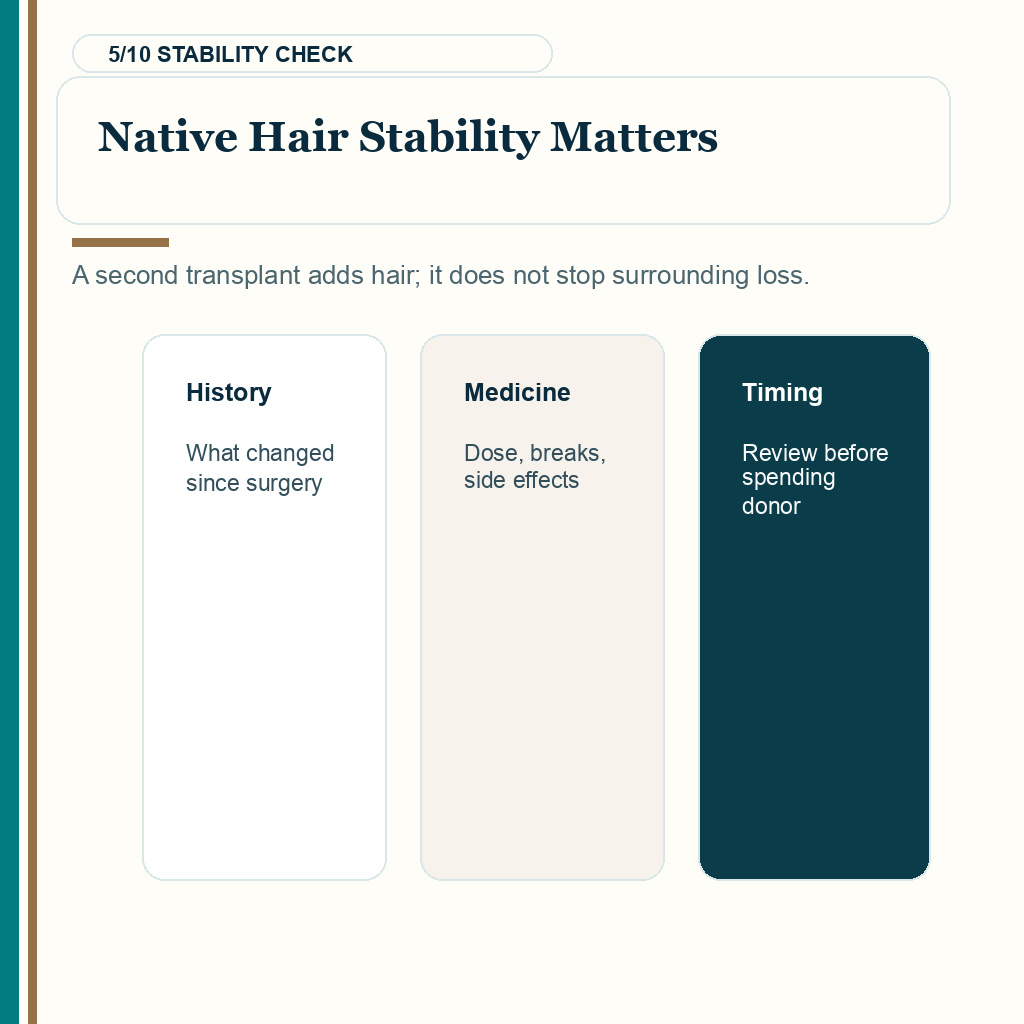
Medication history matters because a second transplant adds hair but does not stop native hair from thinning around it. Stabilizing native hair is not a guarantee of density, and medication is not suitable for every patient, but the history changes how risky another operation is. Any change in medication, added treatment, or move to a different drug belongs with a physician who understands the medical history and adverse effect tolerance. Internet medication escalation does not belong inside a surgical plan.

What should you send before asking for a second plan?

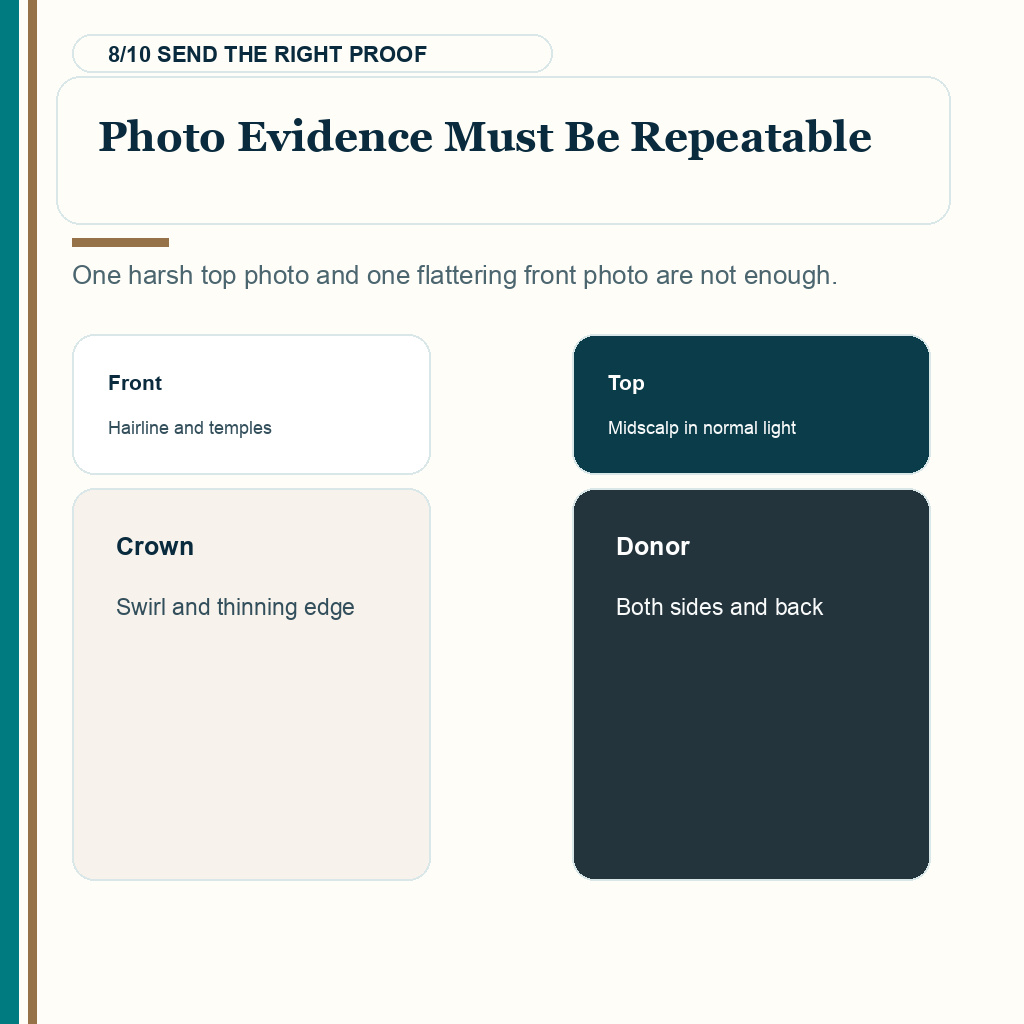
Before advising a patient like this, I need a structured review package. Send clear photos of the front, both temples, top, crown, both sides, and donor area. Use dry hair, wet hair if possible, and consistent lighting. Include the first surgery date, the claimed graft number, the zones implanted, whether the crown or midscalp was treated, and any postoperative complications. If the first operation was recent, say exactly how many months have passed. A thin top at 6 or 7 months is a different review from a thin top after a mature 12 month result.

Send medication history as well, including finasteride, minoxidil, dutasteride, oral minoxidil, changes in dose, breaks, side effects, and when each treatment started. Add family hair loss pattern and any history of scalp itching, burning, scaling, pimples, redness, or patchy shedding. If the donor area looks thin at short length, send close photos without fibers or concealers.

For graft count review, hair transplant graft numbers patients can verify can help organize the records. The more precise the history is, the less likely the second plan will repeat the same mistake.

How do I plan this second session?

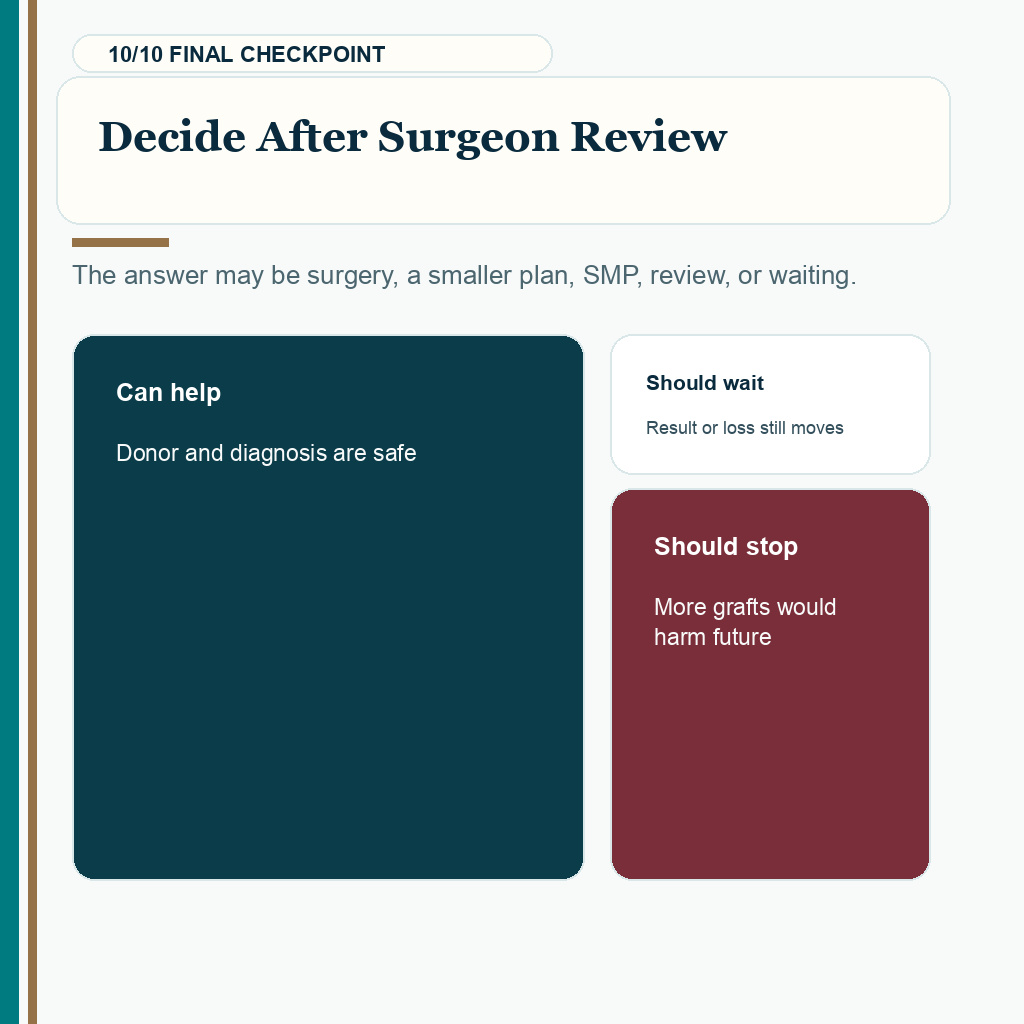
For a patient in this situation, help starts with better planning, not with simply booking another transplant. A second session can still be useful, and shaving is not the only serious option. I also do not rush into surgery just because the top looks transparent. First, I need to understand whether the first plan gave the top too little coverage, whether native hair loss continued, whether the donor reserve is still healthy, and whether the scalp diagnosis is ordinary pattern loss.

If the donor is good and the diagnosis is stable, a second operation may improve the area behind the hairline and selected midscalp coverage. If the donor is limited, the goal may need to be smaller, such as softening the transition, reducing the worst transparent zone, or choosing SMP or short styling instead of chasing full coverage. If the scalp pattern is unusual, surgery waits until the reason is clear.

The answer is not a promise of full top density. A second transplant can help only when it is planned as the next part of a strategy that protects the future, not as an emotional attempt to cover every transparent area. The front view may look good, but the top view tells us whether the first plan respected the whole scalp. The remaining donor area tells us how much can still be corrected.