AI Advice Cannot Examine Early FUE Recovery
A phone photo can help you explain a worry after FUE, but it should not decide the meaning of your recovery. AI can describe what appears in one image. It cannot examine the scalp, feel warmth, compare the day of recovery, know how you washed, or judge the trend since surgery. If a photo answer makes you panic or relax too quickly, pause before changing your care. Send the clinic a clearer picture of the situation, not only a closer crop. If the area is stable, send the date, one wide photo, one close photo, and the symptoms. If pain, redness, swelling, discharge, bleeding, fever, or tissue color is getting worse, contact the clinic without delay or seek urgent local care for serious symptoms.
I use photos as part of follow up, but I never treat one close view without timing and symptoms as the whole clinical story. Early recovery can look uneven, red, crusted, shiny, or alarming under harsh light. What matters is not which label the tool gives the picture. What matters is the context your clinic needs to decide whether the photo triage is routine, same day, or urgent.
The photo is not the whole clinical picture
After FUE, a close photo often exaggerates the most frightening detail. Scabs look larger. Pink skin can look angrier. Wet hair can make density look worse. A shadow can make a normal crust look dark. AI or online replies may react strongly because they only see the crop, not the surgery day, the washing stage, your symptoms, or the previous images.
I would not let a tool decide whether you lost grafts, developed infection, or healed normally. Those are clinical judgments. They need timing, symptoms, and comparison. Online hair transplant photos during recovery can help you understand why a close view can mislead, but your own early photo still needs timing and symptom context.
Before uploading recovery photos to an AI tool or public forum, think about privacy as well as accuracy. Crop out identifying details only if the scalp concern stays clear, and use the official clinic channel for anything that could need medical review.
Use the photo to start the question, not to finish it. If the image worries you, send it in a way that helps the clinic understand what changed. If the image looks reassuring but you have worsening pain, spreading redness, discharge, fever, fresh bleeding, or a clear trauma, do not let a reassuring reply slow you down.
What can AI describe and what can it not examine?
AI can sometimes describe visible features. It may notice redness, crusting, a shiny surface, uneven hair stubble, or dark spots. That does not mean it has examined you. A medical examination is not only pattern recognition. It includes the timeline, physical symptoms, wound behavior, your procedure details, medication history, aftercare steps, and whether the same area is improving or worsening.
AI counting is weakest when scabs, swelling, shaved stubble, and donor marks sit in the same photo. If the question is how many grafts were taken or placed, the clinic record matters more than a cropped image. Use the tool to organize what you send, not to decide whether grafts survived or whether warning signs can be ignored.
This is the same reason I separate postoperative review from preoperative simulation. AI hair transplant planning can help a patient understand why a preview is not a surgical plan. After surgery, the limit is even more practical. A tool cannot know how firmly grafts are seated on that day, whether you rubbed the area, whether you changed washing pressure, or whether the clinic gave you a specific instruction.
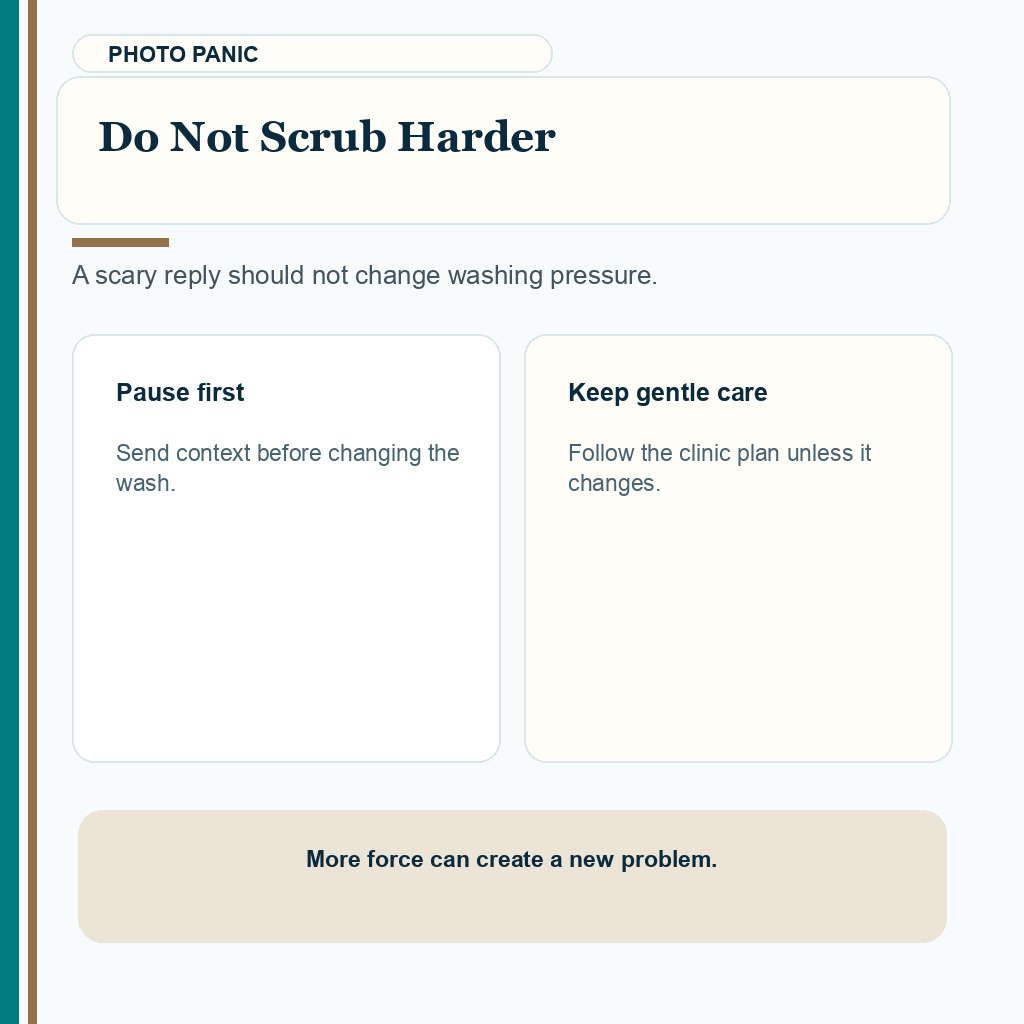
It may still be useful if it helps you organize the concern. For example, it may push you to ask, “Is this redness spreading?” or “Should I send a wide photo too?” That is helpful. It becomes unsafe when you treat the answer as permission to scrub harder, add products, pick crusts, ignore warning signs, or distrust the clinic plan without giving the clinic enough context.
The details I need before judging urgency
The first detail I need is the day after surgery. Day two, day seven, and day fourteen are not the same discussion. The second detail is the view. A wide photo shows the pattern. A close photo shows the surface. Both are useful, but neither should stand alone. The third detail is symptoms. Pain that is settling feels different from pain that is increasing. Mild pinkness is not the same as spreading redness with warmth, swelling, drainage, or fever.
If you are worried about graft security, the timing matters too. The general idea behind when grafts become secure after hair transplant is useful, but it does not let anyone diagnose your own photo from a crop. I still need to know whether there was rubbing, scratching, bleeding, picking, impact, strong washing pressure, or a product change.
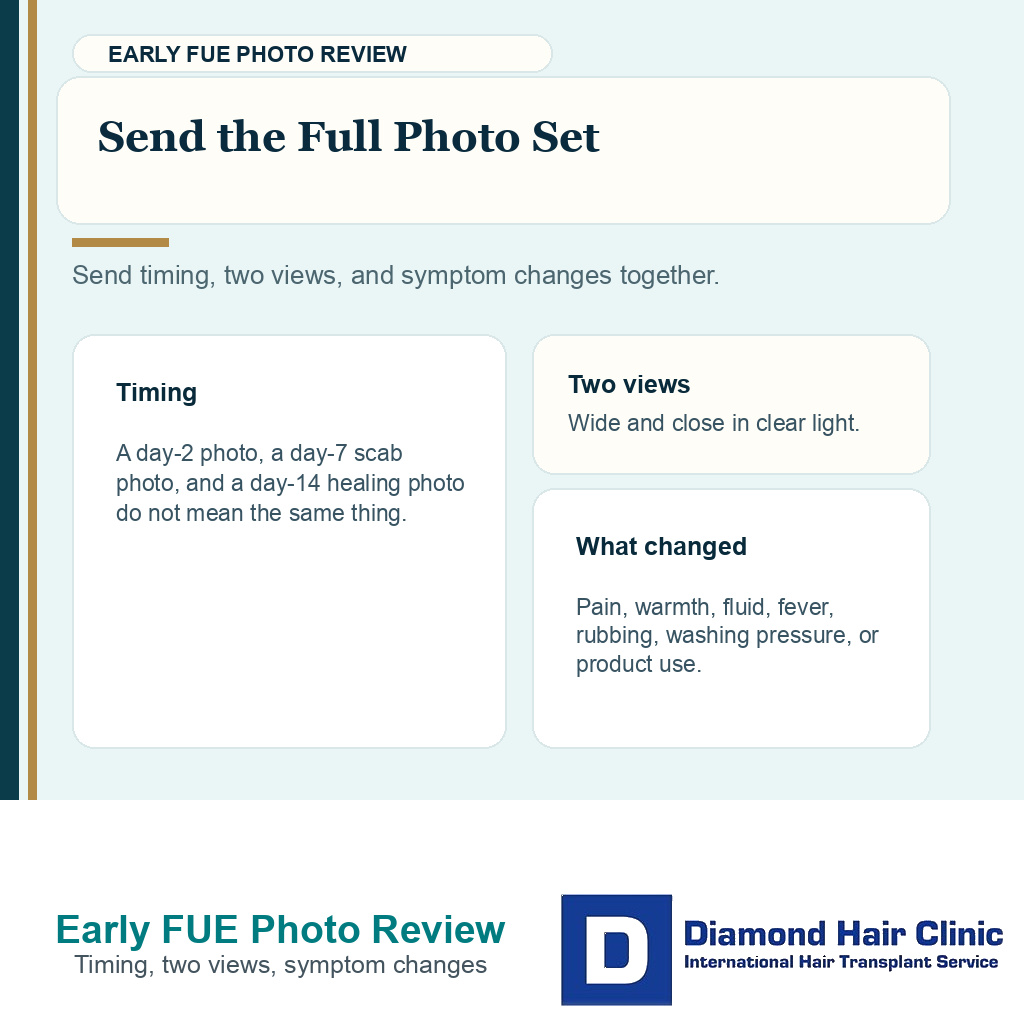
Early recovery photos are easier to judge when timing, two views, symptom changes, and product or rubbing history are sent together.
If the concern is unclear, send a short set instead of another extreme close crop. Include a front or top view in normal light, a close view of the exact concern, the operation date, the day after surgery, and one sentence about what changed. That gives the clinic something to judge.
Scabs need timing and washing history
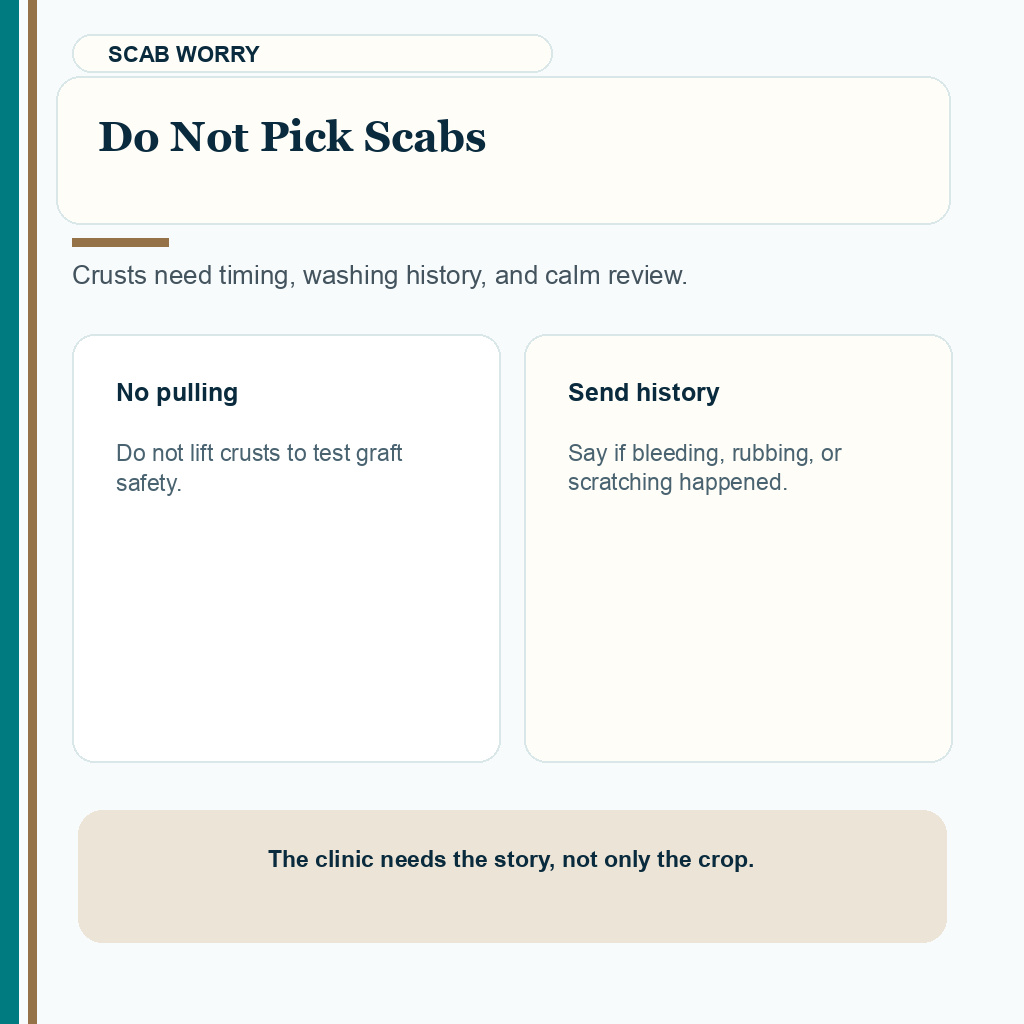
Scabs make many patients anxious because they can contain short hairs, dried fluid, or crusted skin. AI may call the image graft loss, infection, normal scabbing, or something else based only on appearance. That is not enough. I need to know the day, how the area was washed, whether the scab was lifted by force, whether there was bleeding, and whether the skin around it is improving.
A hair inside a scab does not by itself prove a graft was lost. It can be a shed hair, a hair shaft caught in crust, or something that needs closer review. A scab with a hair needs timing and handling history, not only a close image. Here, the key point is simpler. Do not pick harder because a tool scared you, and do not ignore bleeding or worsening symptoms because a tool sounded reassuring.
Scab interpretation changes with handling history. A dry crust that slowly softens with the clinic washing plan is different from a crust that was pulled, scratched, or scrubbed. If you are not sure, send the history clearly. A clinic can give safer advice when it knows what happened.
Which warning signs matter more than the close view?
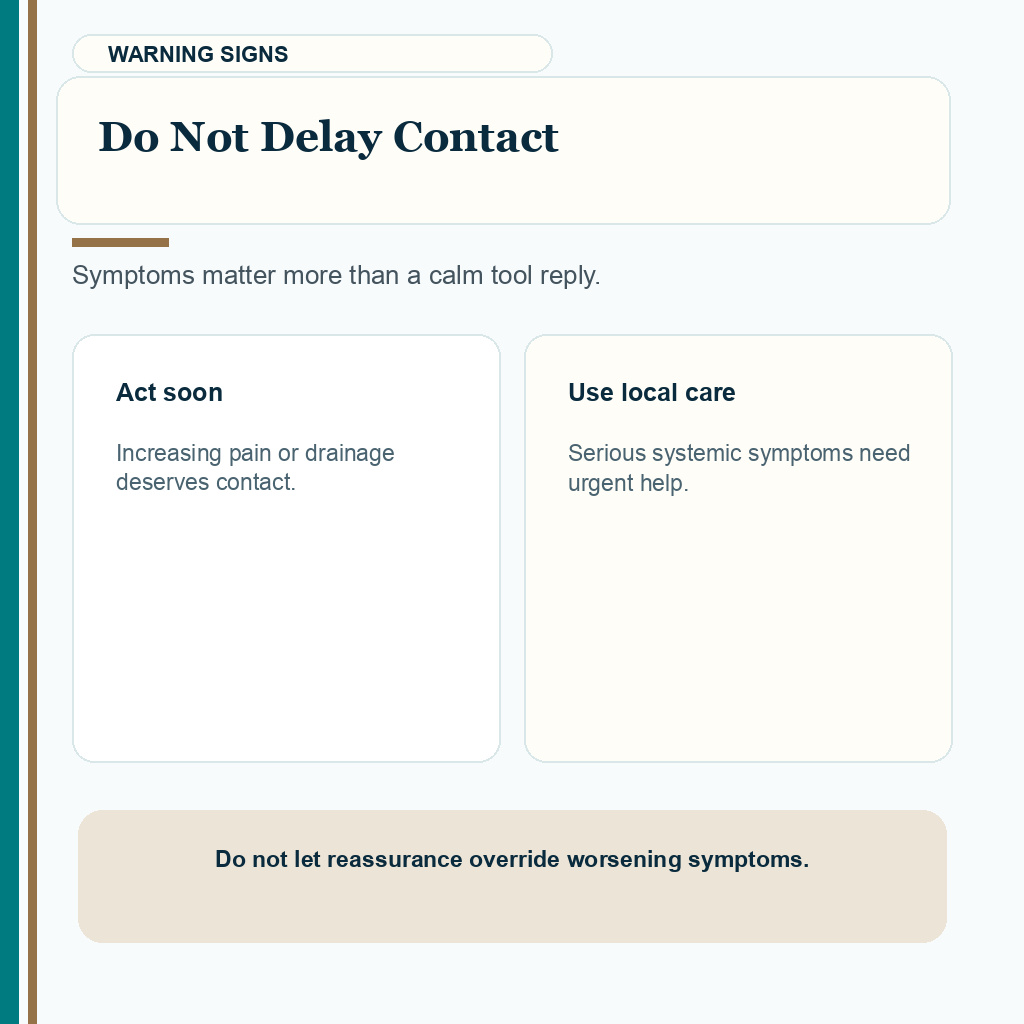
Some signs should carry more weight than the image itself. Increasing pain, spreading redness, warmth, swelling that is getting worse, pus type drainage, persistent bleeding, fever, a bad smell, an open wound, or dark tissue that spreads should not be reduced to a photo debate. Those signs need timely contact with the clinic, and serious systemic symptoms may need urgent local medical care.
This does not mean every red or crusted area is dangerous. Early FUE recovery often includes redness, scabs, tenderness, and uneven appearance. The difference is direction and context. Is it settling or spreading? Is pain improving or increasing? Is there fluid or only dry crust? Did something happen to the grafted area? A fuller warning check for redness, scabs, and pimples after hair transplant can help when the symptom pattern is broader than one photo.
If AI reassures you but your symptoms are worsening, believe the symptoms enough to contact a doctor. If AI alarms you but you feel well and the pattern is stable, send better context rather than changing care in panic. Both situations need human judgment.
Keep online comments out of your aftercare plan
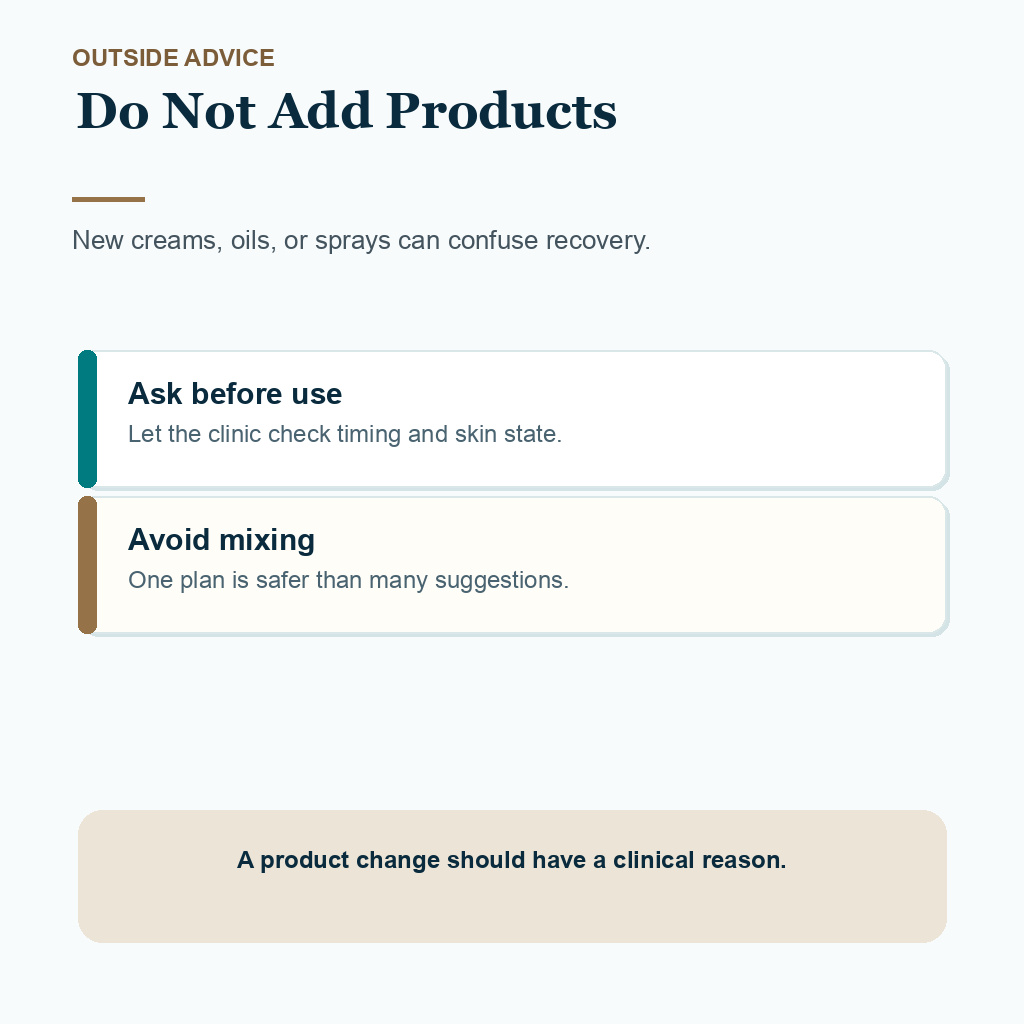
The most common mistake after a scary photo reply is allowing online feedback to decide the care plan before the clinic has reviewed the case. One person says wash harder. Another says stop washing. A tool says the scab looks thick. Someone else says add an ointment, shampoo, antibiotic cream, oil, or spray. This is how one simple concern becomes a mixed aftercare plan.
Use AI only to organize what you will send the clinic. Do not let it replace the washing, medicine, or urgent care instructions you were given.
Your clinic plan is built around the procedure you had, the day you are in, and the way your scalp looked after surgery. If outside advice conflicts with it, the answer is not to combine everything. When outside advice conflicts with your clinic plan, ask before changing washing pressure, products, scab handling, medication, or activity.
The four slides below show common unsafe reactions after AI or online photo advice.