
First FUE Washes Are About Technique, Not Special Water
Patients often ask whether the first washes after FUE need distilled water, bottled water, or a shower filter. I understand the worry. The grafts feel fragile, the scalp is tender, and every small washing decision can feel as if it might change the result. In most normal situations, the water label matters less than the way the wash is done.
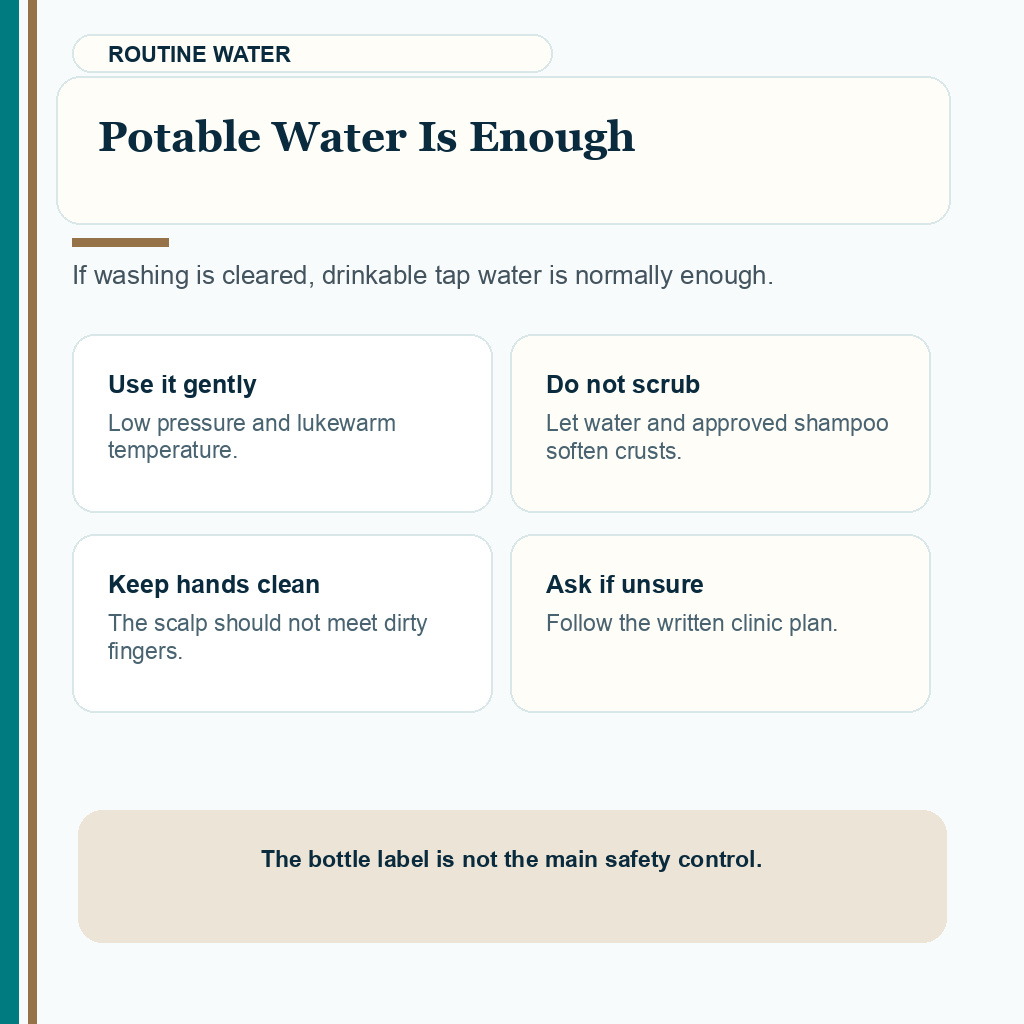
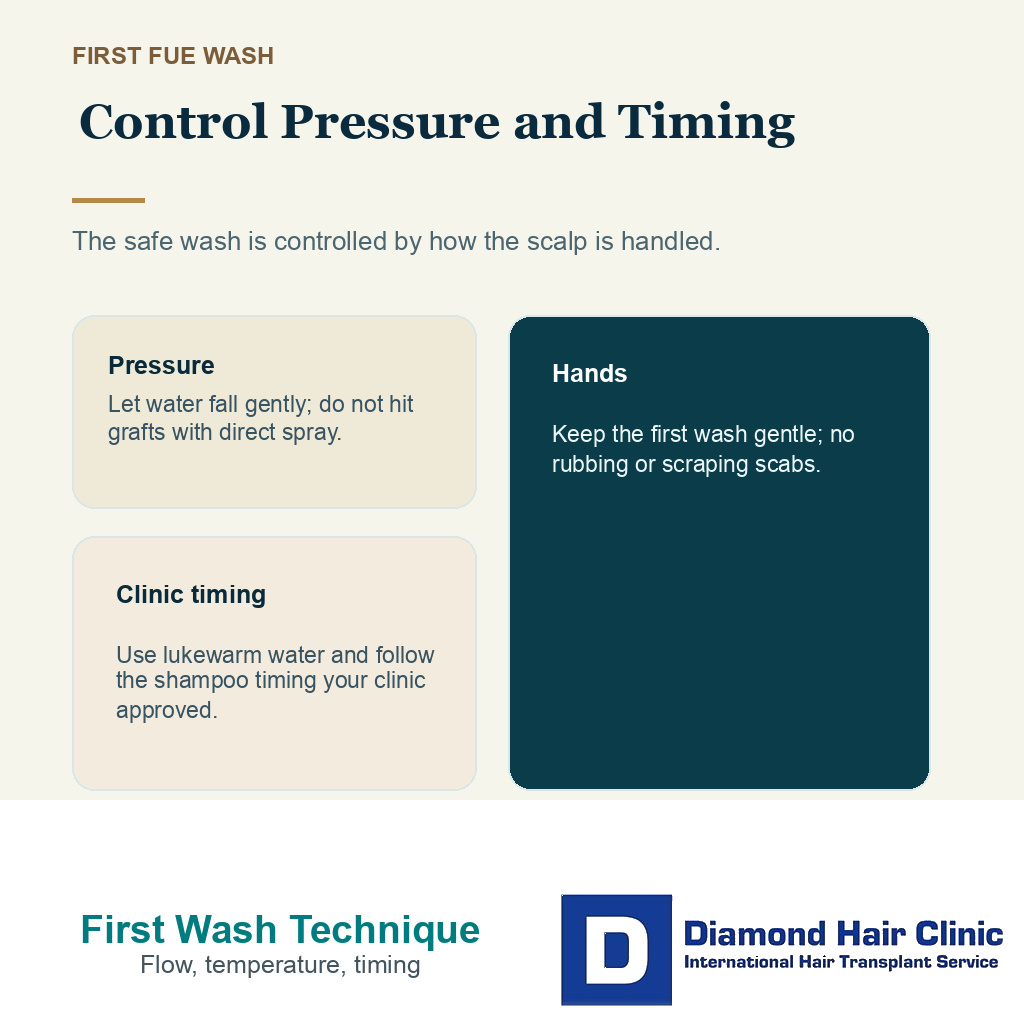
If the local water is safe for normal use and your clinic has cleared you to start washing, the useful focus is simple. Use lukewarm water, low pressure, clean hands, the shampoo or foam your clinic approved, and no rubbing. Special water does not rescue a wash that is too hot, too forceful, full of unapproved products, or followed by rubbing. A gentle routine matters more than making the first wash complicated. Stuck lotion or shampoo should be softened patiently, not turned into a scraping test.
Do not solve fear by adding another liquid. If the pressure, heat, hand movement, or drying step is wrong, bottled water will not make the wash gentle.
Stubborn scabs do not make distilled water, a filter, or extra liquids more important than technique. If the crusts are not ready to lift, repeat the approved softening and rinse pattern instead of extending the wash into a long soak or changing products to make the scalp look clean faster.
If the clinic asks you to leave foam on for a set time, let it sit without continuing to massage. Apply it as shown, keep your hands off during the wait, then rinse with the pressure your clinic demonstrated.
Start with the clinic’s first wash plan
The first decision is not whether hard water is perfect. It is whether washing has started in the way your own clinic planned. At Diamond Hair Clinic, I perform the first wash 2 days after surgery and show the patient the pressure, foam, and hand movement. Other clinics may begin on a different day or give a different home method, so the plan that belongs to your surgery should come first.
Avoid assembling a washing routine from several clinics’ instructions. Any change to the timing, products, or technique should come from the team responsible for your surgery.
For a planned closure on that day, get the written wash method and a backup contact before surgery.
If you are still in the period when washing is not allowed, changing the water choice does not make washing safer. It is still too early for the method you were given. If you have been cleared to wash, follow the same basic principles described in the approved first wash method. The recipient area should get the softest contact. The donor area may be cleaned more directly in some protocols, but it still should not be scratched, rubbed hard, or blasted with hot water.
Patients sometimes buy several products because they want to feel in control. That can backfire. A new antiseptic, a harsh shampoo, or repeated rinsing can irritate a healing scalp more than ordinary potable water. If the clinic gave a specific shampoo plan, stay with it until you are told to change.
If the clinic shampoo cannot travel in hand luggage, the method should not be replaced with a random airport product. The essential part is the washing technique, while product substitutions and delayed steps need to stay inside the clinic’s written limits.
Read this review excerpt
Afterwards Dr Demircioglu gave me his contact information along with detailed postoperative instructions
Potable tap water is usually enough
Potable water means water that is considered safe for normal washing and drinking in that location. A local advisory, unusual color, bad smell, or clear reason not to trust the supply is an exception. In a normal safe water setting, I do not usually tell a patient that distilled water is required for the first FUE wash.
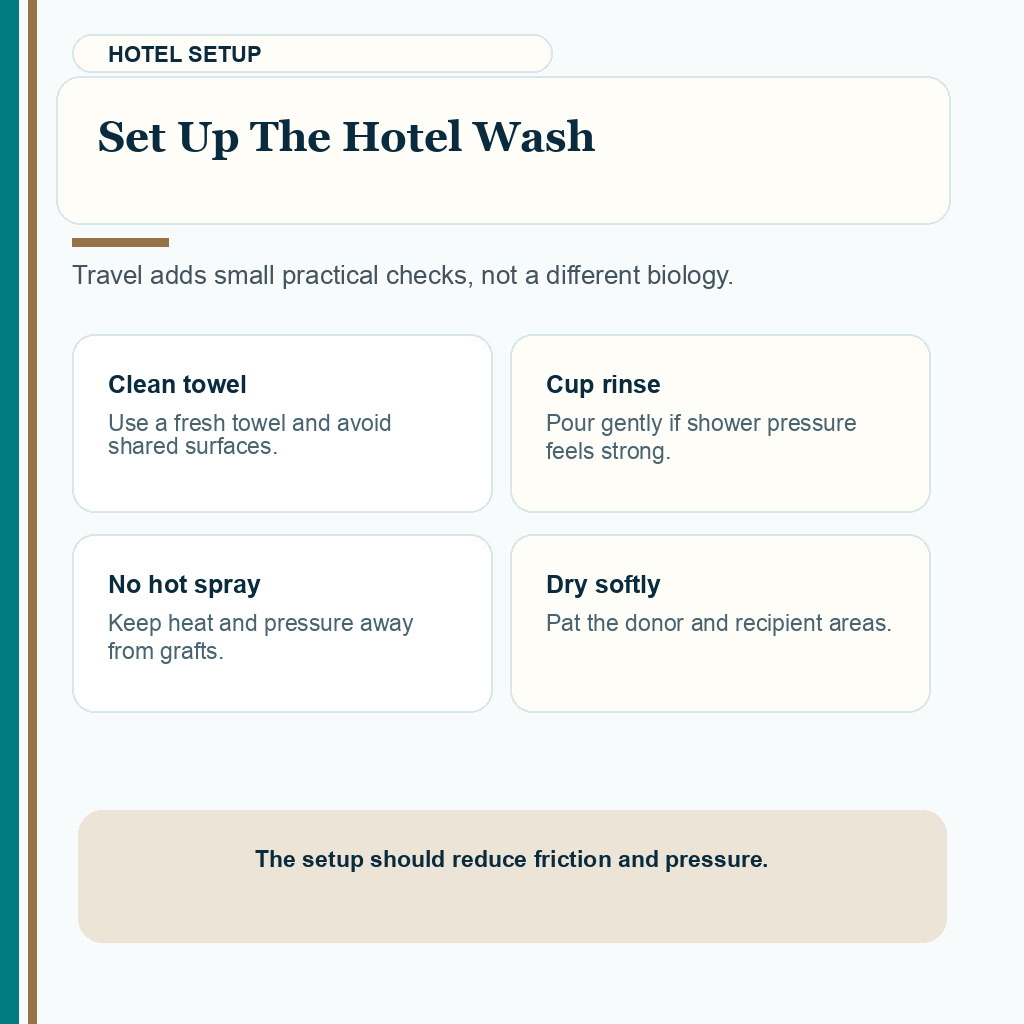
The practical method matters more. Let water run gently. Keep it lukewarm, not hot. Avoid strong direct spray on the recipient area in the early days. If the shower pressure is strong, use a cup or a very gentle handheld setting. Heat and force are more relevant than whether the water came from a bottle, so keep the gentle handling you would use with lukewarm water and low shower pressure.
Set out the cup, towel, and shampoo before the scalp is wet. The wash is easier to keep gentle when supplies are already within reach.
After rinsing, do not rub with a towel. Pat drying is usually safer than wiping across the grafts. Keep pat drying without rubbing grafts as part of the same routine. Many first wash problems come from friction after the rinse, not from the mineral content of the water.
Hard water can irritate, but it is not a graft survival test
Hard water usually means water with more calcium and magnesium. It can leave scale, reduce soap lather, and make skin or hair feel dry in some people. That does not mean hard water is known to destroy FUE grafts. I would not want a patient to look at a bit of scale on a faucet and conclude that the transplant is in danger.
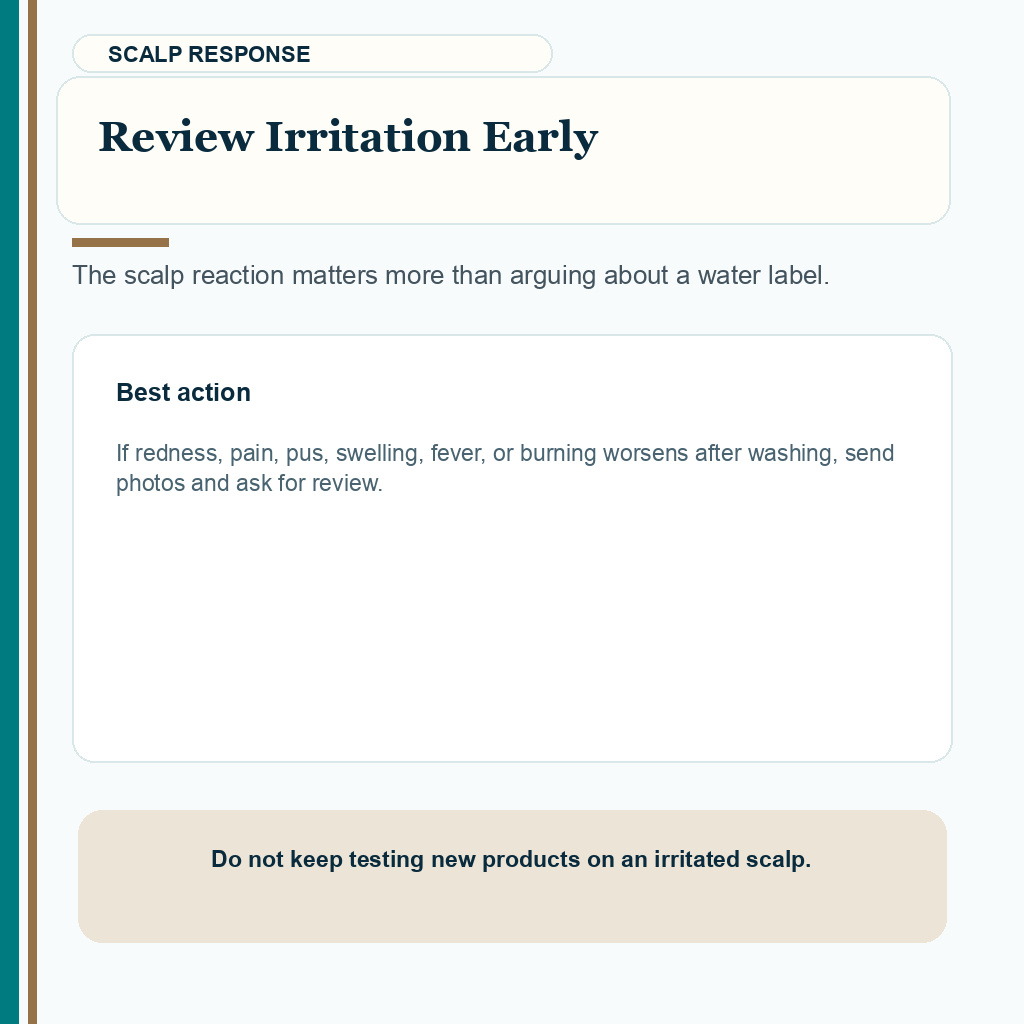
I look more closely at how your scalp responds. If the water feels drying, rinse patiently and keep the approved shampoo mild. If the scalp burns, redness spreads, pain increases, or wet crusting appears, the answer is not to keep testing different products. Photograph the scalp in steady light and keep the wash routine unchanged until the clinic gives specific guidance. You can also compare the pattern with dry flakes and itching after FUE when the main issue is dryness rather than infection signs.
A small amount of dryness after washing is different from worsening inflammation. Do not pick scabs just because they feel firm after a wash. Do not scrub to remove mineral residue. If residue or crusts do not move with gentle washing, leave them for the next allowed wash and ask for review if they stay stuck around the expected scab clearing period. If the scalp looks less dense after the first wash, that can also be a normal visual shock as crusts and hairs shift. If that is your main worry, compare it with looks less dense after the first wash.
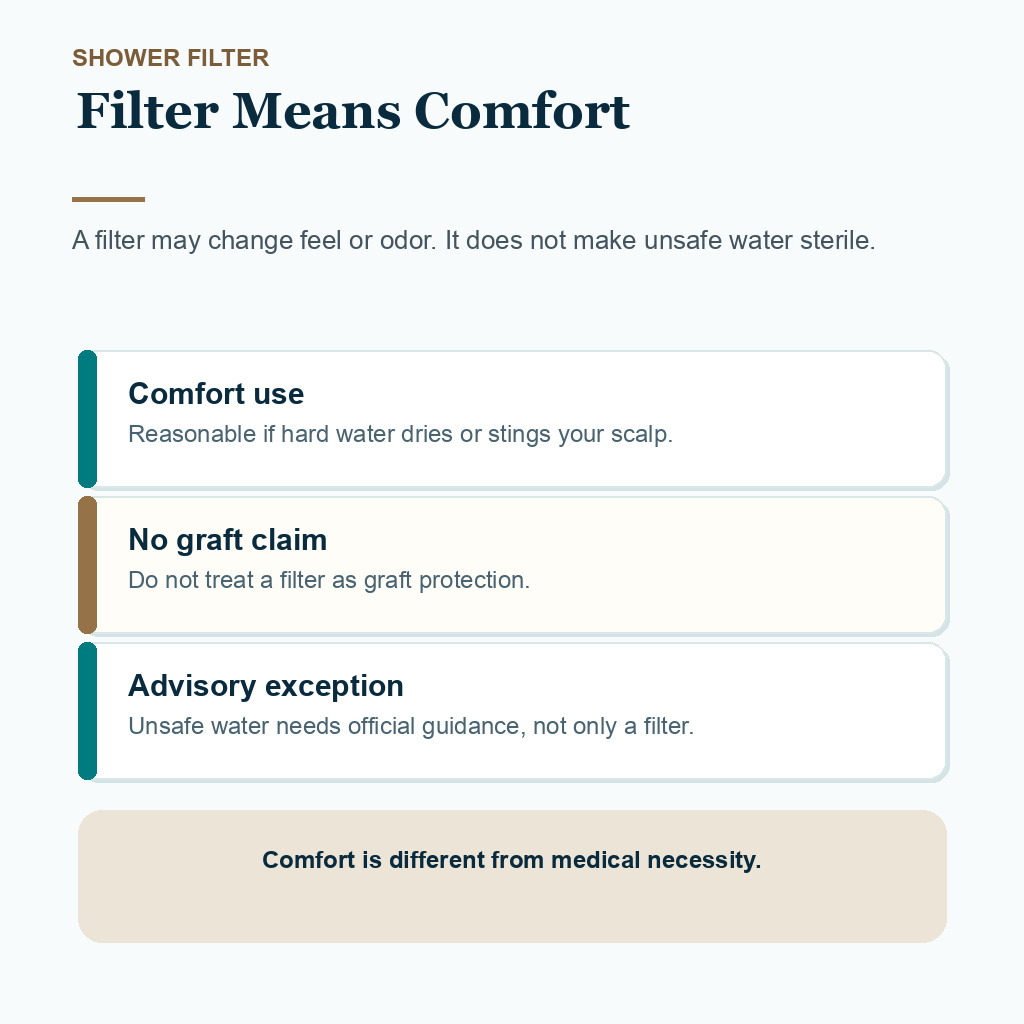
Shower filters are comfort tools, not sterile protection
A shower filter may make the water smell or feel better. Some patients like one because the water feels less harsh on the scalp. That is reasonable as a comfort choice if it does not create pressure, delay the wash, or add a product claim that the clinic did not make. But a filter should not be treated as sterile protection for grafts.
Most consumer filters are designed for certain tastes, odors, minerals, or particles. They are not a universal safety device. If the local authority says the water is unsafe, a shower filter is not the same as a medical sterilizer. Do not assume boiling or filtering solves every warning, because a boil water advisory, a chemical warning, and a notice that says not to use the water can require different action. Follow official local water guidance and ask your clinic how to handle washing during that period.
There is also a practical issue. Some filters reduce flow, while others change the shower head angle or make the hose harder to control. If the filter makes the spray awkward, it may create the exact problem you were trying to avoid. The recipient area does not need a strong direct spray. It needs a gentle rinse.