


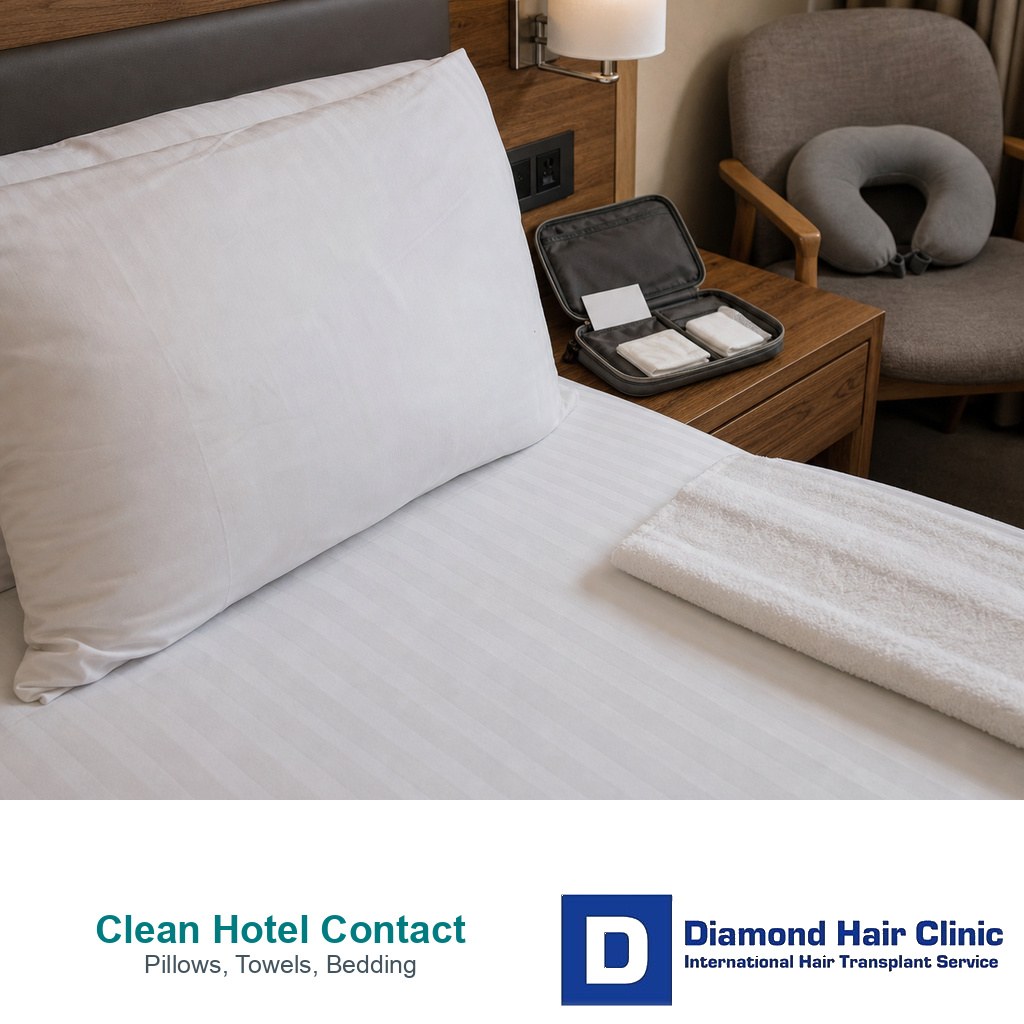
Keep Hotel Bedding Clean Without Overcleaning the Scalp
After FUE, your hotel room does not need to feel like an operating room, but anything that touches the scalp should be clean, soft, and intentional. Use a fresh pillowcase or a clean towel barrier when the donor area may ooze, keep rough hotel towels away from the grafted area, and follow your written hair transplant aftercare instructions before you change anything on your own.
I care less about the hotel brand and more about the contact points, such as the pillow, towel, headrest, sofa back, or anything that may touch the grafted area while you are tired. A clean surface that rests gently near the donor area is different from fabric rubbing the recipient area. A small mark on a pillowcase can come from donor oozing. Repeated pressure or scraping over new grafts is a different problem.
I care less about the hotel brand and more about the contact points, such as the pillow, towel, headrest, sofa back, or anything that may touch the grafted area while you are tired. A clean surface that rests gently near the donor area is different from fabric rubbing the recipient area. A small mark on a pillowcase can come from donor oozing. Repeated pressure or scraping over new grafts is a different problem.
Public spaces around the hotel deserve the same contact logic as the bed. Restaurant chairs, ride headrests, elevators, and clinic transport matter only when they rub the grafted area or make the patient touch the scalp while tired. Before surgery, walk the path from the bed to the bathroom and the route into the vehicle. Notice low shelves, door hardware, the headboard, and the vehicle roof. A patient who remembers the pillow can still bump the recipient area while standing up, turning, or getting in and out when tired.
Request extra clean pillowcases or towels before surgery day, so the first night is not improvised when you are tired.
If you are staying in a rented apartment or another short-term room, make the same plan before surgery rather than assuming the space will have spare linen ready. Pack or request one clean spare cover, know how you would change stained linen if needed, and keep the bedside items within reach before the first sleep.
When you are recovering alone, put water, medicines, wash instructions, charger, clinic contact, and the next pickup time within reach before you sleep. The safest room setup is the one you can follow while tired without rubbing the grafted area. Place them on the side you can reach without rolling the scalp into the pillow or headboard.
Contact the clinic if redness spreads, warmth increases, fluid becomes cloudy or foul smelling, pus appears, fever develops, or pain worsens instead of settling. Those signs matter more than whether the sheet came from a hotel laundry or from home.
Clean contact does not mean cleaning everything
The room does not need to be sterile. The contact points need to be clean. Remove avoidable rubbing, shared fabric, and dirty contact while keeping the recovery simple enough that you can actually follow it. A fresh pillowcase, a clean towel used as a barrier, and clean hands before any approved care step are usually more useful than worrying about every surface in the room.
Do not invent a new cleaning routine because the room feels unfamiliar. If your clinic gave you a specific first wash plan, stay with it. If you are unsure when water, foam, spray, or shampoo should begin, use the written timing in your wash hair after hair transplant instructions instead of guessing from hotel bathroom products.
The recipient area should not be cleaned aggressively just because the room feels unfamiliar. Handling the scalp too often can create the exact friction you were trying to avoid. Clean surroundings help recovery. Constant touching does not.
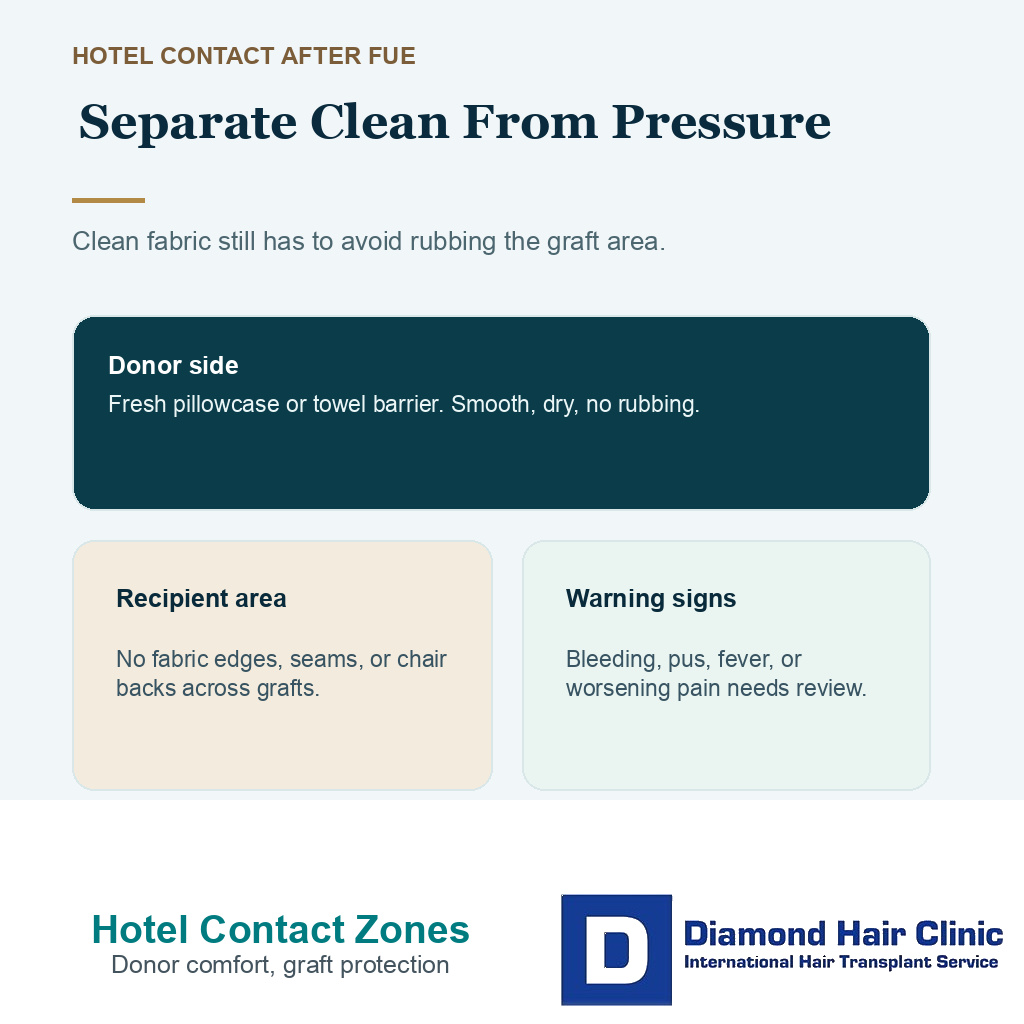
Separate donor oozing from recipient area pressure
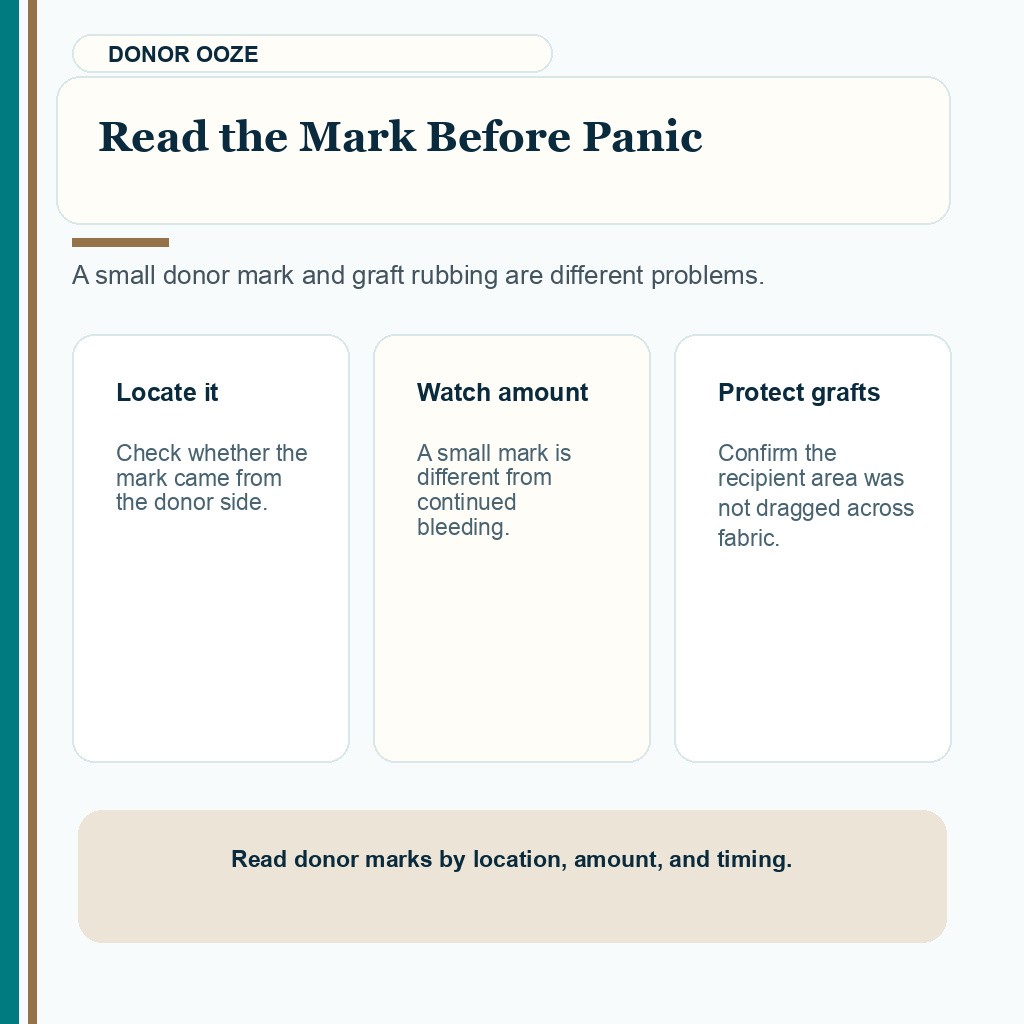
The donor area and the recipient area do not create the same concern. The donor area can leave pale pink, watery, or slightly bloody marks early on, especially after the bandage comes off. A clean pillowcase or towel barrier is practical during the first nights because it protects the bedding without touching the grafts. Active bleeding that keeps spreading should be photographed and reported.
If you wake up and see a small mark near the back of the head, do not panic first. Look at where the mark came from, whether bleeding continues, and whether the grafted area was rubbed. The difference between blood on the pillow after a hair transplant and pressure across the grafts matters.
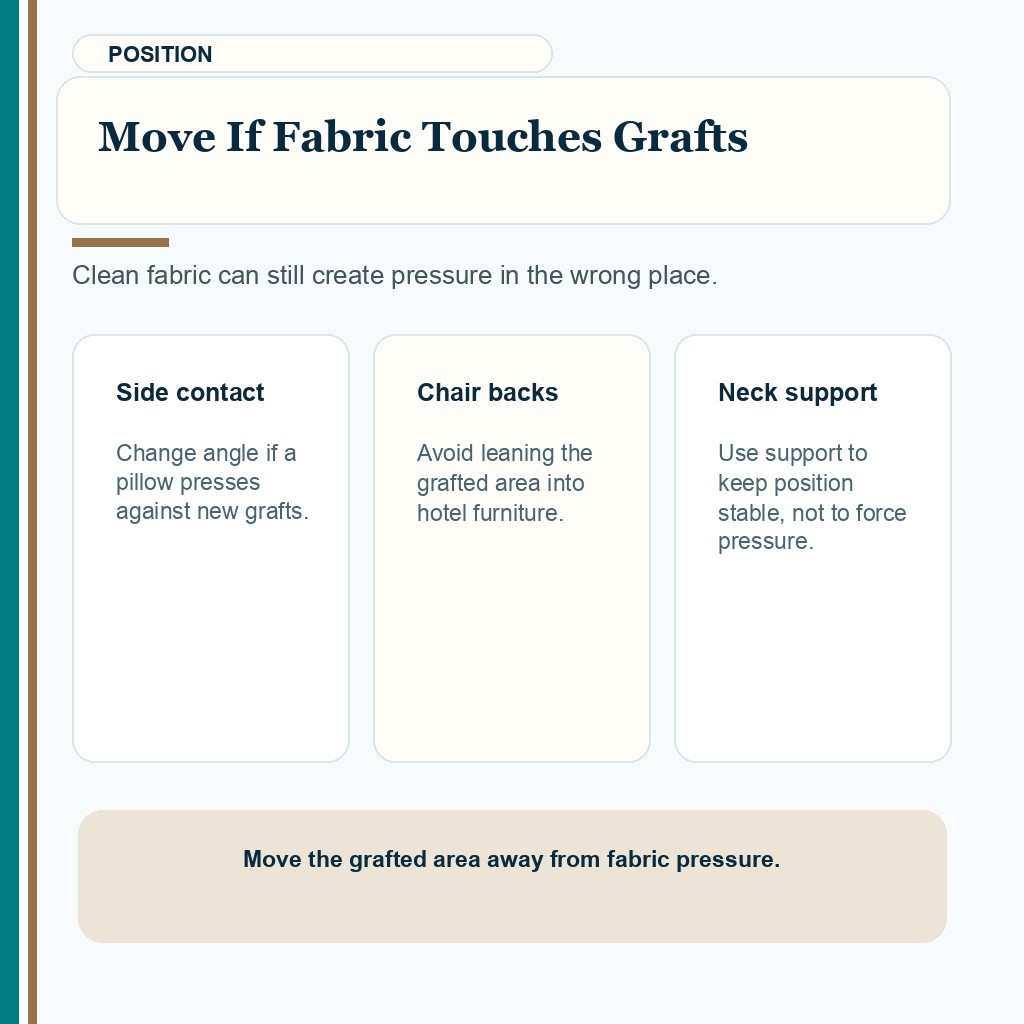
The recipient area needs more respect. It should not be dragged across a pillow, towel, blanket edge, or chair back. If your sleeping position puts fabric against the grafts, adjust the setup. A neck pillow after a hair transplant can help some patients stay more stable, but it still has to be placed so it supports position rather than pressing the scalp into fabric.
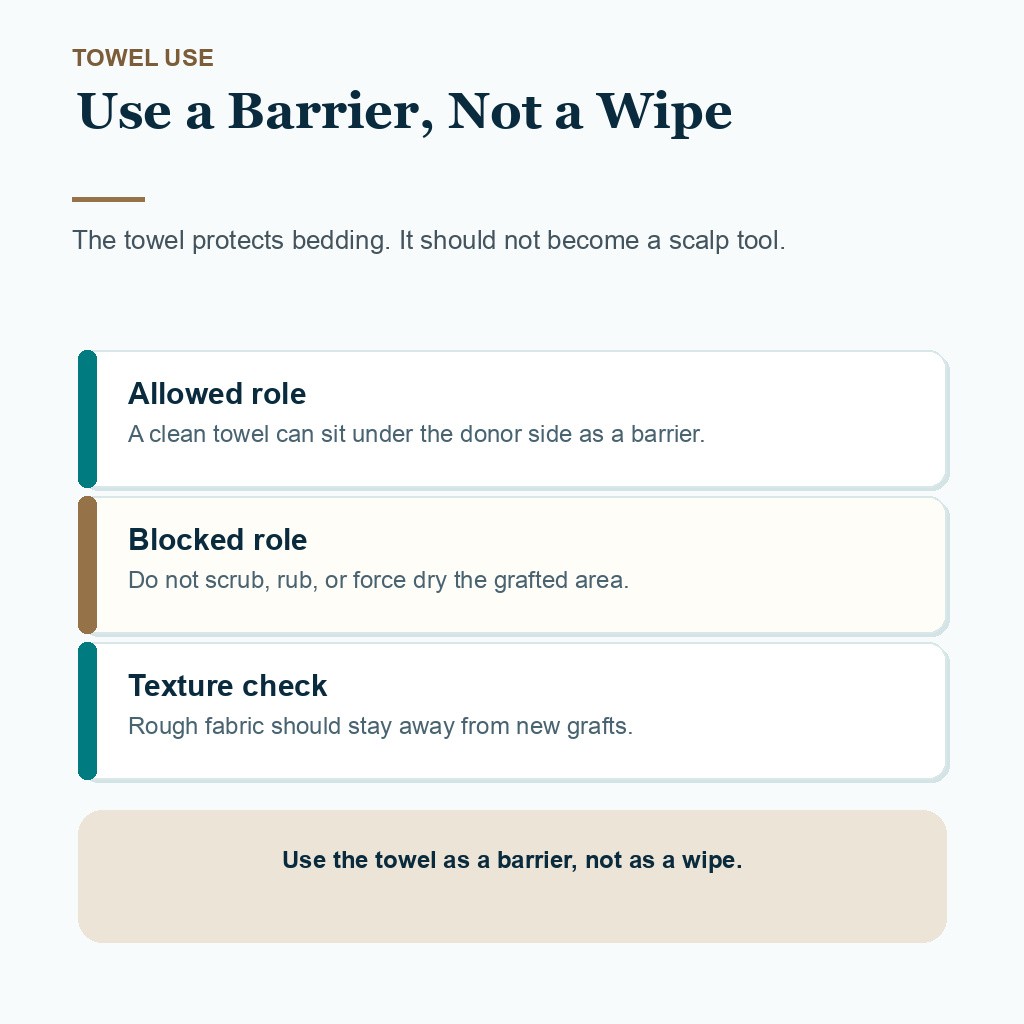
Use towels as barriers, not as scalp tools
A hotel towel should protect bedding, not scrub grafts. Use one clean, dry towel only as a barrier under the donor side when oozing is expected. Change it if it becomes wet, stained, rough, or has been used on the bathroom floor. A towel should not be used to wipe, rub, scratch, or dry the grafted area by force.
Hotel towels can be clean and still be too rough for the recipient area. If a towel touches the recipient area, the risk is usually friction, not the hotel name on the label. Patting or drying should only happen when your clinic has allowed it and in the way they described.
Bandage timing also changes the contact plan. If a donor bandage is still in place, follow the exact removal timing you were given. If you are deciding when the donor area can touch a pillow without the bandage, review bandage removal after a hair transplant with the clinic plan in mind.
Run a quick hotel contact check before sleeping
Before the first hotel night, slow down for one minute. Do not ask, “Is this room sterile?” Ask, “What will touch the scalp while I sleep?” One light accidental touch is judged by visible change, bleeding, pain, and whether the skin opened. Repeated rubbing, sleeping on the recipient area, scratching, or checking the grafts again and again is different.
Recovery errands are easier when they are removed before surgery. Put the simple items beside the bed first, so a missing charger, water bottle, or clean barrier does not become a reason to bend, rush, or touch the scalp.
For later hotel nights, keep the contact plan simple. Use a fresh pillowcase or clean towel barrier when needed, keep floor towels away from the bed, and ask housekeeping for clean linen rather than cleaning the scalp more often.
Choose the clean contact before you lie down
Start with the part of the setup that still worries you before sleep.
Separate a clean barrier, recipient area rubbing, donor oozing, and warning signs before you lie down.
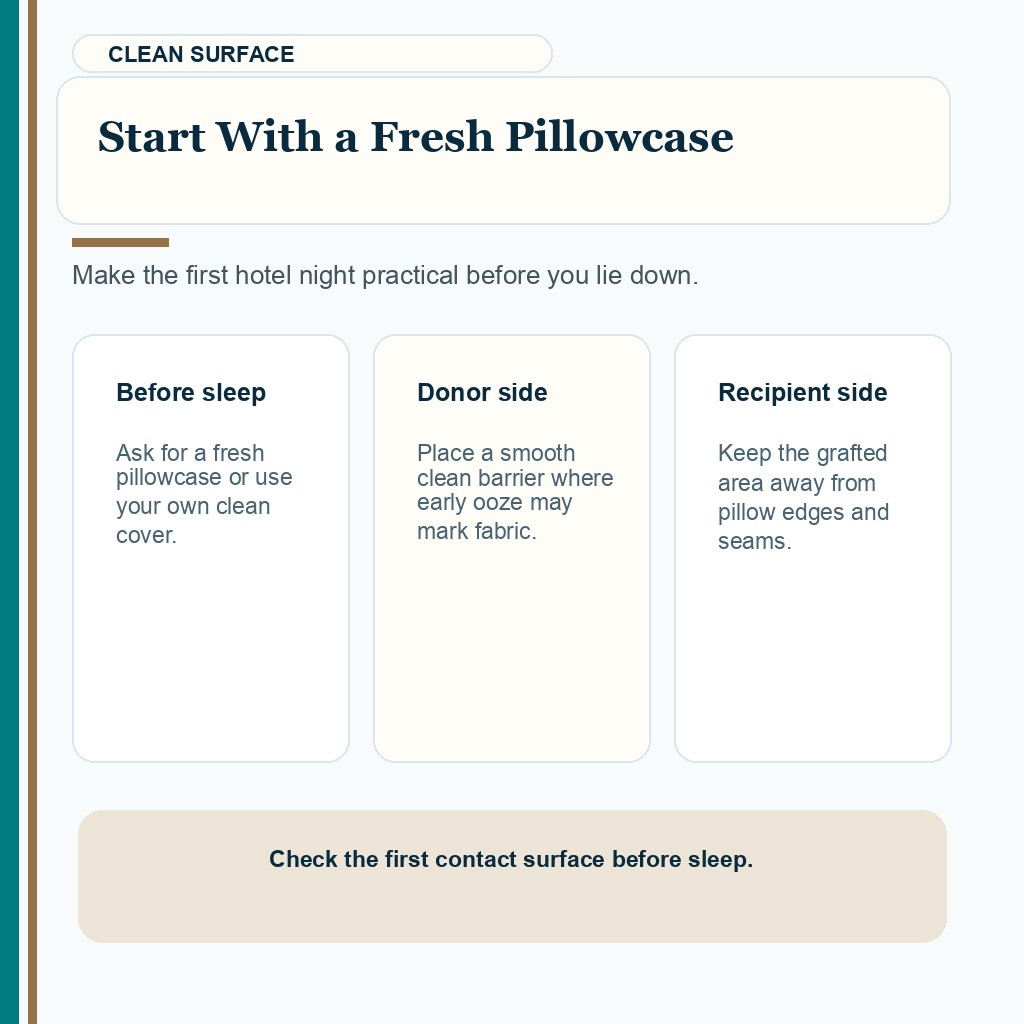
Fresh surface, gentle contact
Use a fresh pillowcase or clean towel barrier where the donor area may touch. Keep the fabric smooth so it does not bunch against the scalp.
This quick check also helps with sleep after a hair transplant. The best position is the one that follows your clinic plan, keeps you stable, and keeps fabric from sliding across grafts.
Warning signs matter more than the hotel brand
A clean hotel surface does not remove the need to watch the scalp. Keep the full warning list simple. Spreading redness, increasing warmth, cloudy drainage, pus, foul smelling fluid, skin opening, chills, fever, or pain that worsens instead of settling are infection warning signs after a hair transplant, not a hotel laundry problem.
Some redness, scabbing, and small pimples can be part of healing, but pattern and timing matter. If the area is getting hotter, more painful, more swollen, or more wet, compare it with your written guidance and send photos. Patients should understand redness, scabs, and pimples after a hair transplant before they travel because the boundary between routine healing and a problem is not always obvious in hotel lighting.
Fever is a separate signal. If you feel systemically unwell or the temperature rises, treat it as a medical review issue, not as a hotel hygiene question. The clinic should know when fever after a hair transplant appears with scalp changes.
Plan the next travel step only after the scalp is settled
Clean contact, luggage, and the next travel step also belong in the hotel plan. It also affects your next morning, airport transfer, flight timing, and outdoor exposure. If the scalp is dry, stable, and not being rubbed after the clinic check, travel planning is usually about protection. If there is active bleeding, fever, worsening pain, discharge, or repeated fabric contact, pause the next travel step and ask the clinic before you leave.

For flying after a hair transplant, the ticket time is only one part of the decision. Travel is easier when the donor area is controlled, the grafted area is protected, and the patient can follow aftercare during the journey. If you are walking outside after checkout, wind, dust, and pollution can add another layer of exposure, so keep the plan practical instead of improvising in the street. Handle dust, wind, and pollution after FUE with prevention, not panic.
The clean surface matters more than the hotel label
A hotel pillow or towel contact is judged by what touched the scalp, when it happened, and what the skin looks like afterward. A brief contact with clean linen is different from rubbing the recipient area, active bleeding, dirty fabric, or repeated pressure while sleeping.
Keep the message practical. Include surgery date, bandage removal time, what touched the scalp, whether bleeding continued, and whether there is fever, warmth, pus, odor, or worsening pain. A normal room photo can help when the skin has changed, but pressing or scratching the scalp to show the issue can make it worse.
If hotel advice, internet advice, and clinic instructions conflict, return to the written medical plan. Conflicting hair transplant aftercare advice is a reason to slow the recovery routine down, not a reason to clean the scalp more aggressively.
For the next night, choose the contact points before lying down. Use a clean pillowcase, a clean towel barrier if instructed, charger and water within reach, and no unnecessary bending over the grafts. If rubbing, bleeding, or warning signs appear, stop changing the setup by trial and error and contact the clinic.
Read this review excerpt
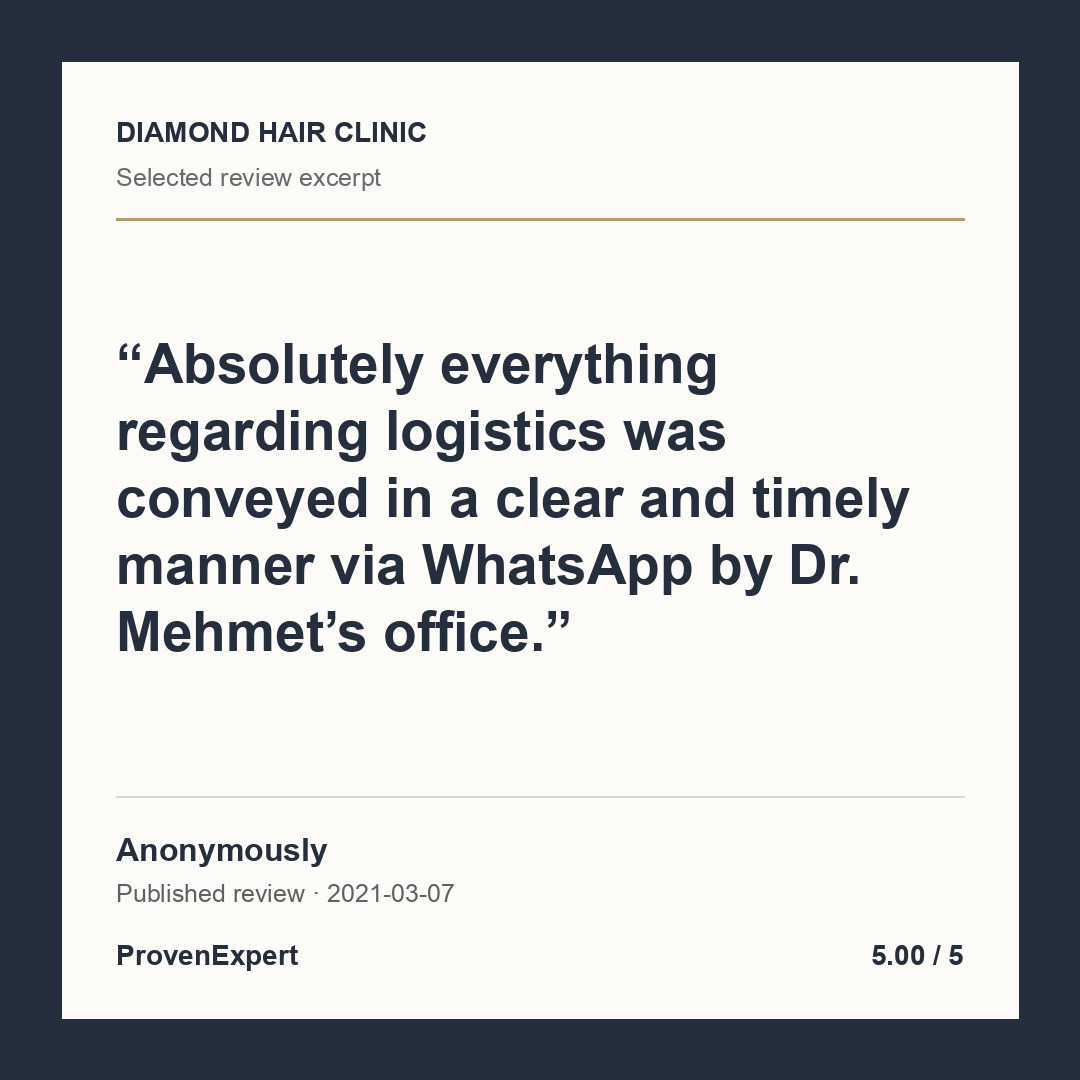
Absolutely everything regarding logistics was conveyed in a clear and timely manner via WhatsApp by Dr. Mehmet’s office.