


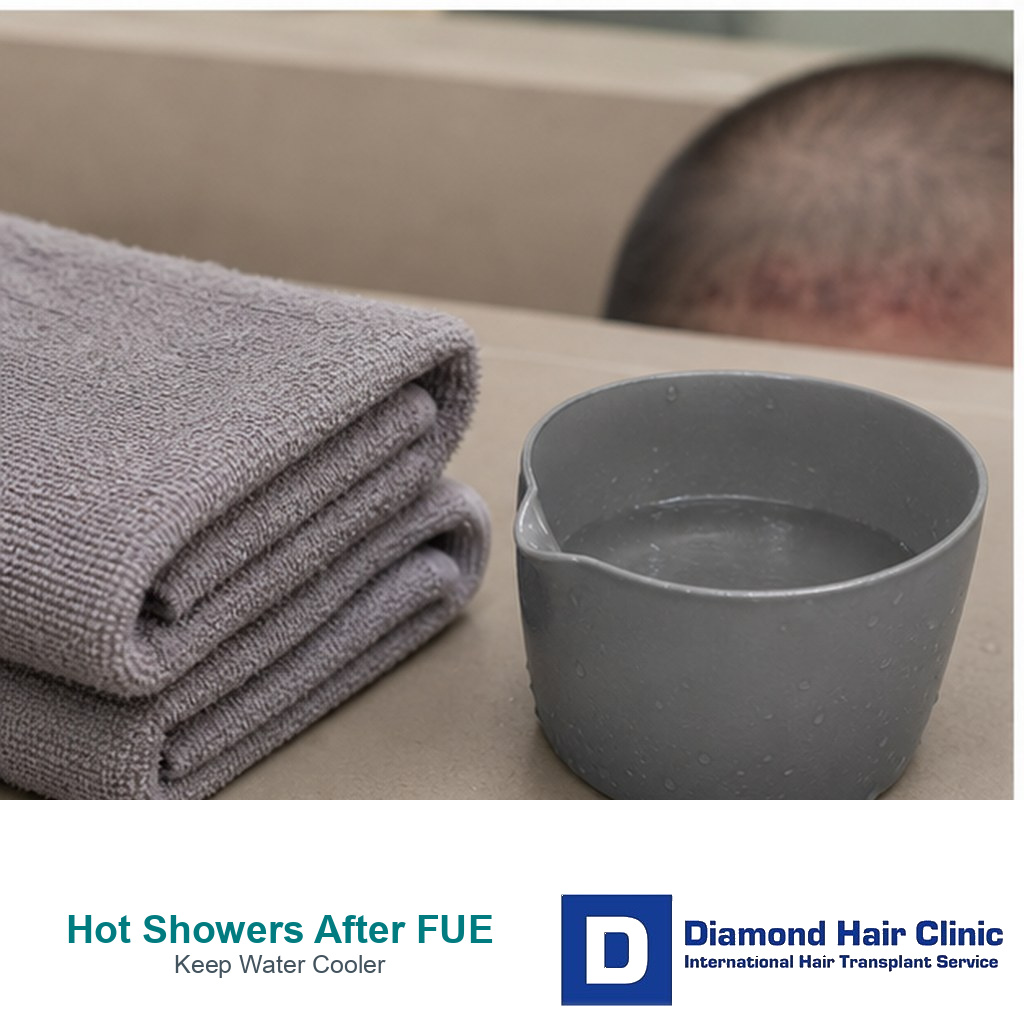
Hot Showers, Graft Safety, and Early FUE Washing
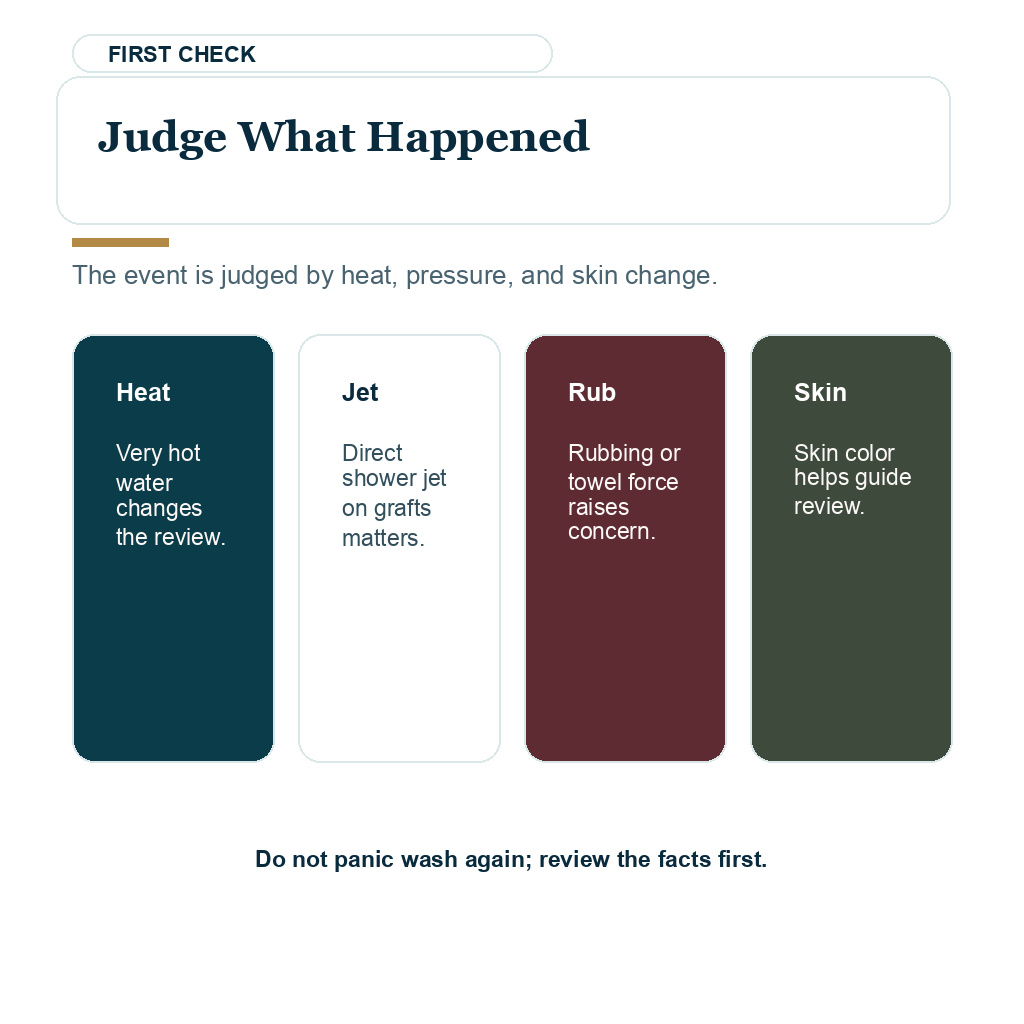
If you accidentally took a hot shower after FUE, do not assume the grafts are lost. I judge the event by the water temperature, the pressure of the stream, how long the scalp stayed in heat or steam, whether you rubbed, scratched, or used a towel, and what the skin looked like after it cooled.
Use lukewarm water first. In the early healing period, avoid hot water, long steam, strong shower pressure, and rubbing over the grafts. If scalp washing has not been cleared yet, do not use another wash to test the grafts. Keep body showering separate from washing the recipient area and follow your clinic’s timing.
Start with what happened with the heat. A brief warm exposure is different from heat plus pressure, rubbing, burn pain, fresh bleeding, open wet skin, drainage, or fever.
First separate heat from pressure and rubbing
If warm water touched the scalp briefly and there was no direct jet, no rubbing, no fresh bleeding, no burn, and no new open wet point, I do not treat that as proof of graft loss. Early grafts are vulnerable, but gentle water running over the scalp is not the same as scraping, rubbing, or pressing.
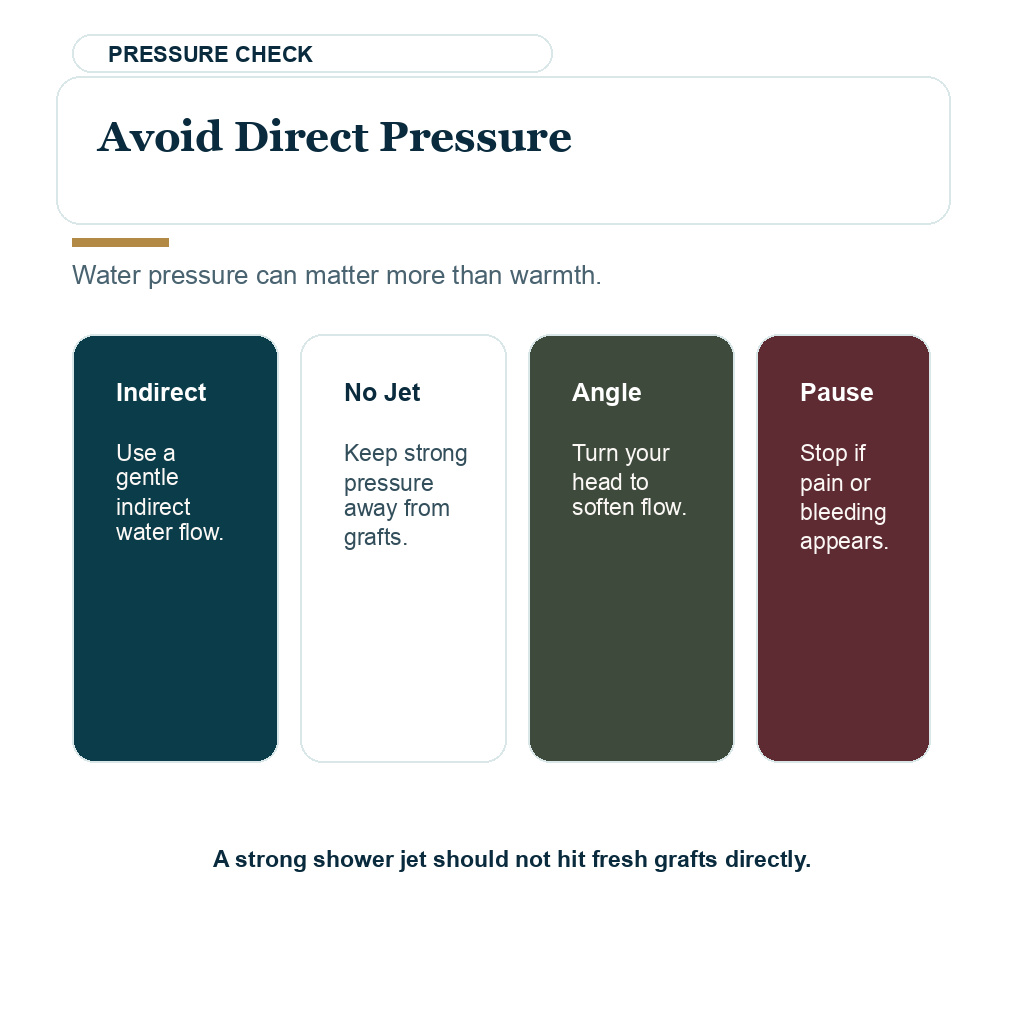
The concern is not water alone. It is pressure, rubbing, or trying to clean scabs before the clinic plan allows it. A direct shower jet, towel friction, fingernails, impatient scab removal, or repeated checking matters more than a short water exposure. When I judge the full wash routine, I use the same basics described in washing hair after hair transplant, including approved timing, lukewarm water, low pressure, clean hands, and no rubbing.
Timing also changes the level of caution. In my routine, the first wash is usually done at the clinic on day 2, so a day 0 or day 1 body shower is not the same as washing the recipient area. During the first protected days, avoid direct scalp pressure unless your own instructions allow it. Around days 10 to 14, many uncomplicated patients are moving toward gentler normal washing as scabs clear, but that still does not mean hot water, steam, or forced scab removal.
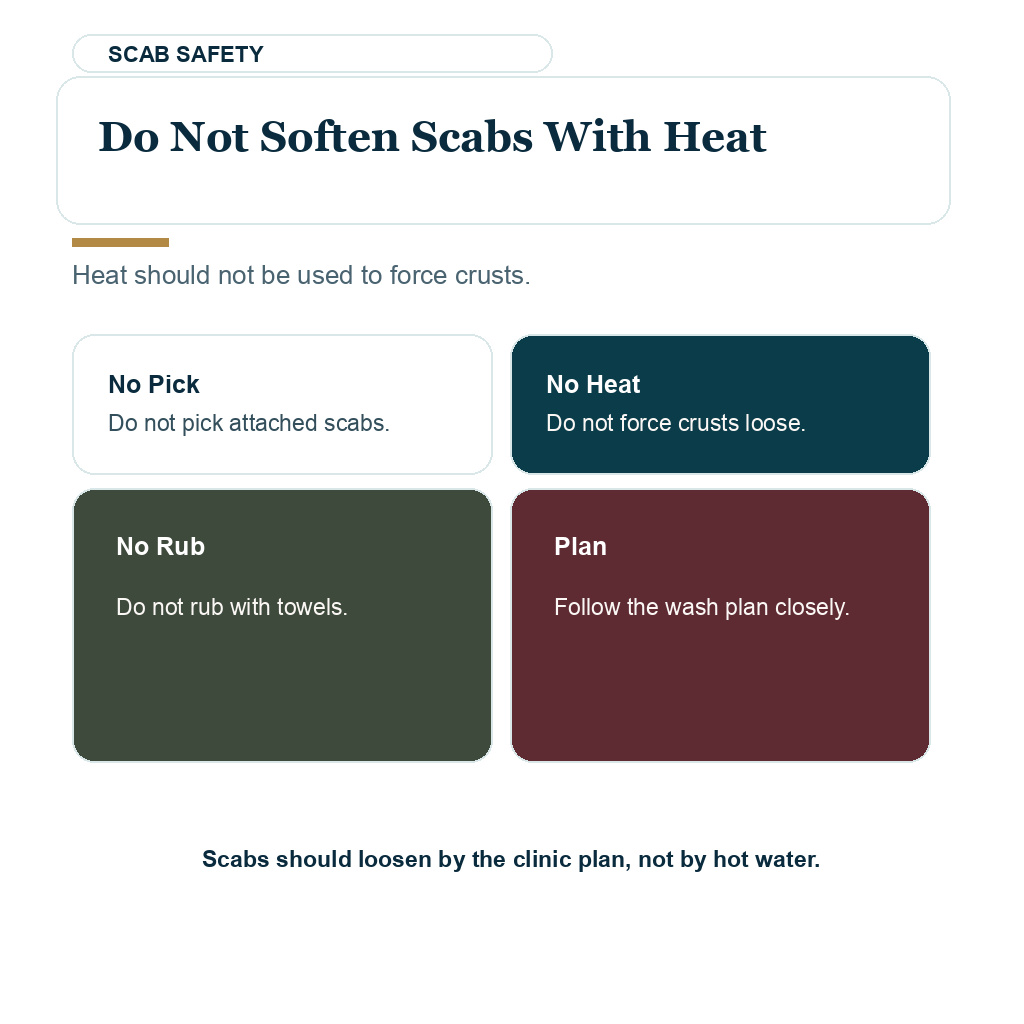
A longer warm shower should not become a shortcut for scabs. Heat and steam can make the scalp look redder, and direct pressure can turn a nearly ready crust into a traction event. Stubborn scabs are better handled with the approved wash rhythm than with a hotter or longer rinse.
The scalp’s behavior after cooling down matters. A temporary redder look after warmth is different from skin that keeps getting more painful, hot, swollen, wet, or blistered.
After a shower scare, wait for the scalp to cool before judging the color. Bathroom heat and wet hair can make redness look worse, so the next decision should come from the settled scalp, not the first mirror check.
Heat often causes the second mistake
Heat can make the skin look redder, increase sweating, and make you feel that the scalp needs another wash. That second reaction is often the risky part. You try to clean sweat, soften scabs, or reassure yourself with more water, stronger pressure, and a towel. That can irritate the skin more than the first shower.
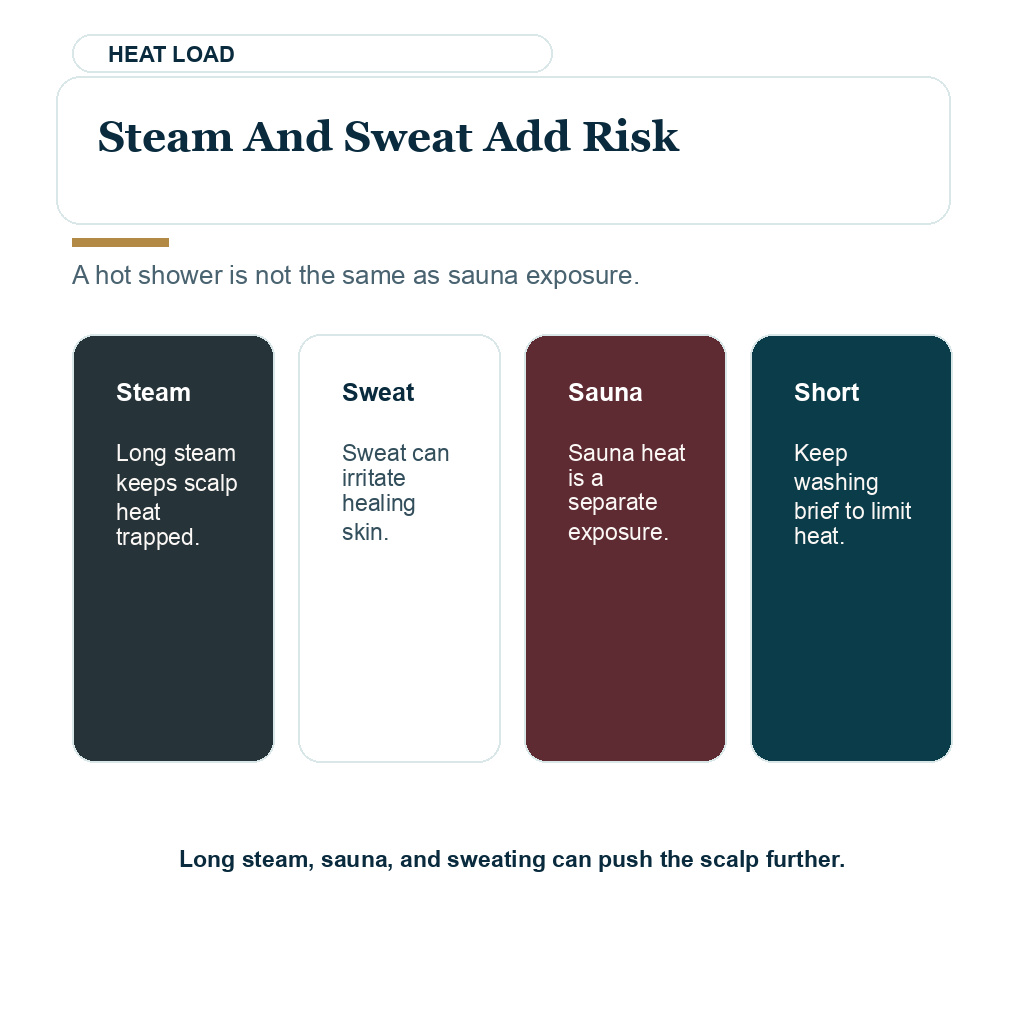
Early hair transplant aftercare should stay simple. The scalp does not need a spa routine. It needs controlled washing, controlled drying, and less touching. Steam rooms, hammams, hot tubs, and a closed bathroom that fills with steam are not just longer showers. They keep the whole body hot and sweaty, which is why sauna after hair transplant follows a more cautious timing rule. If the question is full cold immersion after washing feels easy, review cold plunge timing separately because water exposure and body response both matter.
Sweating needs a gentle recovery response. Do not treat sweat as a reason to scrub. If sweat is the main worry, the gentle cleaning rule used for sweating after hair transplant applies. Cool the room, reduce friction, and clean only in the method your clinic allowed.
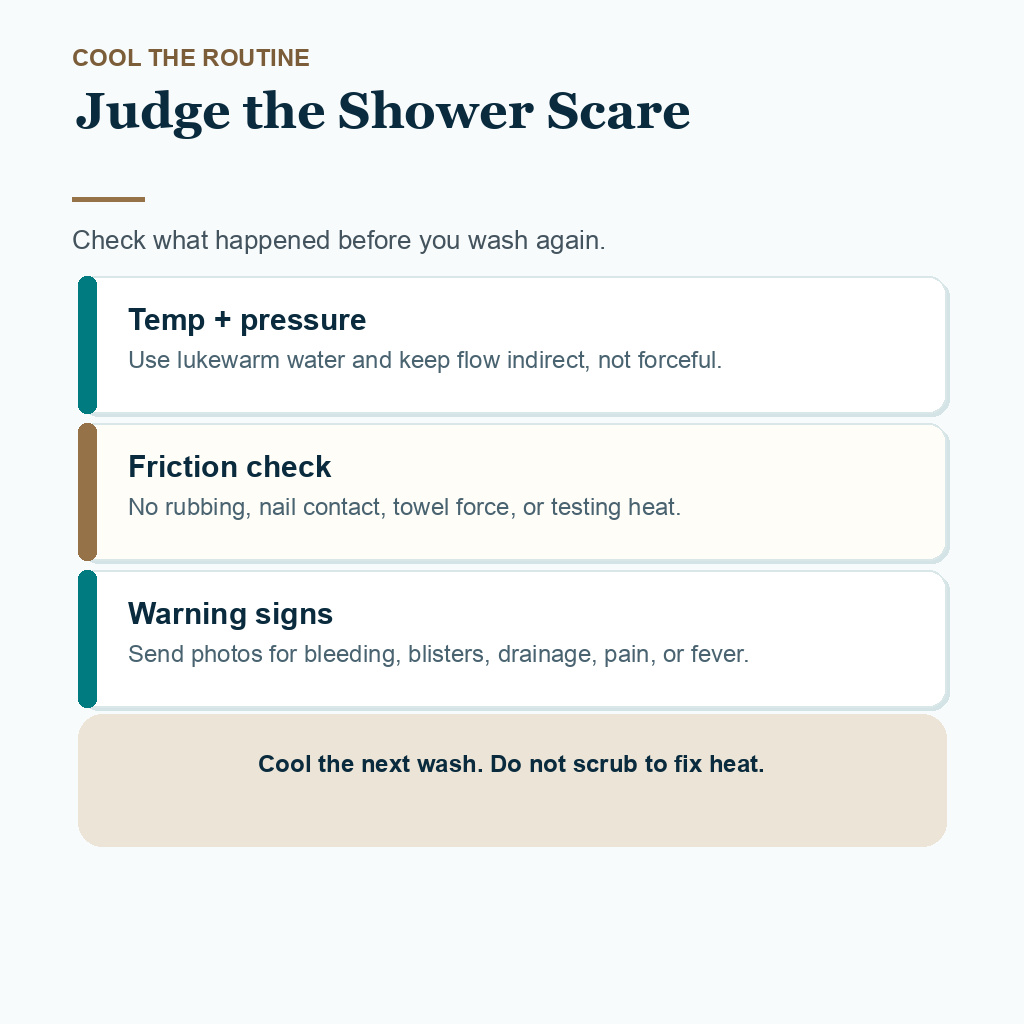
The first approved scalp wash should feel controlled
The first shower or wash should feel controlled, not satisfying in the way a normal hot shower feels. Lukewarm means comfortable, not steaming, not burning, and not so hot that the bathroom feels like a sauna. Indirect flow or a cup is safer than a direct strong stream. Pat drying is safer than rubbing. Short exposure is safer than standing in steam.
Set the water before it reaches your head. Let it run away from the scalp until the temperature is steady, then check it with your hand. A shower handle left in the same position does not guarantee the same temperature throughout the wash. If the water suddenly becomes hotter or the pressure changes, move the stream away and adjust it before continuing. Use the washing method you were given rather than testing the change on the recipient area.
If your clinic gave you a specific wash method, follow that method first. Do not combine three different internet routines. Patients often get into trouble when they mix a cup rinse instruction with a shower head video, then add hot water because the scabs look stuck. The recipient area needs the softest contact. The donor area may be cleaned more directly in some protocols, but it still should not be scratched, rubbed hard, or blasted with hot water.
For a warmer body shower, keep scalp washing separate. Let the recipient area stay out of the direct stream, then use the clinic washing method instead of turning body comfort into a hotter hairline rinse.
Drying is part of the same decision. If the scalp is wet, let water drain, then air dry or pat gently. Do not wipe through the recipient area and do not use hot air near it. If a dryer is part of your routine, the hair dryer after hair transplant decision should stay around cool air, distance, and no direct heat on the recipient area.
When does redness after hot water need review?
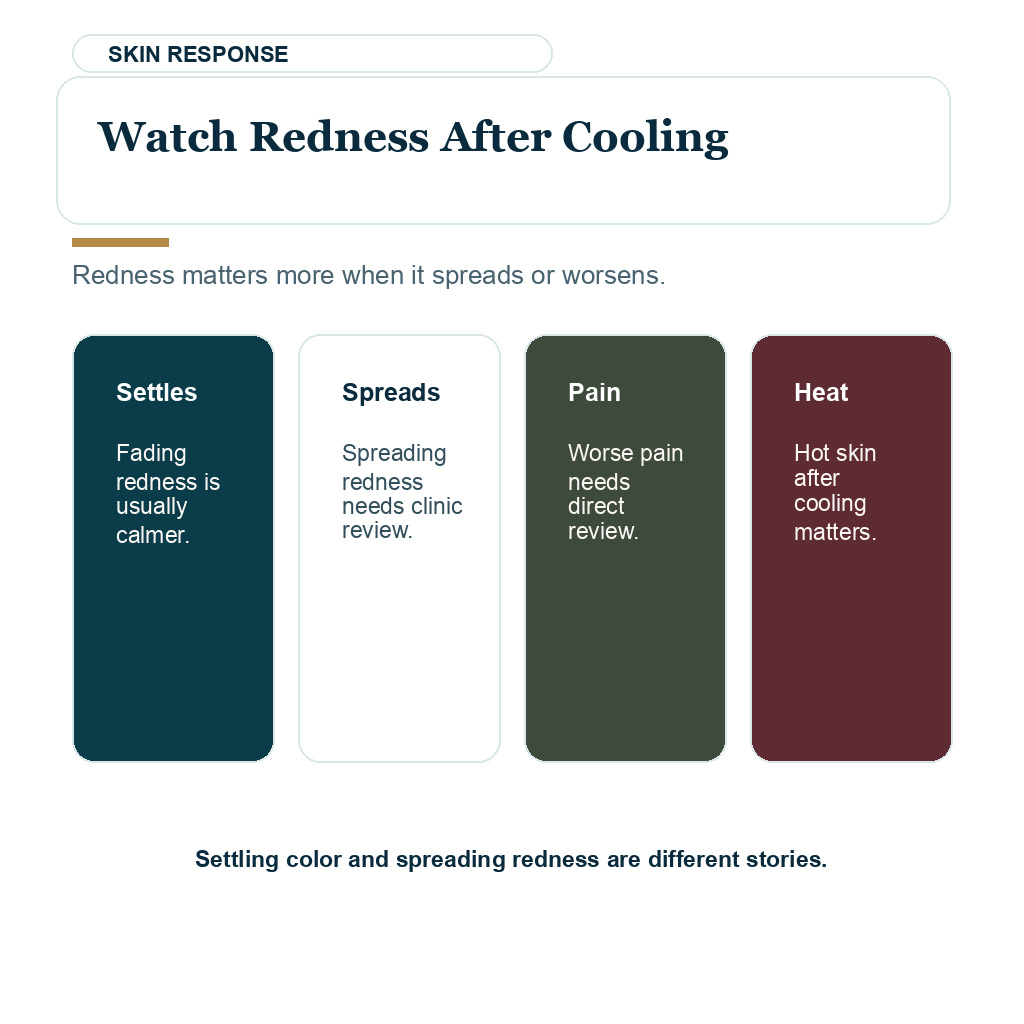
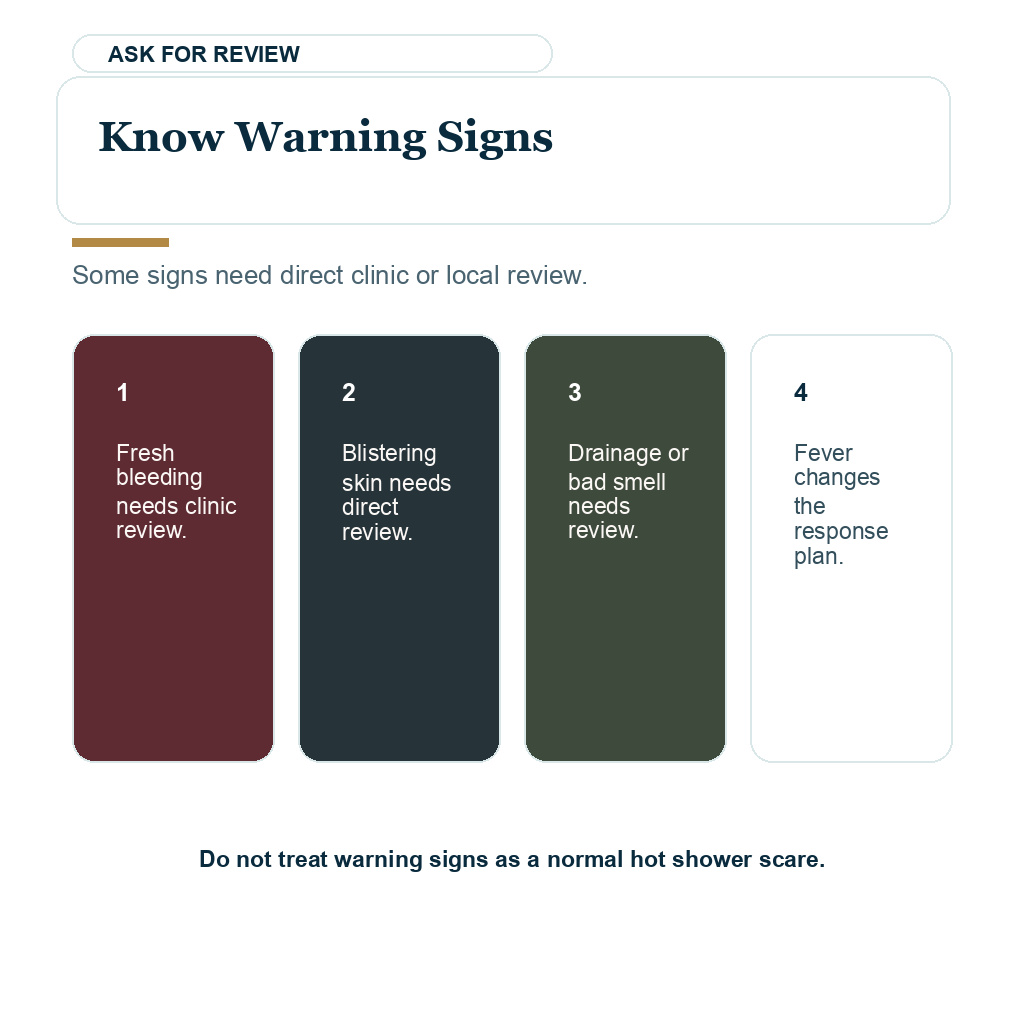
A scalp can look redder for a while after warm water, bathroom light, wet hair, or steam. By itself, that is not my proof of graft loss. I become more concerned when redness spreads after the scalp has cooled, the skin feels hot to touch, pain worsens, swelling increases, the area becomes wet or open, cloudy or thick yellow or green drainage appears, there is a bad smell, fever develops, or you feel unwell.
For the common mix of redness, crusts, and small spots, compare the pattern with redness, scabs, and pimples after hair transplant. Yellow color alone does not answer the question, because moisture can come from serum, shampoo residue, sweat, diluted old fluid, or infection. If the worry is drainage, use yellow fluid after hair transplant as the closer comparison.
If there is fever, the question moves away from a simple shower mistake. Fever after hair transplant changes the urgency because a whole body symptom matters more than the water temperature.
Do not put random burn cream, antiseptic, oil, antibiotic ointment, or patches on the recipient area while waiting for advice unless your clinic or a local doctor specifically tells you to. If the shower caused true scald pain, blisters, spreading redness, drainage, fever, chills, or feeling unwell, stop treating it as only a graft anxiety question. The warning sign boundary overlaps with infected hair transplant.
How are hot showers different from sauna and steam?
A short, controlled wash is different from sitting in a hot, humid room. What matters is duration, body temperature, sweating, and how long the scalp stays under heat. Even a shower starts to behave like steam exposure when the bathroom is closed, the water is very hot, and you stay there long enough to sweat.
Steam should not be used to loosen scabs, and stronger water should not become a graft security test. If your main question is whether grafts are secure enough for normal handling, read when hair transplant grafts are secure, but remember that more secure never means rub, overheat, or force crusts off on purpose.
If scabs or hairs came off after the wash, judge the event by what came with them. A dry crust or hair shaft released during the expected washing period is different from fresh bleeding, an open wet point, scraping, or a clear traumatic pull. Use lost grafts after hair transplant scabs when that fear is the main question.
Sort the shower mistake before you wash again
Before the next wash, place the event into the closest group. This does not replace your clinic’s instructions, but it helps separate a simple heat mistake from pressure, rubbing, steam, or warning signs that deserve review.
Hot shower heat exposure sorter
Choose the closest situation before the next wash. Heat alone is different from heat with pressure, rubbing, steam, or warning signs.
Lukewarm water with indirect flow
I usually want early washing to feel quiet and controlled, with cooler water, low pressure, no direct jet, no rubbing, and no long steamy bathroom session.
If two states fit, choose the more cautious one. A hot shower with no symptoms is one route. Hot water plus rubbing, bleeding, open skin, drainage, or fever is a different route.
Use the cooler water sequence before the next wash
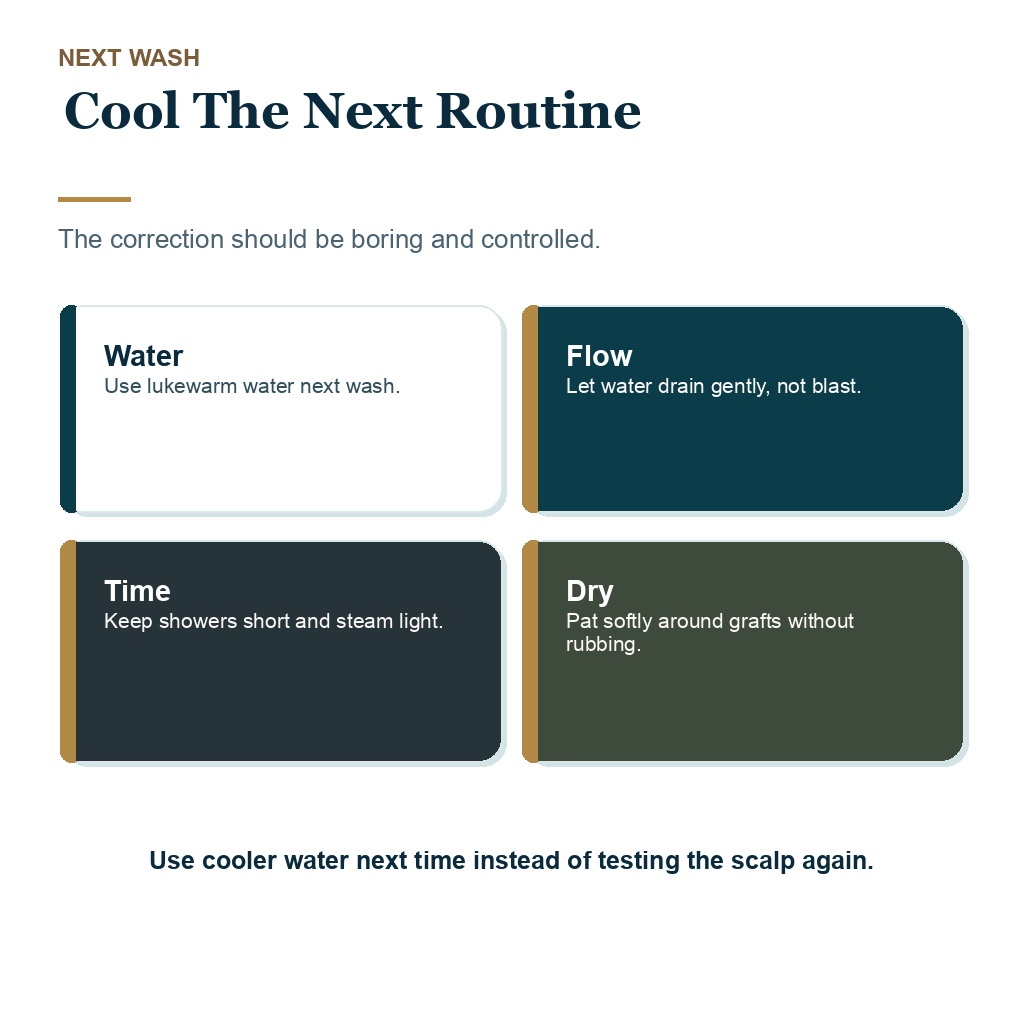
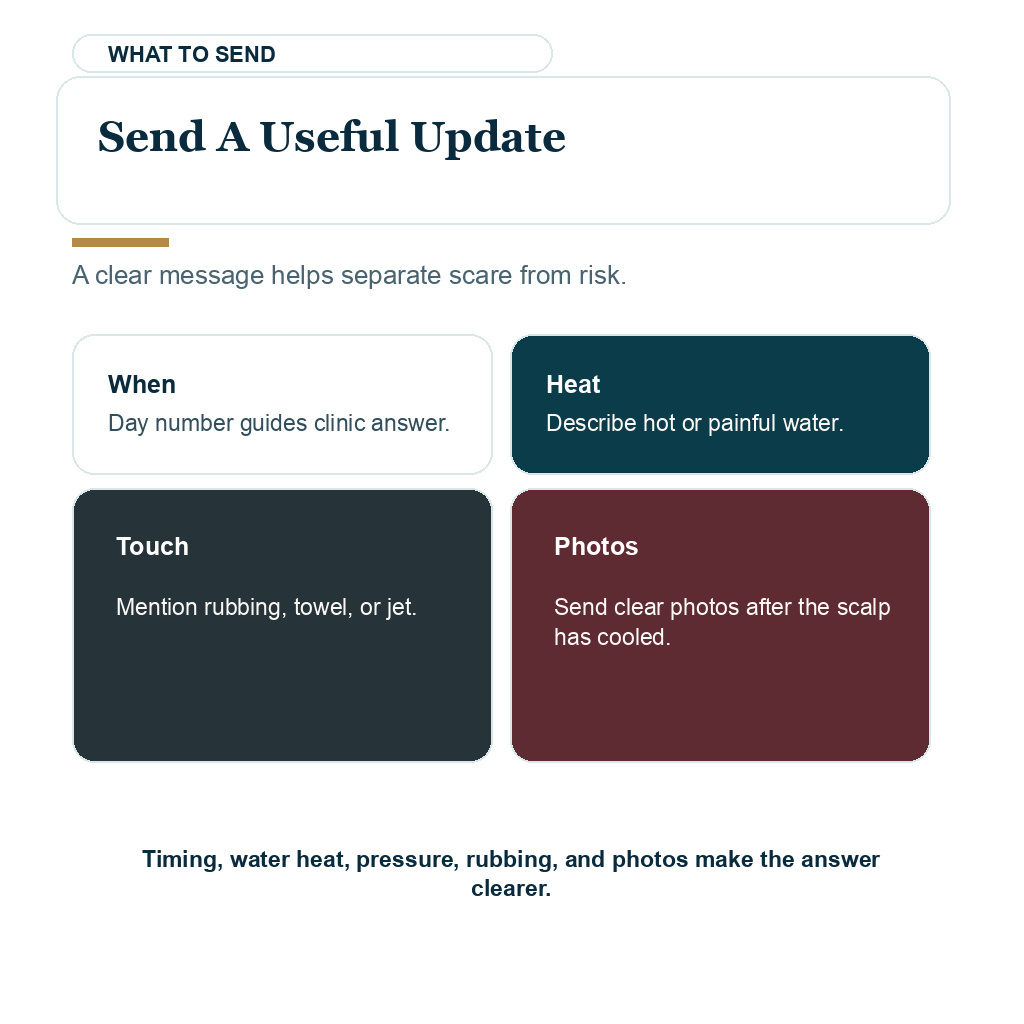
Before the next wash, use the slide sequence to cool the water, reduce pressure, keep steam brief, and send photos if warning signs appear instead of scrubbing the scalp again.
Make the next shower uneventful
After a hot shower scare, the best correction is usually uneventful. Make the next water lukewarm. Keep the stream away from direct graft pressure unless your clinic has already allowed it. Let water drain. Dry gently. Do not rub, scratch, scrape, pick, or use hot air.
A hot shower after FUE is judged by timing, heat, pressure, friction, and the skin afterward. If nothing opened, nothing bled, and the redness settled after cooling, keep the next wash cooler and stop testing the scalp. Fresh bleeding, blistering, wet drainage, spreading redness, worsening pain, fever, chills, or feeling unwell should be reported to the clinic promptly.
Diamond Hair Clinic patients who had a hot shower should send a short message with the day after surgery, how hot the water felt, how long the scalp stayed in heat or steam, whether the stream hit the grafts directly, whether they rubbed or used a towel, and clear photos after the scalp cooled. Also tell us right away if there is fresh bleeding, blistering, wet drainage, worsening pain, spreading redness, heat, swelling, fever, chills, or feeling unwell. That gives the clinic a useful picture and makes the clinic review clearer.
Read this review excerpt
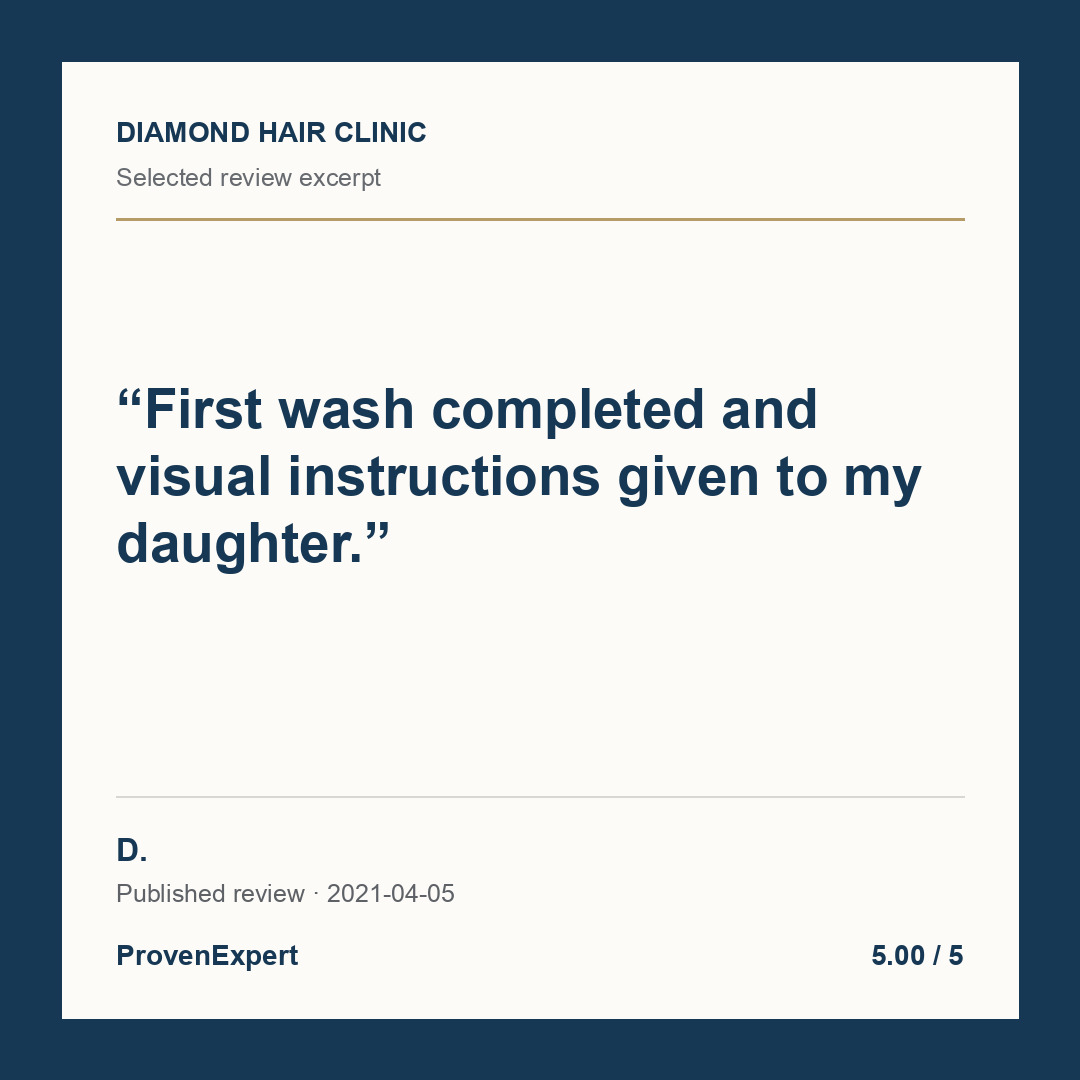
First wash completed and visual instructions given to my daughter.