


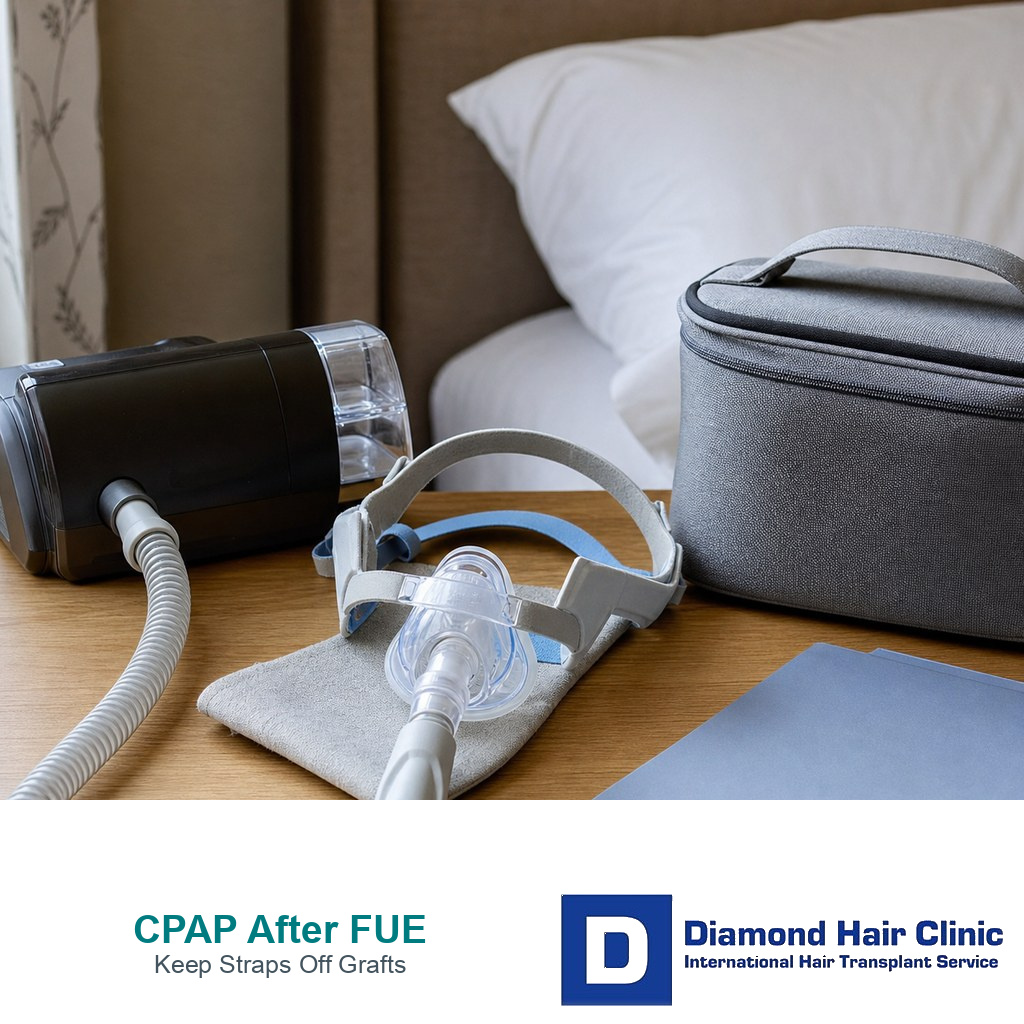
Protect Grafts When CPAP Straps Cross the Scalp
A CPAP machine is often medically important, so the first issue after FUE is not quietly stopping it. The mask path, strap movement during sleep, heat or sweat under the setup, and seal review before the first night matter more than a simple permission question.
If you use CPAP for sleep apnea, the breathing treatment and the graft protection plan need to be discussed together. Do not stop prescribed CPAP on your own, and do not let a strap rub across fresh grafts or sore donor skin without review.
Please show your CPAP mask, headgear, and strap route before surgery, so the first postoperative morning is not spent trying to explain a guess from the hotel room.
A device name is not enough. Send a photo of the actual strap path, because two CPAP masks can protect breathing equally well while touching different parts of the scalp. A front photo is not enough if the strap crosses the crown, donor band, or temples.
Keep CPAP in the medical plan
Sleep apnea is not a cosmetic detail. If you use CPAP every night, tell the clinic during consultation or preoperative review. Tell your sleep doctor as well if surgery may require a temporary mask interface, strap adjustment, or sleeping position change. Hair transplant aftercare should not push you into unsafe breathing decisions.
On the surgical side, the concern is pressure and friction. Fresh recipient grafts do not need a strap sliding over them. The donor area can be tender after FUE extraction. The forehead and temple area can also swell. CPAP planning has to respect all three areas while keeping your sleep treatment workable.
The general aftercare priorities that protect healing grafts still apply, but CPAP deserves a more specific plan because the device may be used for hours while you are asleep.
Map the strap route before surgery
Put the mask on while you are awake and look at the exact route of every strap. Check whether anything crosses the new hairline, temples, midscalp, crown, or donor area, whether the back strap sits on the extraction zone, whether a top strap passes over a planned recipient area, and whether the mask rides upward when you turn your head.
Those details matter more than the mask name. A small nasal interface with side straps behaves differently from a full face mask with a rear strap. A soft strap that stays still behaves differently from a loose strap that has to be pulled down repeatedly through the night.
A daytime face mask can usually be adjusted or paused. CPAP needs stricter mask strap pressure after FUE planning because the device may be medically necessary and may stay on the face all night.
Recipient, donor, and swollen skin do not tolerate pressure the same way
The recipient area is the first concern in the earliest days. I do not want straps, tubing, hands, or pillow movement rubbing across the grafted zone. This matters before scabs settle, and it also matters when you are still tempted to inspect the area too often.
The donor area has a different problem. It may be numb, sore, or scabbed after extraction. A rear CPAP strap can feel harmless for a minute while you are standing, then become irritating after hours of pressure. The graft security timeline helps separate graft timing from donor comfort, but both still matter.
Swelling adds a third layer. A forehead band, mask cushion, or strap can press on skin that is already moving fluid. The same distinction applies to headband fit and swelling. Gentle placement is different from tight pressure.

Mask changes need sleep doctor or supplier input
You may wonder whether nasal pillows, side straps, an ear loop route, or a different full face mask would be easier for the first recovery nights. The answer depends on your sleep apnea, mask seal, pressure needs, mouth breathing, nasal blockage, and what equipment is safe for you. I do not treat CPAP interface changes as a hair transplant trick.
If a temporary interface change is needed, involve the sleep doctor or mask supplier before travel. Try the setup before surgery, not for the first time after the operation. A temporary mask change is different from stopping CPAP or loosening the mask until it leaks. Avoiding the scalp is not enough if the mask can no longer treat your breathing safely.
Headphones without scalp pressure can usually wait if the fit is wrong. CPAP may not be optional in the same way.
Use the radar before the first night
Use the radar below to classify the setup you actually have. The aim is not to choose the smallest mask by guesswork. The aim is to keep sleep apnea treatment reliable while removing avoidable contact, tension, and movement over surgical areas.
CPAP strap route radar
Use this radar to compare the mask you actually wear. The most responsible route protects breathing while keeping straps, adjustment, and mask movement away from grafts and sore donor skin.
Side route nasal pillows
The grafted area and sore donor skin may avoid direct strap pressure when the route stays on the cheeks or ears.
This still needs approval from your sleep doctor or supplier if it is not your usual interface.
Call if the mask leaks badly, you cannot sleep, or the new route causes skin pressure you did not expect.
Keep the first nights low friction
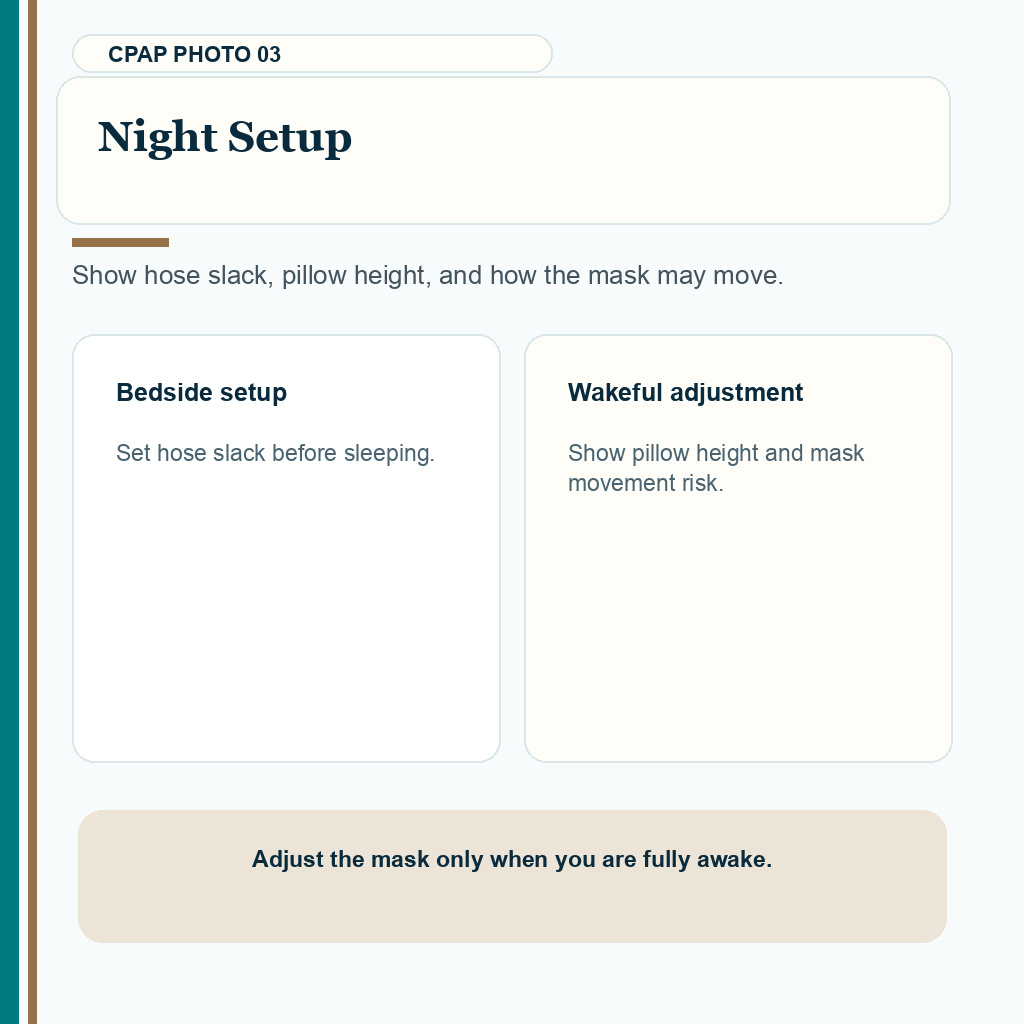
Set the device up before you are tired. Arrange the hose so it has slack and does not pull the mask upward. Put the pillows in the recovery position recommended by the clinic. Check that the strap is not crossing grafts, pressing into donor scabs, or sitting tightly over swollen forehead skin. Warm air, humidifier moisture, sweat, and repeated tightening can irritate swollen skin even when the strap does not cross grafts directly.
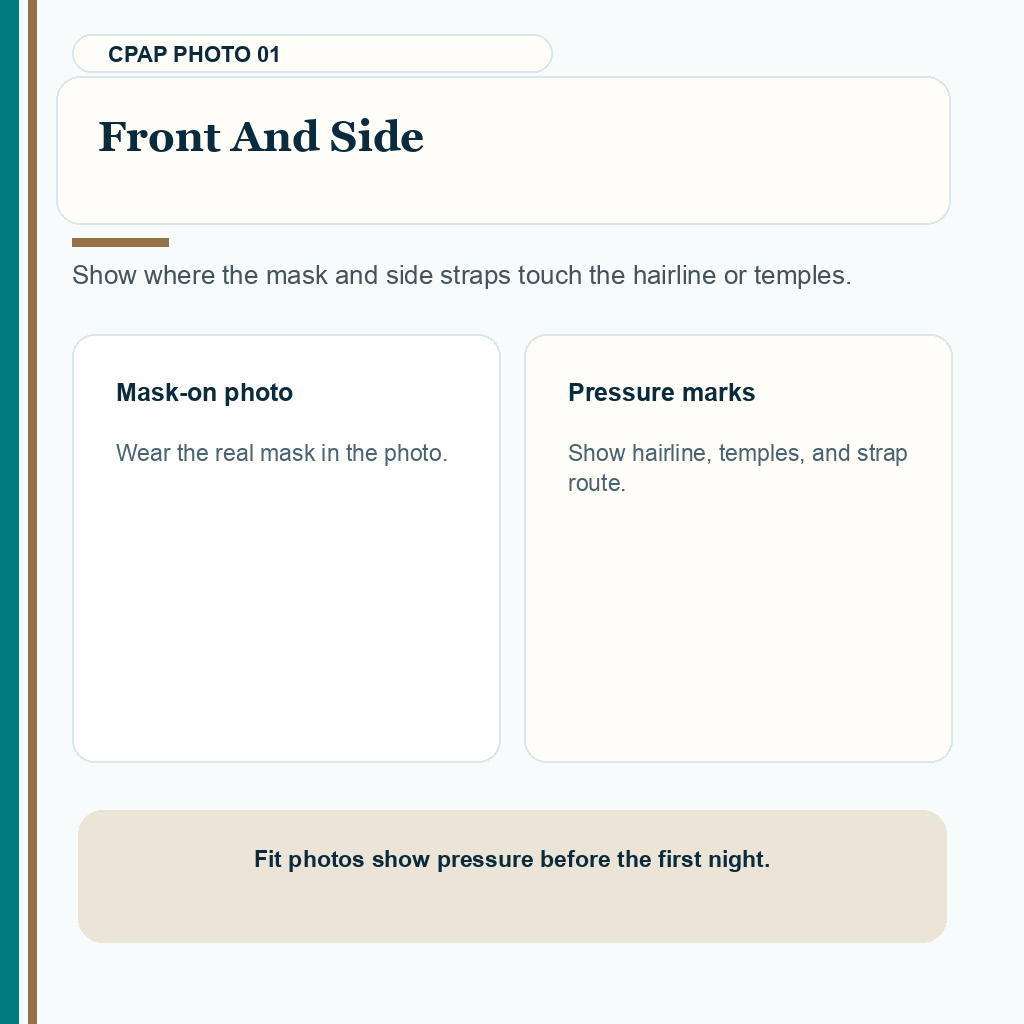
Take one photo with the mask on from the front and one from the side before surgery. The team can plan around the real strap path more safely than a brand name or model number.
The first 7 to 10 nights already need structured sleep position and graft safety planning. With CPAP, that structure also includes the mask route, hose path, and strap tension.
If the mask shifts, wake fully before adjusting it. Do not drag a strap across the recipient area while half awake. This is the same practical distinction as touching grafts during early recovery. One careful check is different from repeated adjustment.
Photos to send before travel
If you are travelling to Istanbul for surgery, send photos of the CPAP setup before you leave home when possible. Wear the mask in the photos so the strap route can be seen. A device photographed on a table is helpful, but it does not show where pressure lands on your head.
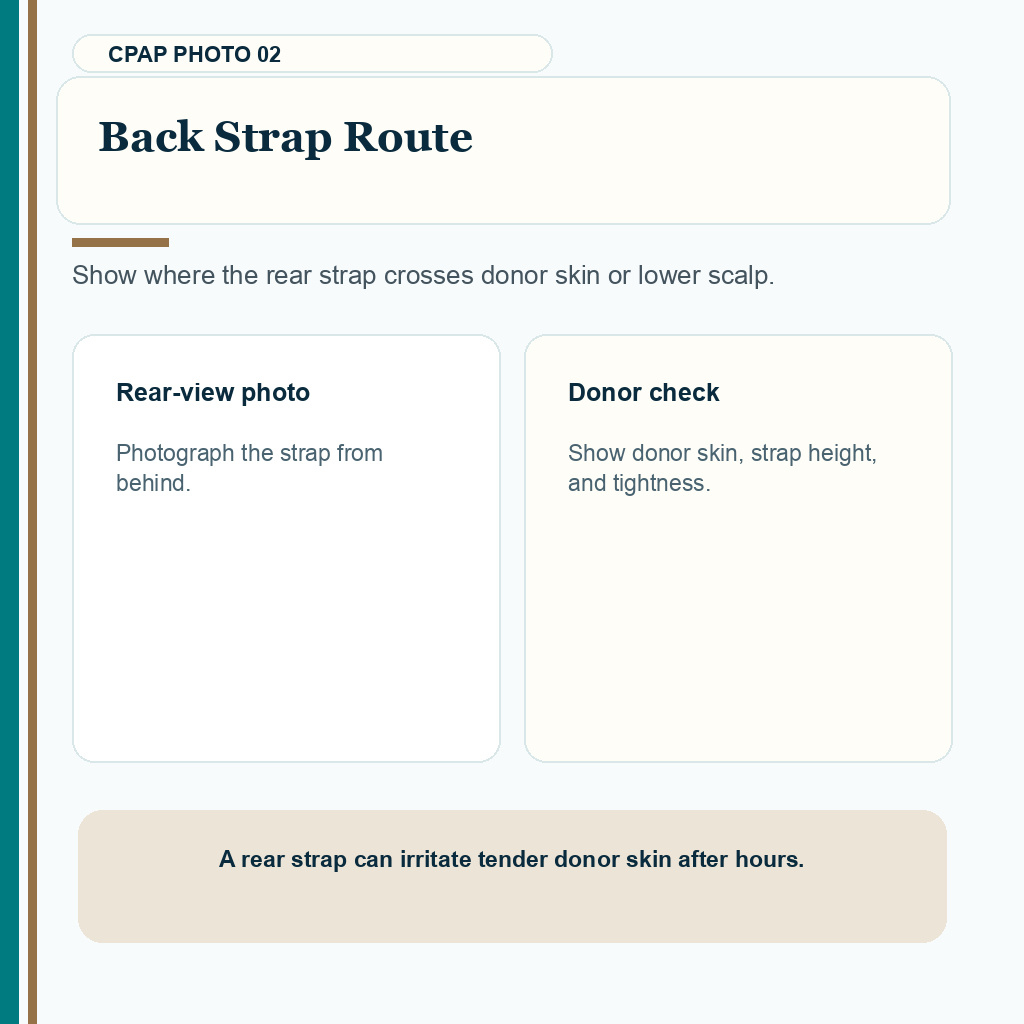
Take one front photo, one side photo, one back photo, and one close photo of any strap that crosses the donor or recipient area. If possible, add one photo while lying in your planned elevated sleeping position, because strap tension can change once you are on pillows. Include the mask type, whether you use a humidifier, and whether the hose tends to pull when you turn. If you already know you are flying soon after surgery, connect this with air travel during graft recovery so the device, hotel sleep, and return route are planned together.
Overnight signs that need a clinic call
Call the clinic if you wake with fresh bleeding, a strap line across the grafts, new strong donor pain, a mask that rubbed the recipient area, swelling that is worse on one side after pressure, or a setup that cannot keep seal without tightening over surgical skin. These signs need context from the team that knows your operation.
A brief accidental touch is judged differently from hours of pressure. If you are unsure after sleep, do not keep rubbing the area to check it. Take clear photos and ask. With accidental pressure while sleeping, the pattern you wake up with matters more than the single fact that contact happened.
If you cannot use CPAP safely without pressing on the transplant, that is a medical coordination problem. Contact the clinic and your sleep doctor rather than deciding alone between breathing poorly and pressing on grafts.
Bring the device, not a surprise
Bring the CPAP machine, mask, tubing, power adapter, travel case, and any alternative interface already approved by your sleep doctor or supplier. Bring written settings if you have them. If you use distilled water or a humidifier, ask ahead how to handle that during travel and the first hotel nights.
The clinic does not need to manage your sleep apnea as a separate specialty, but we do need to know how your device touches the scalp and face. A short preoperative conversation can prevent a long night of improvisation.
Airflow and graft pressure both have to be protected
I do not want poor breathing and scalp pressure to become the choice. The CPAP plan starts with the route of the mask and straps. It matters where they cross the donor skin, whether they touch the recipient area, how they sit against swelling, and whether pillow position changes the pressure overnight.
Before surgery, the mask style and strap path should be clear enough that the first nights are not improvised. Set the device up while awake, keep straps off grafts and sore donor skin, and stop any setup that drags across the recipient area. Bleeding, pressure marks, rubbing, or a mask that cannot sit safely changes the plan from routine use to medical review.
The right CPAP setup protects airflow without treating grafts as padding for the strap.
Read this review excerpt
We also had a levelled conversation about my hairline and results I could expect based on my donor density area.