


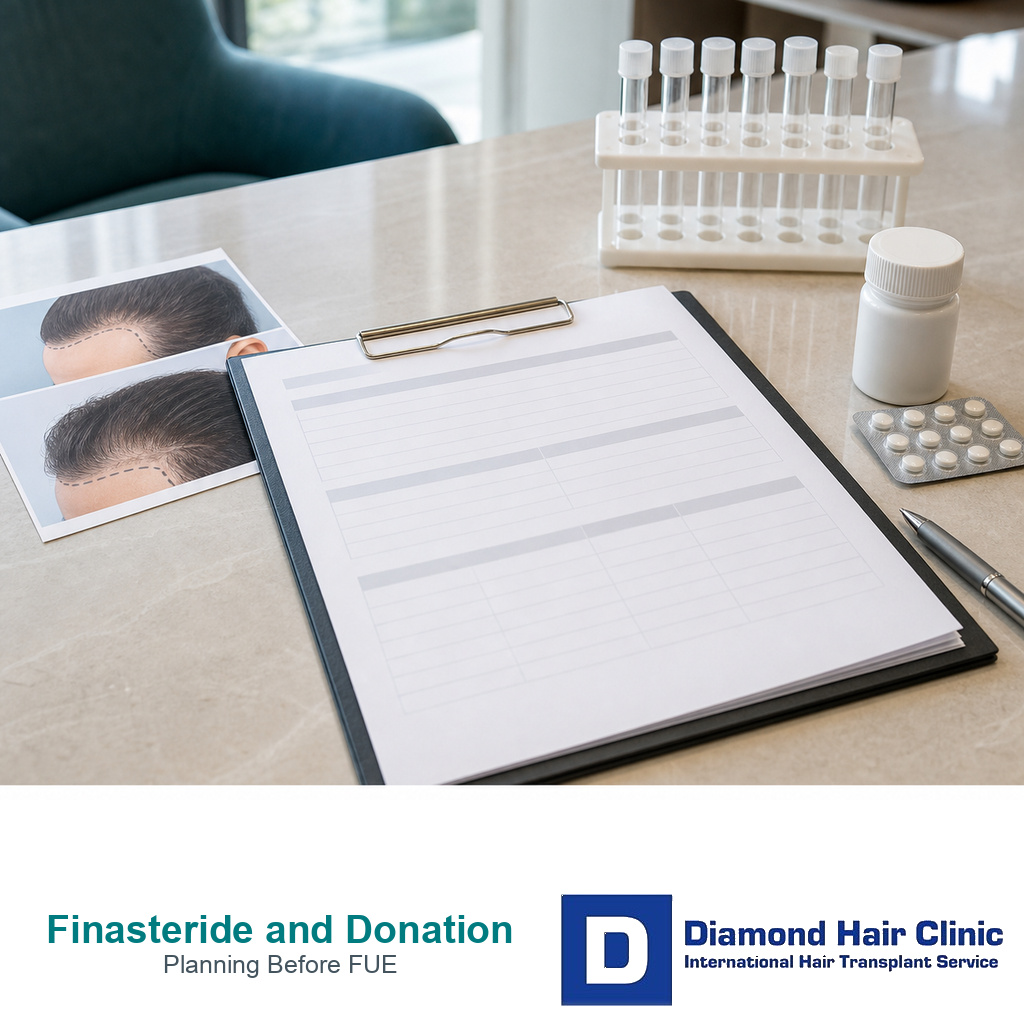
Blood Donation on Finasteride or Dutasteride Needs Timing Review
If you take finasteride or dutasteride, a blood service may tell you to wait before donating blood, plasma, or platelets. That is a blood donation eligibility issue. It does not mean the medicine has damaged your grafts, and it does not cancel FUE by itself.
Some major services list 1 month after finasteride and 6 months after dutasteride, but the exact rule belongs to the country, donation center, medicine form, and donation type. Confirm the donation rule with the blood service before changing medication.
For surgery planning, I separate three decisions. The blood service rule, your FUE readiness, and the hair medication plan. I need to know what you take, when you last donated, whether the donation center deferred you, and when surgery is planned. The risky combination is stopping medication without a plan, donating close to travel, and arriving for FUE while dizzy, dehydrated, or anemic. If donation timing itself is your question, review recent blood or plasma donation before FUE before changing medicine or travel plans.
Do not let a donation rule quietly change your hair plan. Tell the clinic if you stopped, skipped, or delayed finasteride only because a donation center gave timing advice.
Blood donation matters when timing and medication overlap
Blood donation can feel separate from hair transplantation until the dates overlap. You may be a regular donor, take finasteride to protect native hair, and then book FUE without connecting the two. The worry often begins only when the donation center asks about finasteride or dutasteride and mentions a waiting period. At that point, the question becomes whether the medicine is dangerous or whether surgery should change.
I separate those decisions because they protect different people and different risks. A blood donation rule protects the person who may receive the blood. A FUE plan protects your donor area, recipient area, blood count, healing, travel timing, and future hair loss pattern. They meet on the same calendar, but they are not the same decision.
In consultation, blood donation belongs inside the broader medication before a hair transplant review. I need more than a list of tablets taken on the morning of surgery. I also need to know what you stopped, what you restarted, and whether a recent donation, failed donation attempt, low hemoglobin screen, high hemoglobin screen, or deferral note changed the picture.
Donation rules treat finasteride and dutasteride differently
Finasteride and dutasteride reduce 5 alpha reductase activity. In hair restoration, we discuss them because they reduce DHT activity and may protect vulnerable native hair. Donation services look at a different risk. Donated blood might be given to someone who is pregnant, so these medicines are handled cautiously because of fetal development concerns.
This does not mean FUE becomes unsafe because you take finasteride. It means the blood service may not accept your donation until its waiting period has passed. Dutasteride often creates a longer deferral issue than finasteride because it stays in the body much longer. The donation center decides whether your blood can be used. The hair plan decides whether changing medication is wise for your native hair.
Blood donation rules can require a waiting period after finasteride or dutasteride. The interval runs from the last dose, not from your transplant date or the date you first started treatment. Switching from dutasteride to finasteride does not erase the earlier dutasteride exposure. Report both medicines and their dates to the blood service so it can apply its current eligibility rules. Do not interrupt treatment solely to donate without reviewing the hair plan.
For the medication side, finasteride before or after a hair transplant and dutasteride versus finasteride after hair transplant matter more than donation eligibility alone. For blood donation, the narrow issue is whether you are eligible to give blood and whether stopping treatment creates a bigger hair planning problem than you expected.
Stopping finasteride only to donate before FUE is rarely the right reason
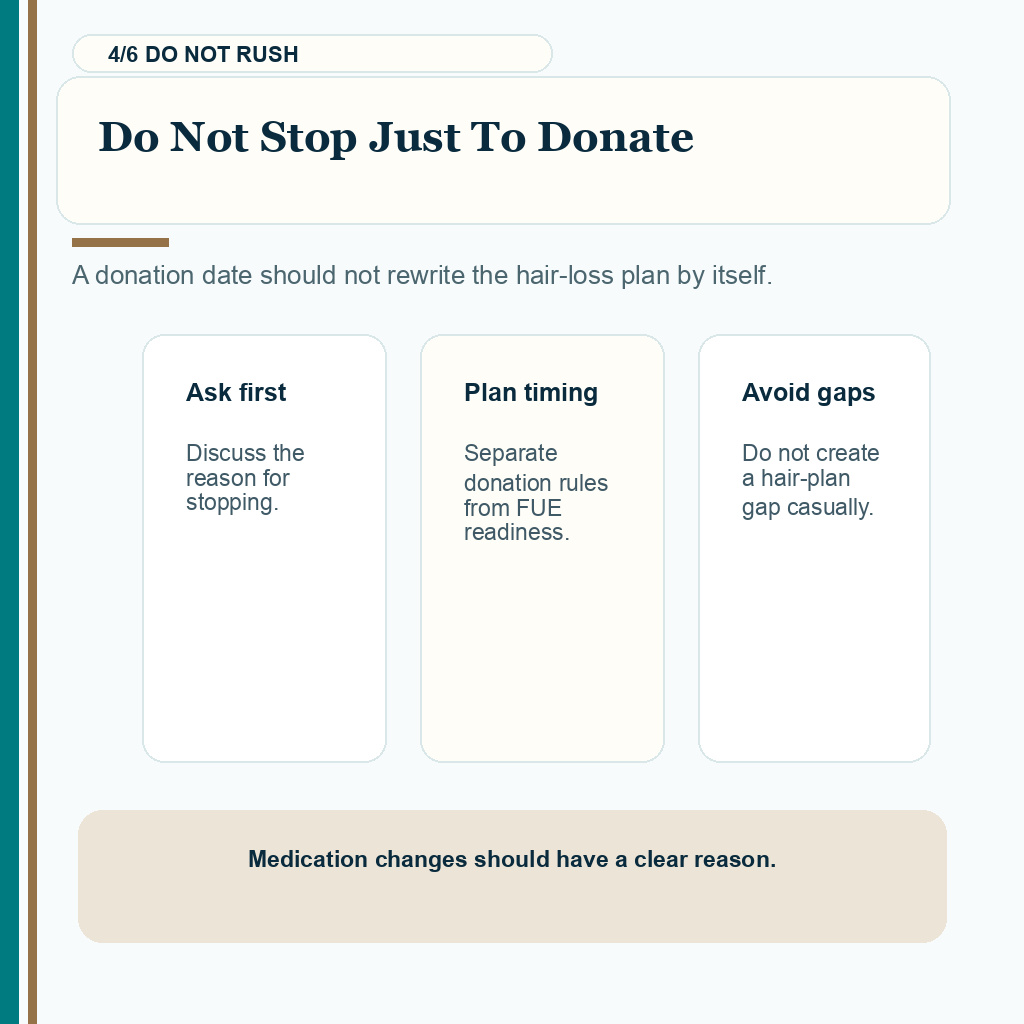
I do not advise stopping finasteride only to fit a donation date unless the whole hair loss plan has been reviewed. If the medicine is helping stabilize native hair behind the future transplant, an unplanned break can create unnecessary uncertainty. A short pause may not ruin a result, but it should be deliberate and understood before the calendar changes.
Being deferred by a blood service should not turn into a silent medication experiment before FUE. Keep the donation rule, the medication plan, and the surgery date in the same conversation.
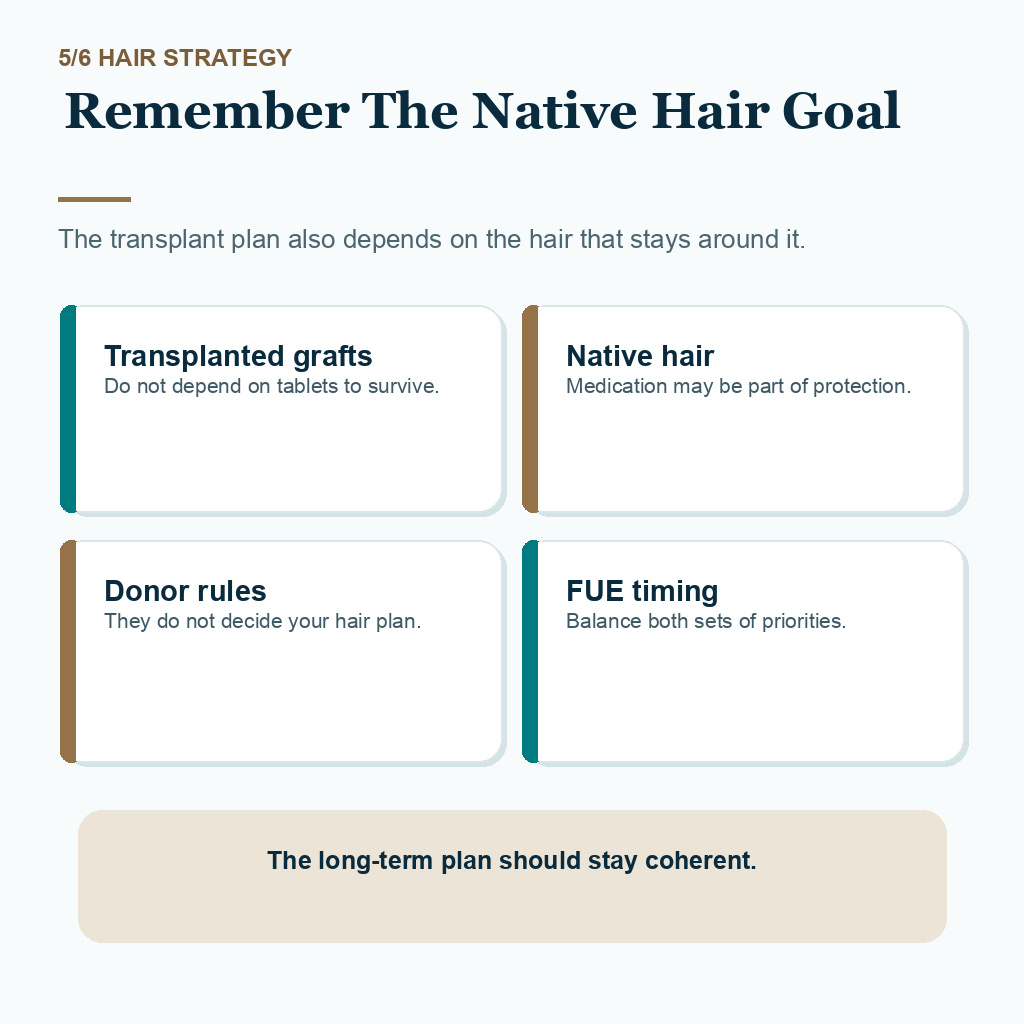
Finasteride does not make transplanted grafts survive by magic. Its value is usually in the native hair that still surrounds the transplant. If that native hair keeps thinning, the transplanted hair can grow and the overall result can still look thinner with time. Medication history is part of surgical planning, not a small lifestyle detail.
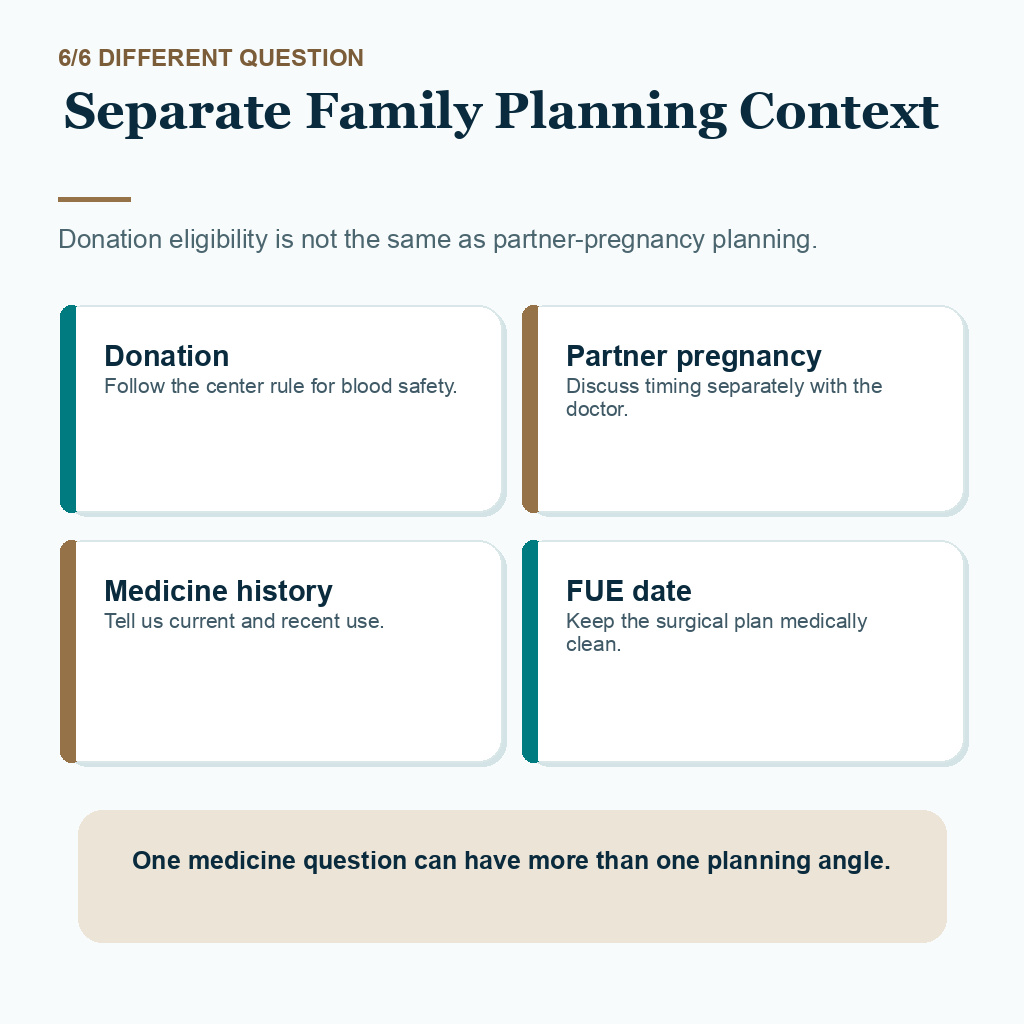
When fatherhood timing or partner pregnancy is the reason for stopping medication, the conversation is different. I cover that in fatherhood planning with finasteride or dutasteride before hair transplant. Blood donation has its own rules. Keep the two questions separate instead of merging them into one fear.
Blood donation close to surgery can become a problem
FUE is performed under local anesthesia in most cases, and it is not expected to involve major blood loss. Still, recent blood donation can matter if it leaves you tired, lightheaded, dehydrated, bruised, or borderline anemic. FUE asks the body to heal thousands of small skin openings. I need you medically stable, hydrated, and rested.
The timing question is not the same for every donation. A small donation many weeks earlier is different from giving blood shortly before travel, sleeping badly, and then arriving for surgery after a long flight. The donation type, baseline hemoglobin, symptoms after donation, health history, surgery size, and clinic protocol all matter. If you donated recently, share the date before the surgery date is locked.
Do not hide a recent donation because you are afraid the surgery will be delayed. A short delay is much better than performing elective surgery when the blood count, blood pressure, hydration, or general condition is not ready. If fainting or dizziness is part of the story, mention it early instead of treating it as embarrassment.
Plasma or platelet donations still need disclosure
Do not assume plasma or platelet donation is irrelevant because it is not the same as whole blood donation. Donation centers still screen medication exposure, blood pressure, pulse, temperature, hydration, venous access, and general fitness to donate. Some medicines also affect platelet donation rules differently from whole blood rules.
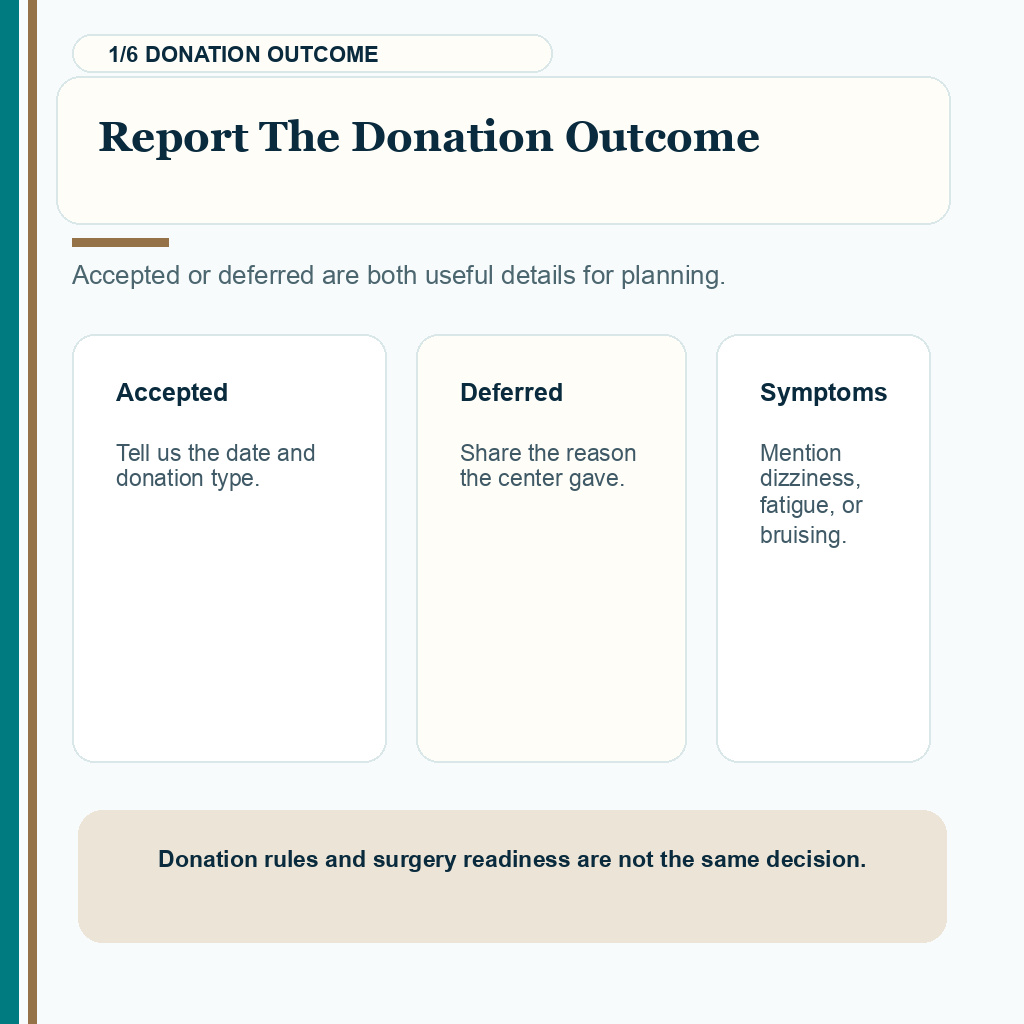
For surgery planning, I review the donation type, dizziness or fatigue afterward, bruising or a difficult needle site, and any rejection for hemoglobin, blood pressure, medication, or illness. Blood donation eligibility while using finasteride and medical readiness for FUE are separate decisions. The donation service owns its medication rule, while the surgical team must judge whether you have recovered and are medically stable.
If aspirin, blood thinners, platelet donation, or bruising is part of the story, I review aspirin and hair transplant surgery as part of the same medication discussion. Donation eligibility and surgery bleeding risk are related topics, but they are not interchangeable.
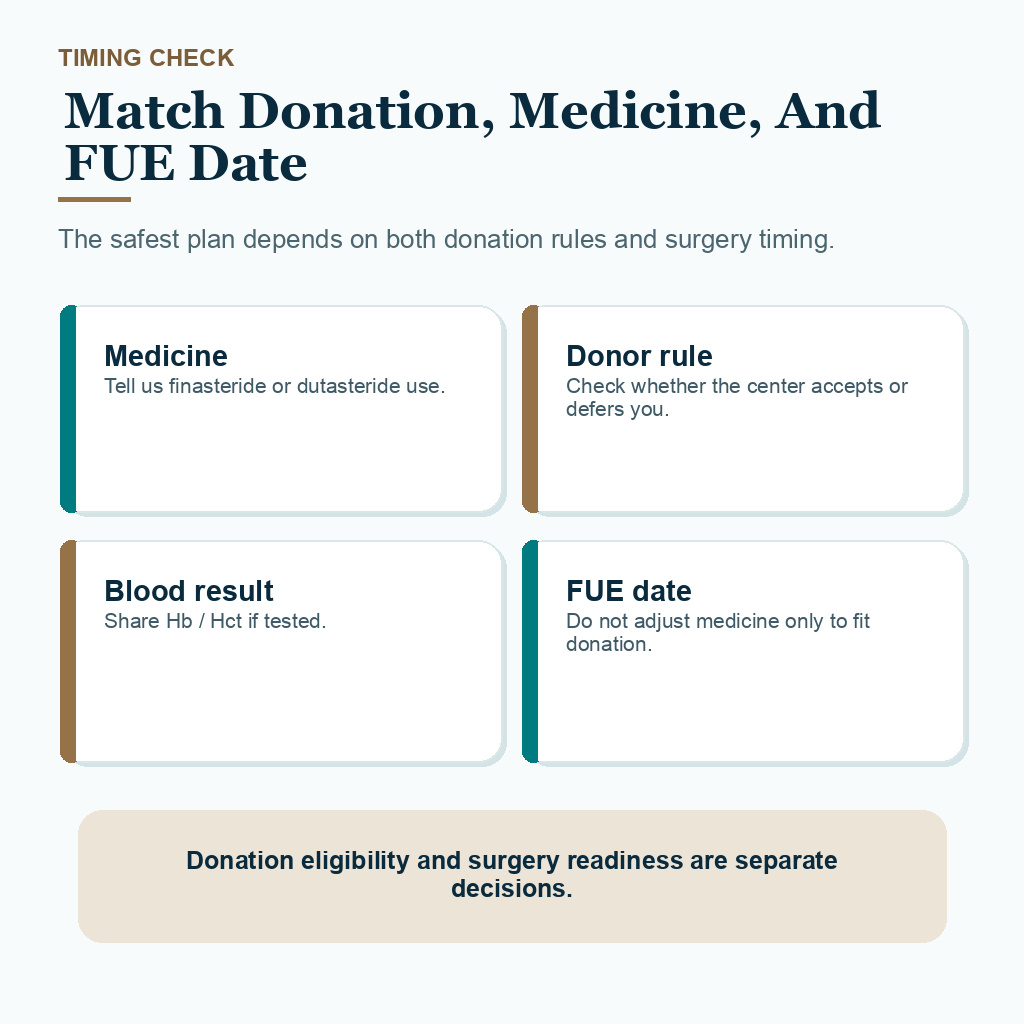
Medication history, donation center rules, and the FUE date should be planned together.
Topical finasteride still needs disclosure
Topical finasteride causes confusion because it is applied to the scalp, so some patients think it never matters elsewhere. I do not rely on that assumption for donation screening. Some topical medication can be absorbed, and donation services may ask about the active ingredient rather than your personal estimate of absorption.
If you use a topical finasteride spray, gel, compounded solution, or combined minoxidil and finasteride product, disclose it as finasteride use. Do not answer the donation questionnaire as if it were ordinary shampoo. Bring the exact bottle, prescription, or ingredient list to the hair transplant consultation as well. Online compounded hair loss products can contain several active ingredients, and patients may not remember all of them accurately.
Online hair loss topicals before FUE need medication clarity too. I cannot plan around a product name alone. I need the active ingredients, dose, frequency, and last use.
What the clinic should know before choosing a surgery date?
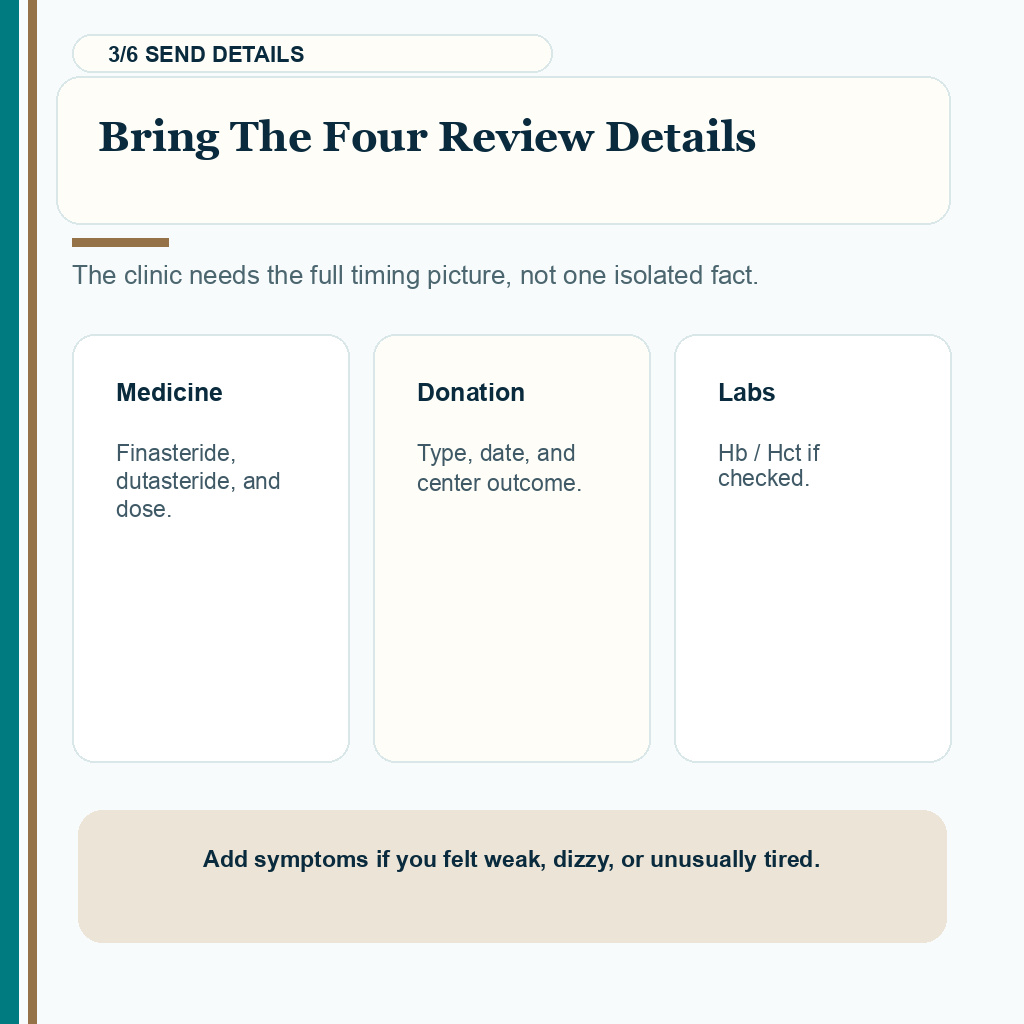
Before choosing a surgery date, tell me whether you take finasteride, dutasteride, topical finasteride, oral minoxidil, blood pressure medicine, aspirin, anticoagulants, supplements, or hormone medicines. Also mention whether you donate blood, plasma, or platelets regularly, and when your last donation happened.
The useful details are whether the donation center accepted or deferred you, whether your hemoglobin was low or high, whether your blood pressure was outside their range, whether you felt faint, and whether you had a large bruise after the needle. A deferral note or blood screening slip is more useful than a remembered number. Send a photo of it if you have one. These details are not embarrassing. They show whether the timing is clean.
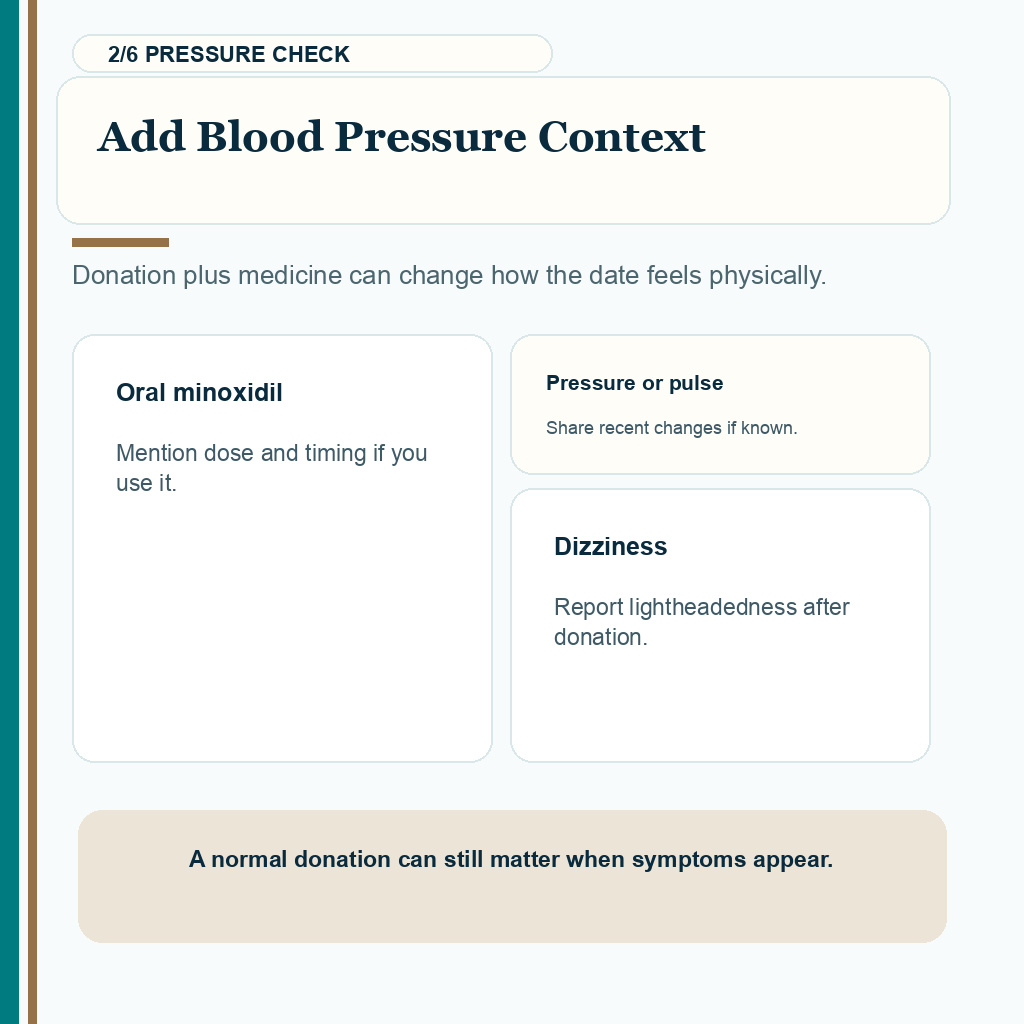
If you use oral minoxidil around hair transplant planning, that also belongs in the same conversation because blood pressure, pulse, dizziness, and dose timing can matter. Good planning prevents avoidable surprises on surgery day.
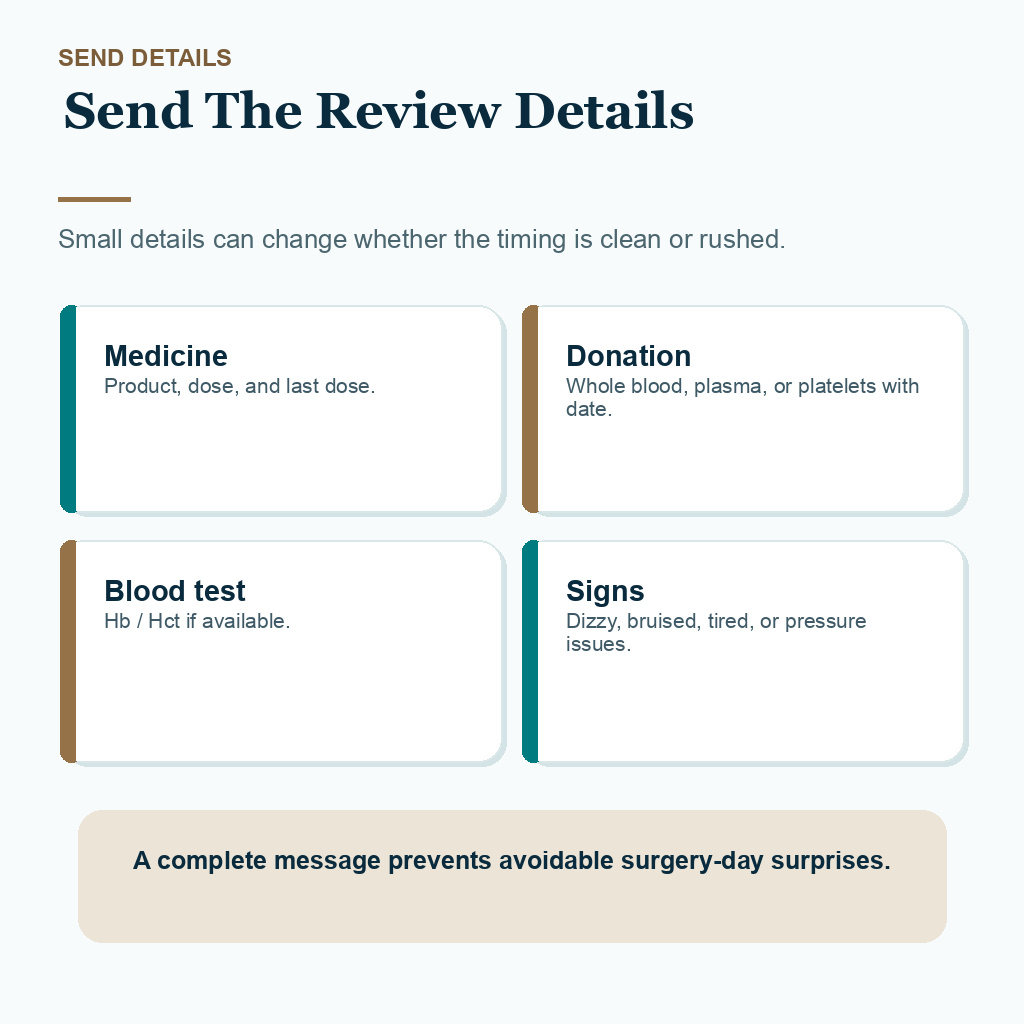
Bring medication, donation, blood test, and symptom details to the review before surgery.
Low hemoglobin can change the FUE plan
A failed donation because of low hemoglobin should not be ignored before FUE. Low hemoglobin can reflect iron deficiency, recent blood loss, dietary restriction, heavy training, chronic disease, or another issue that deserves review. A hair transplant is elective. If your body is giving a warning sign, pushing through for convenience is the wrong priority.
The related medical page for that situation is low ferritin and anemia before hair transplant. Ferritin, hemoglobin, and iron stores are not cosmetic numbers. They help tell us whether you have enough reserve for healing and whether hair shedding might have another medical contributor.
If hemoglobin is low, pause and find the reason. Do not start iron on your own, hide the result, or assume the transplant will fix every hair concern.
High hemoglobin or hematocrit can affect FUE timing
Some donors are turned away because the hemoglobin or hematocrit is too high, not too low. That can happen with dehydration, testosterone use, sleep apnea, smoking, lung disease, or a blood condition. It can also be a temporary reading that needs repeat testing. Either way, it is not a badge of safety.
I cover this in detail in high hemoglobin or hematocrit and hair transplant safety. For the donation topic, the message is narrower. If a donation screening result is abnormal, share that with the clinic and bring the actual number if you have it.
When blood results are unclear, blood tests before a hair transplant are not a formality. They help decide whether the surgery date is reasonable, whether more medical review is needed, and whether the hair loss plan is being built on a stable health picture.
Blood donation inside the wider hair strategy
Start with the hair loss plan, not the donation date. If finasteride or dutasteride is protecting native hair, do not interrupt it casually. If blood donation is important to you, ask the donation center about its exact medication policy before the transplant is booked. Discuss the medication plan early rather than discovering the conflict after surgery.
Then separate the calendars. The donation center decides when your blood can be accepted. I decide whether your scalp, blood count, medication plan, and travel schedule are suitable for FUE. Those calendars may not match, especially with dutasteride.
The worst plan is to stop medicine suddenly, donate blood close to surgery, and say nothing. That creates unstable medication history, possible blood count change, and poor surgical disclosure at the same time.
Situations where I would delay the procedure
I delay FUE if you recently donated blood and feel weak, dizzy, dehydrated, or unwell. I also delay if the donation center found low hemoglobin, very high hemoglobin, abnormal blood pressure, fever, infection concern, or a medication issue that has not been clarified.
Stopping dutasteride only to donate blood needs careful review when the long washout period is not understood. I also slow down when finasteride was stopped recently, shedding is heavy, and the restart decision is still unclear. In that setting, the surgical design may need to be more careful because native hair stability is uncertain.
If donation goals make you consider stopping medication after surgery, stopping finasteride after hair transplant needs the same planning over time. A blood donation goal should not erase the hair strategy without a clear discussion.
Blood donation adds a second calendar
Blood donation, finasteride, dutasteride, and FUE each have their own timing rules. Put them on one calendar before changing medicine or booking surgery.
The useful details are the medicine name, dose, oral or topical form, last dose, last donation, donation type, screening result, and surgery date. If the donation center asks for a medication break, that break also has to make sense for the hair plan.
Do not let a generous donation goal push surgery into guesswork. If the timing is unclear, move the date or clarify the rule before the operating plan is built on missing information.

Read this review excerpt
Every single one of my questions was answered and they made sure I had all the details I needed to make an informed decision.