


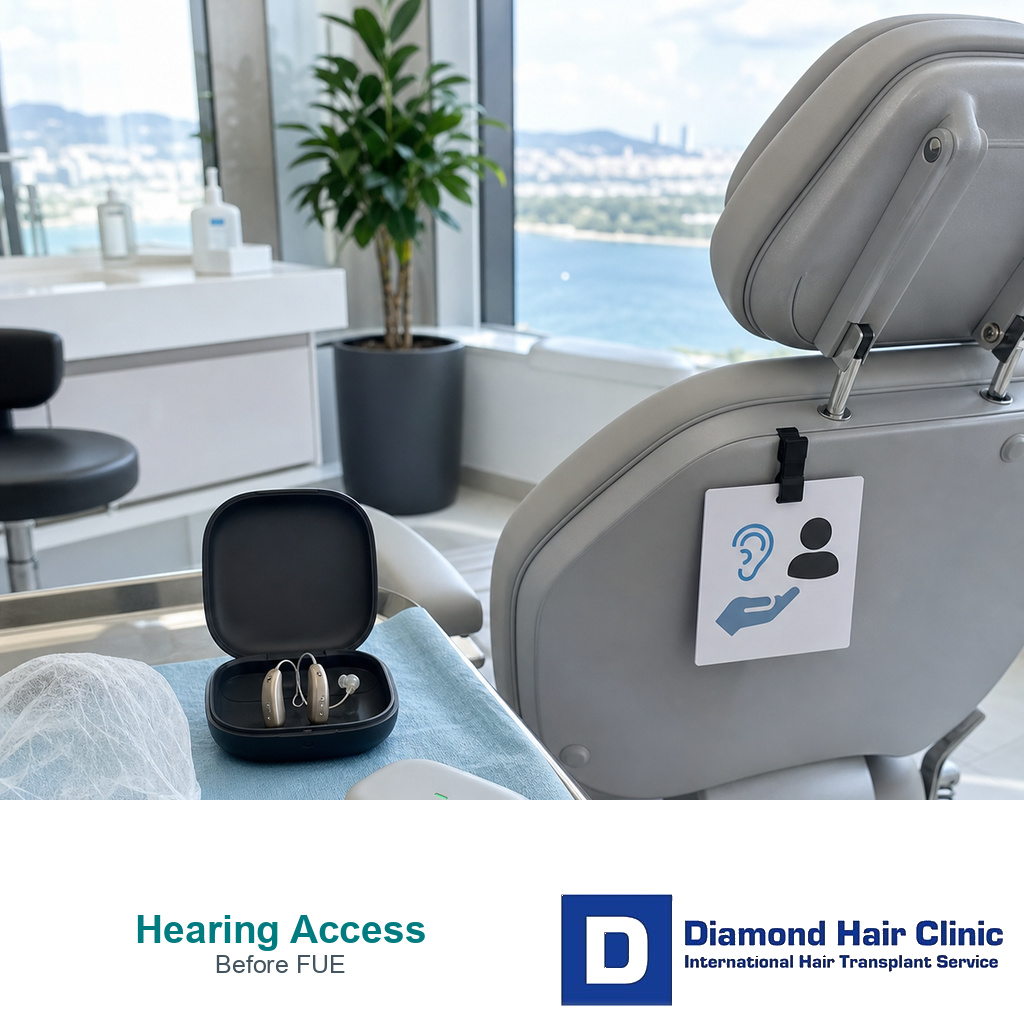
Hearing Devices Need a Communication Plan Before FUE
If you use hearing aids, a cochlear implant, a bone anchored hearing system, or another hearing device, FUE is not ruled out by the device alone in most patients. The communication plan is the practical part. Tell the clinic early, bring the device details, and agree on how you will hear instructions or signal discomfort before the long parts of the procedure begin. The device plan is part of surgical planning, not a small accessory detail.
FUE is usually performed with local anesthesia, but it is still a long medical procedure. The team needs you still, reachable, and able to understand key instructions. If a device has to come off, if a processor sits near the area being worked around, or if background noise makes speech unclear, the plan should already be written down. It is better to solve that calmly before travel than improvise when the chair is reclined and instructions are harder to hear.
The device plan starts before travel
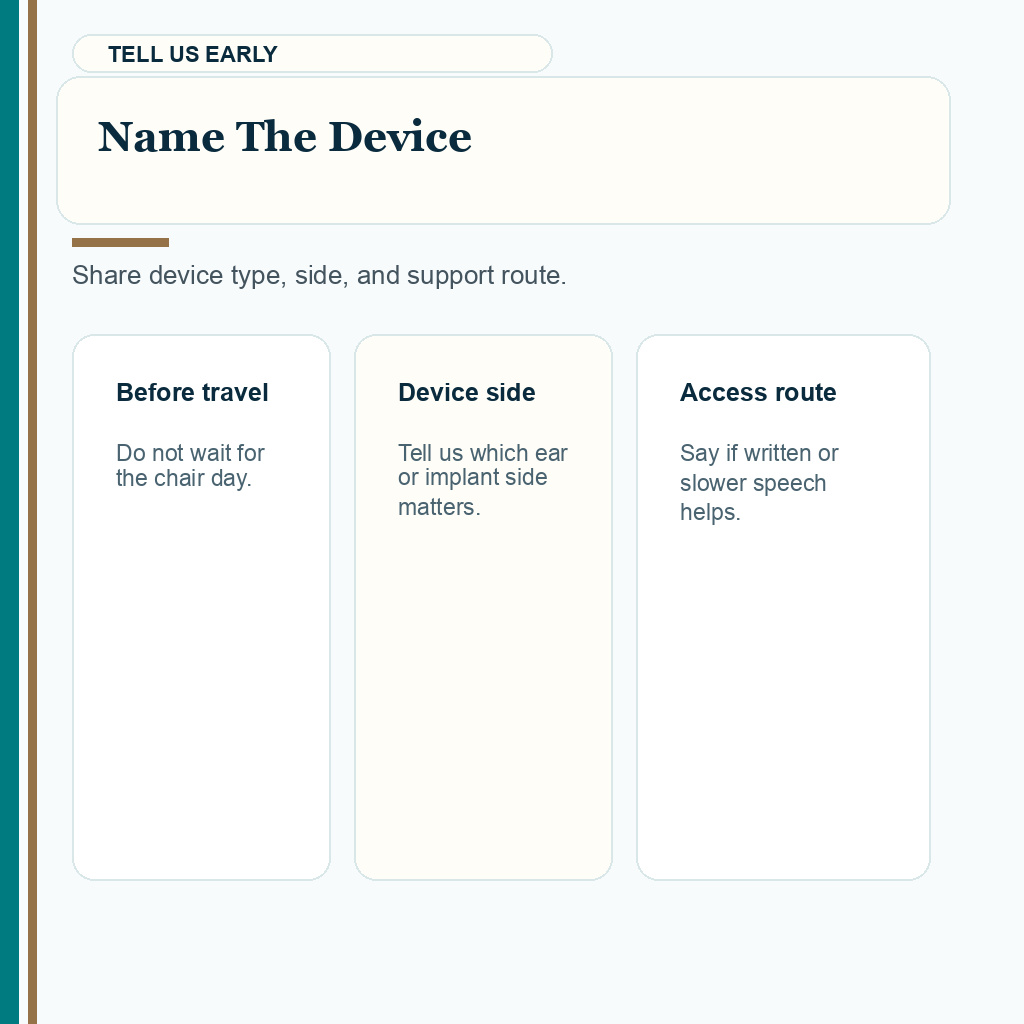
Do not wait until the morning of surgery to mention hearing loss or a hearing device. Send the clinic a short note before travel with the device type, which side it is on, whether you rely on one ear or both ears, and whether there is an implanted component under the skin. If you have a cochlear implant, include the processor and implant side, the device card if you have it, and any written precautions from your ENT, audiologist, or manufacturer.
This early disclosure does not mean the surgery is cancelled. It means the team can decide what needs review. A simple hearing aid behind the ear creates different questions from a cochlear implant, a bone anchored system, or another implanted electronic device. If the device sits near the donor area, the surgical position, shaving, dressing, cleaning, pressure, and any equipment cautions must be thought through before the day starts.
The communication plan applies to other procedure planning details. A surgery morning consultation should confirm the plan, not become the first time a communication issue is discovered. When the hearing route is already known, the setup is quieter and more reliable.
This is communication access, not entertainment
I separate medical hearing access from entertainment. Earbuds, podcasts, and music are optional comfort tools. Hearing aids and processors can be essential for understanding the team. The page about headphones after a hair transplant does not answer the whole question for someone who relies on a hearing device. Pressure and hygiene still matter, but communication access is the separate decision. Set a simple signal before any music, earphones, or device makes instructions harder to hear.
During some parts of FUE, quiet listening may be allowed. During other parts, the team may need your head still, your attention available, or your ear area free from pressure. If you use a hearing aid mainly in one ear, the team may be able to keep that side as the main communication channel during selected phases. If both devices must come off, then the backup route must be clear before you are positioned. The communication route has to work while the patient is face down, tired, or unable to adjust the device without help.
Communication comes before keeping the device on. In some phases one device may stay available. In others, a written card, a simple hand signal, or a short pause before an explanation may be safer. Use a hand signal or written card that still works when you cannot turn your head or answer normally.
Cochlear implants deserve specific disclosure
A cochlear implant needs a more specific conversation than an ordinary hearing aid. The external processor can usually be removed, but the implanted part under the skin remains. The side of the implant, the magnet area, the processor position, and any manufacturer or audiology precautions should be disclosed. I do not treat a cochlear implant as a reason for casual reassurance or casual rejection.
An online example involving strip surgery does not answer an FUE planning question. The donor method is different, so the implant side and exact location still need to be marked and reviewed before the FUE extraction map is agreed.
The important boundary is simple. I cannot promise from a web page that a specific implant model is cleared for a specific surgical setup. Device guidance varies. If the donor area, shaving, bandage route, or surgical equipment may come near the implant side, the device information needs review before the plan is fixed. When needed, check with the implant team or manufacturer as well.
This is also where plain language consent review matters. Consent is not just a signature. You should understand the hairline plan, donor plan, anesthesia, positioning, graft handling, risks, and aftercare. If hearing access is poor during that conversation, the consent process is weaker.
Positioning changes what works
FUE is not one posture. The extraction and implantation stages can require different head positions. In some cases, part of the donor extraction is done while the patient is partly turned or lying face down during FUE. Speech may be quieter in that position. A hearing aid may press against a pillow, strap, cap, or head support. A processor may be less secure. The plan should fit the position, not only the first five minutes.
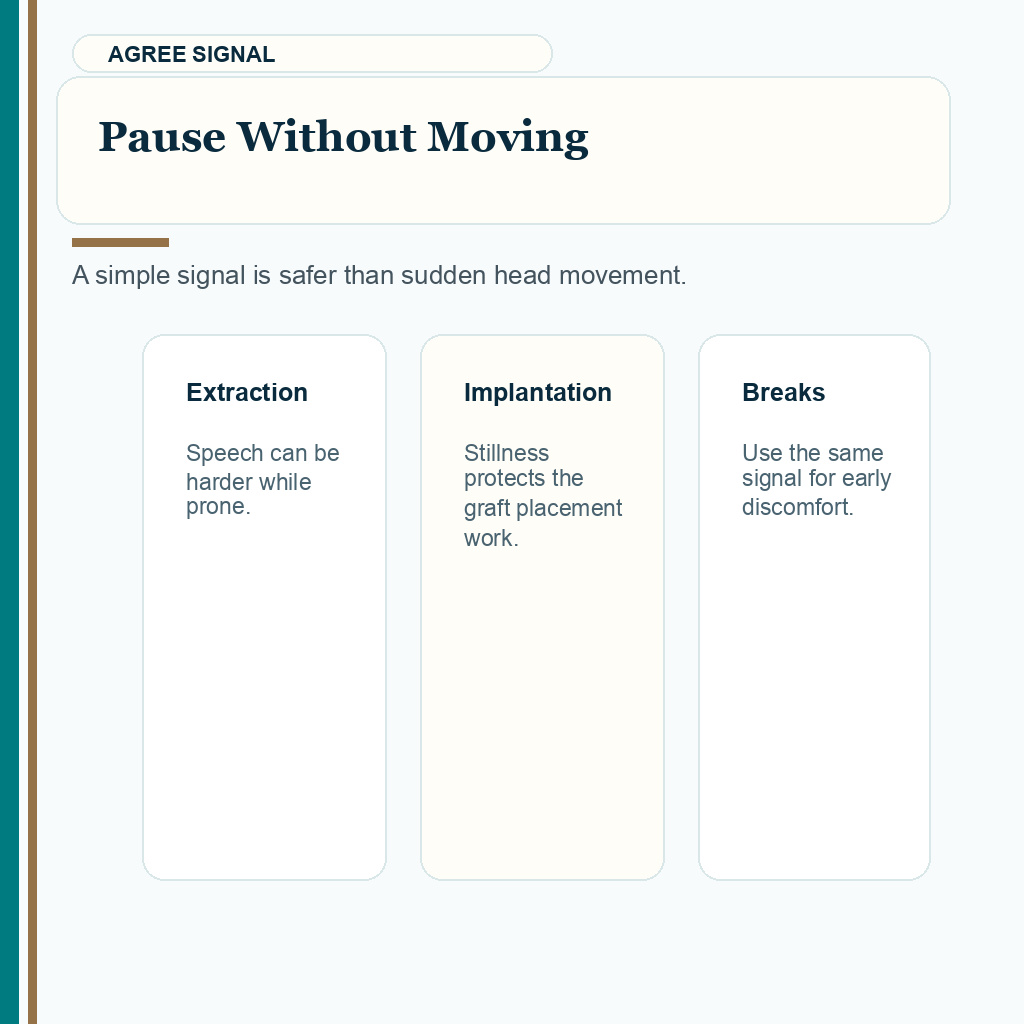
Before the long work starts, agree on a clear signal for discomfort. For some patients it can be a hand raise. For others it may be tapping a safe area, giving a thumbs down, or using a short written card. The signal should mean one thing. Pause and check in. It should not require the patient to twist, lift the head suddenly, or reach toward grafts.
That communication plan belongs inside a long FUE day. Comfort tools are useful only when they help the patient stay still and responsive. If a device, earbud, mask loop, or cap makes you miss instructions, the comfort tool has stopped doing its job.
Written instructions reduce missed details
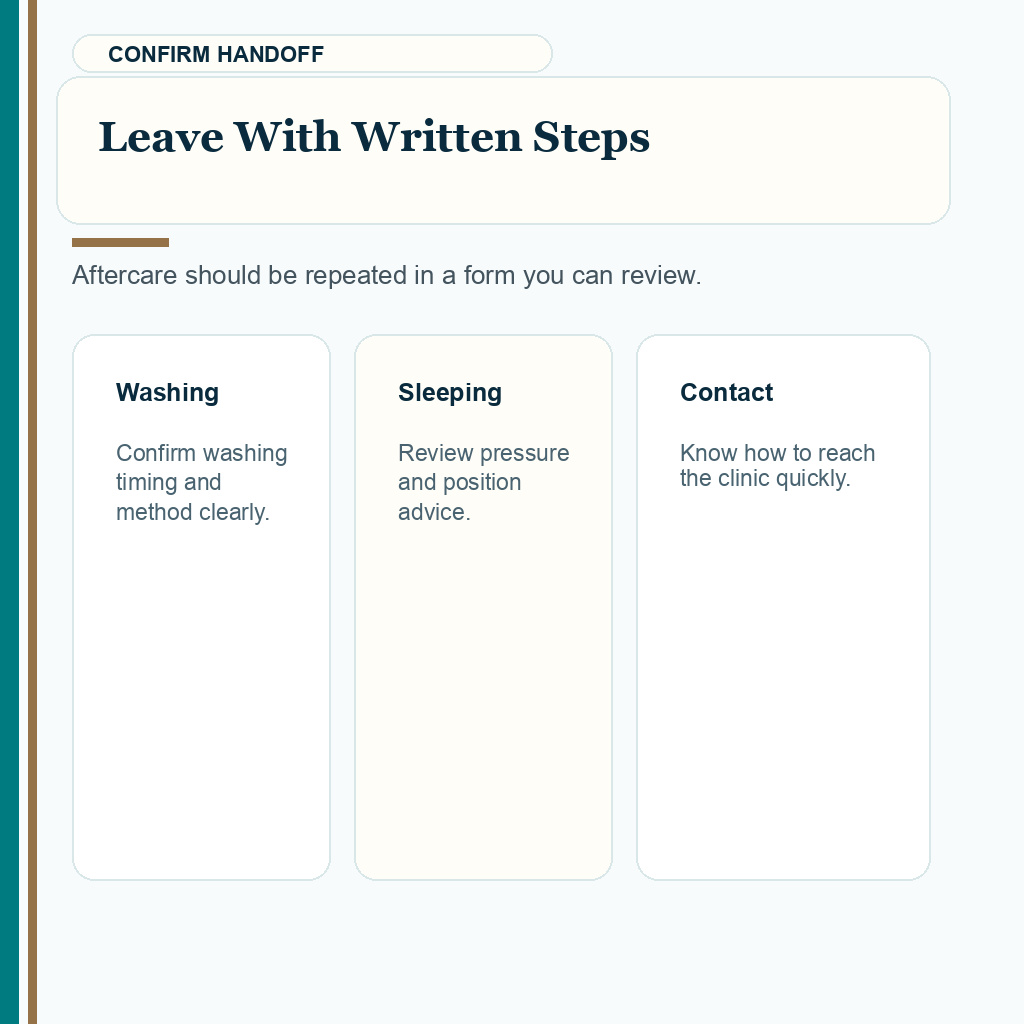
A hearing access plan should include what is said and how it is confirmed. Written instructions help because the end of a long procedure is not the best time to rely only on tired listening. The patient may be wearing a bandage, thinking about travel back to the hotel, or processing many instructions at once. For someone who uses a hearing device, written aftercare is not a luxury. It is part of making sure the care plan is understood.
For routine follow-up, agree on a contact route you can use without a voice call when necessary. Before you leave, confirm which clinical contact receives those messages and what to do if you cannot reach them.
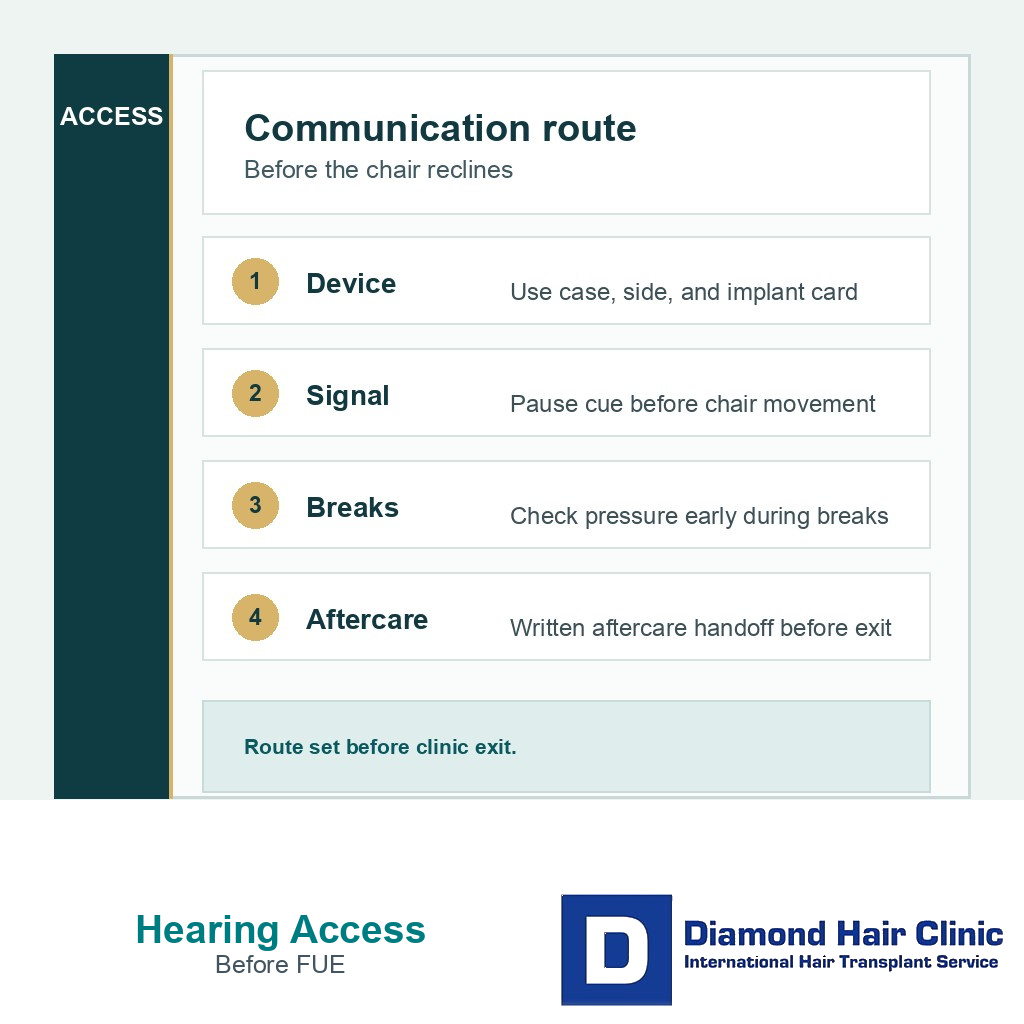
The clinic should also know whether the patient reads lips, uses a phone captioning app, needs slower speech, prefers written summaries, or uses a sign language interpreter. Family or a companion may help with travel, but complex medical understanding should not depend only on a relative guessing what was said. If an interpreter or captioning method is needed, plan it before the patient arrives.
This does not need to become complicated. A short checklist can cover the device side, case, charger or batteries, backup signal, written aftercare, and who confirms understanding before the patient leaves. A paper backup matters if the phone, battery, or processor is not available at the exact moment instructions change.
Use the chair side signal map
The plan changes by phase. Hearing needs are different while reviewing the hairline, lying still for extraction, resting during a break, and receiving aftercare. The communication route can change during the day, but you should not have to discover that change under stress.
Chair side signal map
Keep hearing access open through the FUE day
- 1Before travel
- 2Consent check
- 3Extraction
- 4Implantation
- 5Breaks
- 6Aftercare
Name the device
Send the device type, side, implant card if relevant, and the communication support you normally use.
Plan cue Clinic can decide whether device details or outside guidance are needed before you arrive.
Confirm understanding
Hairline, donor plan, anesthesia, positioning, and aftercare should be explained in a way you can actually follow.
Plan cue Use written summaries, captioning, or interpreter support when needed.
Keep one safe signal
Face down or turned positions can make speech harder, so agree how you will ask for a pause without moving suddenly.
Plan cue The signal should be simple, visible, and understood by the whole team.
Avoid sudden movement
Recipient work needs stillness. If communication drops, pause before repositioning or giving a new instruction.
Plan cue You should not have to guess while grafts are being placed.
Check comfort early
Use breaks to adjust device pressure, recharge hearing access, or repeat the next stage before the chair position changes.
Plan cue Small checks prevent larger movements later.
Write the handoff
Washing, sleeping, medication, contact, travel, and warning signs should be confirmed in writing before leaving.
Plan cue Repeating the plan back protects the patient after the clinic day ends.
During hairline review and consent, full understanding matters more than speed. During extraction, stillness and a safe pause signal matter. During implantation, avoid sudden movement near grafts. During aftercare, written confirmation matters because the details affect washing, sleeping, contact, and early travel. One signal cannot replace the whole conversation, but it can prevent a small need from becoming a sudden movement.
Hearing device items to bring
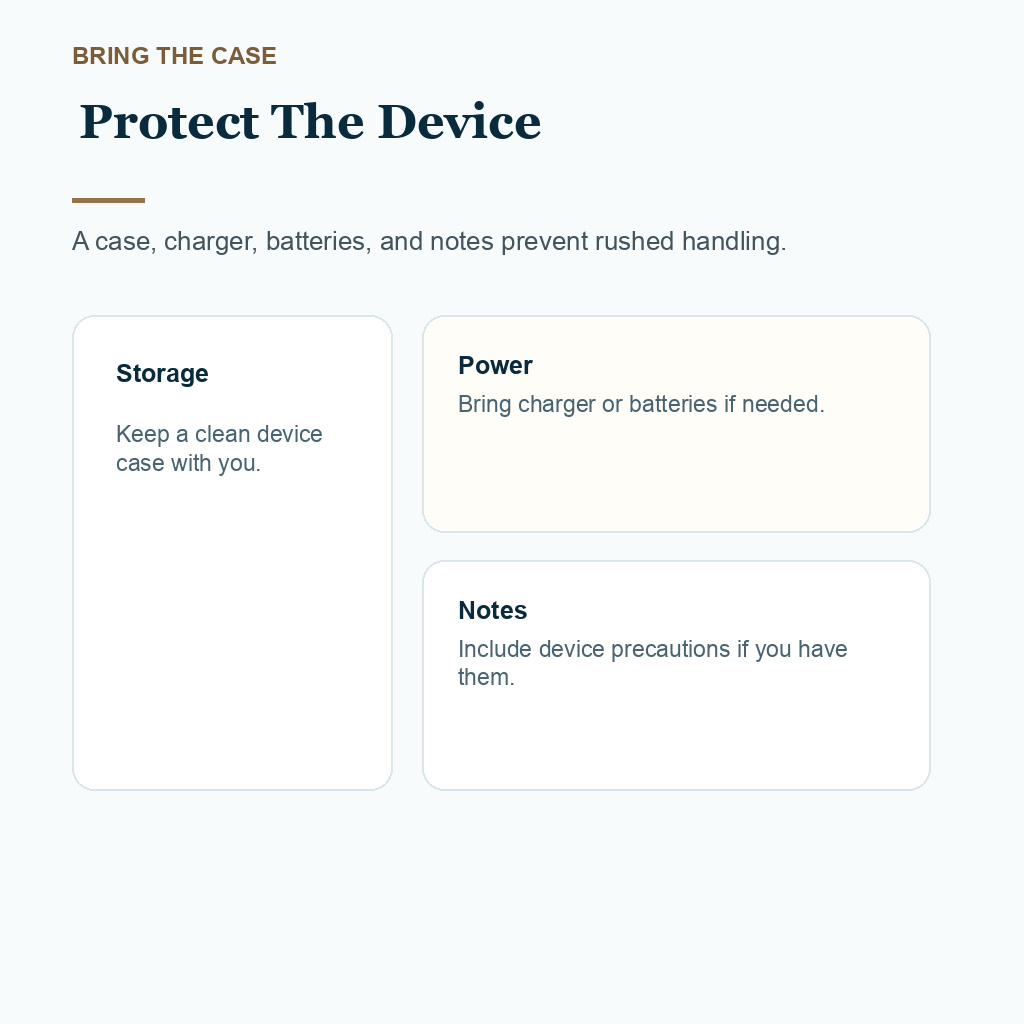
For what to bring on FUE surgery day, keep the hearing device items simple. Bring the case, charger, spare batteries if relevant, cleaning cloth, device card, and a written note with the device name and side. If there are implant precautions, bring those too. Do not bring a full electronics bag into the procedure room unless the clinic has told you it is allowed.
Think about pressure after the procedure as well. Devices that sit behind the ear, mask loops, glasses arms, and headwear can all share the same small area. If grafts are near the temples or sideburns, frame pressure near temple grafts becomes relevant. If mask loops sit behind the ear, the strap pressure after FUE plan should be adjusted. The answer may be a looser mask route, a different strap path, or shorter wear periods when medically appropriate.
Use these four hearing access slides before you travel for FUE.
Reasons to slow the plan down
I slow the plan down if the patient cannot understand the proposed hairline or donor plan clearly, if a cochlear implant sits close to the work area and the device instructions have not been reviewed, if the patient needs an interpreter and none has been arranged, or if anxiety about communication is so high that the patient may move suddenly. Communication has to be reliable before the chair setup begins.
Sedation also deserves caution when it is being discussed as a substitute for communication planning. Sedation during a hair transplant can change alertness and consent dynamics, and it does not solve the need for clear instructions before and after the procedure. If sedation is being considered, that belongs in a separate medical review.
Make communication reliable before FUE
A hearing device is ordinary medical information, not an embarrassment. During a long awake procedure, the patient has to understand position changes, comfort checks, and aftercare instructions without guessing.
Before the operation, I want the team to know which device is worn, which side is affected, what charger or case is needed, and whether an implant has written precautions. A simple agreed signal and written aftercare keep the room calm when stillness and cooperation matter most.
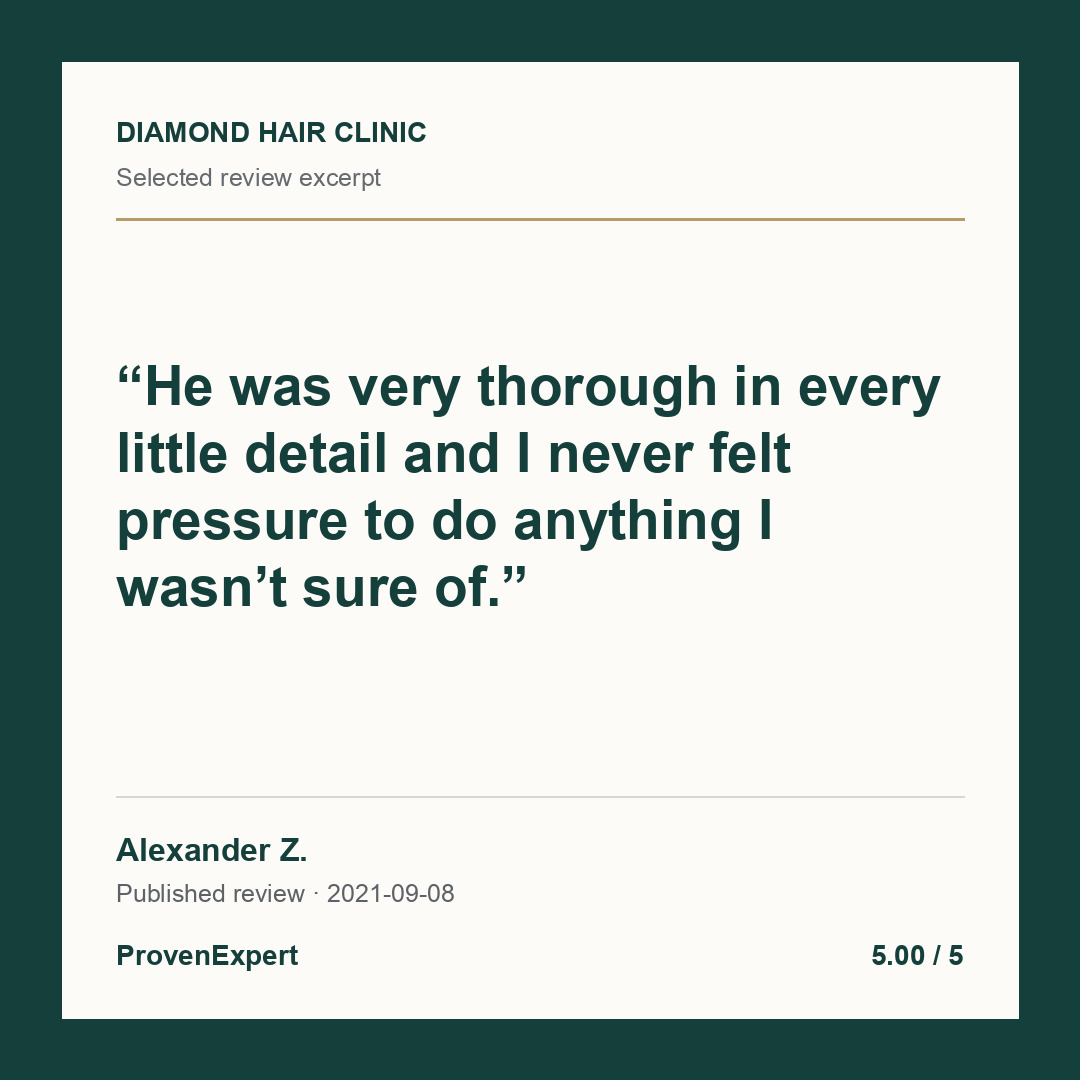
Read this review excerpt
He was very thorough in every little detail and I never felt pressure to do anything I wasn’t sure of.