





Difference between dents, bumps, ridges, and cobblestoning
Bumps and ridges are raised. They can come from early healing, pimples, folliculitis, scarring, graft placement depth, or skin texture changes. A dent is lower. It may be a pressure mark, a crease, a small depression, or a shadow between swollen areas. A small pimple, a raised ridge, a pit, and a sunken line should not all receive the same answer.
The wrong home response can make the situation worse. Pressing a raised area, rubbing an uneven area, or massaging a dent before the skin has settled can irritate the scalp and create more anxiety. Early strong massage is not a growth treatment. If you are tempted to massage the area, read the timing logic in scalp massage after a hair transplant first.
When a surface problem persists after the early healing phase, in person assessment becomes more useful than repeated online photo opinions. A surgeon can check whether the issue is skin level, scar texture, swelling, folliculitis, a true depression, or simply lighting and shedding.
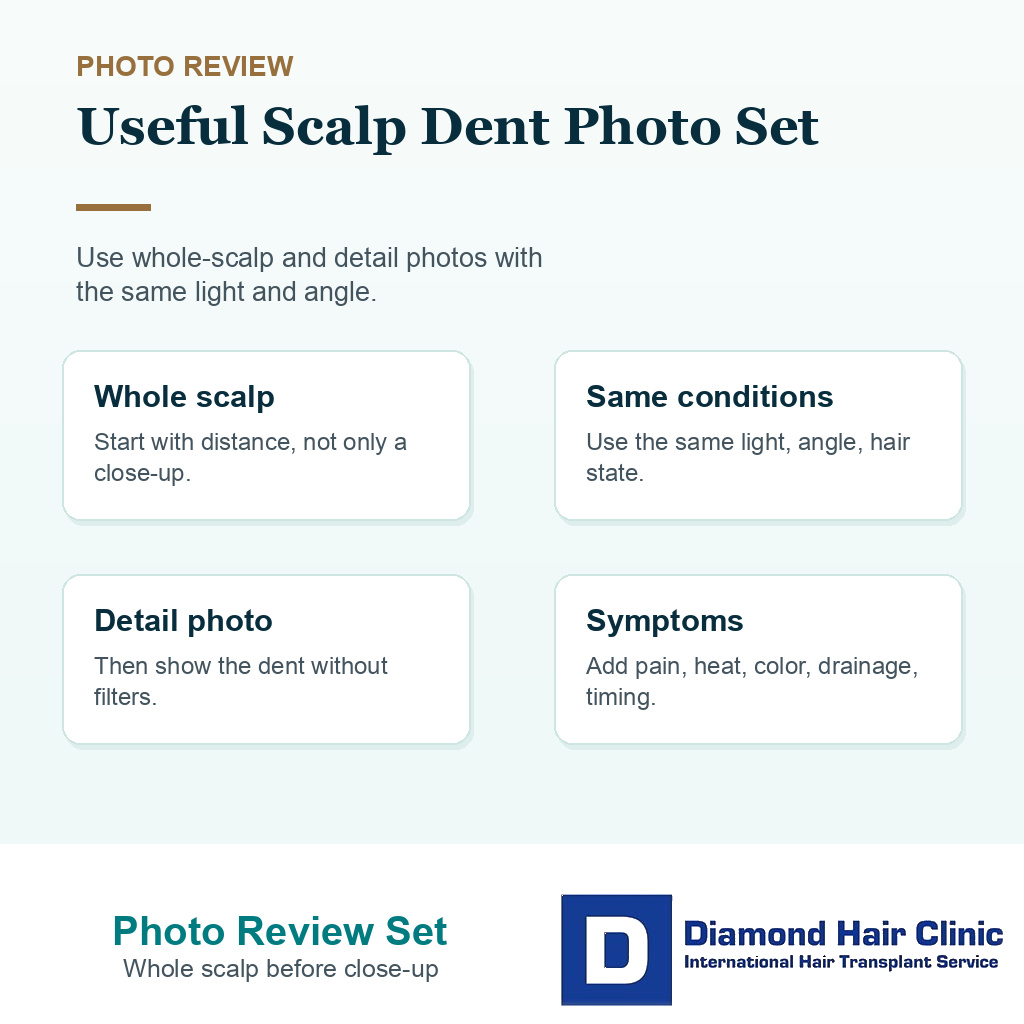
A useful photo set shows the whole scalp first, then the detail.
Swelling or numbness can make the surface look dented
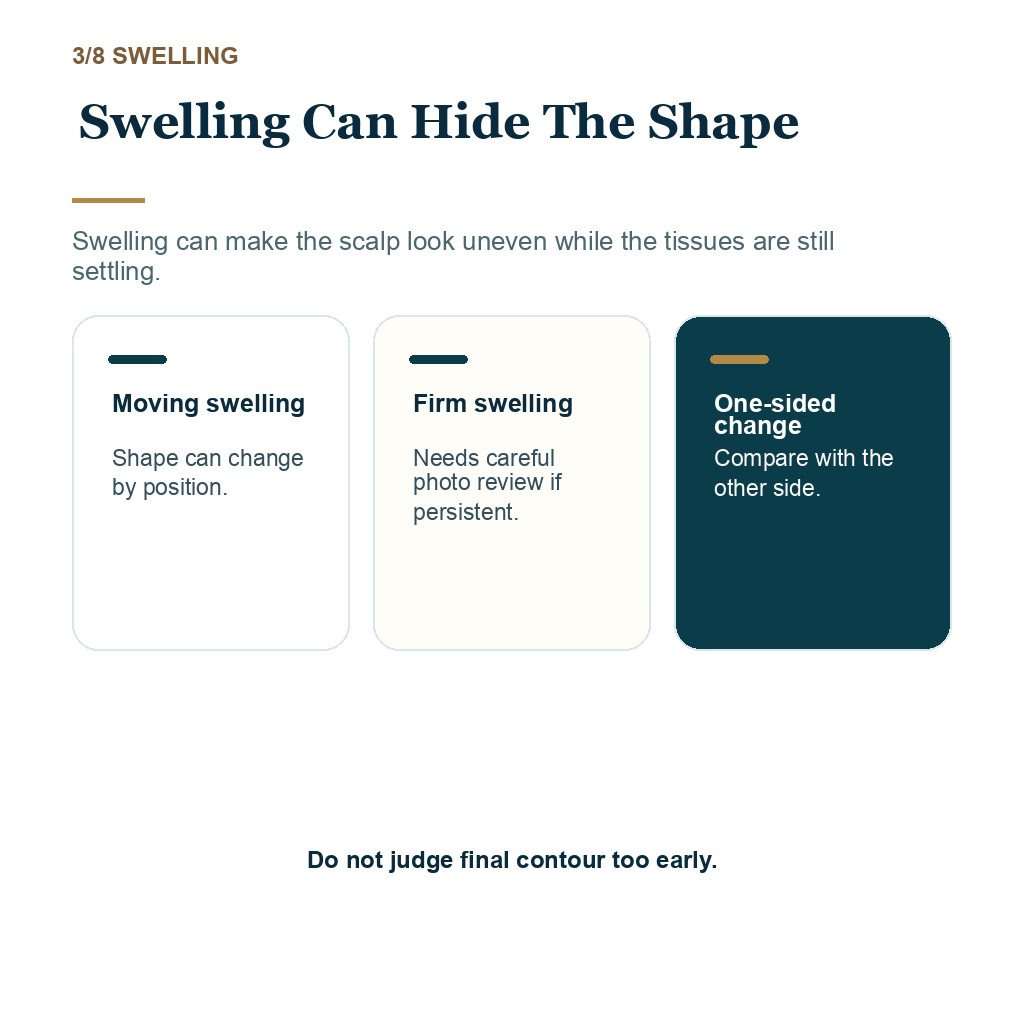
Swelling can make one area look raised and the next area look relatively sunken. Numbness can make the scalp feel thick, tight, or disconnected, so the patient touches the area more and becomes more aware of every contour. Neither swelling nor numbness proves graft loss.
Swelling has its own pattern. It often moves with gravity and should gradually settle. Swelling after a hair transplant becomes more concerning when it is painful, hot, one sided, rapidly worsening, or linked with fever, spreading redness, pus, bad smell, drainage, or dark skin change. At that point, it is no longer a minor surface shape question.
Numbness after a hair transplant also has a recovery pattern. Reduced sensation, tingling, tightness, or helmet like feeling can improve over weeks, sometimes longer in small areas, even when the grafts are not in danger.
Sharing photos for review
Send photos if the dent is new, clearly visible, linked to a pressure incident, appears after a bump, comes with pain, does not flatten after pressure is removed, or makes you unsure whether the skin is improving. You do not need to wait until the concern becomes dramatic. A structured photo review is better than days of repeated touching. If the dent followed a hat, pillow, headrest, or helmet, stop that pressure source and share that with the clinic exactly what happened.
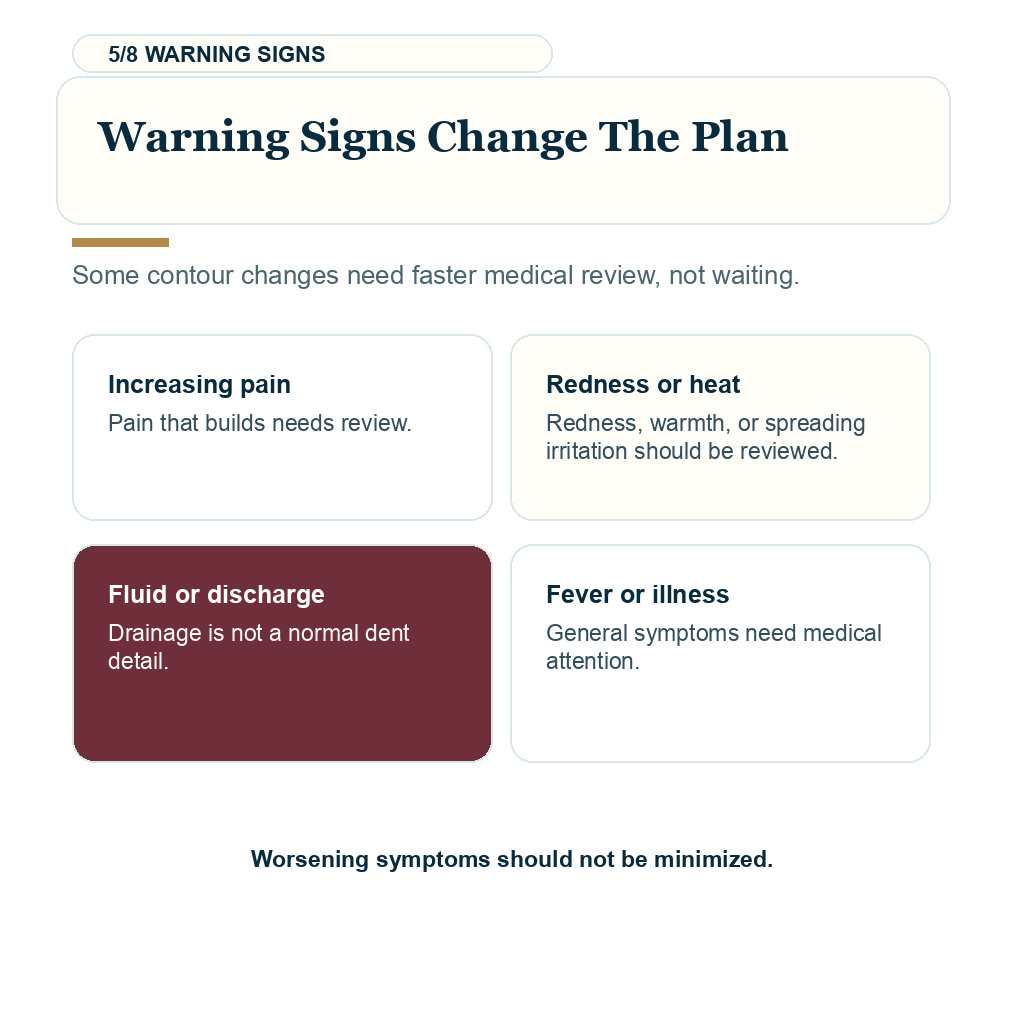
Pain, heat, spreading redness, pus, fever, bad smell, dark skin change, bleeding, or a deepening open area changes the urgency. Those signs need faster review because they can point toward infection, tissue injury, or another complication rather than a harmless pressure mark.
If the area is worsening and you feel unwell, seek local medical assessment while keeping the transplant clinic informed. Infected hair transplant signs matter here because a dent alone is different from a dent with inflammation or drainage.
Photos and details that help a surgeon review a dent
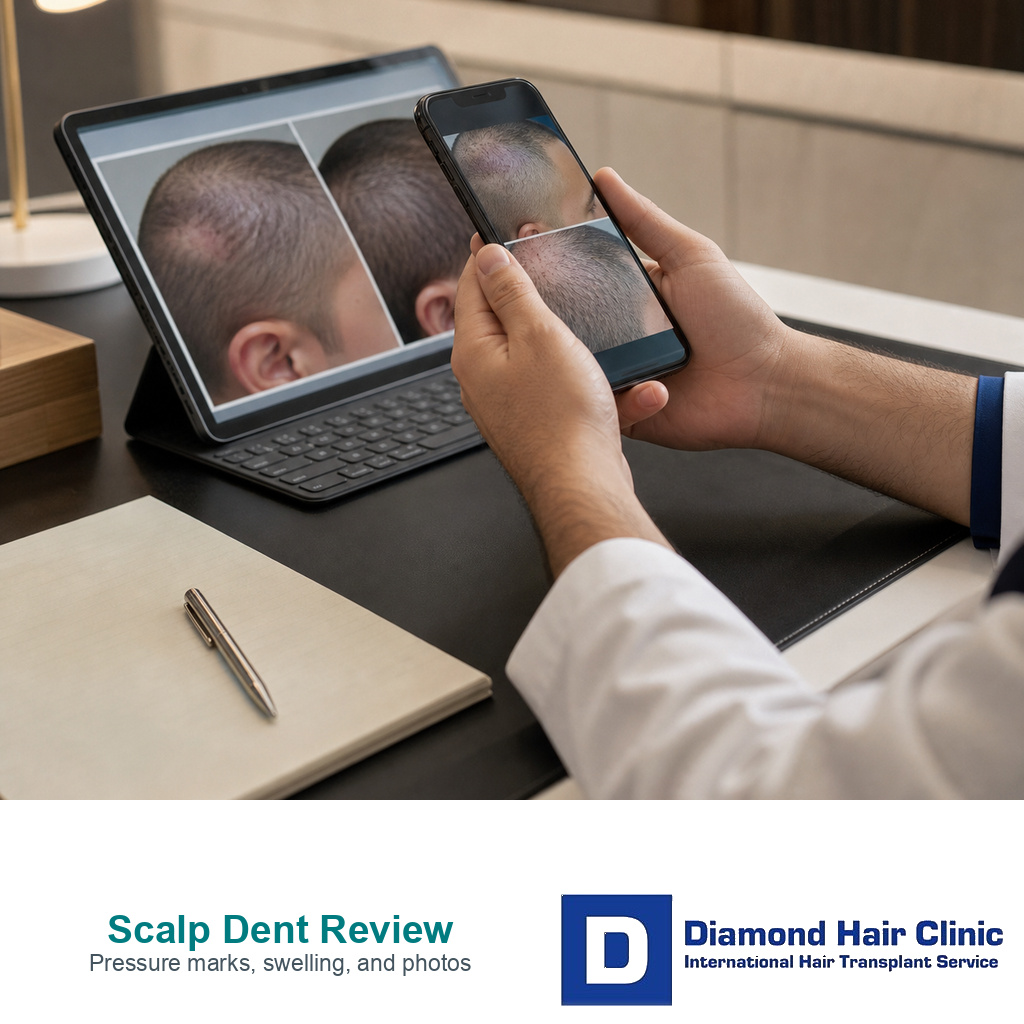
The most useful photo set is straightforward. Take one wider photo that shows the whole frontal scalp or crown area, one medium photo that shows the dent in relation to nearby grafts, and one closer photo in good natural light. If possible, add one side angle photo so the surface height can be judged. Avoid only sending an extreme close up, because it removes the context. Do not press the dent or pull the skin tight just to make the photo look clearer.
Tell the clinic the day after surgery, when you first noticed the mark, whether you wore a helmet or hat, how long the pressure may have lasted, whether you slept on that side, whether there was a bump, whether the area hurts, whether the skin is red, wet, hot, dark, open, draining, or bad smelling, and whether the dent is flattening, improving, or becoming sharper.
A dent along a helmet, pillow, or hat contact line is reviewed differently from a dent inside the donor or recipient pattern with color, pain, or drainage.
The photo should show the whole scalp first, then the detail. In hair transplant follow up after surgery, the clinic can judge better when timing, symptoms, and the wider pattern are visible.
Avoid pressing, massaging, or steaming the dent
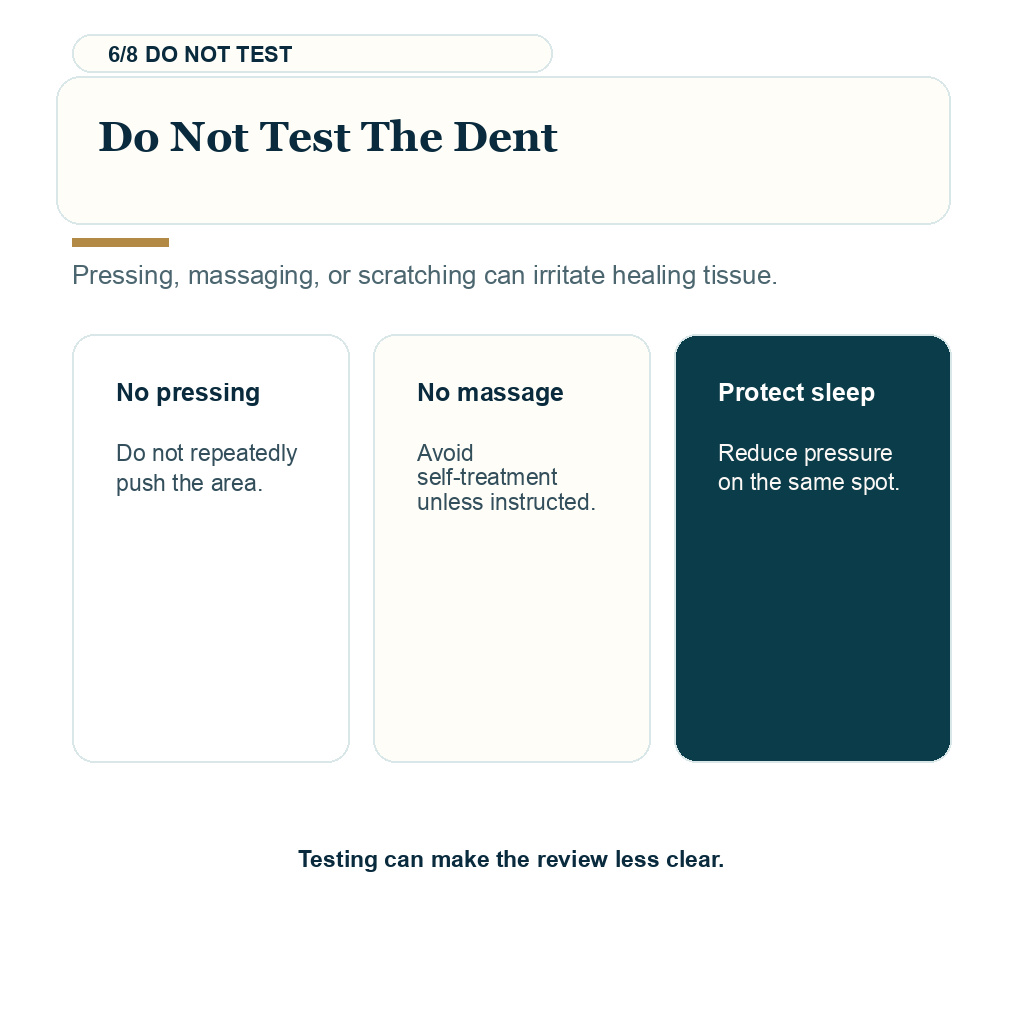
Do not press the dent to see if it fills. Do not massage it early. Do not use a massage device, steam therapy, oils, random creams, steroid creams, filler ideas, or social media tricks. Those actions can irritate healing skin and make the clinic’s assessment harder. Repeatedly checking whether the dent is softer, deeper, or movable can itself become a pressure problem.
Do not press, massage, steam, or inject anything into the area yourself. If treatment is ever needed, the decision should come after examination, timing review, and a clear diagnosis. Many early surface concerns are best observed, not manipulated.
The recipient area is recovering from many tiny openings. The donor area is recovering from many tiny extractions. The skin needs simple protection before anyone adds pressure. If the concern began after contact, also review touching grafts after a hair transplant and bumped head after a hair transplant so the event is judged by trauma signs, not fear alone.
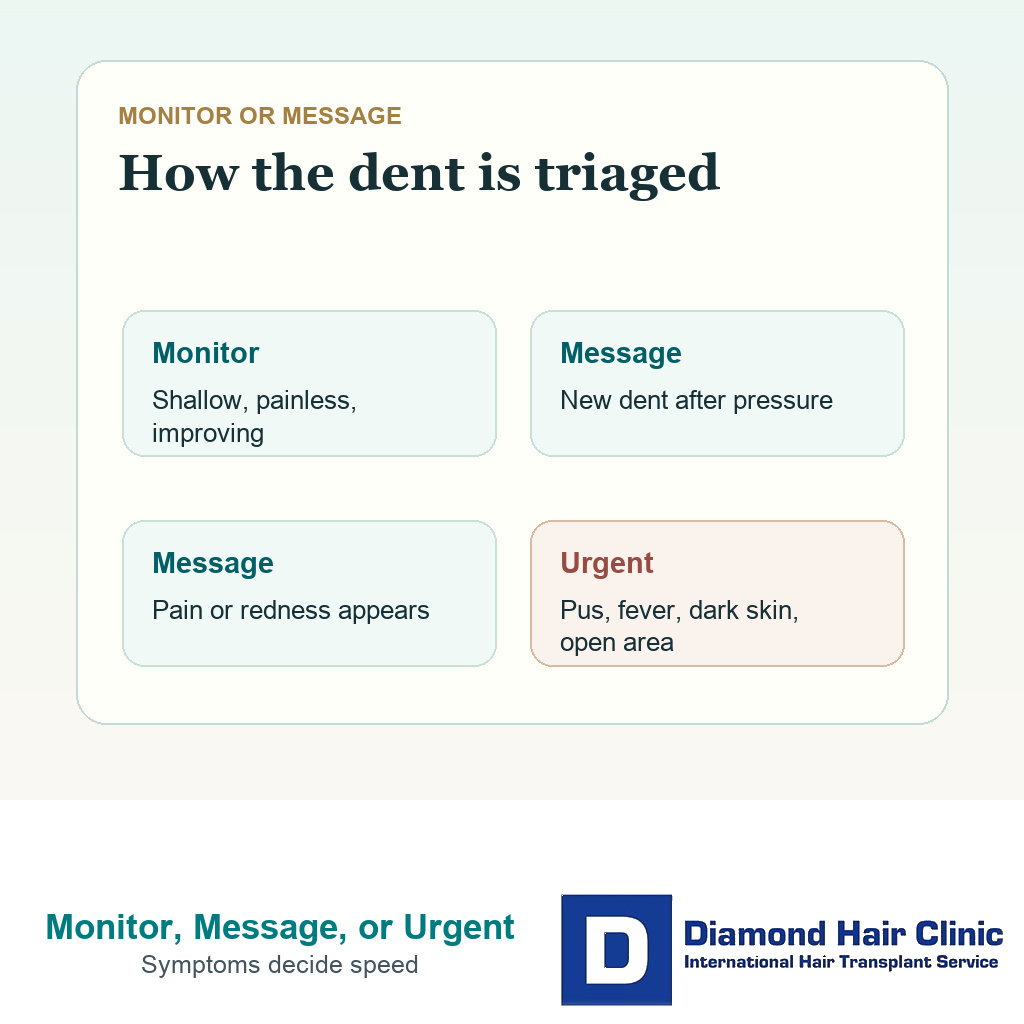
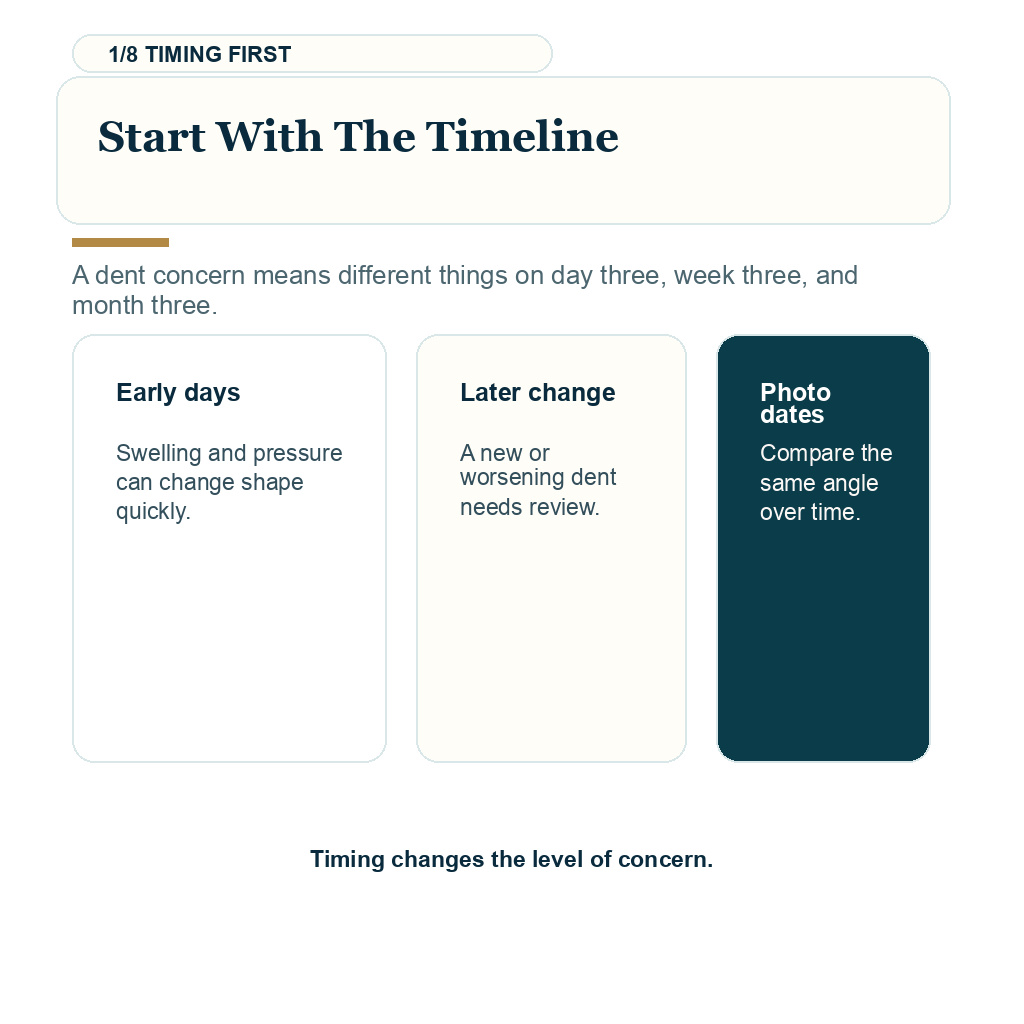
The trend and symptoms decide whether a dent is monitored or reviewed quickly.
Scalp dent does not mean grafts were lost
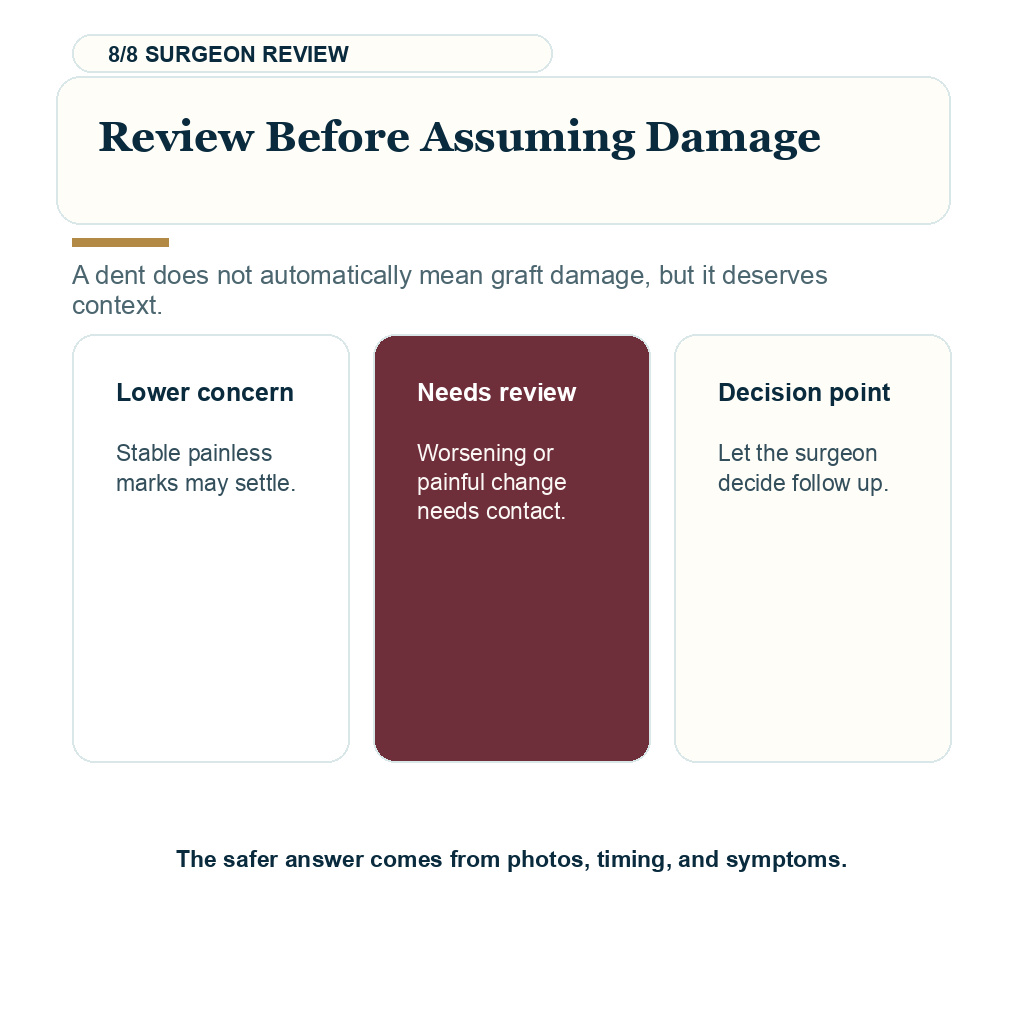
A dent by itself does not prove graft loss. Graft loss is more concerning when there is fresh bleeding, a tissue like piece with hair, an open spot, direct trauma, repeated rubbing, or a clear change immediately after a contact event. A surface depression without those signs needs review, but it should not be translated into lost grafts automatically. Do not answer the fear with extra washing, extra spray, picking, or repeated finger tests.
Shedding can make the area look worse at the same time the patient notices the dent. When transplanted hairs shed, shadows and skin contours become easier to see. That stage can make a small mark feel more important than it is.
If the dent sits in a region where grafts look sparse, the final density cannot be judged early. Surface shape, shedding, shock loss, and early growth are separate questions. A single close up photo should not decide the whole result.
Deeper skin problem that needs faster review
A deeper skin problem becomes more likely when the surface change is persistent, sharply organized, worsening, painful, inflamed, or associated with scarring texture. After hair transplant surgery, possible surface and skin problems can include texture change, ridging, cobblestoning, folliculitis, infection, scarring, and rare tissue injury. That does not mean every dent is one of those problems.
I become more cautious when the dent is fixed in the same place for months, looks attached to scarred texture, appears with color change, or sits in an area that had infection, severe inflammation, trauma, or pressure. Purple or dark discoloration, blistering change, open skin, drainage, or increasing pain raises the threshold for faster review. At that point, the concern sits closer to hair transplant necrosis warning signs or infection review than to a simple cosmetic dent. A real examination is stronger than another close image photo.
A dent in the exact area where a hard scab kept reopening or bleeding needs a different review from a shallow pressure mark. First I treat it as a wound healing question. The important details are whether the scab stayed stuck, opened during washing, showed wet tissue underneath, or came with pain, smell, drainage, or spreading redness. Do not try to smooth or hide it with massage, steam, or random creams. Once the wound is closed and calmer, I can judge whether the contour is still improving or whether scar texture may be involved.
There is also a difference between cosmetic worry and medical urgency. A stable shallow contour concern can be reviewed in a planned way. A painful hot area with drainage, fever, dark tissue, or increasing swelling should not wait for cosmetic result timing.
Track the dent over the next weeks
Use consistent photos. Same room, same light, same angle, dry hair, and no flash when possible. Take the photo after the scalp has been left alone, not immediately after pressing, rubbing, oiling, wetting, or aggressively parting the hair. Take photos every few days at first, then less often if the mark is improving. Daily magnified photos often increase anxiety more than clarity.
Write down what changed. Did the dent appear after helmet pressure? Did it look worse after sleeping on that side? Is the skin color unchanged? Does it flatten after a few hours? Are the edges softer or sharper? Is pain improving? Is swelling moving down? These details help more than a dozen nearly identical close ups.
A temporary pressure mark is different from a scar like surface change. The difference becomes clearer with time, photo consistency, and symptom trend.
Details that matter when I judge scalp surface changes
In clinic, I do not judge this from one dramatic close up. I look at the scalp in ordinary light, compare both sides, feel the surface gently when the timing is safe, review photos from earlier days, ask about pressure or trauma, and check for pain, heat, redness, drainage, dark skin change, or an open area.
If everything points to a shallow improving pressure mark, I protect the area and follow it. If the surface looks fixed, scarred, inflamed, or medically unclear, I examine it more closely and avoid guessing. The useful distinction is between a temporary healing contour and a problem that needs real attention. A stable photo trend can guide the decision. Repeated manipulation can hide the real trend.
My instruction is simple. Do not test the dent with your fingers. Photograph it properly, protect the scalp from pressure, follow the clinic’s recovery rules, and ask for review if the mark is new, worsening, painful, hot, wet, dark, open, draining, or linked to a pressure or trauma event. Structured observation is useful. Repeated manipulation is not.