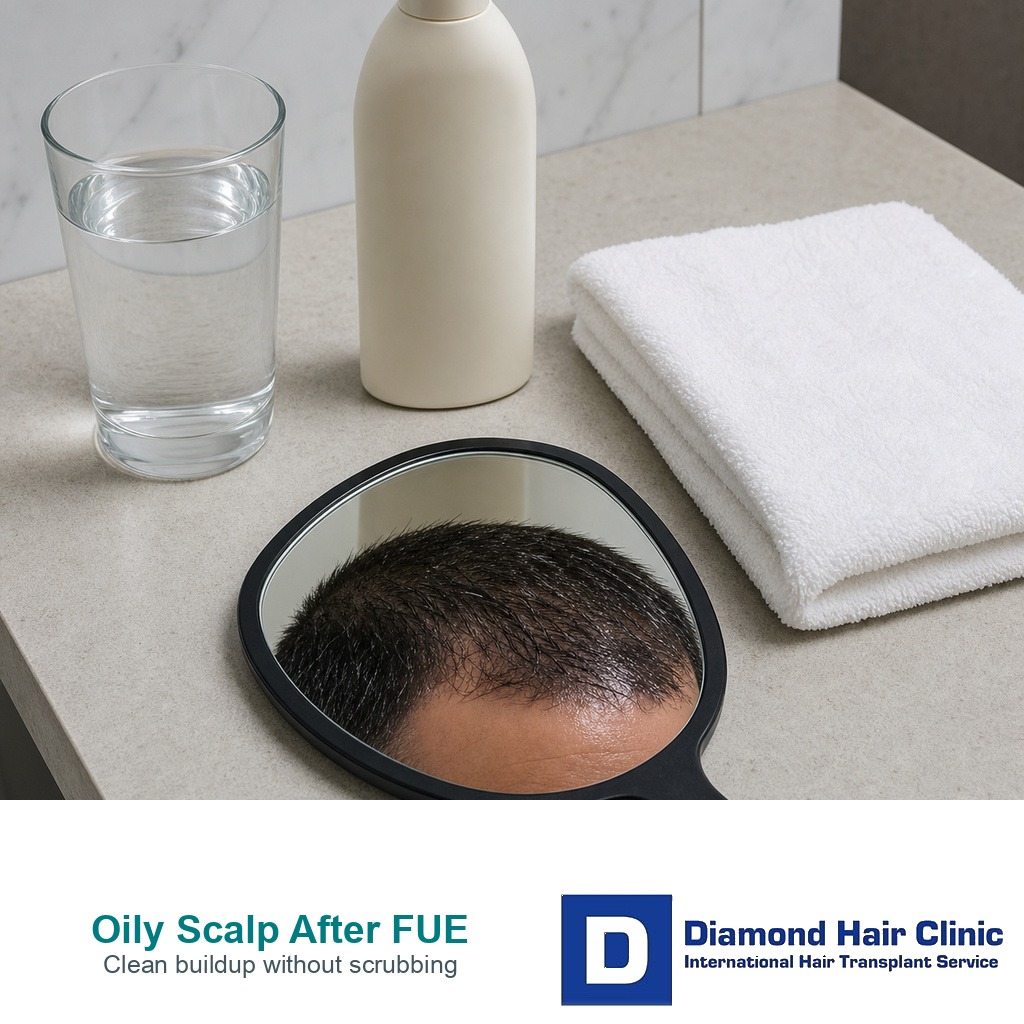
Oily Scalp Needs Gentle Cleaning During Early FUE Healing
Greasy buildup worries patients because it can look as if something is stuck around the grafts. Oil by itself is not a graft test. In the first weeks after FUE, the priority is a clean scalp with as little friction as possible. That means no picking, rubbing, strong shampoo changes, or product stacking while the skin is still settling.
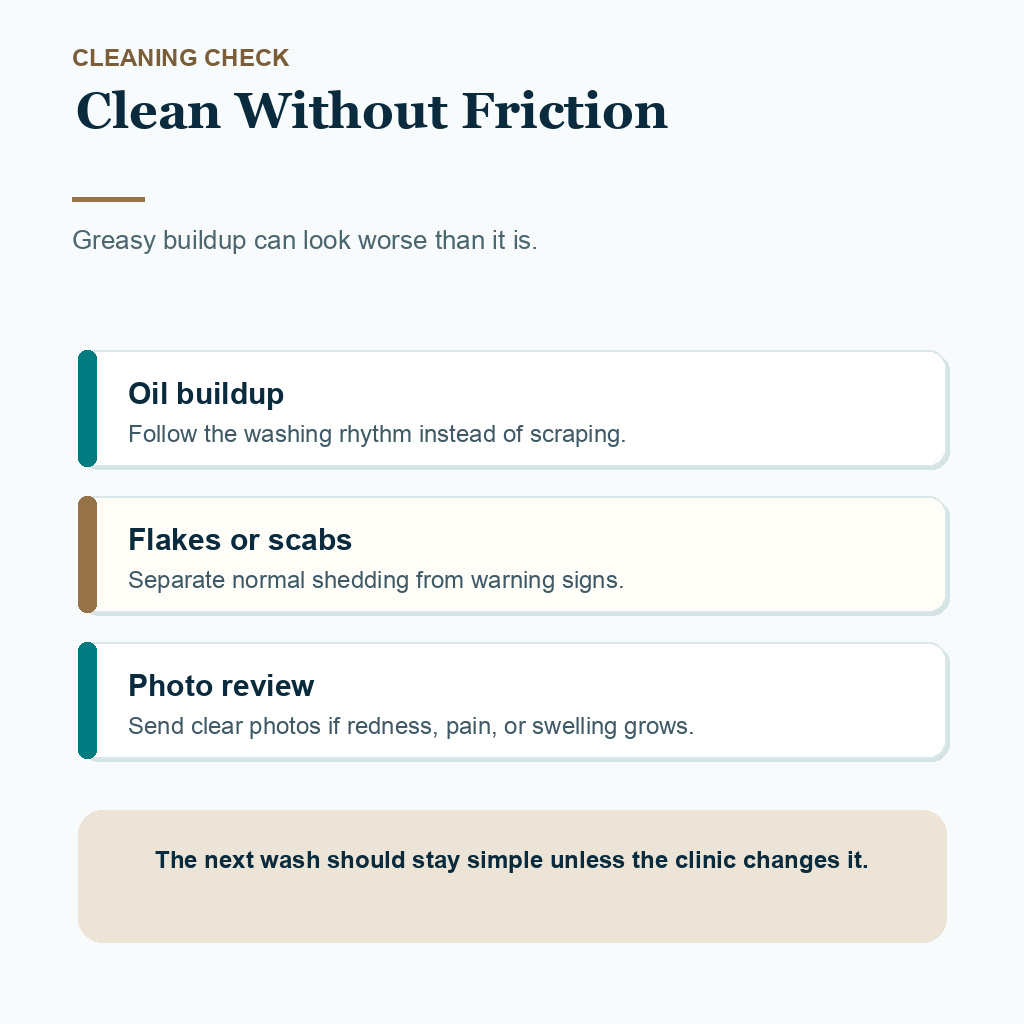
Sebum, loose flakes, softened scabs, shed hairs, and product residue can collect together and look more dramatic than they are. The useful decision is whether the scalp needs the next planned gentle wash, a photo review, or medical treatment for a separate skin problem. Cleaning should reduce buildup without turning recovery into friction.
Oily skin does not need to be dried out to protect grafts. Follow the wash method you were given, and check with the clinic before adding stronger shampoo, alcohol wipes, acids, or extra washing that leaves the scalp tight.
Most patients send this question because the oily layer looks sticky and frightening, not because it hurts. I first want to know the surgery day, how the scalp was washed, and whether the skin is settling or becoming more irritated. When a photo includes the forehead, I still separate forehead shine from graft area buildup before changing the wash advice.
Why can greasy buildup look more serious than it is?
After FUE, the scalp is not behaving like a normal styling surface. There may be healing skin, dried shampoo residue, small flakes, early shedding, and natural oil in the same area. When those things mix, the patient may see a soft pale greasy layer and worry that the grafts are coming out.
That fear is understandable because oily scalp, dandruff, buildup from sebum, and hair caught in sticky flakes can look similar in a mirror. Most patients are not asking a cosmetic question. They are asking whether they damaged the operation.
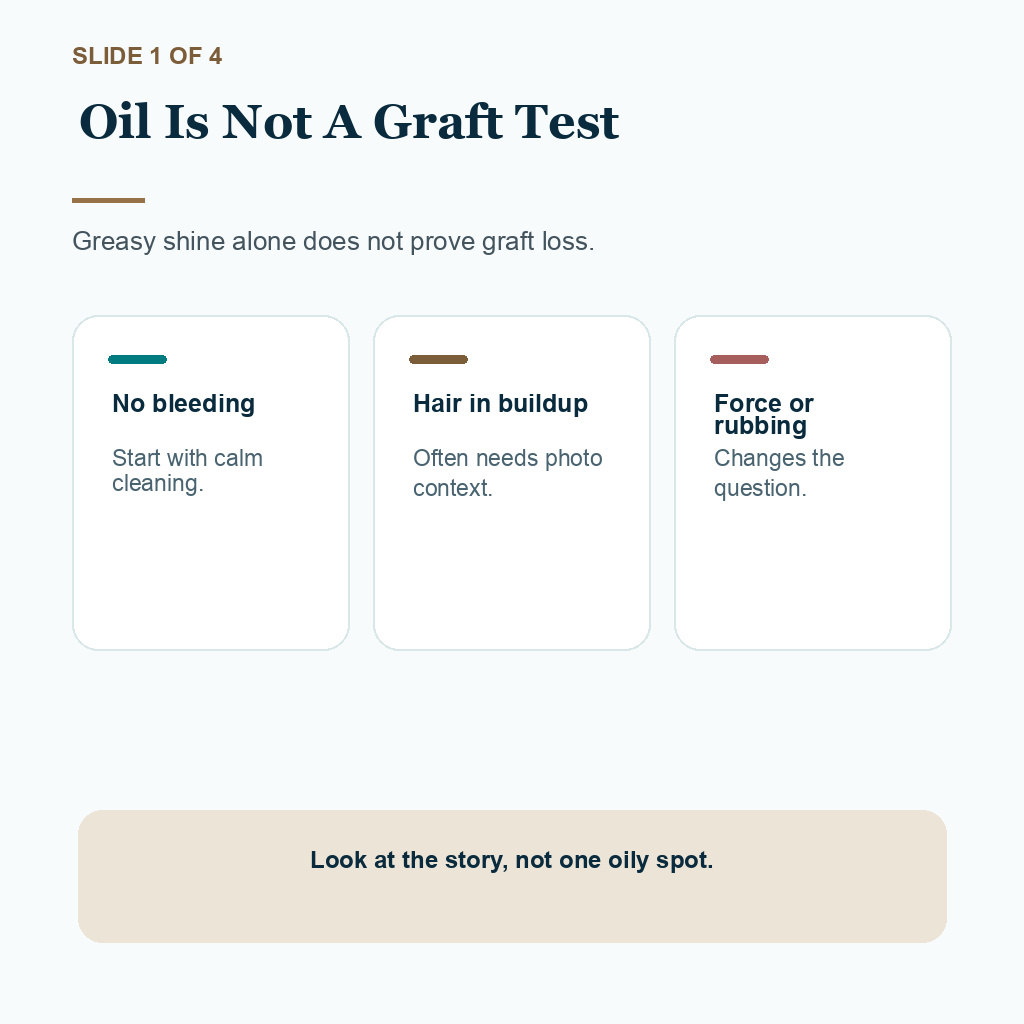
I separate the appearance from the mechanism. A greasy shine or loose buildup does not mean a follicle has been pulled out. The concern becomes stronger when there has been forceful rubbing, picking, trauma, fresh bleeding, or a clearly displaced fragment that looks like a graft in the early healing period. When hair sits inside scabs, scabs with hairs after hair transplant becomes the closer question.
Gentle washing is safer than force
Oil and flakes should be handled with gentle washing, not force.
When the scalp feels oily, many people want to wash harder. During early recovery, that is the wrong instinct. A gentle wash can loosen oil and flakes over time, but fingernails, strong pressure, rough towels, and repeated shampooing can irritate the recipient area.
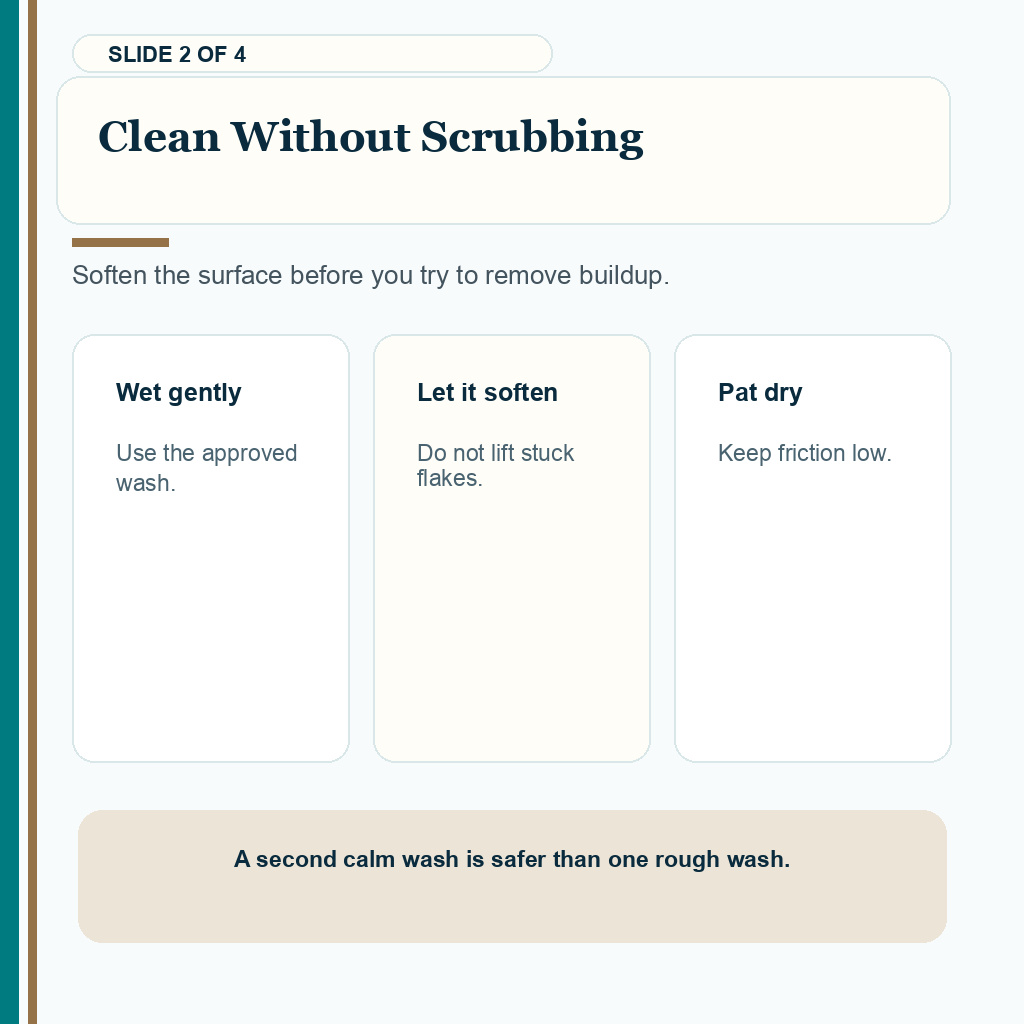
The baseline is the clinic washing rhythm described in gentle washing after hair transplant. Wet the area as instructed, let foam or lotion soften the surface, rinse without pressure, and use only the flat finger pads when your instructions allow contact. Do not use fingernails, brushes, scalp massagers, exfoliating products, rough towels, repeated washing in one day, or dry picking.
A clean scalp matters, but recovery is not improved by chasing every oily spot. The aim is gradual softening. If buildup remains after one careful wash, the answer is often another planned wash at the next allowed time, not emergency scraping. Let the scalp dry before deciding whether oil or residue is still there.
Avoiding every wash can let oil and softened crusts build up, while repeated washing or strong dandruff shampoo can irritate the same area.
Sebum, flakes, scabs, and shed hairs need separate judgment
Sebum is natural oil from the scalp. It may make hair look separated or shiny. Flakes can come from dry healing skin, dandruff, product residue, or old scab material. Shed hairs can sit inside a soft flake or scab and look like a graft, especially when the patient is checking the mirror every few hours.
If the main finding is dry white material, white flakes after hair transplant is the closer match. If the scalp feels tight and dry rather than oily, the dry scalp after hair transplant guide fits better. Here I am talking about the greasy layer that makes patients wonder whether they should clean more aggressively.
The distinction matters because different problems need different handling. Dry flakes do not need oily products early. Oily buildup does not need harsh scrubbing. Scabs do not need picking. Shed hairs do not mean the follicle is gone just because they appear in the sink.
Oily scalp signal timeline
Oily scalp signs that change the next step
Judge oil with the wash stage, crusts, smell, redness, tenderness, and whether the surface is improving or becoming more irritated.
Days 1 to 3 shine
A light oily shine can appear while the scalp is still tender. I treat that as a cleaning and observation issue first, not a reason to scrub.
Follow the wash routine gently and watch the trend. Review is needed if oil appears with spreading redness, warmth, discharge, fever, or worsening pain.
Crusts plus oil
Oil around crusts often means the wash has been too timid or uneven. The correction is technique, not stronger rubbing.
Use the slow soft wash you were given. If crusts smell bad, bleed, lift with force, or the area becomes more painful, send photos before doing more.
Itch and redness
Itching and mild redness can come from healing, residue, or too much touching. The trend is more important than one greasy photo.
Reduce friction and avoid scratching. If redness spreads, the scalp feels hot, or tenderness is increasing, the clinic should review it.
Smell or discharge
Oil with odor, drainage that looks like pus, increasing swelling, or fever is not a simple oily scalp problem.
Stop treating it yourself and contact the clinic. Do not add extra shampoo, alcohol, or antiseptic unless the clinic tells you to.
Repeated buildup
If the scalp keeps looking greasy after proper washing, the cause may be technique, product choice, or your skin tendency.
Ask for a wash review from photos. Buildup with pain, bleeding, spreading redness, or open skin needs earlier contact.
Oily skin can overlap with dermatitis
Some patients already have dandruff or seborrheic dermatitis before surgery. In those cases, oiliness may be part of a scalp condition rather than only normal recovery. Dermatitis is more likely when oil comes with repeated itching, redness, sensitivity, greasy yellow flakes, or a familiar dandruff pattern that existed before the transplant.
For surgery planning, seborrheic dermatitis and hair transplant explains why the scalp should be controlled before travel when possible. After surgery, the question becomes timing. Medicated shampoo can irritate if it is restarted too early or used too strongly, so sudden product changes should wait for the clinic’s instruction.
When dandruff is active and the grafts are secure enough for medicated washing, ketoconazole shampoo after hair transplant is a timing decision, not a product to start because the scalp looks oily. The first step may still be gentle cleaning rather than treatment chosen alone at home.
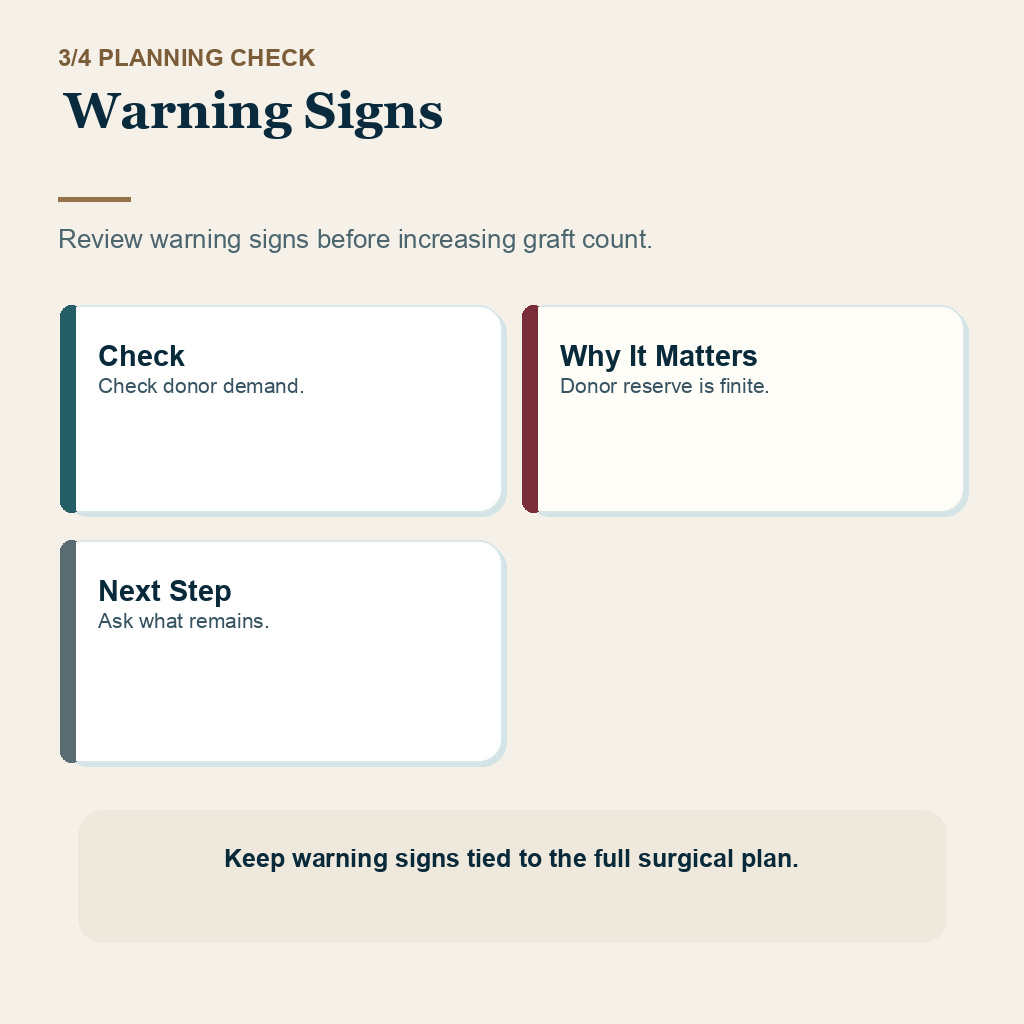
Warning signs that need photo review
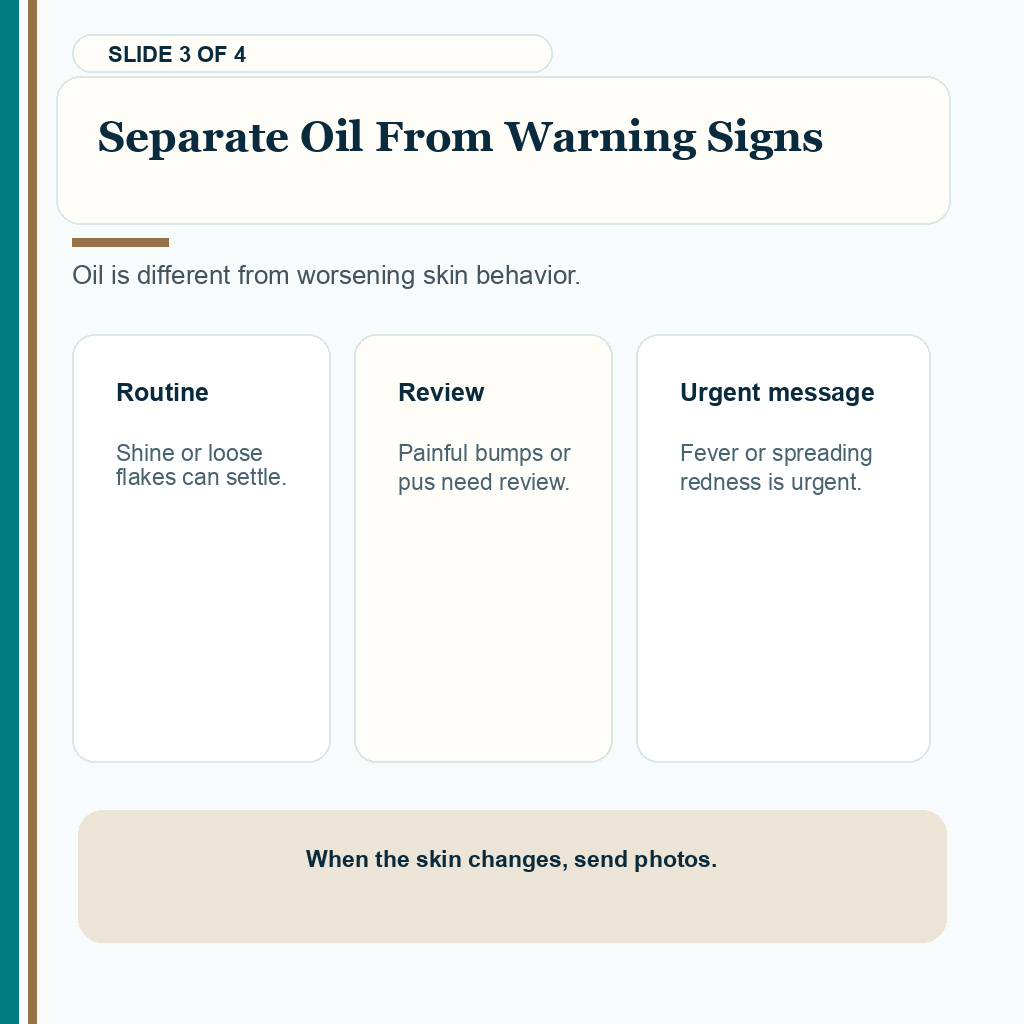
Oil alone is mainly a cleaning and timing issue. Oil with changing skin signs is different. Send photos if the scalp becomes more painful, hotter, more swollen, more red, or starts to drain. Photos are also needed when yellow crusting spreads, bumps become tender, pus appears, or fresh bleeding follows touching the area.
If you also have fever, feel unwell, see spreading redness, have rapidly worsening pain or swelling, notice an open wound, or cannot reach the clinic quickly, seek local urgent medical care the same day rather than waiting only for online review.
Do not try to diagnose infection from one mirror check. Also do not ignore a pattern that is clearly worsening. A photo from the same angle in good light is more useful than another round of rubbing. A texture concern that changes with oil, redness, or product use should be documented before it is called permanent cobblestoning.
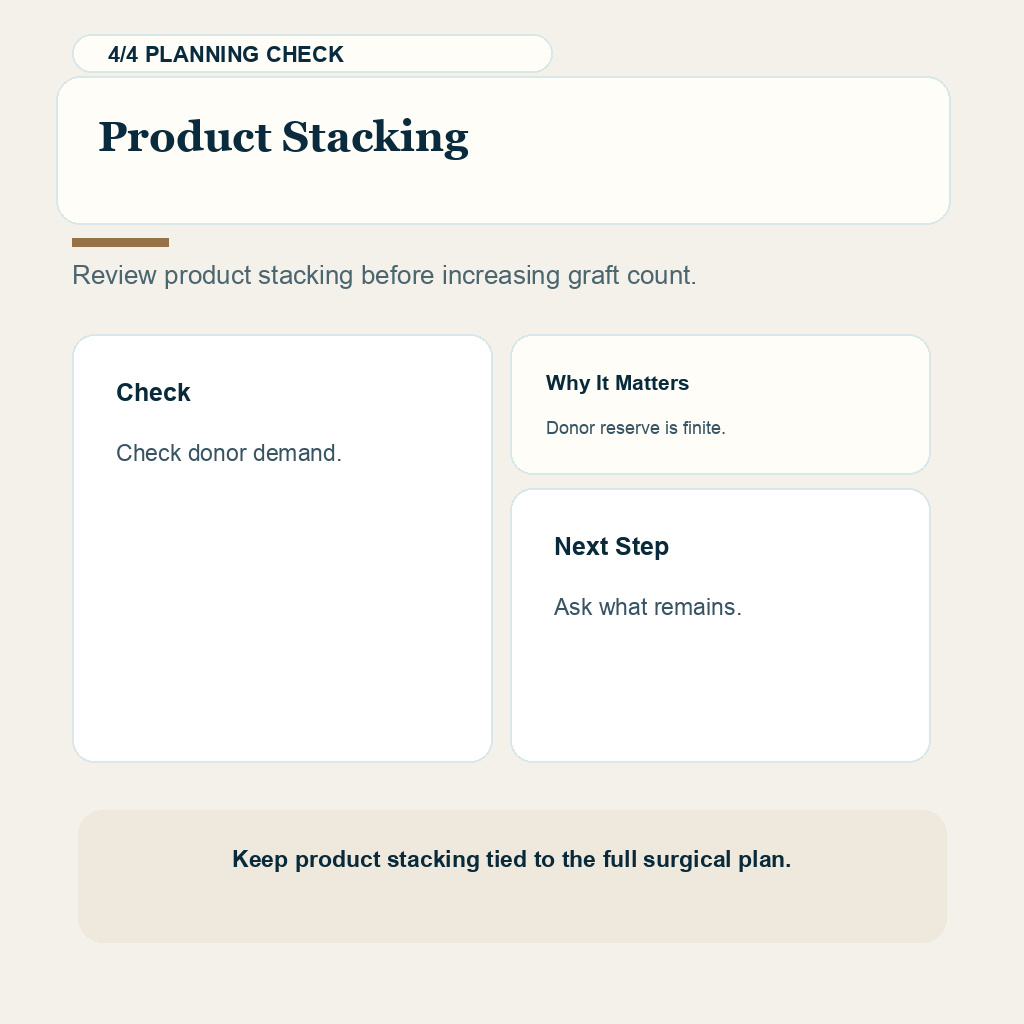
Products can make the scalp harder to read
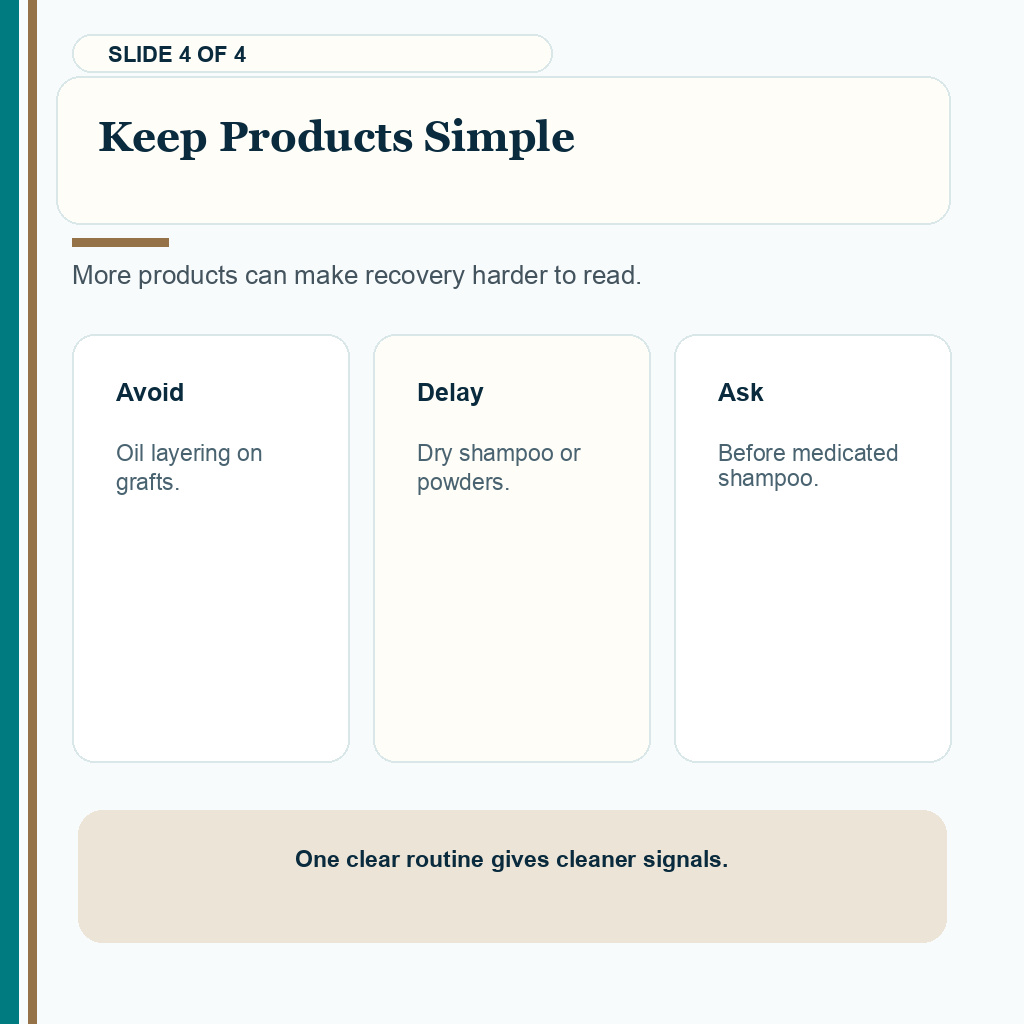
After FUE, oily scalp can tempt patients to add oils, dry shampoo, extra conditioner, dandruff shampoo, sprays, or serums. Do not add several new products in the same week. If the scalp becomes red or itchy afterward, we may not know which product caused the problem.
Oil, conditioner, dry shampoo, and medicated shampoo are not the same decision. Oil can coat and hide the scalp, conditioner can leave a film, dry shampoo leaves particles, and medicated shampoo can irritate if timing or strength is wrong. Strong dandruff shampoos, salicylic acid products, acne treatments, steroid creams, and antibiotic creams should not be started on the recipient area unless the clinic has cleared the timing or prescribed them.
If you are thinking about oil, the timing question belongs with hair oil after hair transplant first. If you are considering powder or aerosol products to hide the oily look, dry shampoo after hair transplant explains why residue can become its own problem. Conditioner is also not the same as shampoo, so the conditioner timing guide is a better match for that question.
My usual advice is to keep the scalp readable. Change one thing only when there is a clear reason and when the clinic agrees. Too many treatments after FUE can confuse recovery signals when several products are added together.
Keep the next wash simple unless the clinic says otherwise
If you are still in the very early washing stage, the answer may be patience and softening rather than more contact. If your clinic has cleared you for washing and the scalp is oily without warning signs, keep the next wash simple. Use the approved cleanser, let the scalp soften, rinse patiently, and dry by patting or letting the area dry naturally as advised.
Do not use fingernails. Do not lift a sticky flake because one hair is inside it. Do not repeat washing several times in the same day unless your clinic told you to. Do not switch to strong dandruff shampoo just because the mirror looks greasy one morning.
If the scalp feels better and looks clearer after one or two normal washes, that is useful information. If buildup does not move with the gentle routine, do not scrape it away. Ask the clinic to review the area and explain what changed. If the buildup keeps returning with itching, redness, or tenderness, the issue may be more than simple oil.
Photos that help me judge the scalp
Good photos make the next step clearer. I ask for a clear front view, both side angles if the recipient area is involved, one close photo in natural light, and a brief note about timing. Tell the clinic the surgery day, the wash day, whether there was rubbing, whether there is pain, and whether the area is getting better or worse.
A single extreme close-up can make every pore and flake look dramatic. A wider photo shows whether the concern is local or spread across the scalp. A second photo the next day can show whether gentle washing is improving the surface or whether the skin is moving in the wrong direction.
Photos should guide the next step, not feed hourly checking. Recovery becomes harder when the patient keeps touching the scalp to prove that everything is fine.
Keeping the scalp clean without turning fear into friction
Oily scalp after FUE is mainly a recovery management question, not proof of graft loss. If I see oil without worsening redness, pain, smell, discharge, or bleeding, I think first about washing technique and timing. If the skin behavior is changing, I want photos before the patient starts experimenting with products.
Warning signs should not be ignored, but every oily flake does not need to become an alarm about graft loss. The safer middle ground is to wash gently according to the plan, avoid picking, avoid unapproved products, and ask for review when the skin behavior changes.
That is the part worth remembering after you leave the mirror. The scalp should become cleaner with patience, not rougher from fear.
The 4 slides above separate oily buildup from graft loss fear, scrubbing, warning signs, and product stacking. Use the arrows or numbered controls to move through the images.