The Day 10 Mirror Overpromises Hair Transplant Density
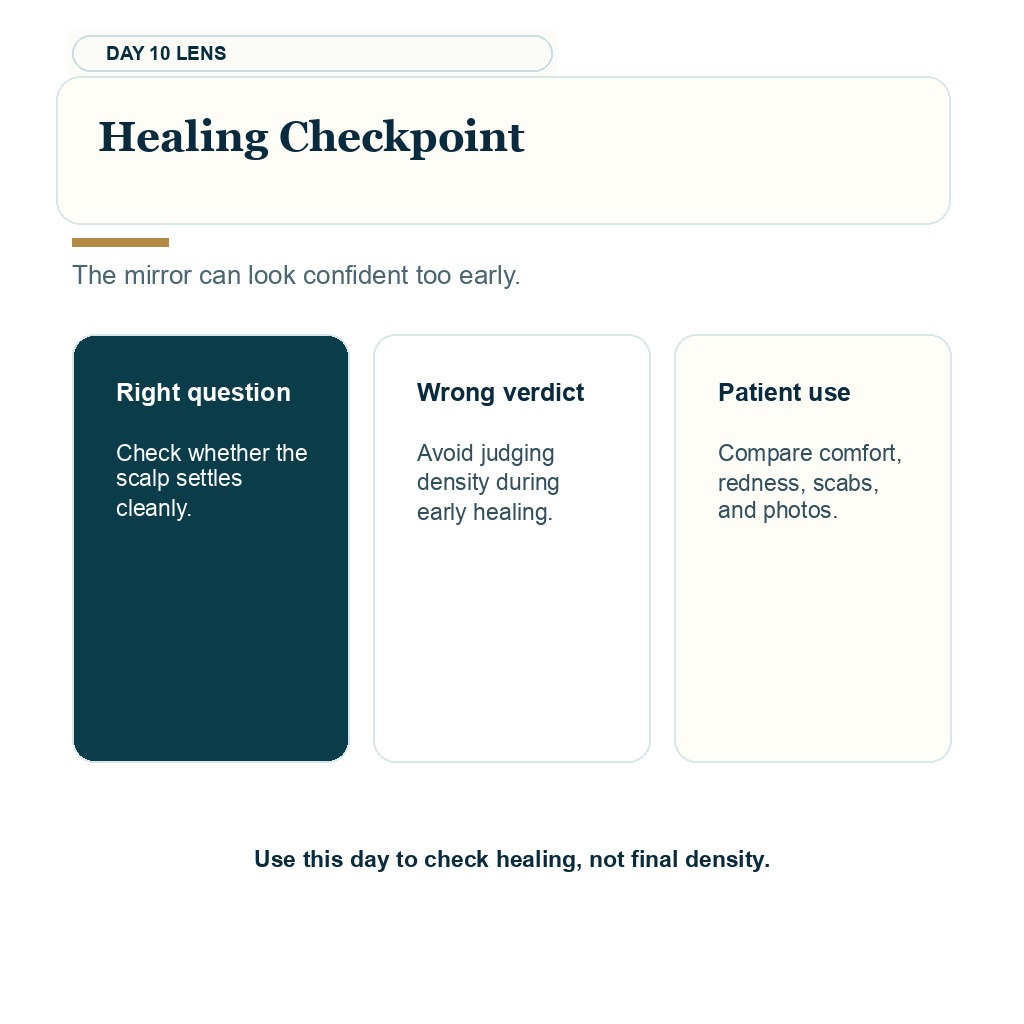
Around day 10, the mirror can make a hair transplant look more finished than it really is. The scabs may be mostly gone, the short transplanted shafts may all be the same length, and the recipient area can look surprisingly filled under bathroom light.
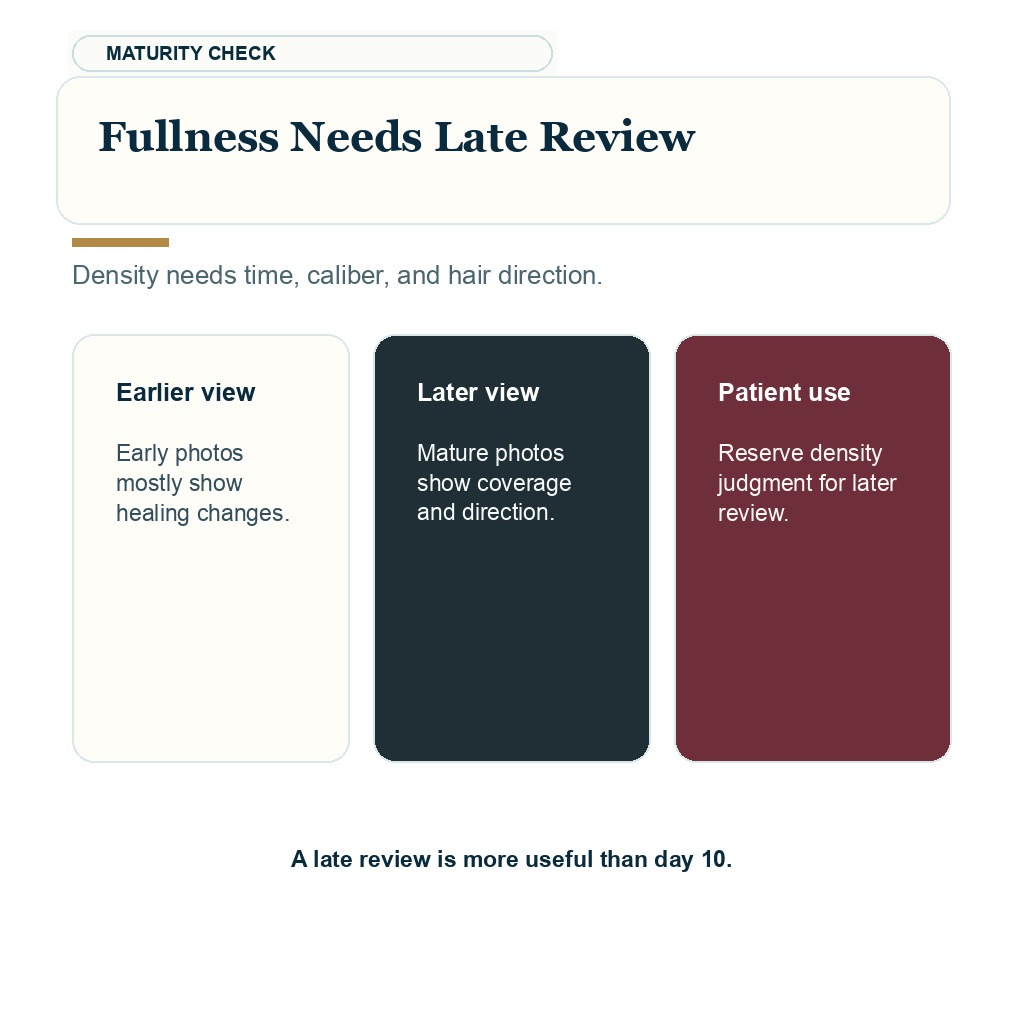
It can be an encouraging healing checkpoint, but it is not final density. Many visible shafts can shed in the following weeks, and real density needs months of growth, caliber change, and photo follow-up before it can be judged with any confidence. A day 10 photo is not a result.
Use early photos as a clean baseline, not as a density promise, because spaces can look larger after scabs lift. Keep the same lighting and distance so later shedding and regrowth are easier to compare.
Day 10 is a healing check, not a density result
When I review an early photo, I am not trying to declare the final result. I look at whether crusts are clearing gently, whether the recipient area has fresh trauma, whether swelling and pain are settling, and whether the skin is moving in the wrong direction. That is a different question from whether density is improving at six months, nine months, or later.
A narrow light strip near the native hairline is a border question, not a density verdict by itself. I compare shave length, scabs, redness, swelling, skin contrast, and immediate placement photos before I treat that line as a possible planning gap.
At day 10, I separate two questions. A graft can be secure in the skin while the final density is still months away. When hair transplant grafts become secure explains early anchoring, but density depends on what those follicles produce later and how the whole recipient area looks over time.
At this stage, photo review is about the recovery facts. I need the surgery day, whether anything hit the recipient area, how washing feels, whether swelling is settling, and whether pain is improving. Those details do not turn a day 10 scalp into a final density preview. They tell us whether recovery is still following the expected path.
Do not zoom into one square of skin where scabs have lifted. A wider view shows whether the concern is a real pattern or only a small area made dramatic by the camera.
If you treat day 10 as proof, the next normal change can feel like a disaster. If the early look is sparse, you may condemn the operation too early. Both reactions come from asking the mirror for an answer it cannot give yet.
Why does the mirror look so confident at this stage?
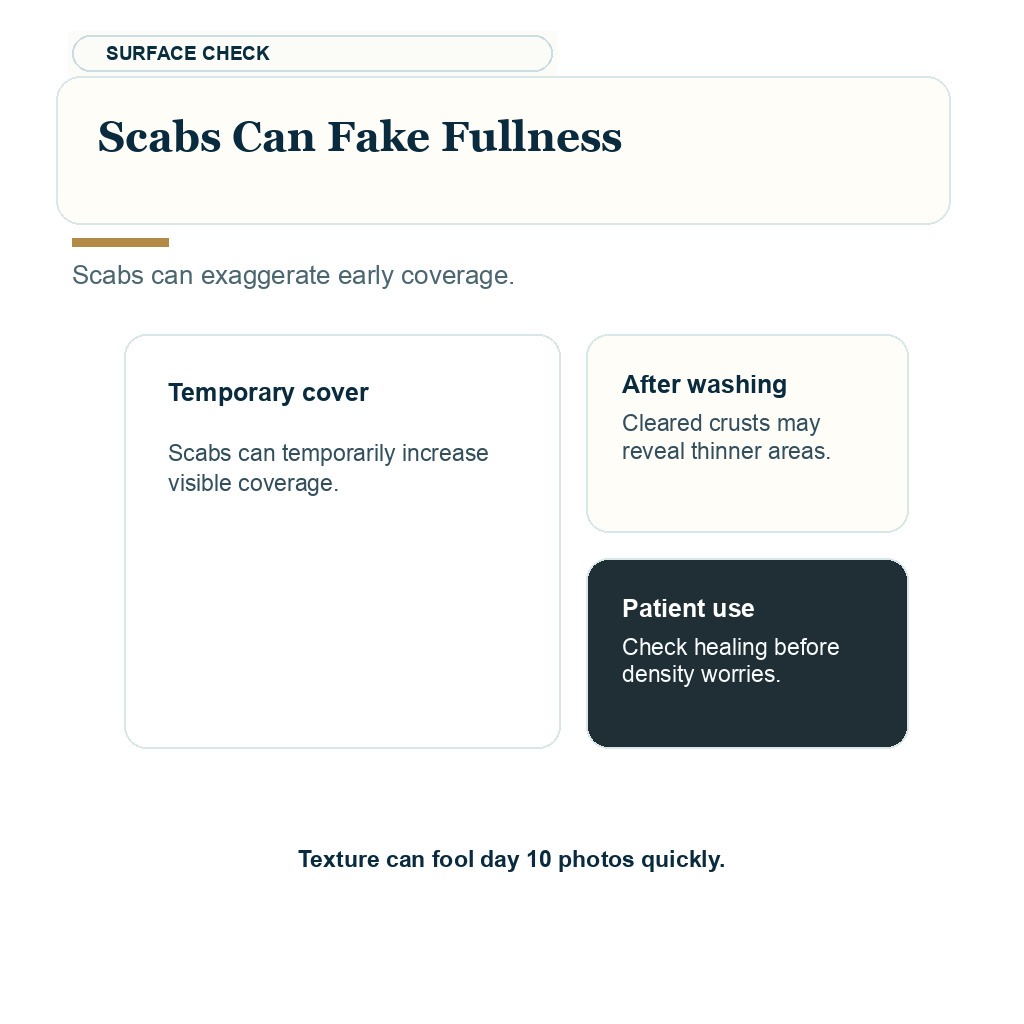
The day 10 look has several visual traps. Short shafts sit close to the scalp and can make coverage look compact. Crusts may have softened or lifted, so the area suddenly looks cleaner. Redness, scalp color, bathroom light, and close phone photos can all exaggerate contrast.
The first wash can make the same area look less filled because crusts, wet skin, and loose shafts change the surface. If the change appears after washing, I first think about why hair can look less dense after the first wash before treating it as a density problem. Around day 10, the skin is still changing too quickly for a final judgment.
Daily checking also makes tiny changes feel larger. If mirror checking after a hair transplant is turning one spot into a daily test, step back and use photos for follow-up, not for hourly scoring.
A shed hair shaft does not prove graft loss
The anxiety often starts when the early stubble sheds. You may see small hairs in the sink, on a towel, or in your hand and think the grafts are gone. The shaft alone cannot answer that question.
When a visible shaft falls away, I first ask what came with it. A dry hair shaft from a settled scalp is different from bleeding, tissue, an open area, or worsening symptoms. Lost grafts, scabs, and hair shafts need that context instead of panic from one hair in the sink.
The opposite pattern can confuse patients too. If very little sheds, it can feel like a guarantee, but I still do not use it as a density score. No shedding after a hair transplant belongs to the shedding timeline, not to a promise about the final result.

What can the first three months really tell you?
The first two weeks mostly tell us about early healing. They can show whether crusts are clearing gently, whether redness is settling, and whether the patient is following the routine. They cannot show mature density.
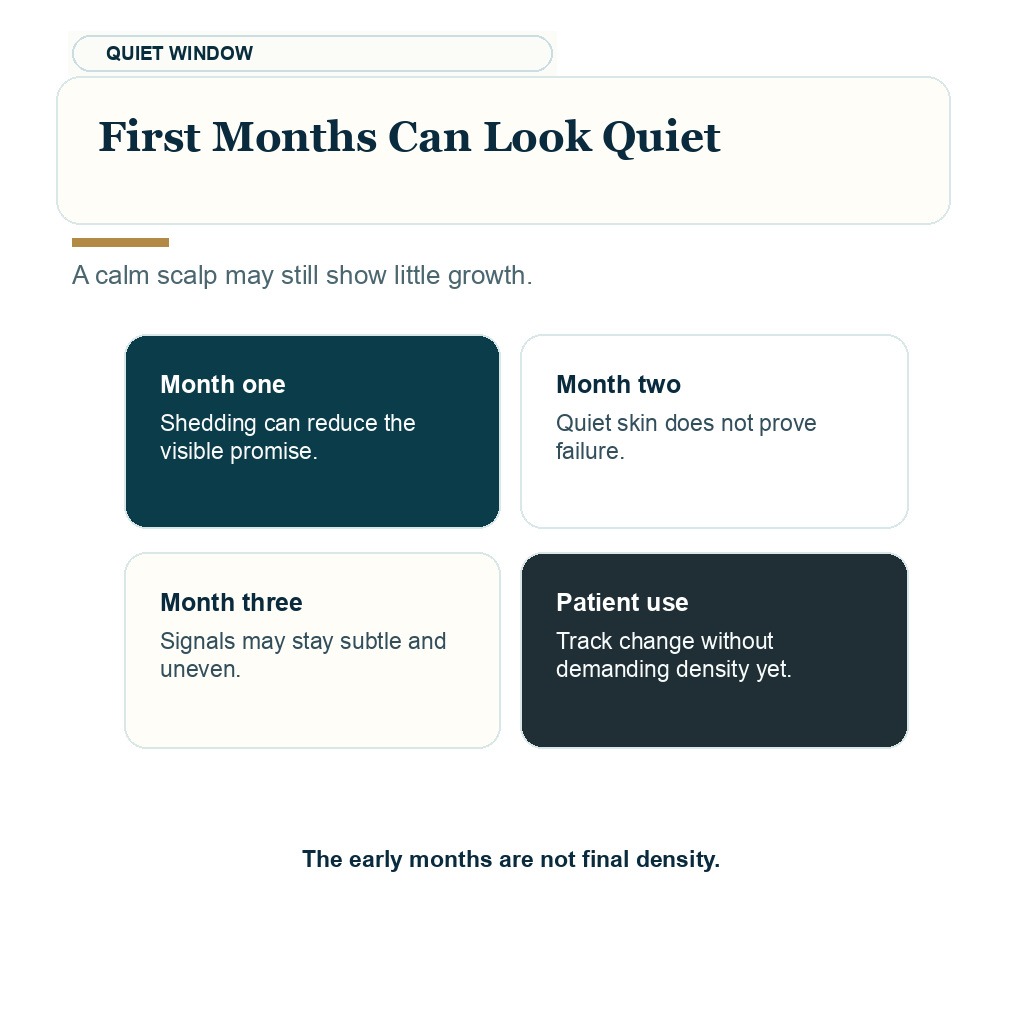
From the second week onward, shedding can make the transplant look weaker than it did around day 10. By the second or third month, many patients are in a quiet stage where the mirror is not rewarding. A quiet month does not make the surgery failed. It means you are still too early for a density verdict.
There is also a confidence trap in comparing day 10 with month two. The two photos are not measuring the same thing. Day 10 shows short cut shafts at the surface. Month two may show a quiet cycle before new shafts build enough length and diameter to matter. A weaker looking month two photo can still belong to a normal timeline.
The photo habit matters here. A close, wet, bright day 10 image should not be compared with a dry month 2 image from farther away, under different light, with a different haircut. Those changes can make the same scalp look like a new problem. A small set of repeatable photos is more useful than ten emotional angles taken on a difficult morning.
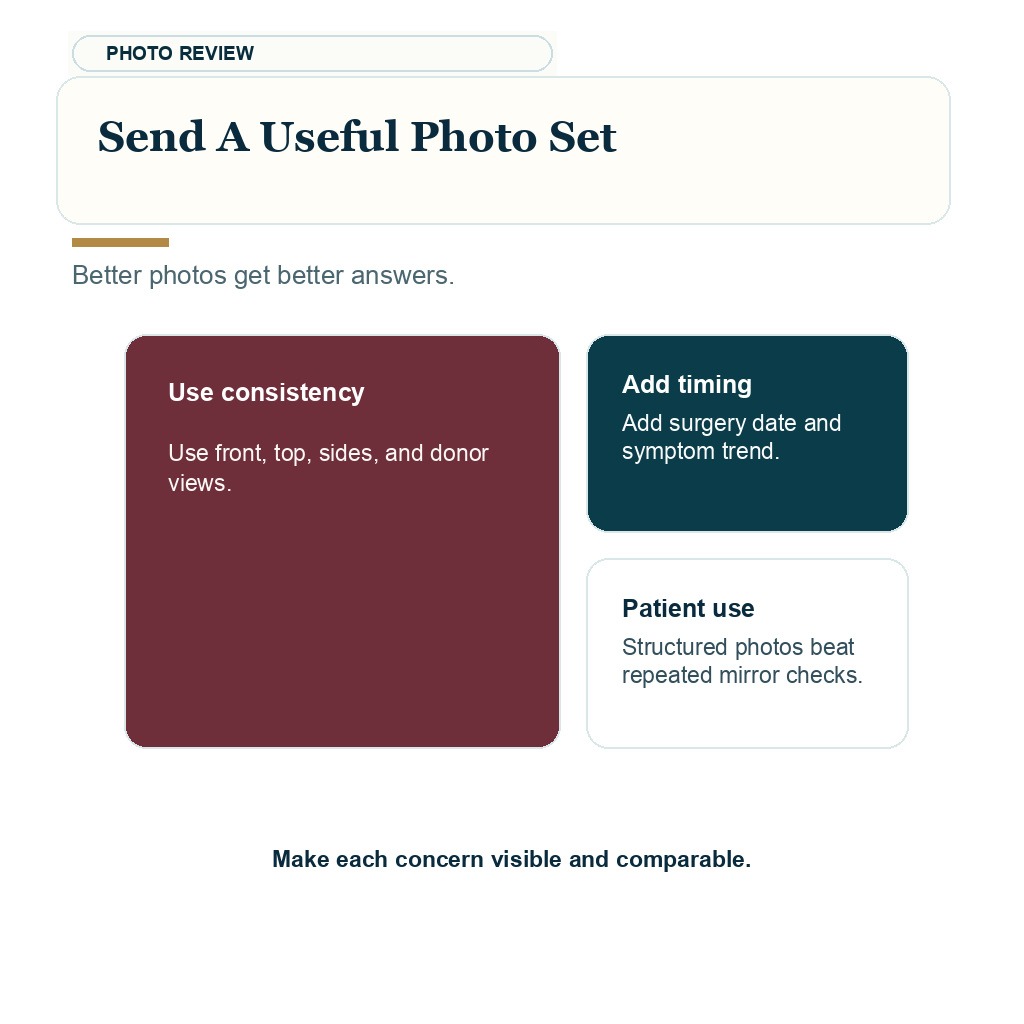
For a useful day 10 check, take the photos with a dry scalp, in the same room, under the same light, and from the same distance. Use front, top, and side or crown angles if that area was treated. Do not zoom into one corner until the photo becomes a fear test. When you are tracking hair transplant growth with consistent photos, a clear repeatable set helps more than ten close shots taken in panic.
Day 10 density photo lab
Use this lab to judge what a day 10 photo can and cannot tell you. It can show whether healing looks calm. It cannot score mature density.
Crusts have cleared and the recipient area can look filled because tiny shafts sit close to the skin.
The photo can support a healing check, but it does not prove caliber, crown behavior, or mature density.
Keep photos consistent, follow washing instructions, and judge whether the skin is settling rather than whether the result is final.
Failed hair transplant or too early belongs later and needs more evidence than one early photo. Day 10 cannot answer that question by itself.
Day 10 photo comparison method
A useful day 10 set keeps the same conditions instead of chasing one dramatic close view.
| Photo concern | Control first | Why it matters |
|---|---|---|
| Light strip near native hair | Use the same room light and the same angle | Skin contrast can make one border look emptier than it is |
| Scabs or redness | Compare again after crusts and redness settle | Healing texture can hide or exaggerate short hairs |
| Different shave lengths | Wait until hair length is closer on both sides | Short native hair and new graft shafts do not reflect light equally |
| Extreme close view | Include a full hairline or full zone photo first | The wider view shows whether the concern is a pattern or a cropped detail |
For later comparisons, keep the same method inside your hair transplant growth tracking record.
If the same line remains visible after the surface settles, compare it with the separate guide to a gap between transplanted and native hair.
Final density depends on more than graft survival
Patients often want to convert the day 10 look into a survival percentage. I understand the instinct, but I do not practice that way. A photograph cannot count living follicles under the skin, and it cannot show future hair caliber, direction, crown behavior, or native hair loss.
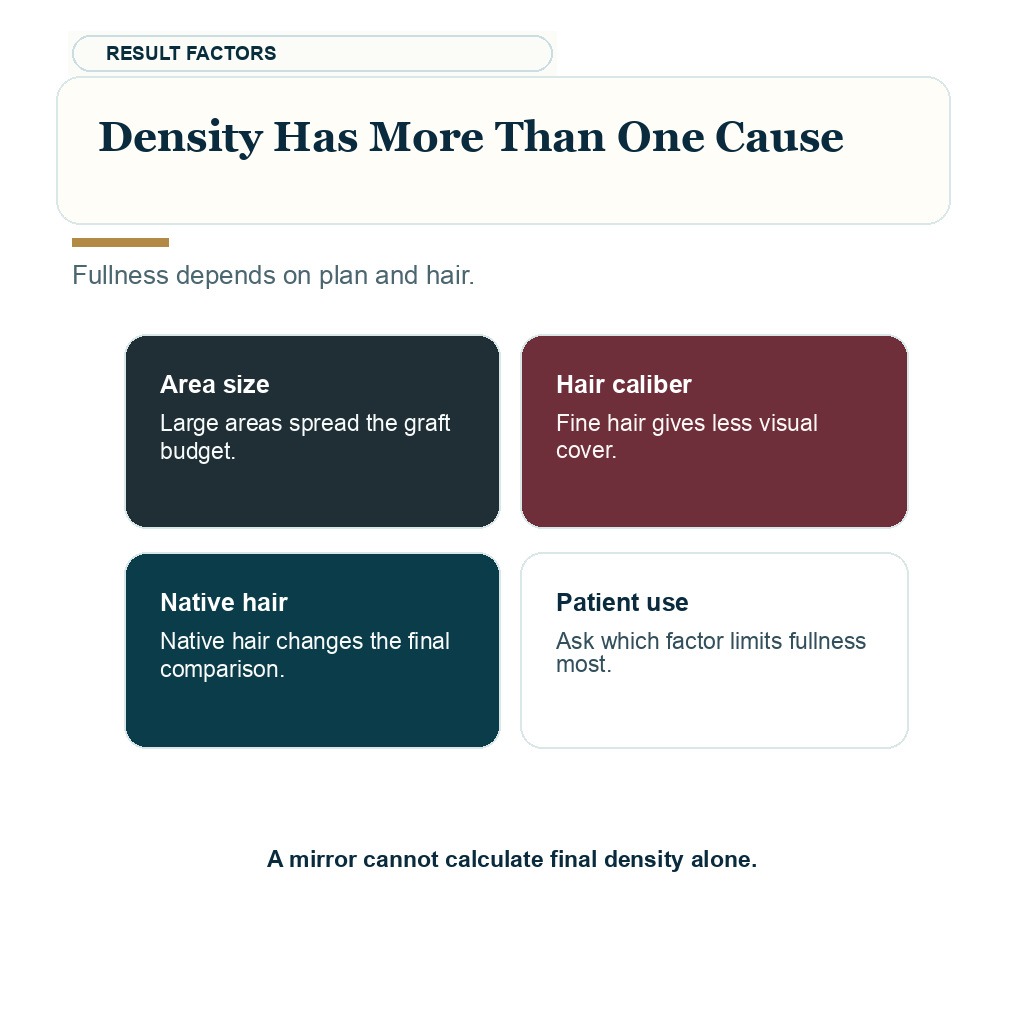
Final fullness depends on graft number, recipient area size, hair thickness, curl or wave, color contrast with the scalp, angle, direction, and whether future hair loss was included in the plan. In practice, density planning is surgical planning, not just a high number written on a quote.
Larger areas and crown work need this caution. A small change in hair angle, whirl pattern, or native thinning can alter the density impression more than a day 10 close photo suggests. The plan has to balance coverage, donor reserve, and future loss instead of chasing the strongest possible early mirror effect.
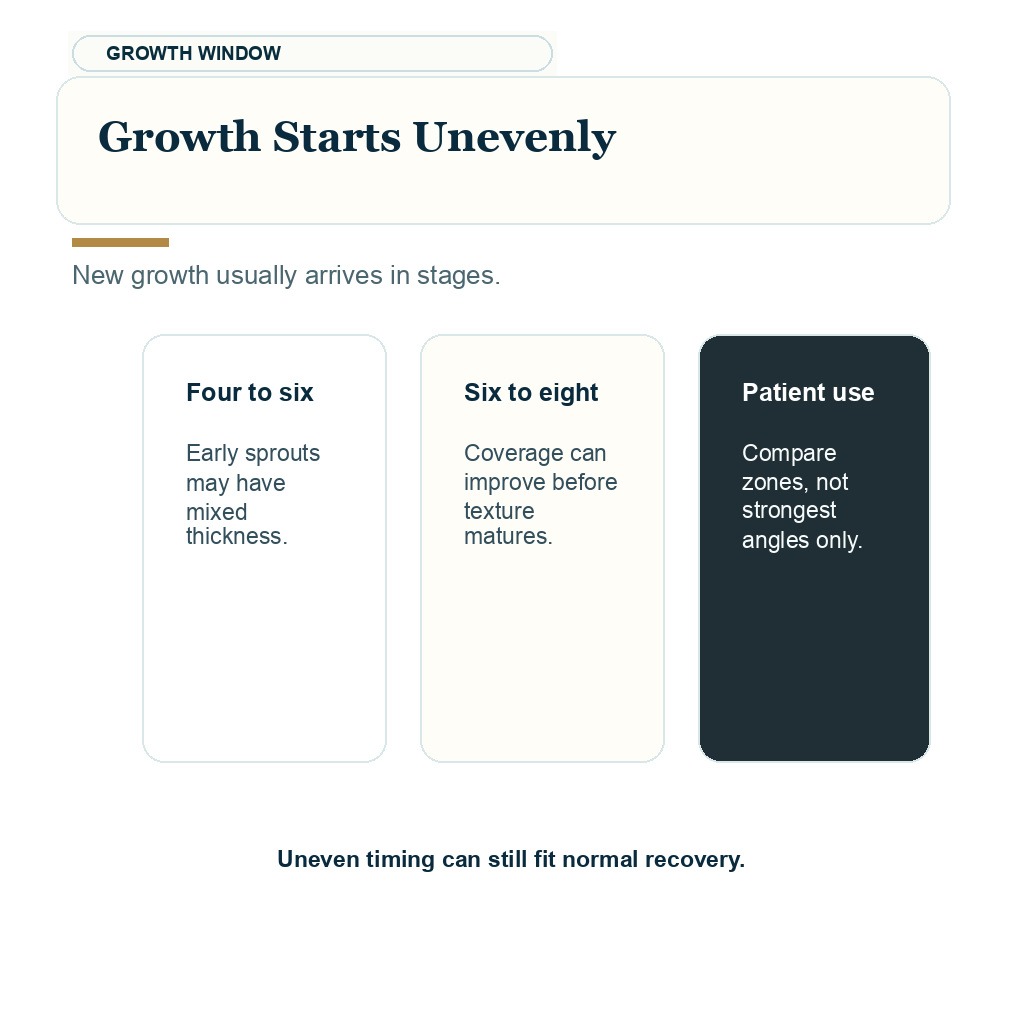
A six month photo is more useful than a day 10 mirror check, but it still needs context. Some patients are clearly improving by then, while others are still waiting for texture, diameter, and styling control to catch up. When I review density at six months after a hair transplant, I look for progress instead of punishing the case for what the mirror seemed to promise on day 10.
If the result still looks thin when the timeline is mature, I move away from the day 10 photo and review caliber, coverage area, native hair, and growth pattern. That is the frame for why some hair transplant results look thin. The early mirror should not be used as a calculator.