Dry Your Scalp Without Rubbing Fresh FUE Grafts
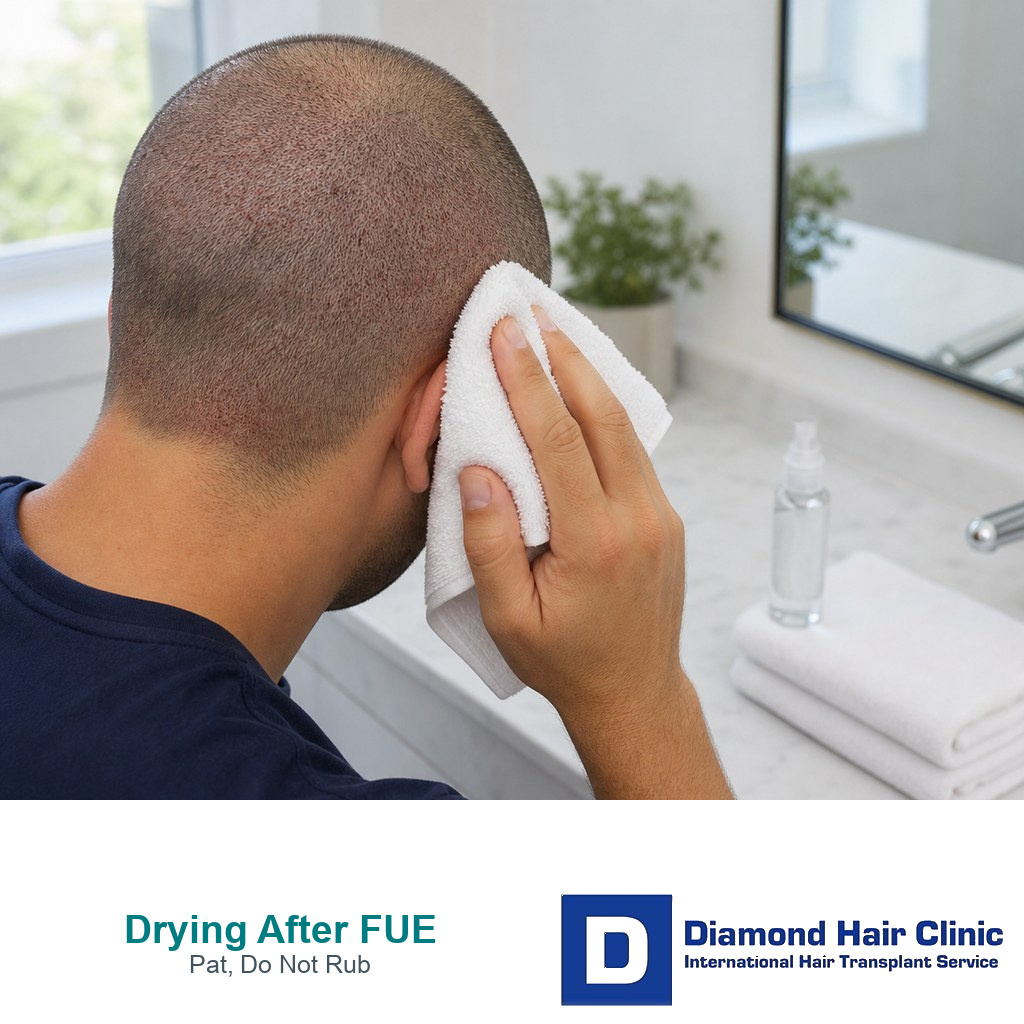
After your clinic has allowed the first wash, drying the scalp should stay slow and light. It is better to leave the recipient area slightly damp for a while than to rub the grafts with a towel to feel dry faster. Pat, pause, and let water leave the skin without dragging across the new grafts or trying to finish drying in one rushed pass.
The towel should take up water while the fabric stays still over the grafts. A clean towel can be used like a soft pad. It should not be used like you would dry normal hair after a shower.
Your own clinic’s washing schedule should still come first. I am focusing on the drying step because many patients wash carefully, then create avoidable friction while trying to finish quickly.
Drying is about friction, not a race
After FUE, the recipient area needs protection from rubbing, scratching, picking, and unnecessary pressure. Water on the scalp is less important than friction across the scalp. A damp recipient area that dries slowly is usually a calmer situation than a dry scalp created by aggressive towel movement.
The wash hair after hair transplant guidance covers timing, water pressure, and hand movement. This page deals with the moment after rinsing, when the towel is in your hand and the recipient area still feels too delicate for normal drying.
Most problems come from a familiar habit. Before surgery, people rub the towel back and forth without thinking. After graft placement, that automatic movement has to stop. Drying should become a controlled touch, not a normal hair drying routine.
Start with water control before the towel
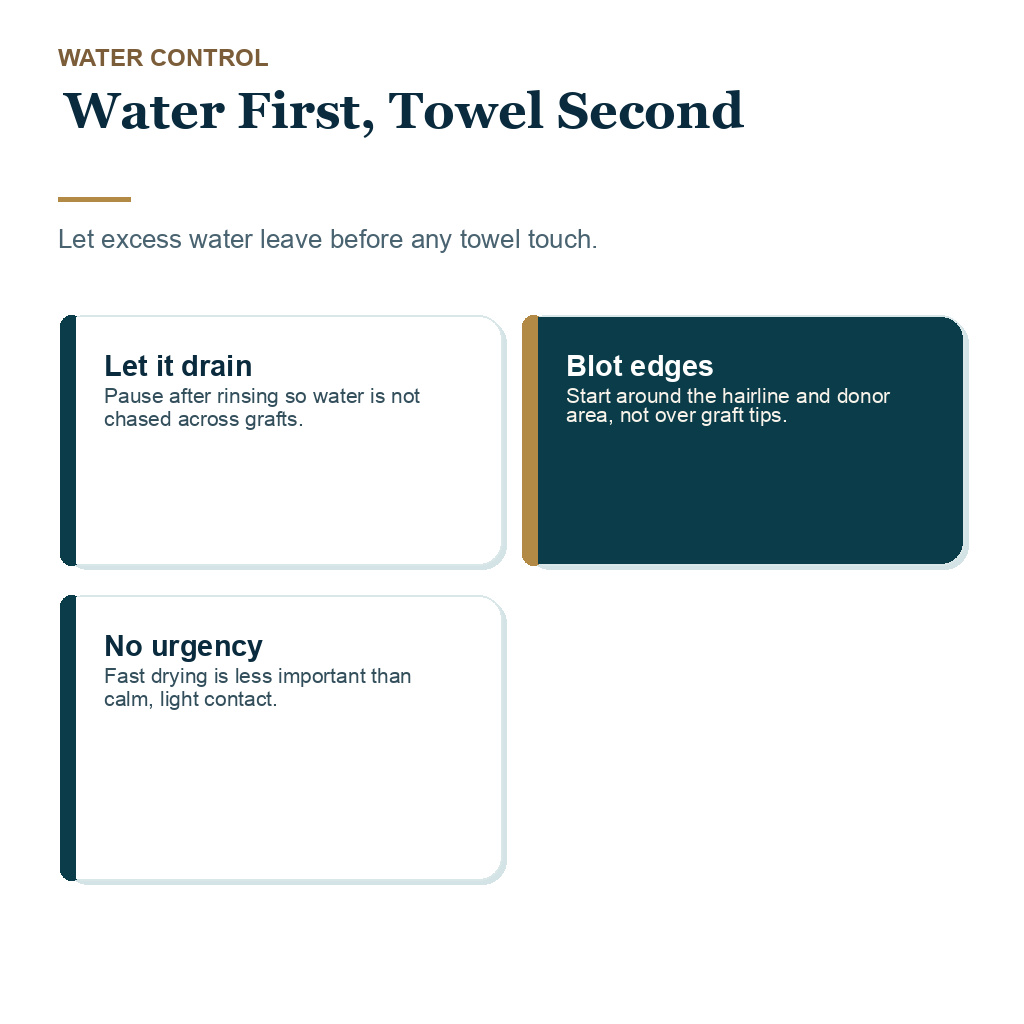
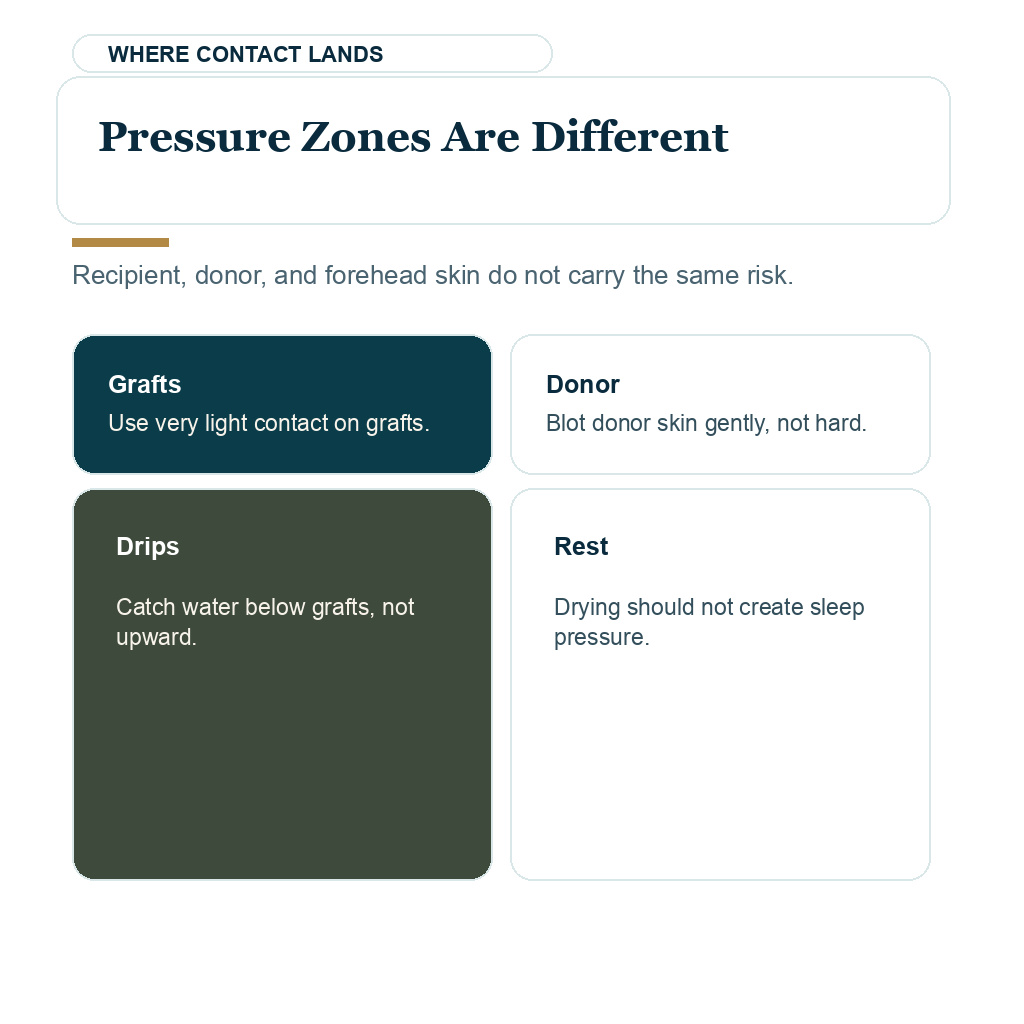
Before the towel touches the scalp, let extra water run off naturally. Keep the head in a comfortable position, avoid bending sharply, and give the water a moment to leave the hairline and donor area. If water is dripping down the face, you can dab the forehead or neck without touching the recipient zone.
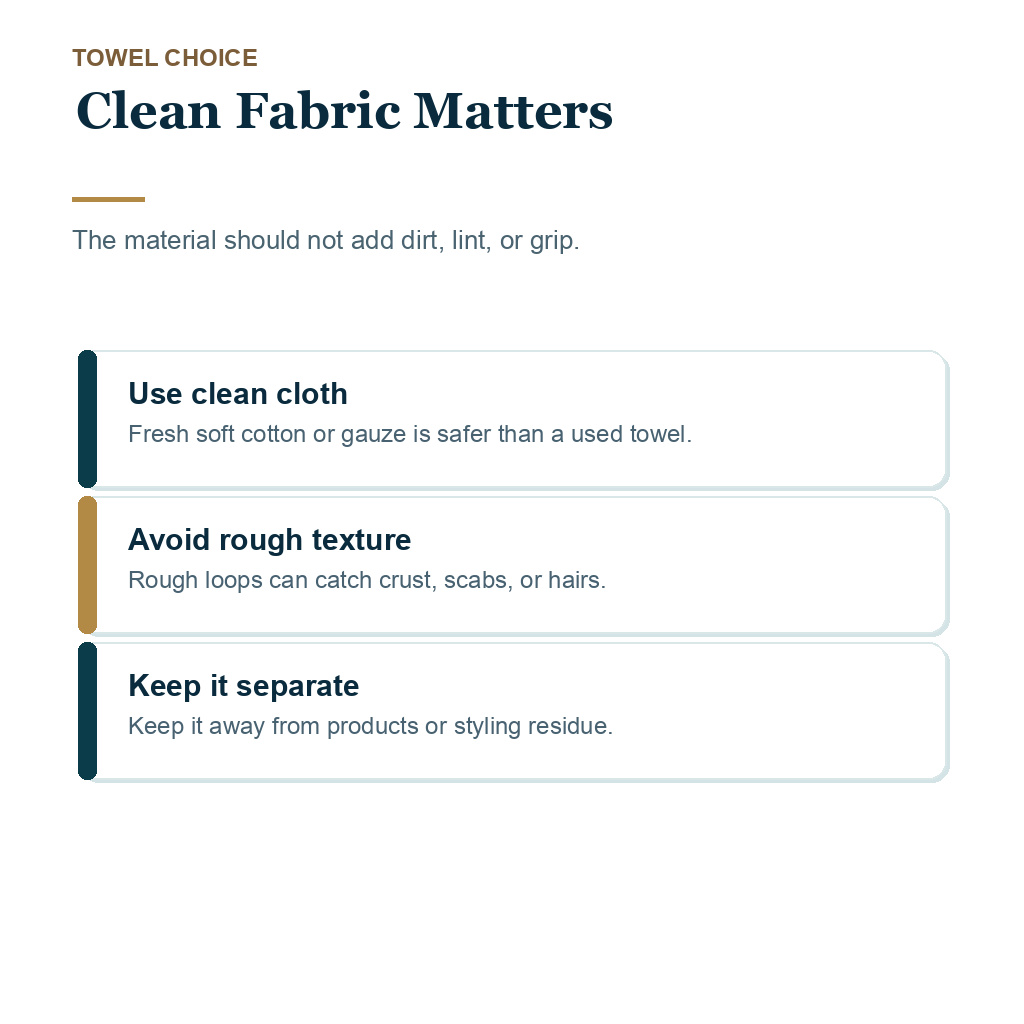
Use the cleanest, softest option your clinic allows, preferably one that does not shed lint. If your clinic gave you sterile gauze or clean pads for the early days, use those before an ordinary towel. A rough towel, a used gym towel, or fabric that sheds fibers is not ideal, because the goal is to reduce snagging, pressure, and contamination while the skin is still settling.
Paper towels, tissues, and cotton pads can leave small fibers on crusts unless your clinic gave you that material. If fibers stick, the next problem is often picking, so a slightly damp scalp is safer than a drying method that creates more handling. Once drying turns into picking, leave the recipient area slightly damp and stop the contact.
If you are nervous, use the towel on the surrounding skin first. Dry the cheeks, neck, and donor side edges, then decide whether the recipient area needs any contact. Many patients can let the recipient area air dry after the first drops are controlled.
Place the clean towel or gauze within reach before washing starts. Searching for something with wet hands is when patients rush, drip, or touch the grafts more than they meant to.
Use a patting motion, not a wiping motion
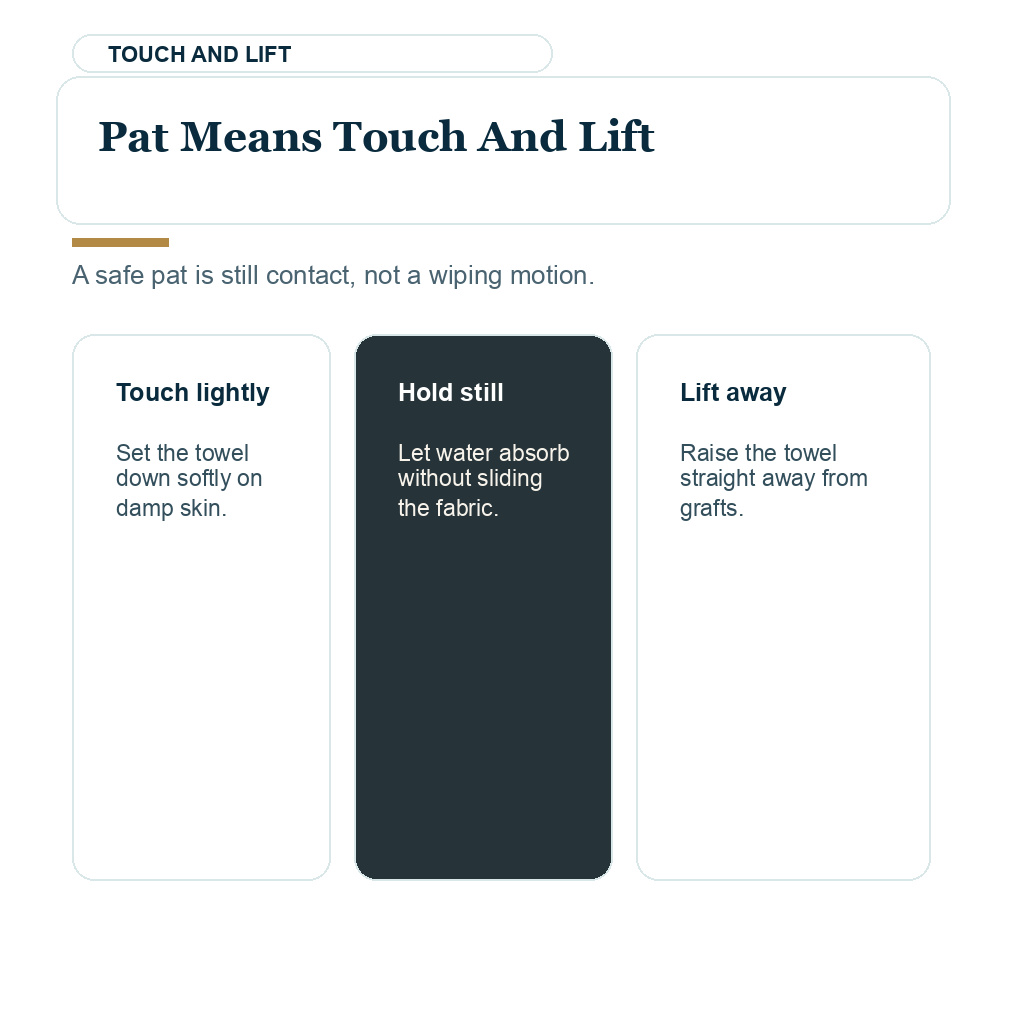
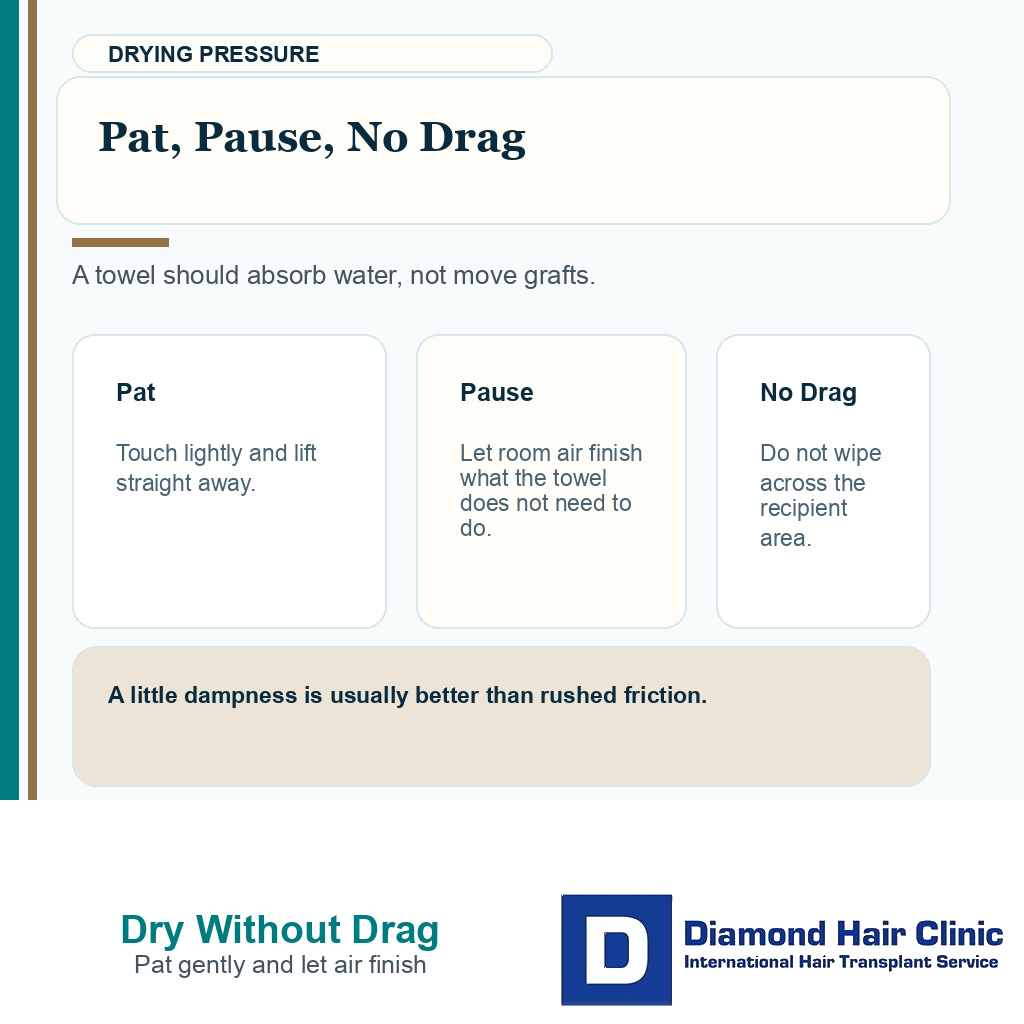
Patting means the towel touches the scalp, stays still, and then lifts away. Wiping means the towel moves across the skin. That difference matters. Patting absorbs water. Wiping creates sideways force.
For each pat, choose one dry part of the towel, touch lightly, lift straight away, and move to a new dry part. Do not press harder because the towel is already wet. Do not twist the towel into the scalp. Do not polish the hairline until it feels dry.
If you made one light automatic wipe, stop there. A single gentle movement without fresh bleeding, a new open point, or an obvious change is not the same as repeated rubbing. The touching grafts after hair transplant guidance explains why repeated checking becomes its own problem. A towel can become another way of checking if the patient keeps pressing and looking for hairs on the fabric.
Air drying can be the better choice
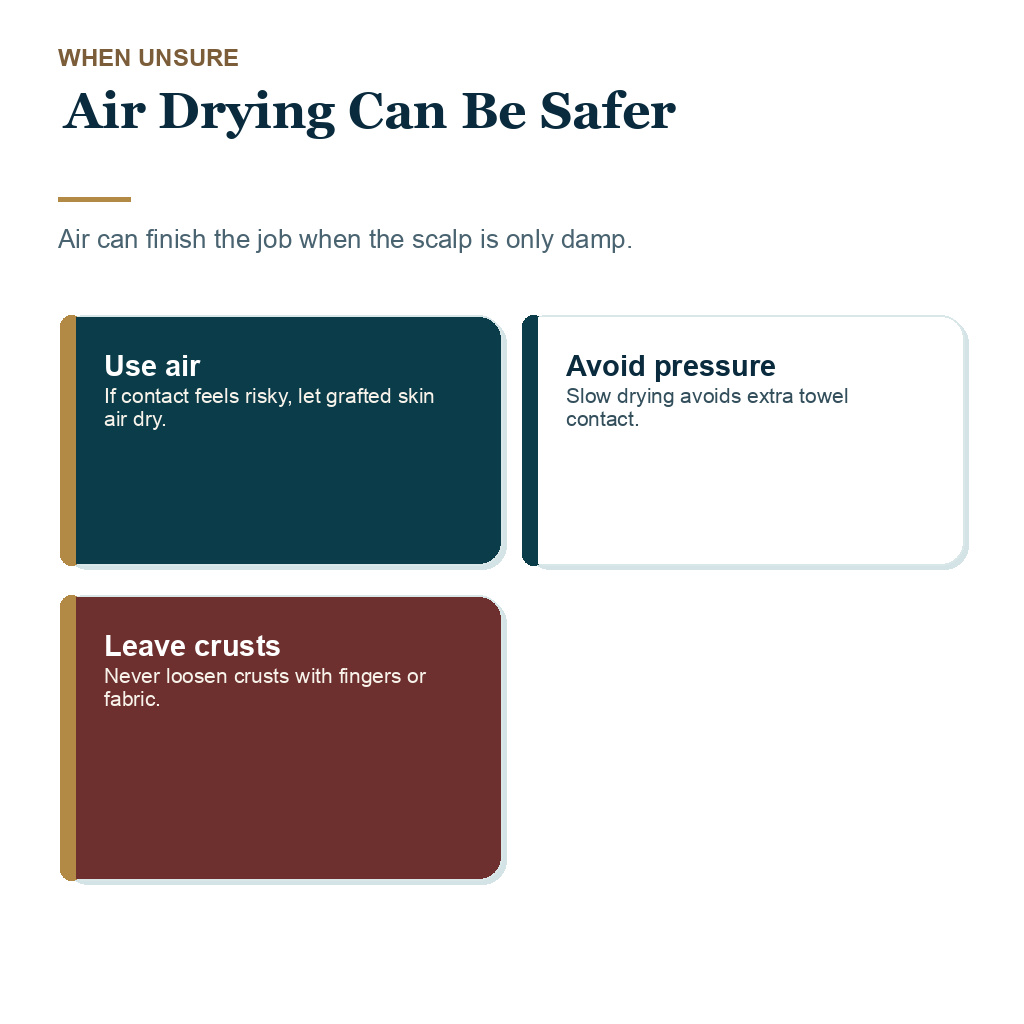
Air drying is useful when the recipient area is tender, scabby, or difficult to reach without dragging. It is also useful for a patient who becomes obsessive when looking at the towel. If the scalp is no longer dripping, it is often cleaner to leave it alone.
Air drying means clean indoor room air after the rinse has finished. It does not mean dust, smoke, strong sun, strong fan flow, or lying down with wet fabric pressing on the grafts. If water is no longer running, you do not need to chase every drop.
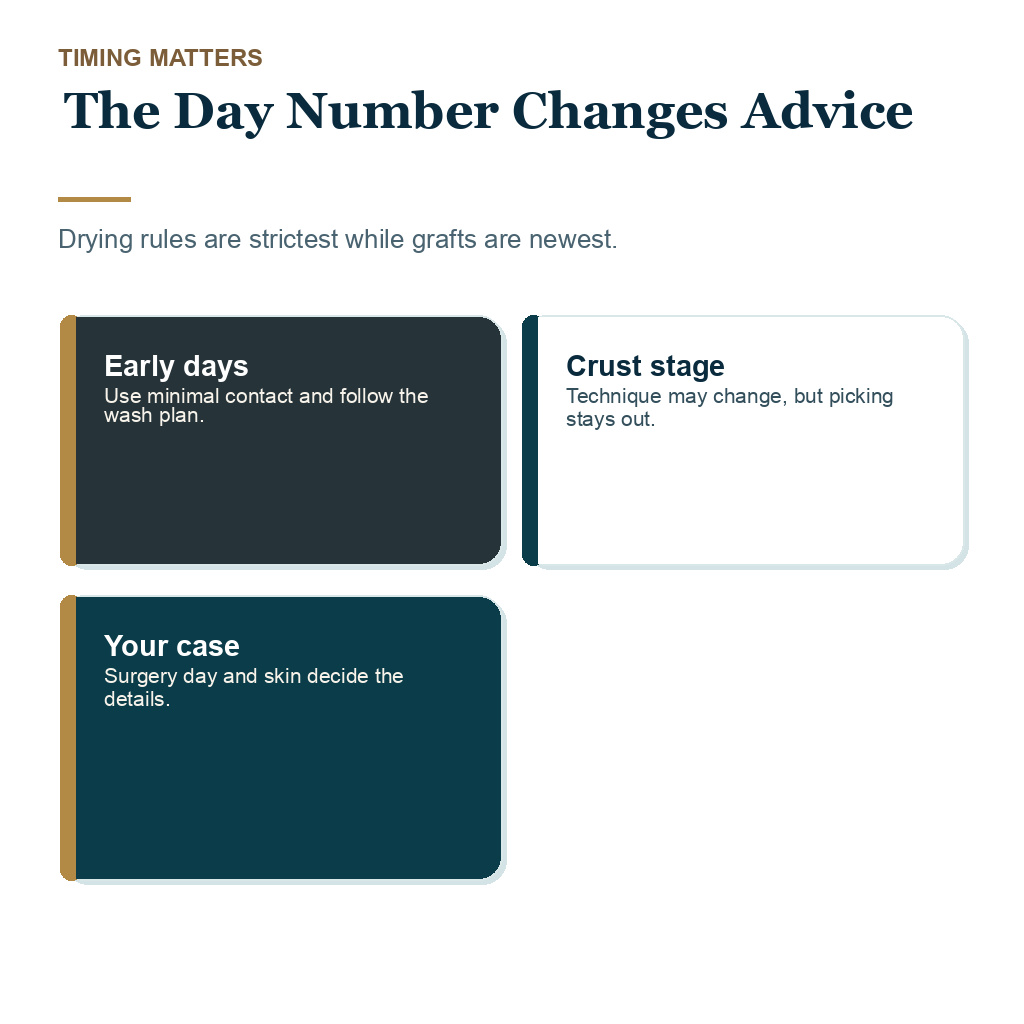
Patients sometimes worry that dampness itself will loosen grafts. The more relevant question is timing and force. I stay strictest about contact in the first 48 hours after surgery. By around day 9 to day 10, hair transplant grafts become secure in most clean, uncomplicated healing, but that still does not make the scalp ready for normal towel drying. I treat the first 10 to 14 days as a protected period because crusts, tenderness, and rubbing risk still matter.
Be careful with a hair dryer
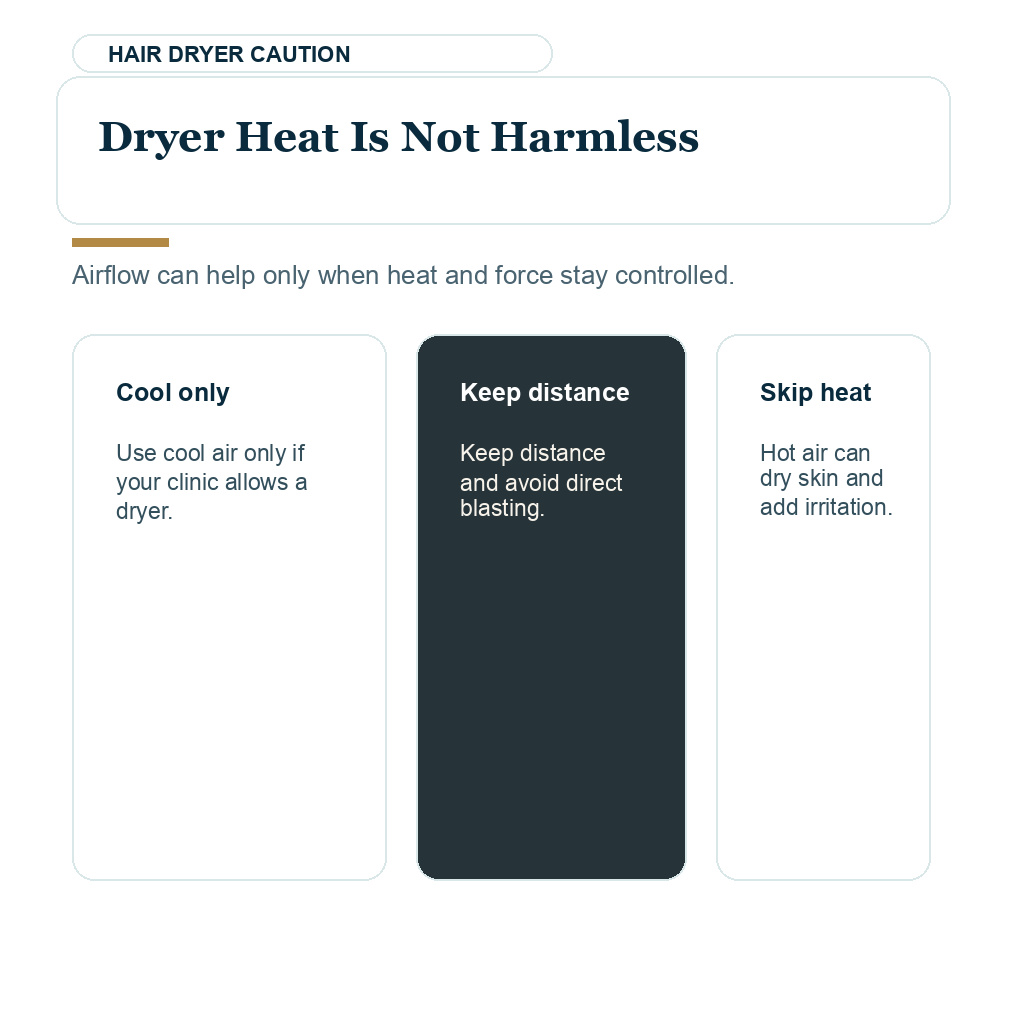
A hair dryer is not my first drying tool for the recipient area. During the first 10 to 14 days, hot air, strong airflow, and a dryer held close should stay away unless your own clinic gives a specific exception. Cool air, low flow, and distance are very different from hot air close to the scalp.
If your clinic later allows a dryer, restart with cool air, low speed, distance, and no brush through the recipient area. Stop if the scalp feels warmer, tighter, redder, itchier, or more tender. If you are using a dryer because you feel impatient, stop and let the scalp dry more slowly.
Hair dryer after hair transplant timing depends on heat, airflow, distance, and the stage of healing. For the first cautious drying moments, a towel used as a still pad is usually easier to control than a machine.
What if a hair, scab, or towel fiber appears?
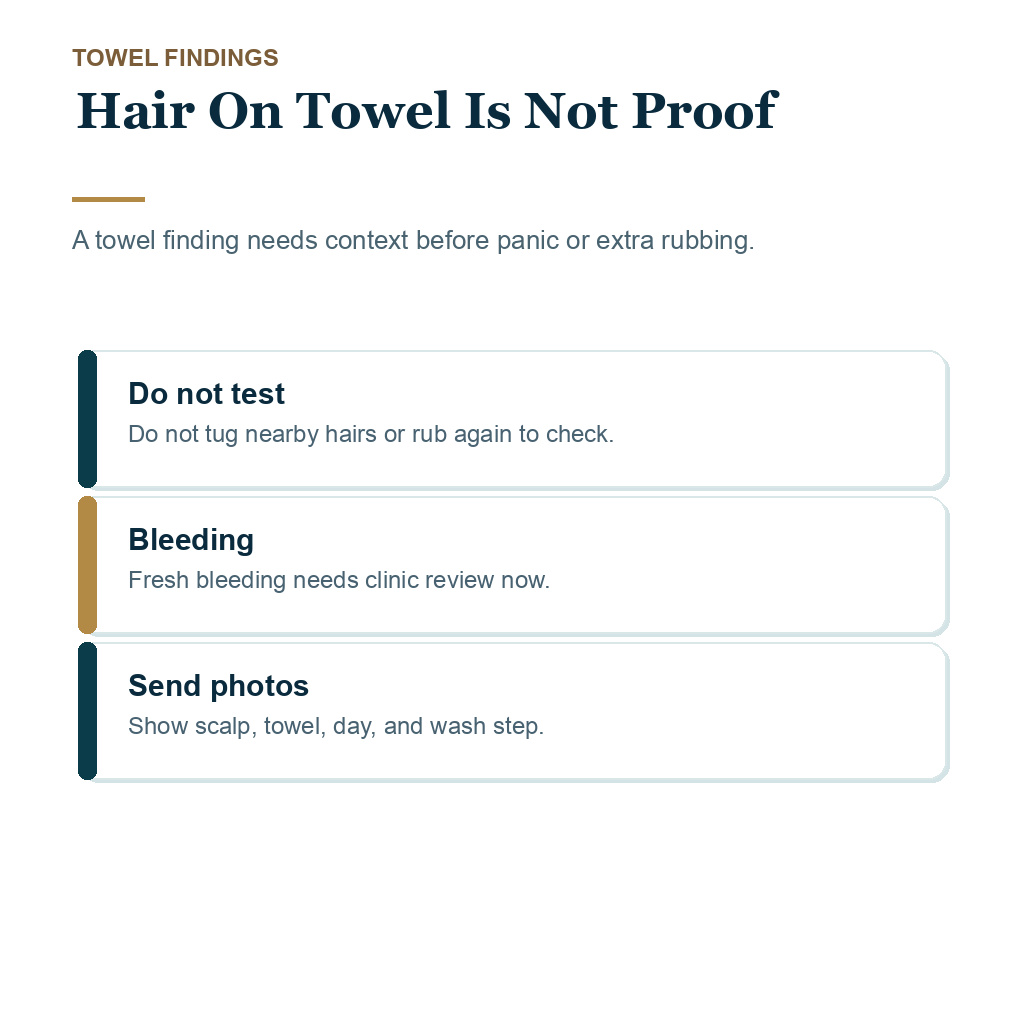
Finding a small hair, dry crust, loose flake, or towel fiber does not by itself mean a graft was lost. After washing begins, some crusts soften and some hair shafts shed. That can look alarming because the patient sees something on white fabric.
The important distinction is whether there is fresh bleeding, wet tissue, a piece that looks like a graft, a new open point, or a clear change in the recipient area. Dry flakes, crusts, and short hairs without those signs are usually a different situation. Use the lost grafts and scabs after hair transplant guidance for that distinction.
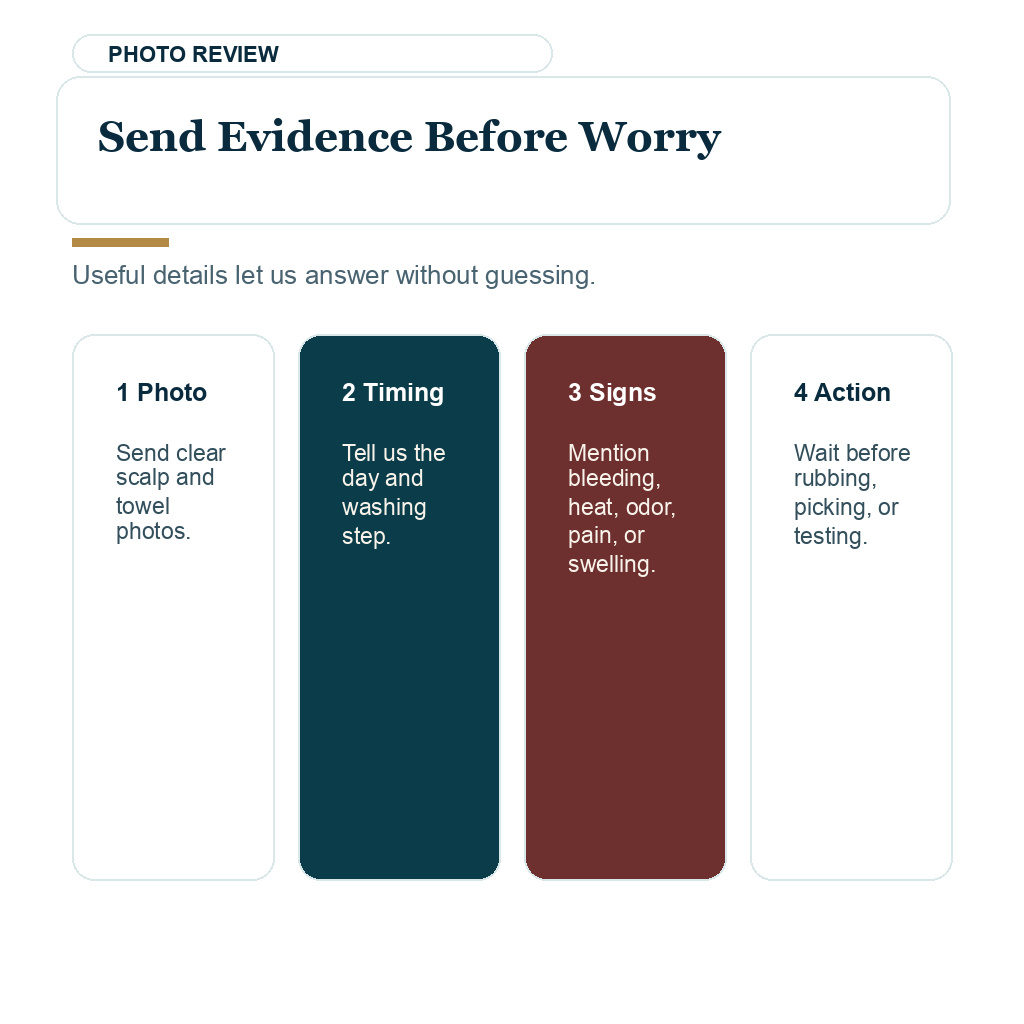
If the scalp looks less dense after washing, do not keep rubbing to prove what happened. The concern belongs in a photo review, not in repeated towel contact. If the fear is visual rather than a clear injury, read looking less dense after the first wash before repeating towel contact.
If there is fresh blood on the towel, pause the routine. Dry the surrounding area without touching the bleeding point, take clear photos, and contact the clinic. A tiny fresh spot means stop adding contact and ask if you are unsure. Repeated bleeding, a new open point, worsening pain, spreading redness, heat, swelling, pus or yellow or green discharge, bad smell, fever, or a visible piece that looks like a graft should be reviewed instead of answered by more drying. Blood noticed after sleep is a separate situation, covered in the blood on pillow after hair transplant guide.
Use the drying sequence before pressure decisions
Work in the same order each time. Let water run off, dry the surrounding skin, pat only where needed, then leave the recipient area alone. The sequence below keeps the towel from dragging across new grafts. Move one slide at a time with the arrows, or tap a number below the image.
Dry skin and flakes need patience. If the scalp feels tight or flaky, that is not a reason to rub harder with a towel. A dry loose flake is different from wet discharge, yellow crusting, bad smell, heat, pain, or redness that is spreading instead of settling. Dry scalp after hair transplant and white flakes after hair transplant should be handled with washing or moisturizing changes your clinic has approved, not extra towel pressure.