


Late Arrival Before FUE Can Change Surgery Day
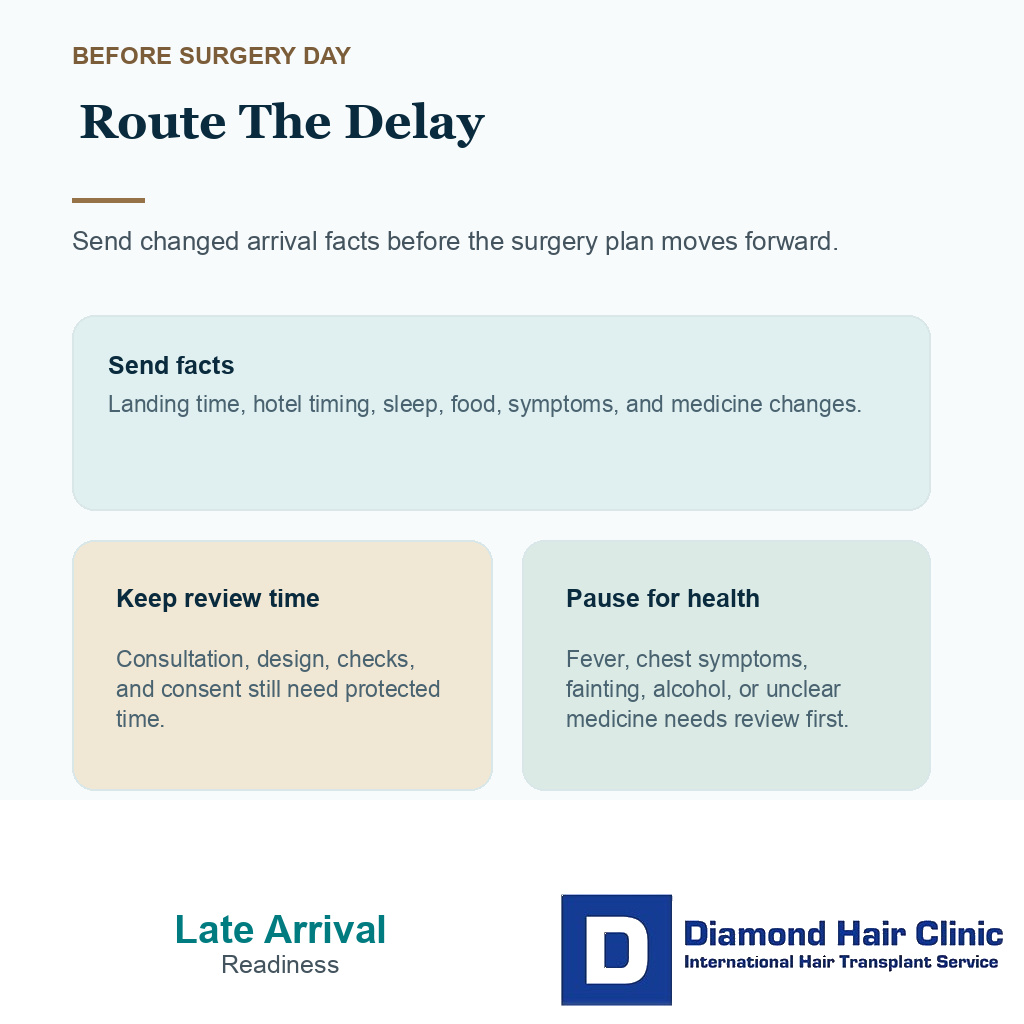
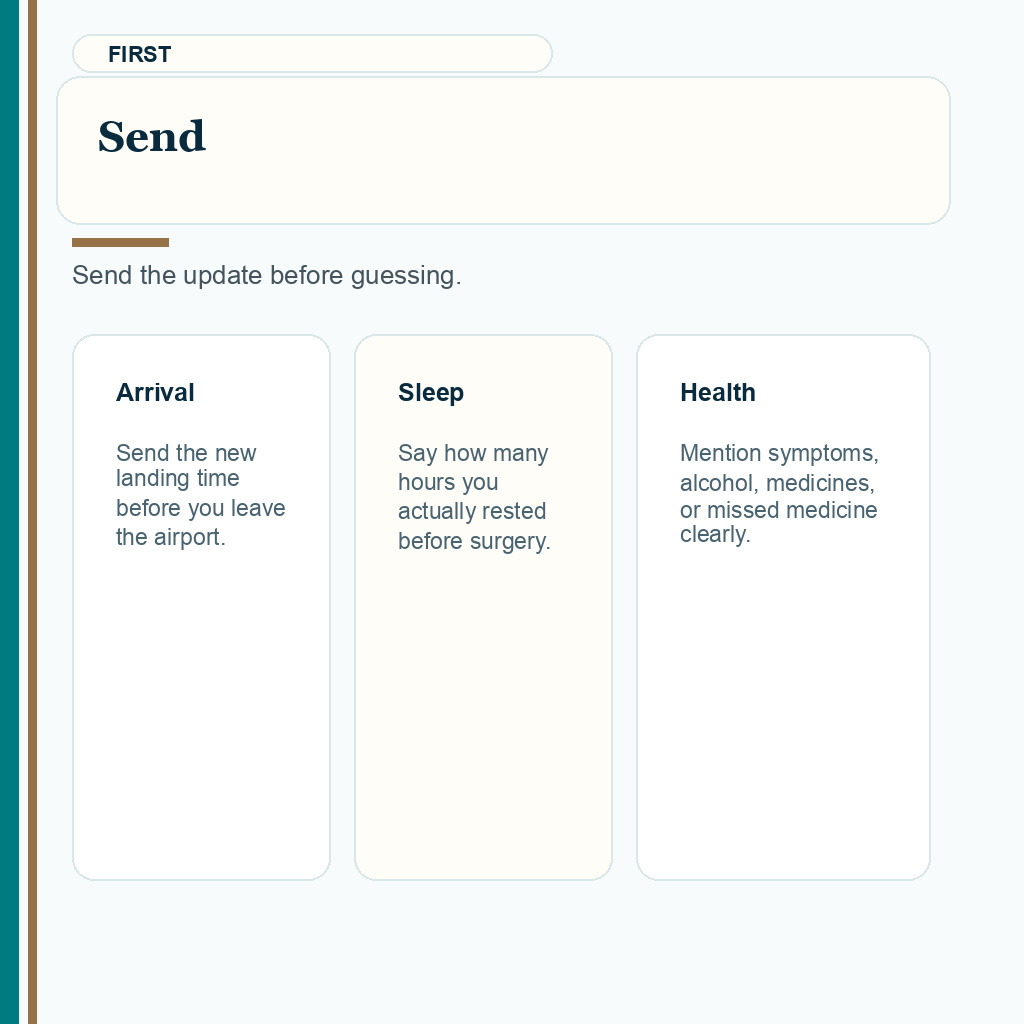
If your flight is delayed, cancelled, or lands much later than expected before FUE, message the clinic before you try to rescue the schedule on your own. A few hours late may only need coordination. A delay that removes sleep, consultation time, required pre-op checks, hairline design, or creates new symptoms needs review before grafts are removed. Send the new arrival time, how much you slept, whether you have eaten and hydrated, any symptoms, and any medication or alcohol changes during travel.
The decision is not only about whether you can physically reach Istanbul. Surgery day needs clear consent, calm hairline design, medical review, and enough steadiness to follow instructions. A short delay may be workable. An overnight journey with no sleep, a missed consultation, or new illness may change the plan.
Tell the clinic before the schedule tells you
When a patient arrives late, the first mistake is silence. People worry that if they explain the delay, the appointment will be cancelled. In reality, hiding the delay creates the bigger problem because the clinic cannot protect the plan without current information.
Do not let the transfer driver, hotel desk, or travel agent decide that the surgery can still happen. Only the clinical team can decide whether sleep, consent, checks, and symptoms still leave a sensible day.
If the new timing means going from the airport almost straight to surgery, pause before leaving for the clinic. A taxi ride can solve transport, but it cannot replace rest, consent, medical checks, and a clear hairline review.
Send one clear update. Include the airline change, expected landing time, hotel arrival time, whether your transfer changed, and whether you can still attend the planned pre-op review. A simple message is enough. “My flight now lands at __. I expect to reach the hotel at __. I slept __ hours, I have or have not eaten and hydrated, and my symptoms or medicine changes are __. Can the consultation, checks, and hairline design still happen safely?” If you already have a clinic contact path, use the same contact route before travel so the update reaches the right person.
Also say what changed in your body. Mention whether you have not slept, have not eaten, feel dehydrated, drank alcohol, took a sedative, used extra pain medicine, developed a fever or cough, or feel unwell. One ordinary coffee is different from energy drinks, repeated strong coffee, or stimulant products after no sleep. Those details may feel personal, but they are more useful than a general sentence like “I am delayed but okay.”
Late arrival is not only a hotel problem
Some late arrivals are mostly logistical. The patient lands a few hours late, still sleeps, attends the consultation, completes the checks, and has enough time to think clearly. That situation is very different from a patient who reaches the hotel at dawn, gets picked up almost immediately, and starts surgery day already exhausted.
The normal Istanbul arrival checklist is useful when travel is on time. A delay changes the checklist because it can remove the quiet space before surgery. You may lose the time needed to review the design, ask questions, eat properly, and settle down before a long procedure.
The question I ask is not “Did you arrive?” It is “Can the important parts of the plan still happen without being squeezed?” If the answer is yes, the clinic may simply adjust logistics. If the answer is unclear, the safer response is review before commitment.
Sleep loss changes the review
Patients sometimes treat sleep loss as a toughness test. They think they can push through the procedure because they have already paid, travelled, and waited. I do not see it that way. A tired patient may understand less, ask fewer questions, agree too quickly, or miss details during hairline design.
Jet lag and long flights already affect how patients feel before surgery. If the delay turns the trip into an overnight arrival with almost no sleep, the issue becomes more serious than ordinary travel fatigue. Tell us whether you are alert enough for consultation and calm enough for a long day. The broader planning around jet lag and long flights before hair transplant helps explain why rest is part of readiness, not a luxury.
Food and hydration matter too. A patient who has skipped meals, rushed through airports, and slept badly may not be in the same condition as the patient described in the original schedule. Do not try to correct this with extra medication, alcohol, energy drinks before FUE, repeated strong coffee, or other stimulants. Also tell the clinic whether you followed the eating and drinking instructions you were given for the planned anesthesia or sedation. Describe what happened and let the surgical team decide how it changes the day.
Protect the consultation from time pressure
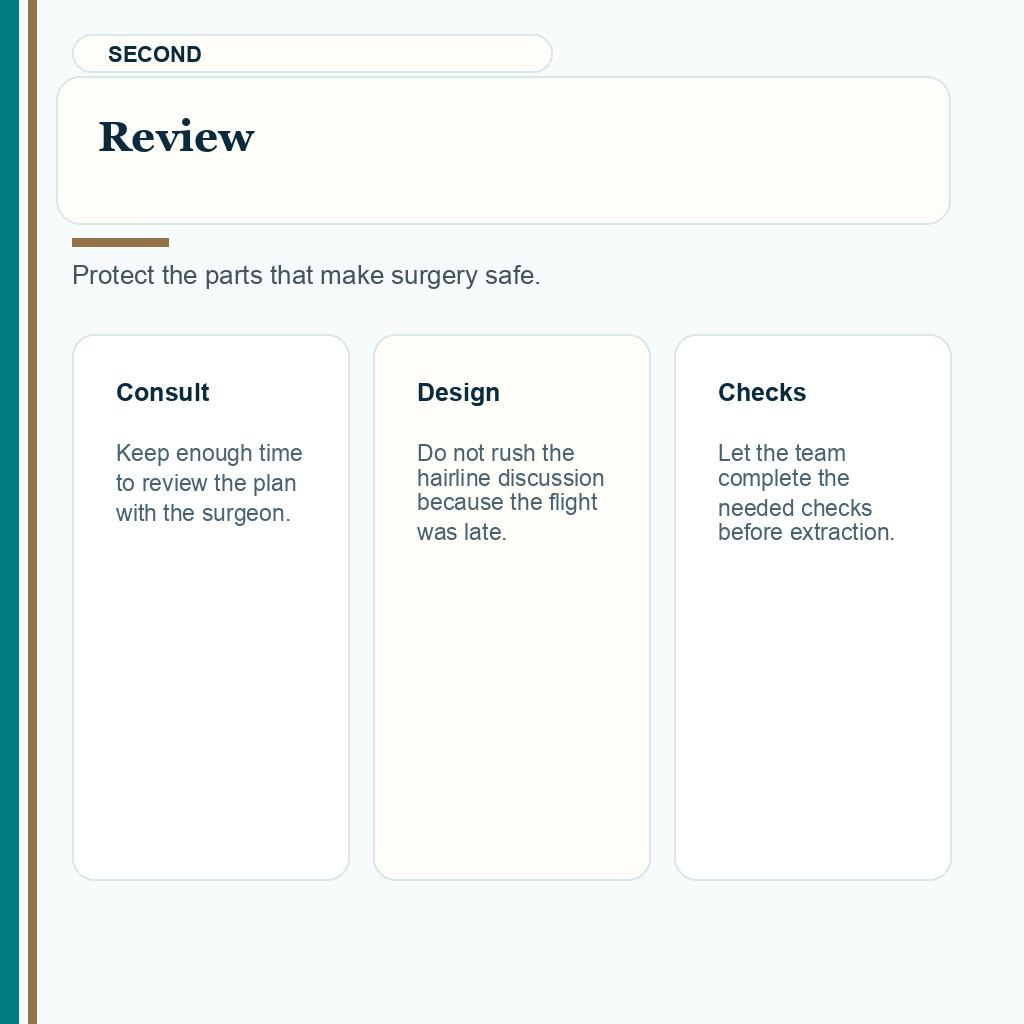
The consultation is not decorative. It is where we confirm donor limitations, recipient priorities, medical history, expectations, and hairline design. If late arrival removes that time, the day can become rushed in exactly the place where it should be slow.
The surgery morning consultation should still give space for questions and review. If a patient has final doubts before a hair transplant, a travel delay can make those doubts easier to hide and harder to discuss. That is the wrong direction.
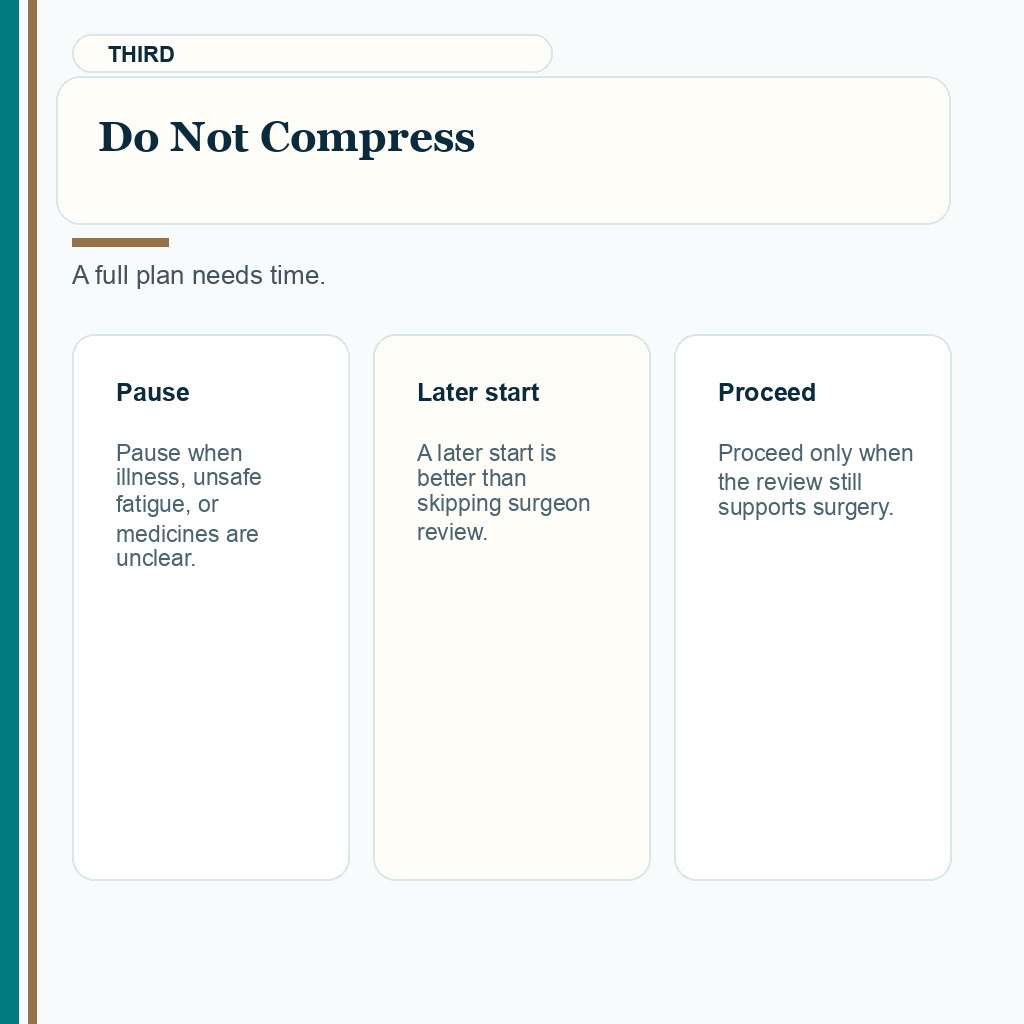
A good FUE plan should not depend on panic. The original graft plan should not be rescued by shortening consent, medical review, or hairline design. If time is lost, a later start or reschedule is safer than compressing the steps that decide where grafts are taken and placed.
The same delay can mean different next steps
The same delayed flight can lead to different decisions. A short delay with protected review is not the same as arriving after a sleepless night. Missing a consultation is not the same as feeling acutely unwell after travel. Sort the situation before you think about deposits, tickets, or embarrassment.
Late Arrival Gate
Use this gate to separate a travel inconvenience from a readiness problem before FUE.
Protect the planned review
A short delay may still work when you can arrive, rest, eat, and complete pre-op review without pressure.
Rest becomes part of readiness
Late with no sleep is not only a comfort problem. It can make consent, design choices, and medication review less reliable.
Protect review before speed
If the consultation, blood tests, medical questions, or hairline design are squeezed, the delay has reached the surgery plan.
Health changes need review first
Fever, chest pain, fainting, severe cough, new medication, or feeling acutely unwell turns a travel problem into a medical review.
Travel health changes need medical review
Late arrival becomes a medical issue when your health changes during travel. Fever, severe cough, new medication, a missed essential medicine, or feeling acutely unwell should be disclosed before surgery decisions are made. Chest pain, severe shortness of breath, fainting, coughing blood, or painful swelling in one leg after travel need urgent medical care first. Update the clinic as soon as you can, but do not treat those symptoms as something to solve by arriving at the clinic door.
New symptoms after booking are different from ordinary travel stress. If your health changed during the journey, the clinic needs the same kind of update described in medical changes after booking. A bad cough or fever before surgery is not solved by arriving at the clinic door. Bad cough before FUE is a surgery day planning issue, not a reason to push through quietly.
Do not stop prescribed medicine, restart a blood thinner, take sedatives, or add painkillers just because the travel day changed unless the appropriate clinician has told you to do so. A flight delay is stressful, but changing medication on your own can create a new problem.
Separate pressure about money from readiness
The emotional pressure is real. You may have paid for flights, hotel nights, time off work, and a deposit. That pressure can make patients think they must proceed because cancellation feels expensive. I understand that feeling, but it cannot be the medical reason to operate.
Administrative questions belong in the right place. If you need to understand refund and rescheduling terms, ask clearly and keep written records. If you are planning future travel, travel insurance for hair transplant abroad is part of the preparation. Those details matter, but they should not replace readiness review.
The clinic should be able to separate two questions. One question is practical and concerns rescheduling or cost. The other is clinical and concerns whether it is sensible to proceed today. Keep those questions separate so the second one is not quietly decided by the first.
Before surgery is a different travel problem
Many patients search for flight advice and mix two situations together. A disrupted outbound flight before surgery is mainly about readiness, consultation, tests, sleep, and consent. A disrupted return flight after surgery is about swelling, graft protection, head contact, airport waiting, and the first recovery days.
If the flight change happens after grafts are placed, the patient is dealing with flight home changes after FUE. Before surgery, the question is not how to protect newly placed grafts on a plane. The question is whether the patient and the plan are still ready before grafts are removed.
That distinction prevents bad advice. A patient before surgery may need a delayed start, a fuller consultation, or a reschedule. A patient after surgery may need recovery logistics. The timing changes the answer.
Arrival stress can change the start
A late arrival before FUE is not only a travel issue. Sleep loss, missed food, dehydration, fever, medication timing, rushed consent, and limited consultation time can all change the surgical day.
A short delay may only need coordination. A patient who arrives exhausted, unwell, confused about the plan, or too rushed to consent clearly needs a fresh review before the room starts.
The flight can be repaired by logistics. Surgery needs a patient who is well enough, informed enough, and steady enough for an elective procedure.
Read this review excerpt
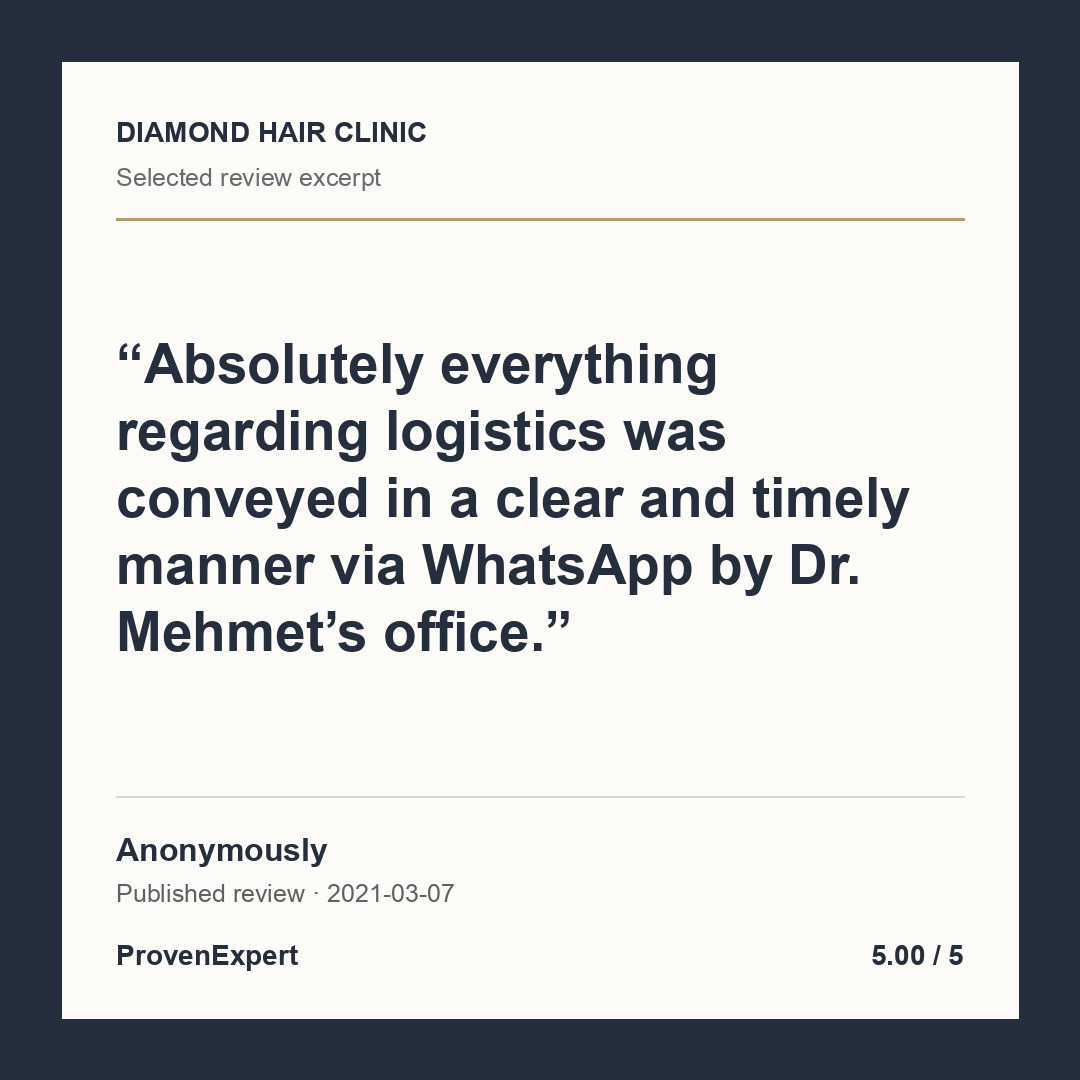
Absolutely everything regarding logistics was conveyed in a clear and timely manner via WhatsApp by Dr. Mehmet’s office.