


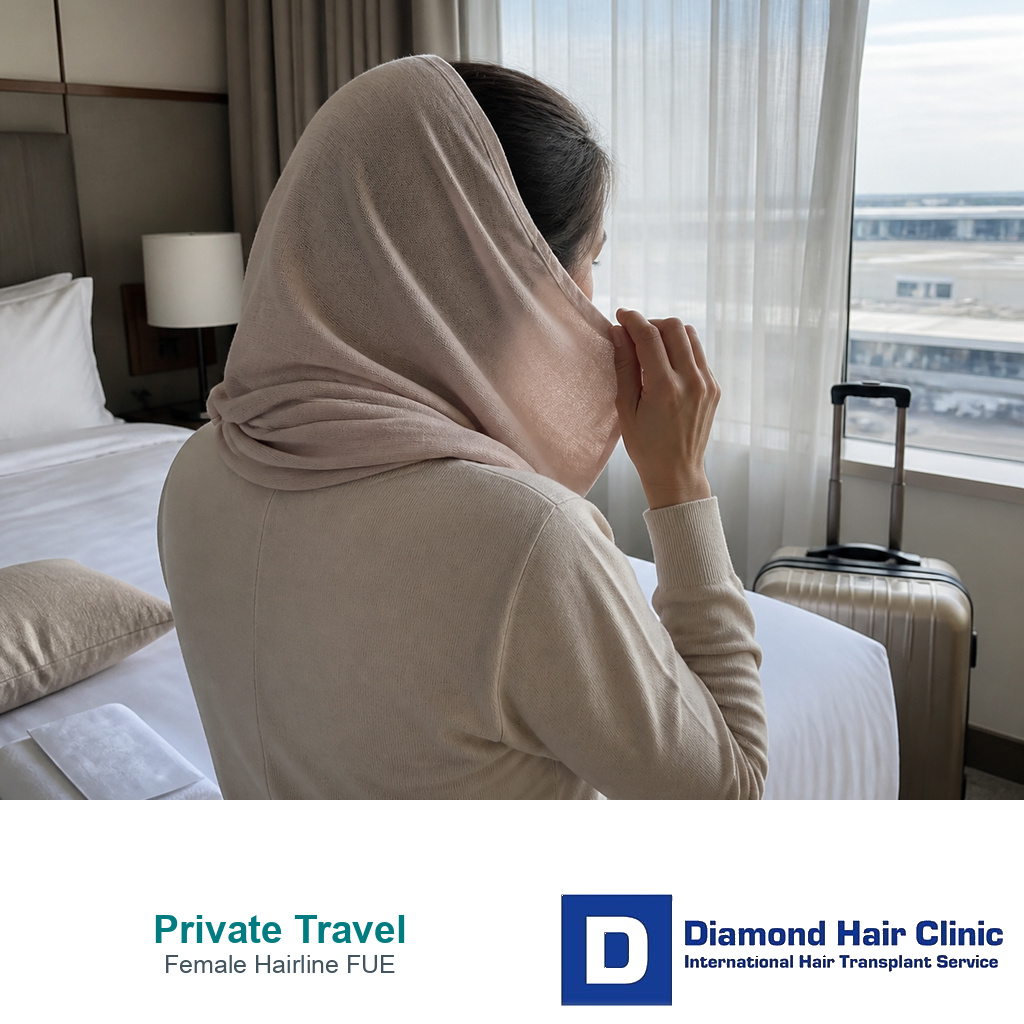
Private Travel After Female Hairline FUE Protects the New Hairline
If you travel after female hairline FUE, the privacy plan has to protect the grafts before it hides the hairline. A loose scarf, hood, or hat can feel comforting, but it becomes the wrong choice if it presses on the recipient area, traps heat, or makes you keep adjusting the front edge in public. A quiet hotel, transfer, and flight route gives more control than a rushed cover chosen because the hairline suddenly feels exposed.
This is not only a cosmetic afterthought. A front hairline transplant is visible by nature. Many women worry about the airport, hotel lobby, family calls, social media, and the return to work before they worry about technical graft details. I take that seriously, but I do not let privacy or embarrassment outrank graft protection. Privacy planning should still explain the surgical method clearly, including shaving, donor visibility, scar risk, and hairline softness before travel is arranged. The safest travel plan accepts that the scalp may be visible for short moments if covering it would create pressure, especially during airport security, boarding, or a hotel lobby transfer.
For coily or very curly hair, the privacy plan should also respect the curl pattern at the front. Flattening the hairline under a tight scarf, wig grip, or headband can create more pressure and friction than a short visible moment in the airport or hotel.
Privacy should not press on the recipient area
The first rule is simple. Covering is useful only when the clinic has cleared it and the fabric stays away from the new hairline. If a scarf edge, cap seam, hood lining, or sunglasses frame touches the grafted border, the privacy solution has become part of the risk. The patient may feel safer because less is visible, while the grafts are actually getting more friction.
Travel privacy belongs next to soft headwear after a hair transplant and hats after a hair transplant. A cover has to be judged in motion, not only while it sits still. I want to know how it goes on, how it comes off, whether it shifts when you walk, and whether you keep fixing it when you feel watched.
A private plan may mean no covering for part of the trip. It may mean a clean loose covering for a short exposed moment. It may mean delaying a social plan until the scalp is easier to protect. The decision changes with the graft location, swelling, washing stage, route home, and what the clinic sees during review.
Female hairline work makes hiding harder
A female hairline is usually judged by softness, temple balance, density, and how naturally the edge frames the face. Female hairline transplant design therefore has to be protected during recovery, not only planned before surgery. A design that looks soft later may still look red, dotted, swollen, or uneven during the early travel window.
Women also style and frame the face differently. Hair, scarf placement, sunglasses, makeup, and camera angles can all become part of the hiding plan. Some of those choices are harmless. Others pull near the recipient area or make the patient touch the hairline repeatedly. I do not want a good surgical design to be stressed by an improvised cover on the way home.
This matters even more when the operation is done for lowering a naturally high forehead. The new edge may sit exactly where a patient wants to hide redness. That is the same area that needs the least friction. A private travel plan has to respect both facts.
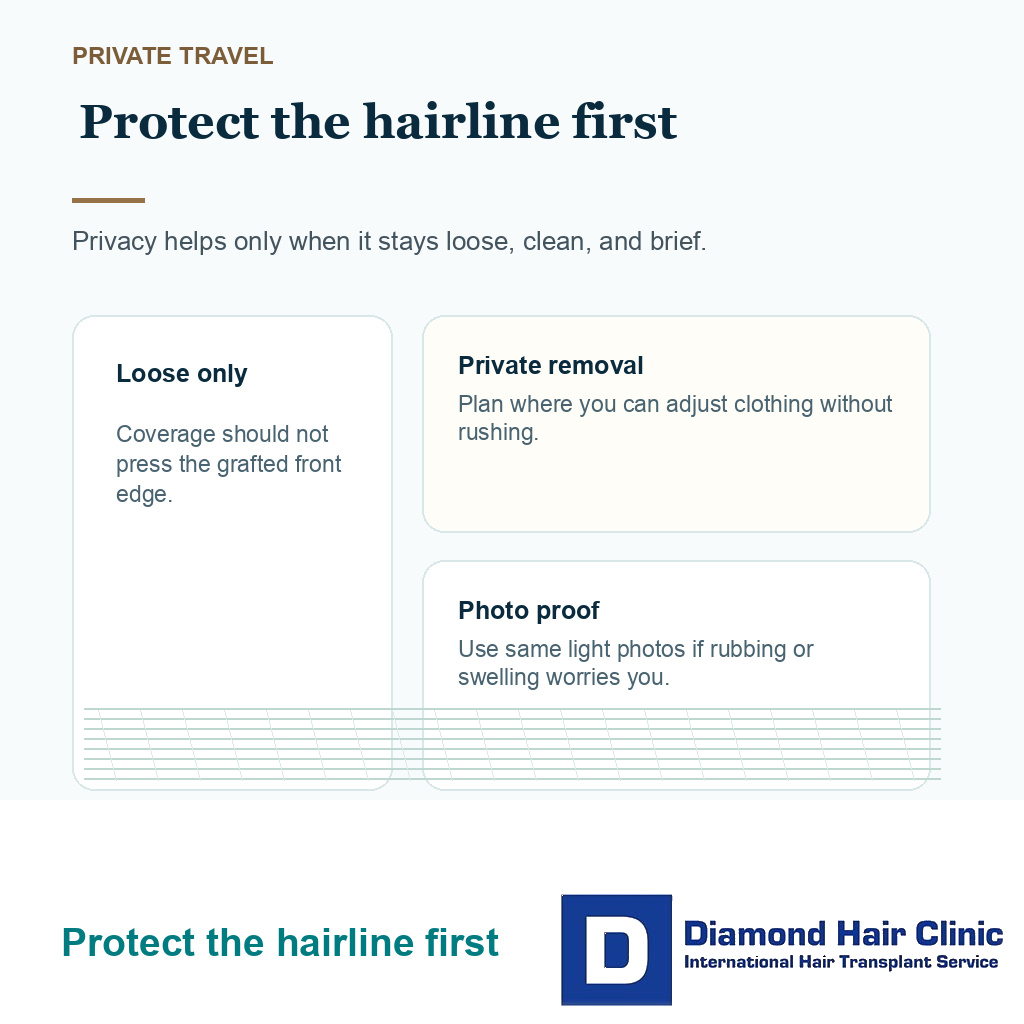
Plan the covering before surgery. If the first discussion about privacy happens in the hotel room after the procedure, the patient is more likely to choose whatever feels emotionally easiest. Decide in advance what can be worn, when it can be removed, where it will be checked, and what to do if it starts rubbing.
Test the hairstyle you plan to travel in from the front, back, and both sides before surgery. A ponytail or hair pinned up may hide the new front edge but expose the shaved donor zone, while loose hair may cover the back and reveal more of the hairline when you turn your head. Ask the clinic to show you the expected shave area, then photograph the actual hairstyle you intend to wear so the privacy plan is based on real coverage rather than guesswork.
Plan the hotel and flight before surgery
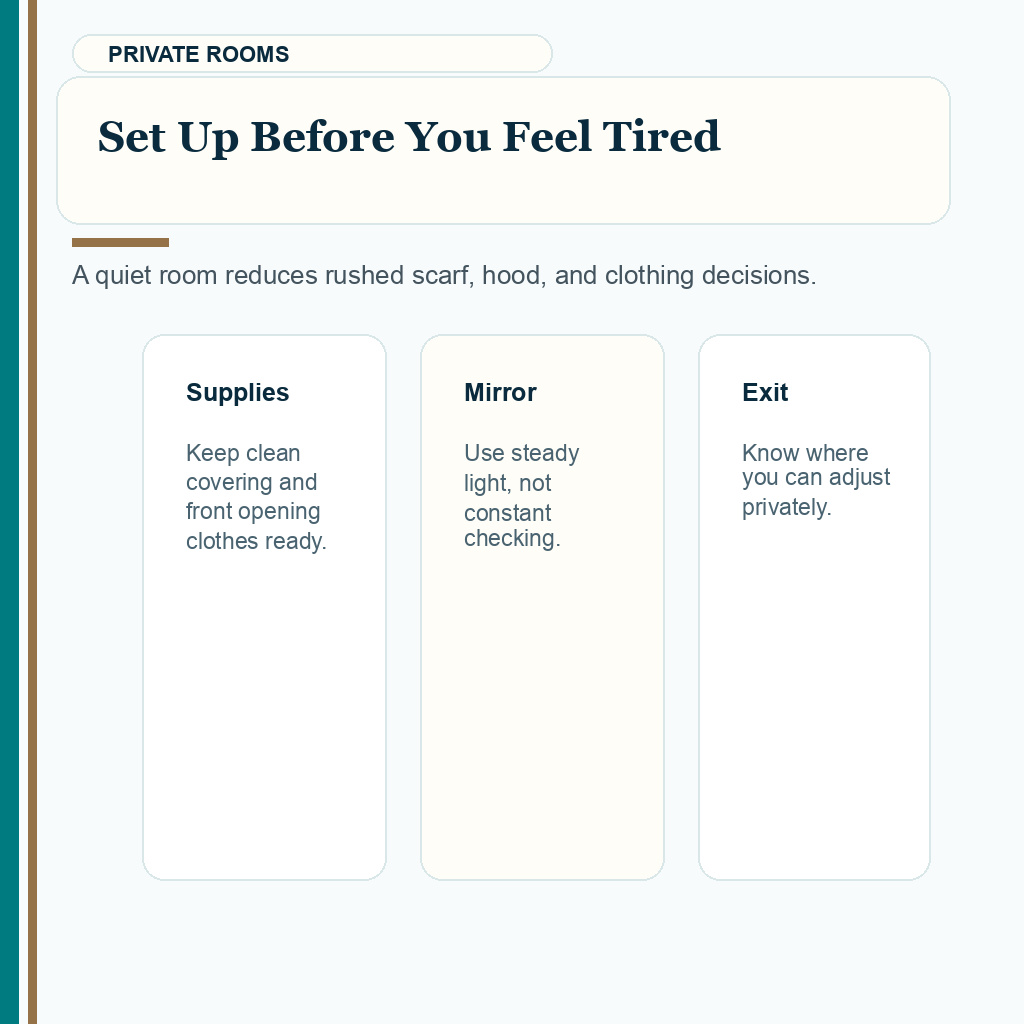
A quiet hotel setup protects privacy better than a dramatic cover. The room should make recovery easy. Front opening clothing, clean pillow positioning, washing supplies, water, simple food, good light, and clinic contact details should be ready before surgery. Privacy is not only what other people see. It is also whether the patient has a private place to slow down and follow instructions.
The privacy plan applies to the route home. A flight home after FUE can become harder if there is delay, rushing, dehydration, luggage strain, or a last minute headwear decision. For a woman with a visible front hairline, I want the travel plan to reduce moments where she feels forced to adjust the cover in public.
If you are traveling alone, the plan has to be even more practical. Traveling alone to Turkey for a hair transplant can be safe for the right patient, but it leaves less margin for heavy bags, anxiety, language stress, and tired decisions. Privacy planning should make the trip simpler, not more fragile.
Choose headwear by how it comes off
Many patients test headwear only by how it looks in a mirror. I test it by removal. If it catches on short grafts, drags over the front edge, or requires both hands and a lot of small corrections, it is not the right travel item. A cover that looks loose while standing still may still create friction during airport security, boarding, sleeping, or leaving the aircraft.
Removal matters as much as coverage. The safer privacy method comes off without dragging across the hairline, especially at airport security or in a rushed hotel lobby. Try the scarf, hood, or loose cover once in the hotel mirror before travel day, so you know it can come off without catching the hairline.
If removing a religious or privacy covering in public is unacceptable, check the airport’s screening procedure before travel, including the availability of a private room or an officer of your preferred gender. The covering still has to come off without touching the hairline, so practise the movement with the clinic before departure.
The cleanest plan is often selective. Use coverage for the exposed part of travel if the clinic has cleared it. Remove it in a clean private place when possible. Carry a spare clean cover if sweat, makeup, or airport handling makes the first one dirty. Do not sleep in tight fabric or wrap a scarf so firmly that it becomes a compression band around the hairline.
Clothing matters too. Clothing choices that protect new grafts should include the trip home, not only surgery day. Front opening tops, easy layers, and less jewelry near the temples can prevent small accidental pulls when the patient is tired.
Use the privacy timeline before you leave
When privacy is vague, every public moment feels urgent. When the trip is divided into hotel, transfer, airport, flight, and arrival, the patient can decide where covering helps and where it creates pressure. A simple timeline works better than one blanket answer because each setting creates a different kind of friction risk.
Private travel timeline
Choose the moment that usually creates pressure
- Hotel roomSet up privacy before swelling
- Private transferReduce public fixing
- Airport privacyUse coverage only when cleared
- Flight homeProtect the hairline from repetition
- Arrival checkUse photos, not panic
Set up privacy before swelling
Keep clean coverings, front opening clothing, mirror light, and clinic contact details in the room before surgery. Privacy works better when you are not searching for supplies while tired.
Room setup Prepare the room first, then keep the first evening quiet enough to avoid heat, friction, and repeated mirror checking.
Reduce public fixing
A private car or calmer transfer helps because the hairline is not being adjusted in a queue. The aim is less touching, less sweat, and fewer rushed clothing changes.
Transfer choice Choose a route that lets you sit upright, carry less, and remove any covering in a clean private place.
Use coverage only when cleared
The airport is where patients most often keep touching a scarf, hood, or hat. The airport plan is brief, loose, clean coverage when the clinic has cleared it.
Covering check If covering shifts or presses the new edge, step away and leave the hairline uncovered rather than dragging fabric across grafts.
Protect the hairline from repetition
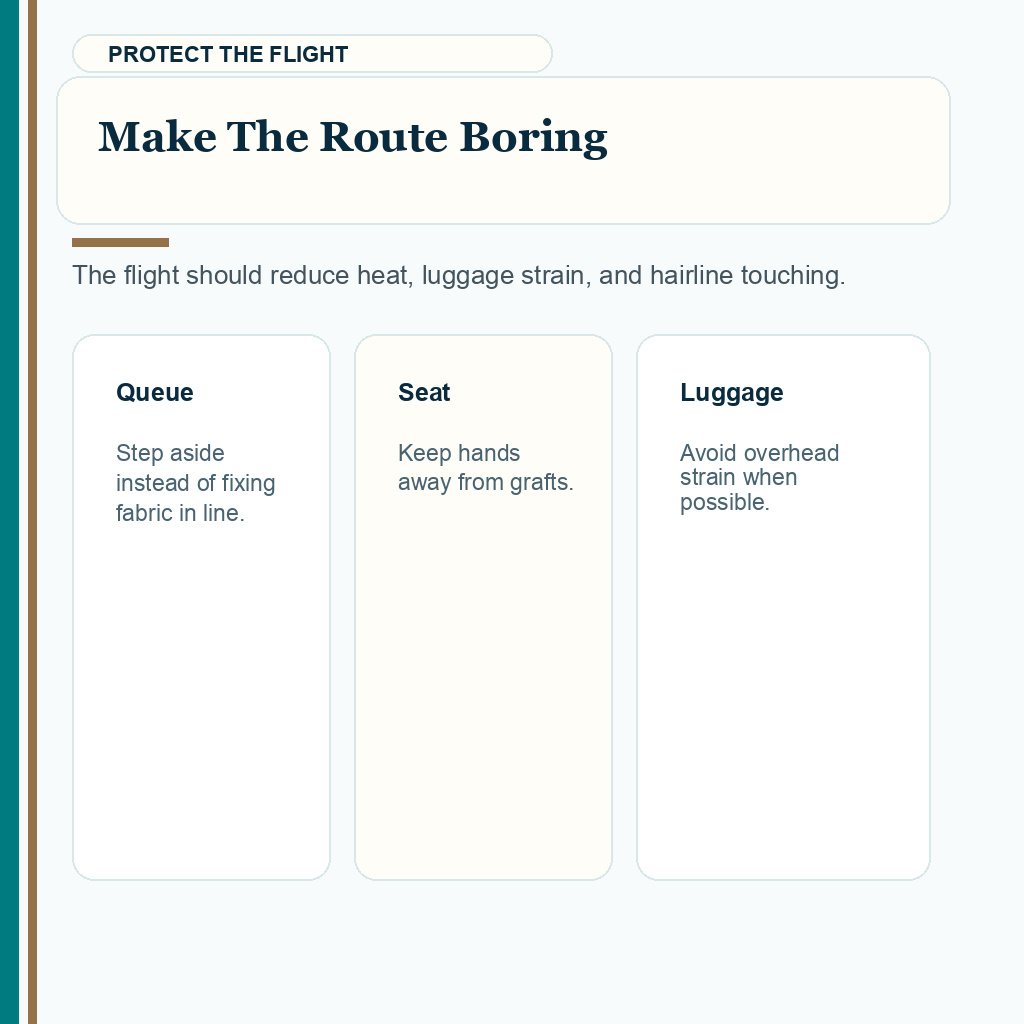
Repeated fixing matters more than one short look from a stranger. Heat, sleep position, overhead luggage, and tight fabric can create more risk than visible redness.
Flight habits Keep hands away, drink water, avoid heavy luggage strain, and make the flight plan uneventful.
Use photos, not panic
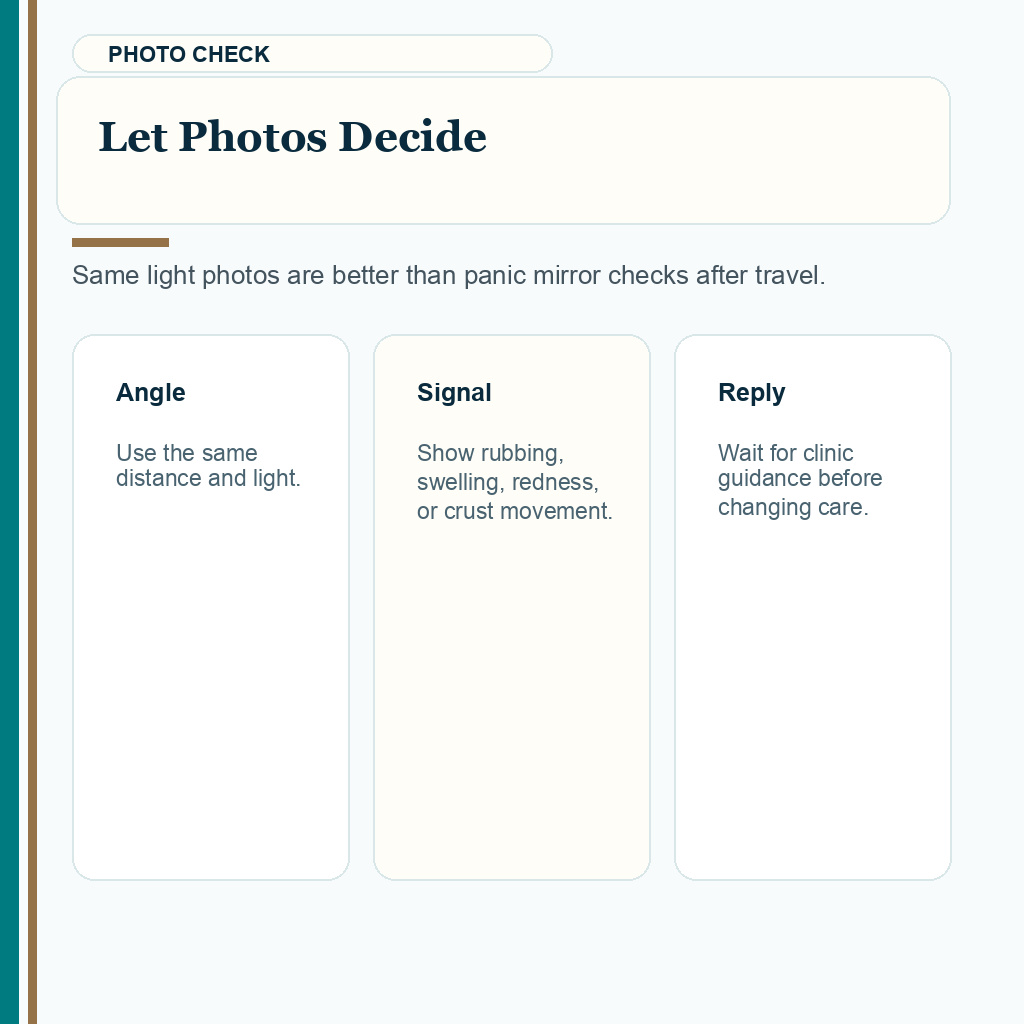
After arrival, same light photos are more useful than panic mirror checks. A photo gives the clinic something concrete if redness, swelling, rubbing, or crust movement worries you.
Photo message Share photos in matching light when something changes, then follow the clinic plan instead of changing headwear or washing timing alone.
The point of this timeline is not to make the patient less private. It is to make privacy safer. The patient can still choose quieter transfers, simpler clothing, fewer public stops, and no social obligations. The part I do not accept is hiding at any cost.
Photos help more than panic mirror checks
After travel, many patients check the mirror too often. The lighting changes, swelling moves, crusts look different, and the front hairline can look alarming from one angle. A mirror can increase touching. A photo can give the clinic evidence.
Use the same light, the same distance, and a calm angle. Photograph the hairline, temples, and any area that feels rubbed. If redness, swelling, bleeding, crust movement, or pressure marks worry you, send the photos rather than changing washing, covering, or medication timing by yourself. The clinic can interpret a stable photo series better than a frightened description.
The recovery plan also belongs inside hair transplant consent before surgery. Before signing, she needs to understand not only the hairline design and graft range, but also how she will protect that hairline during the first travel period.
Social plans should wait for the scalp
Private travel and online privacy are related, but they are not the same. A patient may be able to avoid social media for a while, yet still feel exposed in an airport. Another patient may be comfortable in public but anxious about family photos or video calls. I ask about both because pressure can come from different places.
Social media hair transplant results can make recovery feel like a performance. The early scalp is not a final result. Redness, scabs, swelling, and short hairs are a stage of healing, not a public review of the future hairline. If posting, video calls, or work meetings make the patient keep covering or touching the grafts, the schedule should change.
Use these 4 private travel slides to separate covering, hotel setup, flight behavior, and photo checks.

Privacy must stay inside medical limits
Some women worry that asking about privacy will make them seem vain or difficult. I do not see it that way. Privacy is a real part of recovery, especially when the work is on the front hairline. The problem starts only when privacy hides a weak surgical design, encourages a tight covering, or delays a message about a warning sign.
Female hair transplant candidacy comes before the privacy method. No shave FUE, a scarf, a quiet hotel, or a private transfer can reduce visibility. None of them fixes an unstable diagnosis, weak donor area, or unrealistic design.
Talk about privacy while the operation is being designed. Tell the clinic how you will travel, whether you will be alone, what you want to wear, when you need to appear in public, and who may see you after surgery. That lets the team choose coverings, transfer timing, hotel behavior, and photo checks without putting the grafts under pressure. For patients whose public identity includes hijab, scarf, turban, or another covering, a covering plan that avoids graft pressure after FUE is safer than hiding the scalp with tight fabric.
The best privacy after female hairline FUE is often ordinary and controlled. Less touching, less pressure, cleaner travel, and earlier messages if a warning sign appears.

Read this review excerpt
Probably my only concern of the whole trip was when my transport pulled up to a different hotel than I had been told but this was solved instantly and was only due to the Covid situation.