


Cold Plunge Timing Needs Water and Healing Clearance
A cold plunge after hair transplant is not something to restart just because the grafts feel stable. A cold plunge is full immersion, often in shared water, with a sudden stress response on the body. After FUE or DHI, I want the scalp surface to be closed, calm, clean, and personally cleared before you return to that kind of exposure.
During surface healing, avoid an ice bath, cold plunge tub, or sauna and cold routine. Graft anchoring and immersion clearance are related, but they are not the same decision. The scalp may be more secure than it was in the first days, while the skin surface is still not ready for soaking, rubbing, chemical exposure, or water that is not fully under your control.
Cold water is still a healing decision
Many patients ask this question because cold exposure feels clean, athletic, and controlled. That is understandable. A cool shower, a correctly used cold compress, a swimming pool, a hot tub, and a true ice bath are not the same exposure. The scalp experiences water contact, soaking time, water pressure, temperature change, and sometimes shared water hygiene. Your body also experiences sudden cold stress.
I do not treat cold plunge as a simple version of using ice after a hair transplant. Ice or a cold compress is local and controlled when it is used away from the grafts as instructed. A plunge covers the scalp and body together. It can also tempt the patient to stay in longer because the routine feels familiar from training or wellness habits.
If you are trying to judge whether your grafts are safe, first read the separate question of when grafts are usually secure. Then come back to the cold plunge decision with a different question. Is the skin ready for immersion, and is the body ready for sudden cold exposure?
First check whether the scalp is closed
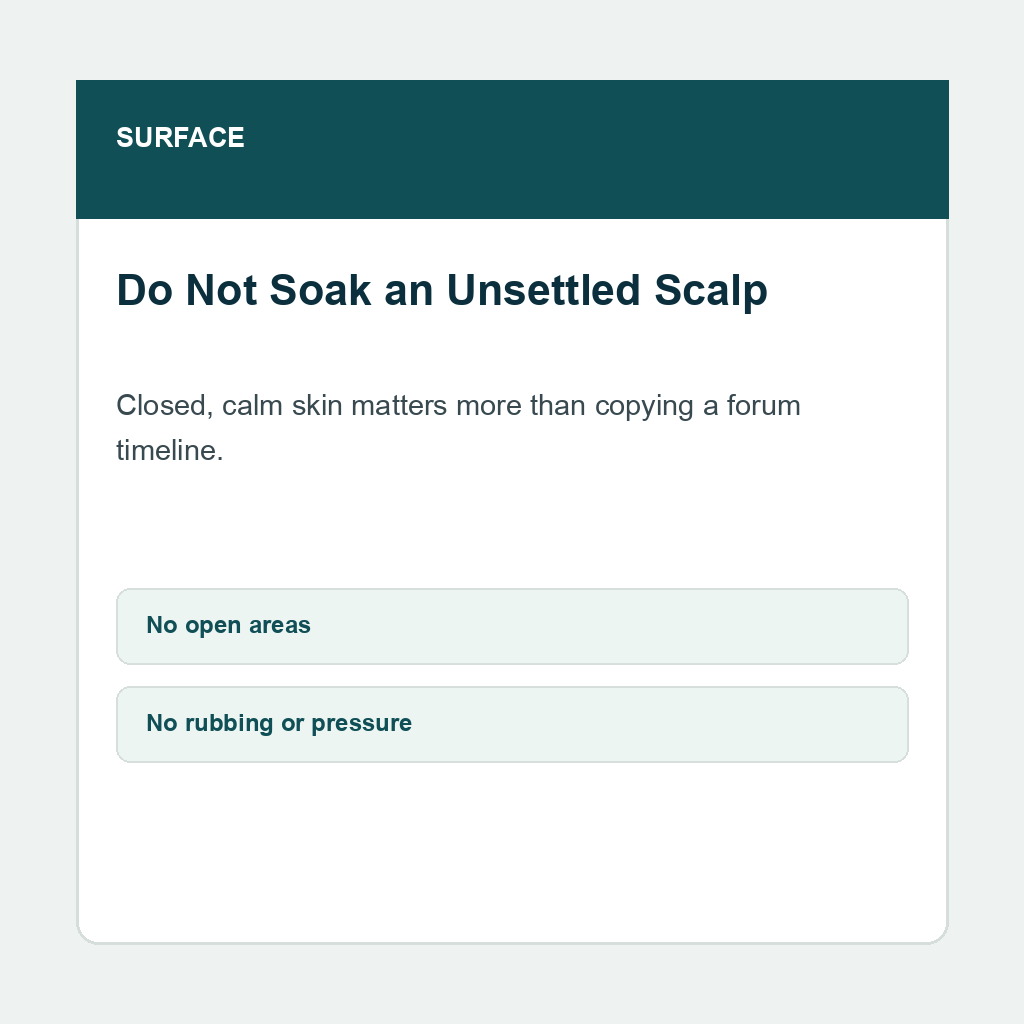
Look at the scalp condition before looking for a day number online. The recipient area should not have open spots, bleeding, draining, or irritated scabs. The donor should not feel raw or painful. Normal washing should already feel uneventful. If basic washing still feels uncertain, the scalp is not ready for a plunge.
The washing instructions matter because they are the first controlled return to water. If you are still unsure about pressure, rubbing, shampoo contact, or how to rinse, review washing after a hair transplant and the more detailed guidance on the first FUE washes. A cold plunge should come after gentle scalp care has already become routine, not before.
Separate cold exposure from shared water
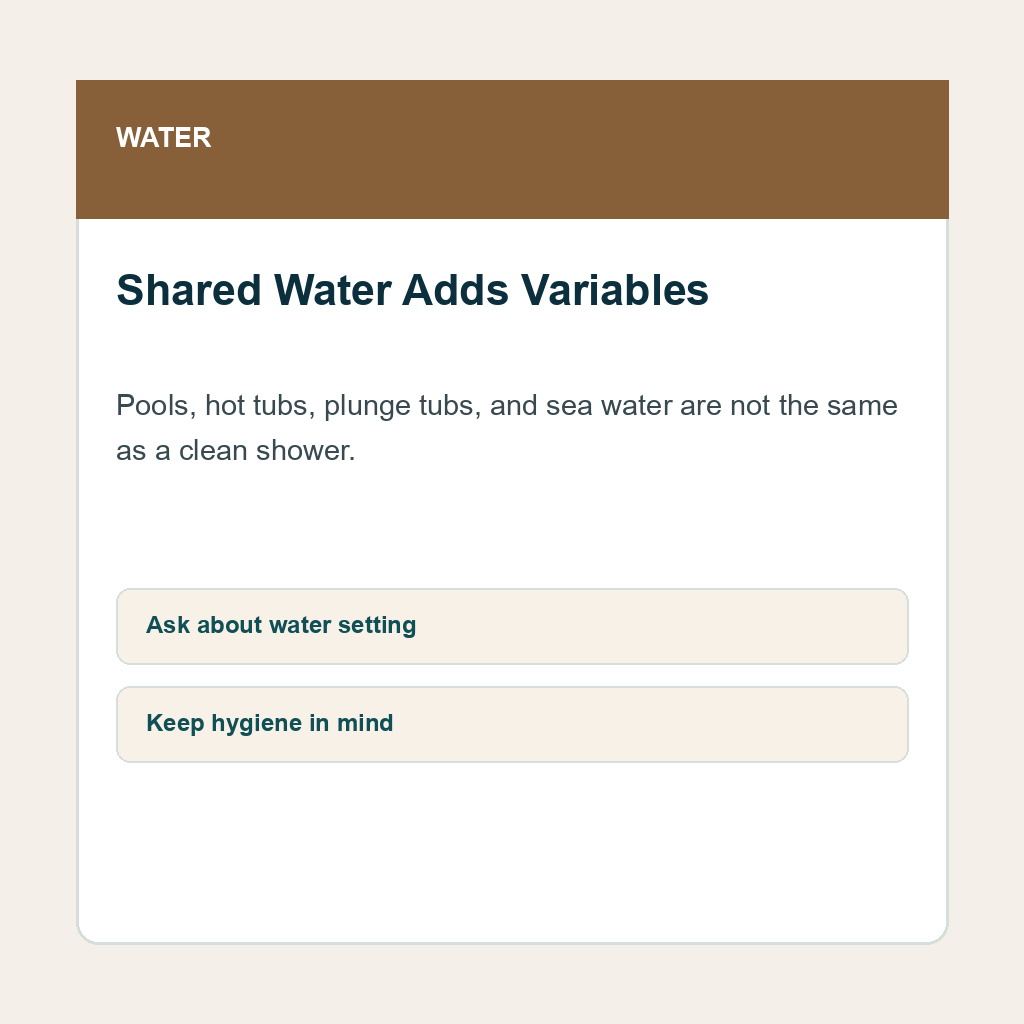
Patients often group water activities together, but each one has its own reason to wait. A clean shower is controlled. Swimming adds immersion and shared water. Sea water adds a natural environment. A hot tub adds heat and shared water maintenance. A cold plunge adds immersion, cold shock, and often a shared tub.
Before returning, check how the tub is maintained as well as its temperature. Shared water, chlorine or other additives, and a long soak create a different exposure from a brief cool shower. If the scalp is not fully closed and calm, the routine can wait.
Write down the exact setting you mean. A private cool shower, a shared cold tub, a sauna cycle, and a lake swim are different exposure questions.
I would not judge a cold plunge like a cool shower. It is closer to swimming, hot tubs, and other full immersion in water, with the added concern of how your body reacts to sudden cold.
For the water side of the decision, swimming after a hair transplant explains broader pool and sea timing. Here, the more specific question is whether a cold immersion habit is sensible after the scalp has healed enough to consider water exposure again.
I also ask patients to be realistic about the setting. A private tub you clean yourself is different from a busy gym plunge tub. Natural water after a beach trip is another situation, so beach after a hair transplant is the better reference for sun, sand, sea, and travel variables.
Heat and cold have different risks
Some patients do cold plunge as part of a sauna cycle. That is a different question from stepping briefly into cool water. Heat can increase sweating, scalp warmth, flushing, and rubbing. Cold can trigger a sudden body response. Moving between the two makes the routine more intense than either one alone.
Start with the easiest return first. If a normal shower and a dry scalp still leave you shivering, rushing, or rubbing your head, a plunge tub is not the next sensible test.
If your real routine is sauna, steam room, hot shower, then cold plunge, I would not restart by testing all of it at once. Keep the related guidance separate. Read sauna after a hair transplant for heat exposure before you combine heat with any cold routine.
Shower temperature and scalp sweating have their own triggers. Use hot water and steam after FUE for shower temperature, and sweating after a hair transplant for activity related scalp irritation.
The cold plunge itself is not a treatment for graft survival, swelling, hair growth, or recovery anxiety. I would not restart it because someone says it improves circulation. After surgery, the practical goal is safer healing, not proving toughness with a very cold routine.
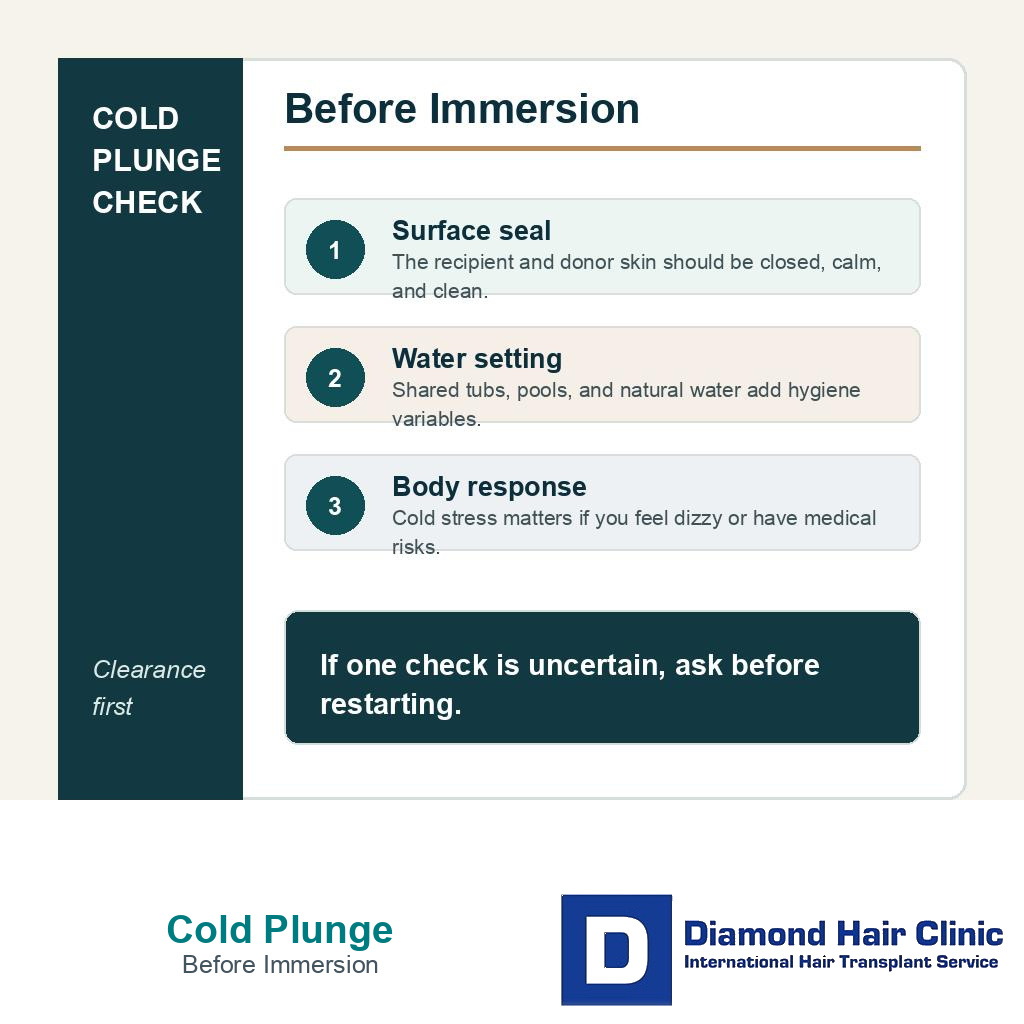
A safe return is not one calendar date. Check the scalp surface, the water setting, and the body’s response before any full immersion.
Surface seal, Water setting, Body response, and Ask before restarting are the four checks before full immersion.
Surface seal
The scalp is closed, clean, and no longer showing open spots, draining, bleeding, or painful irritation.
Scabs are being rubbed away, the donor feels raw, or the recipient area still reacts to normal washing.
Keep routine washing gentle and ask the clinic before adding soaking or water pressure.
Water setting
A private clean shower and a shared tub are different exposures for healing skin.
The plunge is shared, poorly maintained, heavily treated, or natural water with uncertain cleanliness.
Choose the cleanest setting first and avoid treating cold water as a graft treatment.
Body response
You tolerate normal activity and washing without dizziness, throbbing, or scalp symptoms.
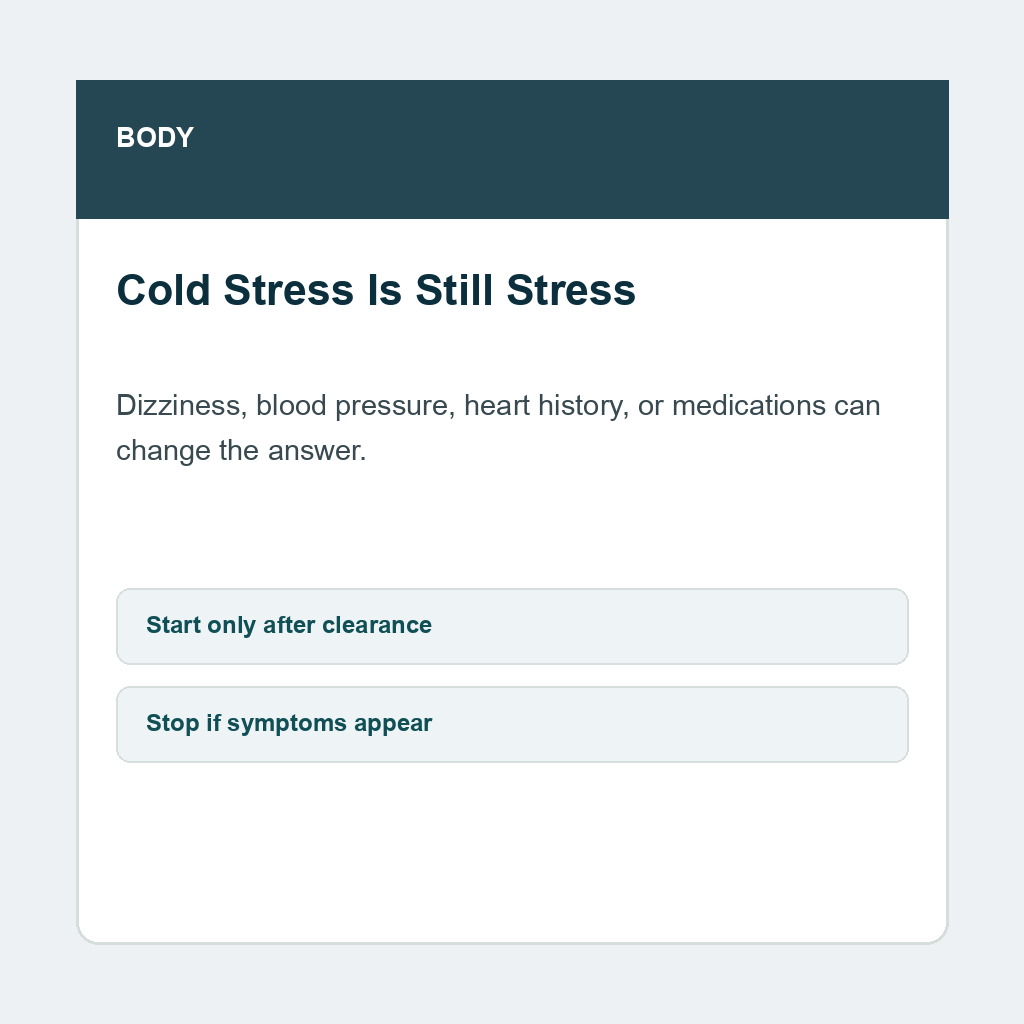
You have heart or circulation concerns, blood pressure problems, neuropathy, or faintness with cold exposure.
Ask your doctor or clinic before restarting sudden cold immersion.
Ask before restarting
You are unsure whether the recipient or donor area is ready for soaking.
There is redness that is worsening, swelling, tenderness, pimples, crusting, or any sign of infection.
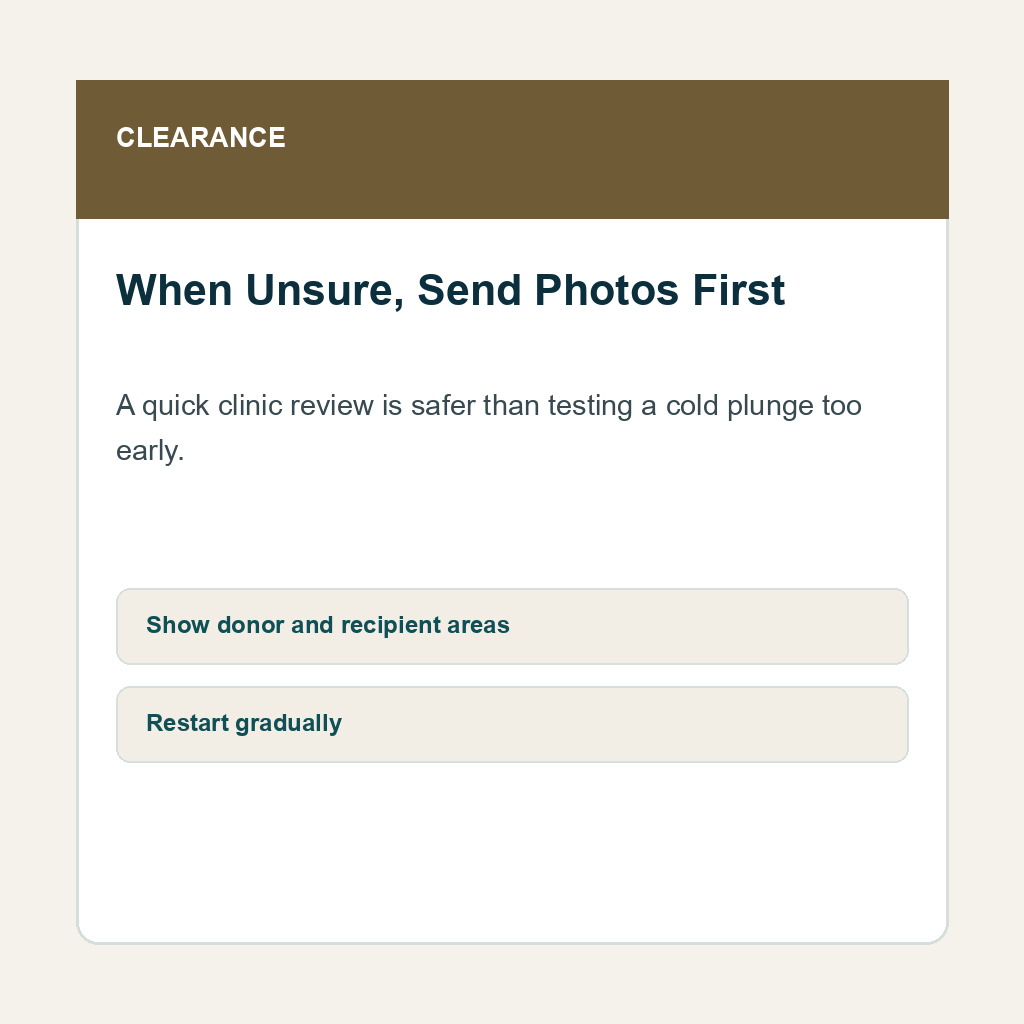
Send clear photos and wait for personalized clearance instead of testing the plunge.
The safest restart is not the coldest water. It is the restart your healed scalp and body can tolerate.
Your medical history can change the answer
The scalp is not the only consideration. Sudden cold immersion can cause a strong body response. If you have blood pressure problems, heart or circulation concerns, fainting, neuropathy, reduced sensation, diabetes related concerns, immune suppression, infection risk, or medication changes after surgery, ask before restarting cold immersion. This is especially important if cold exposure has ever made you dizzy or short of breath.
I am not saying every healthy patient is unsafe around cold water forever. I am saying that a hair transplant recovery question can become a general medical safety question when the exposure is sudden and intense. If a patient tells me they feel lightheaded, unwell, feverish, or unusually tender, the answer is not to test a plunge. The answer is to stop and ask for medical review.
Use three clearance checks before restarting
When the clinic says the scalp is ready to consider normal activities again, I still like a simple three check approach. First, surface seal. The recipient and donor areas should be closed, calm, and not easily irritated by washing. Second, water setting. The cleaner and more controlled the water, the lower the uncertainty. Third, body response. You should feel well, steady, and medically suitable for cold exposure.
If all three are clearly favorable and your surgeon has cleared you, restart modestly. Do not begin with a long ice bath, a crowded shared tub, or a sauna and cold cycle. Keep the first return brief, avoid rubbing the scalp with a towel afterward, and stop if the scalp throbs, stings, swells, or looks more irritated later. If you are also restarting training, keep exercise after a hair transplant separate from the plunge so you can tell what caused any reaction.
Contact the clinic before returning
Ask before restarting if you still have redness that is getting worse, swelling, tenderness, pimples, crusting, drainage, fever, or any area that looks open. Also ask if you scratched the scalp, bumped the graft area, had unusual bleeding, or feel unsure whether scabs are gone naturally. A clear photo is more useful than a guessed date.
Redness, scabs, and pimples after a hair transplant explains why surface changes can be normal in some phases and a warning in others. If you are unsure which side you are on, do not use a cold plunge as the test. Send photos, describe the water setting, and ask what is reasonable for your stage.
This is the same reason general hair transplant aftercare remains more important than any wellness routine. Aftercare is not meant to remove your normal life. It is meant to bring activities back in the right order.
Clearance matters more than the plunge
I understand why patients want to return to the habits that make them feel healthy. The aim is not to fear cold water forever. It is to respect the healing surface, the water exposure, and the body’s response. Once those are all clear, a careful return is a different decision from an early test.
When the scalp’s readiness is uncertain, confirm the restart timing before testing it with a plunge. The routine can wait. A calm, well healed recipient area and a protected donor area matter more.
Read this review excerpt
First wash completed and visual instructions given to my daughter.