Cycling Needs Helmet and Sweat Planning Before You Return
After a hair transplant, I do not treat cycling as one simple return date. The first week is walking time, not bike time. Later, a short easy indoor spin is a different decision from a helmeted road ride in heat, traffic, wind, and sun.
Graft security is only one part of returning to cycling. I also need to know whether the helmet slides across the recipient area, whether sweat and heat make the scalp harder to clean, whether a fall could hit the grafted area, and whether you can stop early if swelling, bleeding, or irritation appears. Cycling has to come back in stages, not from one fixed permission. For the first outdoor ride, keep the route easy and easy to stop. The point is to see how the scalp handles helmet pressure, heat, and sweat before a commute, delivery shift, group ride, or hill session becomes the real test.
Cycling return readiness check
Choose the safest return stage before the first ride
I separate cycling from general exercise because the bicycle adds helmet pressure, sweat, outdoor exposure, speed, and fall risk. The safer return is not one fixed date. It is the stage where the scalp, helmet, route, and ride intensity all agree.
Early healing check
Keep cycling off the scalp in the first week
Fresh recipient area work, swelling, scabs, and donor tenderness make cycling a poor test of healing.
Sweat, bending forward, sudden braking, and helmet contact can all arrive in one ride.
Do not use a bike ride to prove you feel well. Walking is the cleaner early activity.
Any bleeding, wet scabs, new pain, heat, swelling, or urge to wear a helmet before the scalp is settled.
Why is cycling a separate recovery question?
General exercise advice is a starting point, but cycling adds equipment and environment. A rider may sweat heavily, bend forward, wear a close helmet, pass through dust, ride under direct sun, or take a small impact from a branch, doorway, pothole, or traffic incident. Those details matter more than the word bike.
Use the broader exercise after hair transplant guidance as the starting point, not as permission for every ride. Walking in a cool room, spinning gently on a stationary bike, and cycling on a busy road are not the same recovery stress. The heart rate, friction, and accident risk are different.
The helmet also makes cycling different from many other activities. I use stricter rules for helmet pressure after hair transplant than I would for a loose cap, because cycling brings pressure, sweat, and motion together.
The first week is not cycling time
During the first week, recovery should stay boring. The recipient area is fresh, scabs are forming, swelling may move, and the scalp is easy to irritate. A bicycle ride adds too many variables at once.
Even a careful rider can sweat unexpectedly, lean forward for longer than planned, brush the scalp while putting on a helmet, or need sudden braking. If the ride is outdoors, wind, dust, sun, and road vibration are added to the problem.
This is also the week when some patients feel well enough to overdo it before the scalp is ready. Feeling energetic is useful, but it is not the same as a healed recipient area.
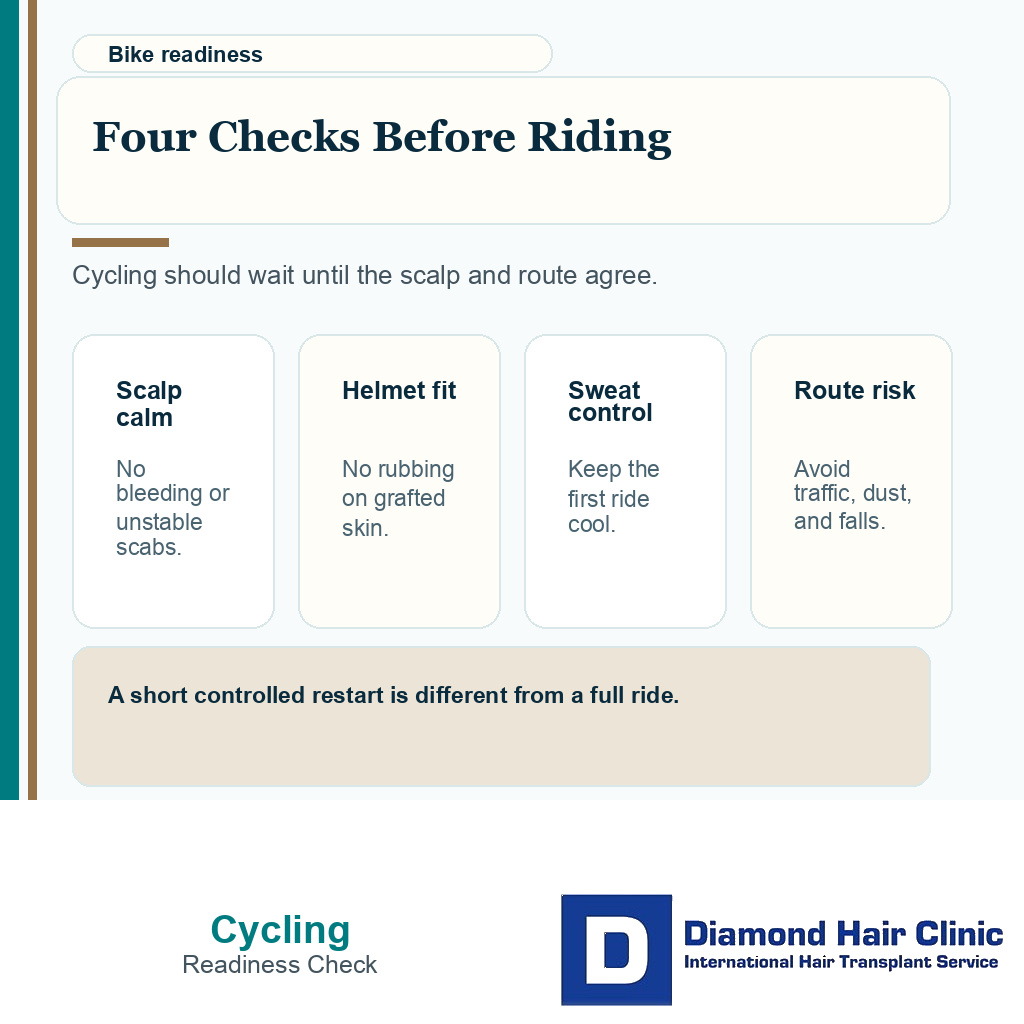
Return to cycling is safer when scalp healing, helmet fit, sweat control, and route risk agree.
Helmet fit changes the decision
A bicycle helmet protects you, so I do not advise riding without one just to protect grafts. The medical answer is usually to delay outdoor cycling until the helmet can be worn without rubbing the recipient area, dragging across scabs, or pressing on tender swelling.
Check how the helmet moves when you put it on and take it off. Many injuries to early grafts come from sliding contact, not from simply resting a light object nearby. If the front edge scrapes the hairline or the inner pads press directly on grafted zones, the ride should wait.
The first road ride should not also be the first real helmet test. Try the helmet at home, look for pad marks or scraping when it comes off, and choose a route that can be shortened without pressure. A commute with traffic, heat, and a fixed arrival time is a poor first test.
After removing the helmet, the scalp should still be easy to inspect. Sweat, strap marks, or a rushed wash can make the skin hard to judge, which means the ride was too much for that stage.
A soft clean liner may reduce rubbing later in recovery, but it should not become a trick for riding too early. If the helmet leaves marks, scrapes scabs, or changes the scalp surface, the scalp is not ready for that ride.
Sweat is not the only issue
Sweat by itself is not the whole story after a hair transplant. The bigger issue is the setting around the sweat. Heat, bacteria, friction, delayed washing, tight headgear, and scratching can turn sweat into a real recovery problem.
The broader sweating after hair transplant guidance explains why heat, friction, and hygiene matter. For cyclists, I add two practical points. Choose a cool restart time, and do not use a hard ride to test whether the scalp is healed.
If the scalp becomes itchy, wet, stinging, or crusts soften after a ride, stop cycling. Do not scrub the area aggressively to erase the sweat. Clean the scalp according to the clinic protocol and ask for review if the surface looks different.
Indoor cycling removes some outdoor risks
A short, easy indoor ride gives more control. There is no helmet, no traffic, no road dust, no sun exposure, and no unexpected fall from a curb or pothole. That does not make it safe in the first days, but it makes the return easier to stage when the scalp is settling.
Start with low resistance and a short session only when your clinic has cleared light activity. Keep the room cool, avoid heavy sweating, and stop before the session becomes a workout. If you need a strong stimulant pre workout product to ride, the timing is probably too early because it can complicate heart rate, sweating, sleep, and anxiety.
Outdoor riding asks for a higher standard. It brings helmet pressure, wind, heat, sun, road vibration, and fall risk. You may be ready for a gentle stationary ride before you are ready for a commute, delivery shift, group ride, or hill session.
Commuting adds pressure to return too early
Commuters often ask because the bike is not a hobby. It is transport. That pressure can make the risk feel negotiable, especially when the clinic, hotel, or home routine depends on easy travel.
If cycling is your normal commute, plan alternatives before surgery. Use a car, taxi, public transport, walking route, or remote work if available. I treat car rides after hair transplant and flying after hair transplant in the same practical way. Movement is easier to accept when it is controlled, but recovery gets harder when travel forces heat, rubbing, rushing, or fatigue.
If the ride is part of a dusty, hot, helmeted, or manual workday, plan it with your physical work after hair transplant return, not as a separate fitness question. The scalp does not care whether the sweat came from the bike or the workday.
Outdoor riding adds impact, dust, and sun
Road cycling, mountain biking, gravel riding, delivery cycling, and motorbike traffic exposure are not equal. The more speed, terrain, contact, heat, and helmet time involved, the later the return should be.
For a gentle outdoor ride, the scalp should be dry, clean, and stable. Scabs should be gone or safely settled according to the clinic timeline. The helmet should sit without scraping the recipient area, and the first route should be short and safe, not a demanding ride that proves fitness.
Dust and sun exposure matter because the scalp is healing. If sun is part of the ride, the decision also involves sunburned scalp after hair transplant risk and sunscreen timing after hair transplant, not only fitness.
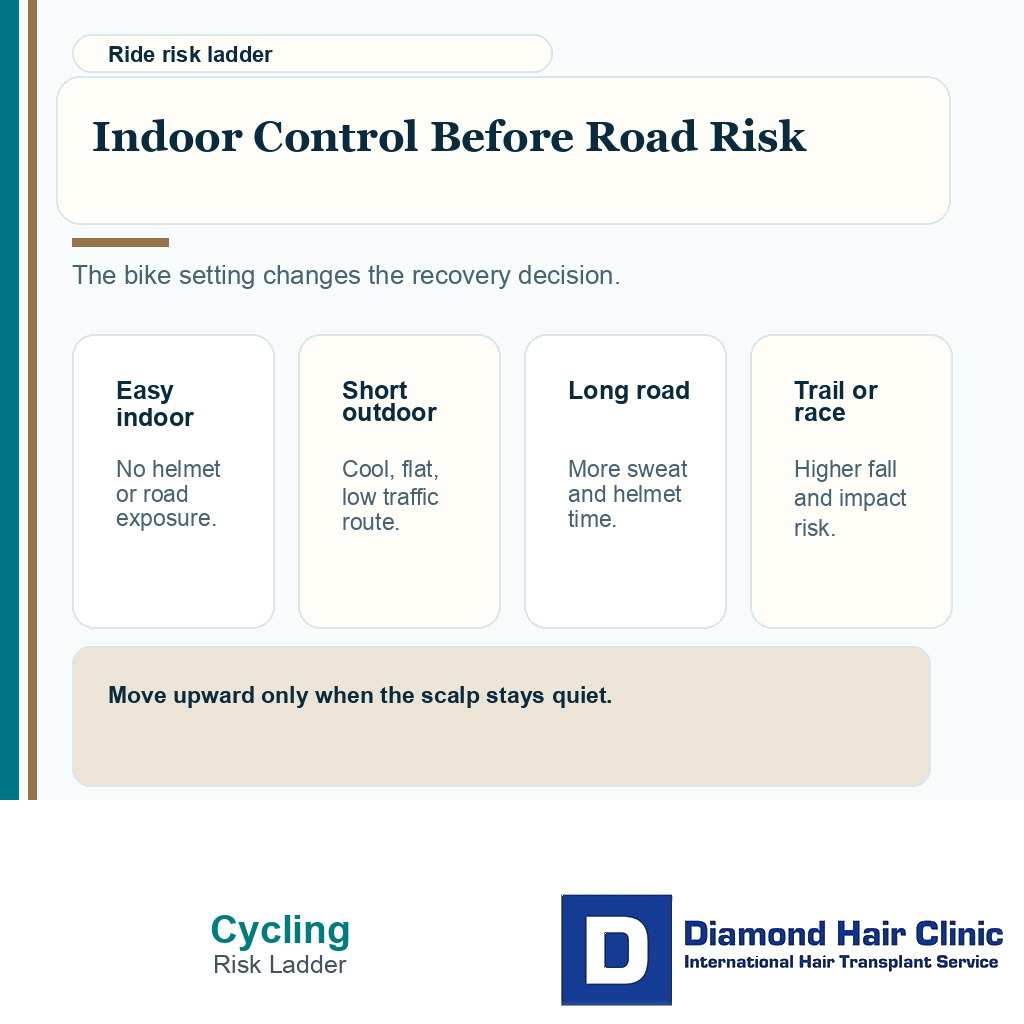
The same bicycle question changes when the ride moves from indoor control to outdoor risk.
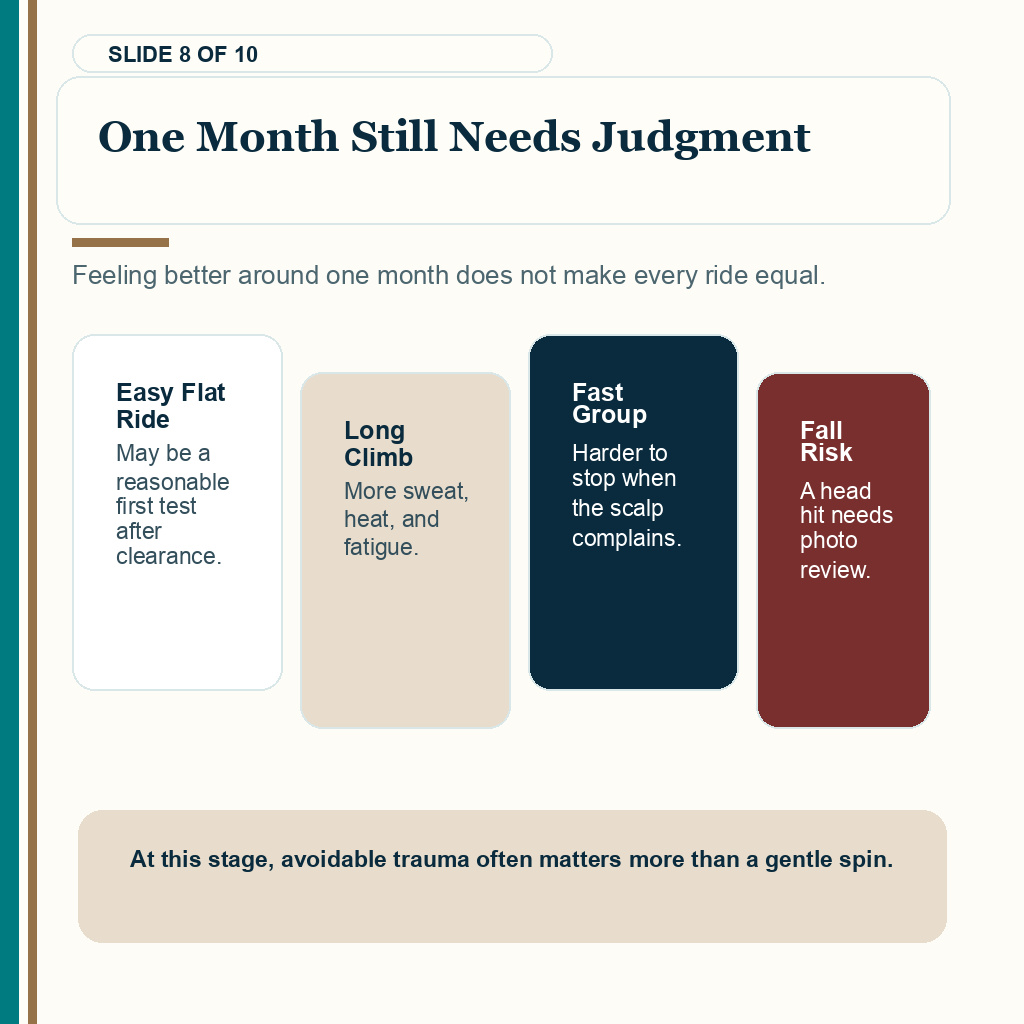
Cycling after one month still needs judgment
Many patients feel more comfortable around one month, but the type of cycling still matters. A quiet flat ride in cool weather is different from a long climb, fast group ride, mountain trail, delivery shift, or daily helmet use for hours.
At one month, the risk is often less about a gentle spin and more about avoidable trauma. If you fall and hit the grafted area, review bumped head after hair transplant and contact the clinic. Prevention is better than asking afterward whether the grafts survived.
Group rides also create social pressure. Riders keep pace, chase hills, sweat more, and ignore early warning signs. If you are returning after surgery, ride alone or with someone who accepts a short slow session.
Use a return sequence instead of guessing
A staged return is usually clearer. Walk and move normally within the clinic instructions first. Add low intensity indoor cycling only when light activity is cleared. Test helmet fit at home before the first outdoor ride. Then choose a short cool route with low fall risk. Longer rides, hard climbs, racing, trails, and group sessions come later.
These 10 cycling return slides separate early quiet recovery, indoor spinning, helmet fit, sweat control, route risk, commuting pressure, terrain, one month judgment, warning signs after riding, and the staged return rule. Swipe sideways, use the arrows one slide at a time, or choose a number below the image.
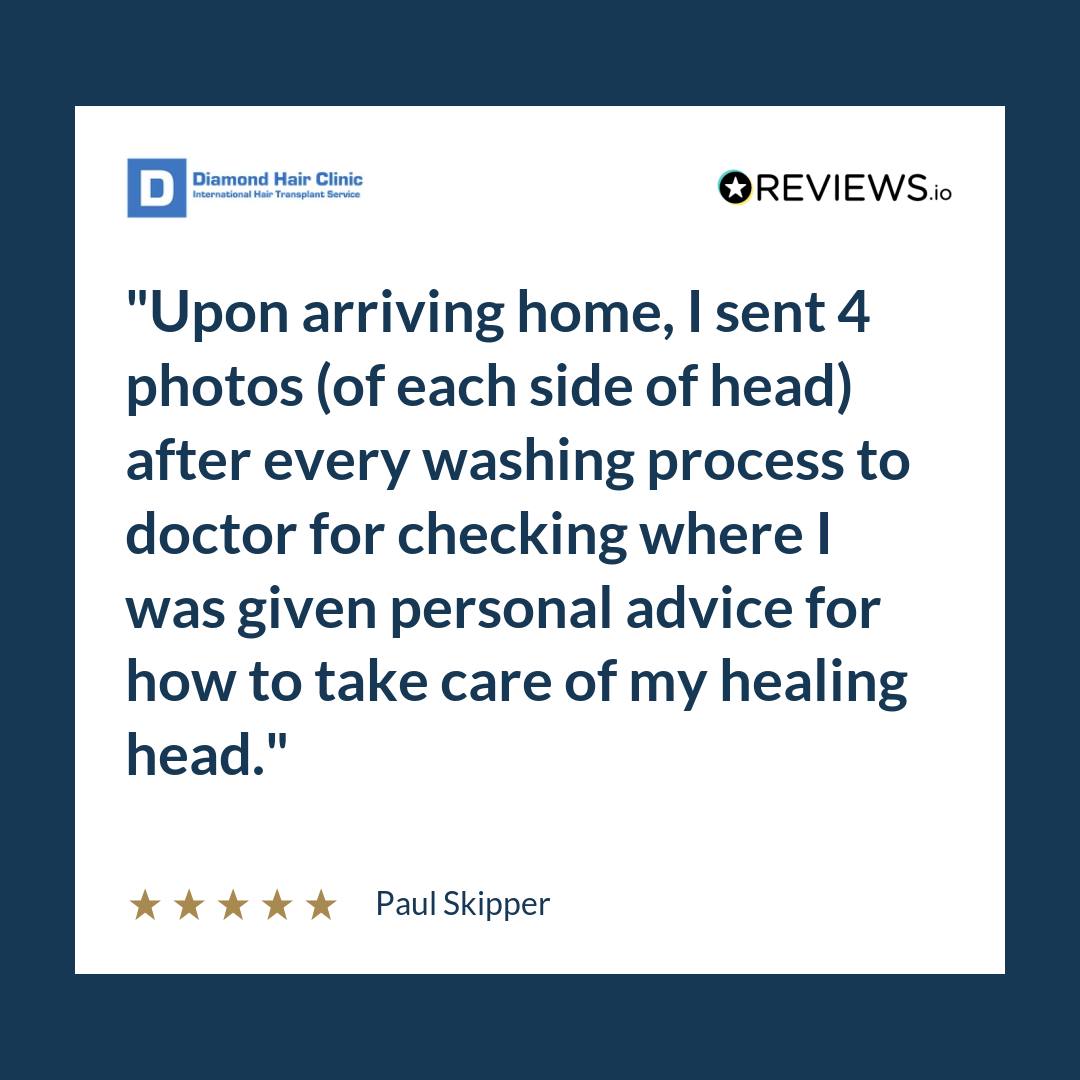
Read this review excerpt
Upon arriving home, I sent 4 photos (of each side of head) after every washing process to doctor for checking where I was given personal advice for how to take care of my healing head.