Hair Transplant Turkey Reviews: Uncovering the Truth
Hair Transplant Turkey Reviews refers to the testimonials, feedback, and ratings of patients who have undergone hair transplantation procedures in Turkey.
You can explore these reviews on various platforms. Some of the notable ones include:
- Popular Review Websites:
- Reviews.io
- Provenexpert.com
- Trustpilot
- Realself
- Yelp
- Search Engines & Social Media:
- Google Business Profile of Turkish Clinics
- Reddit Discussions
- Quora Threads
- Social Media Channels (Facebook, Instagram, Twitter)
- Specialized Forums & Tourism Sites:
- Hair Transplant Community Forums
- Tripadvisor Forum’s Turkey Section
- Medical and Clinic Websites:
- Specific Clinic Websites
- Directory of Hair Transplant Clinics in Turkey
- Prominent Medical Tourism Agency Websites
Reviews from various platforms capture a spectrum of patient experiences after undergoing hair transplant procedures in Turkey. These experiences range from those highly satisfied with their results to those who faced complications or were dissatisfied.
Such reviews play a critical role for potential patients. They provide insights into:
- Quality of Surgery: This refers to the surgeon’s expertise, the facility’s standard, the technology used, and the post-surgery care provided.
- Cost-Effectiveness: In this context, it means getting value for money, where the quality of the procedure justifies the price paid.
- Credibility of Clinics: Reviews can shed light on the reputation and trustworthiness of various hair transplant clinics in Turkey.
Potential patients rely on these reviews to make well-informed decisions, ensuring they receive the best care at a reasonable cost.
In this article, we explore Hair Transplant Turkey Reviews by diving into key takeaways from patient testimonials, discussing why these reviews are pivotal in medical decisions, and offering a guide to responsibly analyzing and interpreting these critiques.
We will begin by highlighting the Key Takeaways essential for potential patients to understand before embarking on a hair restoration journey. We will further discuss Why Patient Reviews Are More Important Than Ever For Medical Decisions, emphasizing these reviews’ increasingly critical role in shaping patients’ choices of clinics and surgeons.
Subsequently, we will delve into How Feedback Can Help Patients Choose A Hair Transplant Surgeon and guide you through What To Ask A Surgeon About Patient Reviews to ensure transparency and reliability.
Navigating through a sea of online reviews might be overwhelming; thus, we will provide comprehensive steps on How To Analyze and Spot Fake or Real Hair Transplant Reviews and offer insights into Which Review Platforms Should You Trust When Researching Hair Transplant Clinics.
Lastly, to address common queries when considering a hair transplant in Turkey, we have assembled a Frequently Asked Questions section to resolve any lingering concerns and offer clarity to prospective patients.
By the end of this article, we aim to equip you with the knowledge and tools necessary to make an informed and confident decision about your hair transplant journey in Istanbul, Turkey.
With this in mind, let’s delve into the darker side of reviews, where fake ratings and testimonials can mislead patients and tarnish the reputation of clinics.
Let’s look at shocking evidence of the fake review industry targeting hair transplant clinics.
Screenshot of An Email That Offers Paid Fake Reviews Writing Services for Clinics

- The attached screenshot showcases an email we received at Diamond Hair Clinic from an agency known for crafting deceptive reviews. It’s worth noting that numerous hair transplant clinics, ours included, receive similar emails regularly.
- While it’s challenging to pinpoint the exact number of clinics collaborating with these deceitful agencies, the count appears alarmingly high.
- To be clear, this isn’t just a concern in Turkey. It’s an issue faced globally. Fake testimonials erode trust, creating a barrier between patients and legitimate clinics.
- Engaging in such deceptive practices tarnishes a clinic’s image and jeopardizes the safety of patients searching for genuine treatments.
So, how does this widespread issue of fake reviews affect patients’ decisions?
Let’s explore how this global issue creates a barrier between potential patients and trustworthy hair transplant clinics in Turkey.
Key Takeaways
“Be skeptical of ‘too good to be true results“
“Look for genuine before and after photos“
“Be aware of the potential for both fake positive and negative reviews“
- The medical tourism sector in Turkey is well-regarded, particularly in hair transplantation. However, some entities don’t uphold ethical practices like in any industry. It’s alarming how some clinics manipulate before-and-after images, enhancing them to portray misleading outcomes. When you come across hair transplant results that appear “Too Good To Be True,” it should raise questions. Recognizing the authenticity of patient feedback has become even more crucial in today’s medical decision-making.
- A plethora of agencies and clinics in Turkey promote cheap surgical packages. But there’s a catch: these cheap surgeries are conducted by technicians or doctors lacking the necessary experience. Such practices can result in complications, some of which can have long-lasting adverse effects. It’s essential to note that hair transplants aren’t suitable for everyone. Before deciding, one must be informed of potential risks, such as tissue necrosis.
- Beware of fraudulent hair transplant clinics in Turkey. They’ve been known to produce counterfeit testimonials and even use photos from legitimate clinics as their own. It’s vital to examine reviews meticulously and be alert to any red flags. Trustworthy clinics will always be ready to showcase actual patient before-and-after photos and share genuine feedback.

- The hair restoration market is thriving, with billions of dollars in transactions happening daily. Given the massive stakes, it isn’t surprising that some go to the extent of fabricating testimonials. In the Turkish hair transplant sector, employing 5-10 staff to write fake patient reviews is not unheard of, but it’s both unethical and unlawful.
- In your research on Turkish hair transplant clinics, maintain a discerning approach. Not everything online is genuine, whether on forums, blogs, or YouTube. Both fake positive and negative reviews abound, often driven by competitive marketing agendas.
Now that we’ve highlighted these critical concerns let’s move forward and dive into the quantitative impact of patient reviews on the medical decisions people make.
Why Are Patient Reviews More Important Than Ever For Medical Decisions?
- According to a Harvard Business Review study, 48% of patients say physician ratings and comments others provided influenced their choice. A survey by BrightLocal indicates that 88% of Americans read reviews before visiting a business. In the health sector, those numbers are even higher. A study by Software Advice found that 95% of patients read online feedback before choosing a physician.
- Based on the May 2018 article in the “Plastic and Reconstructive Surgery Journal” titled “Happy and Unhappy Patients: A Quantitative Analysis of Online Surgeon Reviews” by R. Dorfman, C. Purnell, Cecil Qiu, M. Ellis, C. Basu, and J. Kim:
“Online reviews have become modern versions of the word-of-mouth recommendation, and prospective patients are increasingly consulting them before making decisions about their surgical care.”
“As the influence of online review platforms continues to grow, understanding drivers of positive and negative reviews may help surgeons improve patient satisfaction.”
What Is The Significance of Patient Reviews for Hair Transplant Clinics in Turkey?
- The data is precise. Online reviews carry as much weight as personal recommendations for patients. With the steady rise of medical tourism, esthetic surgery clinics, particularly those specializing in hair transplants in Turkey, must recognize the importance of these reviews. Prioritizing the best patient experience is key.
- Patient reviews play a pivotal role in the long-term success of hair transplant clinics worldwide, be it in Turkey, the U.S., Mexico, Poland, Hungary, or any other nation. While some clinics might temporarily sustain their operations through online paid ads despite a lack of positive testimonials, a long-term presence in the hair restoration industry hinges on consistent positive patient feedback.
But why do patients write these reviews in the first place?
Let’s uncover the various motivations that drive patients to share their experiences.
Why Do Hair Transplant Patients Write Reviews?
Understanding why hair transplant patients, after they return from Turkey, take the time to write reviews can provide valuable insight into the content of the review itself.
Here, we break down the motivations into positive and negative categories:
Positive Motivations
- Sharing a Successful Experience:
-
- Patients with a successful hair transplant may want to share their journey to encourage others to consider the procedure.
-
- They may also want to express their gratitude towards the surgeon and staff by publicly praising their work and professionalism.
- Providing Constructive Feedback:
-
- Patients may see reviews as a channel to offer constructive criticism, helping the clinic to understand areas where they may improve.
-
- This can include a critique of the clinic’s facilities, staff demeanor, patient care, and follow-up procedures.
- Showing Appreciation:
-
- Writing a positive review can be a simple and impactful way for patients to show appreciation and gratitude towards the medical team.
-
- It’s a way to thank the team for the successful result and the care and attention they received throughout the process.
- Encouraging Others:
-
- Positive patient testimonials can be a beacon for nervous or skeptical persons about undergoing a hair transplant.
-
- By sharing their positive outcomes and experiences, reviewers can help to alleviate these fears.
- Helping the Clinic:
-
- Satisfied patients may view their positive reviews as a way to give back to the clinic by helping it attract new patients and grow its business.
-
- This is especially important for clinics that rely heavily on word-of-mouth and patient referrals.
Negative Motivations
- Expressing Dissatisfaction:
-
- Some patients might write negative reviews as a platform to express their dissatisfaction with various aspects of their experience, from the initial consultation to the post-surgery care.
-
- These reviews may cover many issues, including dissatisfaction with the results, perceived lack of professionalism from the staff, or issues with the facilities.
- Seeking a Refund or Future Discount:
-
- Some patients may use negative reviews as a bargaining tool, hoping that public criticism will pressure the clinic into offering a refund or discount on future procedures.
- Warning Others:
-
- Patients who feel they had a negative experience may write reviews to warn others about the potential downsides of choosing a particular clinic or surgeon.
-
- This can be seen as a form of altruism, where the reviewer tries to prevent others from having a similar negative experience.
- Venting Frustration:
-
- For some, writing a negative review is a cathartic outlet to vent frustration and disappointment.
-
- This might be particularly true for patients who feel their concerns were dismissed or not taken seriously by the clinic.
- Influencing Clinic Practices:
-
- Some patients may hope that their negative reviews will change the clinic’s practices or policies.
-
- This could range from advocating for better communication between staff and patients to pushing for more transparent pricing structures.
By understanding the different motivations that drive patients to write reviews, prospective patients considering Turkey for hair transplant procedures can better assess the information and emotions in each review, leading to a more informed and confident decision.
Highlighting Success Stories: What Do Positive Reviews Reveal About Hair Transplants in Turkey?
Positive reviews can be a rich source of success stories, giving potential patients a glimpse of what they can expect when choosing a hair transplant clinic in Turkey.
- Quality of Service: These reviews can reveal the quality of service, the staff’s professionalism, and the procedures’ overall success.
- Satisfaction of Patients: They often highlight patients’ satisfaction regarding their care, the procedure’s effectiveness, and the results’ aesthetics.
- Testament to Clinic’s Dedication: Success stories can serve as a testament to the clinic’s dedication to patient satisfaction, the surgeon’s skill level, and the entire team’s commitment to ensuring a seamless experience.
- Personal Perspective: They can discuss the patients’ journey from their initial consultation to the procedure and recovery. These stories often detail the patients’ emotions and experiences throughout the process, providing a deeply personal perspective that can provide reassurance and understanding for potential patients.
- Clinic’s Ability to Deliver Results: Highlighted successes can gauge the clinic’s ability to deliver the promised results. Patients who express happiness about their newfound confidence, the natural look and feel of their transplanted hair, and the positive reactions they have received can be a sign of a successful procedure.
- Holistic View of Patient Experience: Furthermore, success stories in positive reviews often discuss the patient’s interactions with the clinic staff, their experiences during the recovery period, and the aftercare services provided by the clinic. These elements all contribute to a holistic view of the patient experience, and their presence in positive reviews indicates a clinic’s commitment to patient satisfaction.
In conclusion, positive reviews can paint a vivid picture of the potential successes associated with hair transplants in Turkey. They provide real-life testimony of the transformative power of these procedures, the high level of care offered by Turkish hair transplant clinics, and the potential for a positive, life-changing experience.
Revealing Failures: What Do Negative Reviews Reveal About Hair Transplants in Turkey?
While not the most pleasant to read, negative reviews can be as informative as positive. They can reveal potential pitfalls, challenges, and areas where Turkish hair transplant clinics may fall short. These reviews often come from patients who had less-than-satisfactory experiences, ranging from issues with the procedure to aftercare and customer service problems.
- Unsuccessful Procedures: Some negative reviews may discuss unsuccessful hair transplant procedures. This could involve situations where the hair did not grow as expected or the aesthetic outcome was not what the patient had hoped for. These reviews can provide insight into potential risks and complications of the procedure.
- Poor Communication: Negative reviews often highlight poor communication from the clinic. This could involve a lack of clarity about the procedure, costs, or what to expect during recovery. Communication is crucial in medical procedures, and any lapses can lead to dissatisfaction.
- Subpar Facilities or Equipment: Some negative reviews might mention subpar facilities or outdated equipment. The clinic’s facilities and technology quality can significantly impact the overall experience and the procedure’s success.
- Inadequate Aftercare: Aftercare plays a crucial role in the success of a hair transplant. Negative reviews may highlight issues with aftercare, such as lack of follow-up appointments, unclear instructions for post-procedure care, or unresponsiveness to patient concerns during recovery.
- Cost-Related Issues: Negative reviews often reveal issues related to cost. This could involve hidden charges, disputes over pricing, or dissatisfaction with the procedure’s cost relative to the outcome.
In conclusion, negative reviews can reveal potential failures and shortcomings that prospective patients should be aware of. They can help set realistic expectations and prepare patients to ask the right questions when consulting with potential clinics in Turkey.
Showing Underqualified Practitioners: Who are the Frequently Mentioned Practitioners in Negative Reviews?
Negative reviews can often serve as a red flag, particularly when they recurrently cite certain practitioners. These reviews can provide potential patients with valuable insights into possible underqualified practitioners, enabling them to make informed decisions.
- Repeated Mention: A practitioner repeatedly mentioned in negative reviews can strongly indicate a pattern of subpar service. This could be due to a lack of necessary skills, inappropriate bedside manner, or consistent procedural errors. A single review might not reflect a practitioner’s overall performance, but multiple negative reviews citing the same individual warrant attention.
- Identification of Procedural Errors: Negative reviews often highlight procedural errors or undesirable outcomes. If these are consistently associated with a specific practitioner, it could suggest a lack of proper training, expertise, or attention to detail. Potential patients must pay attention to these reviews, as they directly impact the success of the hair transplant procedure.
- Assessing Patient-Practitioner Interaction: Reviews that cite poor interaction can also offer insights into the practitioner’s professionalism and empathy. Communication, understanding, and respect are fundamental to a satisfactory medical experience. If a practitioner is frequently associated with negative interactions, it could indicate their inability to provide the necessary emotional support and reassurance during the process.
- Recognizing Post-Procedure Issues: Negative reviews discussing post-procedure complications or dissatisfaction attributed to a specific practitioner can also be revealing. These could point towards inadequate aftercare, inability to manage complications, or even initial procedural errors. Such reviews could help potential patients identify practitioners who might not provide the comprehensive care required for such a sensitive procedure.
In conclusion, while negative reviews can be disheartening, they are essential in identifying potentially underqualified practitioners. It’s crucial to approach this information critically and use it as one of many factors in making an informed decision about choosing a hair transplant clinic or practitioner in Turkey.
Addressing Regrets: What Do Dissatisfied Patients Say?
Regret is a powerful emotion that can often come to light in reviews from dissatisfied patients. Understanding these regrets can provide valuable insights into everyday issues and help future patients make more informed decisions.
- Unmet Expectations: Dissatisfied patients often express regret when their expectations are not met. This could relate to the procedure’s results, the level of care received, or the overall experience. These sentiments often highlight the importance of setting realistic expectations and having clear, open communication with the clinic and practitioners.
- Procedural Complications: Regrets can also stem from complications during or after the procedure. Some patients may regret not having done more research into potential risks and complications or not asking their practitioner more questions about the procedure.
- Cost Concerns: Dissatisfaction can also arise when patients feel they did not receive value for their money. This could be due to unexpected costs, perceived overcharging, or dissatisfaction with the results relative to the cost. These regrets underline the importance of understanding all costs upfront and ensuring the clinic provides a detailed breakdown of all charges.
- Practitioner Selection: Some patients regret their choice of practitioner, often due to a perceived lack of skill, poor communication, or unsatisfactory results. These sentiments can guide future patients in thoroughly vetting their chosen practitioner.
In conclusion, addressing and understanding the regrets expressed by dissatisfied patients can provide crucial lessons for prospective patients. They highlight the importance of communication, setting realistic expectations, understanding costs, and carefully selecting practitioners.
Pointing Out Inconsistencies: Navigating Through the Review Discrepancies in Turkey’s Hair Transplant Clinics
Identifying inconsistencies within patient reviews is crucial in Turkey’s thriving hair transplant sector. These differences can offer potential patients an in-depth understanding of the varying quality of service across clinics, aiding them in making informed decisions.
Here are some critical differences to look for:
- Contrasting Reviews: A significant difference to scrutinize is the stark variations between positive and negative reviews about the same aspects of a clinic or practitioner’s service. If negative reviews continually highlight issues notably absent in positive reviews, it could indicate deeper problems that are not immediately apparent.
- Different Procedure Descriptions: If reviews provide different descriptions of the same procedure, it could indicate a lack of standardized protocols in the clinic. This difference could lead to varying quality of service and unpredictable procedure outcomes, a significant concern given the permanent nature of hair transplant procedures.
- Different Aftercare Experiences: Different aftercare experiences reported by patients can highlight inconsistency in the clinic’s aftercare protocols. Proper aftercare is instrumental in the success of hair transplant procedures, so any discrepancy in this area can significantly impact the overall effectiveness and patient satisfaction.
- Variations in Cost: Differences in cost information reported by various patients can indicate a lack of transparency in the clinic’s pricing model. This is a prevalent issue in Turkey’s competitive hair transplant market, where clinics may resort to hidden charges or misleading pricing strategies.
- Varied Communication Experiences: If reviews suggest differences in communication experiences with the clinic or practitioner, it could indicate problems with the clinic’s professionalism or organizational structure. Effective communication is key to ensuring a satisfactory patient experience, and any discrepancy in this area could lead to confusion or dissatisfaction.
In conclusion, detecting and understanding differences within reviews can equip potential patients with valuable insights into the challenges they might encounter in Turkey’s hair transplant industry. By being mindful of these potential red flags, patients can ask the right questions and make more informed decisions about their choice of clinic or practitioner.
Stressing Safety Concerns: What Safety Concerns Do Patients Report in Reviews?
Safety is paramount in any medical procedure, and hair transplants are no exception. Particularly in Turkey, where the hair transplant industry is booming, potential patients must be aware of safety concerns reported by previous patients.
Here are some of the most common safety concerns:
- Unsanitary Conditions: Some patients report clinics that do not adhere to the proper standards of cleanliness and sanitation. This can increase the infection risk post-procedure, leading to further complications.
- Unqualified Practitioners: In some instances, patients have reported that their procedures were performed by practitioners who lacked the necessary qualifications or experience. This can significantly impact the success of the procedure and the patient’s safety.
- Overcrowding: Overcrowding in clinics is another reported concern. High patient turnover can lead to rushed procedures and inadequate attention to individual patient needs and safety.
- Lack of Emergency Protocols: Some patients report that clinics lacked proper protocols. In the event of a complication during the procedure, such as an allergic reaction to anesthesia, the lack of a swift and effective response can have profound health implications.
- Inadequate Pre-procedure Health Checks: A comprehensive health check before the procedure is crucial to assess the patient’s suitability for a hair transplant and to anticipate potential complications. Some patients report that clinics did not conduct thorough pre-procedure health checks, compromising patient safety.
In conclusion, potential patients must consider these safety concerns when choosing a hair transplant clinic in Turkey. By being aware of these issues, they can ask the right questions to ensure they choose a clinic that prioritizes patient safety.
Discussing Outdated Methods: What Outdated Practices Are Criticized in Reviews?
Medical practices, including hair transplant procedures, continually evolve with technological advances and understanding of the human body. However, some clinics still employ outdated methods in Turkey’s bustling hair transplant industry. Here are some of the practices that have been criticized in reviews:
- Strip Harvesting (FUT): This older method of hair transplantation involves removing a strip of scalp from the back of the head, which is then divided into individual grafts for transplantation. FUT is often criticized for leaving a visible linear scar and causing a longer recovery than modern techniques like Follicular Unit Extraction (FUE).
- Use of Older Implantation Devices: Some clinics reportedly still use older, less efficient implantation devices. Modern devices allow for more precise implantation, minimizing damage to the scalp and improving the overall success of the transplant.
- Inadequate Anesthesia: Reviews mention using outdated anesthesia techniques, which may not provide sufficient pain relief during and after the procedure. Modern pain management techniques can significantly improve patient comfort.
- Lack of Personalized Treatment Plans: Some clinics may adopt a one-size-fits-all approach, considered outdated in today’s personalized medicine era. Each patient is unique and requires a tailored treatment plan for the best results.
- Neglecting Post-Procedure Care: An outdated approach to neglecting post-procedure care has been reported in some clinics. Modern hair transplant practices emphasize the importance of comprehensive aftercare for successful results and patient satisfaction.
In conclusion, potential patients must know these outdated practices when choosing a hair transplant clinic in Turkey. Patients can ensure they receive up-to-date care with current best practices by asking the right questions about the clinic’s techniques and approaches.
Given the influence of these reviews, how can a potential patient use this feedback to make an informed and confident decision?
Let’s explore how reviews can guide you in choosing the right surgeon.
Demonstrating Expertise: How Can Reviews Help Patients Choose Hair Transplant Surgeon from Turkey?
- Learn From Other Patients’ Experiences: Patient reviews serve as an insider’s account of their hair transplant journey, providing vital insights to guide you in making an informed decision. Utilizing patient reviews can not only give you an indication of the hair restoration surgeon’s reputation but can also help you learn from other patients’ experiences in Turkey.
- Decoding a Surgeon’s Reputation: The standing of a surgeon often mirrors in patient reviews. A significant amount of positive reviews usually signal good standing. However, focus not only on the tally of stars but also on the content of the reviews. They often reveal essential details about the surgeon’s professional demeanor, surgical aptitude, and patient aftercare.
- Comprehending Strengths and Areas of Improvement: Patient reviews can be a guide to both the strengths and growth areas of a surgeon. For instance, multiple reviews appreciating a surgeon’s precise transplantation, understanding of hairline aesthetics, or excellent patient communication can vouch for their strengths. Simultaneously, feedback addressing concerns about waiting times or post-operation communication allows you to prepare better or discuss these aspects during your consultation.
- Evaluating Communication Backbone: The hair transplantation process requires clear, two-way communication. Reviews can testify to the surgeon and the staff’s communication efficiency. This is particularly crucial when looking at clinics overseas where language barriers may come into play. Look for feedback revealing whether the surgeon and staff were understanding, accommodating, and patient during interactions.
- Scrutinizing Surgical Outcomes: Carefully look for reviews detailing post-operation results, such as noticeable improvement in hair density, a natural-looking hairline, and patient satisfaction with the aesthetic outcome. These factors can help you build realistic expectations of the surgery outcome.
- Understanding the Entire Patient Journey: Look for reviews that provide a descriptive timeline, pre-operation consultation, the procedure, and the recovery period. These reviews often portray what to expect and can help you prepare for the journey.
- Accounting for Individual Differences: Every individual has a unique hair loss pattern, and the surgery results vary accordingly. Remember this variation while going through reviews. A technique that worked wonders for one patient might not have the same results for another with different hair characteristics or loss patterns.
- Actionable tips for the effective use of patient feedback when choosing your hair transplant surgeon:
- Expand Your Search Horizon: Look for patient reviews on various online platforms, clinic websites, dedicated medical review sites, hair transplant forums, Reddit, and social media groups. Each platform can offer differing perspectives, enriching your understanding.
- Analyzing Reviews: Learn to differentiate genuine, detailed reviews from vague, generic ones. Be observant of ‘overly-marketing’ positives or harsh negatives without substantial details. They can be red flags.
- Identify Consistent Themes: Watch out for consistent themes in feedback. If multiple reviews point out a particular concern or laud a specific aspect, it might be more prevalent than you think.
- Engage If You Can: Some platforms allow you to contact reviewers. If permissible, seize this chance to delve deeper into their experience or clarify doubts.
- Pros and Cons Compilation: Create a list compiling the pros and cons for each potential surgeon based on feedback. This tangible list can aid in comprehensive comparison and an informed decision.
- Get Real-Time Information: Look for recent reviews. They give you an updated scenario of the surgeon’s current practice and recent patients’ experiences.
- Remember, while patient reviews are influential, they should complement, not replace, professional consultations. Use them as a tool for building insightful questions for your consultations. Discussing potential concerns highlighted in reviews directly with the surgeon during your consultation meeting is essential. Practice critical and balanced evaluation for a decision that will serve your best interests.
To ensure you make the most informed decision, what questions should you consider asking a prospective surgeon about patient reviews?
Let’s find out what to inquire about during your consultation.
What To Ask A Surgeon About Patient Reviews?
- You should ask the surgeon how they feel about patient testimonials and whether they’re open to hearing it. If a surgeon avoids reading their patients’ critiques, this might mean that the surgeon doesn’t care what patients think.
- Reasonably, you need a surgeon willing to listen to critiques and make changes where necessary; some surgeons are more prone to change their practice based on patient feedback, while others may not be as open-minded.
- You might ask, ‘Can you share examples of patient reviews you have received and how this feedback led to changes in your practice? After acquiring this essential information, the next step is to develop the skills to analyze these reviews critically, as we will explore next.

How Can Patients Systematically Evaluate the Credibility and Overall Quality of Hair Transplant Reviews in Turkey?
- Verifying Authenticity: Ensure the review’s source is credible, especially considering Turkey’s booming hair transplant industry.
- Uncovering Falsehoods: Given Turkey’s competitive market, scrutinize for fake reviews or misleading endorsements.
- Assessing Quality: Evaluate the quality of results and experience in Turkish, where modern techniques are often employed.
- Identifying Experts: Look for reviews that cite qualified professionals in Turkey and their expertise in hair transplantation.
- Evaluating Testimonials: Consider personal experiences mentioned in reviews, focusing on outcomes from Turkish clinics.
- Recognizing Scams: In Turkey’s crowded market, be vigilant in identifying fraudulent or risky offers.
- Ensuring Safety: Since Turkish clinics attract international clients, check for reviews discussing safety measures and certifications.
- Analyzing Cost-Effectiveness: Evaluate discussions about value for money, mainly because Turkey is often cited for its cost-effective procedures.
- Confirming Credentials: Verify if the reviews mention accredited Turkish clinics or surgeons certified in Turkey.
- Detecting Misinformation: Given the marketing push in Turkey’s hair transplant industry, be cautious of misleading facts.
- Measuring Satisfaction: Gauge the level of satisfaction described in reviews, particularly those praising Turkish clinics.
- Spotting Exaggerations: Watch out for overblown claims that the competitive Turkish market might fuel.
- Gauging Reliability: Assess if reviews provide consistent information on hair transplant options in Turkey.
- Questioning Guarantees: Be skeptical of unconditional guarantees, especially those from less-known Turkish clinics.
- Comparing Alternatives: Look for reviews comparing different Turkish clinics or methods to get a comprehensive view.
- Validating Procedures: Confirm reviews discuss medically approved transplantation techniques prevalent in Turkey.
- Revealing Hidden Costs: Given Turkey’s appeal as a budget-friendly destination, check mentions of unexpected costs or fees.
- Investigating Aftercare: Evaluate whether reviews discuss the quality of post-procedure care in Turkey, including follow-ups and support.
- Debunking Myths: Given misconceptions that may surround Turkey’s hair transplant industry, be alert for reviews dispelling such myths.
- Highlighting Success Stories: Consider reviews that discuss positive experiences with Turkish clinics, as these can indicate broader trends.
With all these reviews, how can one discern the authentic from the fabricated?
Let’s look into the techniques and tips for distinguishing genuine reviews from fake ones.
Exposing Deceit: How To Analyze and Spot Fake or Real Hair Transplant Reviews?
- With the advent of online review platforms, anyone can easily filter and read testimonials about a particular surgeon or operating technique so you can make an informative decision without being brainwashed by the clinic’s marketing team.
- However, not all reviews should be believed. Like any other industry, there will always be some bad apples who try to ruin things for everyone else by writing dishonestly negative critiques or positive reviews. That’s why reading patient views from multiple sources is essential before making a final decision.
- Trust your instincts; it might be if something feels off in a patient experience.
How to Verify the Authenticity of Hair Transplant Reviews?
- Examine the Reviewer’s Profile:
-
- History of Reviews: Genuine reviewers often have a history of varied reviews spanning different services and products.
-
- New or Singular Reviews: Profiles that are relatively new or predominantly focus on one review type can be questionable. Check the date of account creation and the diversity of reviews.
- Check for Generic Content:
-
- Overly Broad Descriptions: Reviews that seem overly generic, lacking a personal touch or specific details, might not be genuine.
-
- Personal Experiences: Authentic reviews usually delve into personal experiences, detailing the user’s journey and any notable incidents.
- Use Plagiarism Checkers:
-
- Check for Duplicate Content: Tools like plagiarism checkers can be used to see if a particular review has been copied across multiple platforms.
-
- Multiple Appearances: It might be fabricated if the same review is found on various websites for different clinics.
- Beware of Excessive Praise:
-
- Suspiciously Positive: Be cautious of reviews that shower excessive praise without diving into the specifics of why the experience was excellent.
-
- Balanced Feedback: Authentic reviews often provide a balanced perspective, highlighting the good and the areas needing improvement.
- Engage with the Reviewer:
-
- Open a Dialogue: If you’re uncertain about the authenticity of a review, try engaging with the reviewer by asking questions about their experience.
-
- Genuine Engagement: A genuine reviewer often responds more in-depth about their journey, whereas fake reviewers may avoid giving further details or not reply.
- Cross-Check on Multiple Platforms:
-
- Consistent Feedback: Check the clinic’s feedback across different review platforms. A genuine clinic will likely have a consistent track record.
-
- Variation in Reviews: Beware if a clinic has overwhelmingly positive reviews on one site but negative feedback on others. It could be a sign that they’ve manipulated reviews on one platform.
Remember, while these steps can guide you, always trust your instincts. If something feels off or too good to be true, it’s essential to do further research or consult with others before deciding.
Affirming Reliability: Characteristics of Genuine Reviews
- Detailed and Specific Testimonials:
-
- A genuine review often includes specifics about the patient’s experience, indicating that it was likely written by someone who
-
- Examples:
- “The surgeon explained the procedure clearly and answered all my questions.”
- “The staff was attentive and made sure I was comfortable throughout my visit.”
- “The clinic was clean, organized, and had a calm atmosphere.”
- “I appreciated the detailed aftercare instructions I was given.”
- “The follow-up appointment was thorough, and the team was very encouraging.”
- Examples:
- Consistent Timeline of Events:
-
- Authentic reviews often chronicle the user’s journey from consultation to recovery in a logical sequence.
-
- Examples:
- “I had my consultation in June, and the surgery was scheduled for August.”
- “Three months post-surgery, my hair growth is visible and consistent.”
- “I visited the clinic for a follow-up two weeks after the procedure.”
- Examples:
- Balanced Tone and Language:
-
- Genuine reviews tend to avoid extreme emotions and offer a balanced perspective on the positives and areas of improvement.
-
- Examples:
- “The procedure was smooth, though I felt some discomfort initially, which the staff promptly addressed.”
- “I am happy with the results, but I think the waiting time could be improved.”
- “The clinic’s ambiance was serene, but I wish they had more reading material in the waiting room.”
- Examples:
- Inclusion of Personal Context:
-
- Real reviews often provide context about the reviewer’s specific situation or motivations, making the review more relatable.
-
- Examples:
- “As someone in their late 40s, I was skeptical, but the results exceeded my expectations.”
- “Having suffered from alopecia since my twenties, this procedure has been life-changing.”
- “I opted for a hair transplant after years of trying different treatments with little success.”
- Examples:
- Responsive to Questions or Follow-ups:
-
- Authentic reviewers often engage with others who comment or ask questions on their reviews, showcasing genuine involvement.
-
- Examples:
- “To answer your question, I waited about a week before returning to work.”
- “Yes, I did experience some itching, but it subsided after a few days.”
- “I followed the clinic’s advice on aftercare, which helped in the healing process.
- Examples:
- Photo Evidence:
-
- Genuine reviewers sometimes provide before-and-after pictures or document their recovery process, offering tangible proof of their experience.
-
- Examples:
- “Here’s a photo of my scalp two days post-surgery.”
- “I’ve attached a comparison of before the procedure and three months post-op.”
- “The growth has been gradual and consistent, as seen in these monthly progress pictures.
- Examples:
Identifying Fake Reviews:
- Mentioning Other Clinics or Doctors by Name:
-
- Mentioning other hair transplant clinics or doctors by name may be a tactic used to divert potential patients to a different hair clinic.
-
- Examples:
- “This clinic is terrible, but Dr. X at Clinic Y is amazing.”
- “Avoid this place at all costs! Clinic Z across town is much better.”
- “I wish I had gone to Dr. A instead of wasting my time here.”
- “Don’t make my mistake; Dr. B at another clinic is the real deal.”
- “This place is a scam! Trust me, go to Clinic C.”
- Examples:
- Wording Similar to Other Clinic Reviews:
-
- If the wording in a review closely matches the language in other reviews for different clinics, it may be fake.
-
- Examples:
- “The best experience of my life – I highly recommend!”
- “World-class service from start to finish.”
- “Exceptional care, outstanding results.”
- “I couldn’t have asked for a better team.”
- “Five stars aren’t enough for this clinic!”
- Examples:
- Glowing Reviews with One Small Negative Detail:
-
- These are likely fabricated to seem more realistic.
-
- Examples:
- “The clinic was perfect, but the waiting room was a bit cold.”
- “Amazing results, but they started the procedure 15 minutes late.”
- “The staff was wonderful, but parking was a hassle.”
- “Great experience, but I wish they offered more beverage options.”
- “I love my results, but the post-op instructions were slightly confusing.”
- Examples:
- Excessive Technical Jargon:
-
- A review with too much technical hair transplant jargon is likely fake and might be penned by the clinic.
-
- Examples:
- “The follicular unit extraction was impeccably executed.”
- “The surgeon demonstrated superior mastery of graft dissection.”
- “The follicular unit integrity was preserved exceptionally well.”
- “The donor site was managed with utmost precision.”
- “Post-operative transection rates were remarkably low.”
- Examples:
- Exaggerated Emotional Language:
-
- Exaggerated sentimental language in fake reviews is often used to evoke an emotional response from the reader.
-
- Examples:
- “This clinic literally saved my life.”
- “I was moved to tears by the staff’s kindness.”
- “Undergoing a hair transplant here was a divine experience.”
- “The surgeon is nothing short of a miracle worker.”
- “This clinic’s team are angels walking among us.”
- Examples:
- Temporal Patterns in Reviews:
-
- Suspicious Timing of Reviews: If there are many reviews on a particular date, mainly if they’re separated by lengthy periods, or a surge of positive patient feedback appears shortly after a negative one, they’re almost certainly manufactured.
-
- Examples:
- “Notice 15 five-star reviews all posted on the same day.”
- “Right after a detailed negative critique, suddenly 5-10 glowing positive reviews appear.”
- “Multiple five-star patient testimonials posted within minutes of each other.”
- “A series of positive reviews, all posted shortly after a critical news report about the clinic.”
- “Several reviews using similar language, all posted within the same week.”
- Examples:
In today’s digital age, online patient experiences are powerful. They can guide hair transplant patients considering Turkey to trustworthy clinics or lead us into traps set by fraudulent clinics in Turkey. Being vigilant and critical while reading genuine hair transplant patient feedback is crucial in making an informed decision.
Action Steps for Suspicious Reviews:
- If you suspect a review is fake, consider reporting it to the platform where it was posted.
- Contact the reviewer directly if the platform allows.
Remember: A single sign doesn’t necessarily mean a patient experience is fake. It’s essential to consider the overall context and use multiple methods to verify the authenticity of patient feedback.
Let’s focus on specific platforms where you might find these reviews.
Which ones are the most trustworthy? Let’s evaluate the reliability and credibility of various review platforms.
What Responsibilities Do Patients Have When Leaving Reviews?
In the interconnected world of medical tourism, where prospective patients heavily rely on the experiences of others to make informed decisions, past patients hold significant responsibility. This extends beyond the clinic’s walls and continues even after a patient fully recovers from a hair transplant.
- Honest and Detailed Reviews: Patients are encouraged to leave honest and detailed reviews of their experiences after a hair transplant. This is not merely a courtesy to the clinic but a valuable service to future patients in the same position you were in before your procedure. The review should ideally include the entire patient journey, from the initial consultation to the post-operative care and results. The more detailed the review, the more helpful it will be for others.
- Sharing Both Positives and Negatives: An honest review includes both the positive and negative aspects of the experience. No medical procedure is perfect, and aspects of the process could have been improved. Sharing these details is just as important as sharing what went well. For example, if the surgical team was compassionate and skilled, but the post-operative instructions were unclear, this is crucial information for the clinic and future patients. It helps the clinic to improve and sets realistic expectations for others.
- The Importance of Transparency: Patients are encouraged to leave a review as transparently as possible. This includes disclosing if you had any complications and how the clinic handled them. This transparency is not intended to harm the clinic’s reputation; instead, it provides a complete picture of a patient’s journey, which is invaluable information for prospective patients.
- Respectful Communication: The review must be respectful and fair even if the experience wasn’t perfect. Avoid personal attacks or overly emotional language. Stick to the facts and your personal experience, as this is what future patients and the clinic find most helpful.
- The Long-term Impact of Your Review: Remember that your review could influence someone else’s decision to consider a life-changing procedure. With this in mind, the review should be approached as a serious task deserving of time and attention. Furthermore, your positive or negative feedback can be a catalyst for change within the clinic, encouraging them to uphold high standards or make necessary improvements.
- Responding to Follow-Up: If future patients or the clinic responds to your review with questions or requests for more details, consider this as part of your ongoing responsibility, and if possible, respond to these follow-up inquiries. This continued dialogue can be incredibly helpful for others.
In summary, patients have a significant role in the broader medical tourism community. By leaving honest, detailed, and respectful reviews of their experiences, they contribute to a transparent and informative environment that can guide future patients in making one of the most important decisions of their lives. This is a powerful way for each patient to continue contributing positively to the world of hair transplants after their journey ends.
Which Review Platforms Should You Trust When Researching Hair Transplant Clinics?
- When researching hair transplant clinics in Turkey, numerous platforms can be used to gather insights from previous patients. Prominent among these are Reviews.io, Trustpilot, Provenexpert.com, Google Reviews, Yelp, Trip Advisor Turkey Forum, RealSelf, Quora, Reddit, and HairSite Forum. Each platform hosts a community of people with hair transplant experiences in Turkey.
- While Google and Yelp reviews are often among the initial resources prospective patients consult, their reliability can sometimes be compromised due to the lack of stringent verification processes. Understanding that no review platform can guarantee 100% authenticity is critical. Therefore, cross-checking reviews across multiple platforms is essential, as this approach provides a more comprehensive and balanced overview of a clinic’s performance and patient satisfaction levels.
Are Google Reviews A Better Indicator For Hair Transplant Clinics?
- No! Contrary to common perception, Google Reviews are not the most reliable indicator when evaluating hair transplant clinics in Turkey. This is because Google Reviews, unlike other platforms such as Trustpilot, Reviews.io, or Provenexpert.com, lacks a rigorous verification process for the authenticity of the reviews.
- With the convenience of creating a Gmail account, individuals can leave reviews for any clinic or company using this profile, resulting in a proliferation of potentially misleading positive or negative reviews. Distinguishing genuine reviews from fabricated ones in such an environment becomes a significant challenge. Therefore, it is recommended to approach Google Reviews skeptically and not rely solely on them when deciding.
Are Forums Reliable For Hair Transplant Reviews?
- Hair transplant forums can be valuable review platforms for sharing personal experiences and acquiring insights from other patients who have undergone similar procedures in Turkey. However, the credibility of these forums is a subject of contention.
- Given the open nature of forums, they are vulnerable to exploitation by dishonest participants. Some individuals, posing as genuine patients, may create fraudulent posts to unfairly promote a specific clinic or surgeon, often in exchange for payment or to discredit competitors who have not compensated them. As forums are accessible to anyone, distinguishing between genuine participants and deceptive actors can be exceedingly challenging.
Given this potential for bias and manipulation, forums can, unfortunately, be leveraged in harmful ways, even to acts of blackmail.
Can Hair Transplant Forums Be Used as a Blackmail Tool?
- Indeed, some cases emerge where disgruntled patients exploit hair transplant forums to demand refunds or complimentary corrective surgeries from hair transplant clinics in Turkey. These patients, dissatisfied with their results, may resort to threatening clinics with negative publicity and damaging reviews.
- While such patients’ frustrations may be understandable to some extent, resorting to blackmail as a solution is unequivocally unacceptable. Prospective patients need to inquire in advance about a clinic’s policies regarding refunds or complimentary touch-ups in case of unsatisfactory results. Such policies vary among clinics; some offer these options, while others do not.
- When evaluating a clinic and surgeon in Turkey, it is crucial not to be deterred by isolated negative critiques. Always remember to critically assess the totality of reviews and weigh them against verified, reliable sources of information. Patients are advised to conduct thorough research, cross-referencing multiple review platforms, and consulting directly with clinics to make informed and confident decisions.

With such a mixed bag of reliable and unreliable sources, is Reddit any different?
Let’s assess the credibility of Reddit as a source for hair transplant clinic reviews and explore its unique community-driven structure.
Is Reddit A Credible Source For Reviews Of Hair Transplant Clinics?
Reddit can be useful for gathering firsthand accounts of medical experiences, including hair transplant surgeries. However, the credibility of these reviews varies and should be approached with a discerning eye. Here’s a breakdown of what potential patients should consider:
- General Trustworthiness:
- Reddit posts are not 100% reliable. However, they can be more trustworthy than Google reviews or many hair transplant forums. This is because some forums are influenced by administrators and clinics that may have financial relationships with those in charge.
- Community and Administration:
- Reddit is organized into subreddits, each managed by its administrators. These administrators have the power to moderate discussions, which includes deleting posts.
-
- Not all subreddits are managed the same way, and the level of moderation can significantly impact the authenticity of the reviews posted.
- Free Speech and Moderation Style:
- Before trusting the patient testimonials in a subreddit, assess the level of free speech allowed. Subreddits encouraging open dialogue and avoiding excessive post deletion are generally more reliable.
-
- Observe the interactions between community members’ and administrators’ reactions, especially to negative posts.
- Size and Activity of the Subreddit:
- Larger subreddits, with more than 10,000 members, often allow for more diverse opinions and greater freedom of expression. However, size is not the sole indicator of credibility.
-
- Some smaller subreddits might be tightly controlled by admins with commercial interests, including ties to specific clinics or surgeons.
- Critical Analysis:
- The best way to gauge the authenticity of a subreddit’s reviews is to spend time reading and comparing posts. Look for review patterns and note whether negative critiques are addressed constructively or quickly removed.
- Cross-Reference Information:
- While Reddit can offer genuine insights, it is essential to cross-reference information with other sources. Look for consistent trends across different platforms for a more holistic view of a clinic’s reputation.
Screenshot of An Pricing Page Of An Agency That Specialized to Generate Fake Reddit Content, Including Posts, Comments, and User Profiles for Clinics
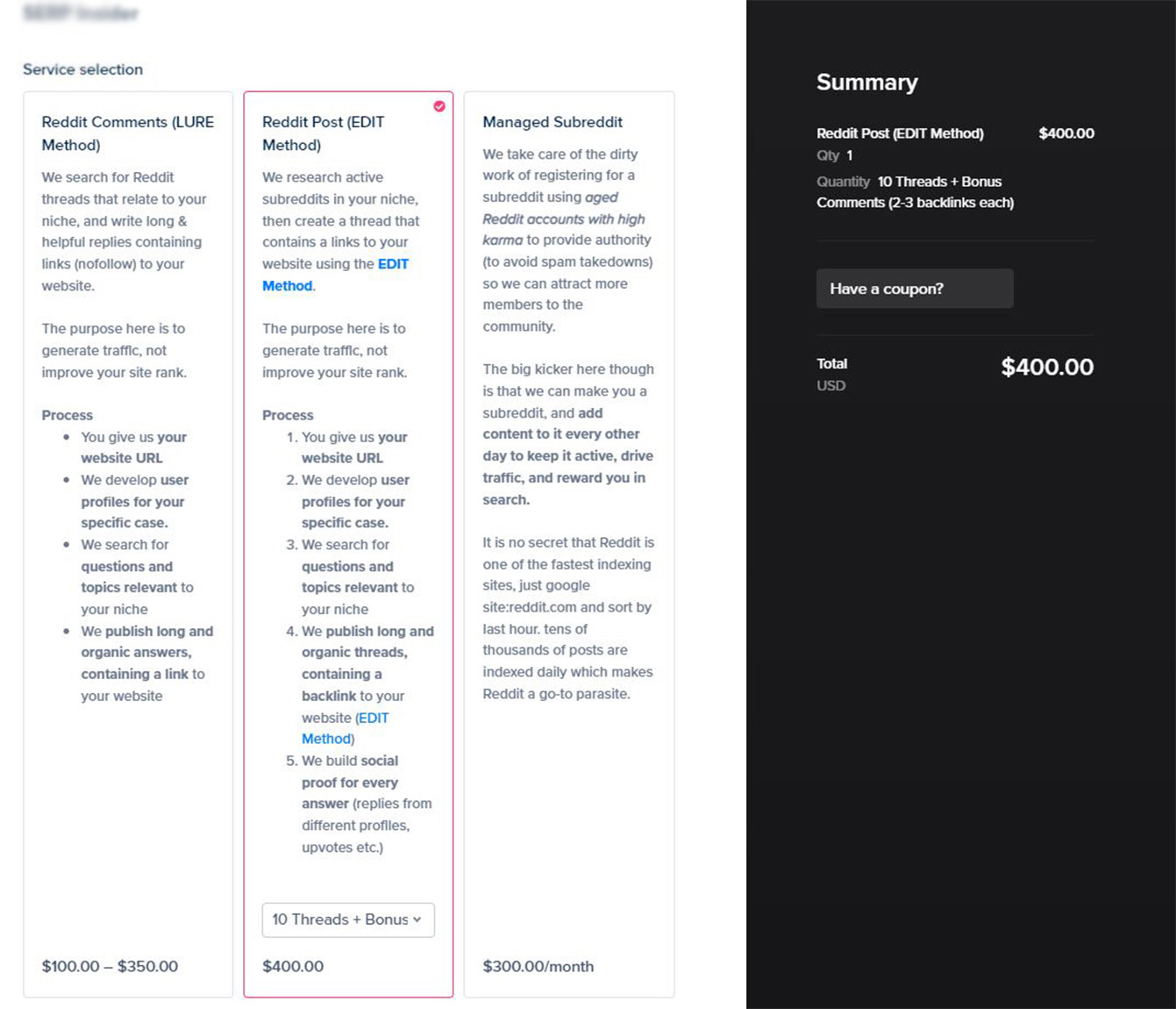
Can Hair Transplant Reviews from Turkey with Photos and Videos Provide Insights and Illusions?
- Before-and-After Photos:
Photos can be a powerful testimony of a clinic’s expertise, especially in a leading medical tourism destination like Istanbul. However, the digital age makes photo manipulation easier, with tools like Photoshop at one’s disposal.
Potential patients must discern genuine results from altered images. To attract patients, some clinics might present ‘ideal’ results that could be digitally enhanced or strategically shot, masking imperfections.
- Recovery Videos:
Such videos provide a real-time look into the recovery phase post-surgery, emphasizing the quality of care in Turkish clinics. Istanbul, with its reputation for medical excellence, boasts many such testimonials. But viewers should approach with a skeptical eye.
Some videos could be edited to exclude complications, pain, or other unfavorable aspects. The omission of these realities can paint an overly rosy picture of recovery.
- Medication Lists:
Listing post-operative medications can assure potential patients of a clinic’s comprehensive care plan. Many esteemed clinics in Istanbul pride themselves on their post-op care. However, there’s a lurking danger of embellishment.
Some lists might be exaggerated to appear more extensive or include unnecessary medications, giving an illusion of superior post-op care.
- Clinic Interior Photos:
These photos can testify to a clinic’s infrastructure and patient care environment. Istanbul, known for its luxurious medical facilities, often stands out. Yet, staging or digital enhancement can misrepresent a clinic’s actual state.
Some photos might amplify the luxury, making spaces look more prominent, cleaner, or more high-tech than they are in reality.
- Live Procedure Recordings:
Such recordings can be a boon for those wanting to familiarize themselves with the surgical process. Turkey’s transparent approach, especially in leading clinics in Istanbul, is commendable.
But, as with all media, selective editing can provide a skewed view, omitting any missteps or challenges faced during the procedure.
- Surgeon Interviews:
Gaining insights directly from professionals can be invaluable in establishing trust. Istanbul, a hub for many renowned surgeons, frequently features such interviews. However, credibility checks are essential.
Some interviews might be scripted or portray surgeons in an overly favorable light without showcasing their genuine expertise or experience.
- Hair Growth Timelines:
Timelines showcasing hair growth post-transplant can prove a procedure’s success. While many clinics in Turkey, especially in Istanbul, produce genuine results, manipulation in such media is possible.
Selective showcasing, where only successful cases are highlighted, or time-lapse manipulations can create misleading perceptions of effectiveness.
- Scar Photos:
Transparency about scarring is essential for setting realistic expectations. Istanbul’s top surgeons often pride themselves on minimal scarring techniques. Yet, digital touch-ups can reduce the appearance of scars in photos.
Such alterations can set unrealistic expectations for potential patients, leading to dissatisfaction when accurate results vary.
- Travel Vlogs:
Medical tourism in Turkey and the historical allure of Istanbul is a captivating combination. Travel vlogs can provide a holistic view of this experience. However, potential patients should be aware of content sponsorship.
Some vloggers might receive incentives to portray only the positives, sidelining any challenges or negative experiences.
- Surgical Equipment Showcase:
Showcasing the latest technological equipment can reinforce a clinic’s commitment to advanced medical procedures. Istanbul, with its reputation for modern medical facilities, often excels here. But discernment is crucial.
Some showcased equipment might be more for display or promotional intent than practical surgery. Potential patients should ensure that the showcased technology aligns with the offered procedures.
Conclusion
- While numerous reviews about hair transplants exist, it’s essential to approach them cautiously. Some of these reviews may be untrue, potentially being swayed by bias or fraudulent intentions. Despite this, many provide genuine feedback from individuals who have undergone the procedure.
- Since hair transplant outcomes differ for each individual, relying on a single review isn’t recommended. It’s crucial to go through various testimonials to get a comprehensive understanding.
- Before deciding, always request to see before-and-after photos of patients who’ve had hair transplants. This visual evidence provides a clearer picture of the potential results.
- Being well-informed about the possible risks of hair transplant procedures is essential. This knowledge ensures that you are making an informed choice.
- Remember that quality comes at a price. For a high-standard hair transplant, anticipate investing a reasonable amount. This is a critical step towards ensuring the best possible outcome.
- Undergoing a hair transplant isn’t a decision to be taken lightly. It’s not a straightforward or swift procedure. For many facing hair loss, this surgery can be transformative. However, before moving forward, understanding and being at ease with the associated risks is vital.
- While hair transplant reviews offer valuable insights, they shouldn’t be the sole determinant in your decision-making journey. Your future hair appearance and overall satisfaction depend on your current choices. Hence, devote the necessary time and effort to thorough research to ensure the best possible outcome for yourself.
For further clarity, let’s address some frequently asked questions about hair transplant clinics in Turkey to equip you with all the necessary information before making this significant decision.”

Frequently Asked Questions
How To Find Out A Reputable Hair Transplant Clinic in Turkey?
- In the world of life-changing decisions, choosing to undergo a hair transplant in Turkey is a significant leap that should be made with utmost care and information. When selecting a clinic and surgeon, reading and analyzing patient reviews should not be overlooked. Unfortunately, many people underestimate the value of genuine feedback and later regret their choice of a clinic.
- It is critical to select a qualified hair transplant surgeon who has an ethical viewpoint and can give consistent outcomes when choosing one. A good clinic will only allow its surgeons to work on one patient a day to minimize the risk of complications. They will also have a professional and experienced team who can support the surgeon throughout the procedure. Furthermore, a good clinic will take an ethical approach to hair transplants, only using donor hair from a safe donor zone.
Why Are Some Hair Transplant Reviews So Negative?
- Negative reviews may be received because the patient was dissatisfied with the consequences of their operation. Others may be negative due to a poor clinic experience, such as being overcharged or not receiving the expected care.
- Some negative reviews can also be phony, meaning they were authored by someone who isn’t connected with the clinic. It’s critical to read reviews skeptically and contact the clinic for any queries.
How Many Hair Transplant Reviews Are Enough For A Hair Transplant Clinic in Turkey?
- The quality of the reviews is more significant than the quantity. A clinic may have a lot of five-star evaluations. Still, if they’re all from the same person or sources that cannot be verified, they won’t be as valuable as ten five-star evaluations from reputable sources.
- So, when reading reviews, pay attention to who is writing them. Do they come from verified patients? Do they have experience with the procedure? Are they recommending the clinic based on personal experience or just repeating what they’ve read elsewhere? These are the things that will help you determine.
Do Hair Transplant Patient Reviews Affect The Price of Turkish Hair Clinics?
- Many factors could influence the cost, such as the clinic’s location in Turkey, the surgeon’s experience, and the type of procedure being performed. However, it’s fair to say that a good reputation can benefit clinics, which may be reflected in the price they charge for their services.
Now that we’ve addressed these crucial questions, let’s introduce you to a clinic that stands out in the industry, exemplifying the standards and ethics we’ve discussed.
Get In Touch With Diamond Hair Clinic!
- Choosing a reputable clinic is paramount, as we have seen through the intricate world of patient reviews. Don’t leave your hair transplant result to chance; choose a clinic like Diamond Hair Clinic, where patient satisfaction is a top priority.
- Diamond Hair Clinic is one of the best hair transplant clinics in Istanbul, Turkey, headed by Dr. Mehmet Demircioglu. Dr. Demircioglu is an experienced and qualified surgeon who has performed thousands of successful Hair Transplant surgeries. Dr. Demircioglu is also a World Fue Institute (WFI) member.
- Contact us today to schedule your free consultation with Diamond Hair Clinic.