


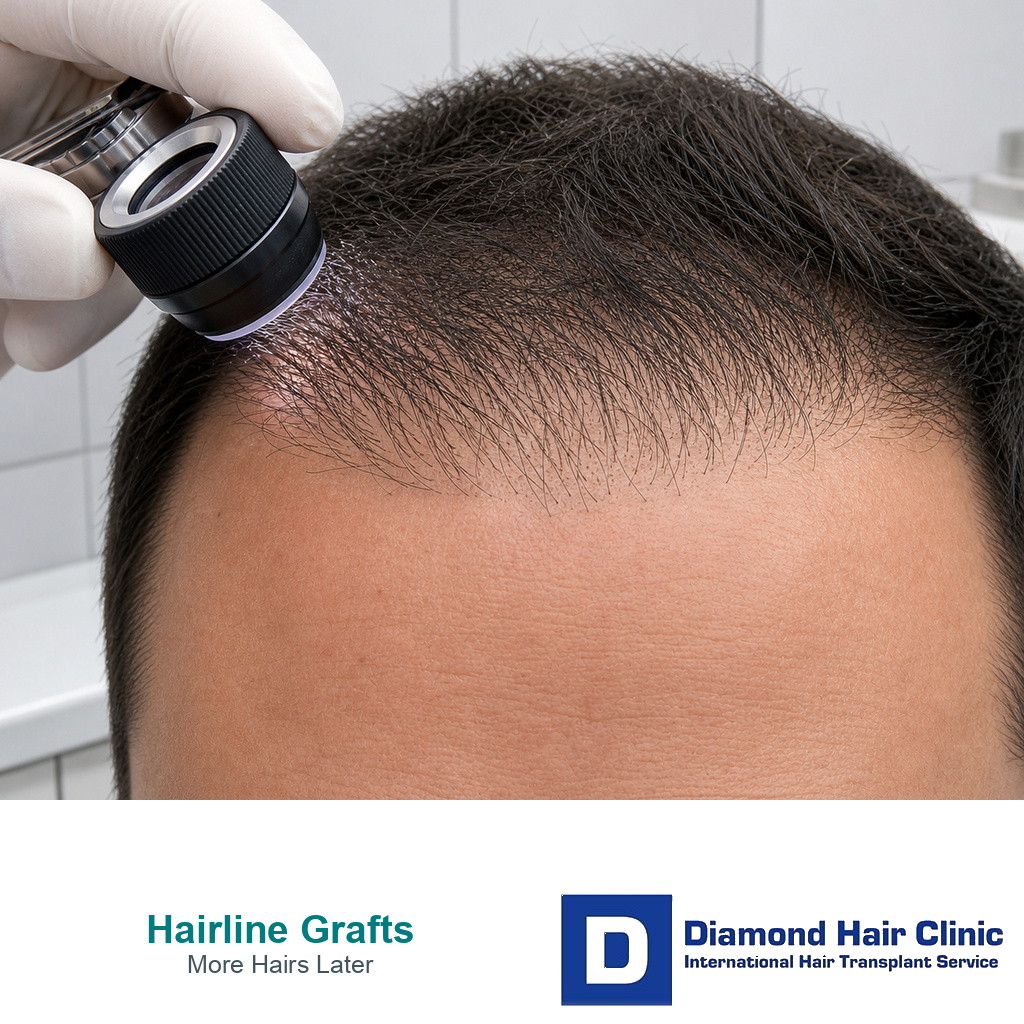
Hairline Grafts Can Show More Than One Hair Later
A single hairline graft can look different later when another hair in the same follicular unit starts growing. That does not mean new follicles were created, and by itself it does not mean the hairline was botched. A graft is usually a follicular unit. One hair in that unit may grow early while another is still resting, shed, broken, or too short to notice.
The clinical question is not only how many hairs appear from one opening. The concern depends on position, hair caliber, angle, repetition, and the month of recovery.
A macro photo can make one thicker point look more dramatic than it is. I separate two situations. One isolated follicular unit that later shows another hair usually needs steady photos, normal distance comparison, and time. A repeated line of coarse units on the first edge is different, especially if the hairs stand upright or look heavy in ordinary light. That is when repair planning may become part of the review after the result is mature enough to judge.
Keep normal distance photos with the close photo. A single thick point that dominates a macro image may barely show in conversation, while a repeated front row pattern deserves a different review.
If you are tracking one unit, photograph the same spot with the hair relaxed and not pulled tight. Hair held back by fingers can make a normal transition area look harsher than it does when it falls naturally.
One graft does not always mean one hair
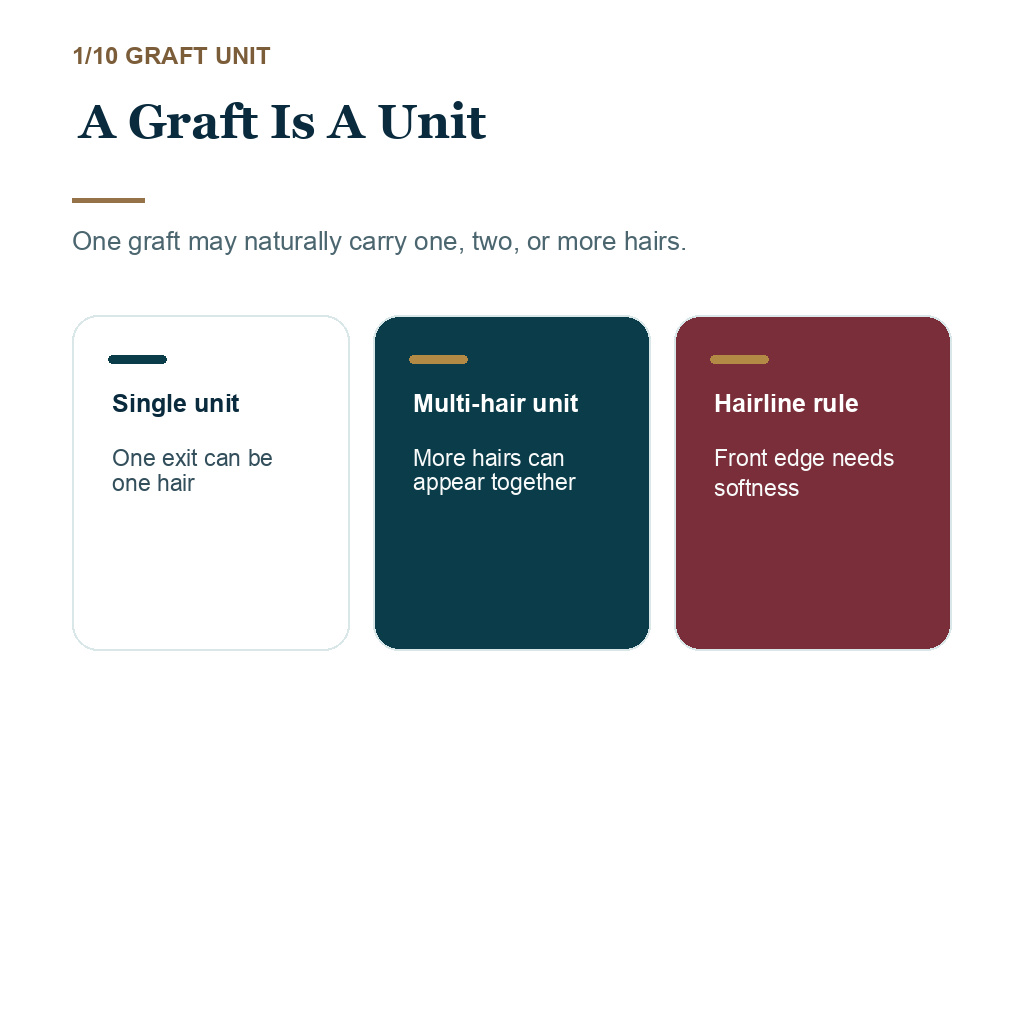
The word graft creates confusion because it is easy to hear it as one hair. In modern FUE and FUT planning, a graft usually means a follicular unit. A follicular unit can naturally contain one, two, three, and sometimes four terminal hairs. A graft count verification therefore cannot be read as a direct calculation where one graft always means one hair.
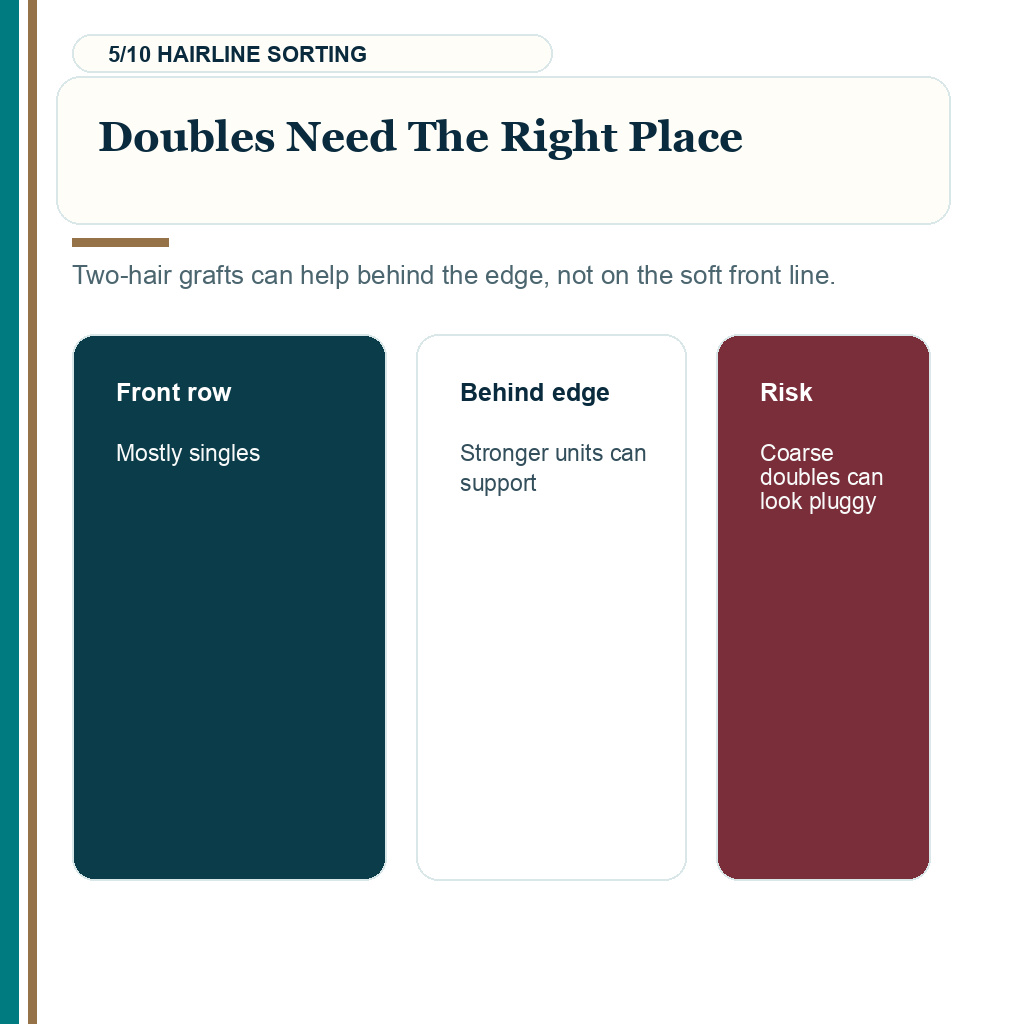
For the softest visible edge of the hairline, I usually place true single hair units at the leading border whenever possible. Behind that first transition zone, carefully placed units with two hairs can help density. Deeper in the mid scalp or crown, larger units may be useful because the eye reads them as fullness rather than a harsh front edge.
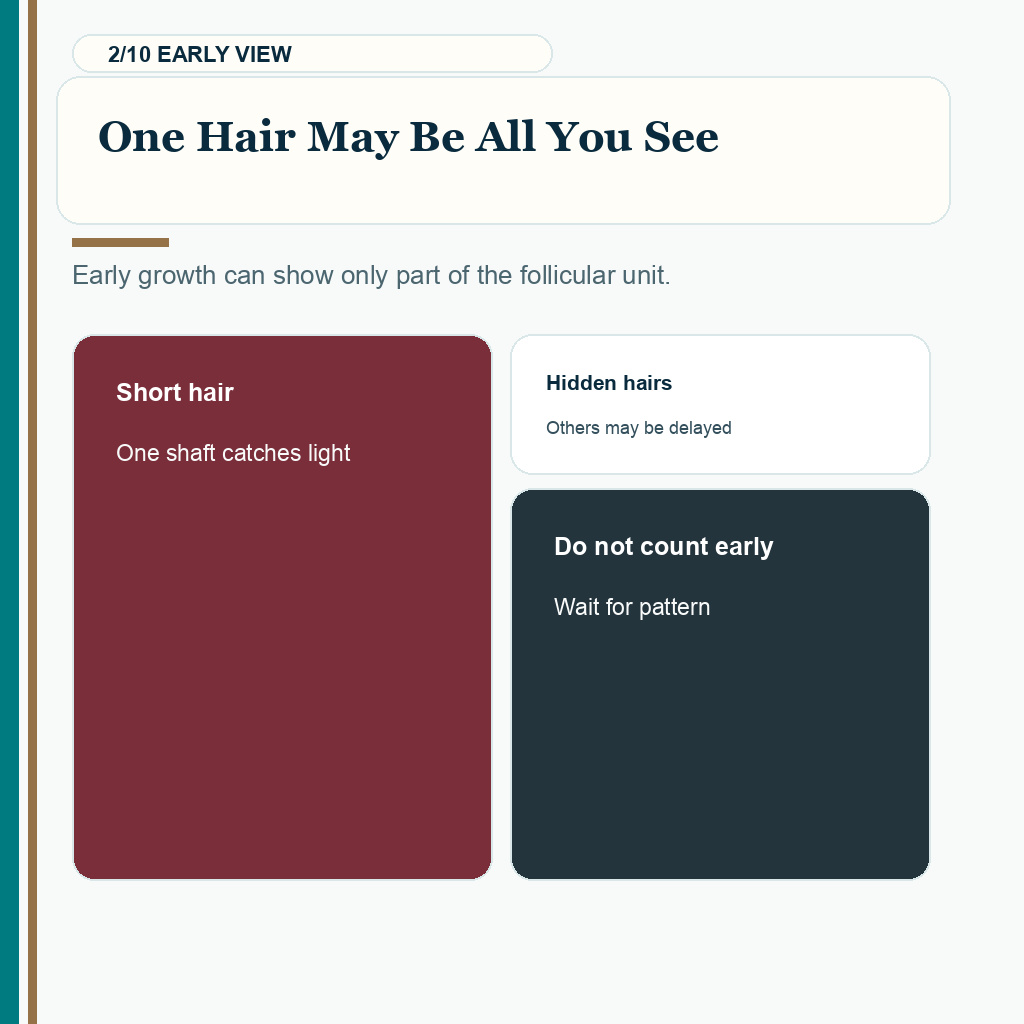
The mistake is thinking that an early visible stump always tells the full long term story of that graft. One hair may be visible while another hair within the same follicular unit is resting, shed, short, broken, or not yet visible above the skin. After shedding and regrowth, the same placed unit can look different.
This does not give any surgeon a free excuse for a poor hairline. It means the review must be precise. One double that becomes visible later is not the same problem as a line of coarse units with two or three hairs placed exactly at the front border.
A hairline graft can look single early and thicker later
Each hair has its own growth cycle. The cycle includes an active growing phase, a transition phase, a resting phase, and shedding. After transplant surgery, many transplanted hairs shed before they grow again. Some hairs stay longer. Some regrow earlier. Some become visible only months later.
Early photos can mislead because they show only one moment in the graft cycle. In the first days, you may see a short shaft or a scab around one visible hair. At month three or four, the area may look sparse. At month six, one hair may be growing from an opening that later shows another fine hair beside it. That second hair did not need to be invented by the graft. It may have been part of the follicular unit but not visible at the moment you judged it.
The same growth cycle timing can also make a graft seem to change from a double to a single. If only one hair from a unit with two hairs grows strongly at first, the unit may look like a single. If another hair enters growth later, the visible count changes again. If one hair does not survive or remains miniaturized, the unit may continue to look lighter.
I use this explanation to avoid one wrong conclusion, not to dismiss a real complaint. An early one hair appearance after FUE does not prove that only one hair will ever appear there.

The same follicular unit can look different as each hair enters growth at a different time.
The front row still needs softness
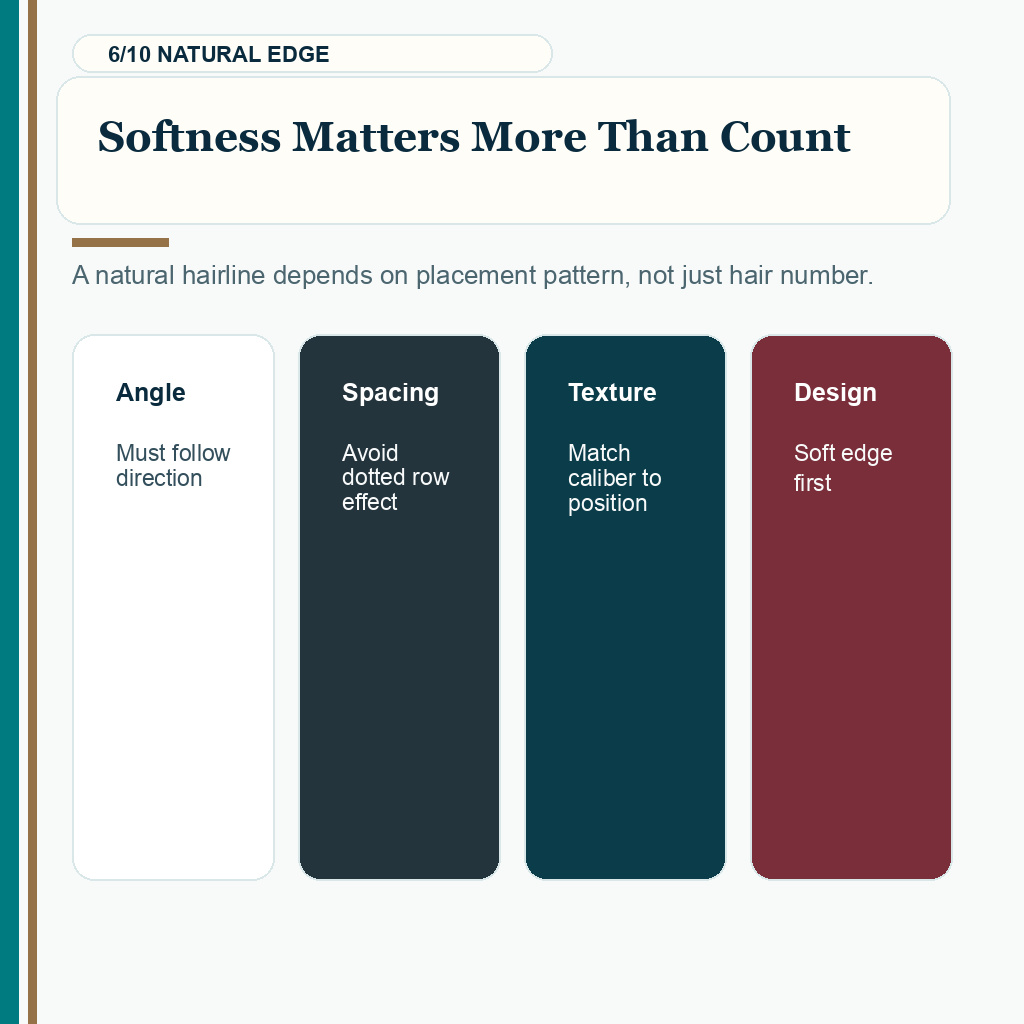
A natural hairline is a transition, not a wall. The first visible hairs should be soft, irregular, and matched to your hair caliber. A proper hairline design in a hair transplant is therefore not only a drawn shape. It is graft selection, spacing, angle, direction, density, and long term donor management working together.
If a thick unit with two hairs appears 8 or 10 millimeters behind the very first edge, it may not attract attention. If the same unit sits on the exact leading border, especially with coarse dark hair and light skin, it can look too strong. Hair caliber and contrast matter as much as count.
The edge also needs irregularity. A row of perfect single hairs can still look artificial if every graft sits in a straight line with the same direction and spacing. I separate graft rows after FUE from concern about grafts with multiple hairs because these are different visual problems. A hairline can look unnatural because of the count inside the grafts, the pattern of placement, the angle, or all of these together.
So yes, single hair grafts matter. But the hairline is not saved by the word single alone. The whole front zone plan has to look grown, not arranged.
Later doubles can be less concerning
A double that becomes visible later is usually less concerning when it sits behind the exact first edge, appears only in one or a few spots, follows the surrounding angle, and is not noticeable in normal conversation. I also look at the month. A concern at month four or month six is not judged the same way as a mature result.
Before month six, I mainly want steady documentation rather than a verdict. At month six, transplanted hair can still be short, wiry, uneven, and visually exaggerated in photos. A six month density check can keep the timing realistic, especially when one harsh close view is being compared with clinic photos taken in ideal lighting.
From month eight to twelve, the pattern matters more, but some hairlines still continue to soften. If the concern is mainly texture or immature shaft behavior, a month eight hairline check should document the change instead of rushing into removal.
I become more confident after a one year FUE result review, because the hair has had enough time to grow, cycle, gain length, and show whether the pattern is truly fixed.
Repeated coarse units are still a placement problem
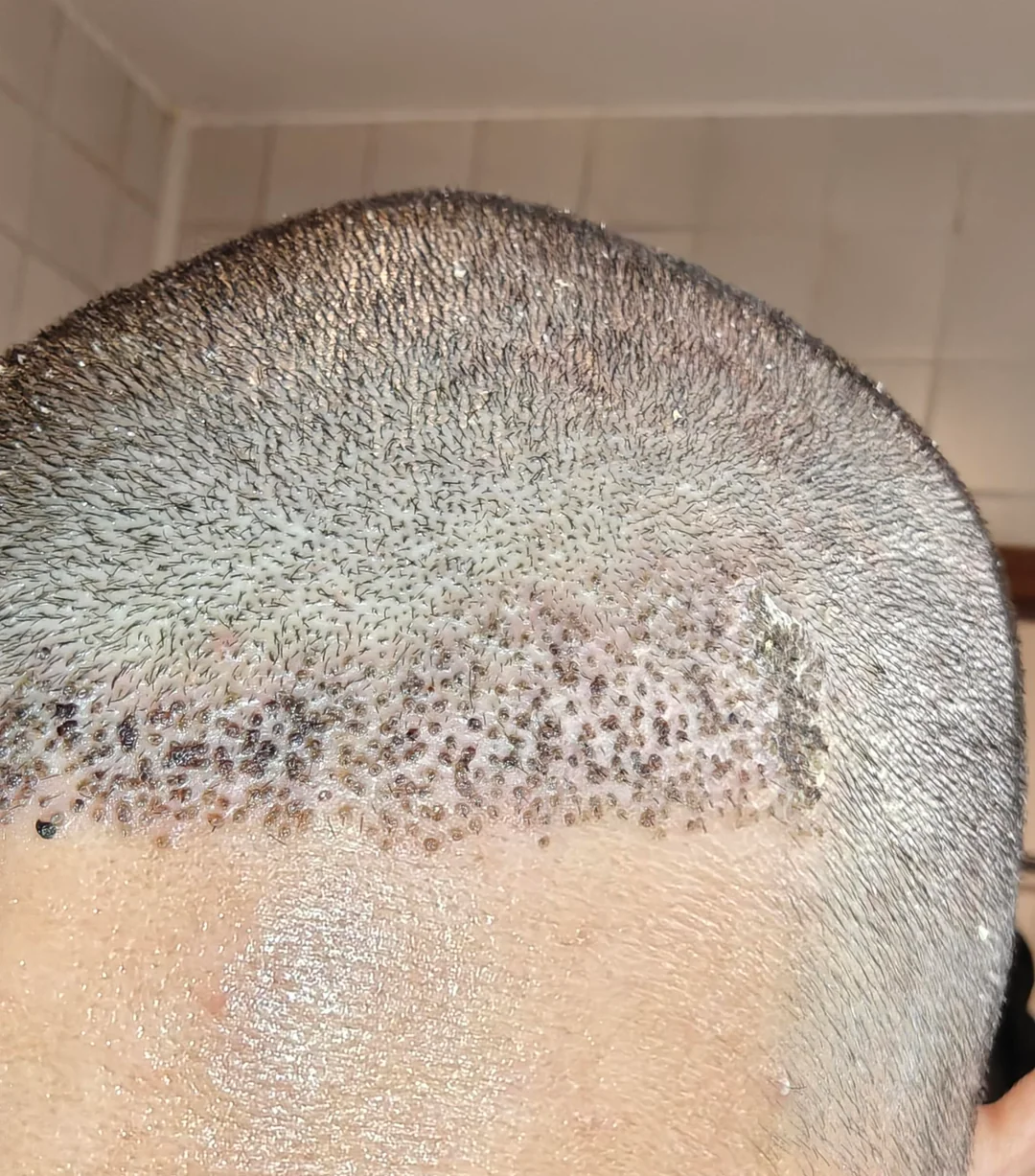
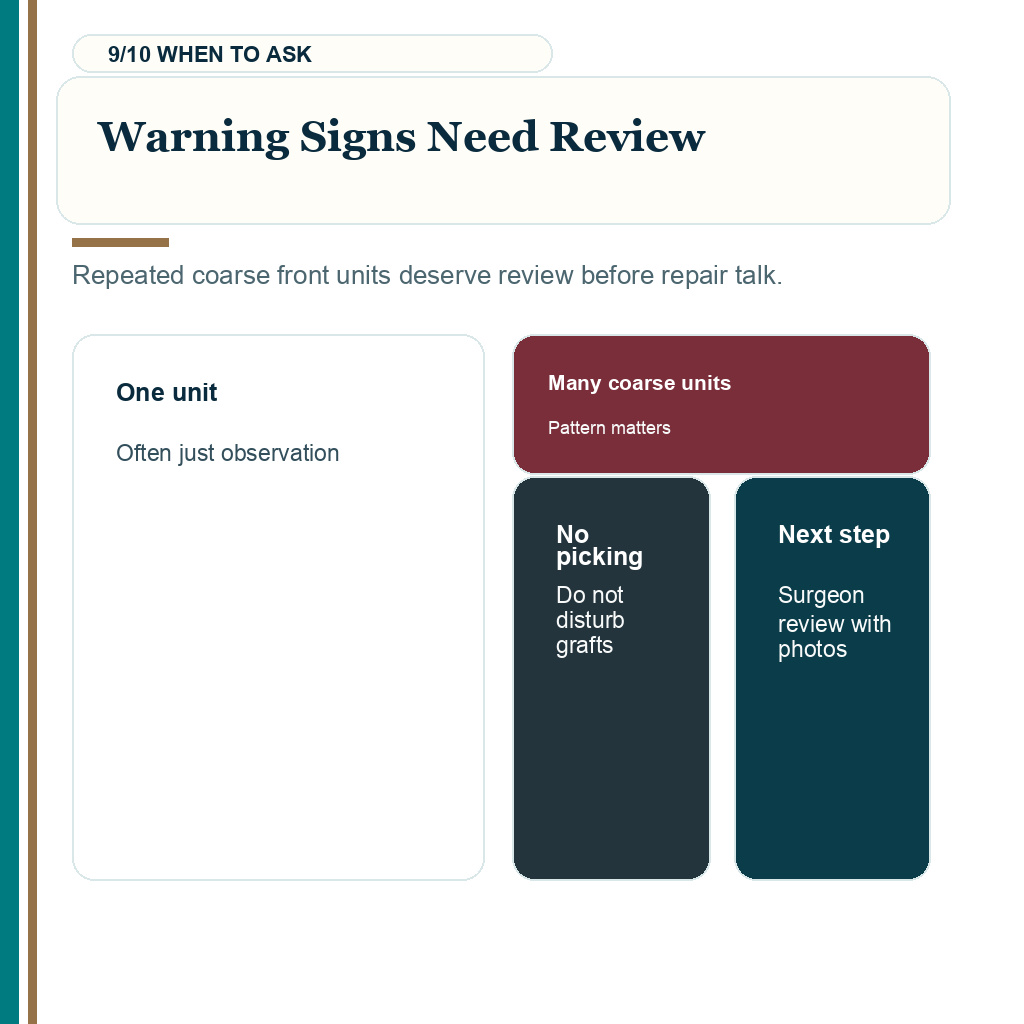
The concern becomes stronger when many coarse units with multiple hairs sit directly on the leading border, form a visible line, point too upright, or look thick and spiky in ordinary light. If the same area also has pitting, raised skin, or a dotted edge, hair count may not be the only issue. A few hidden hairs becoming visible later does not create that whole pattern by itself.
Hair type changes the threshold. Coarse hair, strong contrast between hair and skin, short hairstyles, wet styling, and straight forward growth can make the front edge less forgiving. With finer hair and lower contrast, a small number of doubles may be much less visible.
There are also cases where graft sorting was simply poor. If a clinic did not separate singles carefully, if the team placed stronger units on the border to make the result look dense, or if the hairline was built too straight and too low, the result can look pluggy. I review that pattern with the possibility of grafts with multiple hairs in the hairline and the timing of any repair.
Hair cycling can explain one changing site. It does not explain a repeated coarse edge.
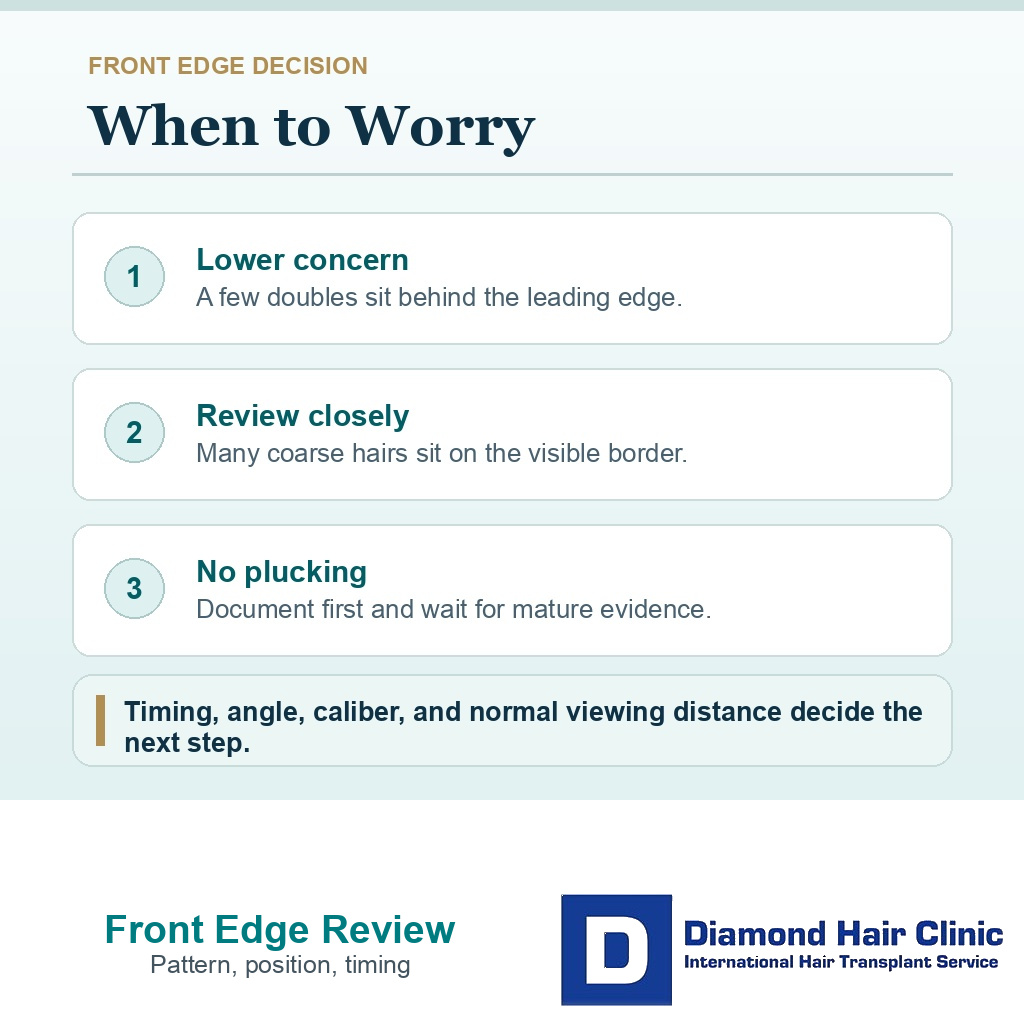
One double that becomes visible later is judged differently from a repeated coarse pattern on the leading edge.
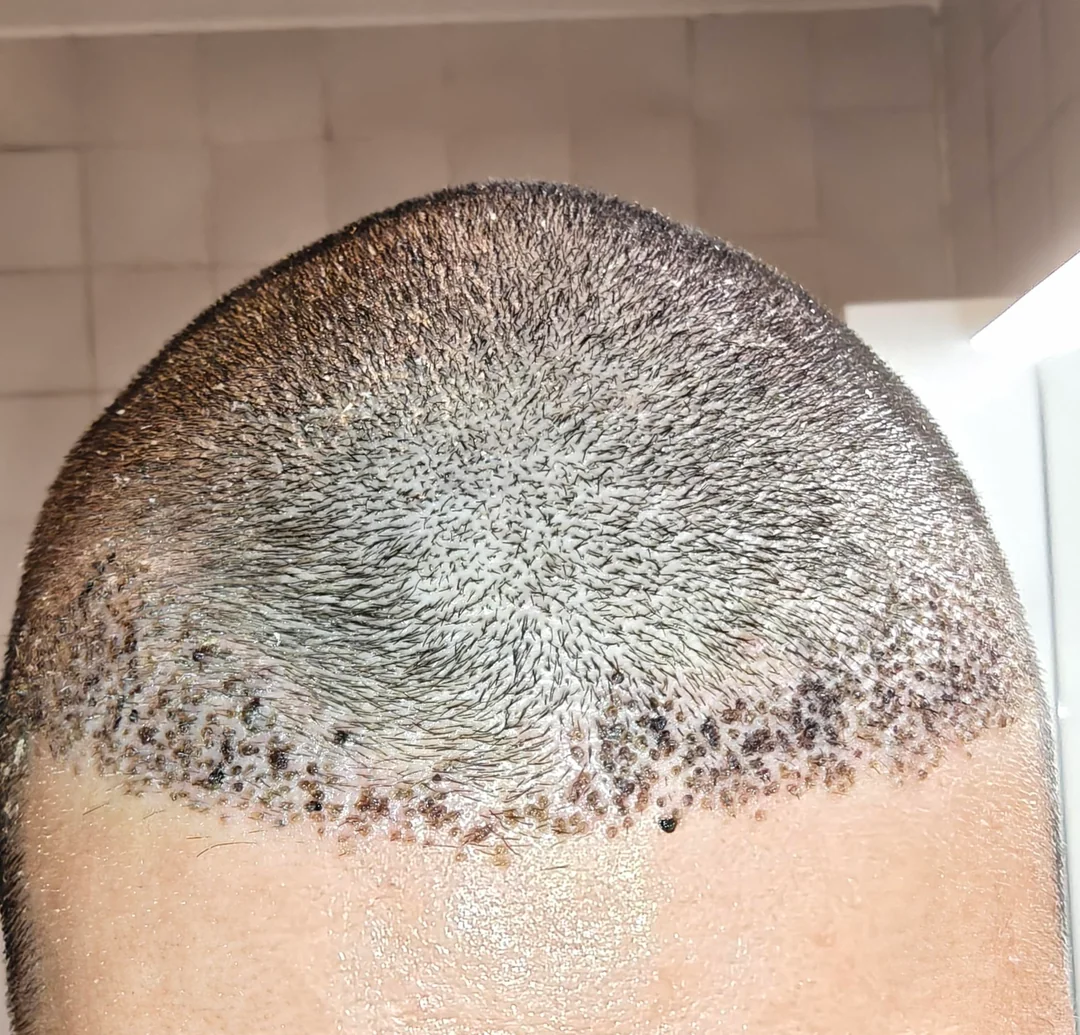
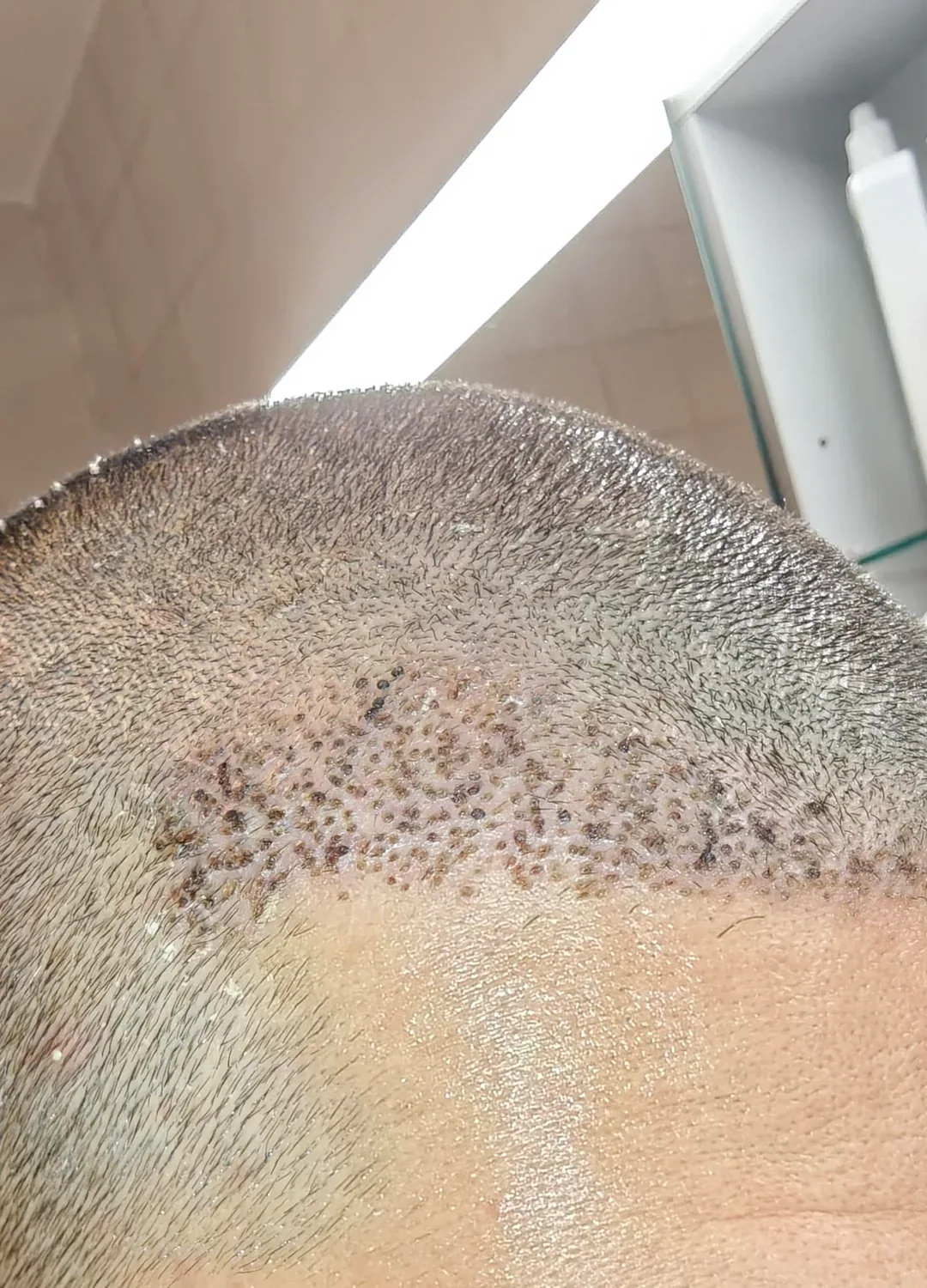
Plucking the graft yourself can make review harder
When you see one thick point in the hairline, the first impulse may be to pluck it. I understand the temptation, but plucking is not a diagnosis. It removes the visible shaft for a while. It does not safely redesign the hairline, and it can make the later review less clear because the clinical picture keeps changing.
Repeated plucking can also irritate the skin and may damage hairs unpredictably. Laser, electrolysis, and surgical removal are not casual experiments for an anxious week. A visible shaft is not the same as a repair diagnosis. If a graft really needs to be reduced or removed, the decision should be part of a controlled repair plan after the result is mature enough to judge.
Start by documenting the concern first. Take one normal conversation distance photo, one clear close photo, and a wet hair photo if wet styling reveals the problem. Use the same light and angle, and note the month after surgery. Do not rely only on a macro image taken two centimeters from the scalp. If repair becomes necessary, removing transplanted hair has to be planned around scars, density, remaining donor supply, and whether the graft should be removed, thinned, camouflaged, or left alone.
Reviewing a hairline before calling it botched
I start with timing. The same photo can mean different things at day ten, month four, month eight, and month twelve. Then I look at the location of the thicker units. Are they exactly on the first edge, or are they behind the transition zone? Are there two of them or dozens? Are they isolated, or do they form a mechanical row?
Next I look at angle and direction. A unit with two hairs placed flat and naturally behind the border may blend. A unit with two hairs pointing upward from the first row can catch the eye immediately. I also look at skin texture. If there is raised skin, pitting, cobblestoning, or visible bumps, the issue may overlap with raised hairline texture after transplant surgery, not only hair count.
I also compare the hairline with your face, age, temple pattern, and future hair loss risk. A low, flat, dense line can look artificial even if the graft sorting was acceptable. A conservative, age appropriate design can tolerate small imperfections more naturally. A transplanted hairline that is too low is therefore a separate problem from a few doubles that become visible later.
Finally, I ask whether the concern is visible in real life. A hairline that looks slightly imperfect under magnification but natural in conversation is not the same as a hairline that looks artificial every time you enter normal light.
Graft sorting questions before surgery
Before surgery, a graft number is not enough. The hairline construction should explain where true single hair grafts start, where units with two or three hairs begin, how coarse donor hair changes the plan, how density transitions behind the first rows, and how the surgeon protects the donor area.

Planning at the front edge should show where single hair units, larger units, density, and donor protection fit before surgery.
With coarse donor hair, the plan may need more softness at the edge. Carefully selected nape hair for hairline transplants can help in selected cases, but only when that donor zone is stable enough. Beard or body hair is different again. It can create texture problems at the front, which is why beard or body hair in the hairline must be approached very carefully.
The clinic also has to be clear about the difference between graft count and hair count. A high graft count can sound impressive, but a natural front line depends on the right units in the right place. The density behind the edge can be stronger, but it still has to respect donor limits. That is this point behind planning around 45 grafts per cm2 and other density targets.
If a clinic cannot explain graft sorting, hairline transition, and donor management clearly before surgery, you have less protection when interpreting the result afterward.
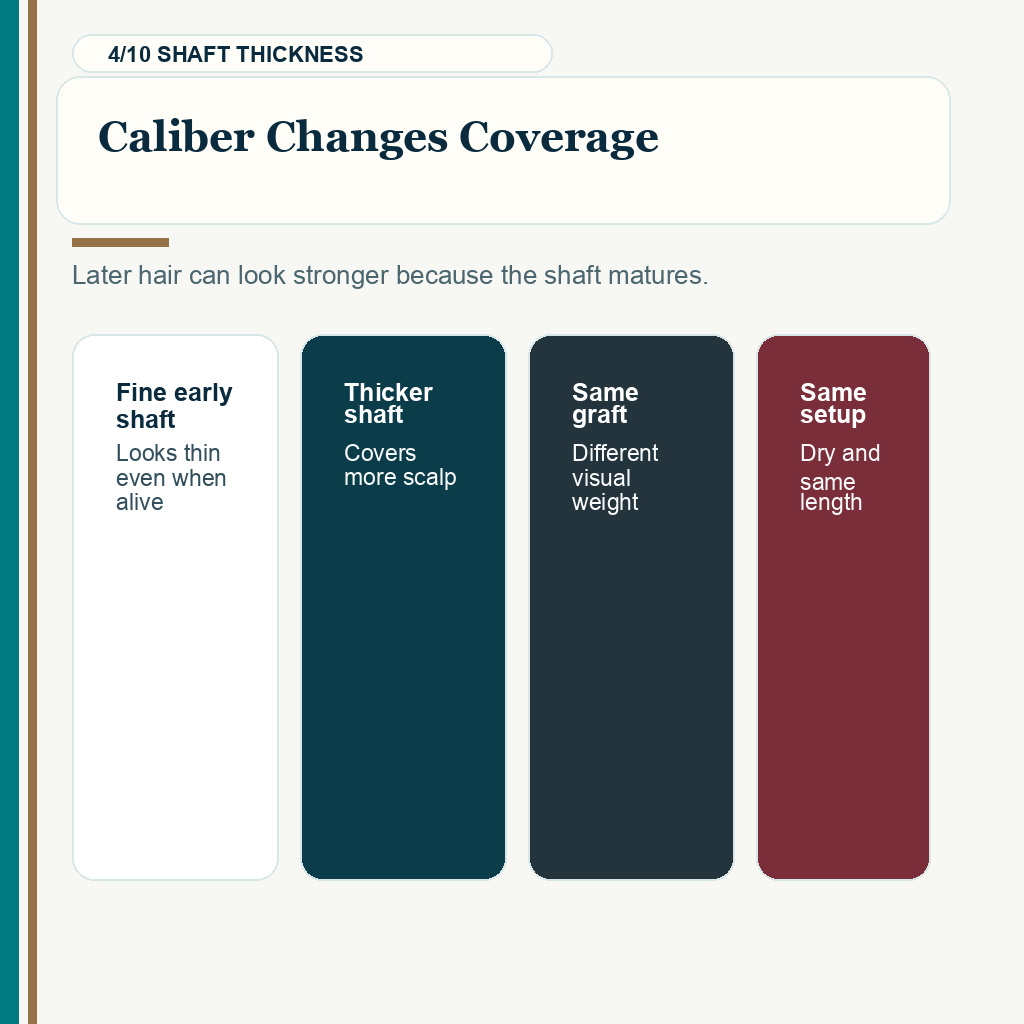
Use the 10 hairline graft slides below to separate graft units, early hair visibility, shedding, shaft caliber, front row softness, photo limits, comb through proof, warning signs, and the timing for surgeon review. Swipe the carousel, use the arrows one step at a time, or choose a number below the image to jump to that point.




Repair timing for a pluggy hairline
If the hairline still looks pluggy after the result has matured, repair may be possible. But repair is not one standard move. Some cases need selected graft removal. Some need softer single hair grafts in front. Some need angle correction, density camouflage, or a staged plan. Some need no surgery after the hairline is reviewed with proper length, styling, and normal viewing distance.
A mature pluggy hairline repair plan starts by naming the defect. Is the problem graft count, hair caliber, direction, spacing, shape, low placement, raised skin, or unrealistic expectation? If the diagnosis is wrong, the repair can make the front edge darker without making it more natural.
I usually avoid irreversible removal decisions before the hair has matured enough to judge, unless the defect is very clear and the case is being reviewed carefully. Even then, the plan has to protect the donor area and the remaining hairline. A small visible problem can become a larger problem if the repair is rushed.
How I read a changing graft over time
My review starts with the pattern, not one alarming close-up. A graft that later shows another hair may reflect normal follicular unit biology and growth cycle timing. It may also reveal that a stronger unit was placed where a softer single would have been better. Both can be true.
If you are early in recovery, document the area and give the hair enough time to declare itself. If you are near one year and the front edge repeatedly looks coarse, spiky, too straight, or visibly pluggy, review it with a surgeon who can separate hair count, placement, direction, skin texture, and repair options.
Do not let one magnified photo decide the whole story, and do not let repeated structural problems be dismissed as normal growth. A natural result depends on biology, graft sorting, placement judgment, timing, and realistic expectations. When those are reviewed together, the answer becomes clearer than what one close photo can show.

Read this review excerpt
We also had a levelled conversation about my hairline and results I could expect based on my donor density area.