


Mobility Limits Need a FUE Surgery Day Plan
If you use a cane, crutches, a walker, a wheelchair, or you know that standing and turning are difficult for you, FUE may still be possible after a practical planning conversation. Share the details before travel so the team can plan arrival, transfer, position, breaks, restroom access, and the return to your hotel. Mobility is part of the surgical plan, not a favor on the day. Written transfer and positioning planning is safer than solving movement issues after the room is busy.
I do not want a patient to arrive embarrassed and then try to prove that he can manage without help. I also do not want the team to discover a transfer problem when the room is already prepared. Say what usually makes movement difficult, even if it feels minor at home, because a long procedure can make small limits matter. A calm FUE day depends on two things at the same time. The patient can move safely when movement is needed, and the patient can stay still when graft work requires stillness.
The first answer is usually planning, not rejection
Limited mobility can mean many different things. One patient walks well but cannot lie face down comfortably. Another can transfer with a walker but becomes dizzy when standing quickly. Another uses a wheelchair for distance but can stand for short moments with support. These are not the same surgical problem, so they should not receive the same answer.
The first question is not whether the patient is strong or determined. The first question is whether the procedure day can be planned without unsafe movement, avoidable pressure, or rushed decisions. If the answer is yes, FUE may still be possible for the right patient. If the answer is unclear, the plan should slow down until the transfer, position, and support route are understood.
This is the same reason I separate the general long FUE day from mobility planning. General comfort advice is useful, but a patient with balance, transfer, hip, back, neck, or stamina limits needs a more specific plan.
Details to send before arrival
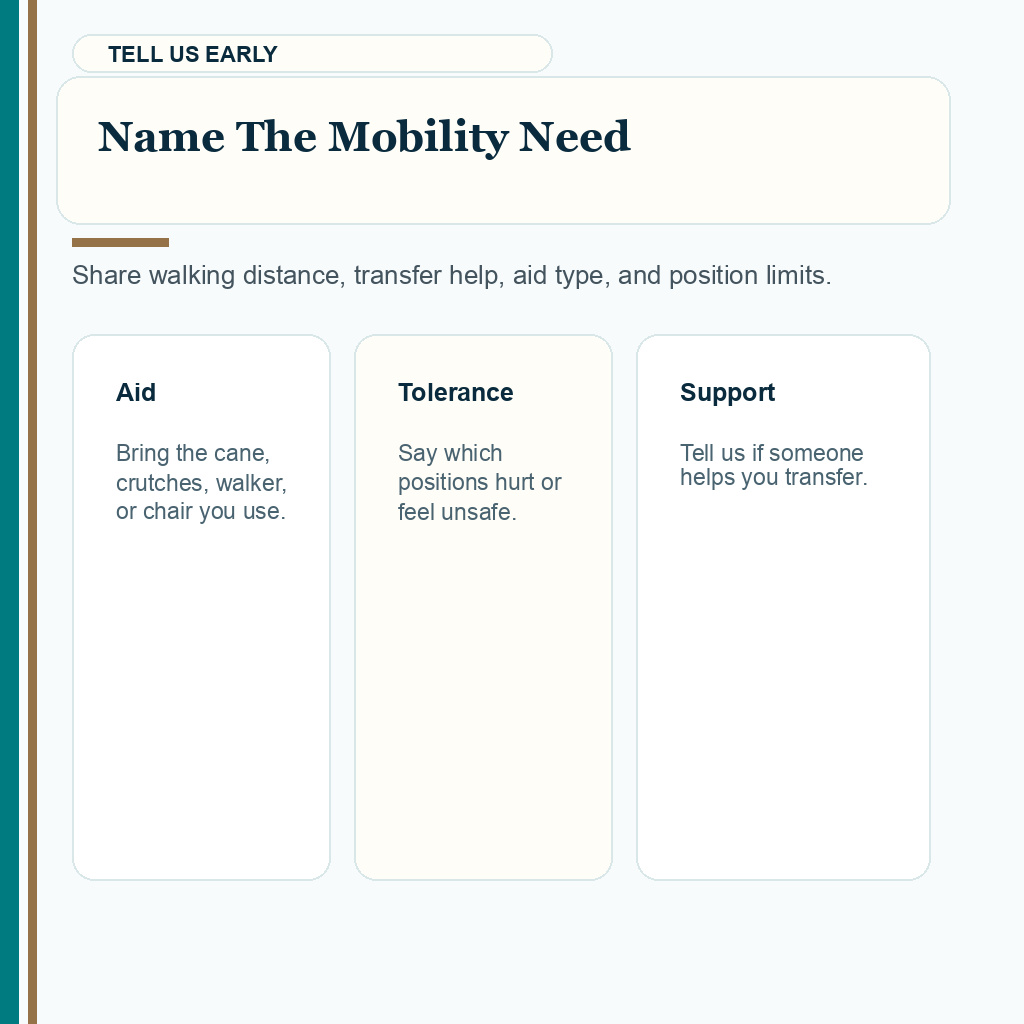
Before travel, send clear information about the mobility aid you use, how far you can walk comfortably, whether stairs are difficult, whether you need help standing from a chair, whether lying face down is painful, and whether you have pressure areas, fragile skin, recent falls, dizziness, or a recent operation that affects movement. If you usually need a companion for transfers, say that early.
Do not describe this vaguely as “I will be fine.” That phrase hides the information the team needs. Say it plainly. I use crutches outdoors, I can walk ten steps inside, I need an armrest to stand, I cannot stay face down for long, or I need time before I stand because I get lightheaded. Those details change room preparation, appointment timing, and the level of support needed.
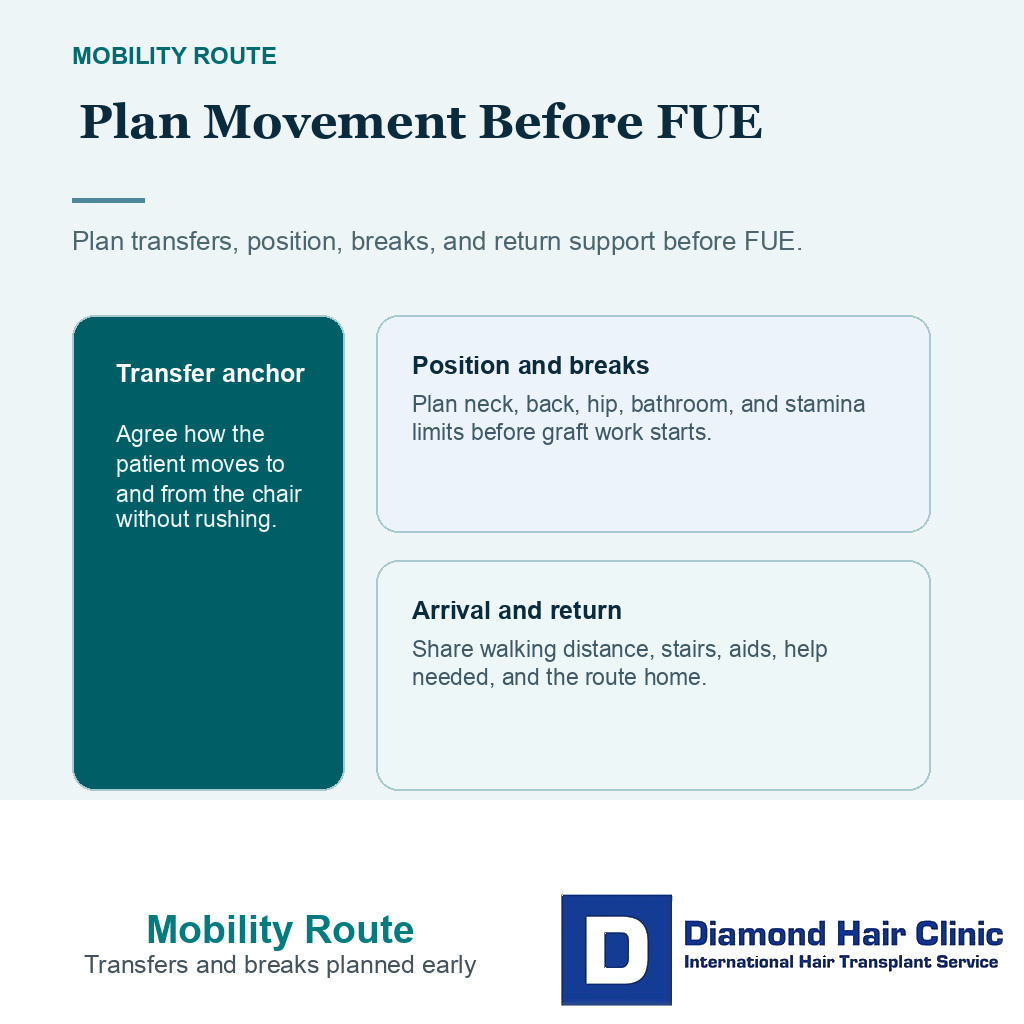
The surgery morning consultation should confirm this plan, not create it from zero. The morning is for final checks, hairline review, donor confirmation, and practical adjustments. Talk about mobility before travel.
Plan transfers instead of improvising them
A transfer is any moment when you move from one surface or position to another. Hotel car to clinic entrance. Waiting chair to procedure chair. Procedure chair to standing. Standing to restroom. Procedure room to transport. If any of those moments are difficult, the team should know before the day starts. Getting back to the hotel belongs in the same plan, because dizziness or fatigue after the procedure can make a familiar route harder. Plan restroom access before the first long sitting period.
I am careful with wording here. A mobility plan does not mean the clinic promises to lift or carry a patient manually. Safe transfer planning means choosing the right route, using stable surfaces, keeping the floor clear, allowing time, and deciding whether a companion, mobility aid, wheelchair, or additional staff coordination is needed. It protects the patient’s dignity and the team’s safety.
It also protects the graft work. Sudden twisting, rushing, or grabbing for support at the wrong moment can create avoidable risk. If you need to move, ask first. Let the team pause the step, secure the area, and guide the next movement.
Position tolerance matters during FUE
FUE can include several positions. Extraction may require the head and neck to stay in one setup for a long time. Some patients spend part of the procedure lying face down during FUE. Others are turned, reclined, or supported differently depending on donor access and recipient placement. If back pain, neck stiffness, hip pain, shoulder limitations, breathing discomfort, or pressure areas become a problem in those positions, the team needs to plan early.
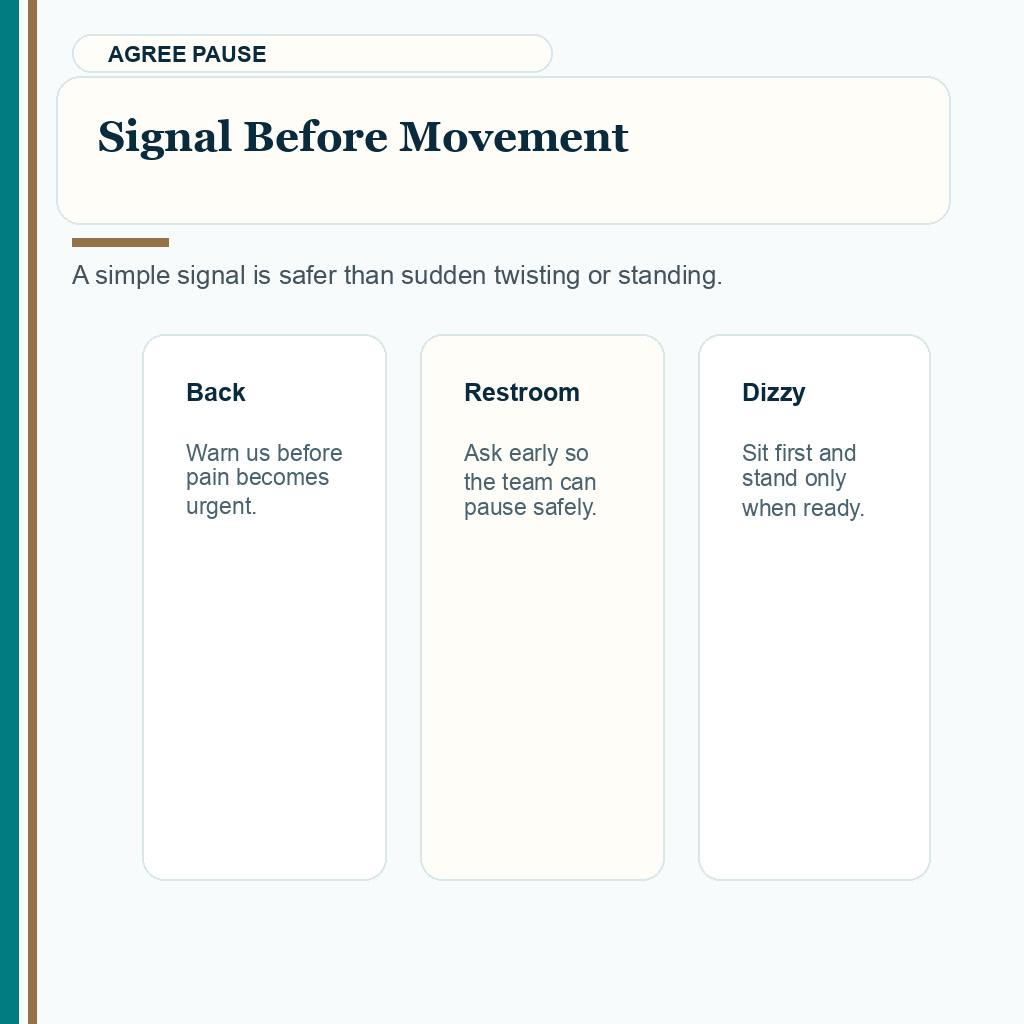
Position tolerance is not about toughness. The real issue is stillness, skin protection, communication, and timing. If a patient waits until discomfort is severe, he may move suddenly. If he warns the team early, the team can pause more safely, adjust support, or divide the work differently when medically appropriate.
For patients who already know they struggle with long still periods, tell me before the procedure. Sometimes the answer is extra padding, a clearer pause signal, a shorter session, staged work, different timing, or a decision to postpone until another medical issue is stable.
Use the mobility route planner
The movement plan changes across the FUE day. Arrival is not the same as chair transfer. Chair transfer is not the same as staying still during extraction. A restroom break is not the same as going back to the hotel. Use the planner below as a simple way to think about which phase needs the most attention.
Mobility route planner
Match support to the phase of the FUE day
- 1Arrival
- 2Transfer
- 3Position
- 4Breaks
- 5Return
Arrive without rushing
Tell us whether you need a wheelchair route, elevator route, closer entrance point, or extra time before standing.
Plan cue The first safe movement is the one planned before the patient reaches the room.
Move surface to surface
Plan how you move from waiting chair to procedure chair and back again. Brakes, armrests, shoes, and helper roles matter.
Plan cue Do not improvise lifting or quick standing when the surgical room is already active.
Set the body support
Back, neck, hip, shoulder, breathing, and skin pressure limits should be known before extraction or implantation position begins.
Plan cue Stillness is easier when discomfort is expected early, not discovered late.
Pause before urgency
Water, stiffness, restroom pressure, dizziness, or leg cramps should be signaled before the need becomes sudden.
Plan cue Planned pauses protect the graft work better than emergency movement.
Leave with support
After the procedure, plan transport, hotel entry, food, stairs, luggage, and who helps if you are tired.
Plan cue The mobility plan should continue until the patient is safely settled.
The point is not to make the patient feel fragile. The point is to remove guessing. When the phase is named, the next action becomes clearer. Arrive with the right route. Transfer with time. Position with support. Break before urgency. Return without rushing.
Bathroom breaks and long sessions need a signal
Mobility planning is most useful when it prevents urgent movement. A patient who waits until he must stand immediately is harder to help safely. If you think you will need the restroom during the procedure, say it early. Planned breaks are easier to manage, as I explain in bathroom breaks during FUE, because sudden movement is harder to manage.
That rule applies to water, coughing, stiffness, leg cramps, back pain, or dizziness. Do not twist, push yourself up, or reach for a bag while graft work is active. Use the agreed signal and wait for the team to pause. A simple hand raise or spoken phrase is often enough, but it should be agreed before the long work starts.
Hair transplant consent also matters here. If the patient does not understand how movement will be handled, the plan is incomplete. Consent should include the practical day, not only the graft number and hairline.
Preparation before the procedure
For what to bring on FUE surgery day, keep mobility support simple and clinic approved. Bring the aid you actually use, comfortable shoes with stable soles, any brace you normally need, a short medication list, and notes about recent falls, dizziness, pressure sores, surgeries, or pain positions. Do not bring extra equipment into the procedure room without asking.
If you use a wheelchair, check whether the chair dimensions, detachable armrests, footrests, brakes, and transfer method matter. If you use crutches or a walker, let us know whether you can stand safely without them for short moments. If a companion helps with transfers, explain that before the appointment. A companion should support calm movement, not perform medical decisions.
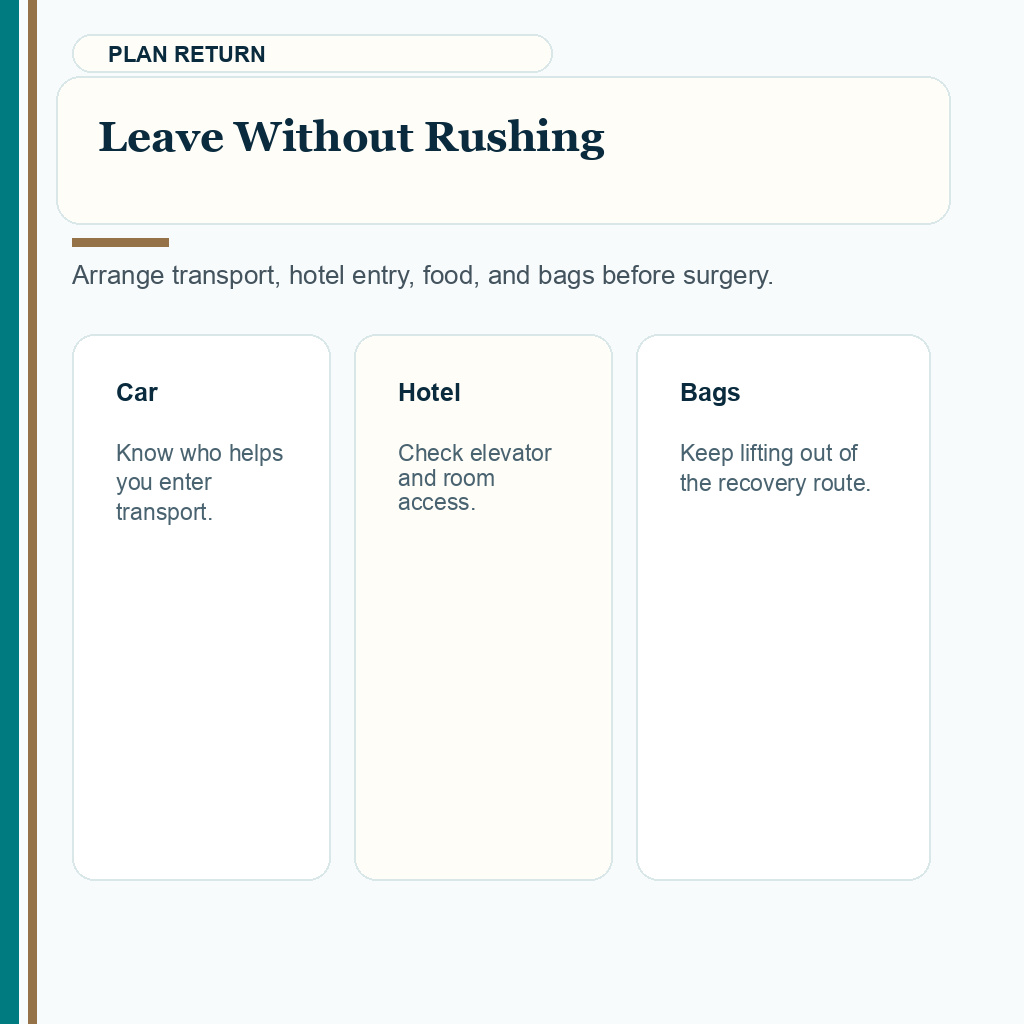
Use these four slides before travel if mobility may affect your FUE day.

The return route also counts
The procedure does not end when graft placement finishes. The patient still needs to stand, leave the room, reach transport, arrive at the hotel, eat, rest, and protect the scalp. If mobility was difficult before the procedure, it may feel harder after a long day. Plan the route back to the hotel before you arrive.
This connects with traveling alone to Turkey. Some healthy adults can travel alone, but limited mobility reduces the margin for error. If you need help with transfers, bags, doors, elevators, or food, arrange that before surgery. For the airport side, keep the separate airport assistance after FUE plan in mind, but do not confuse airport help with procedure day transfer planning.
Bag handling matters too. A patient who needs a walker should not be balancing a heavy bag after surgery. A patient who uses crutches should not be testing heavy lifting after a hair transplant because nobody planned the luggage route.
Reasons to slow the plan down
I would slow the plan down if the patient cannot transfer safely, cannot tolerate the planned position, has active pressure sores or fragile skin in contact areas, has uncontrolled breathing or heart symptoms, has recent falls or dizziness that have not been reviewed, cannot communicate discomfort clearly, or expects the team to solve major mobility needs only on arrival.
Slowing down does not always mean cancelling. It may mean collecting medical information, speaking with the patient’s doctor, arranging stronger support, shortening the session, staging the plan, changing timing, or postponing until the patient is safer. Sedation during a hair transplant should never be used as a shortcut around an unsafe mobility plan.
Good surgery is not only the number of grafts. It is whether the day is planned in a way the patient can actually complete safely.
The goal is calm movement
By the end of planning, the movement route should be clear enough that nobody has to guess. The team knows how you enter, how you transfer, what positions you can hold, which signal means pause, and who helps you get settled back at the hotel.
The safer day is the predictable day. Move only after the team has paused the work, speak before discomfort becomes urgent, and let real symptoms decide whether the session should be adjusted. That protects the patient’s dignity, the surgical rhythm, and the grafts.

Read this review excerpt
It was a very long day which you have to prepare yourself for which is probably why I found it challenging. I was constantly being asked if I was alright and could request toilet breaks (thank goodness).