


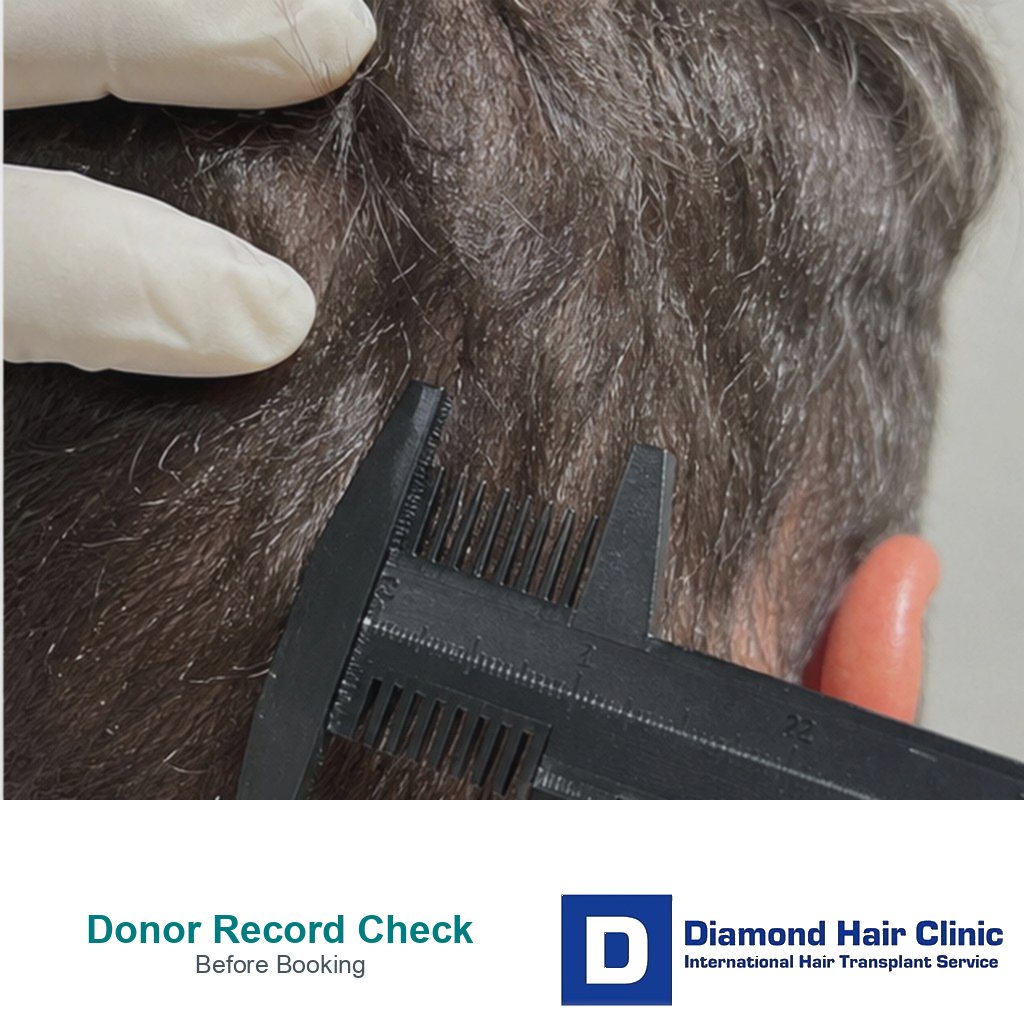
Before a Second Hair Transplant Abroad, Check the Donor Record
A second hair transplant abroad should not begin with a new graft number. It should begin with the record of what already happened to your donor area, what was placed in the recipient area, and how much safe reserve may still remain.
When I review a patient for another operation, I ask for the first surgery file, current donor photos, and the reason for the new coverage priority. I separate what the first clinic promised, what the record actually says, what the donor area looks like now, and what direct examination still needs to confirm. The donor record is the bridge between the first result and the second plan.
Without that bridge, a second quote can sound precise while still being a guess. The patient may compare prices, travel dates, and promised graft counts while donor capacity is still unknown. If one part of the evidence is missing, the quote should stay provisional instead of becoming a travel plan.
The first surgery record changes the second plan
Once the first operation has spent donor grafts, a second operation has to respect the grafts already removed and the areas already treated. That does not make the second operation wrong. It makes the record of the first surgery, the area being treated now, and the donor condition more important than the label.
A useful record includes the operation date, FUE or FUT technique, graft count, hairline or crown areas treated, any donor warnings, and whether beard or body hair was used. If you do not have every detail, collect what you can. Even partial records can stop a new clinic from treating you as a new case. If the first clinic can only provide a total graft number, the new estimate should stay provisional until current donor photos, old records, and direct examination support it. If the first transplant was followed by a smaller refinement, include that operation too. Record its donor source, graft count and treated area separately, rather than giving the next clinic only the count from the main session.
Before a second surgery, an old graft total is only a starting clue. I also want the extraction pattern, photos before and after the first operation, donor trimming length, and what areas were left untreated so the next plan does not spend grafts blindly.
If the first clinic cannot provide a proper file, rebuild the record before accepting a new quote. Use dated photos, messages, invoices, medication sheets, and any graft count note to show what was actually done. Do not replace the missing record with a graft count made from one photograph. Scalp curvature, hidden areas, overlapping scabs, shedding, lighting, and image resolution make that number too uncertain to serve as an operation record.
A repair trip abroad should wait until the first operation record is in your hand when possible. The next surgeon needs to know how many grafts were removed, where they were placed, and whether the donor area still has safe reserve before travel is planned again.
Comparing new prices without the first operation record lets a second offer look cheaper or stronger simply because it ignores the original extraction pattern. Write provisional beside the new estimate when the old file is incomplete.
Whether a second hair transplant is worth it depends on donor reserve, patient goals, and how the first result matured. Here, the focus is the evidence you should bring before you book the next operation abroad.
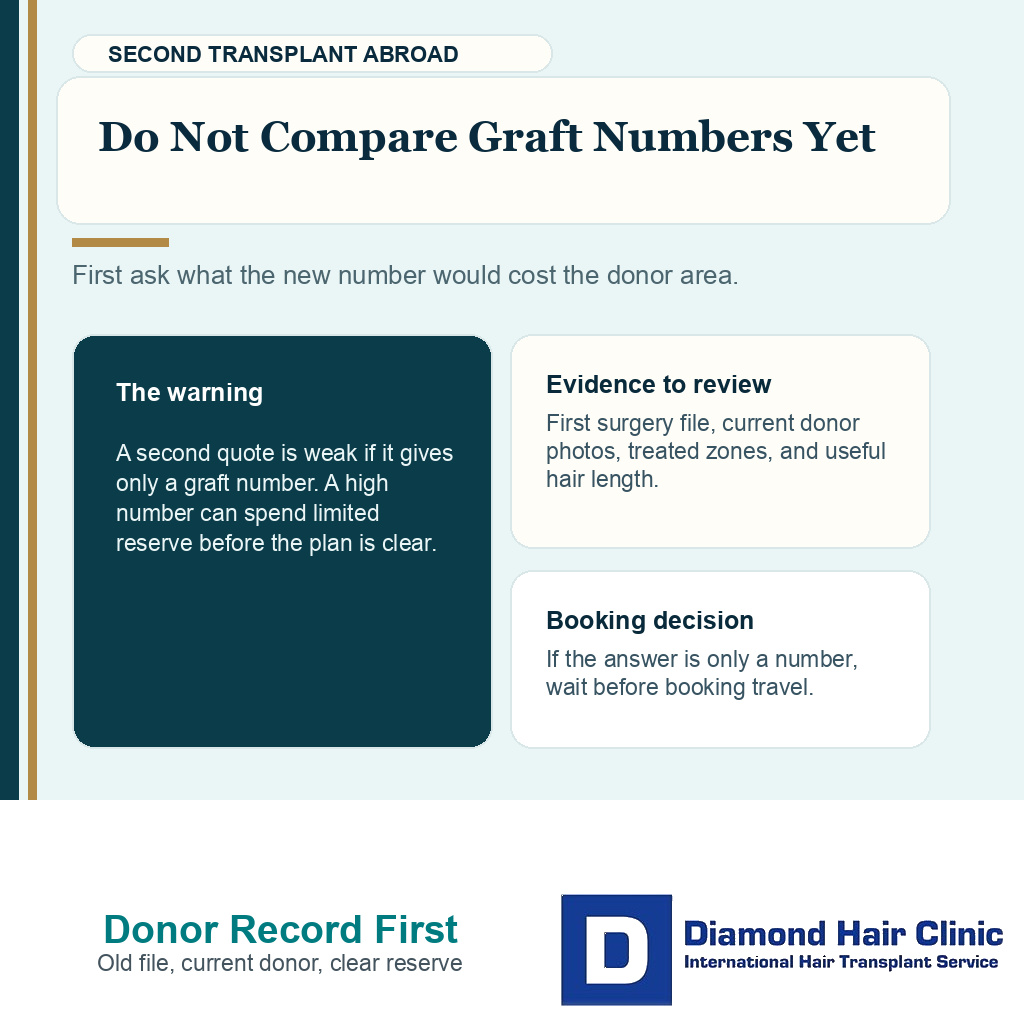
Should you compare clinics by graft number alone?
A higher graft number can feel more complete, especially when the crown and midscalp still look thin. But grafts are not a shopping quantity. They are a limited surgical supply taken from the donor area.
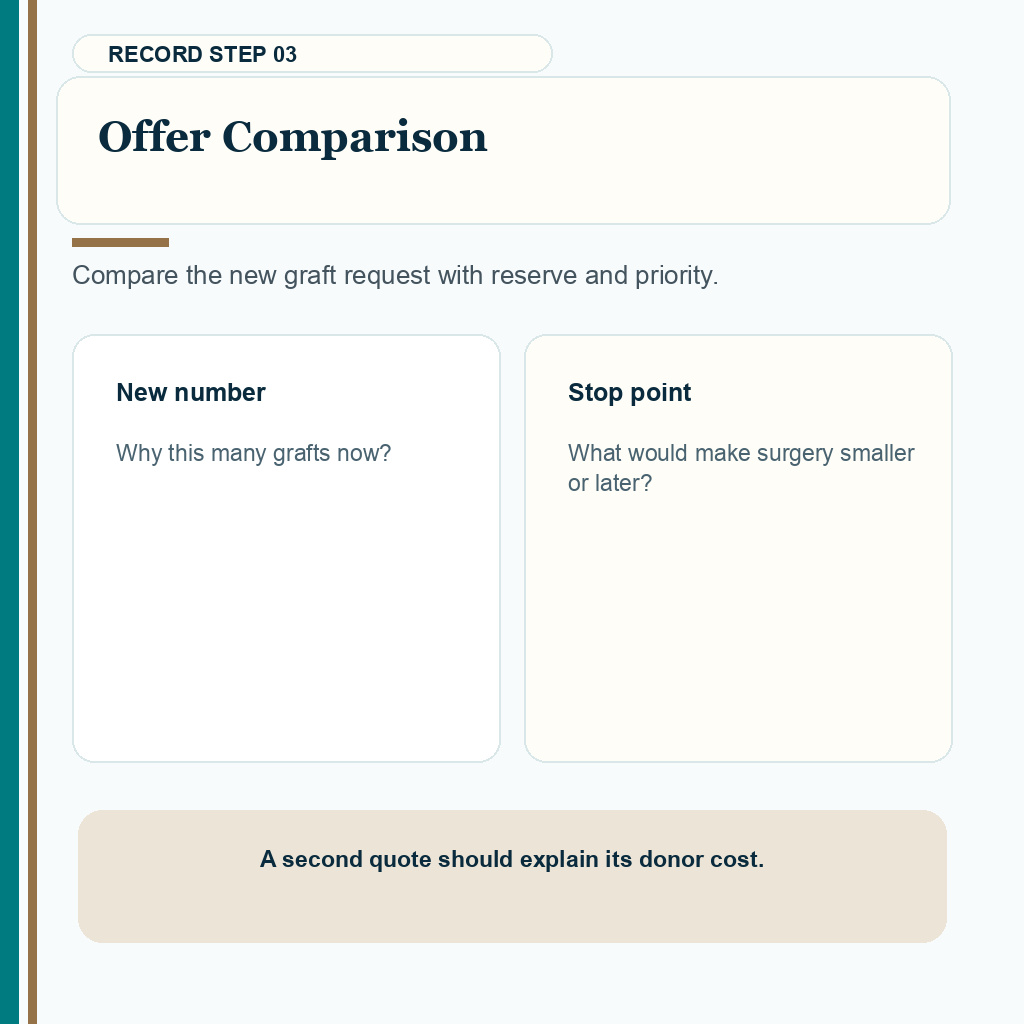
If one clinic says 2,000 grafts and another says 4,000, the useful question is not only who is more confident. Ask what donor measurements, previous extraction pattern, miniaturization, and coverage priority support the difference.
This is the donor reserve boundary I use in lifetime hair transplant graft planning. A careful second plan still leaves options for future loss.
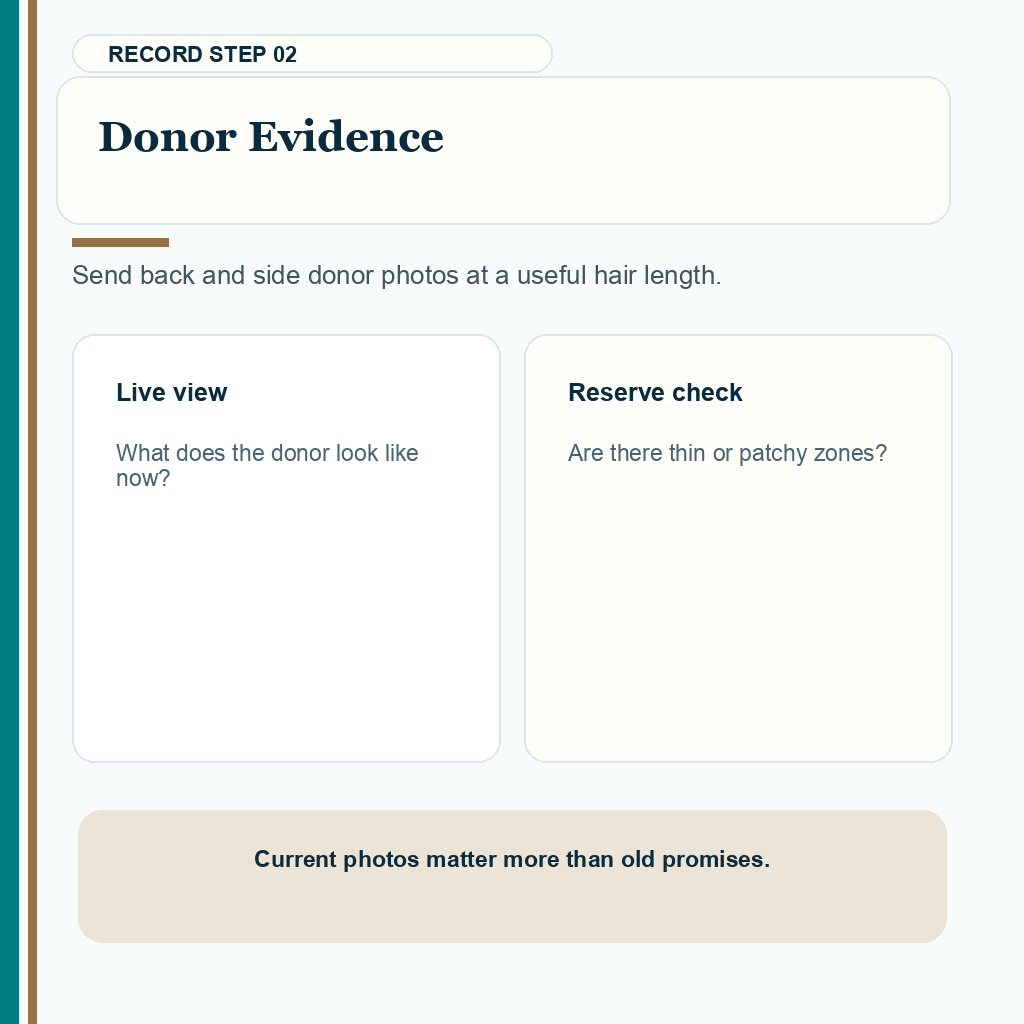
Current donor photos matter more than old promises
The donor area you have now is more important than the donor area that was promised before the first operation. A patient can have a good hairline result and still have visible thinning, patchy extraction, or reduced reserve at the back and sides.
Take clear photos from the back, both sides, crown, and hairline. Use neutral light. Avoid heavy styling product. Include the hair length, because donor weakness can hide when hair is longer. If you can, include one set after a shorter trim and one set at your normal length.
The logic is similar to a hair transplant plan from photos. Photos cannot replace examination, but weak or incomplete photos can make remote planning too optimistic.
The old recipient area also tells a story
The recipient area shows how the first grafts were used. A dense frontal hairline may limit what is realistic behind it. A thin crown may still be large enough to absorb many grafts without looking dense. A natural hairline with a weak midscalp may need a different priority than a low hairline with donor thinning.
I separate the record from the wish list before I discuss new coverage. The patient may want the next grafts in one area, but the first surgery already changed the available choices. I need to know what it achieved, what it failed to achieve, and what the donor area can still safely support.
Patients who feel thin behind a transplanted hairline can use thin top after a hairline transplant to think through that coverage decision in more detail.
Overharvesting risk must be reviewed early
Overharvesting is not just a cosmetic inconvenience. If too many follicular units are removed or removed too close together, the donor area can look thin, patchy, or scarred. A second procedure can make an already stressed donor area worse.
Before booking travel, ask the clinic to explain the extraction plan and the donor limit, not only the recipient design. Ask whether the donor can tolerate another session, whether the graft number should be reduced, and whether the crown should wait.
In a second surgery decision, donor area overharvesting should change the plan before booking, because a stressed donor area may need a smaller session, a delay, or no further extraction.
How should you use the donor record board?
Run through the board below when a second clinic abroad sends a new estimate. It separates the missing first surgery record, current donor photos, a sudden graft number jump, coverage priority, and the point when booking should wait.
Second transplant donor record board
Use this board before you compare clinics abroad. A second operation should start with what already happened to the donor area, not only with a new graft promise.
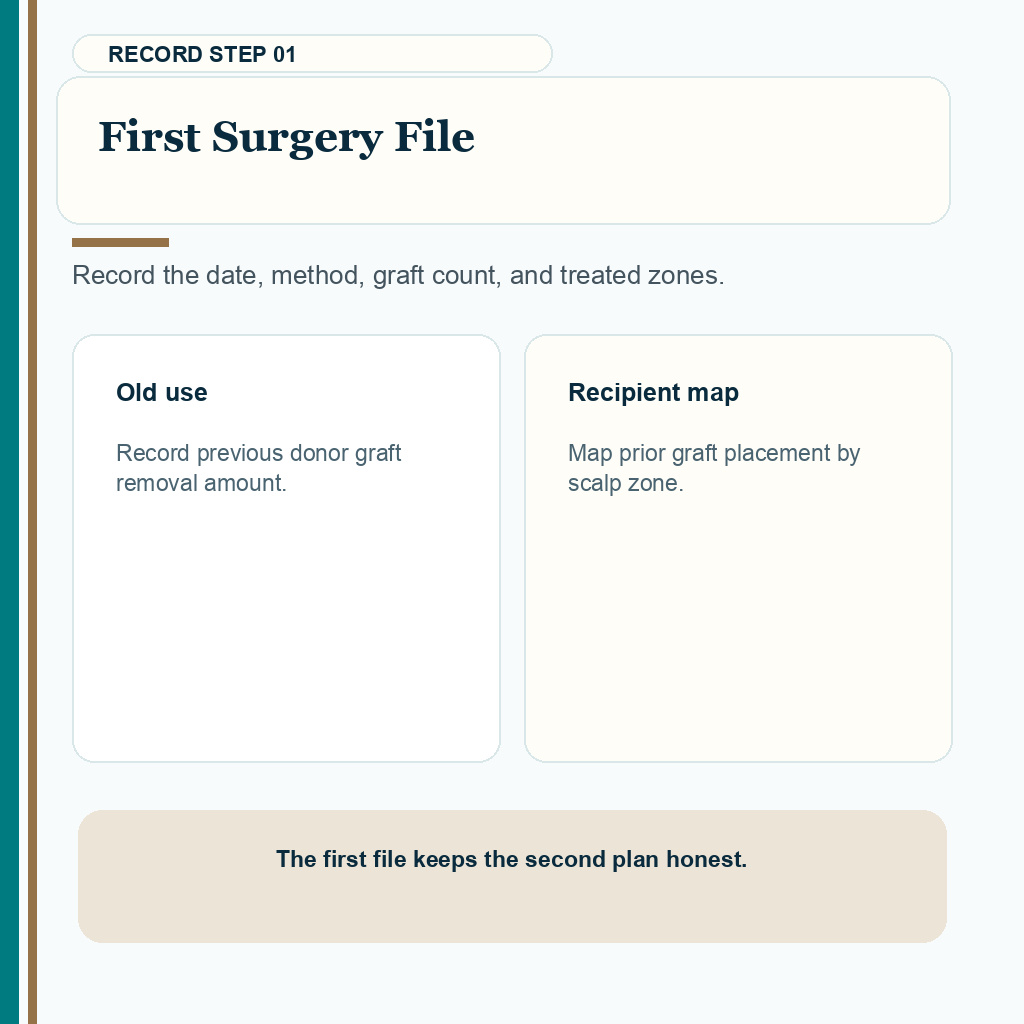
First surgery file
Ask for the date, technique, graft count, zones treated, and any donor notes from the first operation.
A second quote has less value if nobody knows how much donor reserve was already used.
Continue only when the new plan explains the old graft use and the remaining donor limit.
High graft quotes need a donor explanation
A high graft quote can be medically reasonable. Some patients genuinely need a larger session after the first result matures. But a high number must be explained against the donor record, not against the patient’s impatience.
If the clinic gives a high number without asking about the first operation, the estimate may be built on incomplete information. If the clinic asks for detailed donor photos, previous graft numbers, and current hair loss pattern, the conversation is more serious.
A weak donor with a high graft quote needs this same calculation, but in a second surgery the old extraction history must be part of the donor limit discussion too.
When should beard donor enter the conversation?
Beard hair can sometimes support repair or coverage when scalp donor supply is limited, but it is not a simple replacement for scalp grafts. Texture, growth behavior, placement zone, and long-term planning matter.
If beard donor is proposed during a second operation, ask why it is needed, where it will be placed, and whether scalp donor reserve is already too limited for the goal. Ask how the clinic will avoid using beard grafts to cover a plan that should have been smaller.
When beard hair is suggested, beard hair may support crown coverage when donor hair is limited, but it should not be used to justify a plan that the scalp donor cannot safely support.
What should you send before you travel?
Send the first surgery date, clinic name if you are comfortable sharing it, graft count, technique, treated zones, medication history, and current photos. Add close photos of the donor area if you see thinning, scars, patchiness, or uneven extraction.
Also send what still bothers you about the result. Is the front too thin, the midscalp weak, the crown open, the hairline unnatural, or the donor area visibly depleted? The second plan should respond to the actual problem, not only to the idea of more density.
A proper international case review before travel should be able to say what can be judged from this evidence and what still needs direct examination.
Red flags in a second transplant offer
Be careful if the clinic promises a large second session without asking for first surgery details. Be careful if the graft number keeps rising during messaging. Be careful if the crown, hairline, and midscalp are all promised in one session without donor limit reasoning.
Also be careful if the clinic says the first operation does not matter. It does matter. It changed the donor area, the recipient area, and the choices available now.
If a quote changes sharply after photos, connect that with hair transplant quote changes before surgery. A change can be reasonable, but it needs a surgical reason.
A second opinion can protect the donor area
When the donor record is incomplete, a second opinion is often worth the delay. The purpose is not to collect praise or criticism of the first clinic. The purpose is to understand whether another extraction session is reasonable.
A good second opinion may say yes, but smaller. It may say wait until the result has matured. It may say the crown should not be the priority. It may say repair is more important than more coverage. It may also say no surgery is the most protective answer.
A second opinion before hair transplant can help here because the donor area should be protected before another booking becomes emotionally hard to cancel.
Every graft already spent changes the second surgery
A second hair transplant abroad should not start with a new graft promise. It starts with the donor story that remains after the first operation. I want to know what was extracted, where the thinning still exists, how the donor looks now, and which future area we are choosing not to spend on yet.
If the old record is missing, the plan should become more cautious, not more confident. Better donor photos and an in person exam can still help, but the booking should wait until the remaining reserve is described in plain language.
Read this review excerpt
We also had a levelled conversation about my hairline and results I could expect based on my donor density area.