


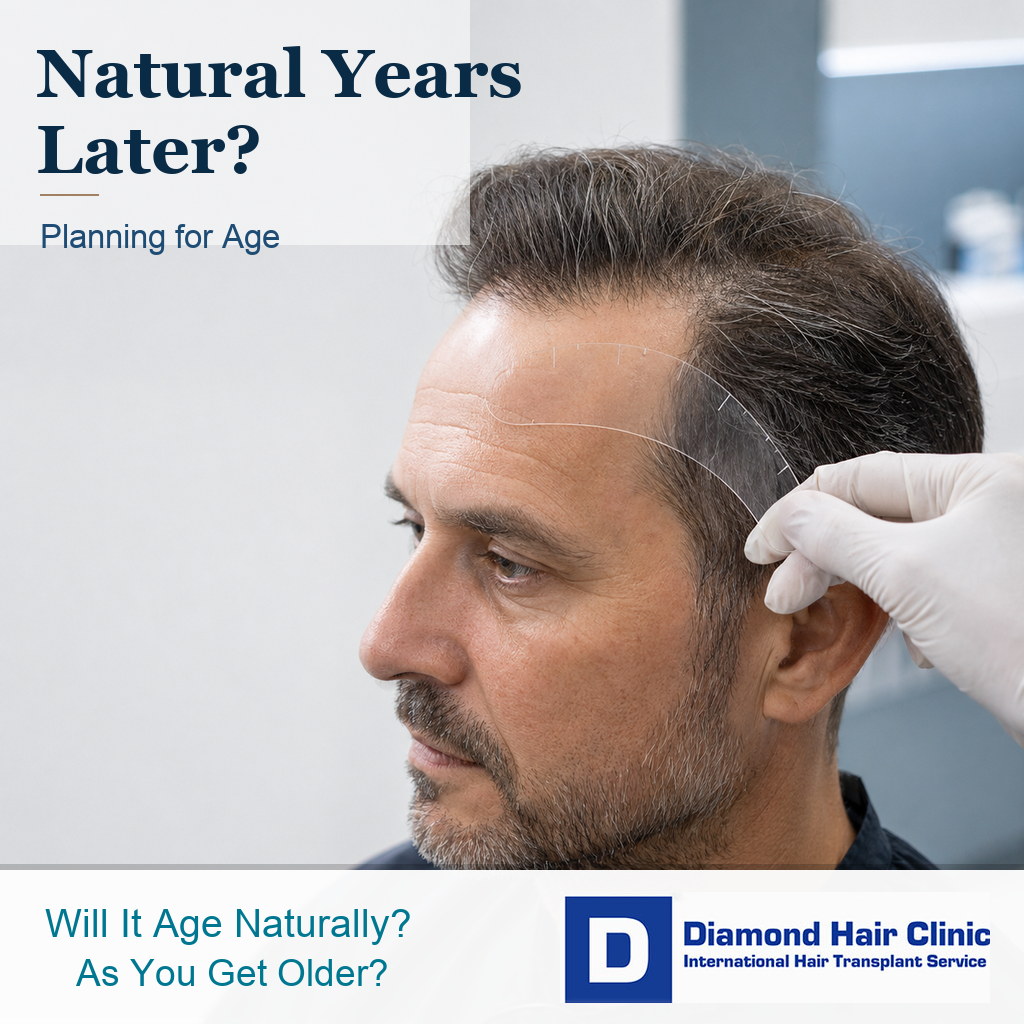
Planning Natural Hair Transplant Results That Age Well
A hair transplant can still look natural as you get older, but only if the plan is made for your future face, future hair loss, and future donor needs. The transplanted hair may remain stronger, but the face, temples, crown, and native hair around it can keep changing.
For patients already weighing surgery at 40 or 50, older age hair transplant planning should connect donor reserve, health, and coverage goals before the hairline is drawn.
A widow’s peak hair transplant should not simply erase the peak if that shape helps the hairline age naturally.
The mistake comes from judging the result only by how low or dense the hairline can look today. A result that ages well is usually planned with a softer hairline, careful graft use, and respect for the native hair that may still thin later. If your specific worry is that the transplanted hairline sits too high, the answer still has to be judged against aging, donor reserve, and future thinning.
Temple point restoration needs long-term restraint, because even a small overcorrection can age badly. For patients whose hair is already gray, gray hair transplant planning also has to consider color blending as the result ages.
When I evaluate this question, the point is not only whether grafts can be placed. The point is whether the result will still look appropriate in 5, 10, and 20 years. A plan that photographs well early is not always the same as a plan that continues to age well.
One strong result photo after the first year is only one chapter. I still look at whether the hairline can keep fitting the face if the temples, crown, or native hair change later.
When looking at older results online, notice what is missing as much as what is shown. Temples, crown, donor length, and medication history help explain whether the result is aging well or only styled well.
A hair transplant can still look natural as you age
A hair transplant can age naturally when it is planned as a long term restoration, not as a quick attempt to recreate teenage hair. The transplanted hair usually comes from the donor area, which is more resistant to pattern hair loss, but the overall appearance of the head can still change because the native hair around it may continue to thin.
Designs that look impressive only on surgery day need a longer view. A drawn hairline can look exciting when the head is freshly marked, and a dense frontal plan can sound attractive in consultation. But the quieter test is whether the hairline will still fit the face years later, whether the density will still blend if the middle scalp thins, and whether enough donor hair remains if the crown needs attention. This concern also appears when planning a hair transplant after scalp micropigmentation, because a pigment line also has to age naturally.
A natural result is not the lowest hairline I can create. It is the hairline that still belongs to the patient years later. I use that idea when I decide how far to lower the front and how much donor reserve to keep for later. The same long term thinking applies to nape hair for hairline transplants, where softness should not override donor stability.
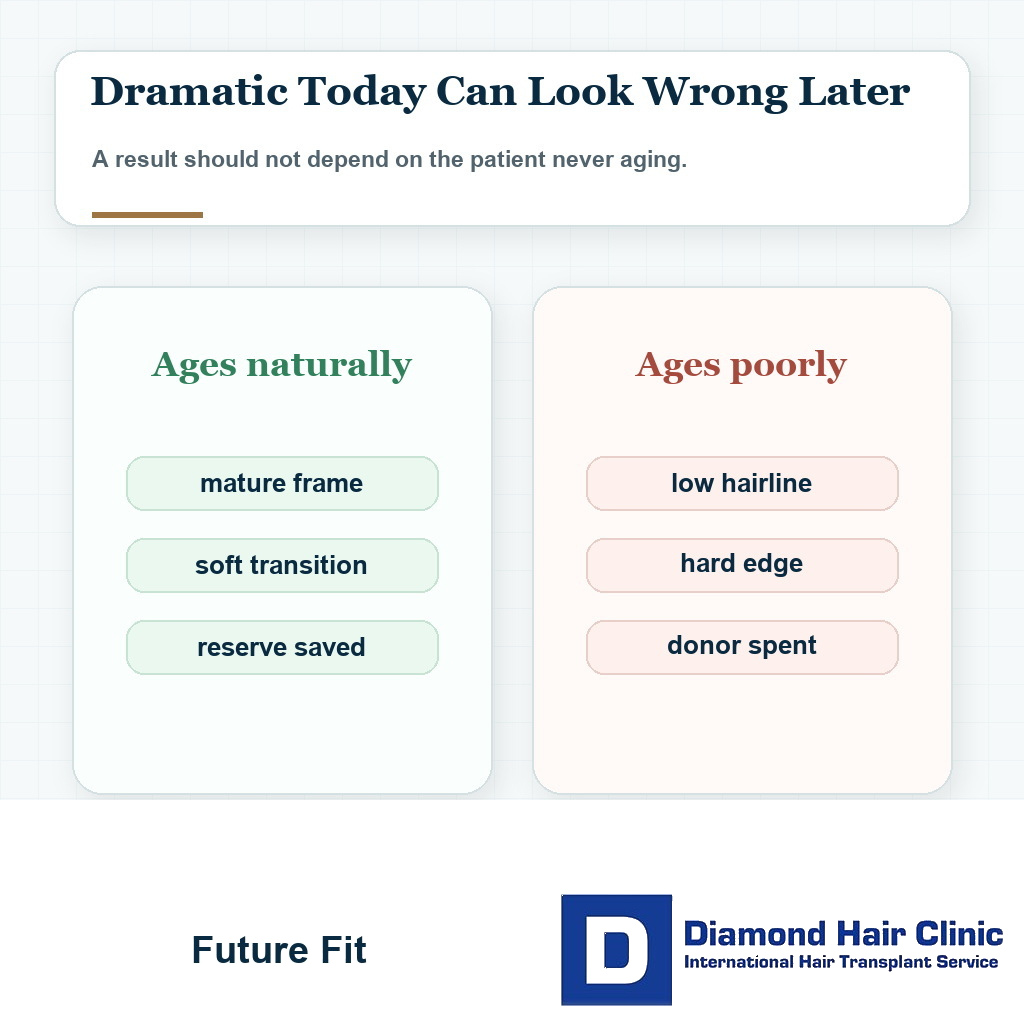
A transplant can look natural now but less balanced later
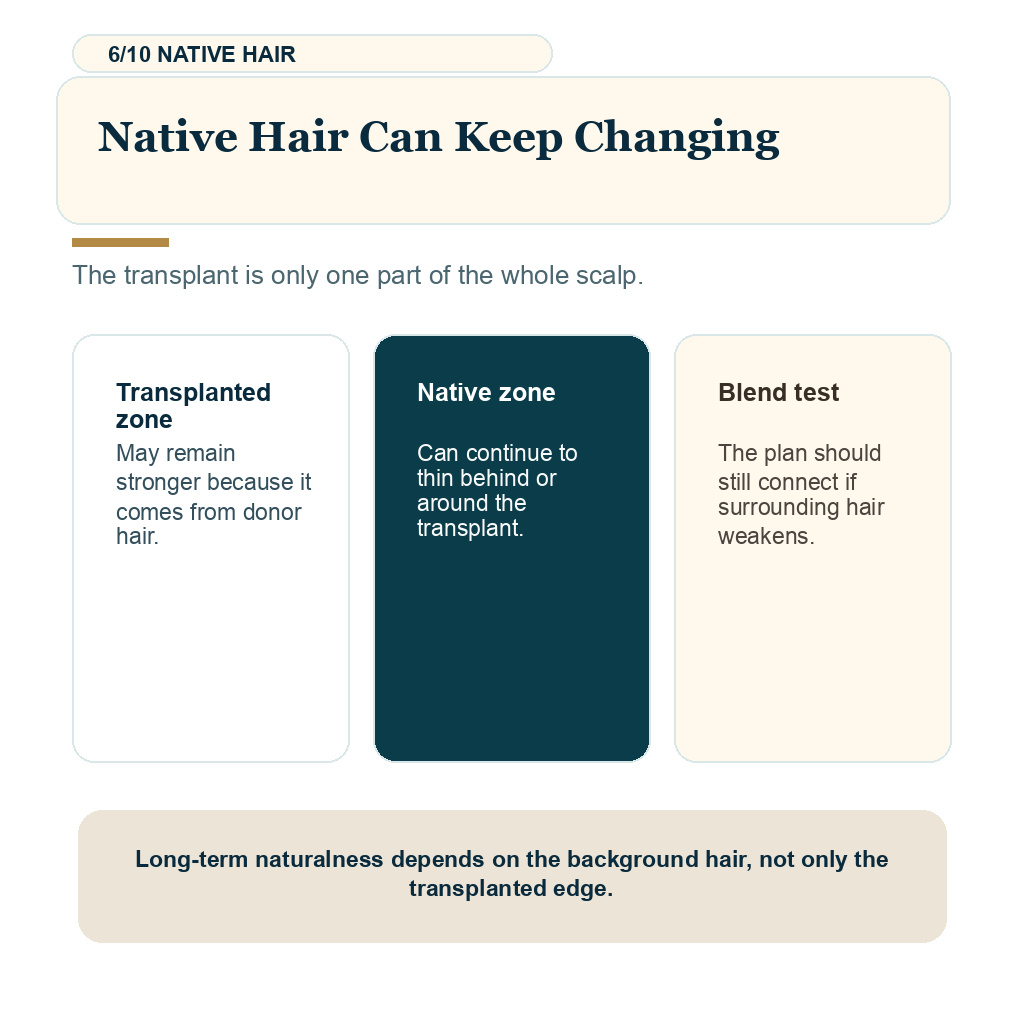
A transplant can look natural in the first year and still become less balanced later if the surrounding hair changes. Surgery moves hair. It does not stop the biological pattern that caused the hair loss. If the native hair behind the transplanted area becomes weaker, the patient may see a strong front with a thinner zone behind it.
A transplant may still grow well and yet age poorly if the first plan was not realistic enough about the future. The first good result should not hide the longer picture. Donor supply is limited, and the pattern of loss may continue.
The question of whether hair loss can continue after a hair transplant directly affects how I design the hairline, how much density I aim for, and whether I advise medical treatment before or after surgery.
When the plan ignores future thinning, the result can begin to look disconnected. The patient may not know exactly why something feels off, but they see a strong transplanted front sitting in front of weaker hair that no longer supports it.
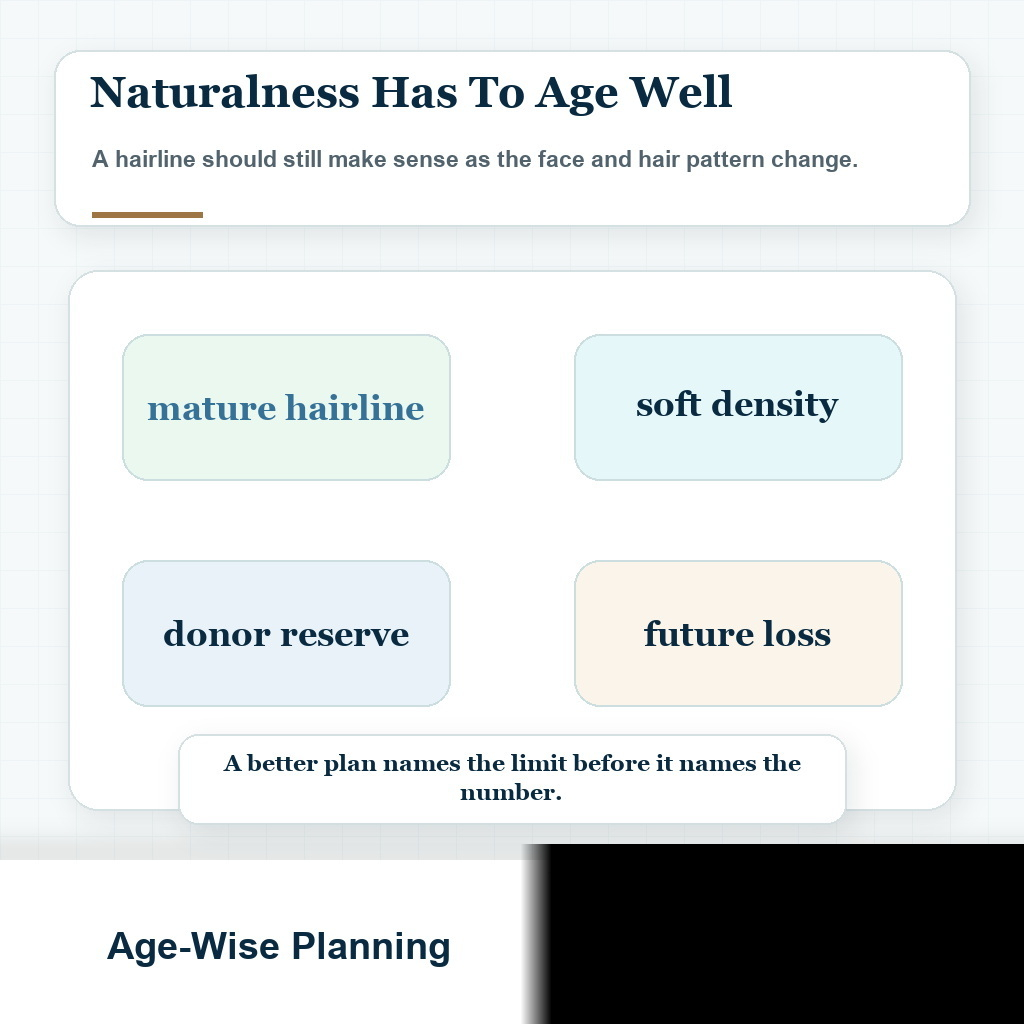
Age resilient hairline lens
Four checks before a hair transplant still looks natural with age
A transplant can look natural for years when the hairline is designed for the face today, native hair changes later, and donor reserve that may still be needed.
Soft front edge
Will the first visible line stay soft?
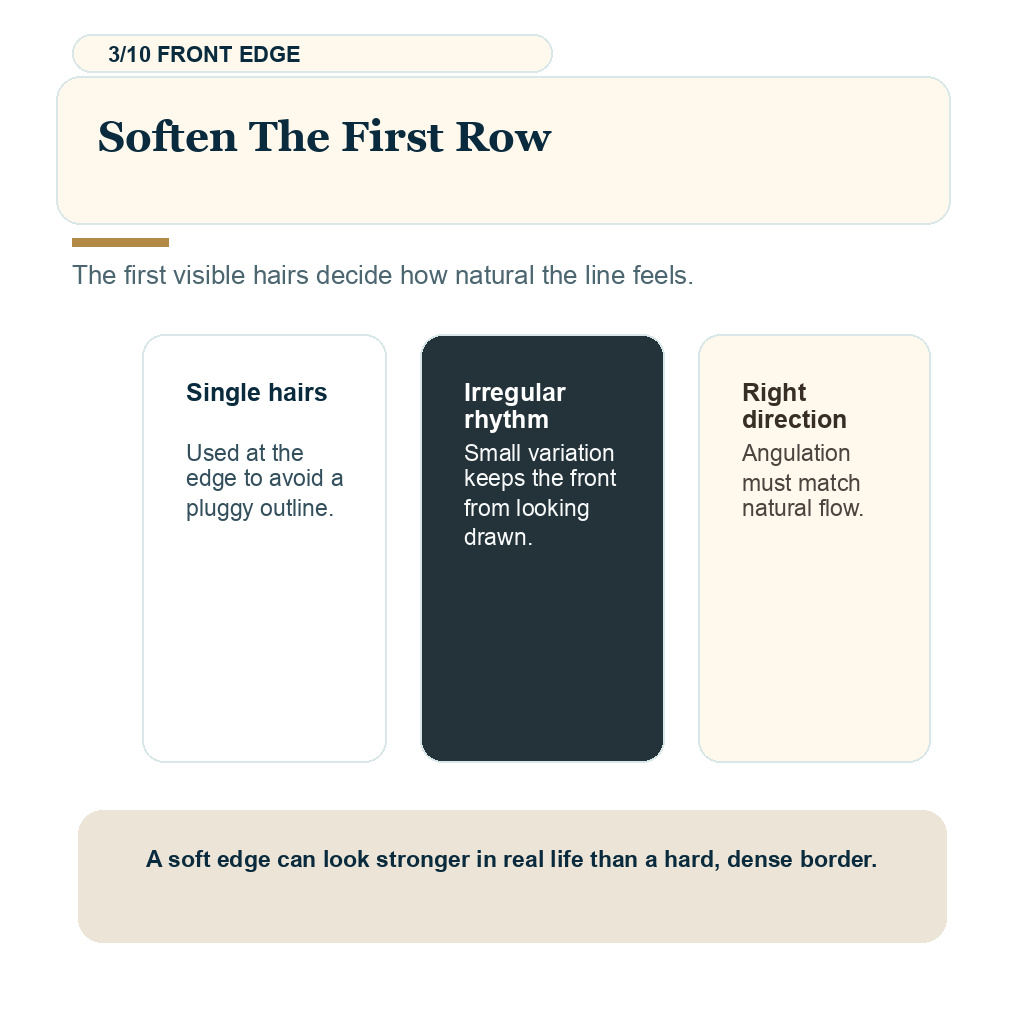
A result that ages well usually has a softer first row instead of a hard border. Single-hair grafts at the front edge help the line stay less obvious in bright light, wet hair, and close conversation.
A natural aging hairline usually keeps softness at the first edge, avoids an overly low or flat outline, and leaves enough donor reserve for future hair loss. I judge naturalness in normal life, not only in a styled clinic photo. The result should tolerate movement, different hair lengths, bright light, and ordinary social distance without the surgical outline becoming the first thing people see.
Use this as a planning frame, not a diagnosis of your hairline. The final design still depends on donor reserve, recipient area anatomy, hair type, and future hair loss risk.
Hairline design and the way the result ages
Hairline design is one of the strongest factors in whether a result ages well. A hairline is not just a line. It has height, shape, irregularity, density, direction, and softness at the front edge. If these details are wrong, even good graft growth can look artificial.
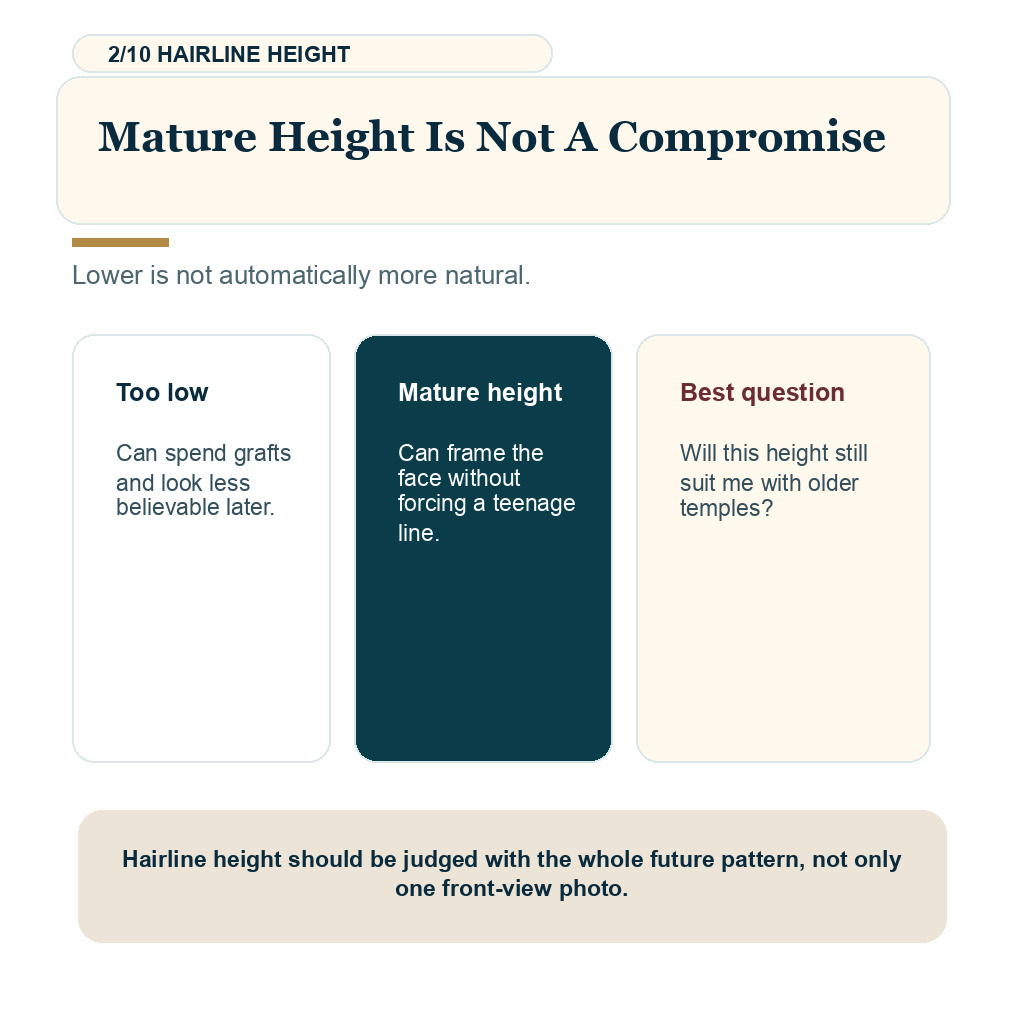
In my planning, natural hairline design must respect the face and the future. A young patient may want a very low, straight, dense hairline because it feels like the fastest way to feel like themselves again. I understand that wish. But if the hairline is too low for their donor capacity, family history, and likely future pattern, it may become a burden rather than a gift.
The front edge should usually have softness, small irregularities, correct angulation, and the right use of single hair grafts. Behind that, density must be planned according to what the donor can safely support. Naturalness is not created by a ruler. It is created by respecting how real hair grows and how a real face changes with age.
Age appropriate does not mean small or unattractive. It means the hairline still makes sense when the temples, crown, skin, and facial proportions continue to change. The result must not look transplanted. It should look like the patient, with a better frame.
Design mistakes can make a transplant obvious as the years pass
A transplant usually starts to look obvious when the front is treated as a fixed drawing instead of a living part of an aging scalp. A line that is too straight, too low, too dense at the edge, or built with grafts containing several hairs can look unnatural even if the grafts grow well.
Direction matters just as much. If the transplanted hair grows against the natural flow of the native hair, the result may look acceptable in one hairstyle and strange in another. I treat wrong hair direction after a hair transplant as a planning problem, not only a styling problem.
The same issue can appear when the transplanted front becomes separated from weaker hair behind it. I take the gap between transplanted and native hair seriously during planning. I am not trying to create a strong island of hair. I am trying to create a front that can still blend as the rest of the scalp changes.
Repair is possible in some cases, especially when a sharp or pluggy front can be softened. But a result that needs repair has already spent donor hair once. It is better to avoid that problem than to depend on a future pluggy hairline repair.
Native hair loss still matters after transplanted hair grows
Native hair matters because it is the background that makes the transplant look natural. If the native hair is strong and stable, the transplanted area can blend more easily. If the native hair is miniaturized, unstable, or likely to continue thinning, the same surgical design becomes more risky.
Candidacy matters before graft numbers. A patient may be a poor candidate for an aggressive plan even if they are technically able to have surgery. They may need medication first, more observation, a smaller first session, or a different hairline goal. This is part of deciding whether someone is truly a good candidate for a hair transplant.
The misunderstanding to prevent is thinking that transplanted hair solves the entire pattern. It usually solves a selected area. The rest still needs diagnosis and planning. If the crown is beginning to thin, if the middle scalp is weak, or if the hair behind the hairline is already miniaturized, I have to design with that future in mind.
A transplant that ages naturally is rarely the most aggressive operation possible. It is the operation that leaves the patient with options.
The donor area should be protected for future years
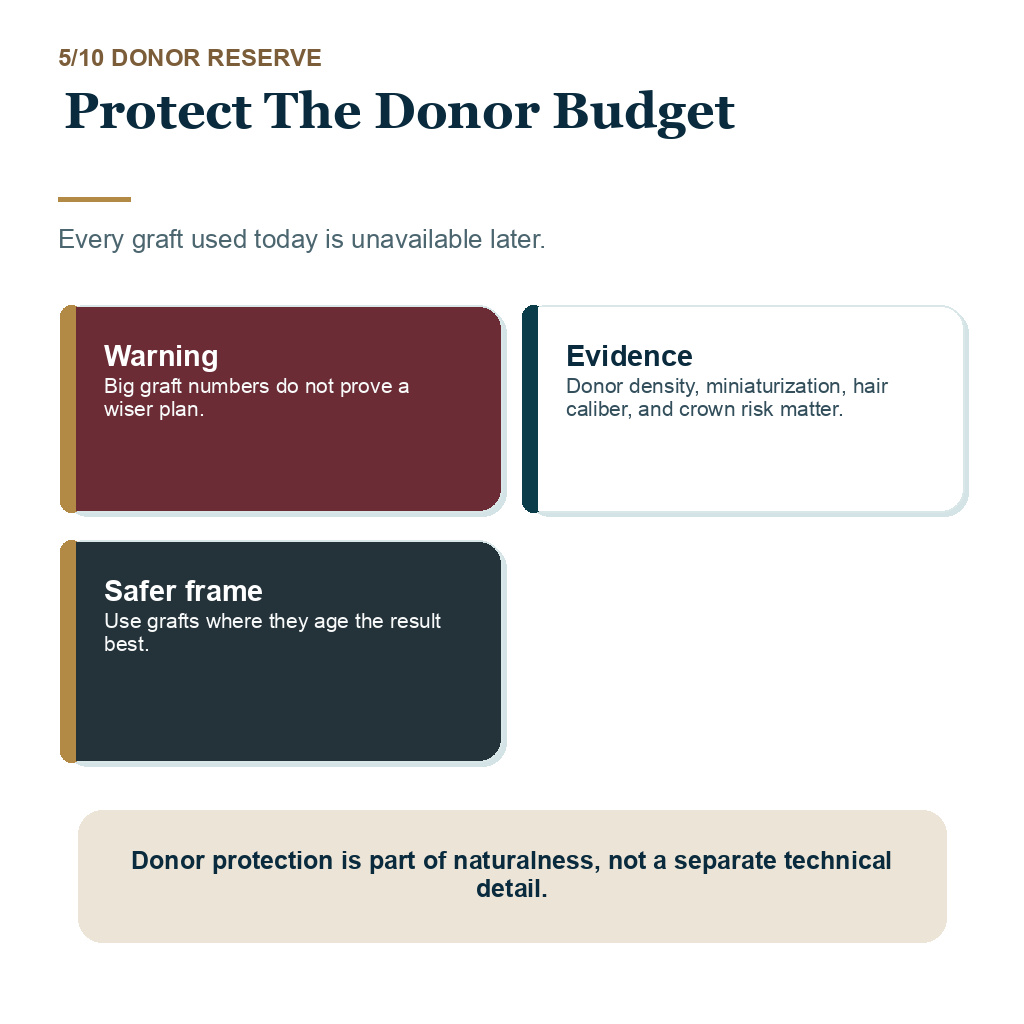
I treat the donor area as a lifetime reserve, not as a store that can be emptied for one dramatic result. This belongs among the places where careful planning shows. A hair transplant does not create new follicles. Every graft used today is a graft that cannot be used again somewhere else.
When I examine the donor area, I look at density, hair caliber, safe extraction pattern, miniaturization, previous surgery, and how much future need the patient may have. A patient with a small frontal recession is different from a patient with crown risk. A patient with thick hair is different from a patient with fine hair. The same graft number can be sensible in one person and excessive in another.
One detail I check carefully is whether the donor looks stable or only looks full because the hair is being worn at a helpful length. If the sides, lower crown, or donor margins already show miniaturization, a large extraction can make the result age worse, not better. The future plan should be based on stable donor hair, not on a flattering haircut.
Graft numbers should not be used as proof of quality by themselves. More grafts can sound better, but a larger number does not make the plan wiser by itself. Sometimes the better operation uses fewer grafts with better distribution, better angulation, and better long term planning.
Protecting the donor area is how future options stay open.
Use the 10 long term planning slides below to review mature hairline height, soft first row design, temple restraint, donor reserve, native hair changes, low hairline warnings, medication context, second session timing, aging promises, and the evidence to send before accepting a plan. Swipe the carousel, use the arrows one step at a time, or choose a number below the image to jump to that point.
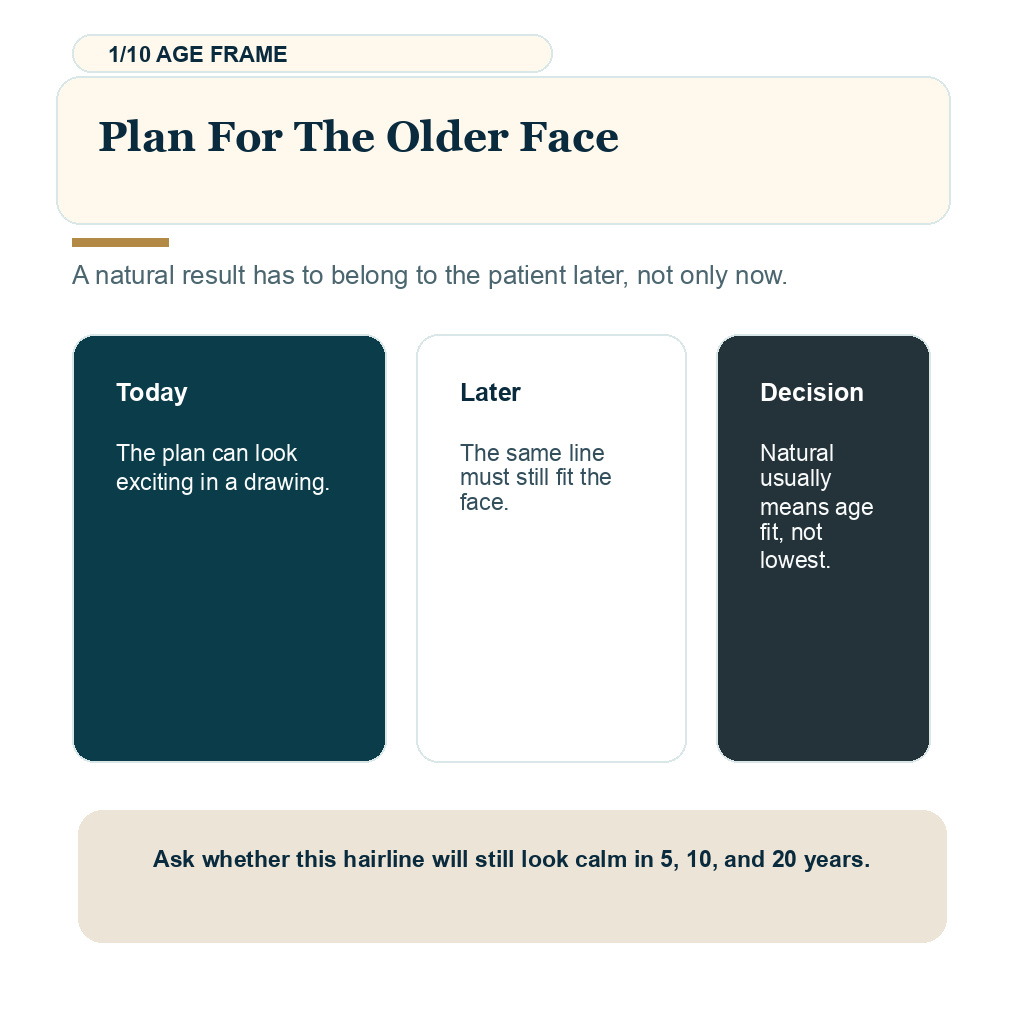

A low hairline can be a warning sign
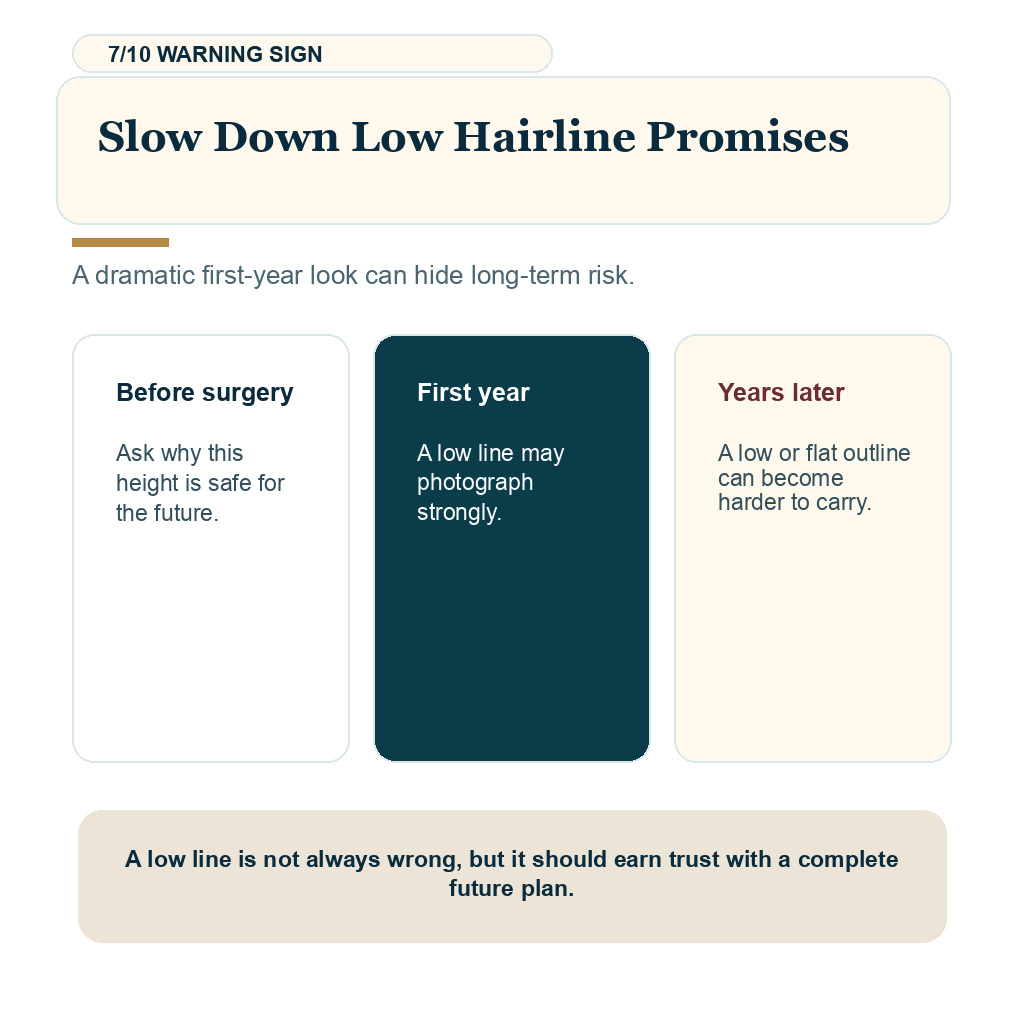
A low hairline becomes a warning sign when it is chosen mainly because it looks dramatic, not because it fits the patient. It worries me more when a patient is young, the hair loss is active, the donor reserve is not strong, or the clinic does not explain how the design will age.
Some patients naturally have lower hairlines. Some older patients with stable hair and excellent donor capacity may be able to support a stronger frame. So I do not evaluate height in isolation. I look at the full picture. The decision depends on whether the hairline fits the face, the hair loss pattern, the donor supply, and the future.
For patients in their 60s or 70s, the age policy and medical review need to be clear at the first contact. Age alone does not decide candidacy. When a clinic has a fixed age limit or requires extra medical clearance, that boundary belongs before repeated photos, health details, or travel planning.
I warn patients about low and flat hairlines when they are planned without real surgical responsibility. A low, flat, sharp line may look powerful in a clinic photograph, but it can look artificial as the patient ages or as untreated areas continue to thin.
Younger patients need particular caution here. If a patient is worried that they may be too young for a hair transplant, age is only part of the answer. The plan also has to be mature enough for the future they have not reached yet.
Aging promises that need a slower decision
Slow down when a clinic makes the future sound too neat. If the message is that a large graft number will solve everything, the decision needs more thought. If the hairline is offered before proper donor assessment, the plan is not ready. If the consultation feels like a package sale rather than a medical evaluation, that tells the patient something.
A poor consultation may promise full coverage in one session, ignore future hair loss, or show only best case photographs under flattering light. It may avoid explaining what will happen if the crown thins later or if the patient cannot use medication. It may also treat the donor area as if it were unlimited.
When that happens, repair difficulty matters from the beginning. A bad hairline can sometimes be softened, but raising a hairline that was placed too low is difficult. A damaged donor area cannot be fully restored to its original state. An overused donor reserve can limit every future decision.
A consultation should leave the patient with more clarity, not only more excitement. Plans that cannot explain limits, timing, donor protection, and future native hair loss are not ready.
Medication choices can change the long-term plan
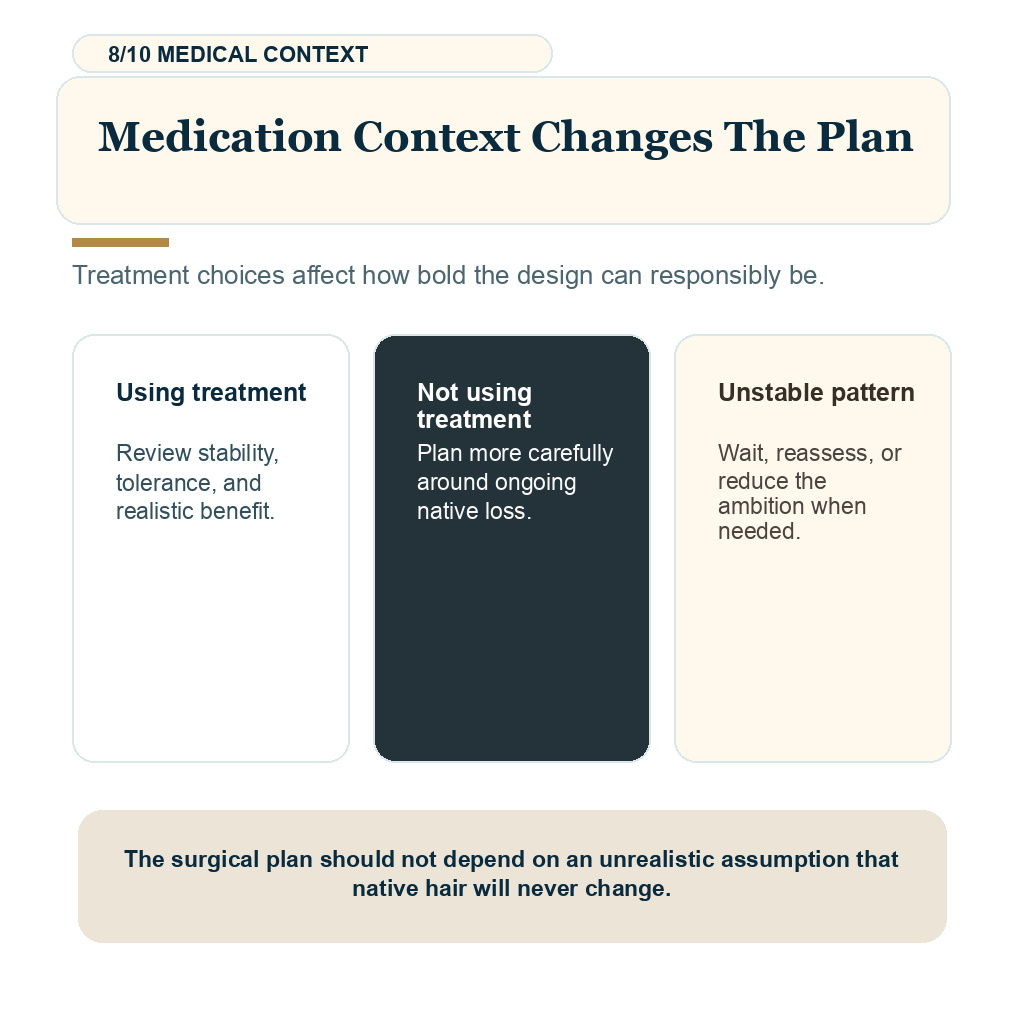
Medication choices matter because native hair stability changes the surgical strategy. I do not put every patient on the same medical path, but the decision has to be clear. If a patient can use medical treatment safely and it helps stabilize native hair, the transplant plan may become more conservative and more durable.
If a patient does not want medication, cannot tolerate it, or has a medical reason to avoid it, surgery may still be possible. But it should not be planned as if future loss has disappeared. When that happens, I plan more conservatively with hairline height, crown ambition, and graft spending.
A hair transplant without finasteride needs a clear review. It is not a moral decision. It is planning information. A patient who cannot or will not use finasteride may still be treated, but the surgical design should respect that choice.
Minoxidil, dutasteride, PRP, and other supportive options should not be sold as guarantees. They are tools that may help specific cases, and the plan must be adjusted to the individual.
Sometimes the most natural result with age is not the lowest or fullest possible hairline, especially when medication is not part of the plan. A patient who already looks balanced for his age may need a small improvement, or no surgery, more than a dense line that looks borrowed from a younger face.
A second surgery can help only when the long-term plan is stable
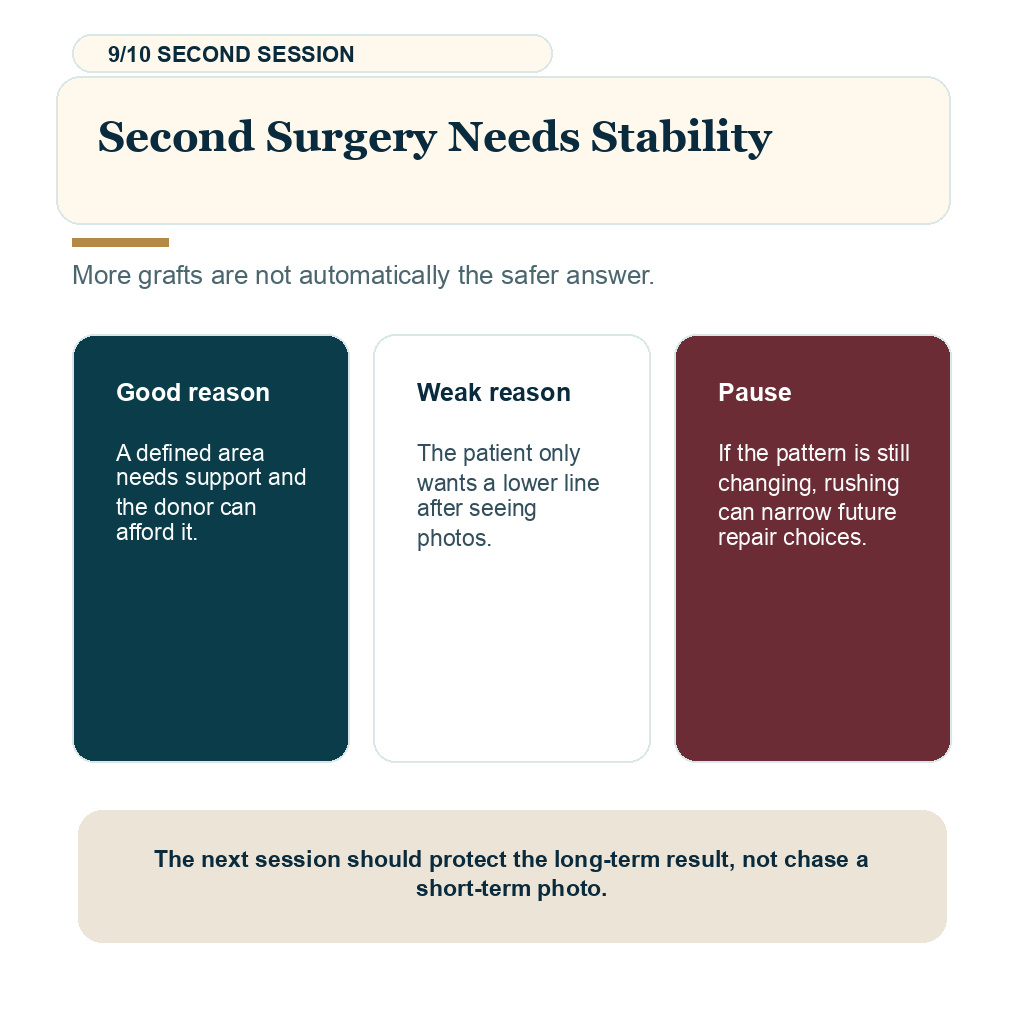
A second surgery can help when the first plan protected the donor area and created a stable foundation. For example, a first operation may focus on the frontal frame, while a later session improves the crown or middle scalp only if the donor area remains suitable and the hair loss pattern is clearer.
A planned second step is very different from needing another surgery because the first operation was too aggressive or poorly planned. A planned second step can be wise. A forced second step can be stressful, expensive, and limited.
When I discuss whether a second hair transplant is worth it, the key distinction is whether the patient is improving a stable plan or chasing a result the donor area cannot safely provide. That distinction protects patients from using surgery to treat anxiety rather than anatomy.
Sometimes the best decision is to wait until 12 to 18 months after the first transplant before judging what is truly needed. Hair growth, texture, and visual density mature slowly. Acting too early can lead to unnecessary graft use.
A natural hairline must still age well
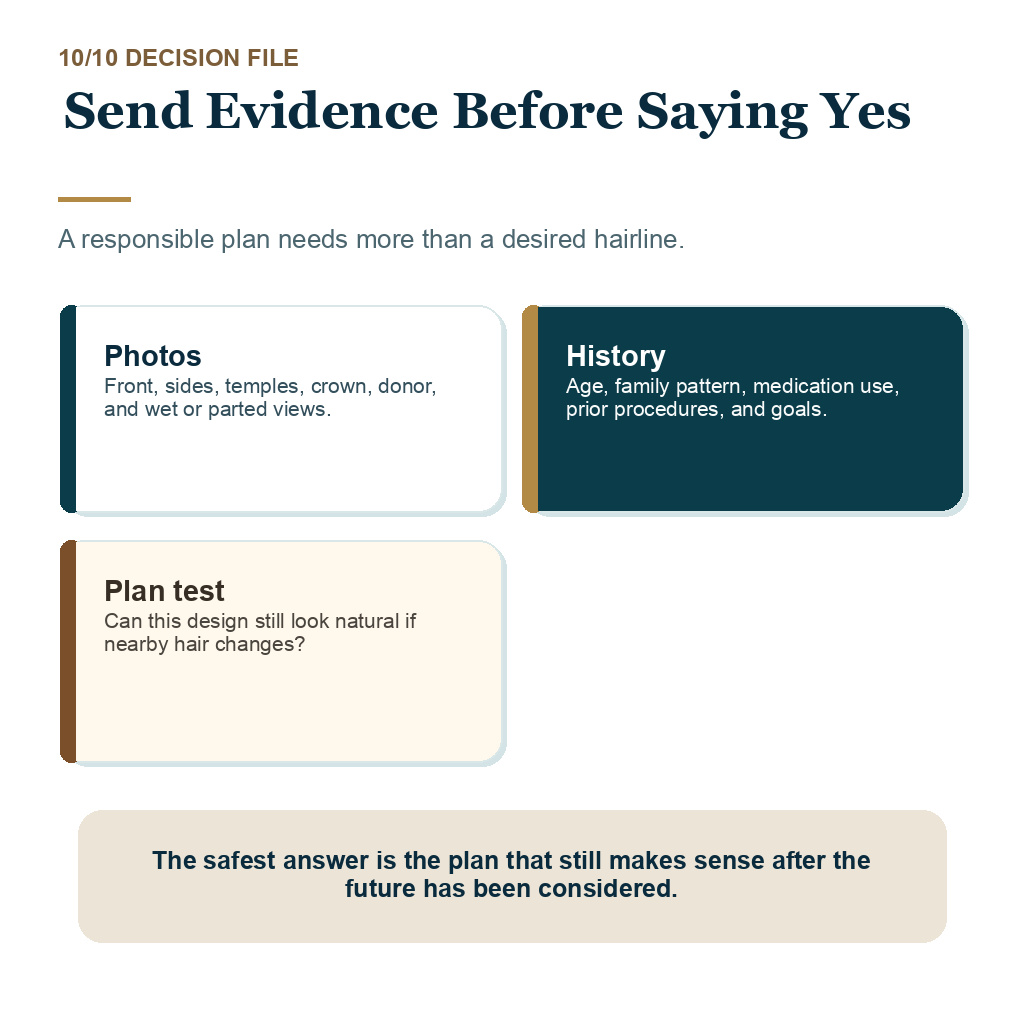
Before accepting a hair transplant plan, the explanation should cover why this hairline fits your age, face, donor area, and future hair loss risk. The graft number should have a reason, not just an impressive sound. Untreated areas and the reason they are left alone should also be clear.
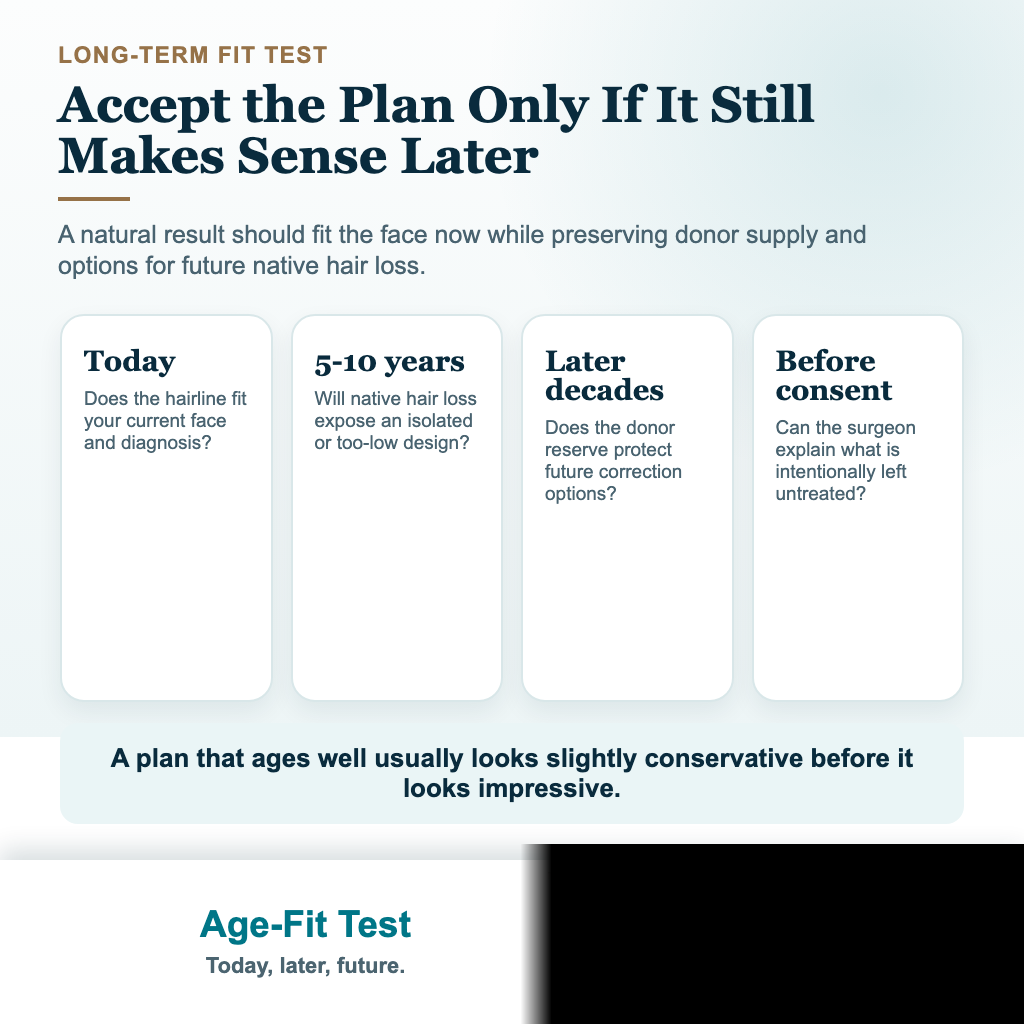
It helps to know how I calculate the graft number. The number should follow the diagnosis, not lead it. If a clinic gives a number before understanding the donor area, hair caliber, miniaturization, crown risk, and long term plan, the patient is receiving an estimate without enough medical foundation.
This comparison is clearer when you understand why some hair transplant results look thin. Not every thin looking result is a failure, and not every dense looking photograph is a wise result. Lighting, hair length, hair caliber, donor limits, and future native thinning all change how the result is judged.
Do not choose the plan that only makes you excited today. Choose the plan that still makes sense as you get older. A hair transplant should improve your appearance without trapping you into future repair, donor exhaustion, or an unnatural frame.
The strongest result is the one planned for your older face, future hair loss, and remaining donor reserve.
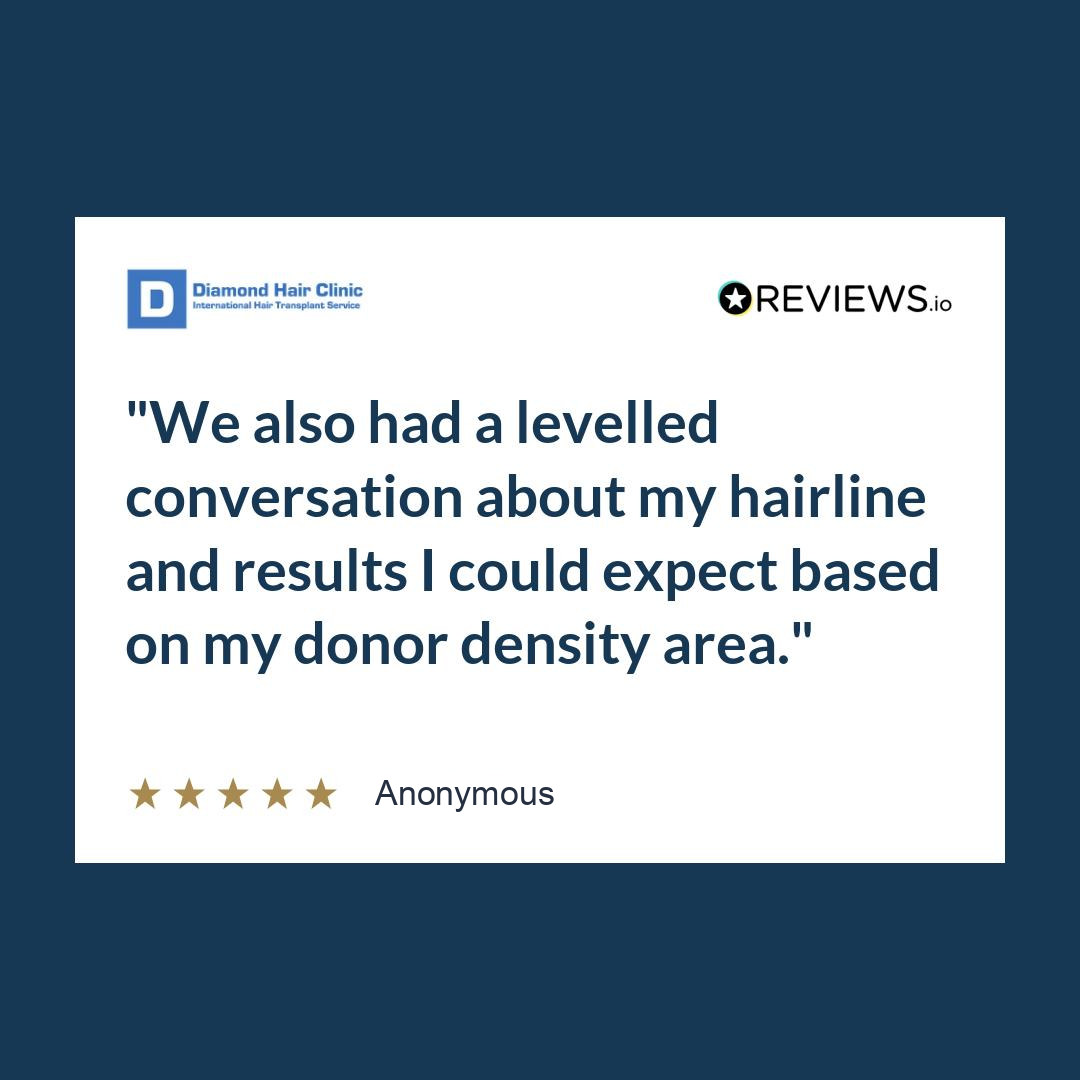
Read this review excerpt
We also had a levelled conversation about my hairline and results I could expect based on my donor density area.