




Caffeine, bleeding, and swelling
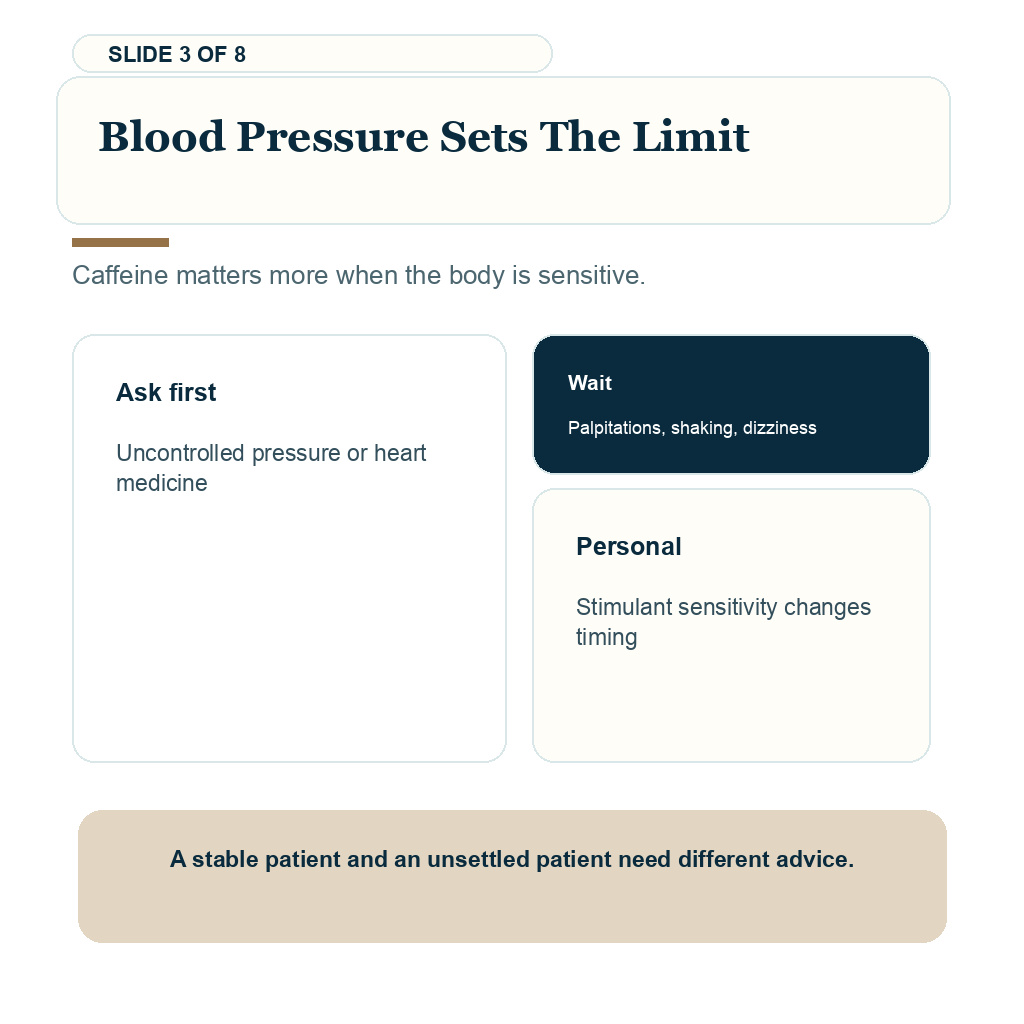
Caffeine can temporarily affect heart rate and blood pressure in some people. For a patient who does not usually drink coffee, the effect may be stronger. For a daily coffee drinker, the body may be more used to it. The answer changes with the patient’s usual caffeine tolerance and medical history.
If a patient has high blood pressure and hair transplant is already a medical planning issue, caffeine becomes more relevant. Several strong coffees or energy drinks around surgery can turn an already sensitive reading into a practical problem. I am not judging coffee culture. I am trying to keep the surgery predictable.
Bleeding after the operation should also be judged by what is actually happening. A small amount of spotting can happen for several reasons. But if caffeine is combined with bending, heavy lifting, alcohol, aspirin like medicine, anxiety, poor sleep, or touching the scalp, the situation becomes more complicated.
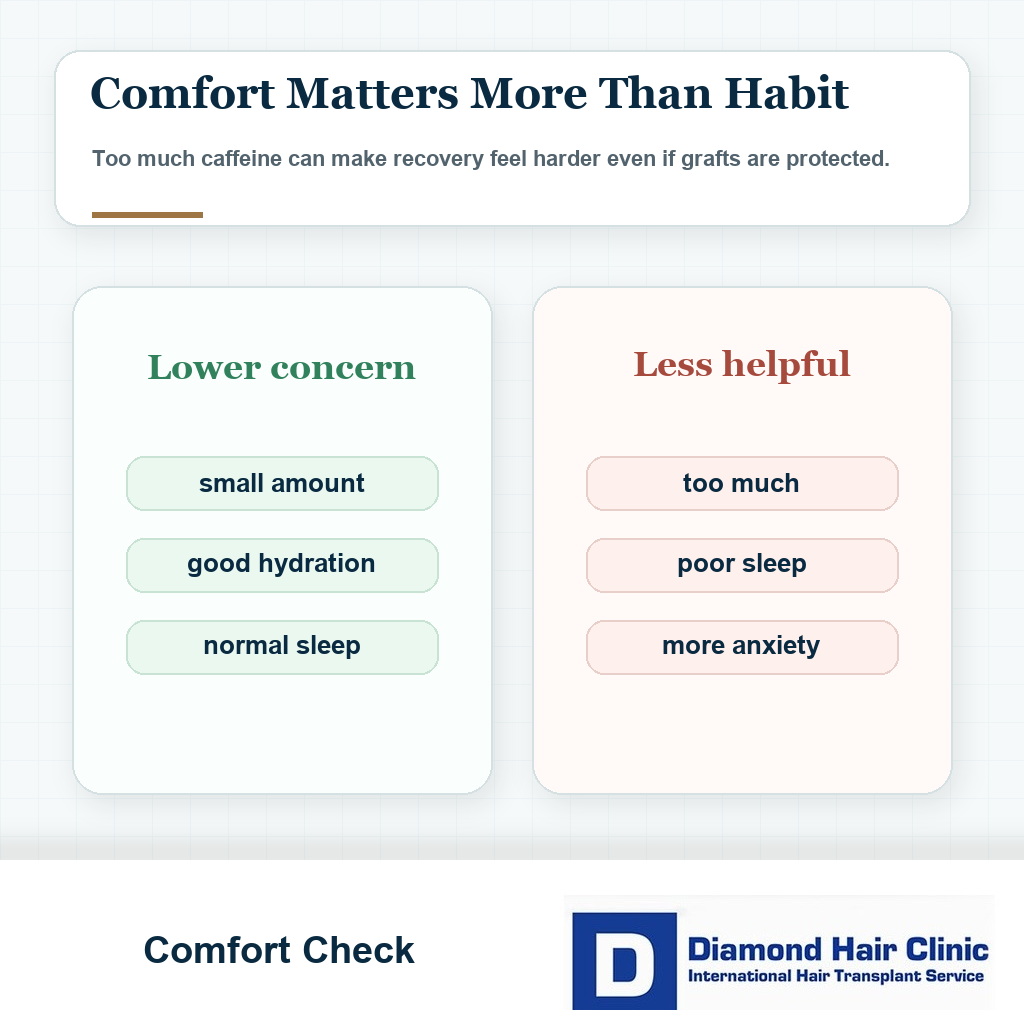
Swelling is similar. Coffee alone is not the main reason most patients swell. Swelling after surgery usually relates to the operation, fluid movement, gravity, inflammation, sleep position, and the early healing response. Still, if caffeine makes a patient restless, dehydrated, or unable to sleep, it can indirectly make the recovery feel worse. For swelling after a hair transplant, the timing question is when swelling is normal and when it deserves attention.
If coffee was taken too early
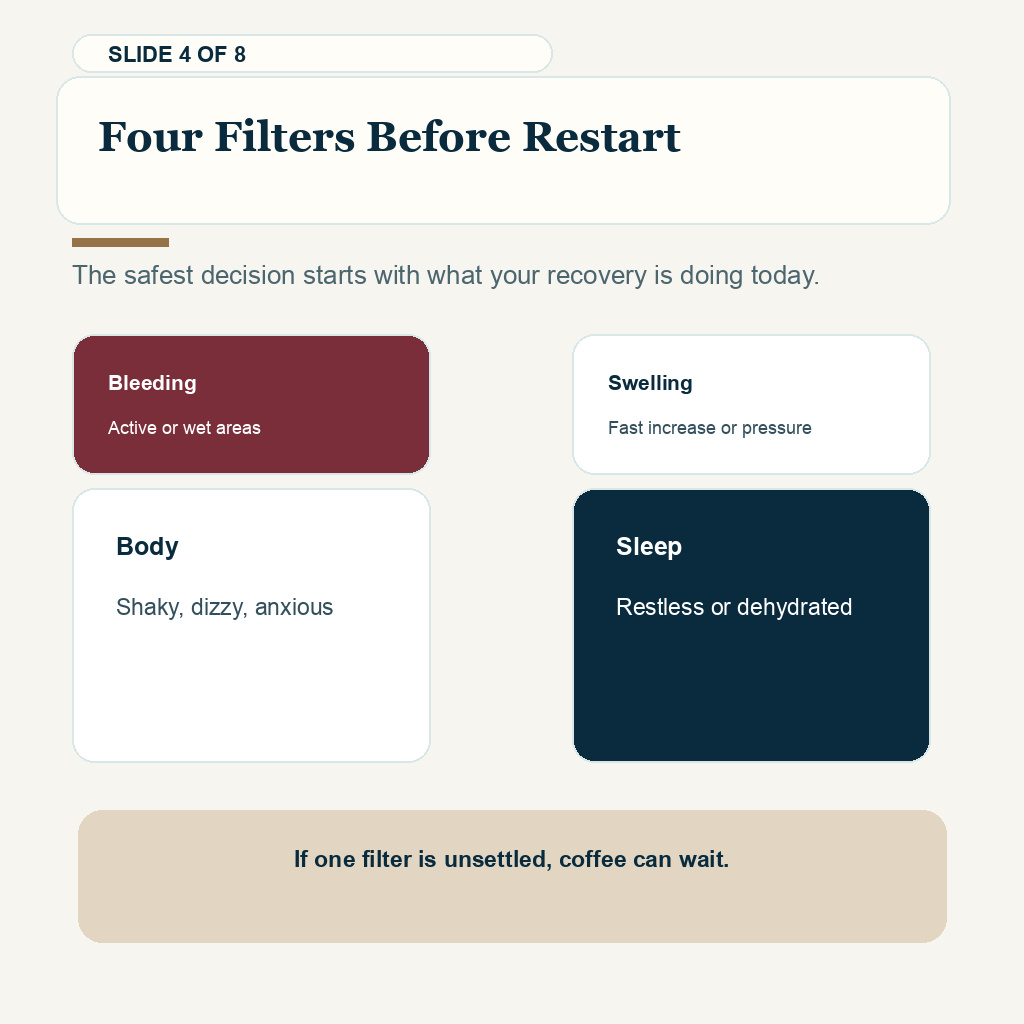
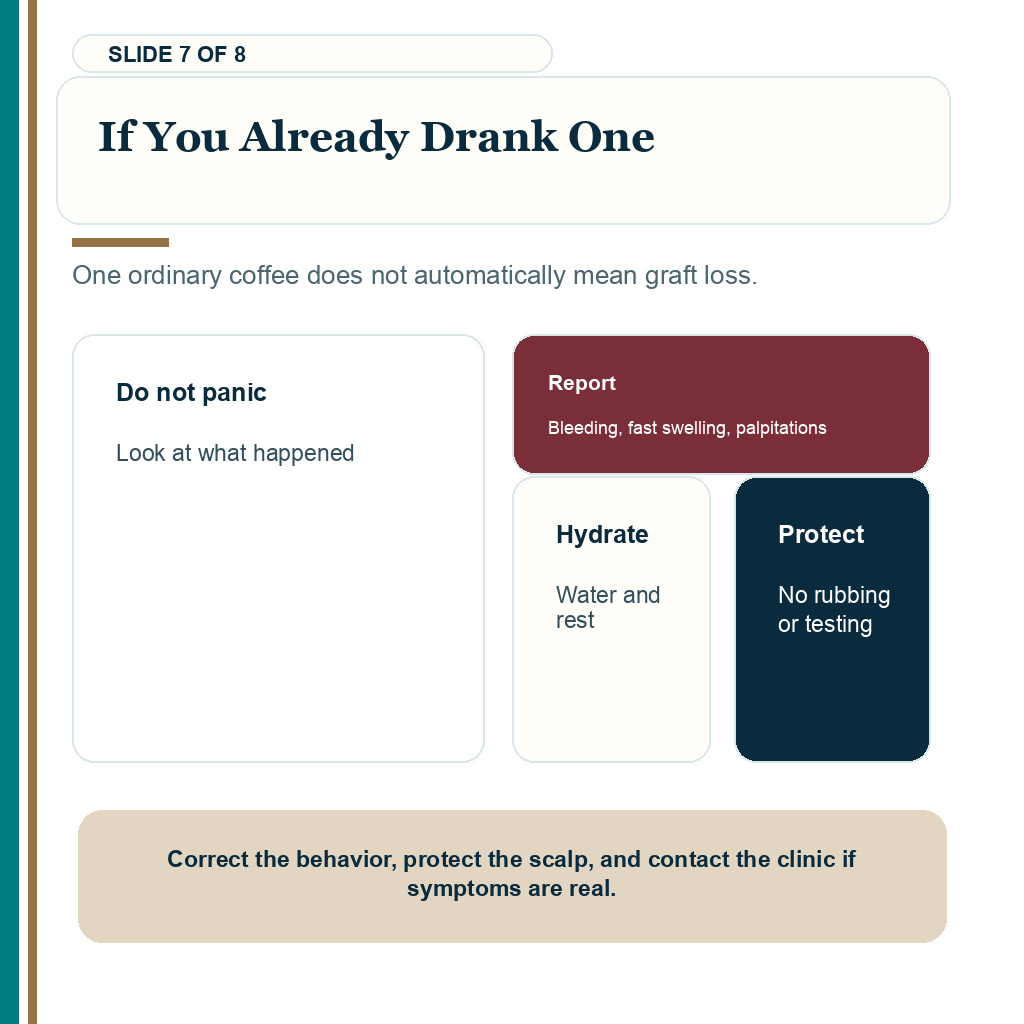
If you drank one coffee too early, first do not punish yourself with panic. Look at what actually happened. Is there active bleeding from the recipient area? Is swelling suddenly getting worse? Do you feel dizzy, shaky, unusually anxious, or unwell? Did you bump, rub, scratch, or touch the grafts because you were restless?
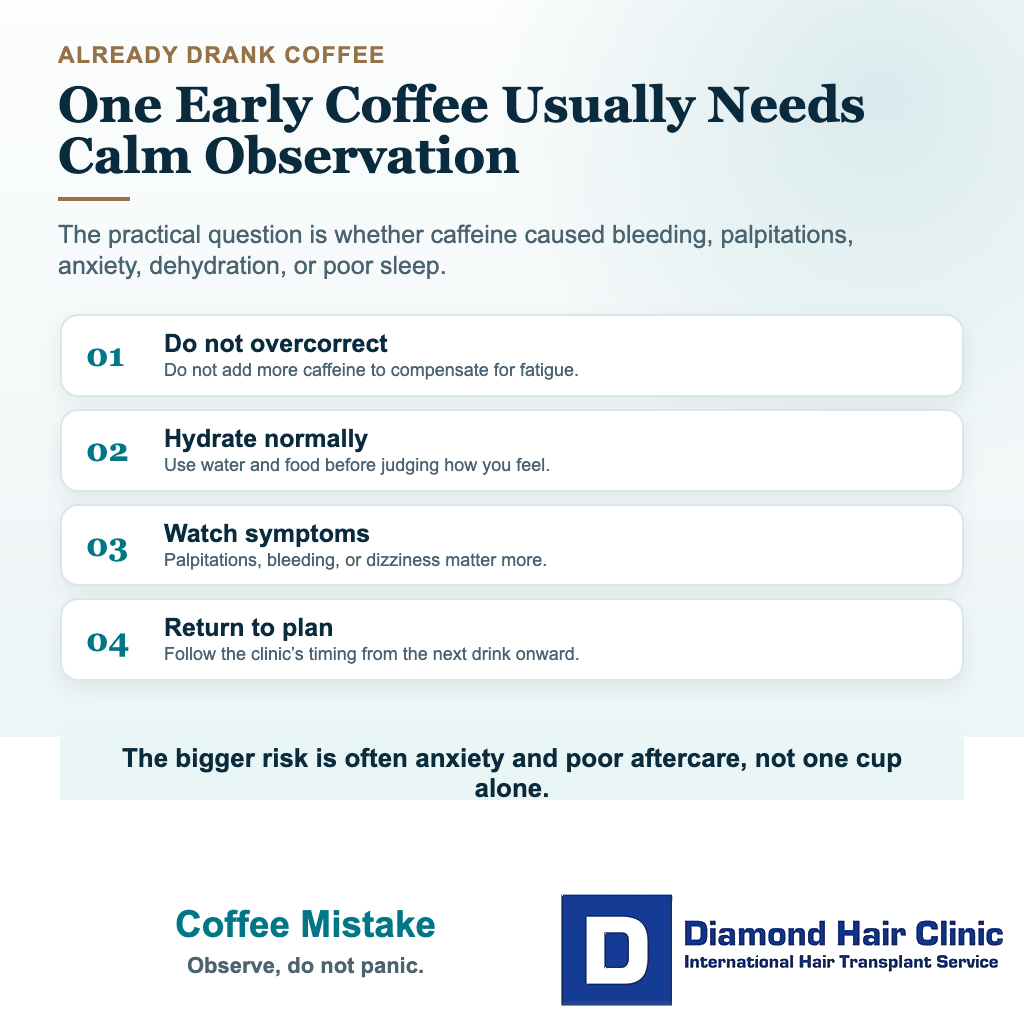
When the answer is no, return to the recovery plan. Drink water, keep the scalp protected, avoid more caffeine for the moment if you feel unsettled, and continue the instructions from your clinic. A measured correction is better than anxious overreaction.
If there is bleeding, take photos in steady light and contact your clinic with the timing, amount, and exact location. Do not rub the area to inspect it, press hard, or add random creams, alcohol based products, or home treatments. The response after touching grafts after a hair transplant should be precise, not emotional.
One ordinary decision usually does not destroy the grafts, but the first days still deserve discipline. The bigger concern is the chain of behavior that can follow the drink, especially poor sleep, more caffeine, sweating, smoking, or careless contact with the scalp.
Reasons to wait longer before coffee
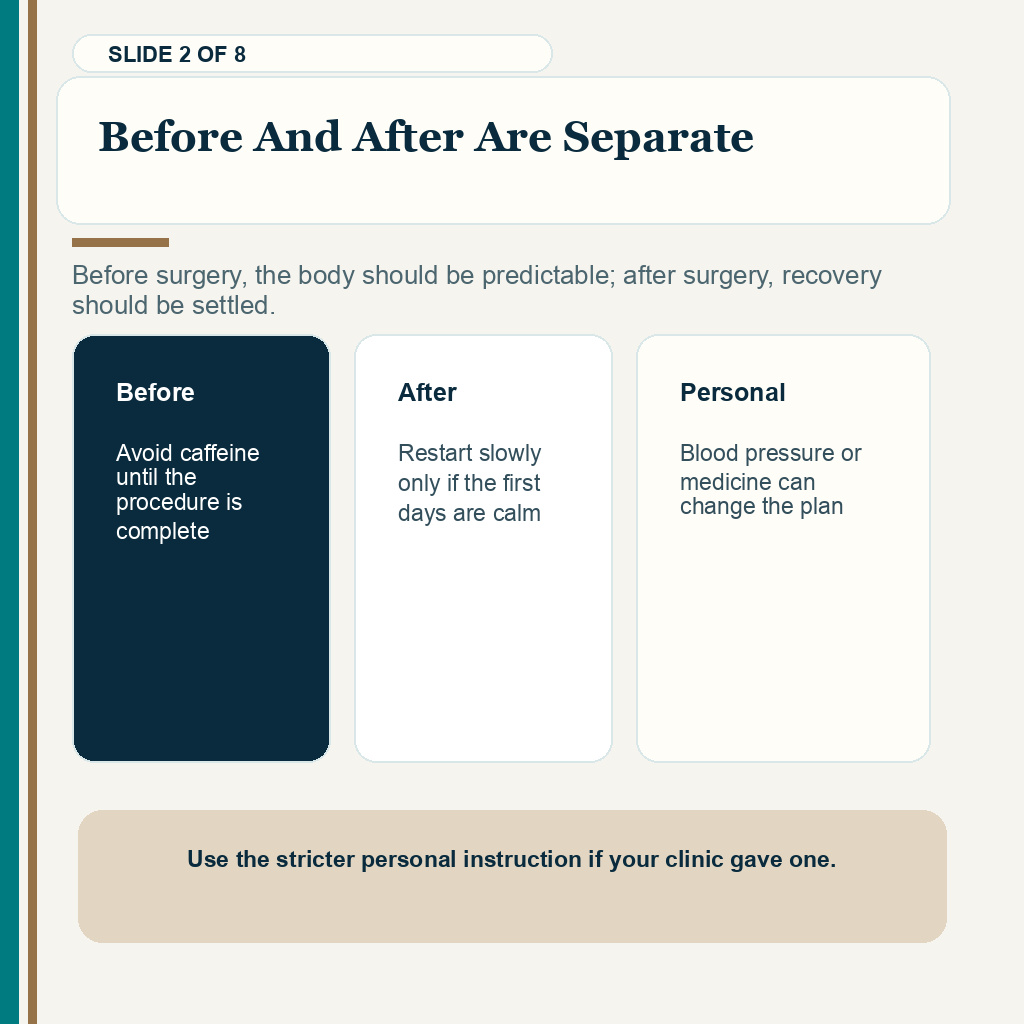
Wait longer if there was active bleeding during or after surgery, if your blood pressure was unstable, or if you felt strong palpitations, shaking, panic, or dizziness. Waiting also makes sense if swelling is increasing quickly, if you are dehydrated, if you are taking medication that makes you feel lightheaded, or if your surgeon gave you a stricter instruction for your case.
Patients with heart rhythm problems, poorly controlled hypertension, strong stimulant sensitivity, severe anxiety, or a recent medical warning should be more cautious. This is the same type of judgment I use when discussing adrenaline in hair transplant anesthesia. A stimulant effect that is harmless for one patient may be uncomfortable or risky for another.
After very large or tiring surgical days, the body may be asking for rest, water, food, and quiet, not stimulation. If coffee is being used to fight travel exhaustion or sleep deprivation, rest is the better answer. If the food part is confusing, start with what to eat after a hair transplant. Rest and position matter more than forcing normal energy too early, especially when sleep after a hair transplant is still uncomfortable.
As a practical rule, if the first 24 to 48 hours are settled, a small coffee is usually reasonable for many patients. If the recovery is not settled, wait until the reason is clear. In surgery, timing should follow the patient’s condition, not only the clock.
Restarting coffee without disturbing recovery
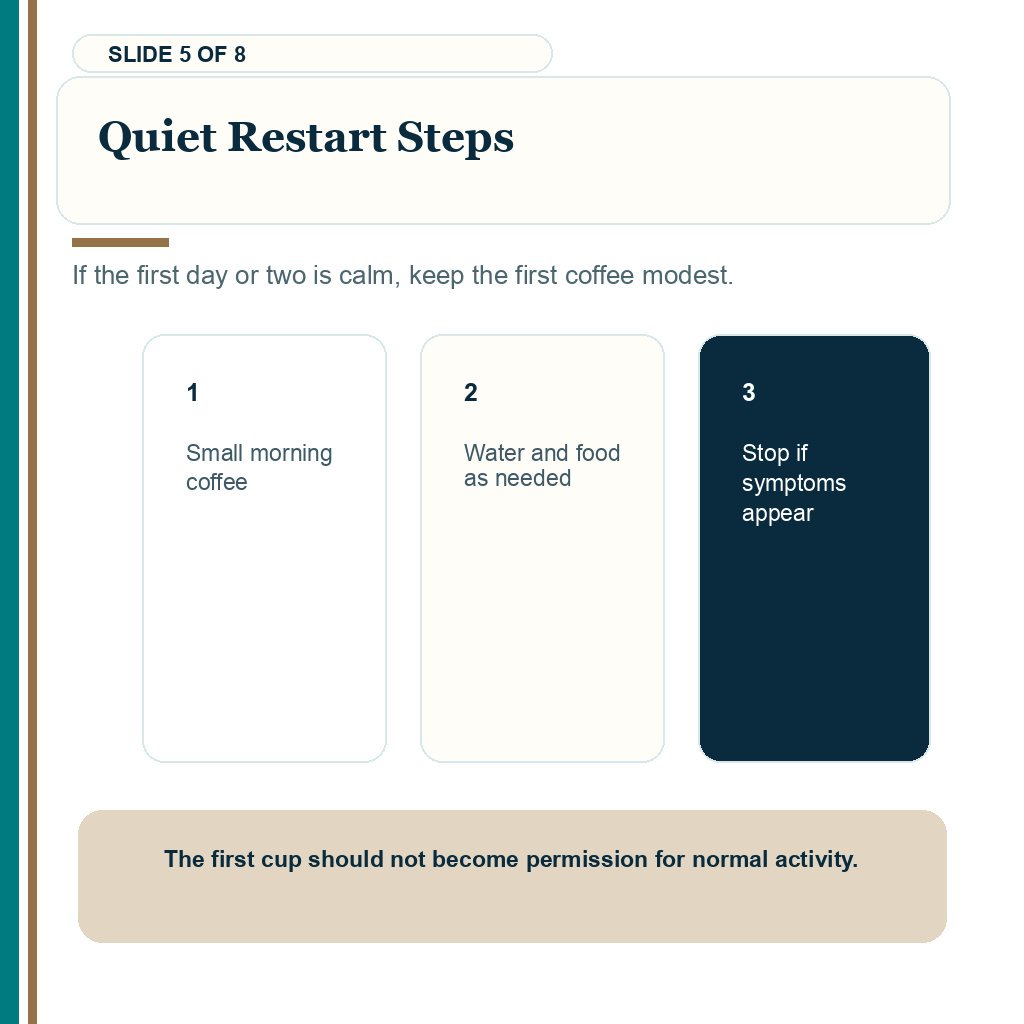
When coffee is restarted, keep it quiet. That usually means one small or normal coffee, not several strong coffees because the patient missed caffeine for a day. Drink water as well, eat normally if your stomach is sensitive, and avoid using coffee to push through exhaustion.
The first cup after surgery should not become a test of how much stimulation the body can tolerate. If you feel your heart racing, shaking, stronger anxiety, dizziness, more bleeding, or a sudden increase in swelling, stop and contact your clinic rather than taking another cup to feel normal.
Late caffeine is also worth avoiding in the first nights because sleep protects recovery more than coffee helps it. A morning coffee after a settled early period is very different from an evening espresso that keeps the patient awake, restless, and more likely to touch the scalp.
Tea, soda, decaf, and energy drinks
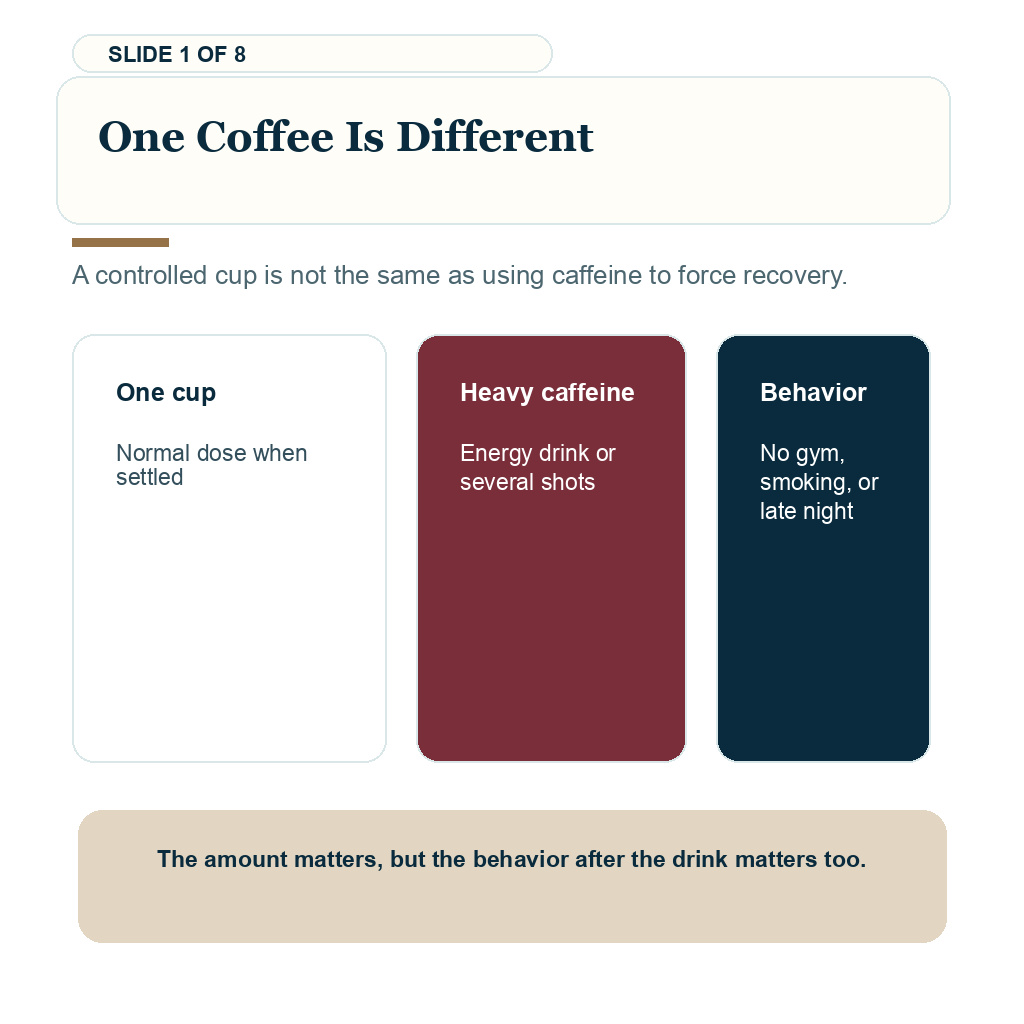
They are not the same problem. Tea and soda may contain caffeine, but usually in different amounts. Decaf coffee still has a little caffeine, but much less than regular coffee. One normal coffee is also different from several strong coffees, multiple espresso shots, pre workout caffeine, or an energy drink.
Energy drinks are the category I treat with the most caution because the dose can be high, the drinking speed can be fast, and the patient may not know how much caffeine or stimulant mixture was taken. General adult caffeine limits are not a recovery target. In the first days, I focus more on how the patient reacts than on proving a number is technically allowed.
If a patient wants something warm because the habit is comforting, decaf coffee or non caffeinated tea is often easier in the early period. If the patient wants caffeine because of a withdrawal headache, a small controlled amount may be more sensible than suffering all day and becoming anxious. But that is very different from multiple espresso shots, pre workout caffeine, or an energy drink.
Energy drinks can also encourage the patient to move more, sleep less, or feel falsely ready for normal life. I avoid a patient using them to return early to gym training, travel stress, or long nights awake.
I connect caffeine with exercise after a hair transplant. The drink matters, but the behavior after the drink can matter more while the scalp is still healing.
Caffeine does not decide hair growth
Drinking coffee should not be treated as a hair growth treatment after a transplant. It is not graft insurance. It does not repair poor graft handling, weak planning, overharvesting, an unnatural hairline, or a bad surgical design. Coffee cannot replace a proper surgical plan.
Caffeine based shampoos and topical products are a separate subject. They are not the same as drinking coffee. Even if a patient uses a caffeine shampoo later, new products should not be applied too early while the recipient area is still sensitive, crusted, or healing.
In the first days, I focus much more on safe washing, gentle contact, and keeping the scalp clean without friction. Water is not usually the enemy, but rubbing is. Keep that in mind with wash hair after a hair transplant.
Long term hair quality depends on the original diagnosis, donor management, graft handling, implantation quality, native hair loss, medication decisions, and follow up. Coffee is not one of the central pillars of a result. It is a small lifestyle question that should be handled sensibly.
Matters more than coffee early on
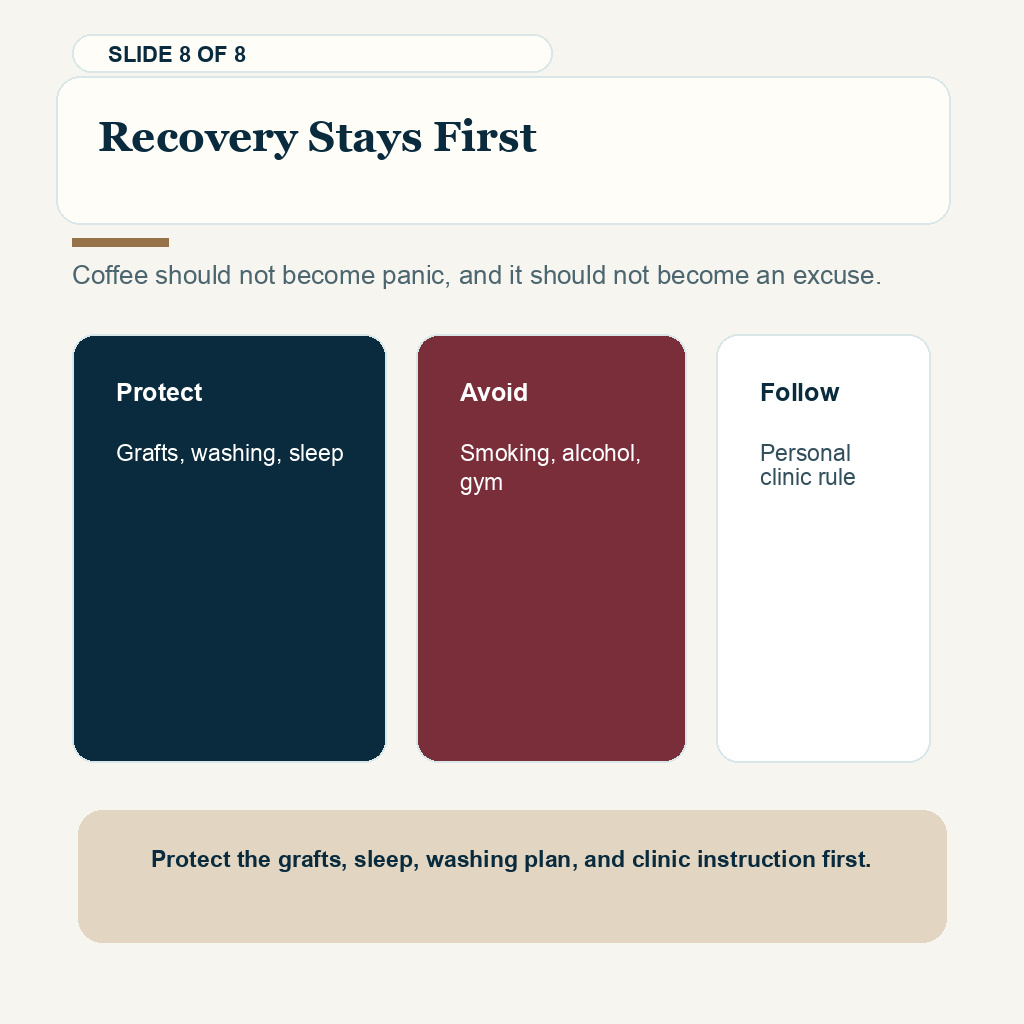
Many things matter more than coffee. In the first 10 to 14 days, the grafts need protection from rubbing, scratching, pressure, sweat, heat, and careless trauma. The donor area should stay clean. Sleep, washing, medication timing, hydration, and avoiding panic over every small sensation matter more than one ordinary cup.
This is the broader recovery logic I explain in hair transplant aftercare. The early period does not need fear, but it does need fewer avoidable problems while the scalp settles.
Alcohol often deserves stricter limits than coffee because it can affect judgment, hydration, sleep, swelling, and medication safety. My usual advice on alcohol after a hair transplant is stricter because alcohol can make patients careless at exactly the wrong time.
Smoking, vaping, and nicotine pouches deserve more concern than a small coffee because they can work against wound healing and circulation. I explain the smoke related side separately in my article about smoking after hair transplant. Between coffee and smoking, smoking is the clearer problem.
Coffee can return after the scalp is steady
Caffeine is less important than the way your body is reacting. If blood pressure is steady, swelling is mild, sleep is reasonable, and washing is calm, a small coffee after the first quiet phase is usually different from an energy drink, pre workout drink, or repeated strong doses. Hidden caffeine still counts, especially when it makes you shaky or keeps you awake.
Wait if you feel shaky, dizzy, dehydrated, anxious, swollen, or your heart is racing. The recipient area does not need extra pressure from poor sleep, heavy caffeine, or rushed movement.
Keep surgery day and the first 24 to 48 hours simple. Restart gently only when recovery is stable and follow any personal instruction from your surgeon.