


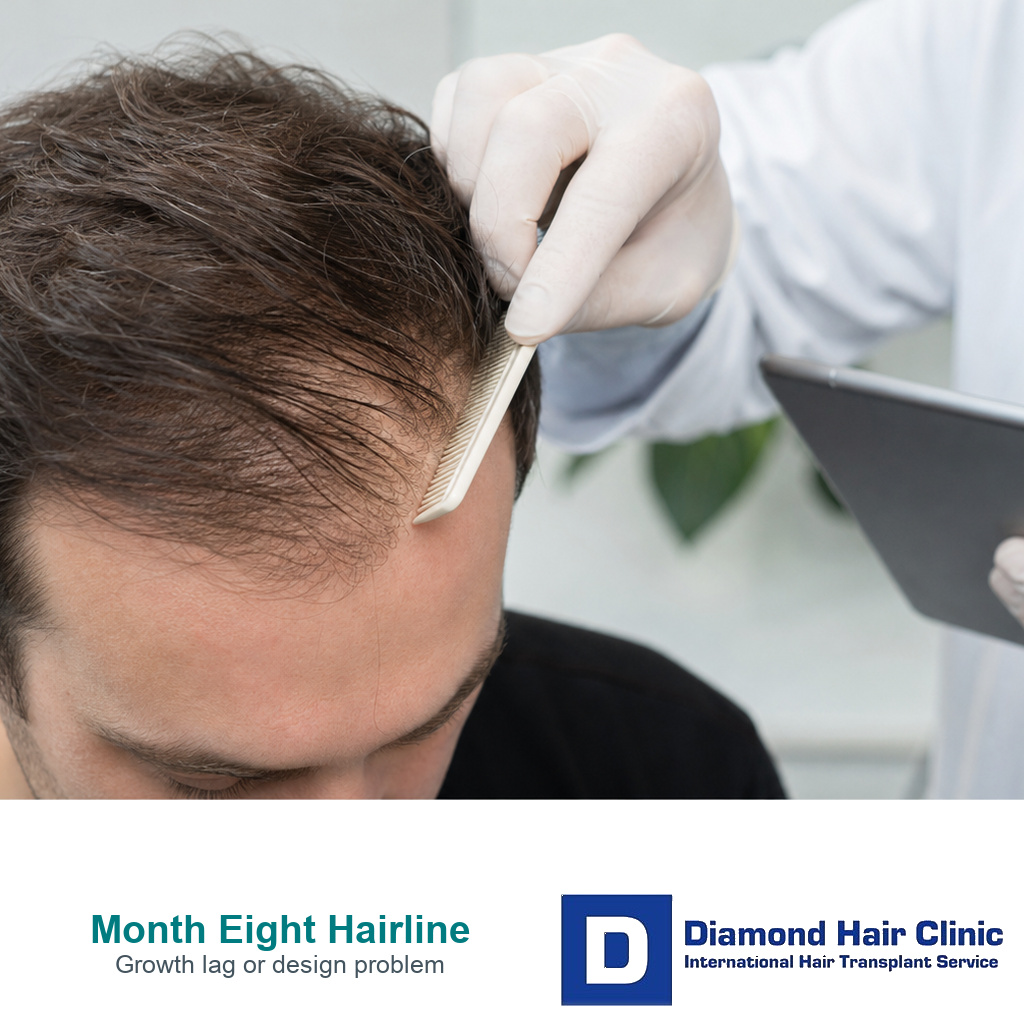
Good growth can still look artificial
A hairline can grow well and still look artificial. Growth only tells us that grafts survived. Naturalness depends on the shape of the edge, the graft selection, the direction, the density transition, the temple connection, and how the hairline fits the face.
The first centimeter matters more than many people realize. In a natural hairline, the border is not a thick wall of identical strong hairs. There is softness, small irregularity, and controlled transition from fine single hairs into stronger hairs behind them. If the first rows are too dense, too uniform, or built with thicker grafts, the eye reads the line as transplanted even when coverage is strong.
You may hear friends say the result looks good and still feel something is off in the mirror. Other people see the whole face for a few seconds. You study the edge every day in harsh bathroom light.

Texture and maturation signs
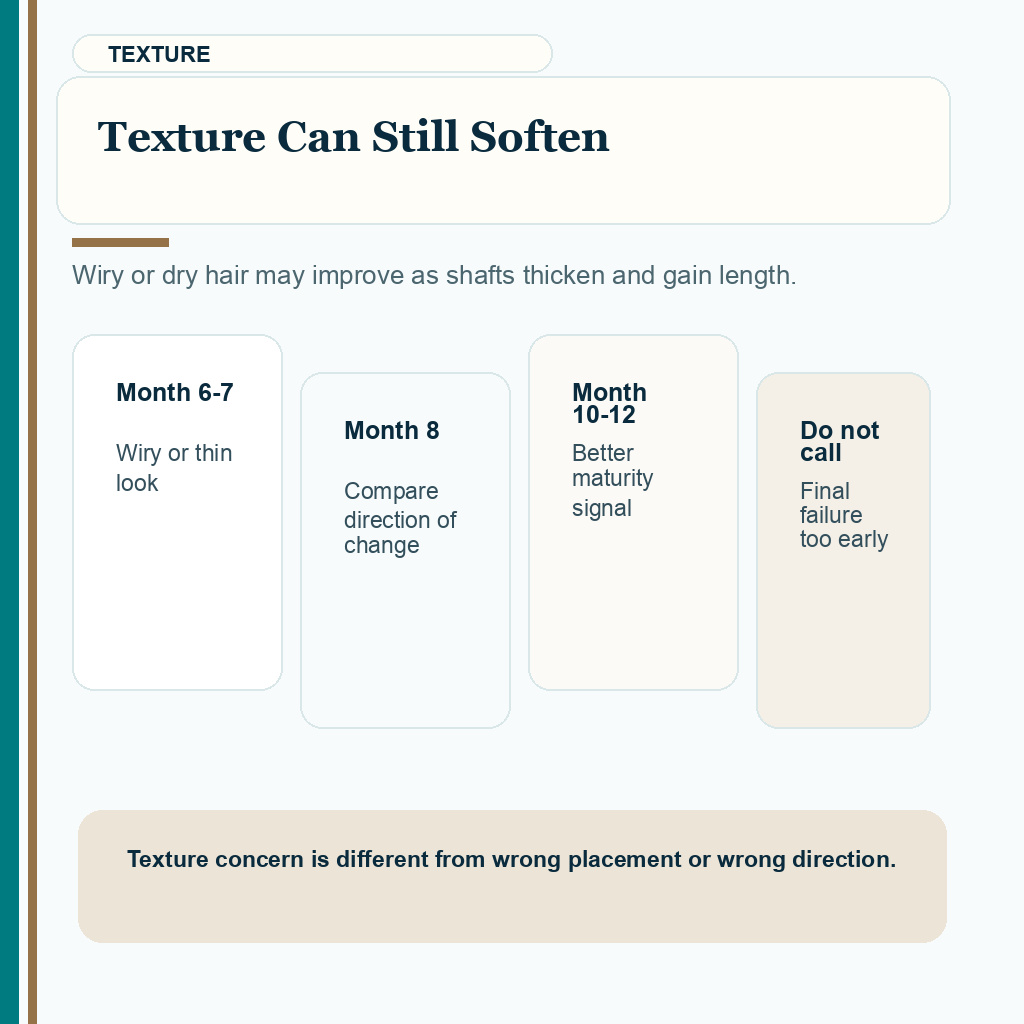
A texture problem is more likely when the hairline shape is reasonable, the front edge is not too straight, and the transplanted hairs generally point in the correct direction, but the hair still looks dry, wiry, thin, or difficult to style. This can happen during maturation. It is frustrating, but it is not the same as a misplaced hairline.
Texture also depends on hair length. Short transplanted hair can stand up, catch light, and look more obvious. Longer hair often bends better and blends with native hair. If the hairline looks better when it grows a little longer, or when the hair is styled softly instead of pushed straight upward, that is a useful sign.
I also compare photographs from several months, not only one bad day. A month eight photo taken under a ceiling light with wet hair can exaggerate every weakness, so I check the same hairline under normal dry conditions as well. Filters, portrait mode, sharpening, fibers, and different camera distances can make the edge look either better or worse than it is. The problem becomes more obvious in harsh light, wind, and wet hair, so photo conditions matter.
Graft angle and direction need a real review
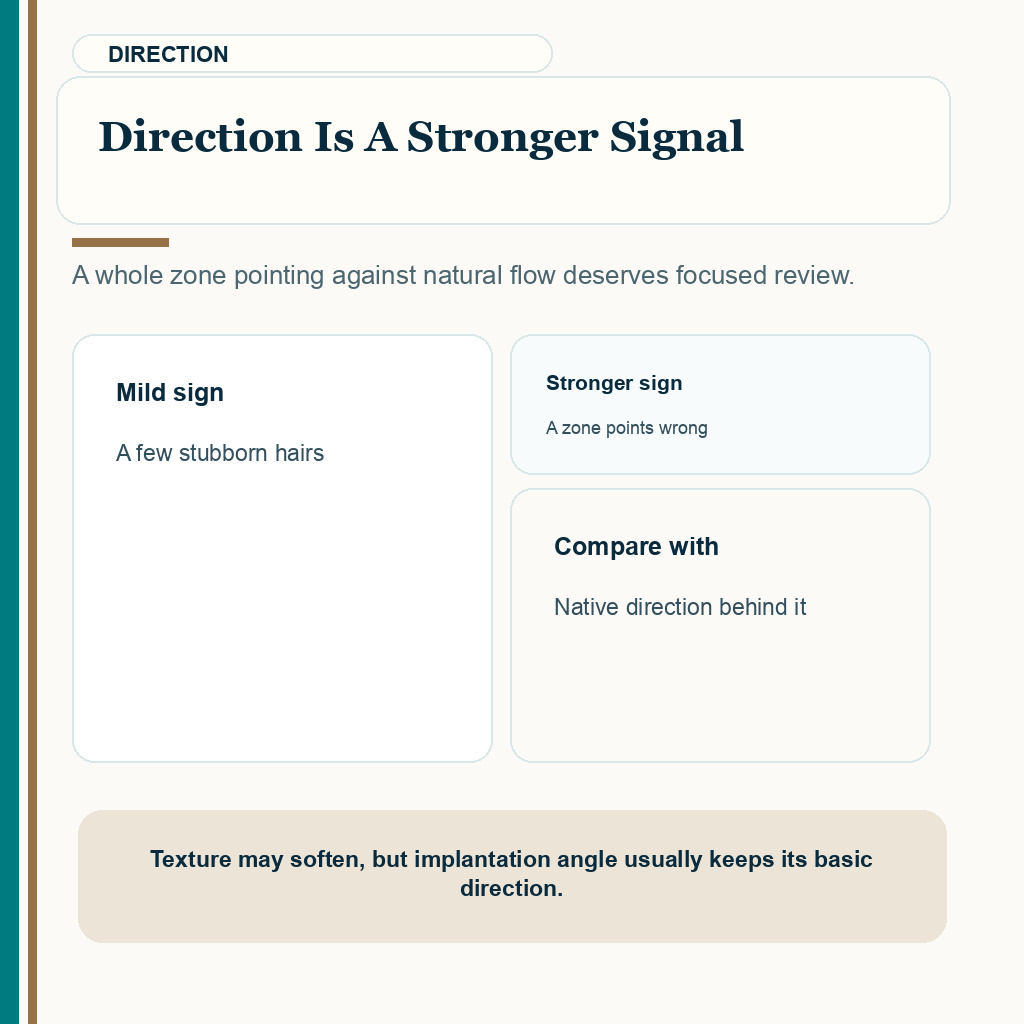
Direction deserves review when hairs consistently point against the natural flow of the surrounding hair. A few stubborn hairs are common. A whole zone that grows upward, forward, sideways, or away from the natural pattern can make the hairline difficult to style even when density is acceptable.
Wrong direction is different from wiry texture. Texture may soften. A graft placed at the wrong angle tends to keep that basic direction. Styling can hide it in some hair types, but it does not change the implantation angle.
If the direction concern is strong, compare the month eight hairline with the older planning photographs and the natural direction behind the transplant. The repair options are more complex than adding density alone, so wrong hair direction after a hair transplant needs its own careful assessment.
Straight front edge can change the whole impression
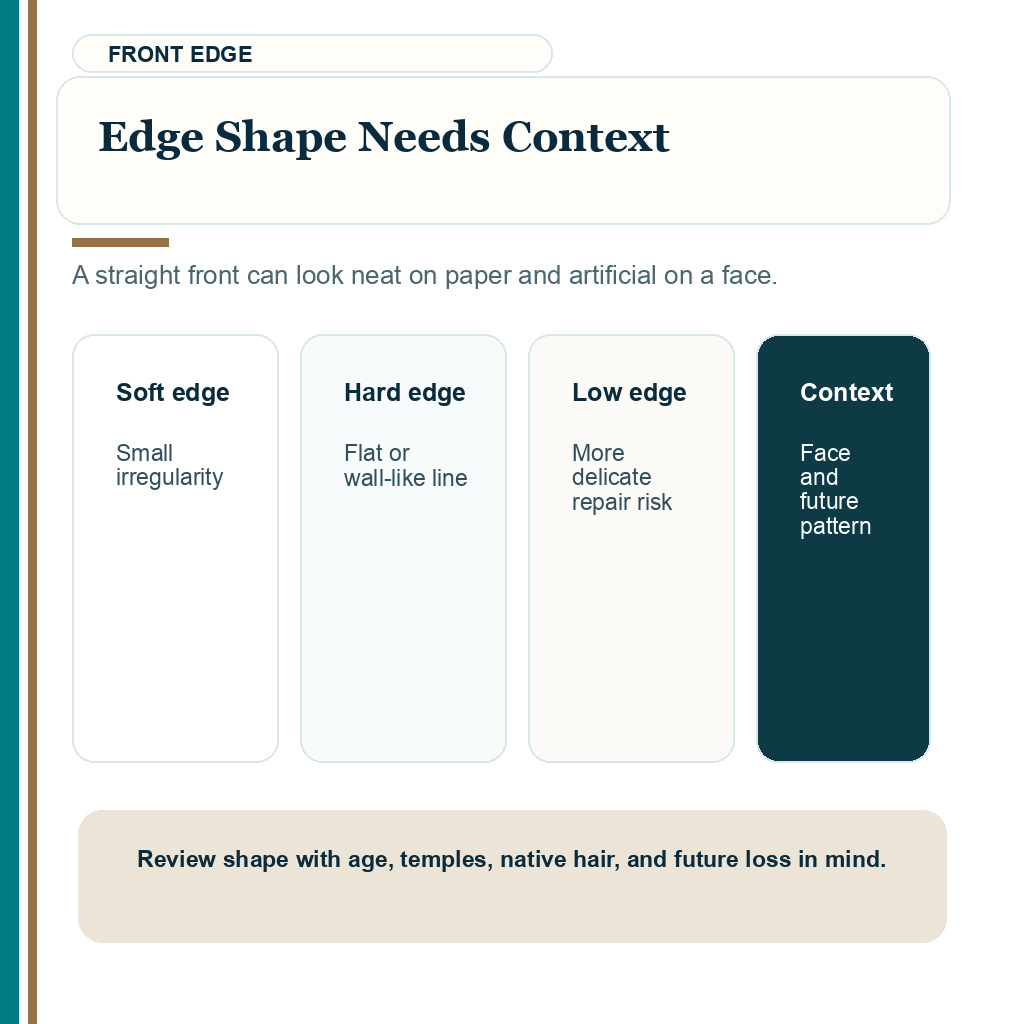
A straight hairline can look neat in a drawing and artificial on a face. Natural adult hairlines have small irregularities, slight recession at the corners, and a softer transition at the very front. If the edge is too flat, too low, or too symmetrical, it can look like a line placed on the forehead rather than hair that belongs there.
A visible straight segment is not a disaster by itself. Some patients naturally have stronger, lower, or more linear hairlines. It becomes a problem when the line ignores age, facial proportion, temple points, future hair loss, and native hair behind it.
A too straight edge often overlaps with a too low design. If the hairline sits too far forward, repair becomes more delicate because the problem may be shape, position, and graft type at the same time. A transplanted hairline that is too low can create a long term problem even when the first months look exciting.
Temple points and corners change the answer
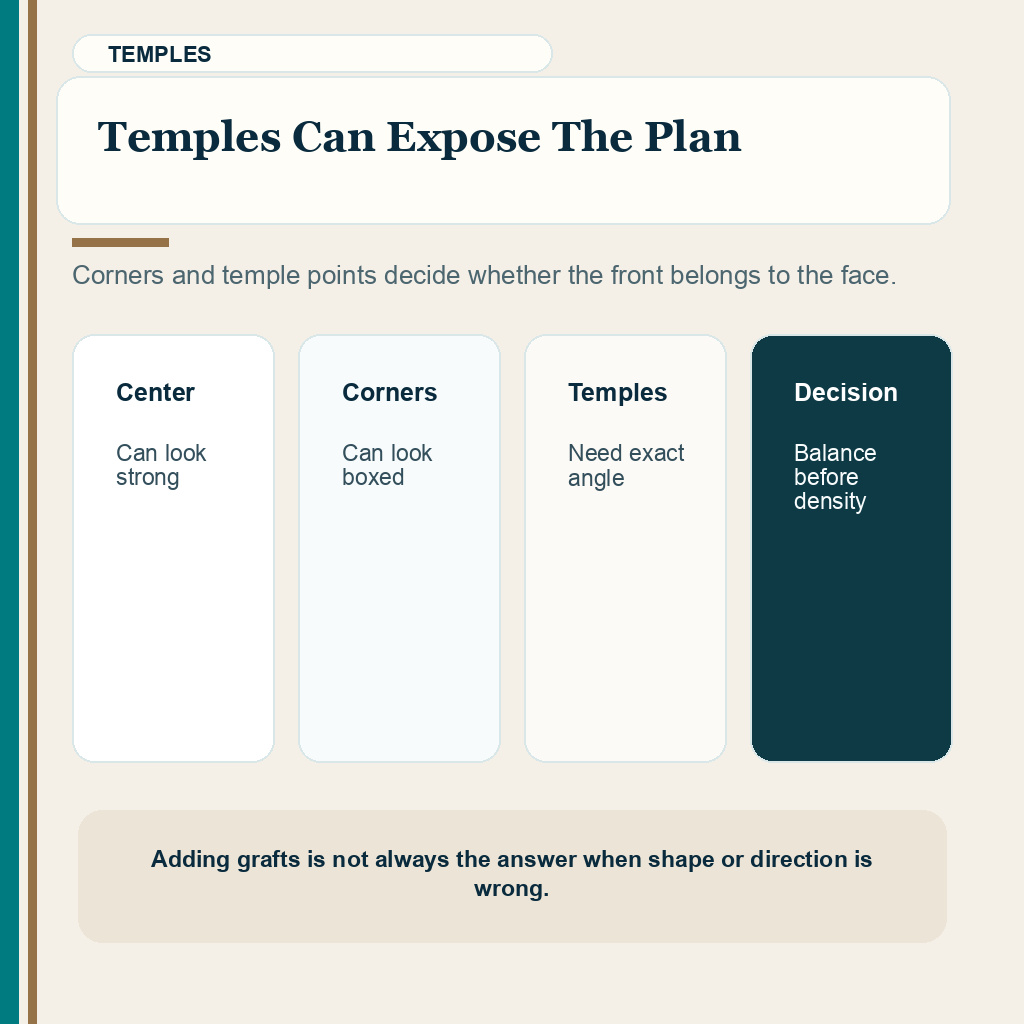
You may focus only on the center of the hairline. I look at the corners and temple points because they decide whether the front connects to the face. A hairline can look strong in the middle and still look artificial if the corners are boxed, the temples are ignored, or the front sits too heavy compared with the sides.
Temple work is unforgiving. If the angle, direction, or density is wrong there, the face can look unbalanced. Adding more grafts to the temple area is not always the answer because a bad shape can become more obvious when it is made denser.
Hairline design has to work as a facial frame, not just a lower line. The front, corners, temples, mid scalp, and future native hair all have to support each other.
Thick or curly hair can hide some design issues
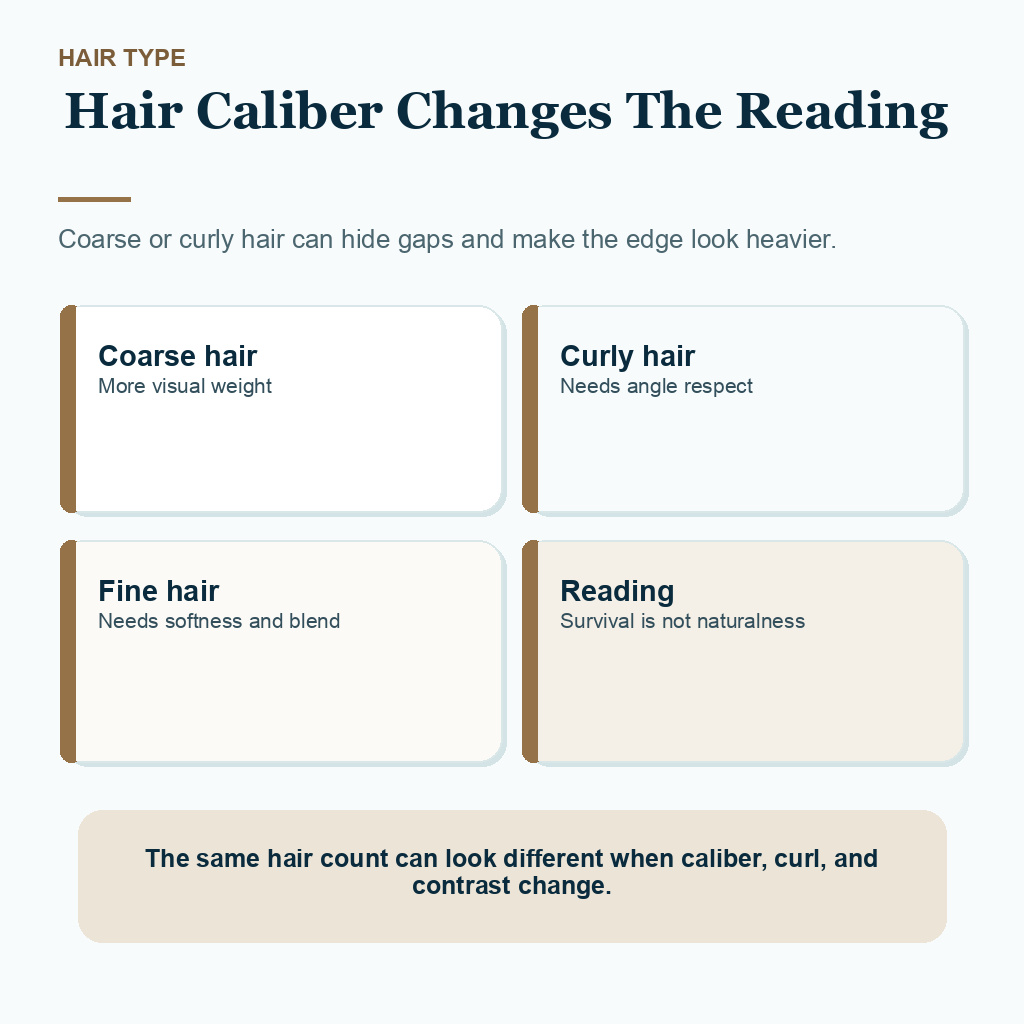
Thick or curly hair can be forgiving because it gives more coverage per graft and can soften small gaps. It can also make the front edge look stronger than intended. When thick hairs or curly units are placed too close to the very front, the line may look powerful but less natural.
Hair caliber is not good or bad by itself. It changes the surgical decision. Coarse hair often needs more softness in the border, more careful single hair graft selection, and controlled direction. Curly hair needs respect for curl exit and angle. If those details are ignored, the result can look heavy even when the graft survival is good.
More grafts may help when the issue is limited coverage. If the issue is a hard edge, wrong direction, or thick grafts at the front, adding density can make the artificial part stronger. More grafts do not repair a design problem if the design itself is the reason the eye notices the hairline.
Useful photos for a month eight review
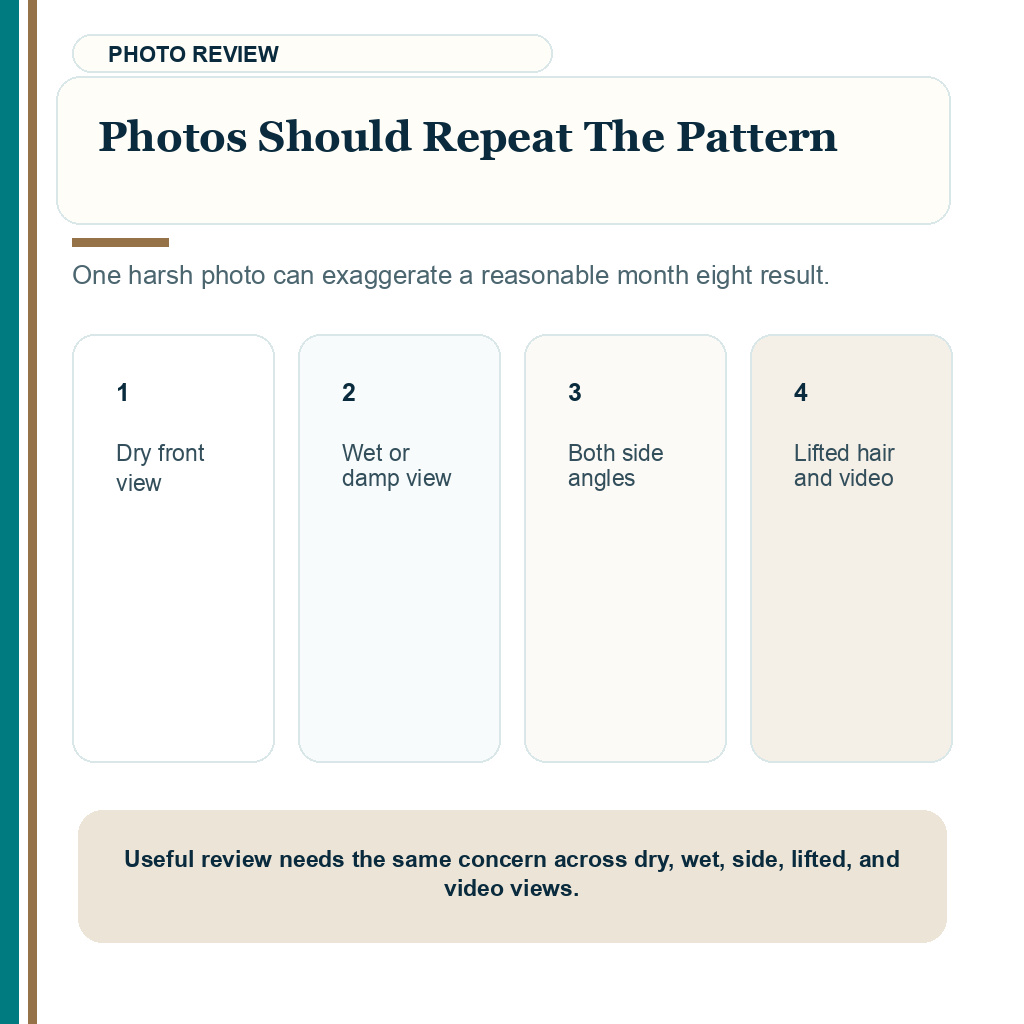
Good photographs reduce panic and reduce false reassurance. Useful review photos include dry hair, wet or damp hair, front view, both side angles, hair lifted away from the forehead, normal room light, harsh light, and a short video where the hair is moved gently. Add close views of the first row and both corners without fibers, concealer, filters, or strong styling product. Before surgery photos and immediate placement photos also matter when they are available.
Before booking a touch up, compare relaxed normal distance photos beside close hairline photos. A small sparse corner may need a different answer from a whole frontal edge that still looks weak in daily light.

A month eight hairline review is more useful when the same concern appears across dry, wet, side angle, lifted hair, and video views.
A single flattering photo can hide density problems. A single harsh photo can make a reasonable result look worse than it is. The review needs the pattern across many views.
Compare the hairline with similar hair characteristics, not with edited clinic photographs. Results from patients with hair like yours are more useful than a generic before and after gallery because hair caliber, curl, skin contrast, and loss pattern change how the hairline reads.
Month eight is usually too early to commit to repair
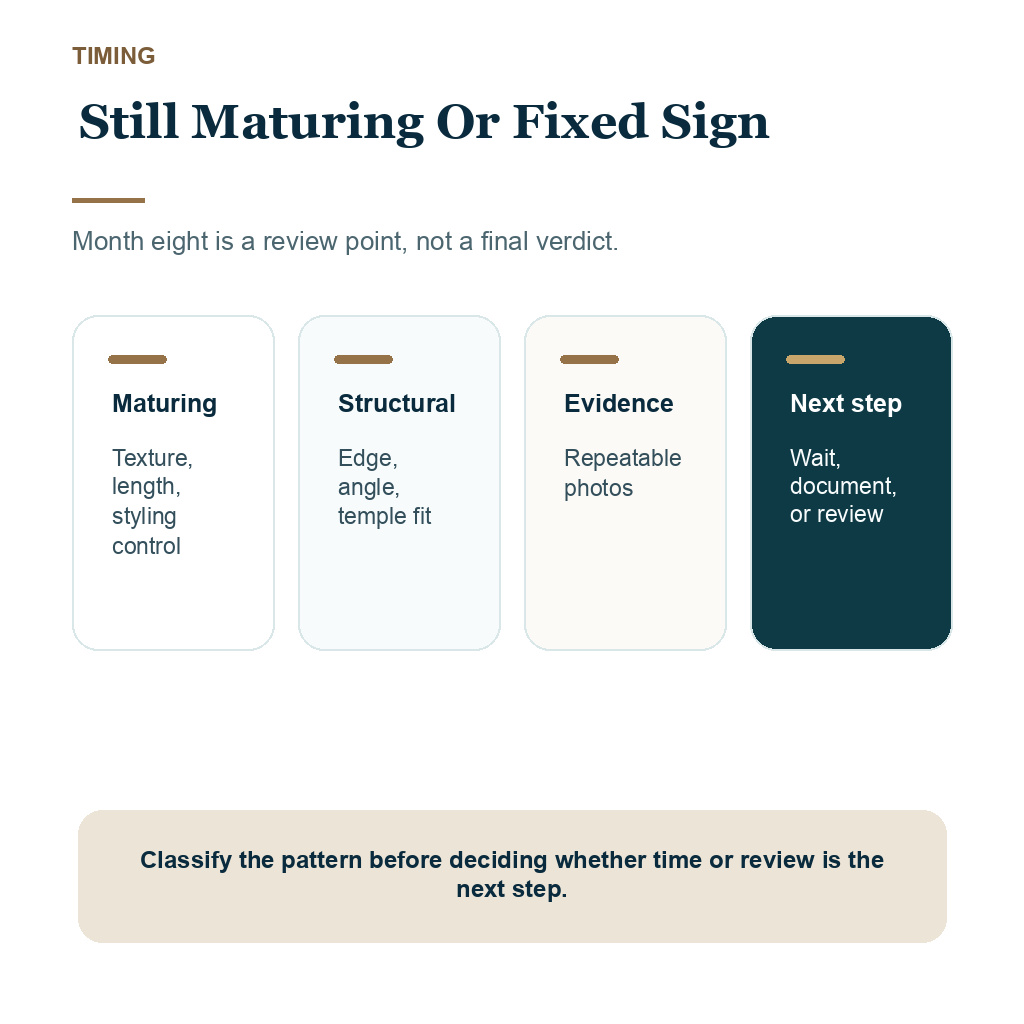
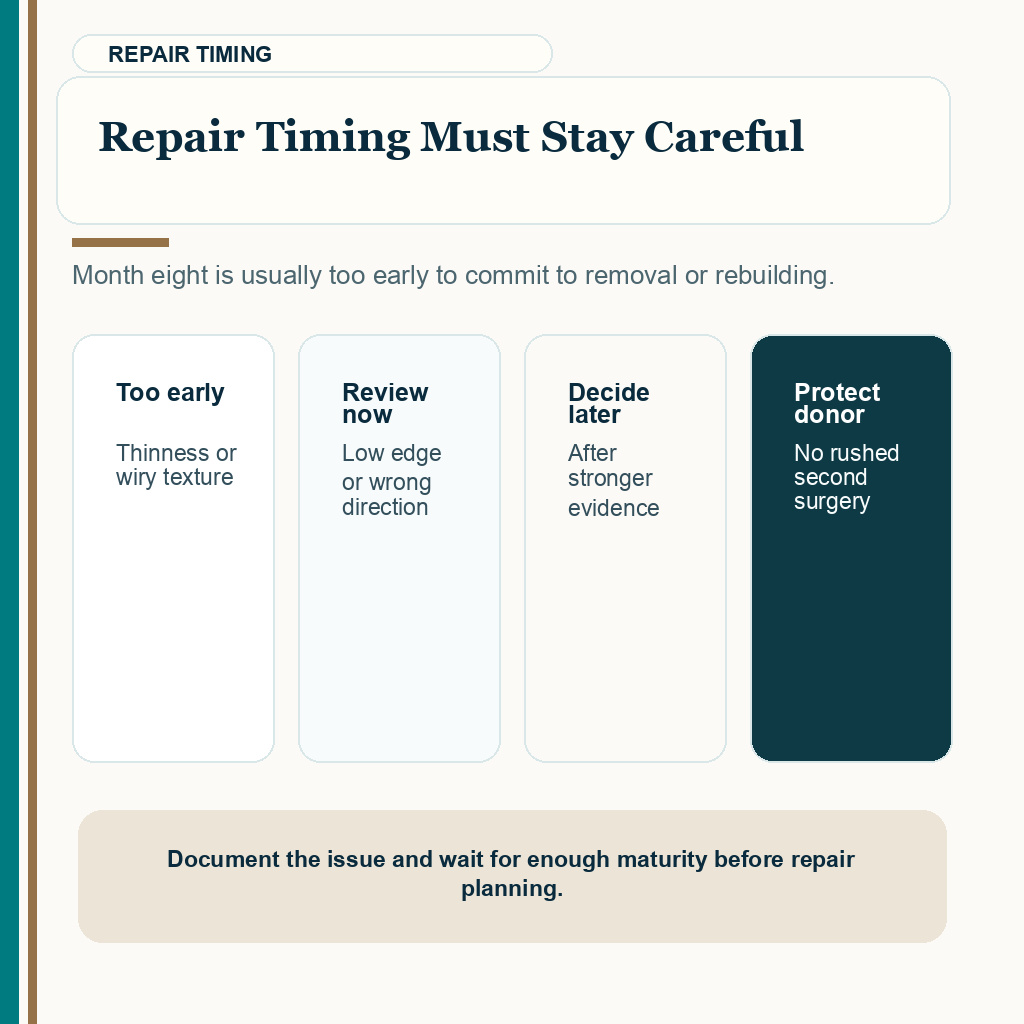
Repair planning at month eight is premature if the main issue is thinness, wiry texture, uneven growth, or difficulty styling. Those concerns may still improve. Planning a second procedure too early can waste grafts and create new problems before the first result has declared itself.
Structural concerns change the review. Low placement, wrong direction, obvious multiple hair grafts at the edge, or a temple connection that does not fit the face all need careful classification. Even then, month eight is for classifying the problem and documenting it, not committing to a repair date. Do not start graft removal, laser, electrolysis, or camouflage surgery before the pattern has been mapped and the donor area has been reviewed. Stable photos and enough maturation should come before removal, camouflage, or added softness.
An uneven appearance can also distort judgment. One side may mature slower, or one side may truly have a design problem. A careful review of an uneven hairline after a hair transplant separates timing, swelling, camera angle, growth speed, and actual design.
Repair options after full maturation
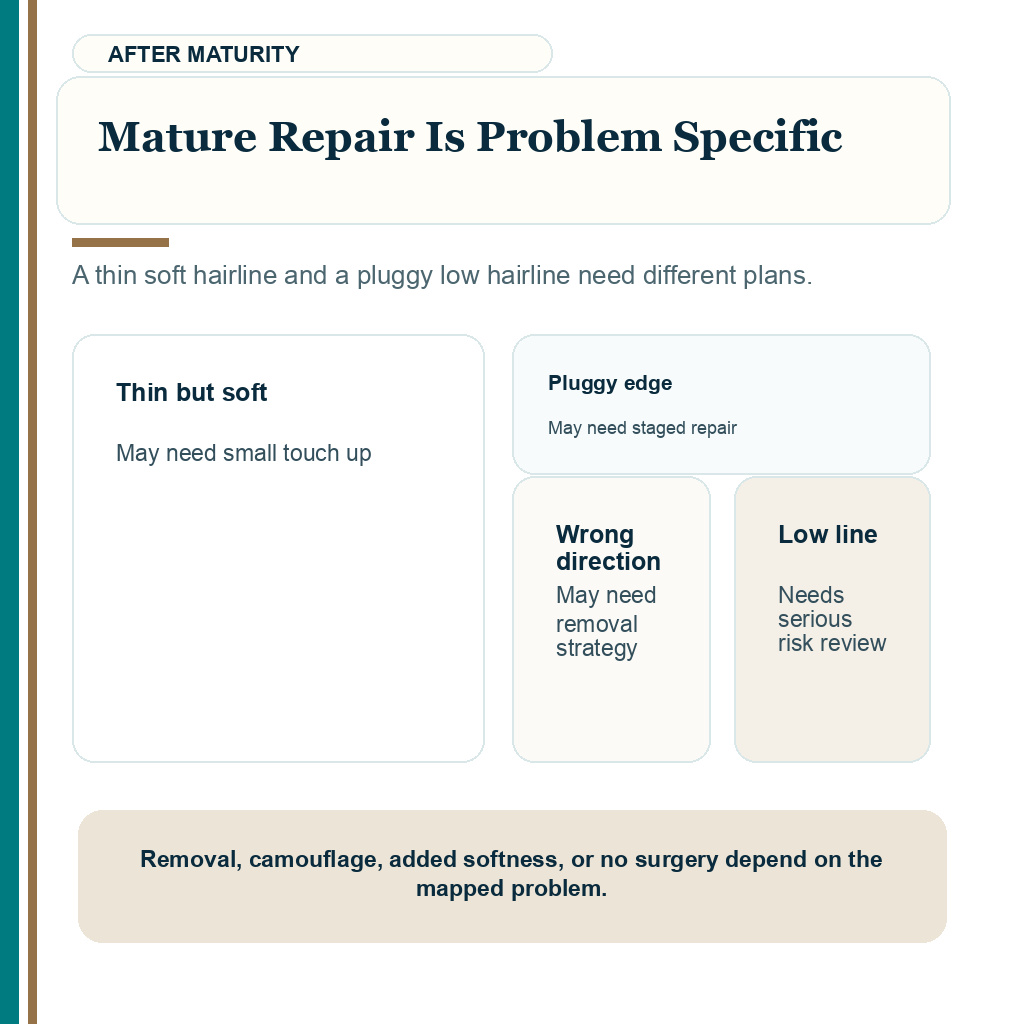
After the result is mature enough, repair depends on the specific problem. A thin but well designed hairline may sometimes need a small hair transplant touch up with soft single hair grafts in selected areas. A pluggy front may need removal of thick grafts, camouflage with finer grafts, or a staged combination. Wrong direction may require removal or careful redistribution, not only extra density.
If the line is too low, the decision becomes more serious. Raising or softening a low hairline can involve laser, electrolysis, punch removal, or staged reconstruction depending on graft position, scarring, hair type, and donor supply. Each option can create its own risks, including texture change, pigment change, small scars, or the need for more than one stage. Repair is not cosmetic decoration. It is surgery on top of surgery.
A careful repair map matters more than a rushed second surgery. Pluggy hairline repair depends on single hair placement, removal strategy, donor limits, and emotional timing before another procedure is accepted.
Prevention starts before surgery
Prevention starts before the first incision. The surgeon must design a hairline that fits the face today and will still make sense if native hair changes later. The front edge needs fine graft selection, irregularity, and direction that follows real hair growth. The corners need conservative planning. The temples need special judgment.
You can help before surgery by asking where the hairline will sit, how the first rows will be built, how single hair grafts will be used, how the corners will connect, and what happens if you lose more native hair later. The proposed line should be checked upright on the face, with the temples and forehead in view, not only as a close drawing of the front edge.
This is also where a second opinion before a hair transplant can protect the patient. If a proposed hairline looks exciting but too low, too straight, too dense at the edge, or too disconnected from the temples, the pause before surgery is much easier than repair after surgery.
Frame I use at month eight
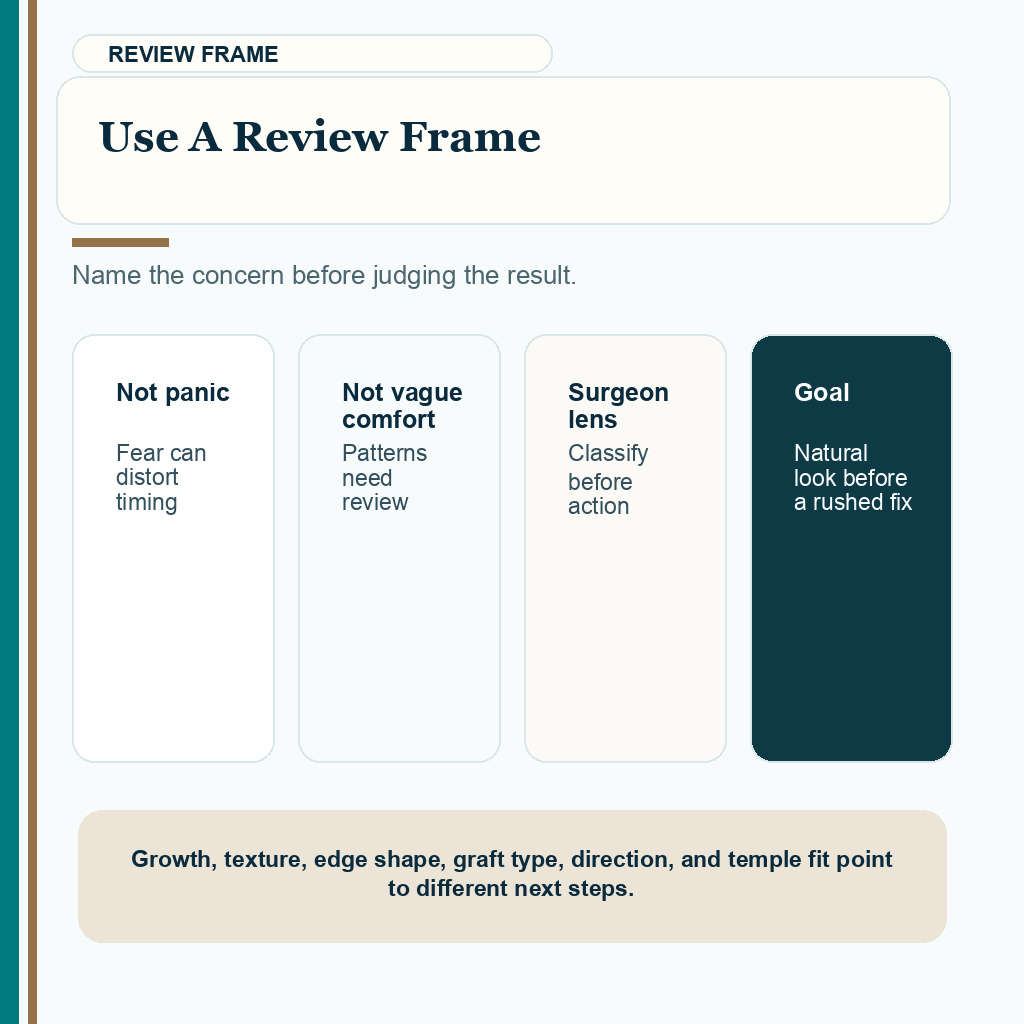
At month eight, do not react only from fear, and do not accept vague reassurance if a structural problem appears in every photo. Put the concern into the right category by separating growth, texture, edge shape, graft type, direction, temple connection, and styling behavior. Each category leads to a different repair or waiting path.
If the hair is growing but still immature, time is part of the treatment. If the edge is too straight, the angle is wrong, or thick grafts sit at the front, time may soften the hair but it will not rewrite the original design. That distinction separates patience, better photographs, medical review, and repair planning.
A natural result is not created by chasing the lowest line or the densest front. It is created by respecting the face, the donor area, the native hair, and the future pattern. If your month eight hairline worries you, the best first step is a proper review, not panic and not another rushed operation.