


Salon Chemical Treatments Need Healed Scalp Skin
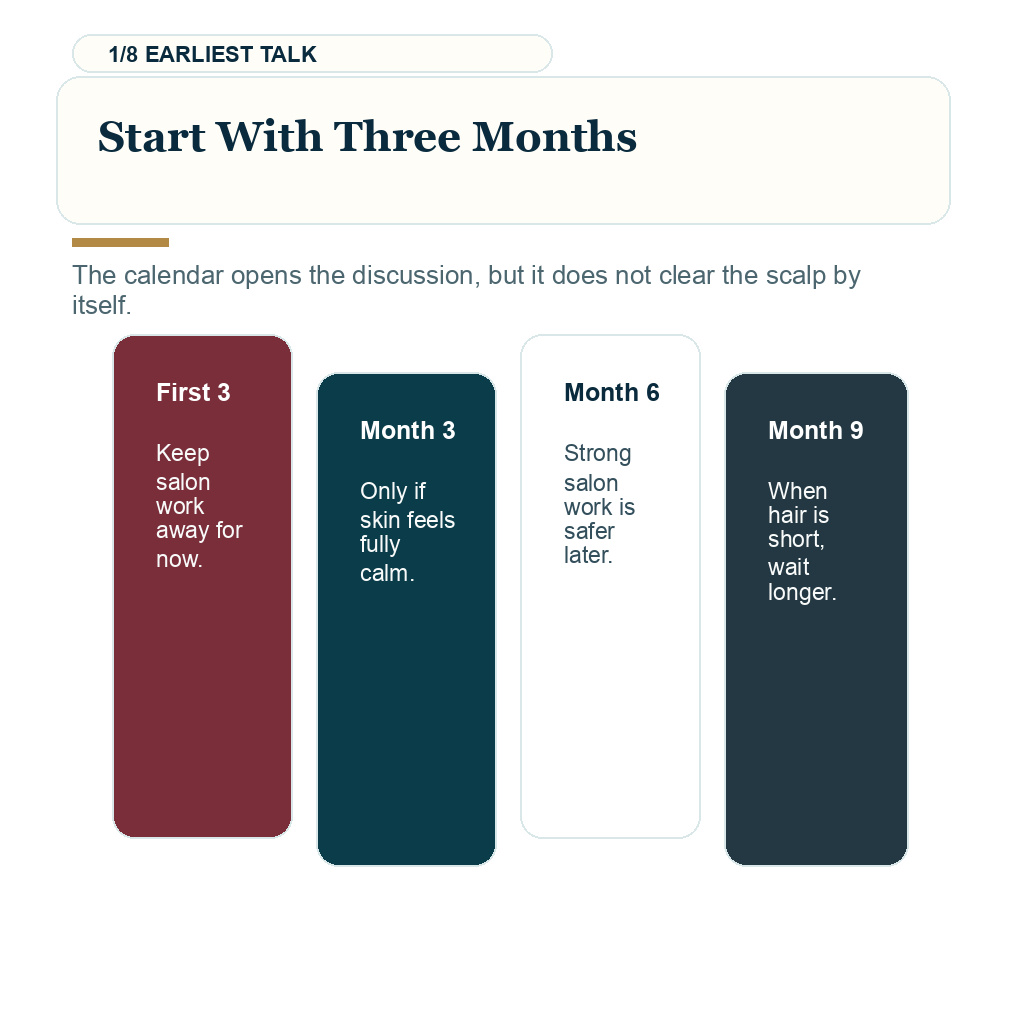
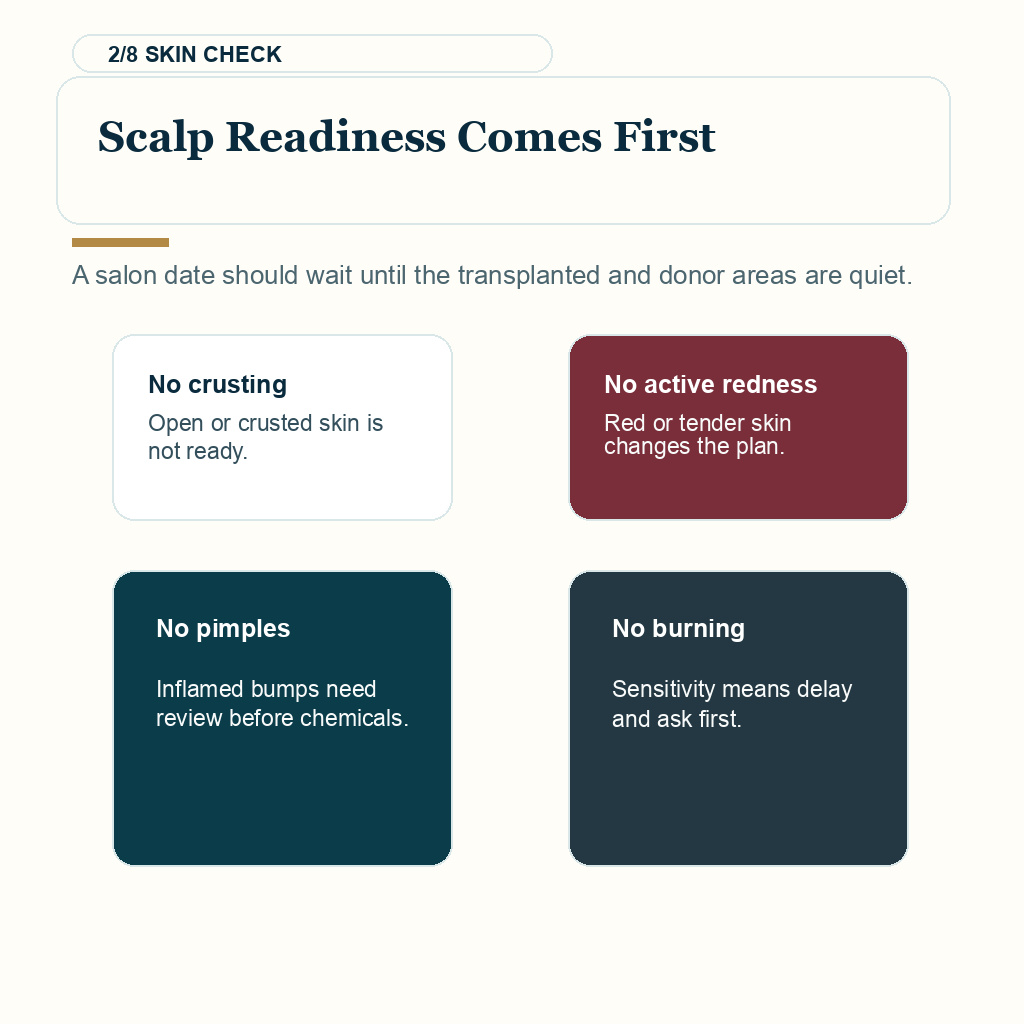
For most patients, I keep keratin treatment, perming, chemical relaxers, chemical straightening, and aggressive flat iron work out of the first 3 months after FUE. The calendar is only the starting point. The transplanted and donor areas also need to be fully healed, with no crusting, open spots, active redness, pimples, tenderness, burning, or unusual shedding pattern that needs review. For burn, traction, or CCCA questions related to relaxers, see chemical relaxers and hair transplant timing.
For stronger salon chemicals, month 6 or later is a more sensible discussion. Month 9 or later may be better if the transplanted hair is still short, the scalp is sensitive, or dense hairline work was done. The treatment needs to be worked through the hair shaft, not rubbed into healing graft skin.
That practical distinction matters. A cautious treatment kept on longer healed hair shafts is different from root application, relaxer retouching close to the skin, bleach plus keratin in one visit, or daily flat iron pressure near short grafted hair. If the transplanted hair is still short, wiry, or changing texture, a keratin or perm treatment may chase a styling problem that would have improved with time. Skin healing comes before hair styling, especially when product or heat reaches the roots.
Before booking the salon, the important detail is how close product and heat will come to the roots. A treatment kept on longer hair is different from a service that pushes chemicals into short transplanted hair, then needs firm washing to remove residue.
Transplanted hair can feel frizzy or wiry
New transplanted hair can grow with a coarse, wiry, or uneven texture before it matures. The shaft may look different from the surrounding native hair, especially during the first visible growth period. This often appears during the months when the result is improving but not yet refined.
That texture change can make keratin smoothing, a perm, a relaxer, or a hot iron feel tempting too early. I first ask whether the concern is true permanent texture, short immature growth, dry hair, styling difficulty, or anxiety about appearance. Many cases of wiry coarse transplanted hair soften as the shaft matures.
There is no benefit in treating a temporary growth phase as if it is a final cosmetic defect. Hair transplant growth is slow, and the shaft quality can continue changing while density and length improve.
Keratin, perms, and relaxers are different from normal styling
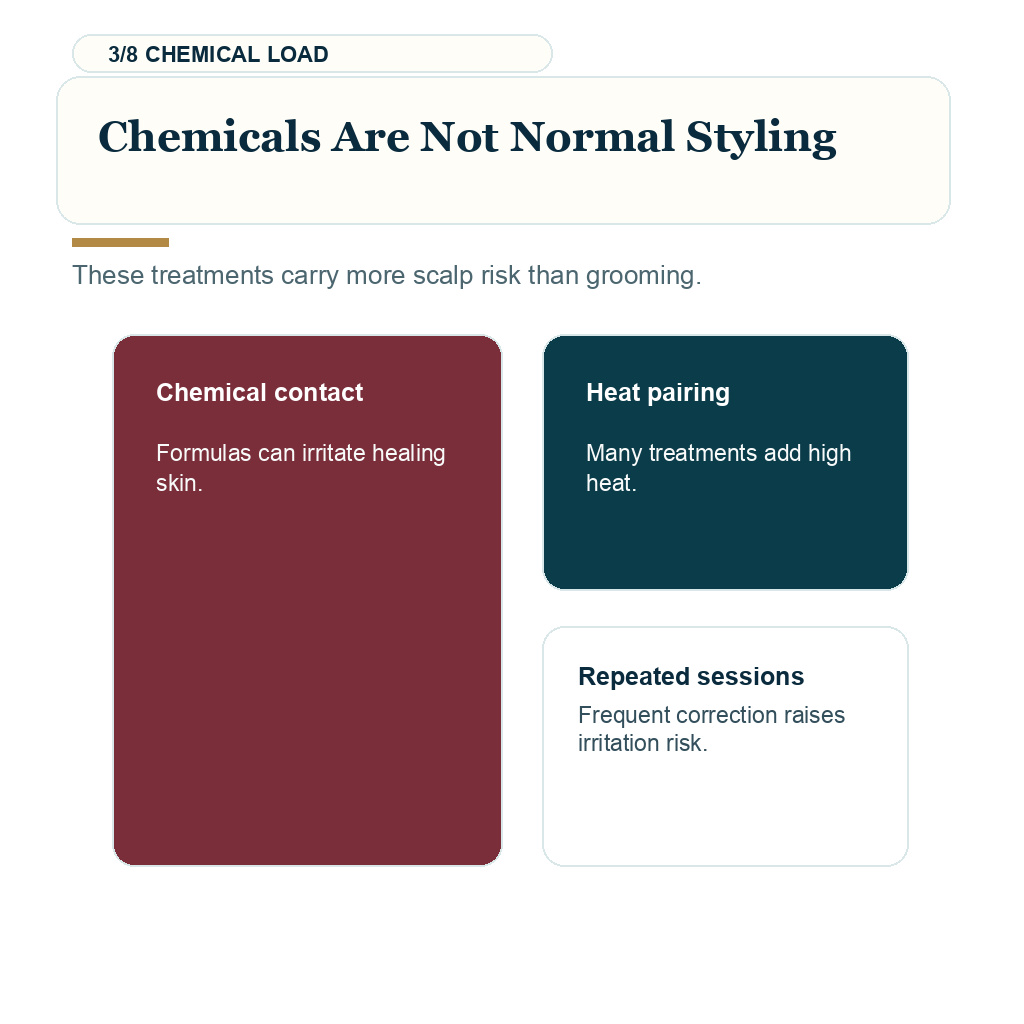
Normal styling products sit on or around the hair and can be stopped quickly if irritation appears. Chemical smoothing, perming, and relaxing are more aggressive. They may involve alkaline or acidic products, prolonged contact time, heat, repeated combing, sectioning, tension, neutralizing, and washing steps.
I look past the hair shaft and check the skin underneath it. During early recovery, the recipient area and donor area may still be sensitive even when they look acceptable from a distance. Chemical product touching a tender scalp can create burning, irritation, rash, follicle inflammation, or scratching.
I separate these treatments from ordinary hair gel, wax, and hairspray after a hair transplant. A light product used away from the grafts is a different risk from a salon treatment that combines chemicals, heat, and scalp manipulation.
Dyeing hair after a hair transplant uses a different product family, but the decision is similar when bleach, strong developer, or repeated scalp contact is involved.
Timing chemical styling safely
It is too early if there are scabs, crusts, pimples, drainage, active redness, itching that makes you scratch, burning, pain, open skin, or folliculitis. It is also too early if you are still unsure whether recent shedding, redness, or bumps are normal for your stage of recovery.
The first weeks are not the time for keratin treatment, perm solution, relaxer, bleach, or strong heat. The grafts and skin need a quiet healing period, not extra chemical stress. Even later, the answer changes if the scalp is irritated or inflamed.
If redness, scabs, or bumps are still present, compare the scalp with redness, scabs, and pimples after a hair transplant. If the problem looks like inflamed follicles, folliculitis after hair transplant matters before any styling decision.

Do not judge timing only by calendar days. The scalp, hair length, product contact, and heat exposure must all be ready.
The scalp must be ready for salon chemicals
The scalp needs to be settled, with no open areas, no crusts that still need careful washing, no increasing tenderness, no suspicious discharge, and no active rash. You need to be able to wash hair normally after a hair transplant and touch the hair gently without pain or fear.
The hair also needs enough length for the stylist to work on the shaft without pressing product into the scalp. Very short transplanted hair forces product and heat closer to the skin. Longer hair gives more control, less scalp contact, and a cleaner way to protect the recipient area.
Numbness can also mislead you. If the recipient or donor area still feels numb, do not use that numbness as proof that a chemical product is comfortable. A scalp that cannot feel heat or burning normally needs more protection, not more aggressive treatment.
It helps to separate styling dryness from medical irritation. Conditioner after a hair transplant may be enough for dryness once washing has normalized. Chemical treatment is not the first response to early roughness.
Keratin and perms after grafts are secure
Once grafts are healed and growing, a salon treatment applied carefully to the hair shaft does not pull the grafts out simply because it is called keratin or perm. The risk comes from the process itself, including chemical irritation, heat injury, pulling, scratching, scalp inflammation, and treating the area before the result has matured.
If the treatment burns the scalp, causes rash, or triggers scratching, it has moved beyond a cosmetic styling issue. Irritated skin can make recovery uncomfortable and can confuse the picture if redness, bumps, or shedding appear afterward. You may then worry about graft loss when the real cause was treating an unsettled scalp.
The product cannot touch healing graft skin. If the stylist cannot keep product away from the scalp, or if the hair is too short to work safely, delay the treatment.
Stylist instructions after FUE
Tell the stylist that you had a hair transplant, where the grafts were placed, where the donor area is, and which areas still feel sensitive. A stylist does not need every surgical detail, but they need to know that the scalp is not an ordinary untreated scalp. When the idea comes from a barber or stylist, the exact service name and product process need to be clear before the appointment is booked.
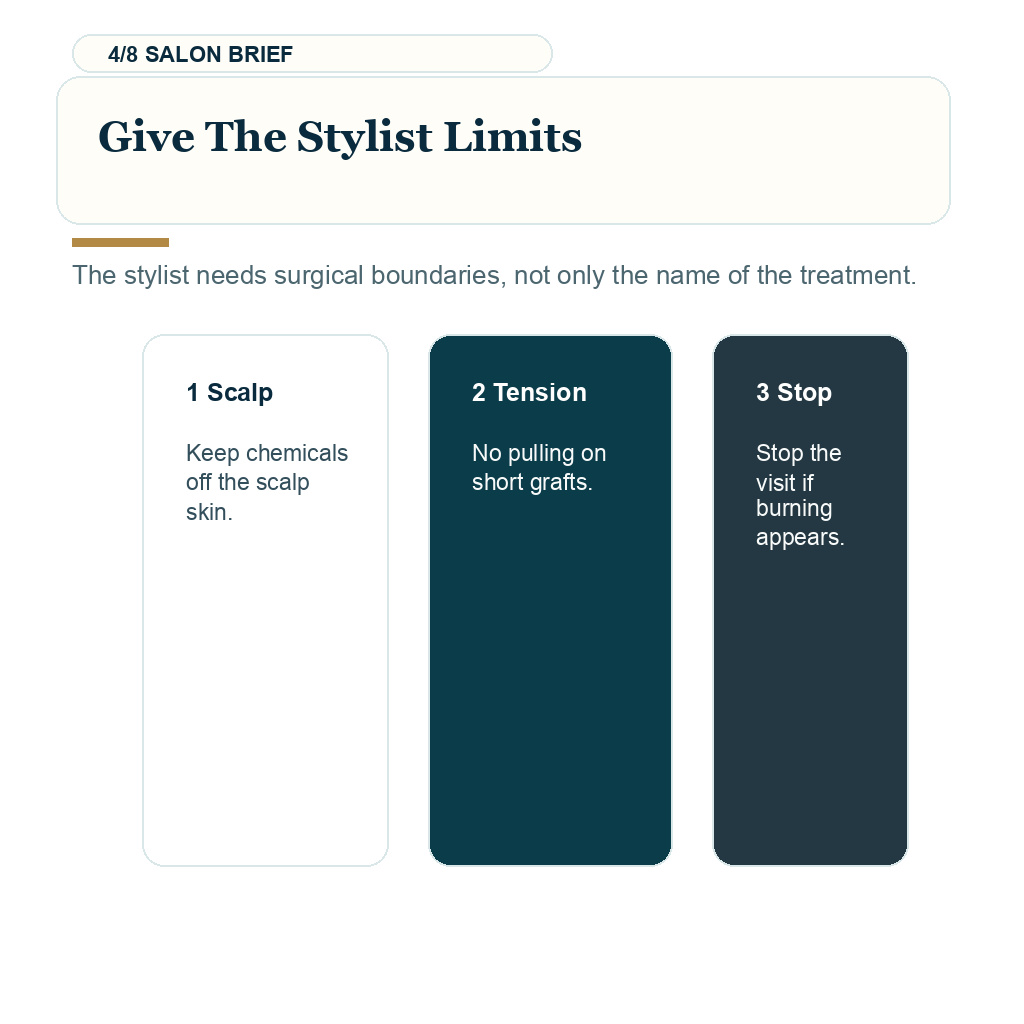
Ask them to keep chemicals off the scalp as much as possible, avoid tight sectioning, avoid tight clips or foils on grafted areas, avoid aggressive combing, avoid high tension pulling, and use controlled heat. The appointment stops if there is burning, stinging, rash, eye irritation, coughing, or a strong chemical smell that makes you uncomfortable. A stylist who cannot adjust technique for a scalp after transplant is not the right stylist for that stage.
Ask for the exact product name and ingredient list before the appointment, not only the service name or the word keratin. If the stylist cannot show the hair product ingredient list, the service is not clear enough for a recently transplanted scalp. A small strand test away from the scalp is safer than applying a strong formula across the whole transplanted zone first. If your skin has reacted to hair dye, bleach, fragrance, relaxer, or smoothing products before, tell the stylist and the clinic before booking.
Timing also overlaps with ordinary grooming. A careful haircut after a hair transplant may be easier and safer before any chemical process, because it can improve shape without exposing the scalp to strong products.
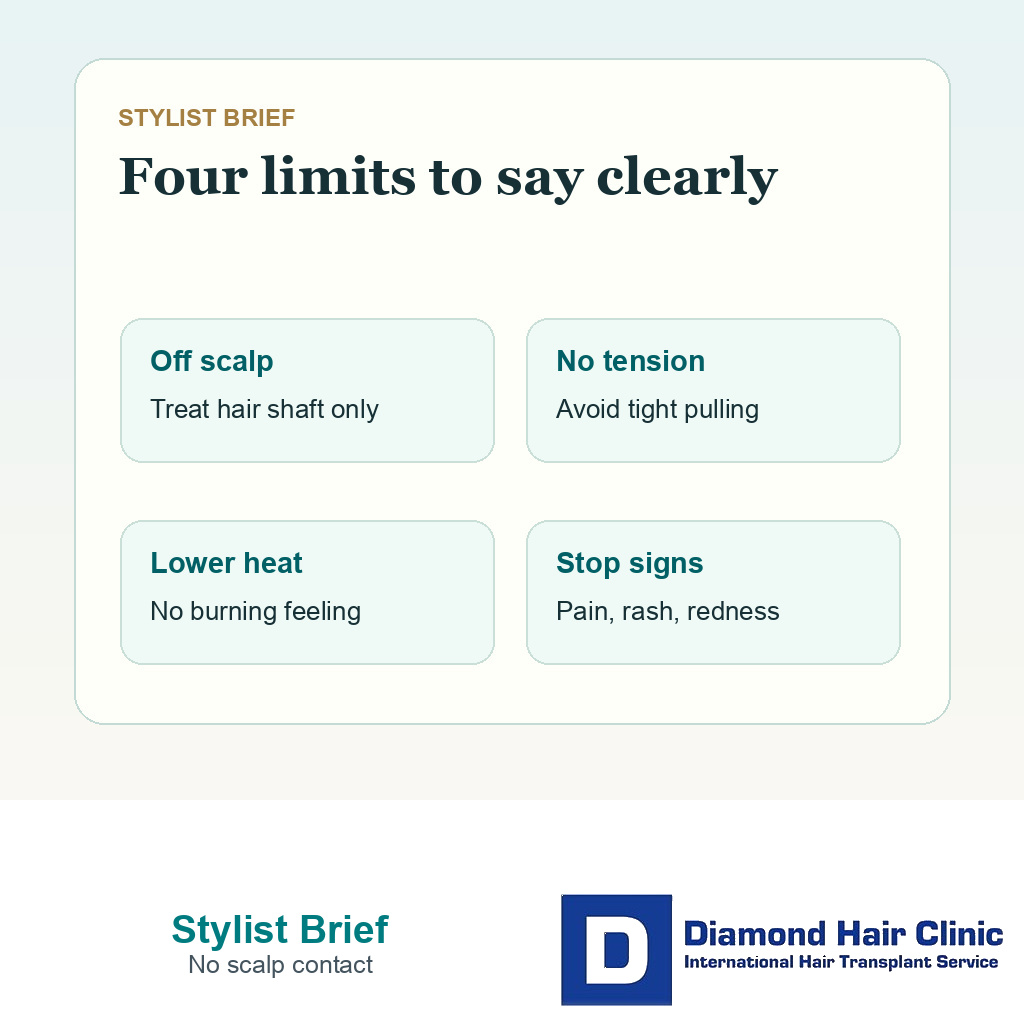
A stylist needs clear limits, including avoiding the scalp, avoiding tension, using controlled heat, and stopping if burning or irritation appears.
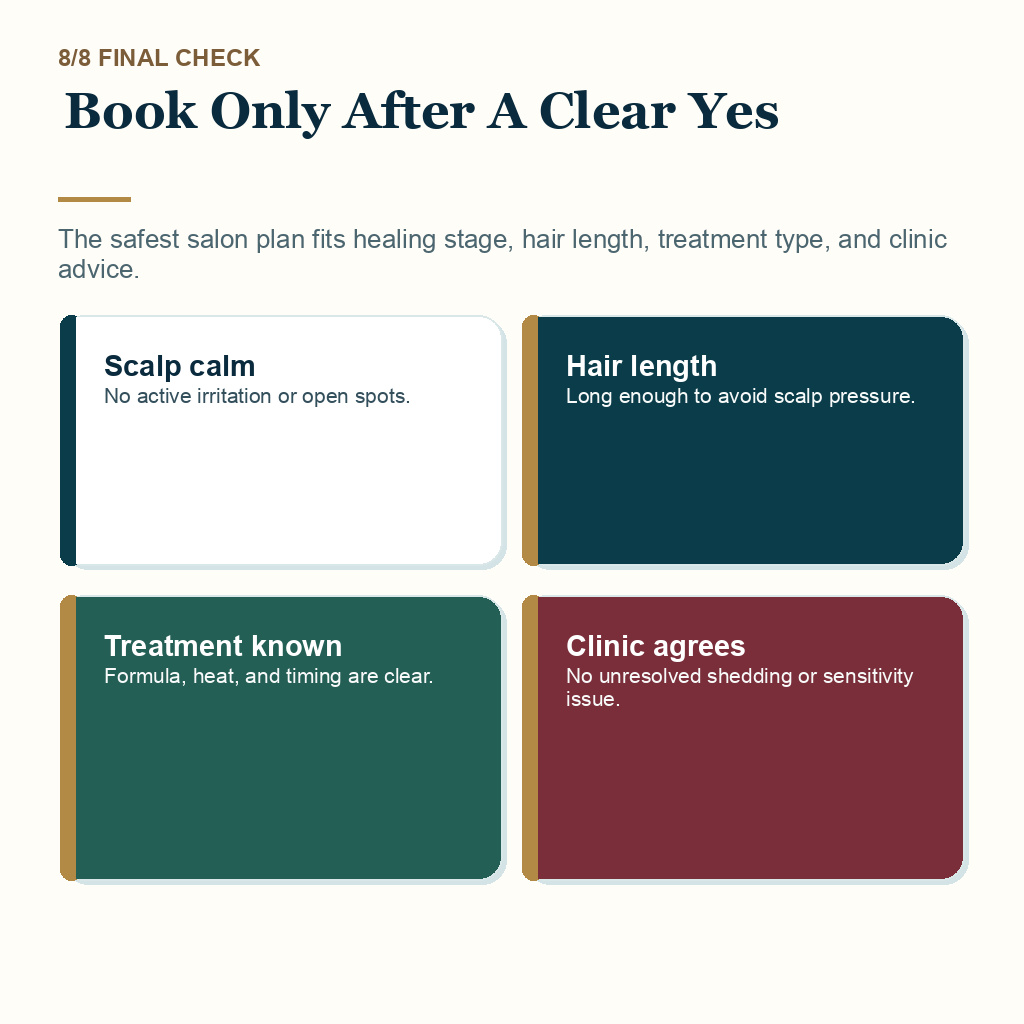
Use the 8 salon treatment timing slides below to separate the first 3 months, healed skin checks, chemical contact, stylist limits, product details, heat tools, fumes or sensitivity, and the final booking decision. Swipe the carousel, use the arrows one step at a time, or choose a number below the image to jump to that point.

Flat irons and blow dryers need different caution
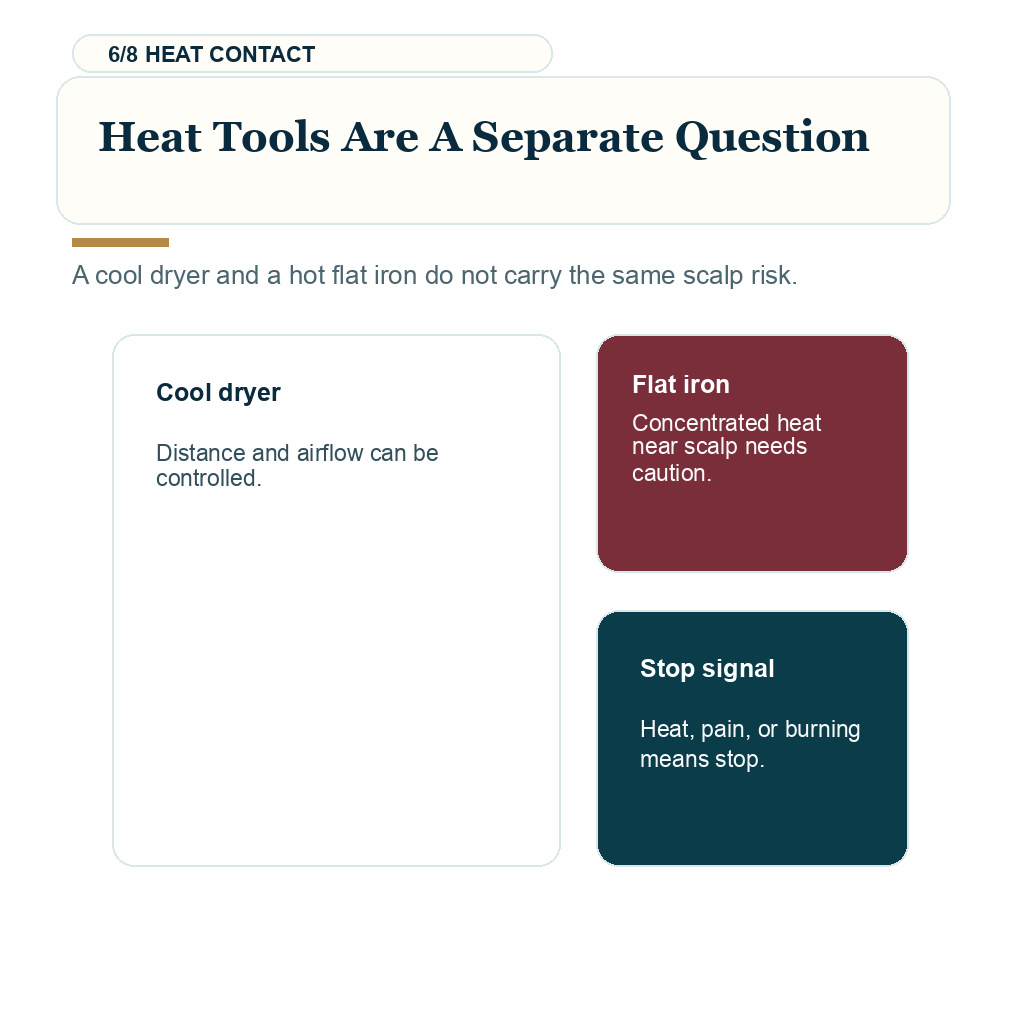
Heat styling has its own rules. A cool blow dryer at a safe distance is not the same as pressing a hot flat iron close to newly transplanted skin. Early heat can dry the scalp, irritate tender skin, and make scratching more likely.
Distance and heat level matter with hair dryer use after a hair transplant. A flat iron is more concentrated than a dryer, so I am more cautious, especially when the hair is short and the plates may come close to the scalp.
If the transplanted hair is long enough later, use lower heat, short contact, no scalp pressure, and stop if the skin feels hot or painful. One careful styling moment on healed longer hair is different from using heat every day to force immature hair into shape.
Formaldehyde and salon fumes matter
Some smoothing products contain formaldehyde or ingredients that release formaldehyde when heated. Formaldehyde, formalin, and methylene glycol are names I treat carefully, especially when a flat iron seals the product into the hair. Keratin is a marketing word, not a safety guarantee. A claim of being free from formaldehyde is not enough if the product creates irritating fumes when heated.
Relaxers and perms may involve strong alkaline products, thioglycolates, neutralizing steps, and repeated scalp contact. This is a general safety issue, not only a hair transplant issue. On healing skin, it makes me more conservative.
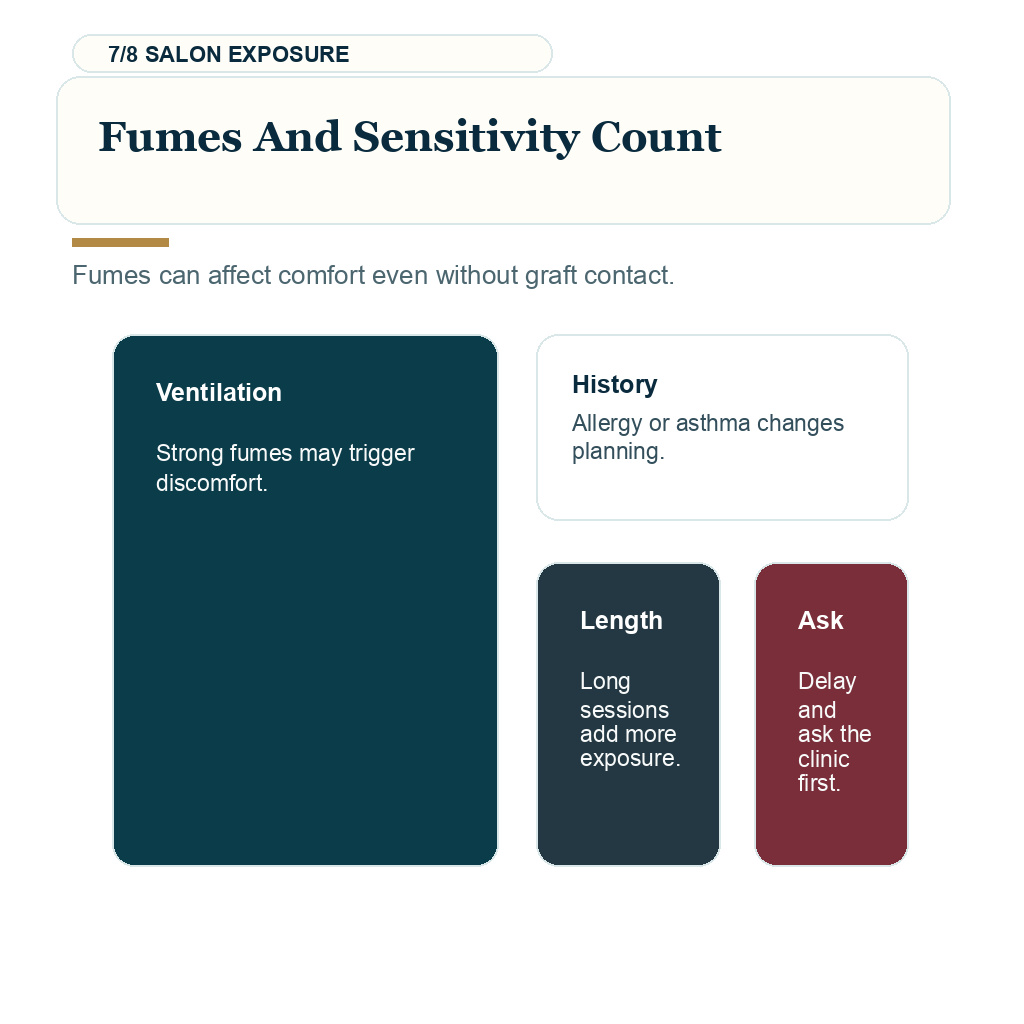
If a salon treatment produces strong fumes, eye irritation, coughing, burning, dizziness, nausea, chest discomfort, or scalp stinging, stop and reassess. A transplant scalp is not a test area for a product with unclear ingredients. Unknown chemicals plus heat are a poor match for a healing scalp. Poor ventilation makes that combination harder to justify.
This does not mean every smoothing product is forbidden forever. It means the product, ventilation, stylist experience, scalp distance, and your skin condition matter. If you have allergies, asthma, dermatitis, or previous reactions to hair products, be even more cautious.
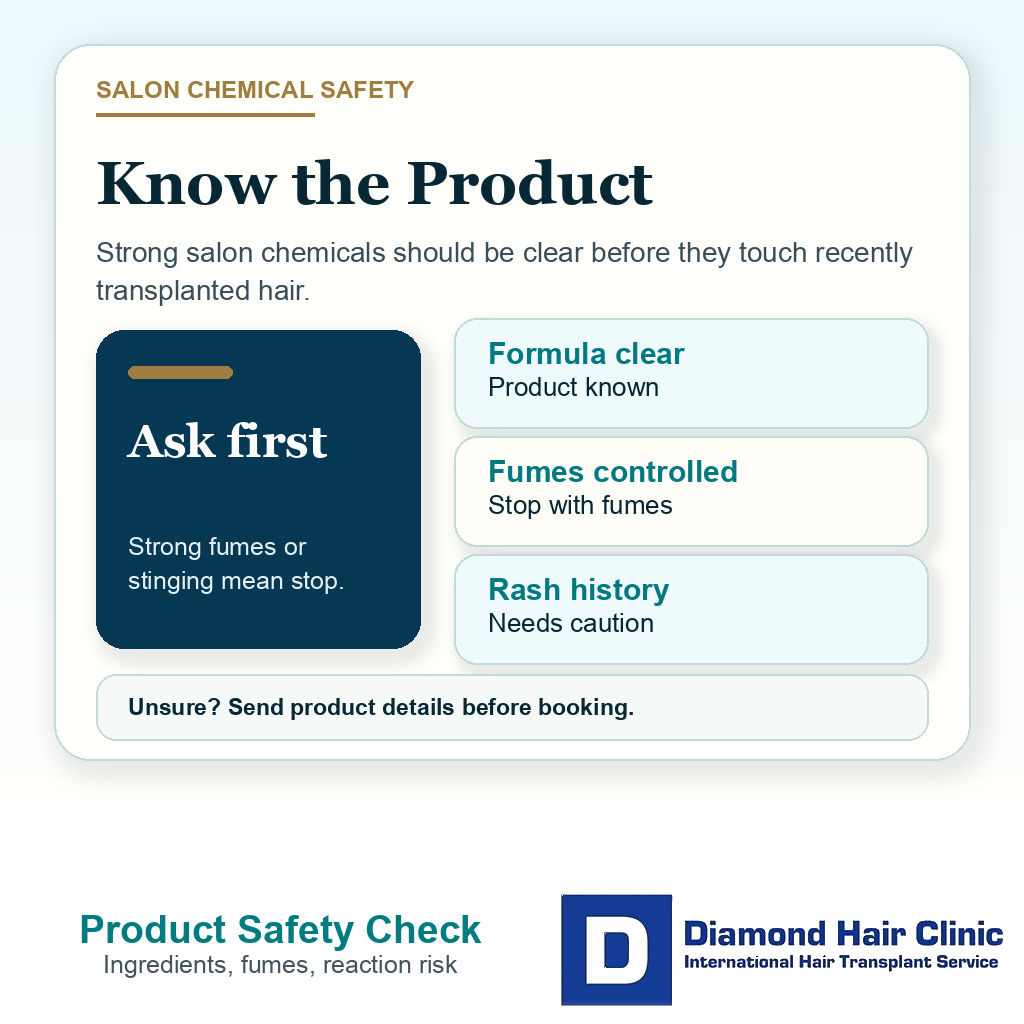
Before strong salon chemicals, the product, fumes, and skin reaction risk should be clear.
Curly or Afro textured hair can change the decision
Curly and Afro textured hair often needs more detailed planning because curl direction, shaft shape, styling habits, traction, and product use all affect the final look. Chemical straightening or relaxing can also sit closer to the scalp if the hair is short.
Do not damage the hair or scalp just to make the early growth phase look smoother. For curly hair, the plan needs to respect the natural curl pattern, not fight it blindly. Afro and curly hair transplant planning needs careful direction, curl, and donor management from the start.
If the real goal is cover up, safer cosmetic options deserve attention too. Hair extensions after a hair transplant have their own traction risks, but the decision still comes back to scalp safety.
Confirm safety before booking the salon
Decide in this order. I first look at whether the scalp is healed and settled. Then I check whether the hair is long enough to treat the shaft without touching the scalp. After that, the product identity, required heat, stylist technique, and ventilation decide whether the appointment is reasonable.
Keep the first appointment deliberately simple. One careful service is easier to judge than bleach, toner, keratin, root color, tight sectioning, and a hot finish in the same visit. If the scalp reacts, you need to know what caused it.
The removal step matters as much as the product. If rinsing out the treatment would need firm scrubbing at the roots, the appointment may be too early even when the hair length looks adequate. Hair length can make the appointment look possible before the scalp is ready for the product or the washing needed to remove it.
If the answer is unclear, share photos for review before booking the appointment. Include the month after surgery, the areas you want treated, current symptoms, the planned product, and whether the treatment involves heat, perm solution, relaxer, bleach, or close scalp contact.
Follow up is easier with specific details. In a hair transplant follow up after surgery message, “Can I do keratin?” is less useful than “I am month nine, no redness, no bumps, hair length is five centimeters, stylist will keep product off the scalp, flat iron needed, is this reasonable?”
Chemical styling should wait for settled scalp skin
I am not against cosmetic styling after a hair transplant. Hair texture matters in daily life. But I avoid using strong chemical or heat treatments to solve a problem before the scalp has healed or before the transplanted hair has matured enough to judge.
If the scalp is still irritated, delay. If the hair is too short, delay. If the product touches the scalp, delay or change the method. If the salon cannot explain the product, heat, ventilation, and scalp contact plan clearly, choose a safer option. Chemical burn, blistering, oozing, strong scalp pain, or eye and breathing symptoms end the salon plan. They are not signs to push through.
I only become comfortable with keratin, perm, or relaxer treatment when the scalp is settled, the hair is long enough, and the product can stay away from graft skin. Until then, gentle washing, conditioner when allowed, careful trimming, and lower risk styling are better than forcing a chemical result too early.