


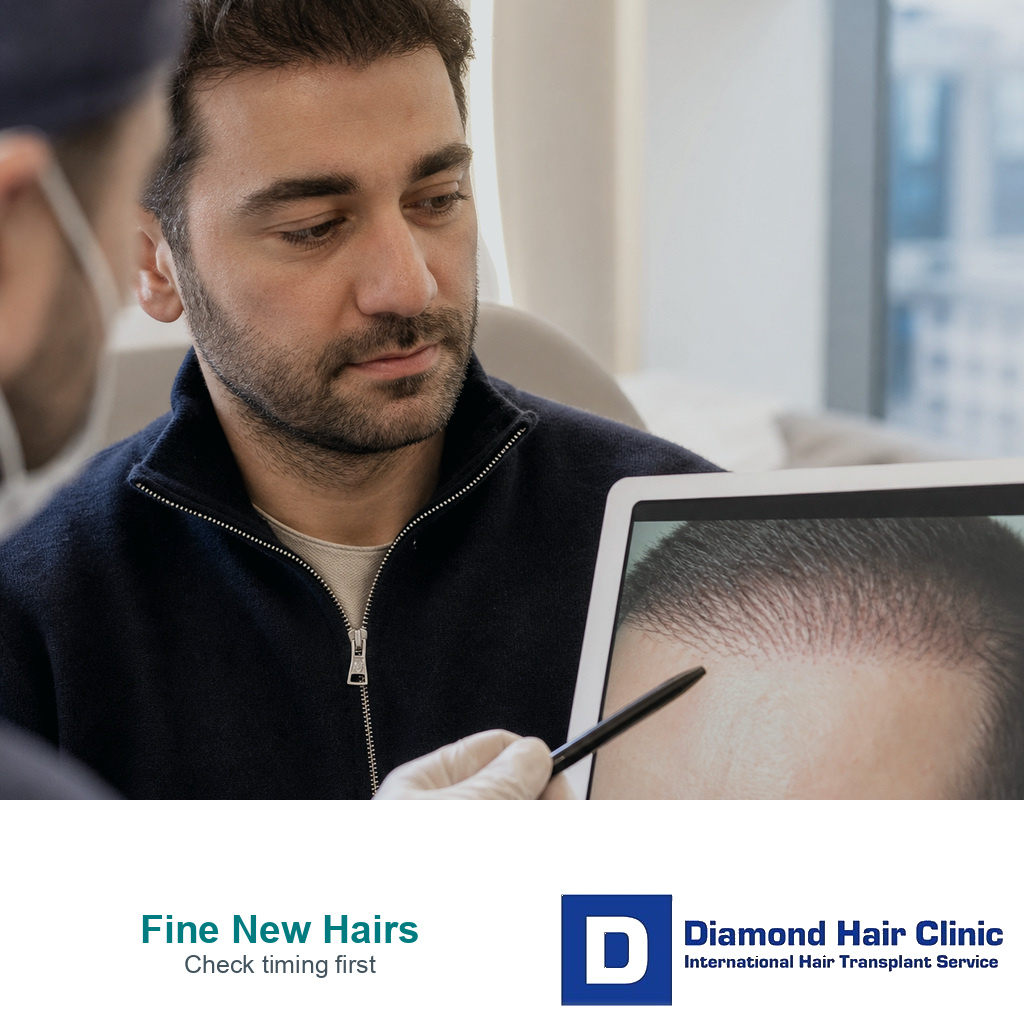
Fine Baby Hairs During FUE Growth
After the quiet early months, a few thin new hairs can feel reassuring, but they are not proof of final density by themselves. They may be early transplanted hairs beginning to grow, short shaved shafts that stayed visible after shedding, or miniaturized native hair around the transplanted area.
Two different concerns can share the same phrase. Fine hairs that appear during recovery have to be checked against the surgical map, while soft hairs planned into a natural hairline are a design decision before surgery.
Seeing hairs is not enough by itself unless the same area is changing over time. I want to know whether the same hairs are lengthening between comparable photo checks, whether the area was actually transplanted, and whether the scalp looks stable without increasing redness, pain, discharge, or painful bumps. Do not pull, tweeze, or scratch these hairs to test them. That adds trauma and gives no useful diagnosis.
I understand why this becomes emotionally loaded. After a hair transplant, the eye starts searching for proof that the grafts survived. Very fine hairs are easy to misread, so I read them against timing, the original surgical map, and repeated photos rather than one repeatable photo.
Fine hairs are hard to interpret
Fine hairs can feel reassuring because they are visible. They can also worry you because they may look too weak to become a real result. Both reactions can be wrong. Early regrowth often starts as lighter, shorter, softer, uneven strands. Native hair around the hairline may already be thin from ongoing miniaturization, and a magnified photo can make both groups look similar.
The first months after FUE are confusing because the scalp has been shaved, washed, shed, and photographed under different lighting. Short hair shafts can catch the light and look like fresh growth. A small shadow can look like density. A harsh bathroom light can make the same area look empty. Haircut length also changes the impression, so a new guard length or a fresh trim can make the same weak spot look better or worse. Repeated, standardized photos are safer than daily inspection driven by anxiety.
For a broader monthly framework, I pair this discussion with a hair transplant growth tracking routine. Tracking helps only when the same angle, light, and hair length are used each time.
Three possibilities to separate first
When you show me fine hairs after FUE, I first separate three possibilities. Early graft growth is the one you hope for. These hairs often begin as soft, thin strands and then gain length, color, and strength. They do not all appear on the same day. Some areas wake up earlier than others.
Short retained shafts are different. These are small pieces of hair that may remain visible for a while after the early shedding phase. They can look like “baby hairs,” but they are not active growth unless they keep lengthening. I read no shedding after a hair transplant as a recovery pattern, not as proof that every visible point is new growth.
Do not pull, pluck, shave, or scrape a tiny hair to test whether it is real growth. A better test is whether the same spot changes across calm, repeatable photos without extra handling. A hair that only appears after zooming in is less useful than one that becomes longer in the same calm photo setup. A hair that only exists in a zoomed crop is less useful than a small area that keeps changing in the wider photo.
Miniaturized native hair is the third group. This is common around the frontal hairline and mid scalp, especially when native hair was already thinning before surgery. These hairs can be fine, wispy, and irregular. They may sit next to transplanted hairs, which makes the picture harder to read. If you started, stopped, or changed minoxidil, finasteride, dutasteride, or another hair loss treatment, share that with the clinic because nearby native hair can change while transplanted hairs are also maturing.
Timing matters more than one photo
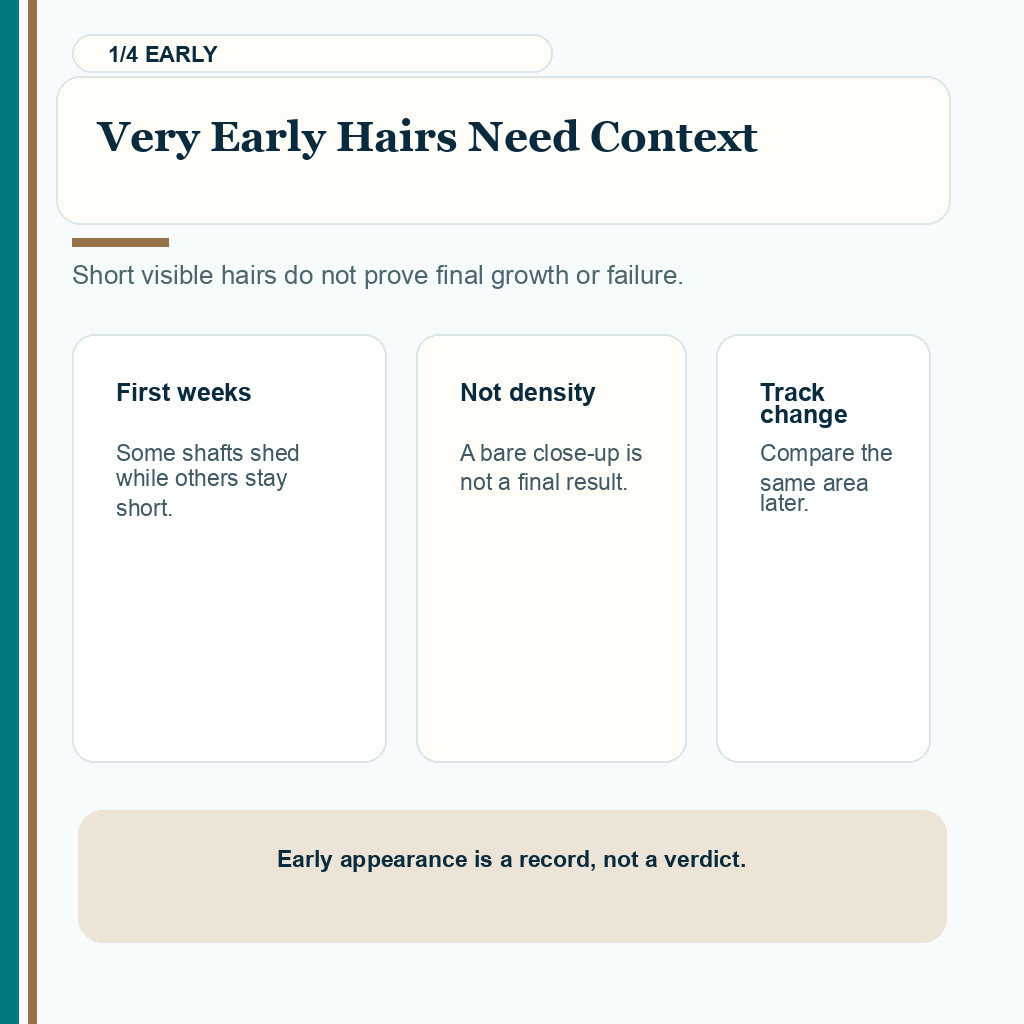
Timing is more useful than magnification. Very early after surgery, especially in the first weeks, visible short hairs do not prove final growth. Many transplanted hairs shed. Some small shafts stay behind. The scalp can also look uneven because the hair is cut short and the skin is still settling.
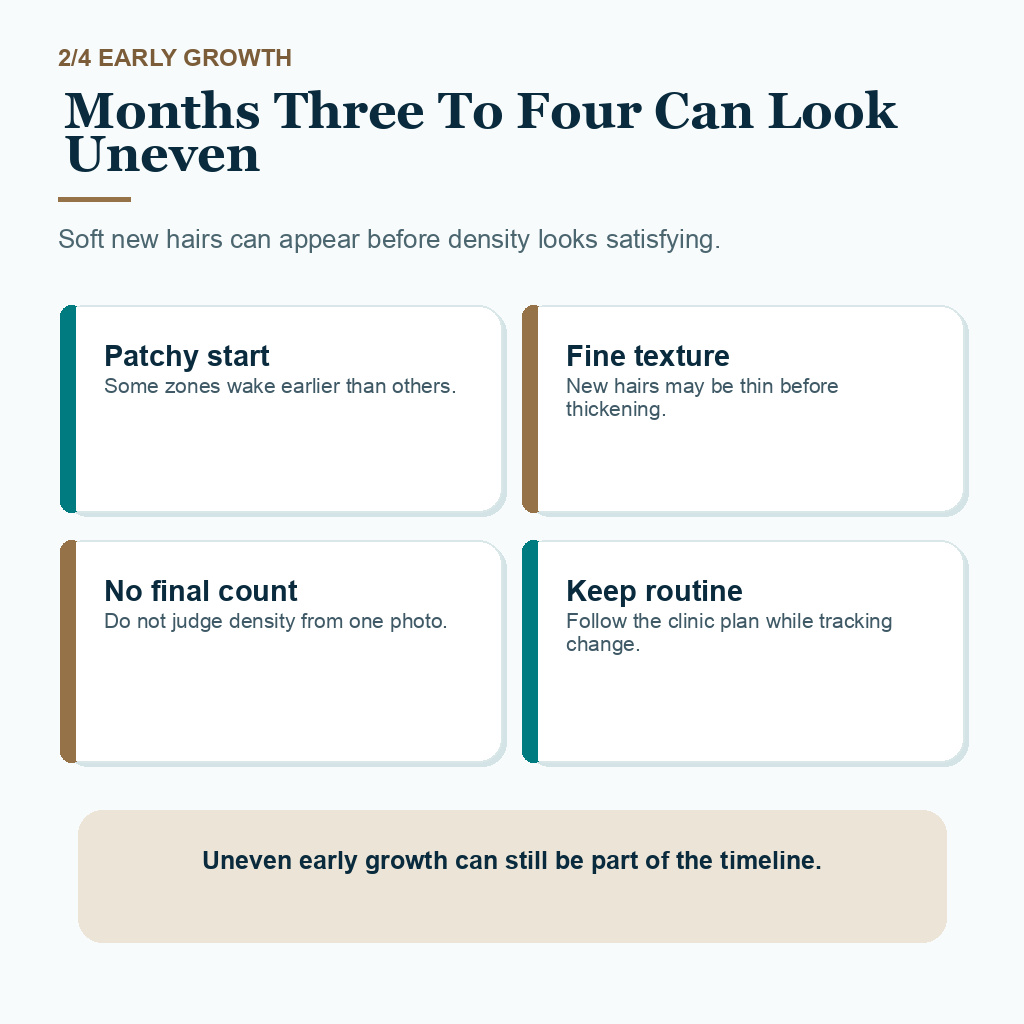
Around the third and fourth months, some people start seeing fine new growth. It can be patchy and unimpressive. I do not judge final density from a month three photo. Low density at 4 months after a hair transplant needs the broader density context, not a verdict from one photo alone.
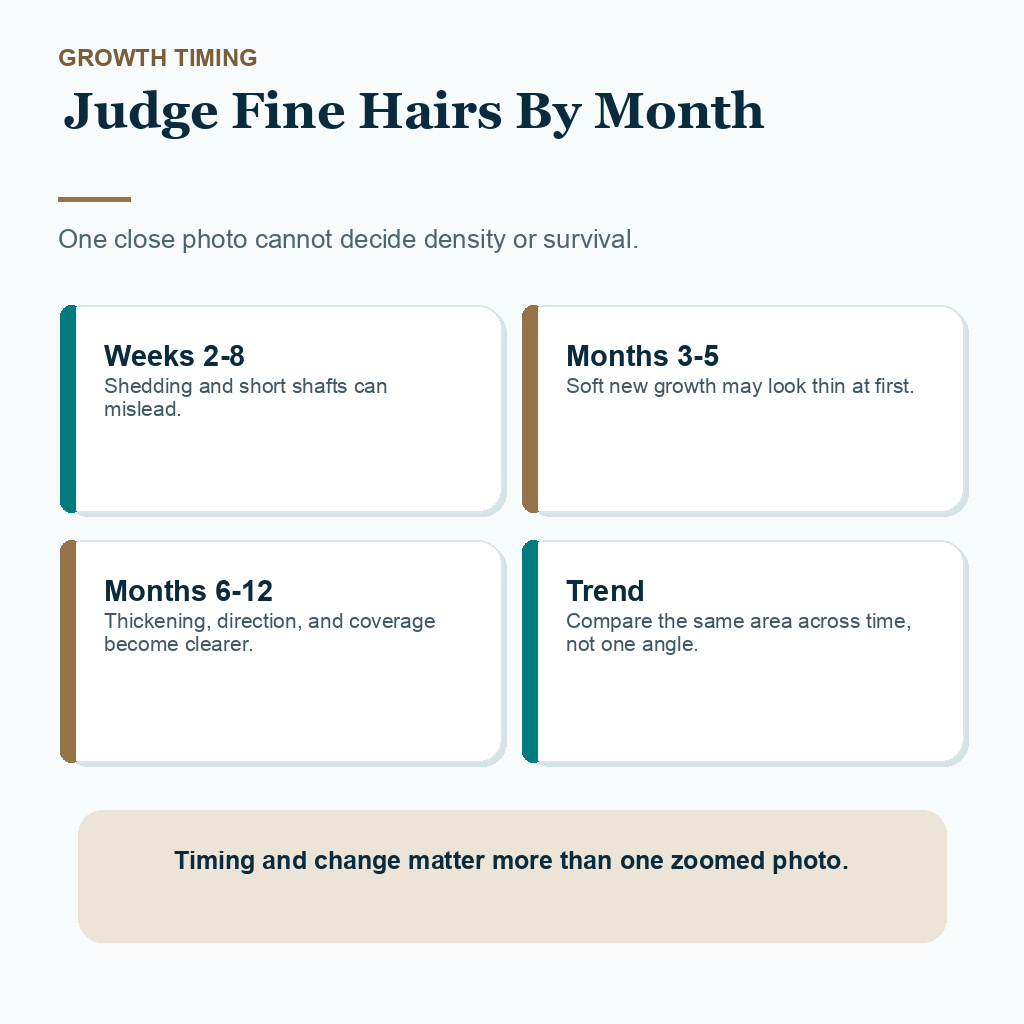
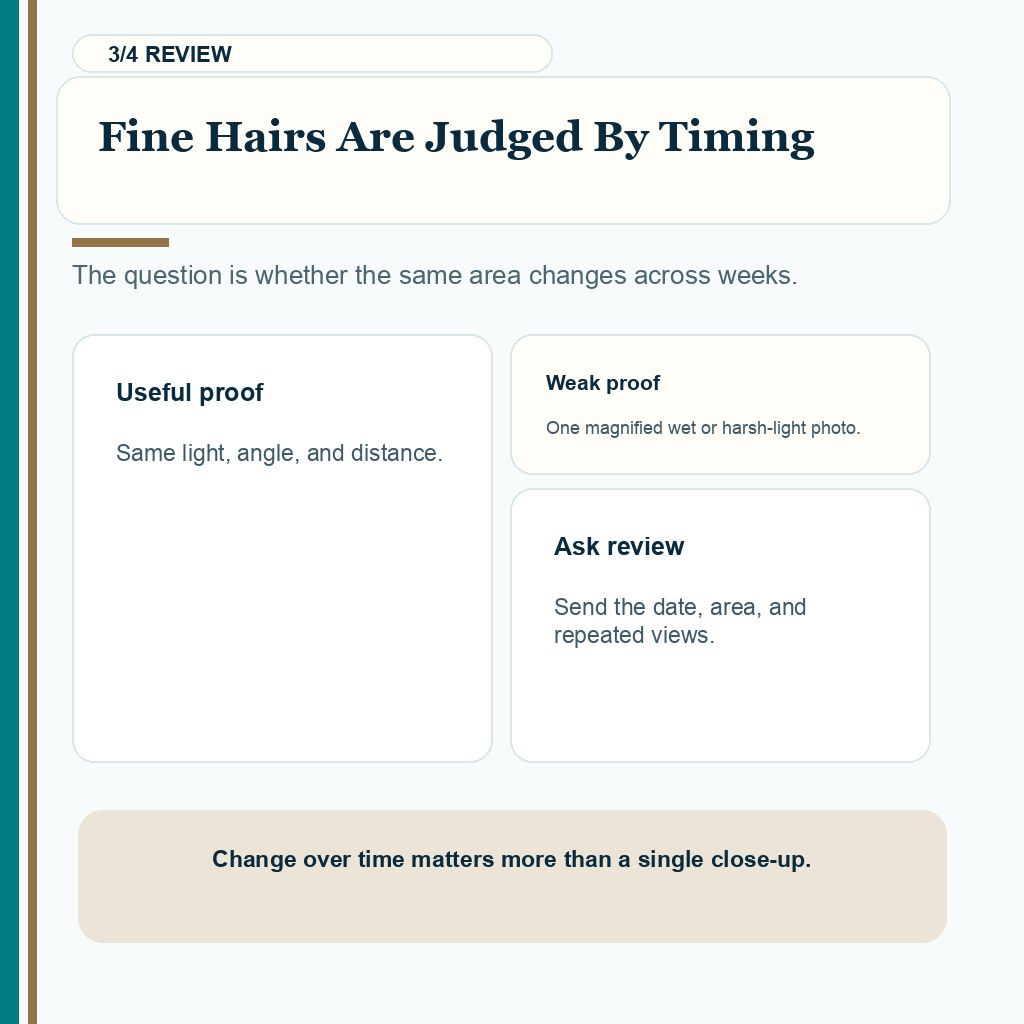
Fine hairs are judged by timing and change, not by one magnified photo.
By month five, the discussion becomes more practical. Not every area must be dense, but I expect at least some movement in the right direction. The month five hair growth check is useful when fine hairs are starting to appear but density still feels uncertain. At six months, density still may not be final, but the pattern should be easier to evaluate, so six month density after a hair transplant becomes the better reference.
This 4 slide recap keeps early fine hairs in the right timeline before judging density. Swipe sideways, use the arrows, or choose a number below the image.

Signs I look for in the transplanted zone
In the transplanted zone, I look for change over time. A tiny hair that is longer in the next comparable photo matters more than a dot that simply remains visible. A group of small hairs emerging unevenly can be normal. I also ask whether you have been rubbing, picking scabs, using harsh styling products, or repeatedly parting the same area for repeated close photos, because local irritation can make a weak looking zone less reliable. A completely static area over repeated checks deserves more attention, especially later in the process.
I also compare the visible hairs with the surgical plan. I check whether that exact zone was grafted densely, lightly, or not at all, and whether it was the frontal edge, the transition zone, the mid scalp, or the crown. You may worry about a weak looking patch that was intentionally planted with softer density to create a natural transition. Another person may ignore a patch that should have been filling in more clearly by that stage.
Texture matters too. Early transplanted hair may look fine, bent, wiry, or inconsistent before it matures. If the main concern is unusual texture rather than weak growth, wiry or coarse transplanted hair after a hair transplant is a different issue from slow growth.
Hairline details are easy to misread
The hairline is where “baby hair” questions are most common. It is also where interpretation can be most misleading. A natural hairline should not look like a wall. The first row may contain finer single hair grafts, and the transition should be soft. If every front hair looked thick and identical early on, the design could look artificial later.
That said, softness and weakness are not the same thing. A soft hairline is planned. A weak hairline is one that fails to mature or remains visibly thin beyond the expected window. The difference is judged by growth, caliber, direction, and how the hairline blends with the native hair behind it.
Native hair can confuse this area further. If native frontal hair was already miniaturizing, fine hairs behind or between the grafts may not represent transplant growth. They may represent ongoing thinning. The preoperative diagnosis and long term plan matter, especially in men with fine hair characteristics, because fine hair and hair transplant results depend on planning as much as regrowth timing.
Weak spots that deserve review
A weak spot does not need to be judged too early, but it should not be ignored forever. I become more interested when the same area shows no meaningful change across several standardized photo checks, when one side keeps falling further behind the other, or when you are already past the usual early growth window.
Asymmetry is common in the beginning. One side can grow slower. The concern is not a left right difference by itself. It is a lack of progressive change. If the worry is mainly one side lagging, one side growing slower after a hair transplant is the more focused comparison.
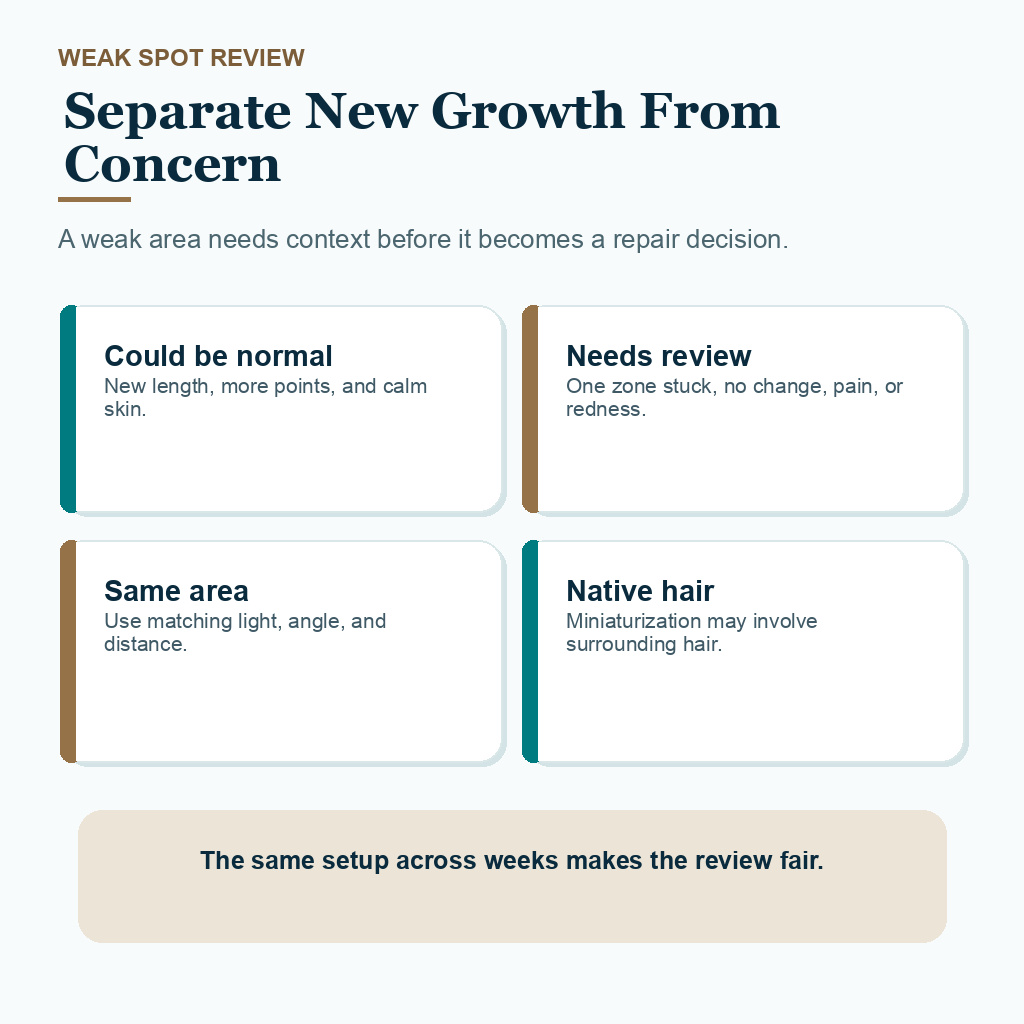
The same fine looking hair can have different meanings depending on location and change over time.
Symptoms change the priority. Fine hairs on a stable, comfortable scalp point me toward timing. Fine hairs with increasing redness, pain, swelling, discharge, worsening crusting, or painful bumps need clinical review. If the scalp is irritated, redness, scabs, and pimples after a hair transplant becomes more relevant than the baby hair label.
Photographing fine growth without creating panic
Bad photos create unnecessary fear. If you photograph the same area every day, each image becomes a new verdict. That is not useful. Choose a fixed interval, often every two to four weeks after the early shedding phase, and use the same place, light, camera distance, camera angle, and hair length as much as possible. If you cut the hair between checks, write down the guard length or wait until the hair length is comparable again.
Do not use wet hair, extreme zoom, flash glare, or harsh overhead light as your main comparison. Those conditions exaggerate gaps. Use front, both temples, top, and crown views, plus a close photo only when it can be repeated in the same way. That close photo is supporting evidence, not the whole diagnosis.
Keep the surgical zones separate in your mind. The frontal edge, central hairline, mid scalp, and crown do not always mature at the same pace. Crown growth often feels slower, and density questions there need more patience than a straight hairline check.
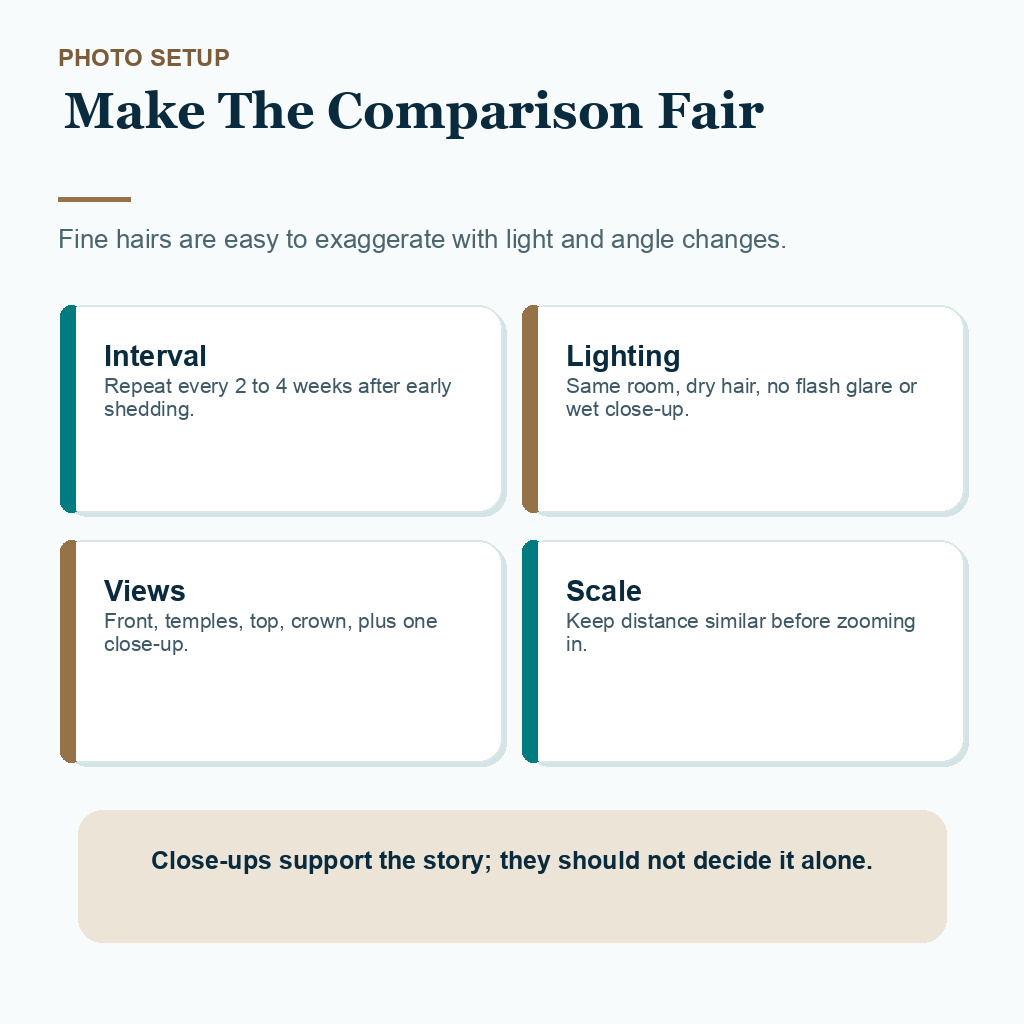
Fine new hairs are easier to judge when photos repeat the same interval, light, hair state, views, and close photo area.
Context for the next appointment
If you send progress photos to your clinic, do not frame everything around whether the baby hairs are “normal.” Send the date of surgery, the exact month after FUE, whether shedding happened, whether the area was transplanted, the original graft zone context if you have it, whether you changed haircut length or hair medication, and whether the hairs have changed since the previous check. That lets the clinic answer with context.
The review should not be only emotional reassurance. It should confirm whether the visible fine hairs match the expected stage, whether native thinning is contributing, whether the scalp is healthy, and whether the current plan needs adjustment. Sometimes the answer is patience. Sometimes it is better photography. Sometimes it is medical stabilization of native hair. Sometimes it is simply too early to decide.
If you are already around seven months and still feel the whole result is thin, I move from “baby hair” interpretation to a broader result review. At that stage, thin hair transplant results at 7 months matters more than judging baby hairs alone.
Timeline pages in context
I keep this discussion narrow because a baby hair photo cannot replace the full growth timeline. Month by month progress starts with tracking. Month four emptiness belongs with the low density guidance for month four. Month five and six belong with the month specific pages above.
Later in recovery, the focus changes. At ten months, very fine new hairs may still thicken, but the overall pattern should be easier to read than it was at month four. 10 month hair transplant results help separate maturing baby hairs from a weak zone that is becoming clearer. Around one year, I judge the result more seriously with the original plan, photos, donor condition, native hair loss, and scalp health together, so the one year after FUE final result page is the better reference.
Another confusing moment can happen later, when shedding appears during the maturation phase. Fine hairs and temporary shedding can overlap in your mind, but they are different issues. New shedding around the mid growth period fits month 6 to 8 shedding after FUE. If nearby native hair suddenly looks thinner after surgery, native hair shock loss after a hair transplant is the more precise topic.
Answering that photo today
If you are early in recovery, do not turn fine baby hairs into a final verdict. First ask whether they lengthen, whether more points appear, whether the scalp is stable, and whether the timing fits your month after surgery. Then check whether that zone was planned for dense coverage, soft transition, or slower crown maturation. Those answers matter more than the label “baby hair.”
Slow change needs controlled follow up, not panic. No change across repeated checks, a zone that remains clearly behind later in recovery, or inflamed skin deserves review. This is less about labeling every tiny hair as good or bad. I read the evidence in the right order so we reduce avoidable risk and do not create fear from a photograph that is too early to judge.