


Can Decongestants Before FUE Raise Blood Pressure?
One ordinary decongestant dose does not usually damage grafts by itself, but it can still matter before FUE. The useful details are the exact ingredient, dose, timing, symptoms, blood pressure, pulse, and what else was taken the same day.
A mild blocked nose with stable readings is different from fever, chest symptoms, repeated coughing, poor sleep, high blood pressure, a racing pulse, or stimulant cold medicine taken on the morning of surgery.
If you are congested before FUE, do not mask the symptom with a cold tablet and arrive as if nothing changed. Send the product name, active ingredients, dose, last use time, symptoms, temperature if checked, and any blood pressure reading before surgery day decisions are made.
This matters most when the medicine contains pseudoephedrine, phenylephrine, oxymetazoline, naphazoline, caffeine, painkillers, or several ingredients in one cold and flu tablet. A blocked nose can feel minor, but illness, travel fatigue, stimulant cold medicine, and local anesthesia that contains adrenaline can meet in the same body on the same day.
Medicine and blood pressure safety check
Cold medicine detail check
I do not judge decongestants only by the brand name. Before FUE, the safer question is whether illness, stimulant ingredients, blood pressure, pulse, sleep loss, travel fatigue, or local anesthesia planning make the surgery day less predictable.
Illness check
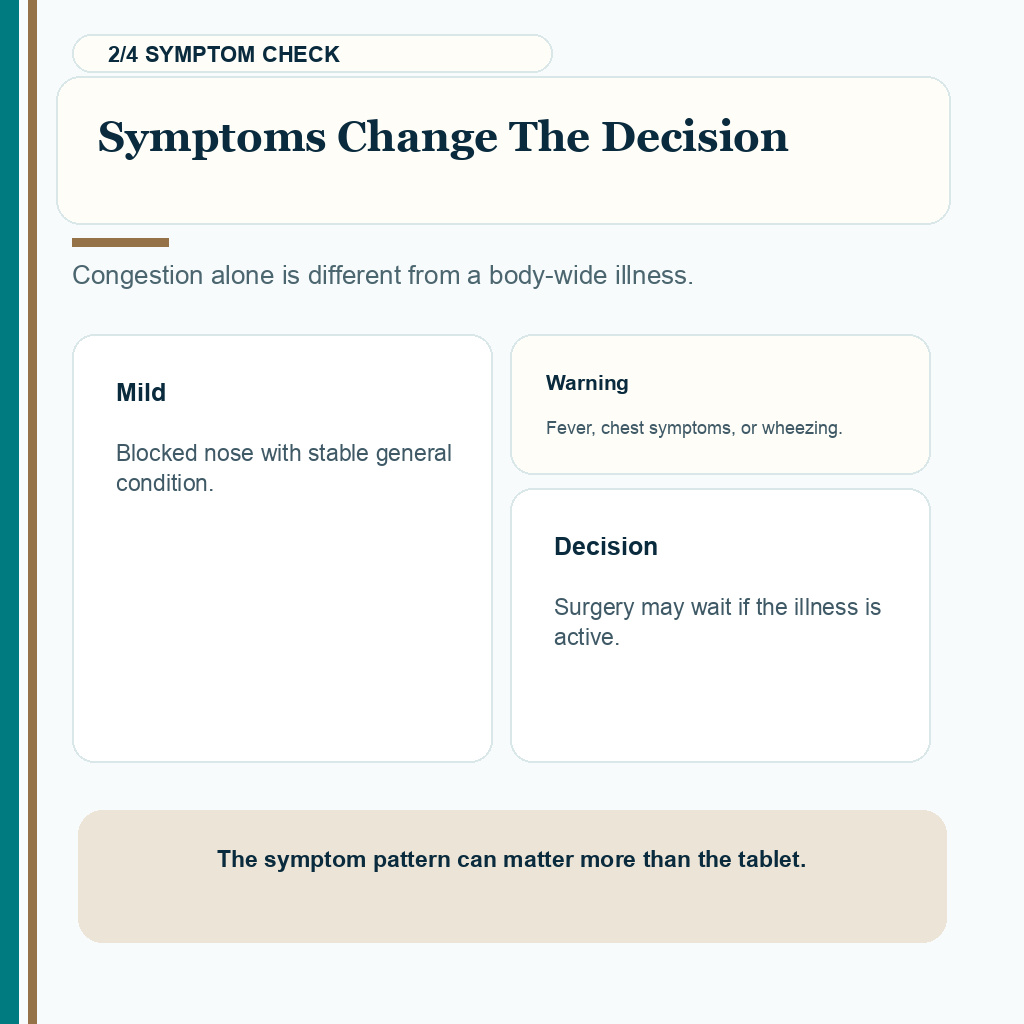
The symptom can matter more than the tablet
Blocked nose alone is different from fever, chest tightness, repeated coughing, vomiting, or dehydration.
Symptoms, temperature if checked, diagnosis if known, last medicine use, and whether travel made symptoms worse.
You feel actively ill, cannot sleep, cannot breathe comfortably, or would hide the illness to keep the date.
I first decide whether the body is fit for a long procedure day.
Illness can matter as much as the decongestant
Before a hair transplant, I separate two questions. Are you actually well enough for a long procedure? And have you taken something that changes blood pressure, pulse, bleeding risk, sedation safety, or communication during the day?
A decongestant sits between those two questions because it may improve the blocked nose while hiding how unwell the body really is.
A mild stuffy nose with no fever, no chest symptoms, no repeated coughing, stable blood pressure, and a short medicine list is one situation. Fever, vomiting, severe headache, high blood pressure, and three different cold products is another. When repeated coughing is part of the picture, use the bad cough before FUE plan alongside the medication review.
I judge the whole situation, not the word cold alone.
Cold, flu, and hair transplant readiness still depends on the illness first. For decongestants, I narrow the medication review to what was taken, what is inside it, how often it was taken, and whether the surgeon knows before the procedure starts.
Pseudoephedrine needs extra attention before FUE
Pseudoephedrine is a common decongestant used for nasal and sinus congestion. It can narrow blood vessels and may raise blood pressure or make the heart feel faster in some people. That does not mean one accidental dose ruins a transplant.
It means the surgeon needs the exact details, especially with existing hypertension, palpitations, thyroid disease, heart disease, anxiety, poor sleep, diabetes, or stimulant use.
The timing also matters. One dose several days ago is different from repeated maximum dosing until the morning of surgery. I need the exact product, strength, number of tablets, last dose time, and whether it was combined with coffee, energy drinks, stimulant gym powder, ADHD medicine, nicotine, or blood pressure medicine.
Do not try to correct the situation with another medicine on your own. Someone may think, “My pressure is high, so I will take a beta blocker,” or “My nose is blocked, so I will take another strong tablet.” That can create a more confusing problem.
The decision around beta blockers before hair transplant surgery belongs with the doctor who understands your pressure and pulse, not with a nervous dose taken alone.
Hidden ingredients in cold and flu packets
Many cold products are not one medicine. A single packet can include a decongestant, antihistamine, painkiller, cough suppressant, caffeine, or sedating ingredient.
The active ingredient matters more than the brand color. Send clear photos of the front label and ingredient panel instead of a vague message that says “I took something for my nose.”
Phenylephrine is another name that appears on cold products. In the United States, the FDA has proposed removing oral phenylephrine from the OTC nasal decongestant monograph because the evidence did not support its effectiveness at recommended doses. That is an effectiveness issue for oral phenylephrine, not a safety clearance for taking medicine on your own before FUE.
It also does not make every nasal spray or combination cold product the same decision. The label still matters because the product may contain other active ingredients, and the symptom that made you take it may matter even more.
I check painkillers and fever medicine mixed into cold products with the same care. If ibuprofen, aspirin, or another medicine that can affect bleeding is inside the product, the medication decision changes.
I include ibuprofen timing before hair transplant surgery in the medicine review, not only in pain control.
High blood pressure can change the anesthesia plan
FUE is usually done with local anesthesia. Some local anesthetic solutions may include adrenaline to reduce bleeding and prolong the effect.
If you arrive with very high blood pressure, fast heart rate, severe headache, vomiting, dehydration, panic, or stimulant medicine on board, the anesthesia conversation becomes more serious.
Do not think only about losing the appointment. The first priority is medical safety. If the blood pressure is too high, the doctor has to decide whether it should be repeated after proper rest, whether you need fluids, medical assessment, postponement, or medication review.
The transplant can be rescheduled. A dangerous cardiovascular situation cannot be ignored to protect a booking.
With existing hypertension, the high blood pressure and hair transplant surgery discussion can move from a routine medicine note to a safety review. If the concern is heart racing, skipped beats, or a fast pulse around the procedure, heart racing around hair transplant surgery needs medical warning sign review, not just graft anxiety.
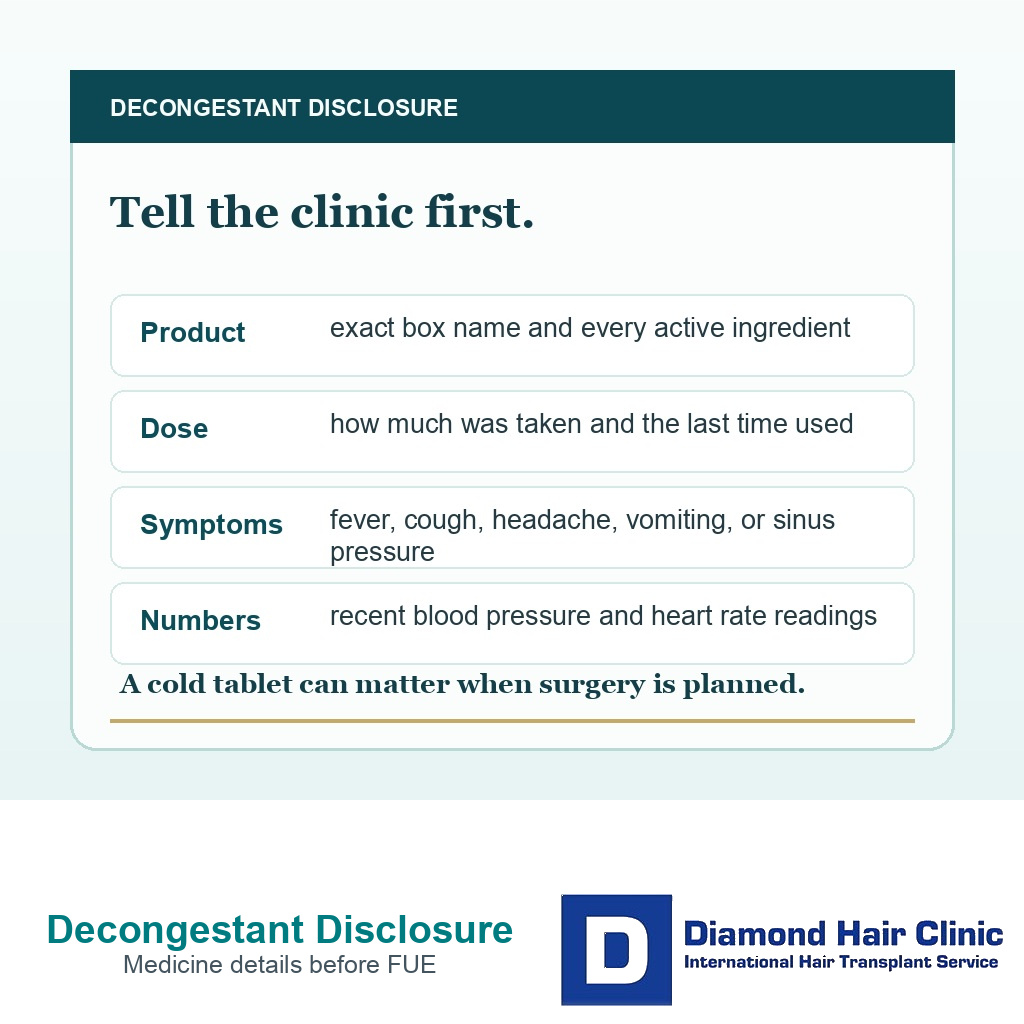
Bring the exact cold medicine details, not just the brand name or symptom.
Congestion can make FUE wait
A blocked nose alone is not the same as active infection or unstable vital signs. The operation may need to wait when congestion comes with fever, worsening cough, chest tightness, shortness of breath, repeated sneezing that cannot be controlled, vomiting, dehydration, a positive flu or COVID test, severe sinus pain, or blood pressure that stays high after proper rest and repeat measurement.
There is also a practical graft issue. If you are coughing hard, wiping the nose constantly, sweating with fever, or sleeping poorly, the first recovery night may be harder.
The grafts are not fragile forever, but the first days need gentle handling, clean washing, and stable instructions. Someone who is genuinely ill may struggle to follow the most basic postoperative steps.
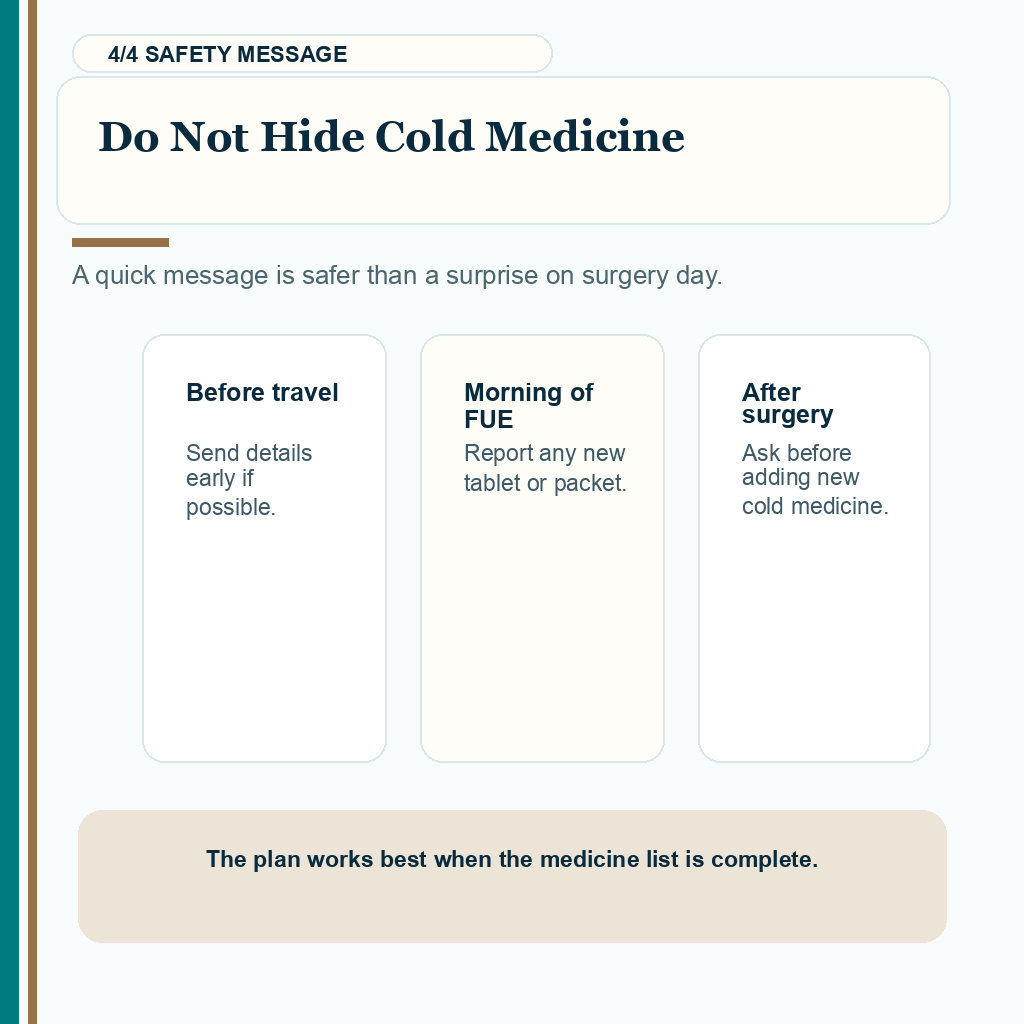
Early disclosure protects the plan. If symptoms begin before travel, share that with the clinic before the flight. If symptoms appear in the hotel the night before surgery, share that with the clinic before taking more medicine. A postponed operation is frustrating, but an unsafe operation is worse.
Details to send before travel or surgery morning
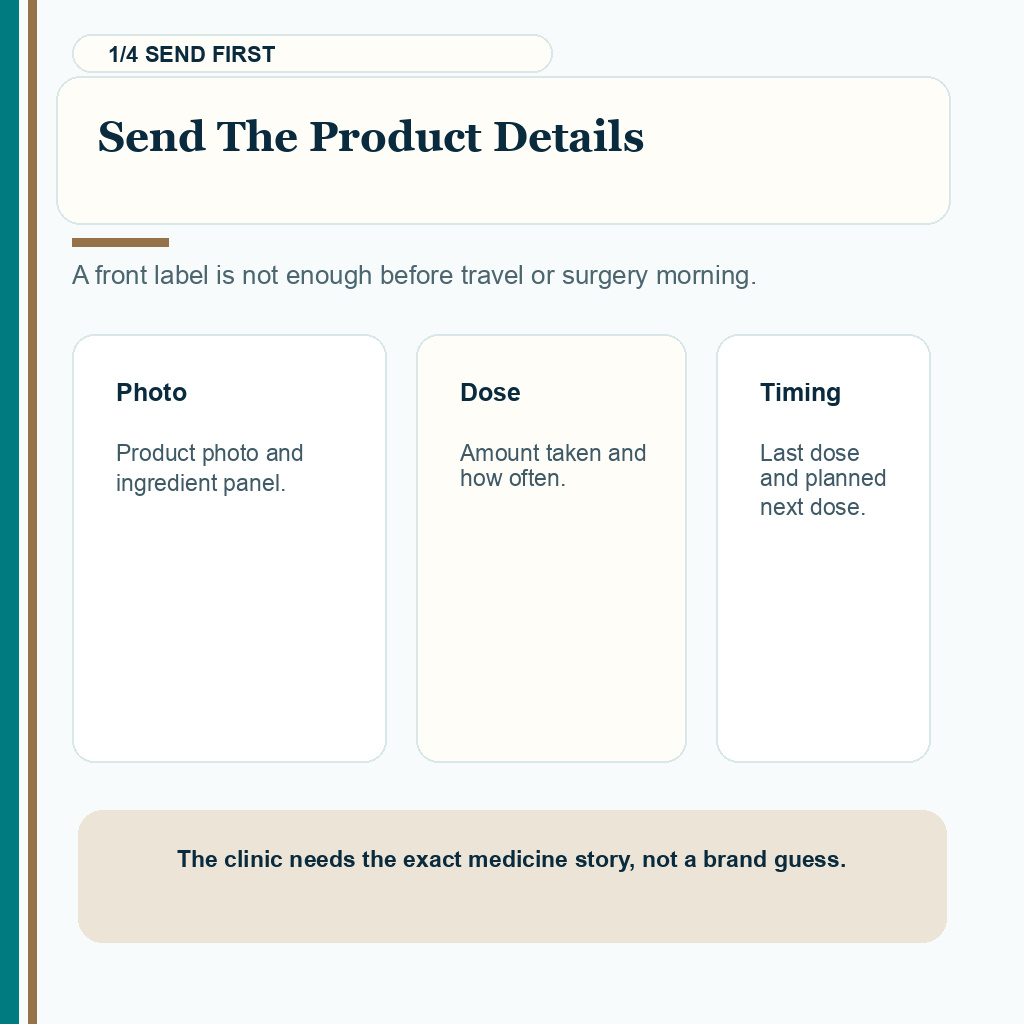
Send the product photo, active ingredients, dose, last use time, symptom list, temperature, blood pressure if available, heart rate if available, and any medical history that affects the answer.
Add whether the medicine was taken once or repeatedly, whether symptoms are improving or worsening, and whether there is cough, fever, chest tightness, or repeated sneezing. Include blood pressure medicine, heart medicine, antidepressants, ADHD medicine, thyroid medicine, blood thinners, aspirin, supplements, sleep tablets, and recent alcohol use.
If you are already a patient of Diamond Hair Clinic, send the real label early, preferably before travel or before taking another dose. Discovering the medicine list during procedure preparation gives the surgeon less time to judge risk properly.
If another clinic is doing the surgery, the same principle applies. The surgeon needs the full medicine picture before deciding whether the day is medically safe.
A cold medicine added after booking should be sent with any medical changes after booking a hair transplant, because it is still a new exposure near surgery even when it looks small.
Use these 4 slides to connect decongestants with blood pressure, stimulants, illness, and surgery day safety. Swipe sideways, use the arrows, or choose a number below the image.
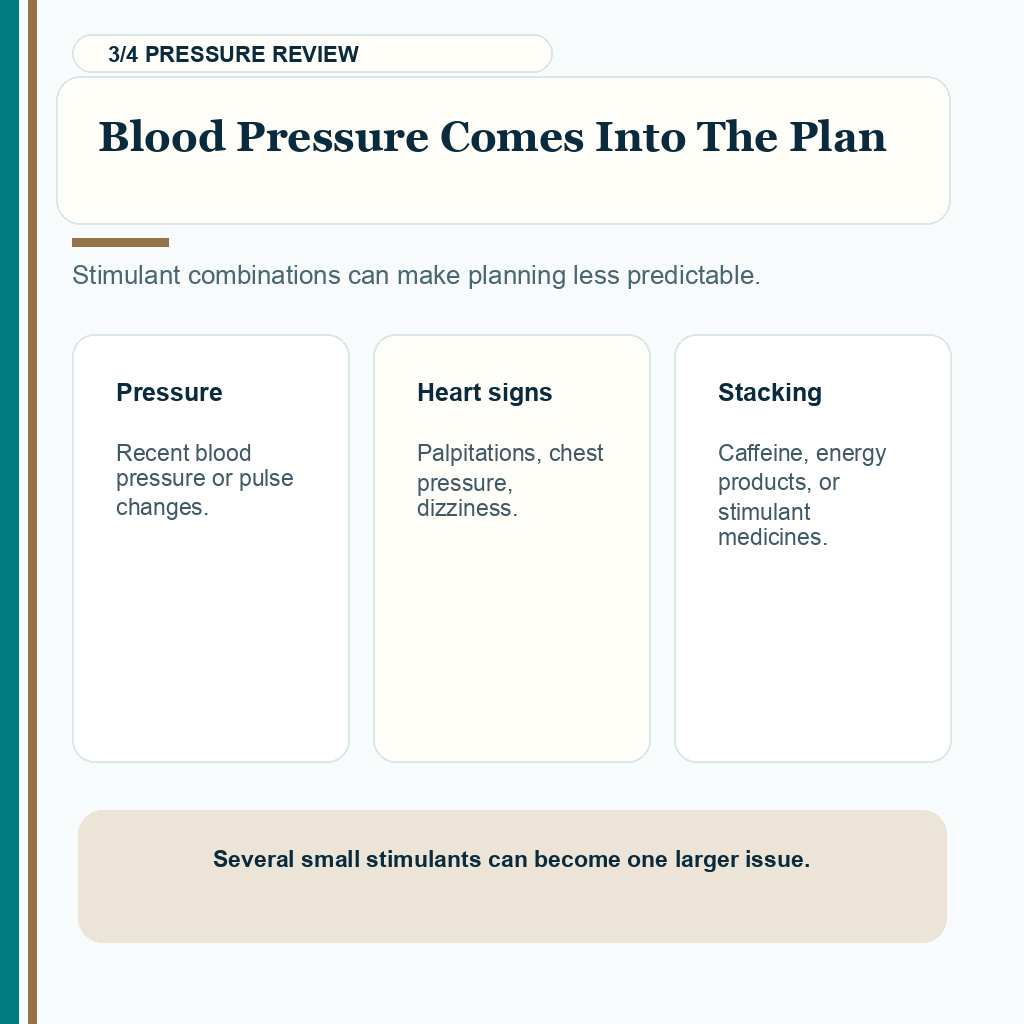
Stimulant stacking makes FUE less predictable
The risky pattern is stacking. Pseudoephedrine for congestion, strong coffee after poor sleep, ADHD medication, stimulant gym powder, nicotine, and travel anxiety can all arrive together.
Each item may have its own reason, but the combined effect matters more than the reason for each product. Together, they can make blood pressure and pulse harder to interpret.
If stimulant medicine is part of the daily routine, do not change it alone before surgery. With ADHD medication and hair transplant surgery, disclosure and context from the prescribing doctor matter before the clinic changes anything.
If caffeine is the question, coffee on surgery morning is a separate decision from cold medicine.
Gym products also matter, including stimulant gym products after hair transplant. They are mainly a recovery question, but the same stimulant logic matters before surgery. If a product raises heart rate or pressure, tell me before I add local anesthesia and a long procedure day.
Antihistamines, saline spray, and nasal sprays are not the same
Nose products are not interchangeable. Saline spray is a different discussion from an oral stimulant decongestant tablet. Antihistamines are different again, and some can cause drowsiness.
Nasal sprays such as oxymetazoline can relieve congestion, but overuse can create rebound congestion. Blood pressure, thyroid, diabetes, urinary, or heart concerns still need medical caution.
Your own dose has to be judged from the exact product, your reason for taking it, and your medical history. Send the exact name, ingredient list, and reason for use so the surgeon can separate a mild allergy symptom from an active viral illness, a sedating tablet from a stimulant tablet, and a saline rinse from a vasoconstrictor spray.
If allergy medicine becomes a question after surgery, I look at antihistamines after a hair transplant through drowsiness, timing, and symptom control. Before surgery, allergy medicine before FUE needs its own review because the product, symptom, timing, and sleepy side effects decide whether it is a routine note or a review item.
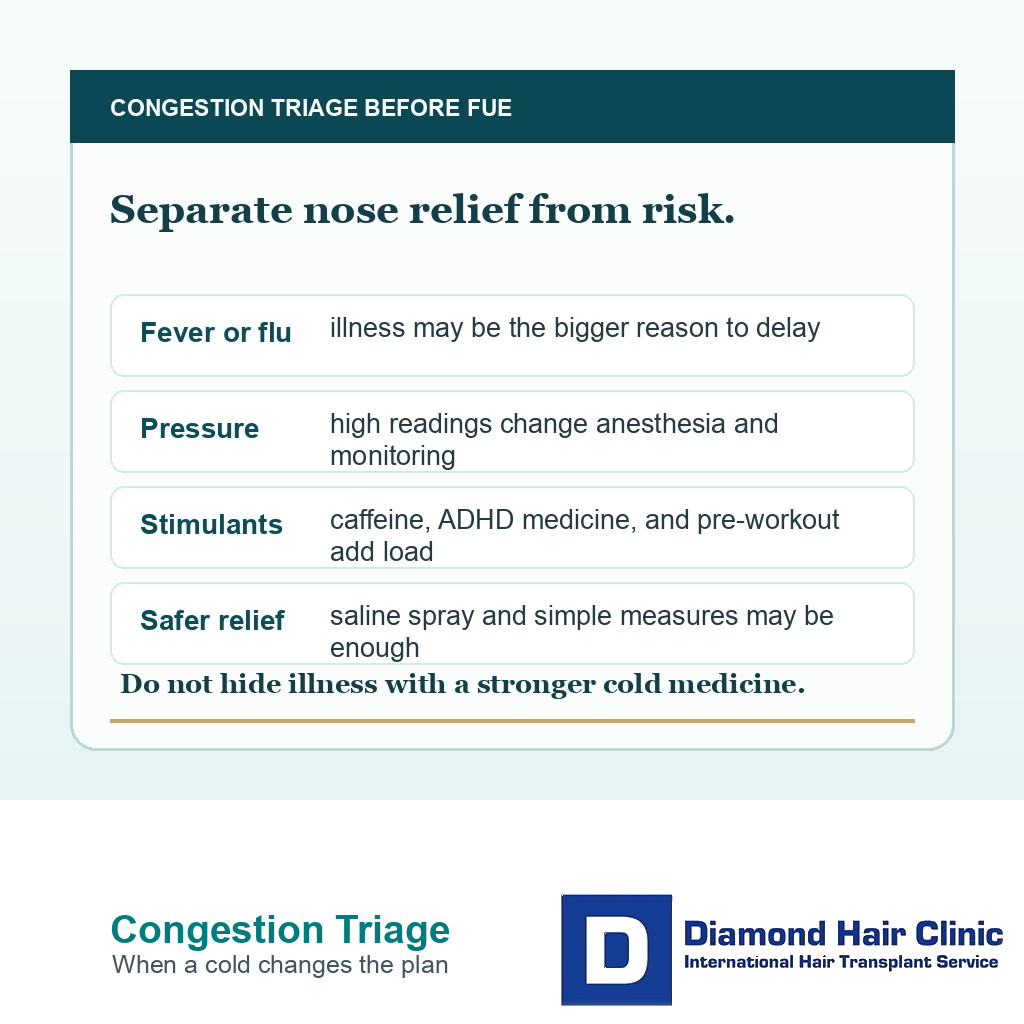
Congestion is not judged from the nose alone. The whole medical picture decides the plan.
If you already took cold medicine after FUE
Some people become worried after discovering that a cold medicine contained pseudoephedrine or another decongestant. If this happens weeks after surgery, do not invent damage from the label alone.
The useful details are timing, dose, symptoms, blood pressure, bleeding, swelling, and whether there are any warning signs in the donor or recipient area.
The early graft security timeline matters. By several weeks, the concern is often less about a tablet destroying grafts and more about overall health, blood pressure, sleep, and whether you are recovering from a real infection.
After surgery, cold or flu after hair transplant is judged by symptoms, timing, and warning signs rather than the medicine label alone.
If there is fresh bleeding, worsening swelling, chest symptoms, severe headache, fever, or a racing heart, do not reduce it to a hair question. Ask for medical review. The scalp matters, but medical safety matters more than graft anxiety.
Protecting the surgical day with a clear medicine plan
A decongestant does not make the day a disaster by itself, and a blocked nose does not cancel the operation by itself. The decision depends on the illness, active ingredient, blood pressure, heart rate, medical history, dose, timing, and the surgeon’s protocol.
The medicine list needs to be complete before the operation starts.
For me, the strongest warning sign is not the person who says, “I took this medicine, what should I do?” That message helps the doctor.
Bring up both the medicine and the illness. The bigger problem is taking multiple products, arriving with high blood pressure, and hoping the clinic will not notice because travel and money are already committed.
If you need cold medicine near FUE, do not guess from the pharmacy shelf or leave the tablet out of the clinic message. Send the product details, report the symptoms clearly, and let the surgery day decision stay medical rather than emotional.