Medicine Names Matter on FUE Surgery Day
If you are handed tablets, offered a sedative, or given an injection on FUE surgery day, it is reasonable to ask what the medicine is called and what it is for. The useful standard is simple. You should know the name, the reason, the expected effect, allergy relevance, and whether it continues at home.
When possible, ask before a planned new tablet, sedative, or injection is given, especially if you have an allergy history or you are unsure what was reviewed. If something has already been given, ask before leaving so the written record is accurate.
I do not want patients to treat every tablet as dangerous. Local anesthesia, swelling control, pain relief, antibiotics when clinically indicated, or carefully selected calming medicine can all have a place in the right patient. I also do not want a patient to leave surgery with no idea what was used. You should not make your own dose decisions, but you should not be left guessing either.
A medicine question is reasonable, not difficult
Some patients stay quiet because they do not want to look anxious. Others worry that asking will sound like refusing care. In a surgeon-led hair transplant plan, the opposite is true. Good medicine communication makes the procedure calmer. If a patient knows why something is used, consent is clearer and recovery questions are easier to answer later.
This is different from trying to control the operation from the chair. You do not need to negotiate every clinical step. But you can ask a direct question such as, “What is this medicine called, and what should I expect from it?” If you already take regular tablets, medicine clarity begins before surgery with medication before a hair transplant.
Medicine names have to survive the handoff from surgery day to recovery. If a tablet was bought abroad or repackaged, write down the active ingredient, strength, timing, and reason before the consultation moves on.
The same record standard applies when a tablet has been cut into pieces or placed inside an empty capsule. A loose capsule or cut tablet is not a medication record by itself. Bring the original labeled package or prescription record too, especially when the medicine is finasteride, dutasteride, oral minoxidil, a sedative, or a pain tablet.
When the written sheet and the tablet box use different names, treat that mismatch as a record problem until the active ingredient is clear.
The answer also helps the team. If a tablet may make you drowsy, you can interpret that feeling instead of panicking. If a local injection is expected, you can separate normal numbing from an unexpected reaction. If an antibiotic was given, a later rash can be reported with a medicine name instead of a vague memory of “some pill.”
Bring your own list before the chair
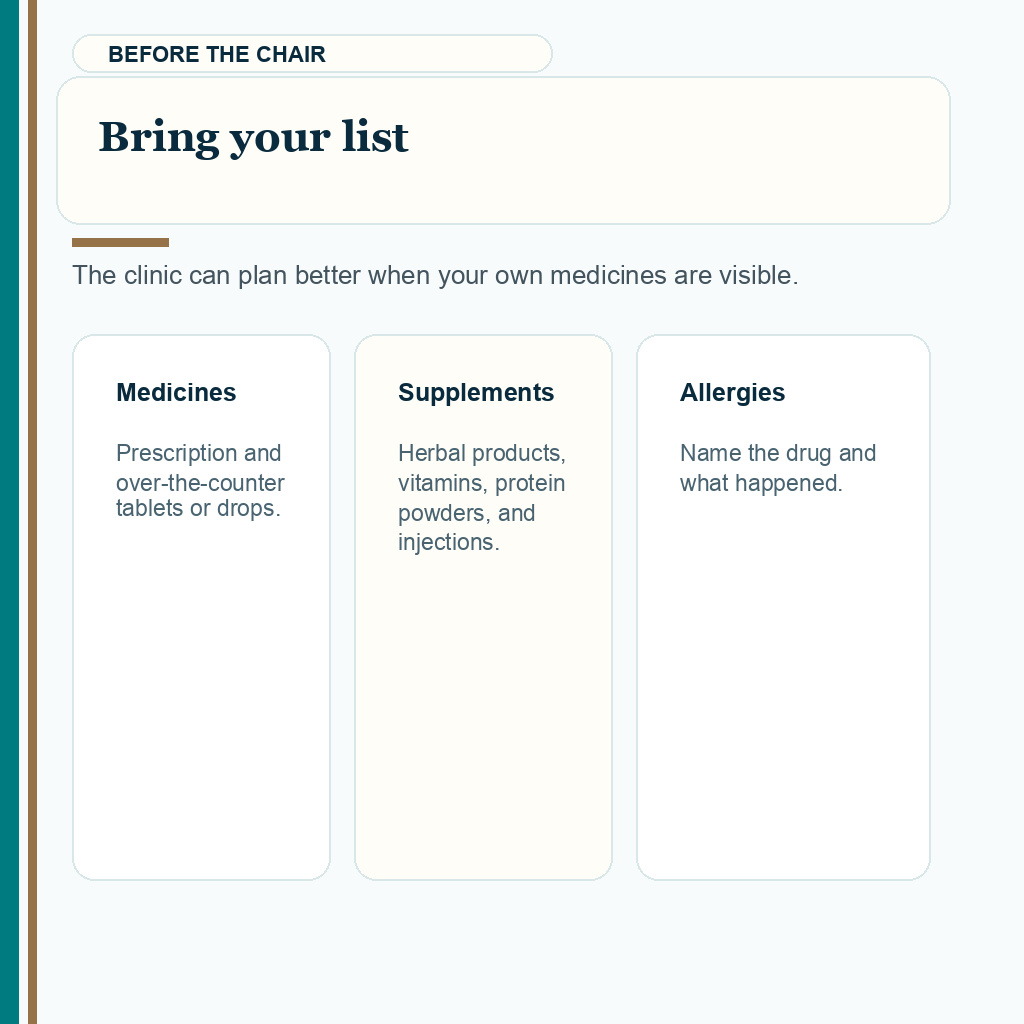
The medicine check starts before the clinic gives anything. Bring a current list of prescription medicines, over-the-counter medicines, supplements, recent injections, allergies, and previous reactions. If names are difficult, bring photos of the boxes or labels. For international patients, a box photo or active ingredient can be more useful than trying to pronounce a brand name from another country. If the dose is not clear, say that directly rather than inventing a number. If PrEP is part of your routine medication list, write the Truvada or generic PrEP medicine name clearly so the surgery day record is accurate.
This list belongs beside the normal medical readiness checks, including blood test review before surgery. It also matters when the history includes blood thinners, diabetes medicine, blood pressure medicine, anxiety or sleep medication, steroids, supplements, antibiotic allergy before FUE, rash after a medicine, swelling after a dental injection, fainting after a procedure, or severe nausea after a painkiller. If you use an insulin pump or CGM during FUE, record the insulin, device, receiver, and glucose-check instructions before the chair day. If you have a pacemaker or ICD before FUE, keep the device card, cardiology note, and medicine list together so the team is not judging each detail separately.
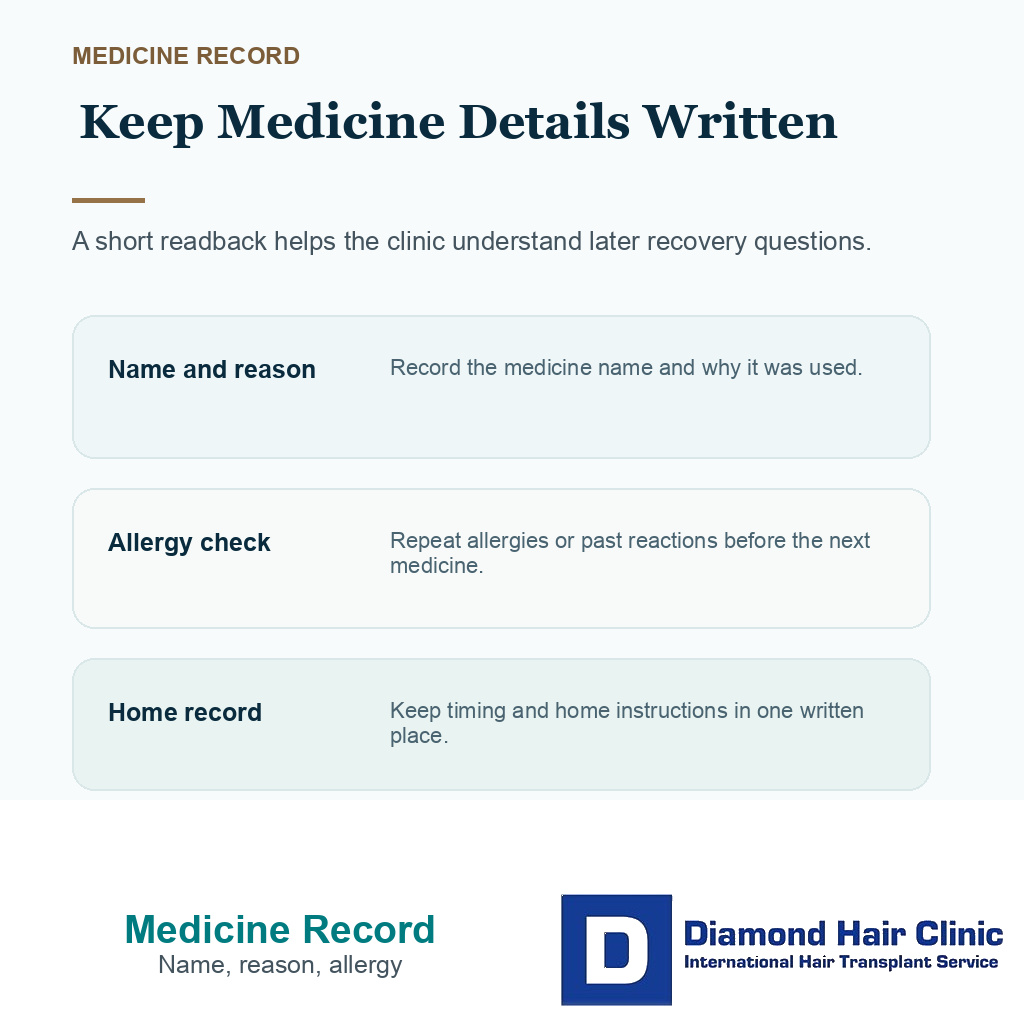
A useful readback connects the medicine name, reason, allergy relevance, and written record.
The point is not to cancel surgery over every minor detail. The point is to prevent surprises. A medicine that is harmless for one patient may matter more in another patient with blood pressure issues, asthma, sleep apnea, liver disease, stomach problems, allergy history, anxiety medication, anticoagulants, or previous anesthesia reactions. Blood thinners such as aspirin, clopidogrel, warfarin, apixaban, rivaroxaban, and similar medicines should not be stopped privately. The prescribing doctor and surgical team need to coordinate that plan.
Ask what each tablet or injection is for
On surgery day, medicines can appear at different moments. A tablet may be offered before the procedure. Local anesthetic injections are used to numb the donor and recipient areas. Some clinics may use medicine for swelling, infection prevention, pain control, anxiety, or other medical reasons. These are not all the same decision.
If you are mainly afraid of the injection pain, that question is better separated from the identity of the medicine. I wrote about anesthetic injection pain because the beginning can be uncomfortable even when the medicine is appropriate. Here, the issue is what was used and why.
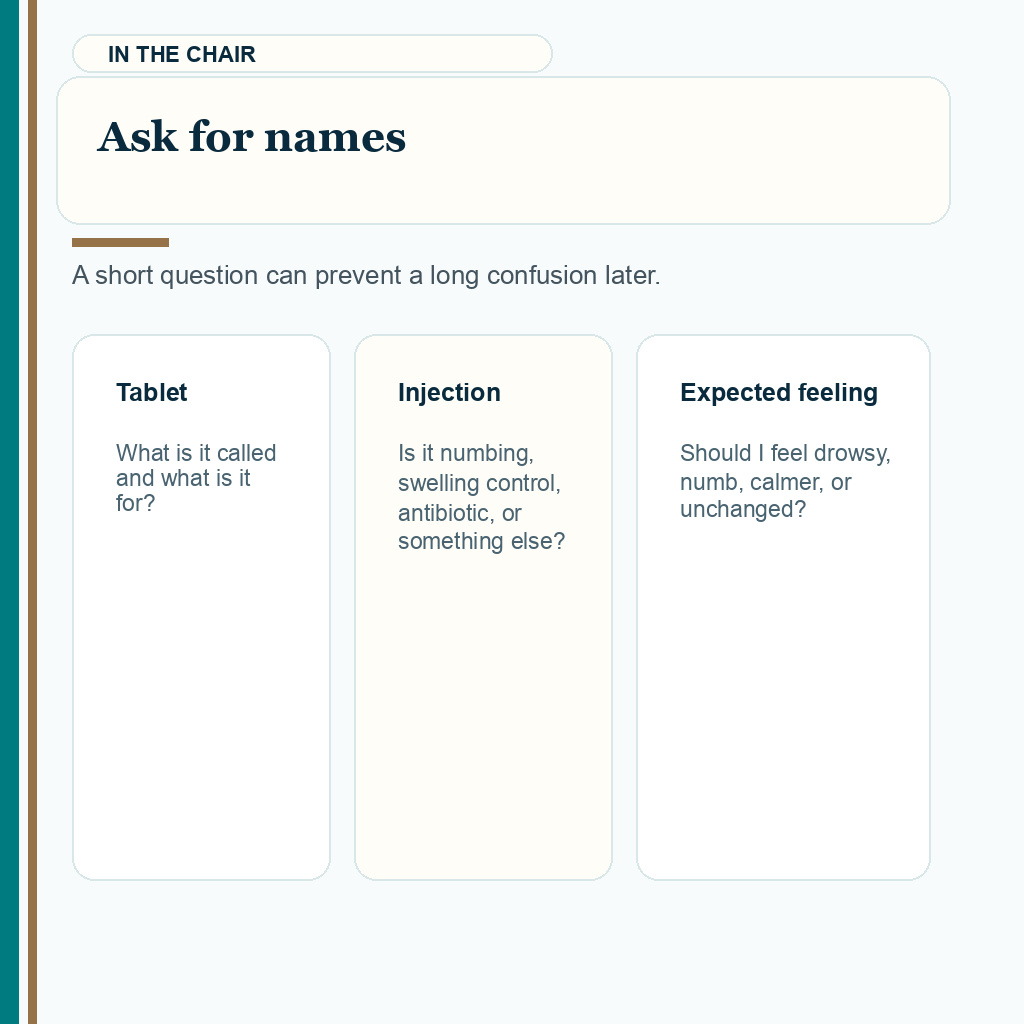
A clean medicine question can be short. Ask the name or active ingredient, the purpose, whether it is related to any medicine you reported as an allergy, what you should expect to feel, and whether it will be written in your record. If you are told that you may feel sleepy, lightheaded, numb, calmer, or sore at the injection site, that information helps you interpret the next few hours.
Anesthesia, sedation, and antibiotics are separate decisions
A patient often says “medicine” when he is actually mixing several categories together. Local anesthesia is not the same as sedation. Adrenaline added to local anesthesia is not the same as an antibiotic. A pain tablet is not the same as a sleeping tablet. Each one has a different reason, expected effect, and follow-up question.
For example, adrenaline in hair transplant anesthesia is used for a different purpose than a sedative. If a patient needs or is offered sedation during a hair transplant, the decision should be made with medical review, transport safety, alertness, and monitoring in mind. Do not add your own calming tablet, sleeping tablet, alcohol, or leftover medicine because you want the day to feel easier.
Antibiotic questions follow another route. Ask whether antibiotics after a hair transplant are clinically indicated or part of the clinic’s reviewed plan, why they are used, and what allergy history should be repeated before a dose is given.
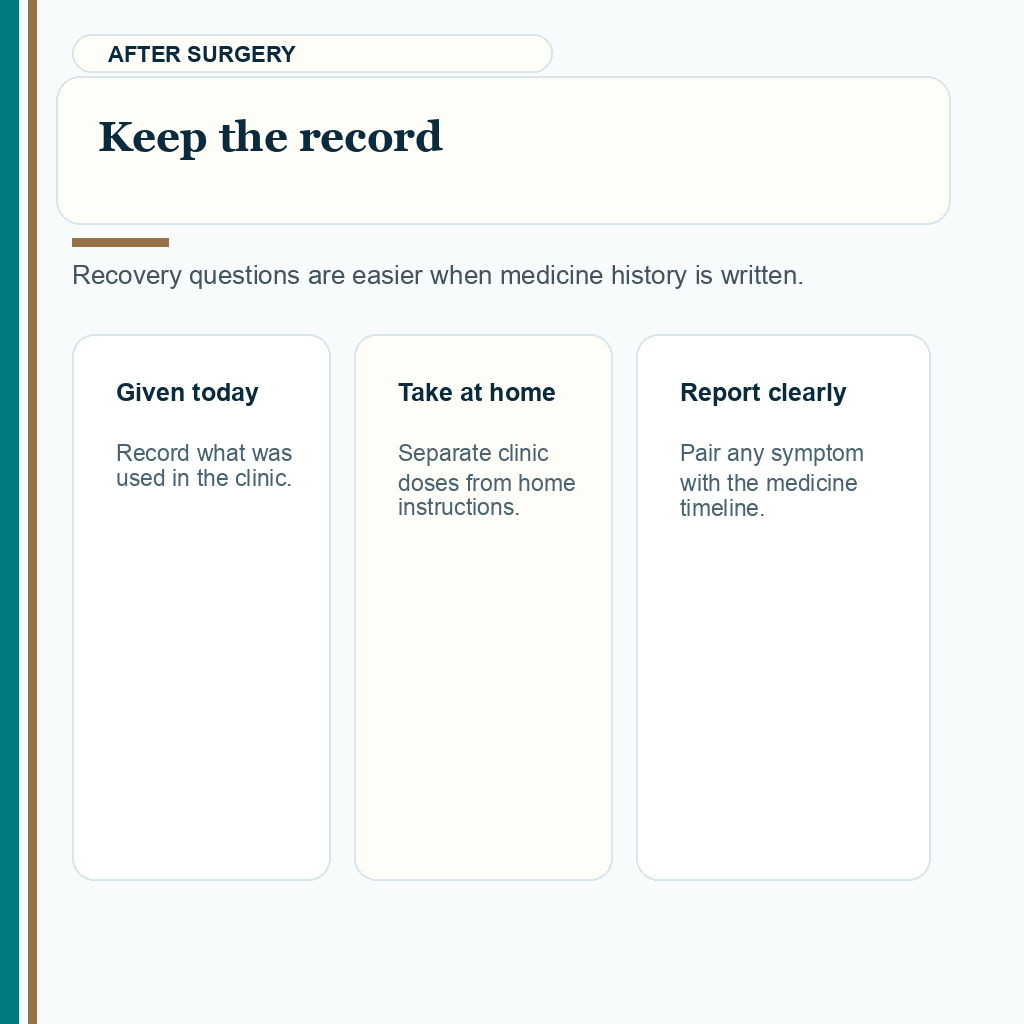
The carousel below separates the surgery day sequence. It is not a drug list. It shows a plain communication pattern. Bring your list, ask for names, keep the record, and pause if the answer conflicts with your allergy or medical history.