


Pacemaker and ICD History Before FUE Surgery
If you live with an implanted rhythm device, I first ask what the device is doing for you now. Some stable patients with a pacemaker or implantable cardioverter defibrillator may still be candidates, but I need the device history before anyone prepares you for surgery.
A pacemaker or ICD changes the questions I need to ask before I agree to a surgery date. I need to understand the device, the heart condition behind it, the last device check, the current medicine list, any recent shock or alert, and whether the procedure environment could create a device issue. Device history belongs in the planning stage, beside heart disease and stent safety before hair transplant, not as a casual note on the consent form.
First confirm the device history
A pacemaker helps treat certain rhythm problems. An ICD can detect dangerous rhythm events and deliver therapy when needed. Those two devices are not the same, and two patients with the same device name may still have different risks. One may be stable, checked recently, and cleared by the device clinic. Another may have had a recent ICD shock, fainting episode, device alarm, or medication change.
For FUE, I keep the decision shared between the surgical team and the doctors who know the device. A pacemaker or ICD can rule surgery out in one patient and still be manageable in another. Local anesthesia alone does not settle that difference. FUE is usually performed while the patient is awake, but it can still be a long procedure. Local anesthetic, possible adrenaline use, monitoring, bleeding control, anxiety, positioning, and any equipment that could create electromagnetic interference all need context. The device location also matters. Pressure from padding, straps, or long positioning can make the day harder unless it is planned before surgery starts.
If palpitations, dizziness, or fainting are part of the current story, I review them together with the device history. The separate guidance on heart racing around FUE may help you describe those symptoms, but the pacemaker or ICD information still needs to reach the clinic before travel.
Device clearance cannot be left until arrival. The card, last interrogation report, symptoms, and medicine list should be reviewed while the surgery date can still move.
Device details the clinic needs early
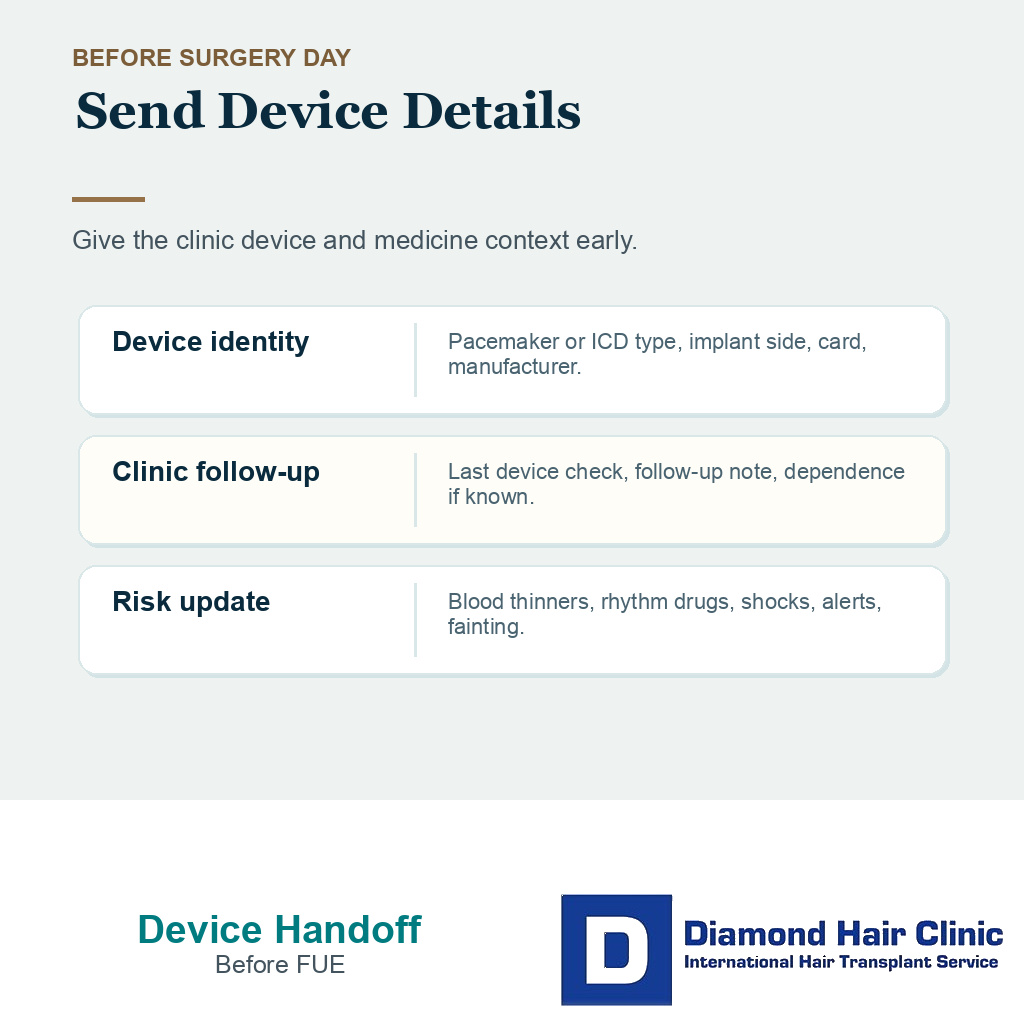
Send the device information while the surgery plan is still flexible. The most useful packet includes your device card, the device type, the manufacturer if shown, the implant side, the reason it was implanted, the date of the last device check, and the name of the cardiologist or device clinic that follows you. A card photo helps, but the last check and current restrictions matter just as much.
Send the current medicine list in exact names, not categories. I need to see anticoagulants, antiplatelets, rhythm medicines, blood pressure medicines, diabetes medicines, sedatives, supplements, and anything you were told never to stop without cardiology advice. Exact surgery day medicine names matter here because with a pacemaker or ICD, one medicine name can change the bleeding, blood pressure, rhythm, or sedation discussion.
Also tell us whether you are pacemaker dependent if you know, whether you have had a recent ICD shock, whether a device alert has appeared, whether you had a recent device interrogation, and whether you have chest pain, fainting, severe shortness of breath, worsening palpitations, fever, or redness, swelling, or drainage near the device pocket. I ask for these details because they can change whether an elective surgery date should go ahead.
Local anesthesia still needs device context
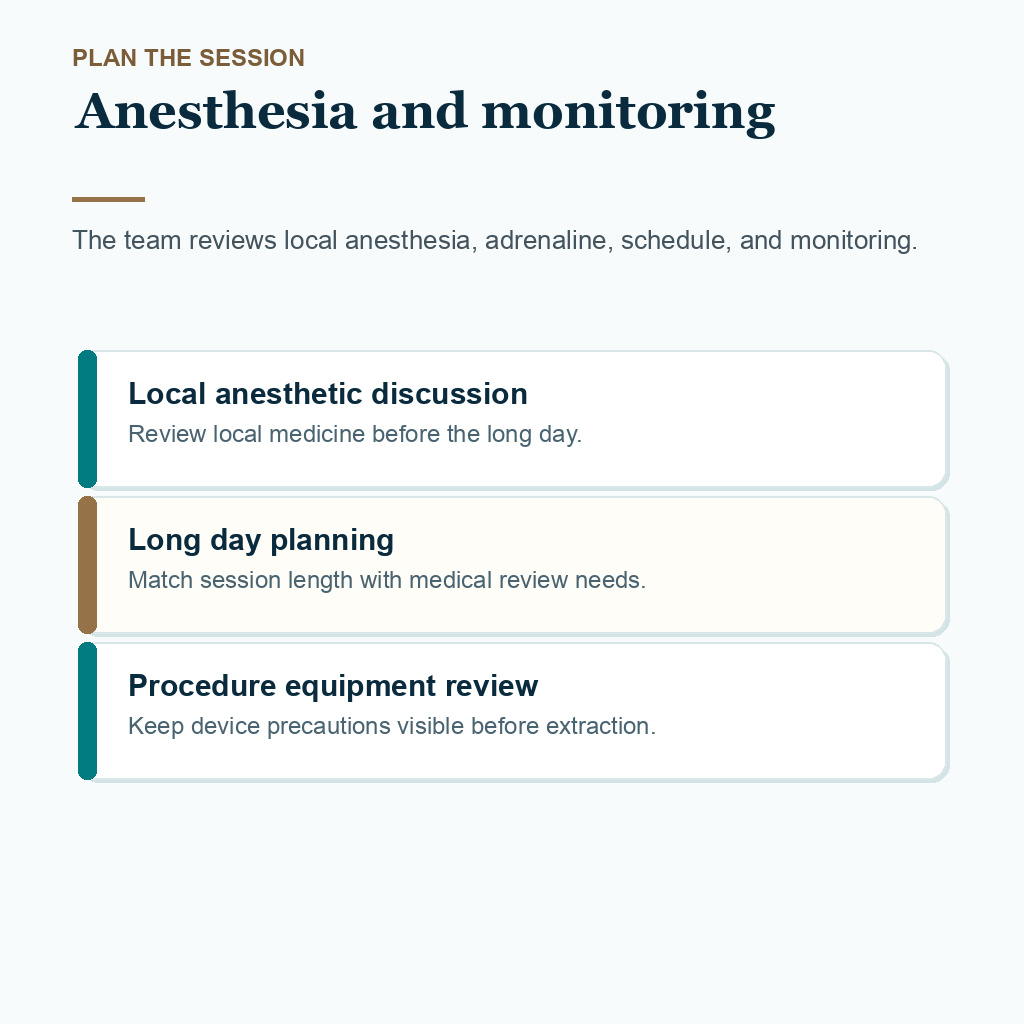
Many patients ask whether the decision is easier because hair transplant surgery is not usually general anesthesia. It can be easier in some ways, but it does not become simple by itself. A long awake procedure can still include local anesthetic decisions, adrenaline discussion, monitoring needs, blood pressure changes, anxiety, and choices for bleeding control.
If the surgical plan includes equipment that may produce electromagnetic interference, such as electrocautery or other tools that use energy, the decision belongs with the procedural team and the cardiology or device team. I do not want a patient guessing about magnets, ICD therapy, pacemaker programming, or restoring device settings after the procedure from online advice. Those are clinical decisions for the device team.
Adrenaline in local anesthesia and sedation during hair transplant both need the device history upfront. Bring the device facts early, then let the doctors who know your rhythm history decide the details for your device.
Use the pacemaker or ICD readiness matrix
Use the matrix to organize what you need to send before you contact the clinic. It cannot clear you for surgery, but it can show which missing detail needs attention first.
Device readiness check
Choose the device detail that needs review first
- 1Pacemaker disclosedBring the device facts
- 2ICD disclosedAdd shock and alert history
- 3Device details unclearPause for missing details
- 4Medicine plan unclearCoordinate the medicine list
- 5Surgery day readinessConfirm the handoff
Bring the device facts
Share the card, implant side, device clinic, last check, and why the pacemaker was placed.
Device record Move forward only after the device history and current heart status are clear.
Add shock and alert history
Tell us about any recent shock, device alert, rhythm episode, fainting, or cardiology warning before travel.
ICD history With an ICD, I often need device team input before travel.
Pause for missing details
An unknown model, missing card, unknown last check, or uncertain pacing dependence needs clarification while there is still time to adjust the surgery schedule.
Missing facts If details are missing, pause until the card or device clinic can confirm them.
Coordinate the medicine list
List blood thinners, antiplatelets, rhythm medicines, blood pressure medicines, and sedating medicines by their real names and doses.
Medicine boundary Do not stop, skip, double, or substitute medicine privately to make the day easier.
Confirm the handoff
Proceed only when documentation, symptoms, medicines, cardiology/device review, and the clinic plan line up.
Surgery morning By surgery morning, the device history should already be clear.
Device card, last check, implant side, and device clinic contact belong together.
Keep blood thinners, rhythm medicines, sedatives, and daily tablets on the list for surgery day.
Shock, alarm, fainting, chest symptoms, fever, or pocket changes should slow elective timing.
Medication and blood thinner decisions are not separate
Pacemaker and ICD patients may also be taking anticoagulants, antiplatelets, antiarrhythmics, beta blockers, blood pressure medicines, or other cardiac medicines. I need to see those medicines before I finalize the plan for surgery day, especially when they affect bleeding, blood pressure, rhythm, sedation, or cardiac risk.
Do not stop, skip, double, or substitute medication privately to make the hair transplant easier. That can be more dangerous than the original issue. If you take anticoagulants or antiplatelets, review the blood thinner plan before hair transplant. For regular medicines and supplements, prepare the exact names using the medication before a hair transplant guidance.
Sometimes an ECG, chest imaging, or cardiology note is useful because it answers a specific safety question. I do not order tests to decorate a file. I request ECG or chest imaging before FUE only when the result could change timing, monitoring, or the anesthesia discussion.
Warning details that should slow the plan
There are situations where cosmetic surgery planning should slow down immediately. Chest pain, fainting, severe shortness of breath, a recent ICD shock, repeated shocks, a device alarm, new or worsening palpitations with dizziness, fever, or redness, swelling, pain, or drainage over the device pocket should not be treated as routine travel details.
If one of these appears after booking, tell the clinic while the surgery date can still be changed without rushing the medical review. That warning also applies to any medical changes after booking, because a stable plan can change when the medical facts change.
Missing information can also stop the day from moving normally. If you do not know whether your device is a pacemaker or ICD, cannot find the card, do not know the last check date, or cannot explain recent symptoms, I may delay or change the schedule instead of making device decisions while you are already prepared for surgery.
Prepare the device packet early
I want the device card, medicine list, and any requested cardiology note reviewed early enough to decide whether monitoring, timing, or anesthesia details need to change.



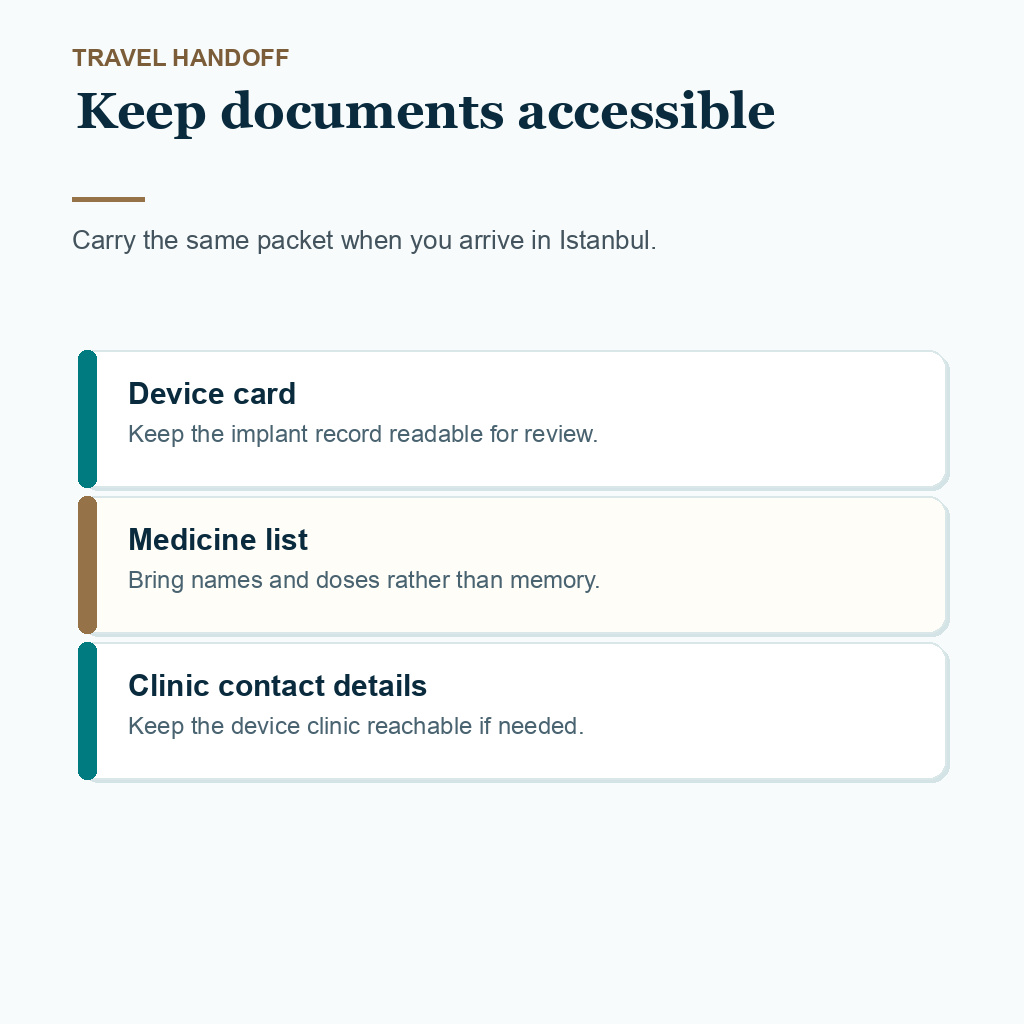
Bring the same packet physically on the day. Include the device card, cardiology note if requested, medicine list, allergy list, and contact details for the device clinic. Keep it with the other items you bring for FUE surgery day, because consent before surgery is clearer when the risk conversation is not happening from memory.
The surgery morning consultation should confirm the plan, not discover the pacemaker or ICD for the first time. If the device card, medicine plan, or recent symptom history is still missing that morning, I may need to pause the elective part of the day until the heart details are clear.
Missing rhythm details can postpone FUE
I do not want a pacemaker or ICD introduced for the first time in the treatment room. Before I plan the day, I need to see the device card, the last check, the current medicines, and any recent symptoms. If those details are missing, I cannot judge the surgery day properly.
When the device is stable and recently reviewed, FUE may still be possible. A shock, alarm, fainting, chest pain, severe breathlessness, fever, or a change around the device pocket means the rhythm concern has to be handled before I decide whether the hair transplant should stay on the schedule.

Read this review excerpt
Diamond Hair was the only clinic asking for medications, treatments I've done before, and other type of questions that make me feel confident on the professionalism that they practice with their clients.