


If Your Clinic Goes Quiet, Keep the Decision Medical
A slow reply after surgery can make you feel that you need to do something immediately. I would not change your aftercare just to feel back in control.
First check for warning signs. If there are no red flags, send one organized message with dated photos, keep the written plan, and seek local medical care if the concern cannot safely wait.
No one should feel abandoned after surgery. Silence can push someone toward oils, harsh washing, leftover antibiotics or medication that was not prescribed for you, or another clinic’s generic instructions before a doctor has reviewed the scalp. A slow reply should make your next step more organized, not more impulsive with washing, products, or leftover medicine. Put the facts in order, protect the grafts, and know when the problem needs care beyond messaging.
Separate silence from medical urgency first
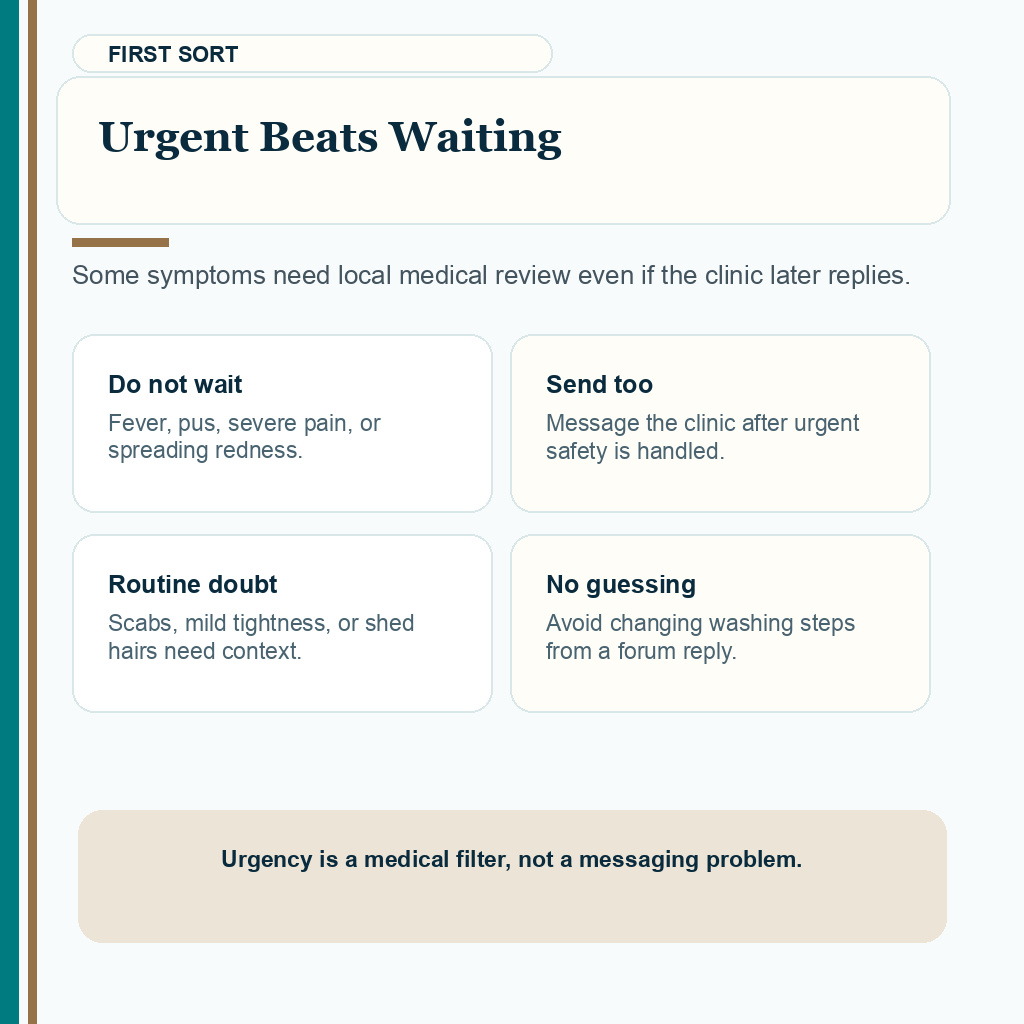
A late reply can feel frightening, but not every worry has the same level of risk. Mild tightness, dry crusting, early shedding, small flakes, or a few small bumps can be routine questions when they are mild and improving. Painful bumps, pus, spreading redness, fever, or symptoms that worsen instead of settling belong in the warning sign route.
Urgent symptoms come before clinic messaging. Do not wait for a WhatsApp reply if you have fever, increasing severe pain, pus or cloudy drainage, rapidly spreading redness, a bad smell from the wound, worsening swelling, a wound that opens, eye symptoms such as vision change or an eyelid you cannot open, breathing symptoms, or you feel generally unwell. In those situations, contact a local doctor, urgent clinic, or emergency service first. You can still update the operating clinic, but urgent safety should not depend on a delayed message.
For nonurgent concerns, keep following the written plan while you prepare a clean follow-up request. If the concern looks like infection warning signs after a hair transplant, medical review comes before another online opinion. If you are unsure whether redness, scabs, or pimples are routine or concerning, compare your situation with a focused page such as redness, scabs, or pimples after a hair transplant, then send photos rather than changing the plan by yourself.
Send one message a doctor can answer
When patients are anxious, they often send several messages in a row. One says the scalp feels tight. Another asks about washing. A third sends a blurry close-up. A fourth repeats the question in different words. I understand why this happens, but it can make the answer slower and less precise.
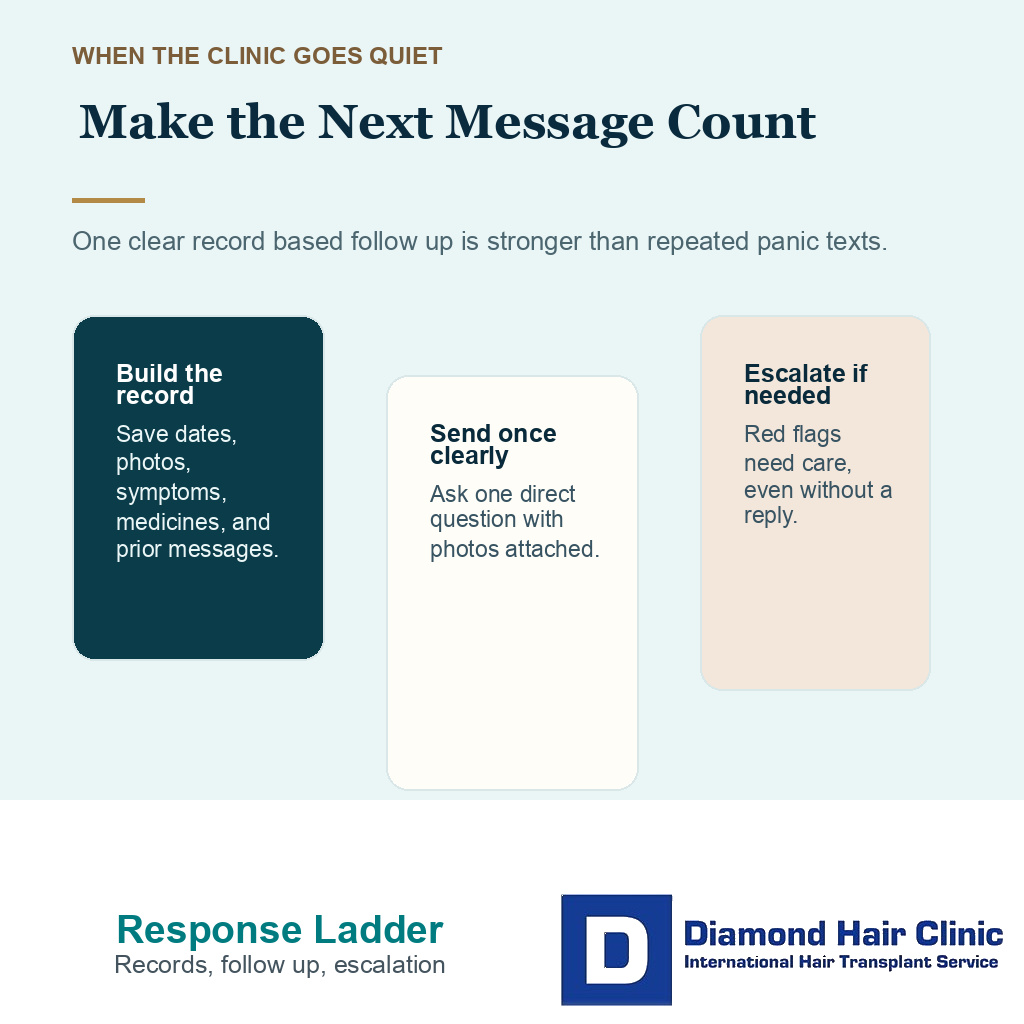
One complete message is easier to review than repeated fragments. Say the surgery date, which post-op day you are on, the exact concern, the current aftercare step, and what has already been used on the scalp. Attach repeatable photos instead of many different angles under different light. A clinic can answer more safely when the message is structured around facts.
A brief reassurance is not a care plan. A useful reply names the next action, such as keeping the same wash, changing one step, sending new photos, or getting local medical review. It should connect to your recovery day, symptom, and current aftercare step.
Keep the follow-up in one clear thread when you can. If questions are scattered across WhatsApp, email, and social media, the doctor may see fragments instead of the full timeline.
A useful message can be this short. “My surgery date and post-op day are clear. My main concern is the symptom I am seeing now. I have fever, or I do not have fever. I am washing as instructed, or I have changed one step. I have not added anything else, or I used one named product. Please confirm whether I should continue the written plan or change only this step.” Then attach repeatable photos.
If your main question is who should review your photos after leaving Turkey, the normal process for hair transplant follow-up after surgery should connect your current symptom to the original plan. The operating clinic should know the surgical details, graft placement, donor extraction pattern, medications, and the instruction set it gave you.
Keep a record another doctor can use
If communication has been poor, your record matters because it helps any doctor understand what happened. It keeps dates, photos, symptoms, and actual instructions together instead of relying on memory. It also protects you from dramatic advice that ignores your timeline.
If you received an operation report or discharge summary, keep it with the written aftercare plan, surgery date, graft number if you were given one, medication names, washing instructions, clinic messages, and symptom changes. Keep the record factual. Do not turn it into an argument in the first message. A clear record is more useful than a long complaint when another doctor later needs to understand what happened.
One generic reply can feel like dismissal when the result looks thin. The useful record is a calm timeline with the surgery date, graft count if known, treated zones, photo dates, symptoms, product changes, and every clinic instruction, because another doctor cannot review a scattered message thread.
A public reply, review response, or short reassurance does not replace the medical file. Keep the private messages, dated claim, and records you actually received in one place, because another doctor can only review what is documented rather than what was promised online.
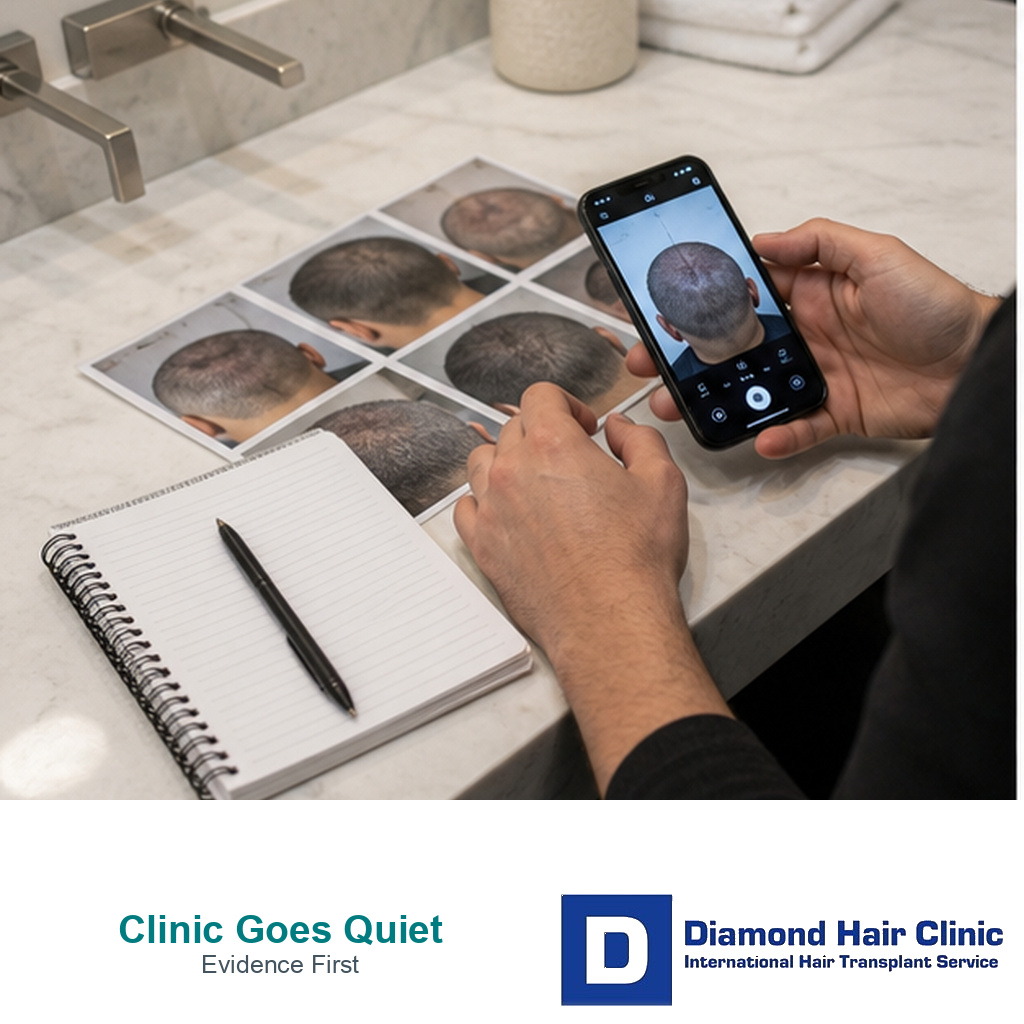
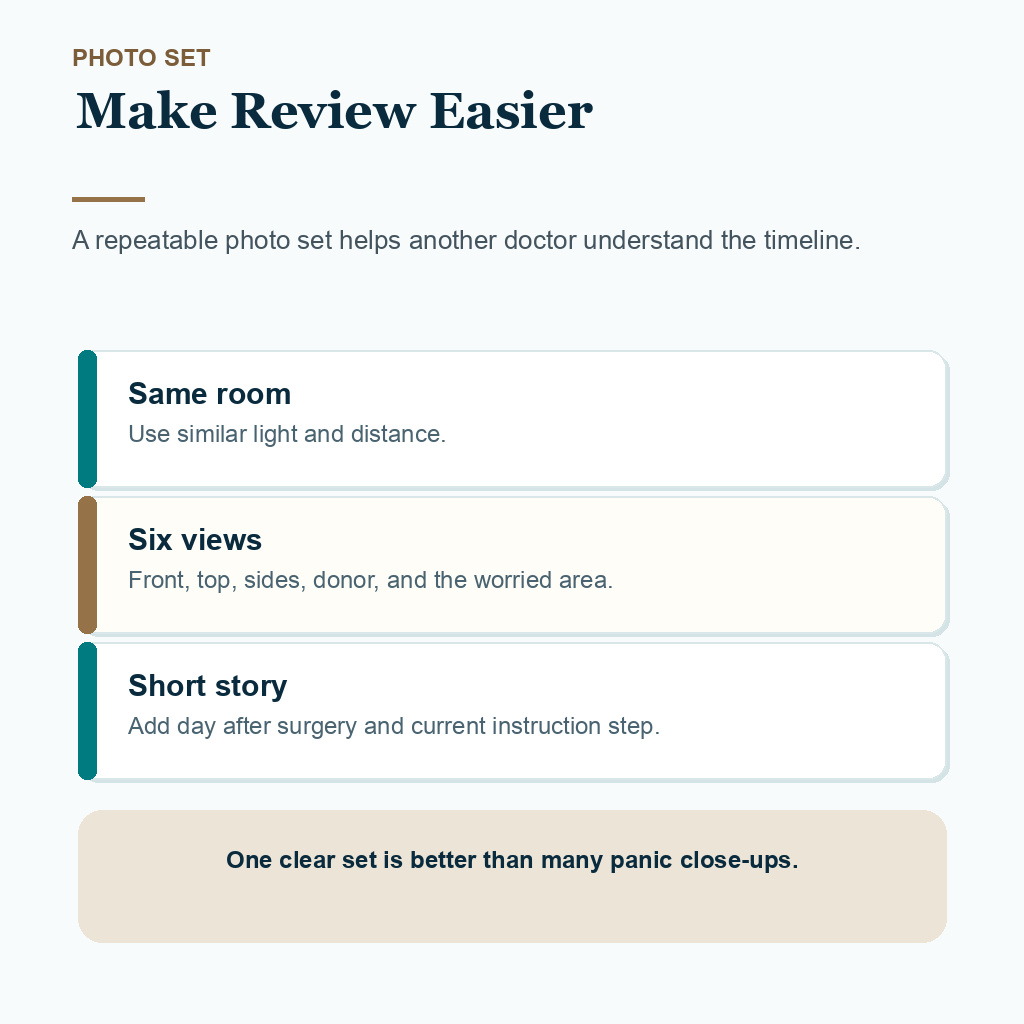
Photos should be repeatable. Use the same room, similar light, and similar distance where possible. Include front, top, sides, donor area, and the exact area that worries you. If you are unsure how to make photos useful, the principles in early hair transplant review photos apply here too. A single panic close-up rarely answers the real question.
Sort urgency before sending another message
Pick the situation closest to yours. The aim is to decide whether this needs local care, one cleaner message, a pause on mixed advice, or another medical review.
Start with the path that matches the risk, not the emotion of being ignored.
Medical urgency
Check fever, pus or cloudy drainage, severe pain, spreading redness, bad smell, or worsening swelling.
Urgency route starts with local medical review.
Message clarity
Check whether the clinic has scattered questions and mixed photos.
Message route starts with one organized request.
Instruction conflict
Check whether two sources give different washing, medication, or product advice.
Instruction route pauses new changes until the step is clear.
Second review
Check whether the clinic remains silent and the question needs medical judgment.
Review route starts with sharing the record, not only frustration.
Warning signs now
Send the clinic a short update, but do not make urgent symptoms wait behind a message queue.
- Use local medical care for fever, pus or cloudy drainage, severe pain, spreading redness, bad smell, or worsening swelling.
- Take clear photos before treatment if that does not delay help.
- Keep medication names and timing in the record.
Routine doubt
One clean message helps the clinic see the timeline and the exact decision you need.
- State the surgery date and the post-op day you are on.
- Send repeatable front, top, side, donor, and concern-area photos.
- Ask the decision you need answered now.
Mixed advice
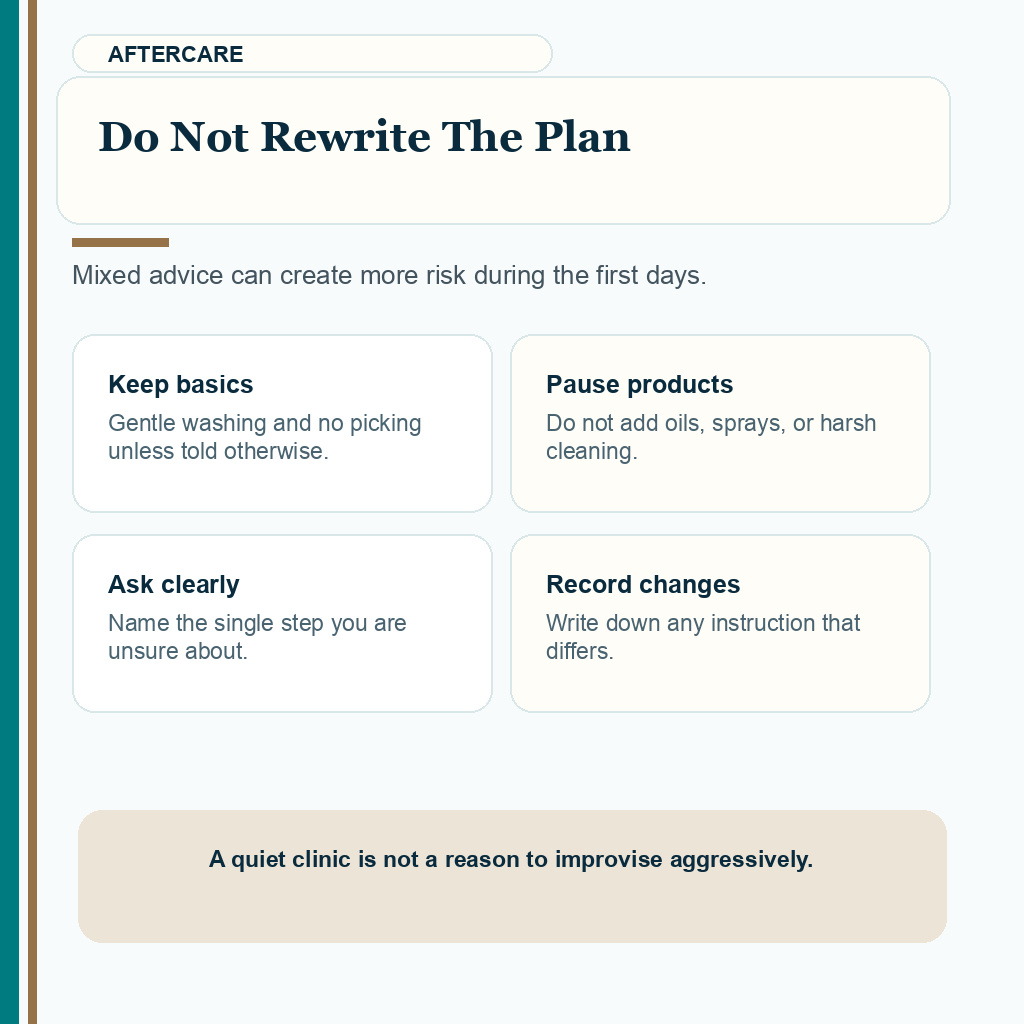
If advice conflicts, the safest move is usually to pause new products or aggressive cleaning until the specific step is clarified.
- Keep the written plan visible.
- Do not add oils, scrubs, strong antiseptics, or medication that was not prescribed for you without review.
- Record exactly which instruction conflicts with which step.
Second opinion
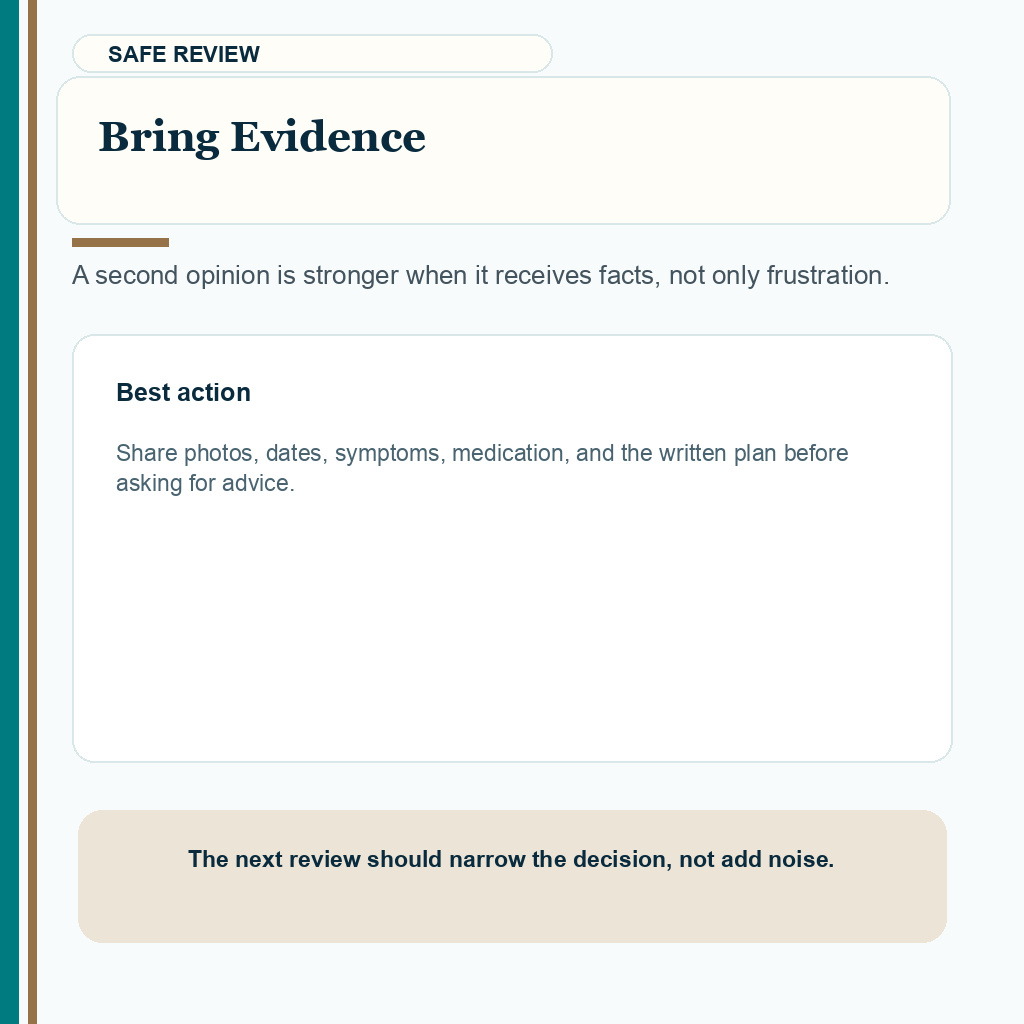
A second opinion should receive the record, photos, symptoms, and original plan before giving advice.
- Share the operation date, operation report if available, and any known graft count.
- Show the written aftercare and all medication names.
- Ask what needs urgent action and what can wait.
One follow-up message that can be reviewed
| Include | Keep it factual |
|---|---|
| Timeline | Surgery date, current month, and when the concern first appeared |
| Photos | Front, top, sides, donor area, and the exact spot under steady light |
| Symptoms and products | Pain, redness, shedding, itching, medication changes, and anything added after surgery |
| Previous instruction | The last clinic advice, wash plan, and product plan in the same message |
| Decision needed | Whether this is routine follow-up, faster review, or a separate repair assessment |
If the question is whether the result is truly failed or still immature, connect the message with the failed result timing review instead of turning every slow reply into a repair decision.
Keep online advice from rewriting aftercare
When the operating clinic is slow to reply, online advice becomes tempting. Most online advice is missing your surgical details. The person replying may not know the graft placement depth, donor extraction pattern, medications, scab condition, skin sensitivity, or whether your clinic used a specific washing protocol.
A clinic instruction can still be unclear or incomplete. The risk is mixing instructions before anyone has reviewed your case. If one reply tells you to wash harder, another tells you not to touch anything, and another suggests a product, the conflict itself becomes part of the problem. The same warning applies to conflicting hair transplant aftercare advice. Mixed routines are often where avoidable irritation begins.
Stay with gentle basics unless a doctor reviews your case and gives a reason to change. Do not pick scabs. Do not scrub grafts. Do not add harsh products because a stranger online sounded confident. General hair transplant aftercare can give background, but it should not replace case-specific review when the clinic is silent.
Use a second opinion when safety or surgery needs judgment
A second opinion can be useful when the clinic remains silent and the question is no longer a routine aftercare step. Suspected infection, necrosis, wound opening, an unusual donor problem, possible overharvesting, a misplaced hairline, or a repair question all need qualified review with facts, not guesswork from one photo.
The best second opinion is not a quick judgment from one photo. It is a review of the timeline, photos, symptoms, medication list, washing routine, and the specific question you need answered. The same habit of using evidence also applies before surgery when a plan feels wrong. A second opinion before a hair transplant should test the plan, not just reassure you.
Be careful with anyone who gives a confident diagnosis from one cropped image. Early healing can look dramatic without proving a final result. At the same time, urgent symptoms should not be minimized. The role of a second opinion is to separate what needs action now from what needs observation, photos, and time.
Anger can force a premature repair decision
Silence from a clinic can quickly turn into anger. That is understandable, especially if a patient traveled, paid a large amount of money, and now feels ignored. Still, refund or repair language is often too early in the first weeks or months. The scalp is still healing, shock loss may appear, and density cannot be judged from the early phase alone.
If your concern is a poor result, record it now but do not force a repair conclusion too soon. Final density should not be judged in the first weeks or early months, but that does not mean abnormal healing should be ignored. A repair plan usually needs graft growth to mature, donor area assessment, recipient area diagnosis, and enough time to see the real growth pattern. The timing problem behind poor hair transplant result before refund or repair is that another operation should not be accepted before the facts support it.
That does not excuse silence. A clinic should communicate responsibly, especially after surgery. But your own next decision should still be based on evidence. If the final concern becomes a dispute, the same organized record helps more than emotional message threads.
Check communication standards before you pay
The best time to test communication is before travel or deposit, not after surgery. Ask who answers medical follow-up questions, whether the doctor reviews photos, what happens outside business hours, and how urgent symptoms are handled after you leave Turkey. A fast sales reply is not the same as a safe medical follow-up route.
If the clinic cannot explain its follow-up route before surgery, pause. Ask for the channel, the person responsible, the kind of photos needed, and when a symptom requires local medical care. A clear medical follow-up route before travel is more than administrative convenience. It is part of surgical safety planning.
Booking messages should also match the surgical plan. If one person promises the doctor will do everything, another avoids the question, and the written plan says something different, you need clarity before payment. Your hair transplant booking messages and surgical plan should describe the operation you are actually agreeing to.
Slow replies should not create unsafe care
If a clinic goes quiet after surgery, sort the problem by urgency. Bleeding, fever, spreading redness, pus, severe pain, or feeling unwell needs medical review, not another day of guessing.
For stable questions, send one clear message with photos, timing, symptoms, medicine use, and the step you are unsure about. Keep the written plan until a qualified doctor changes it.
Online replies can help you name questions, but they cannot take responsibility for treatment. Recovery should not drift because nobody answered quickly.

Read this review excerpt
Every single one of my questions was answered and they made sure I had all the details I needed to make an informed decision.