


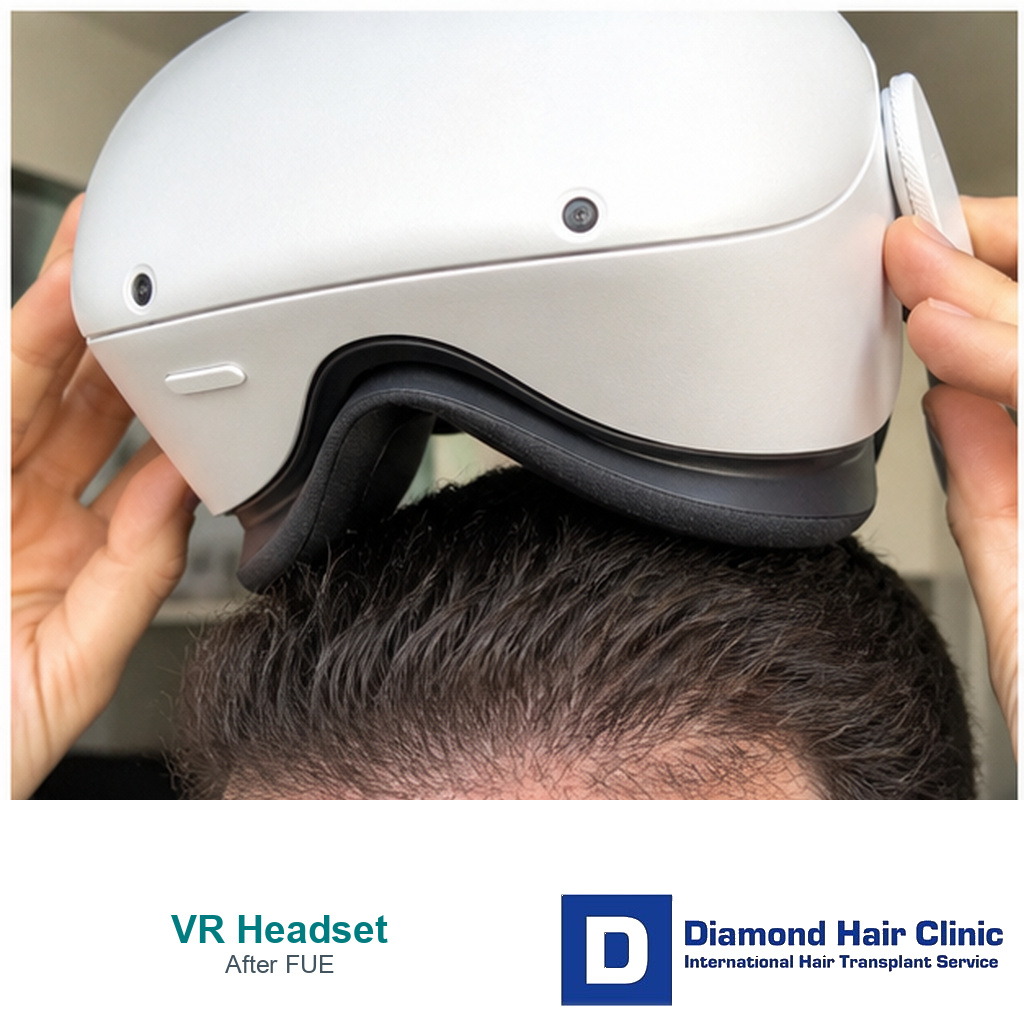
VR Headset Pressure, Heat, and Strap Contact
In the early healing period, do not use a VR headset if the cushion or straps touch the recipient area, press on a tender donor area, trap heat, create sweat, or need to slide across the scalp during removal. If the band touches tender donor or recipient skin, wait until contact does not create soreness, rubbing, or dampness. The safer first return is a short test, not a full gaming session. It is a short, clean, seated, dry test after the scalp looks settled and the device can come off without dragging across grafts.
I do not reduce this to one date. Around day 10, many grafts are harder to dislodge, but that is not permission for tight pressure, rubbing, heavy sweat, or sliding a device across the recipient area. A loose, clean headset used briefly for a low movement test is different from a tight, front heavy headset used for an active game. I judge the headset by its contact path first. The cushion position, dry padding, and slow removal matter more than the device name.
What should you separate before using VR?
Most patients ask about the headset as if the headset is the whole activity. It is not. I separate it into placing the device on the head, keeping it there, and moving while it is on.
That distinction matters because transplanted grafts become more secure over time, but secure grafts are not the same as a scalp that likes friction, pressure, sweat, or repeated strap movement. If your main worry is whether the grafts are secure yet, start with when grafts become secure. VR then adds pressure, heat, and strap movement on top of that timing question.
A headset may feel front heavy, squeeze the forehead, pull through a top strap, or press behind the head near the donor area. Some feel fine for five minutes and irritating after forty minutes. So the first return should be a small test, not a full gaming night. Even a soft headset can become a scalp problem after heat, sweat, and repeated removal. End the first headset test as soon as heat, soreness, or strap marks appear.
Work equipment needs an earlier plan than entertainment. Tell the clinic before surgery if a headset is part of your job, so time off or modified duties can be planned instead of guessed after the operation.
Why does the strap path matter more than the screen?
Before you think about the game, hold the headset near your head and trace the contact points. Does the front cushion sit on the forehead only, or does it cross the new hairline? Does the top strap touch transplanted grafts on the frontal scalp or midscalp? Does the rear strap press on a tender donor area? Does removal drag across the grafts?
The best comparison depends on where the headset touches. If it feels soft and sits near the scalp without much compression, the logic is close to headphones after hair transplant. If it is front heavy, fixed, or compressive, I think more about helmet after hair transplant, because pressure over healing skin becomes the issue.
A narrow top strap or rear strap can behave more like mask strap pressure after FUE. VR borrows from all three examples. I would trace the exact route first instead of judging the device only by its name.
If the headset crosses the transplanted area, I would treat it cautiously even when the game itself feels easy. The screen is not the problem. Repeated contact is.
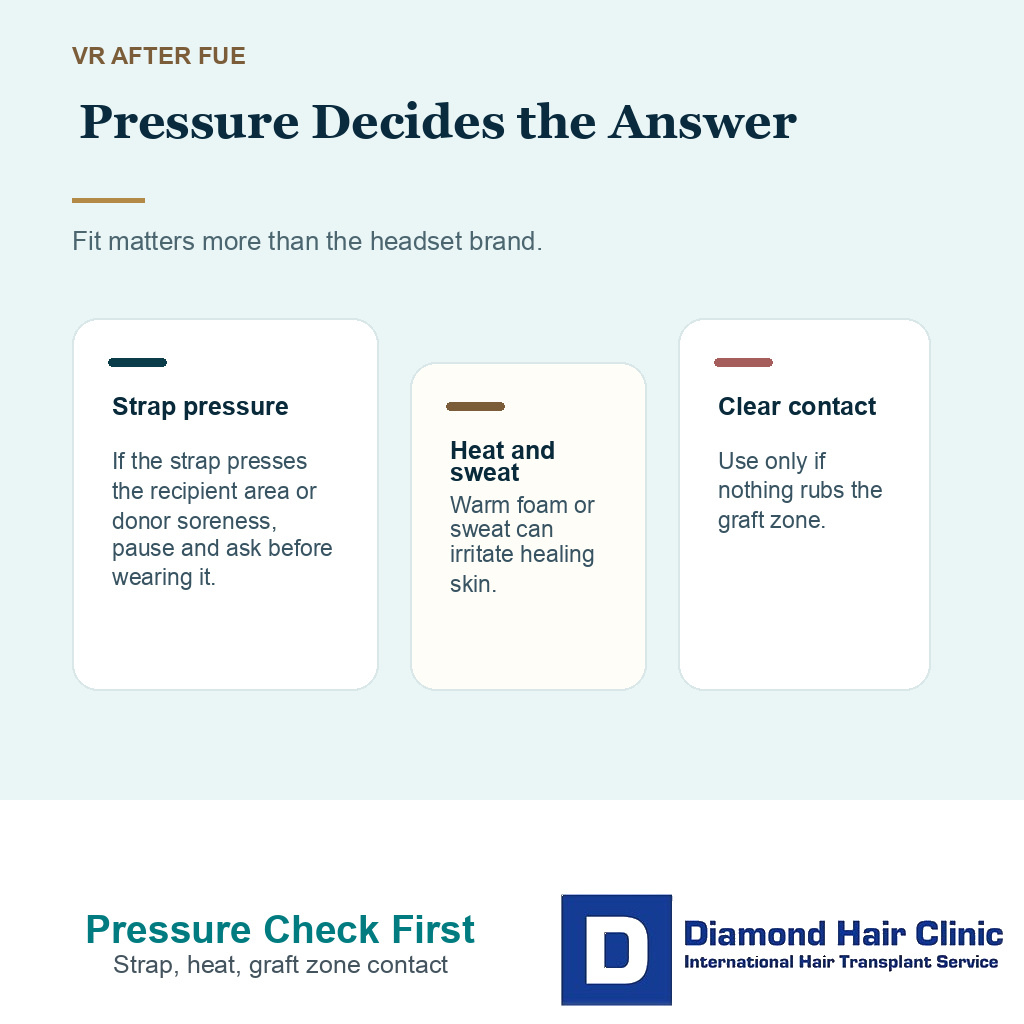
Forehead pressure can still be the problem
A frontal hairline transplant changes the answer. Many VR headsets rest close to the forehead. If your transplanted area includes the frontal hairline, temples, or front scalp, the edge of the cushion may sit near the zone you are trying to protect. Even if the padding feels soft in your hand, repeated pressure against healing skin can be irritating.
Soft padding is not automatic permission. I handle a soft headset the same way I handle soft headwear after a hair transplant. Softness helps only when the fit is loose, brief, clean, and away from healing skin. If the cushion compresses the new hairline, it is still pressure.
Patients also underestimate accidental pressure because the contact may be brief. One brief touch during sleep is a different problem from a chosen VR session. If that is what happened, compare it with sleeping on grafts after hair transplant. For VR, you can choose to wait instead of repeating the pressure.
When do heat and sweat change a quiet session?
A seated, low movement VR demonstration is one situation. A boxing game, dance game, long racing simulator session, or large movement game is another. Once sweat is involved, the headset can slide more, the padding can stay damp against the skin, and you may remove it quickly without thinking about the graft path.
This is the part patients miss when they only ask, “Is it two weeks or one month?” The game type changes the risk. Once the session becomes sweaty or active, I judge it with the pressure limit I use for exercise after hair transplant, because body heat, sweat, blood pressure, and contact start to matter together.
If you are early in recovery, do not use VR as your first way back to activity or exercise. Start with walking and ordinary daily movement. Let the recipient area and donor area settle first. Once you are past the clinic’s protected contact window, the scabs are settling or gone, and your clinic has not given a different instruction, make the first test clean, loose, seated, low movement, and short. A headset that stays dry for ten minutes is a different test from a headset that is damp after an active game.
How should you check headset contact before the first session?
Do not make the call from one date alone. First sort the contact pattern, then watch what the scalp does after removal.
VR Pressure Console
Sort the pressure situation first
The action changes when pressure, heat, movement, or symptoms change.
Short dry test
If the strap avoids the recipient area and any tender donor area, the scalp is calm, and you are not inside your clinic’s protected early contact window, start with a short seated session and check the skin after removal.
- Clean the padding.
- Keep the fit loose.
- Stop before sweat builds.
Delay or change the fit
If the front cushion presses the new hairline or the top strap crosses grafts, wait longer or change the device path before using it.
- Do not test by pressing.
- Avoid sliding the padding.
- Ask the clinic if the fit cannot be changed.
Reduce the session
If the session is active or sweaty, treat it like exercise. Keep the first return low movement and stop before the headset becomes damp.
- Choose a seated app.
- Set a timer.
- Let the scalp cool after.
Stop and review signs
If the headset rubbed the scalp and you see fresh bleeding, increasing pain, drainage, swelling, spreading hot redness, fever, an open wound, or persistent redness, send photos to the clinic.
- Do not scrub the area.
- Do not keep testing.
- Document the contact point.
Start with a short dry test
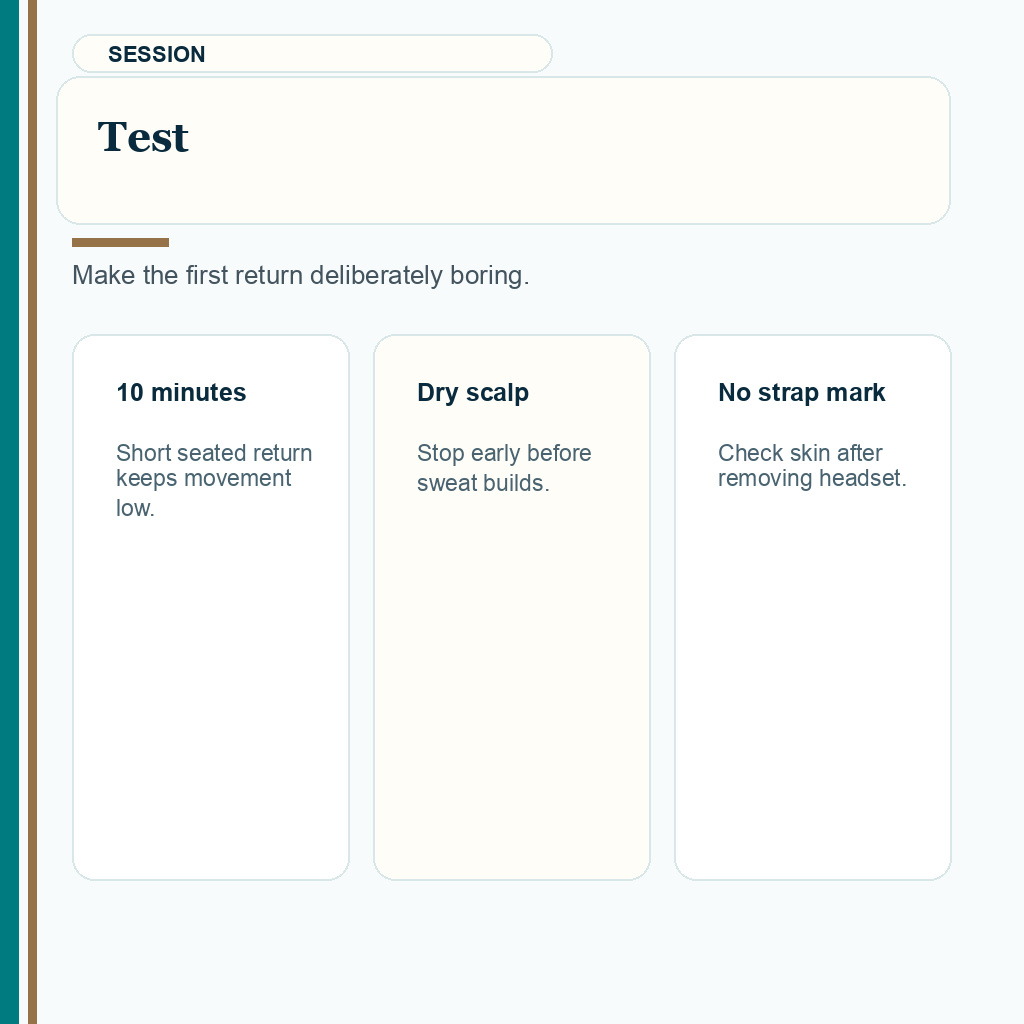
The first VR return should be almost boring. Put the headset on slowly. Make sure the front pad does not push into the hairline. Make sure the top strap is not lying across transplanted hair. Remove it by lifting away from the scalp, not by sliding straps backward through the grafts.
For the first return, choose a seated session with low movement and a timer. Ten to fifteen minutes can tell you more than an hour. After removing the headset, look for pressure marks, unusual tenderness, new redness, a rubbed patch, or damp irritation. If the skin looks and feels unchanged, the next session can be slightly longer. If the scalp complains, the answer is not to push through it.
If the device needs frequent adjustment, wiping, or tightening during the test, stop there because the repeated hand movement is part of the risk.
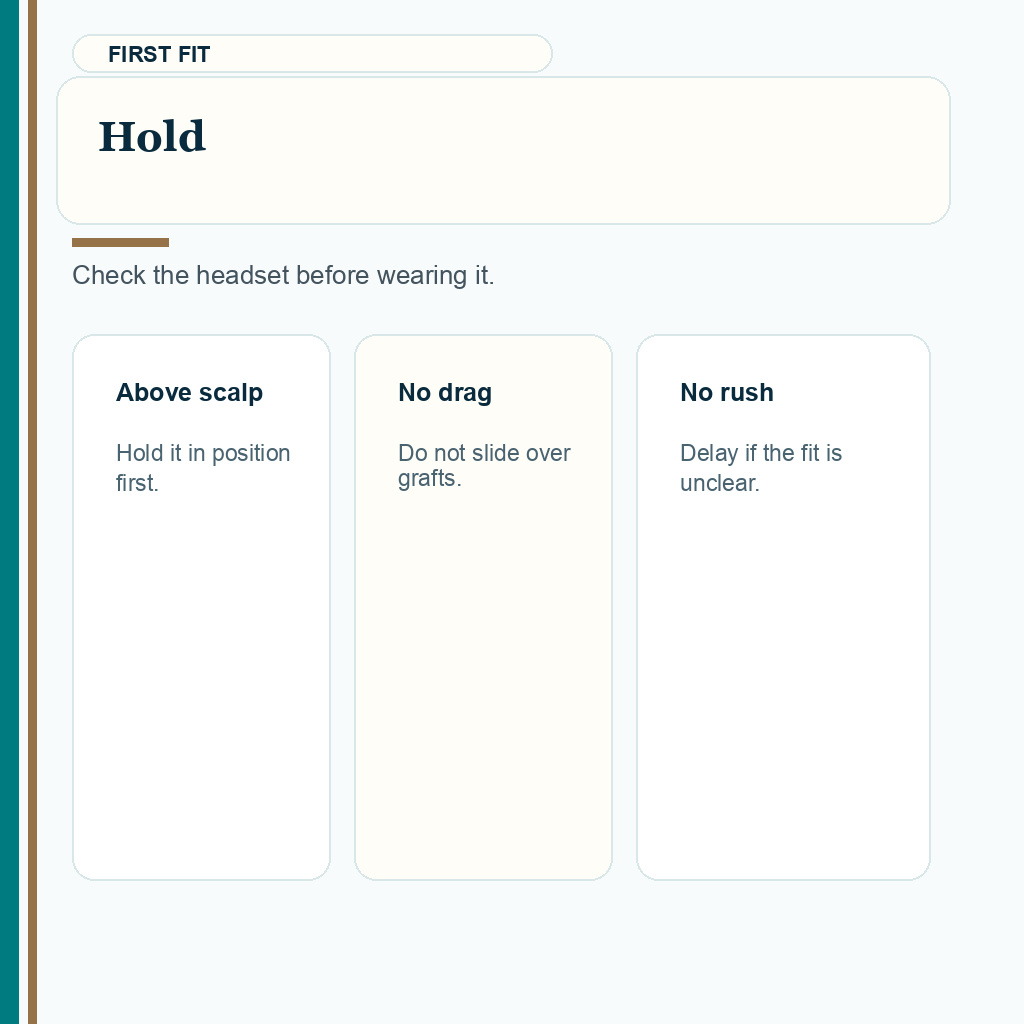
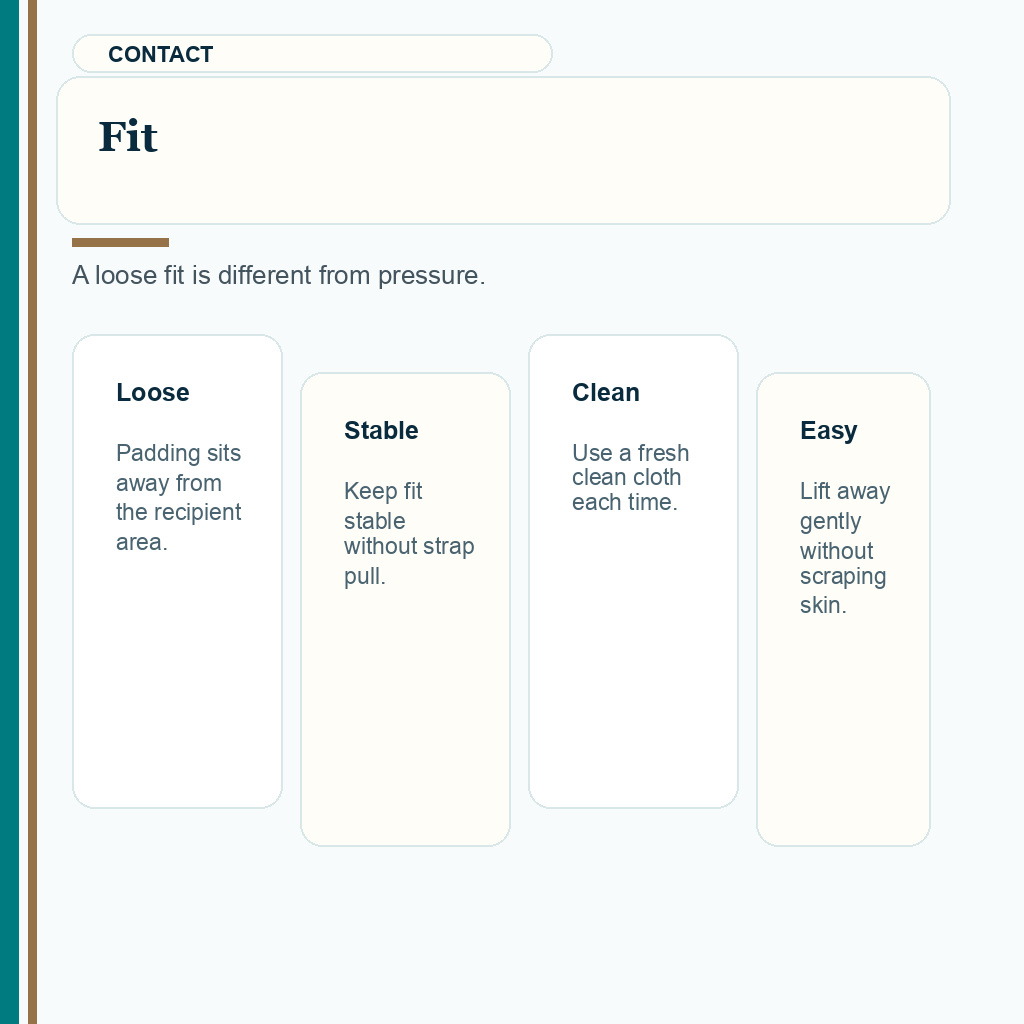

Scalp sensitivity can last longer than the first secure graft phase. The pressure tolerance rule behind scalp massage after hair transplant applies here. Pressure that seems harmless on normal skin can feel different on a healing scalp, so VR should wait until the device feels ordinary.
What should you do if the headset rubbed the scalp?
If the headset touched the scalp briefly and nothing changed, do not panic. Do not start rubbing the area to check it. Do not pick at scabs or pull at hairs to see whether they are secure. Leave the area alone, take a clear photo in normal light, and monitor it.
The concern rises when there is fresh bleeding, increasing pain, swelling, drainage, heat in the skin, a new wound, or redness that does not settle. Those signs belong in a clinical message, especially if the headset contacted the recipient area. Judge that pattern the same way I explain redness, scabs, or pimples after a hair transplant, by timing and pattern rather than panic.
If you message the clinic, say exactly what happened. Mention the date after surgery, the headset model or strap path in plain words, how long you wore it, whether there was sweat, where it touched, and what you see now. One clear overall photo and one closer photo in normal light are usually more useful than ten worried close-up photos with no context.
Return when the device is boring again
VR is ready when it no longer turns into a scalp event. The headset goes on without scraping. The strap does not cross the grafted area. The session stays short enough that heat and sweat do not build. Removal is slow and deliberate. The scalp looks the same afterward.
That is a different kind of readiness from looking good on camera. Use video calls after hair transplant for visibility decisions. For VR, judge the device like a contact object first and entertainment second.
One early session is not worth turning the scalp into a new problem. Wait until the scalp looks settled, keep the first return short and dry, and ask the clinic before continuing if the headset creates pressure marks, rubbing, or symptoms that do not settle.
Read this review excerpt
He was very thorough in every little detail and I never felt pressure to do anything I wasn’t sure of.