


Plan Video Calls Around Camera Timing and Recovery
A patient can feel well enough to answer emails two or three days after FUE and still not be ready for Zoom, Teams, or a client video call. That is not weakness. The camera adds a different kind of exposure because swelling, scabs, shaved hair, redness, lighting, and the feeling that everyone is looking at the hairline all sit in one small frame.
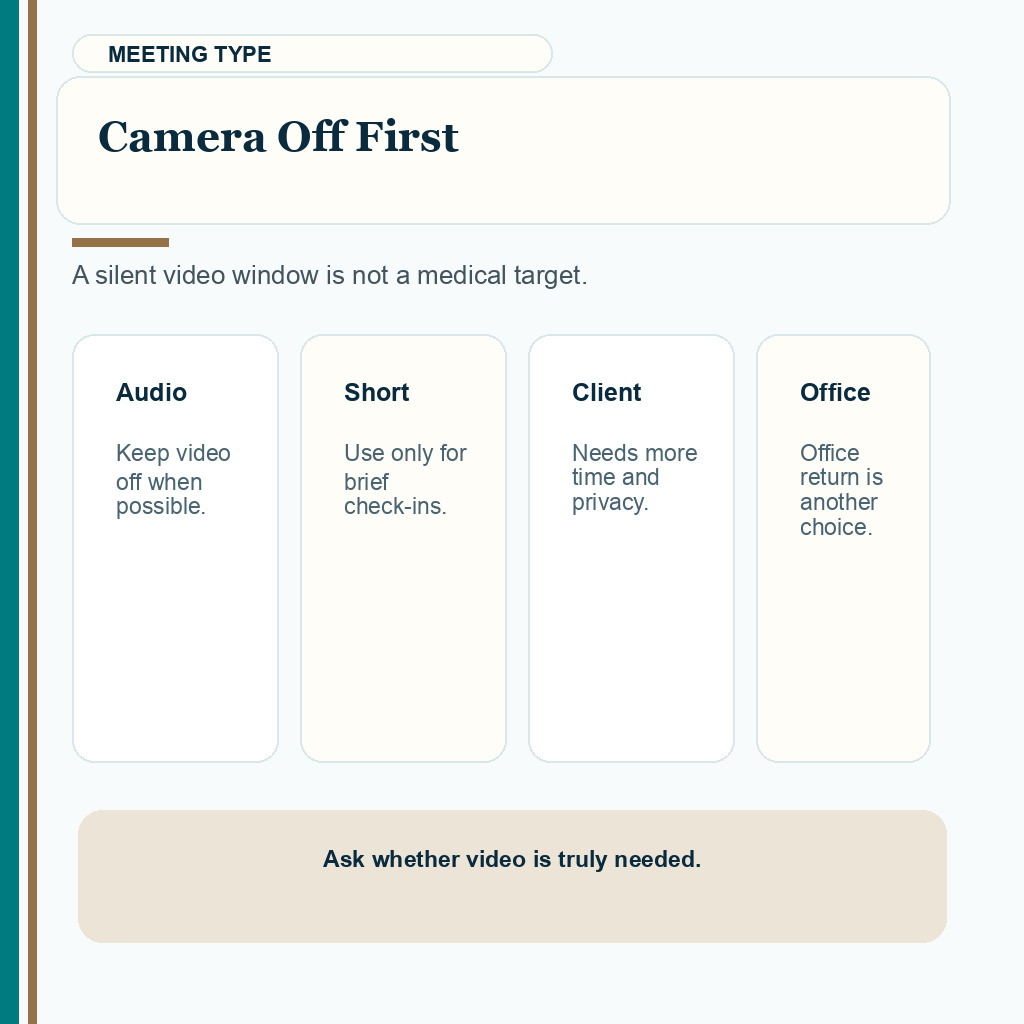
In the first days, keep the meeting audio only when your face is not truly needed. You may be able to handle a short internal camera call during the first week if swelling is mild, the scalp is not worsening, and the setup does not make you touch, hide, or check the grafts again and again. Client calls, interviews, webinars, and recorded presentations deserve more margin because they create more pressure and less privacy.
Being able to work quietly is not the same as being ready for a webcam to frame the hairline. Before you think about hats, fibers, concealer, or makeup, decide whether the call can be audio, shorter, postponed, or framed more simply.
A video call is not the same as quiet remote work
Quiet remote work and time off work after hair transplant planning can be fairly simple for some patients. Emails, admin work, and short audio calls may not expose the scalp. A video call is closer to public facing work after hair transplant because people are looking directly at your face, hairline, and expression.
The camera removes some problems and exaggerates others. You do not need to commute, sweat, shake hands, or sit under office lights for hours. But the screen can focus attention on the hairline, forehead, and donor haircut. I judge a video call by whether the meeting will push you into touching, covering, styling, or explaining the scalp too early.
If you need a simple sentence for work, keep it plain. “I had a minor medical procedure and will join audio only for a few days” is enough. You do not owe every colleague the details of your transplant, and privacy should not be solved by putting pressure on healing skin.
The first camera week is not about looking normal
Patients often ask when they will look normal in public after a hair transplant. For a video call, the threshold is smaller but more psychological. You may only need to look acceptable for a short meeting, not fully healed or socially invisible.
During the first week, scabs, redness, swelling, donor shaving, and haircut mismatch may all be visible. Some patients can frame the camera so the transplanted area is not obvious. Others have forehead or eye swelling after hair transplant that decides the answer before the hairline does. A bruised eye look on camera can be more distracting than the grafts themselves, especially in a client call or interview.
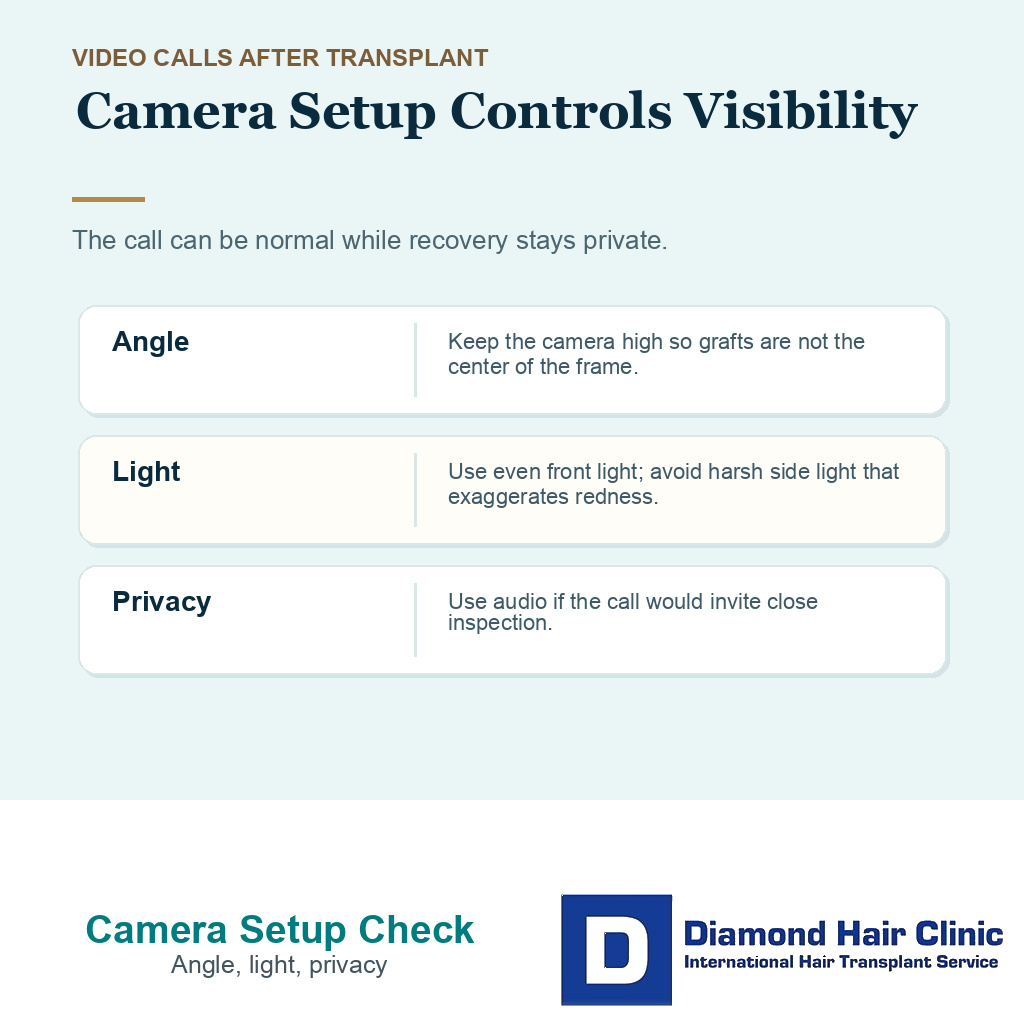
Do not judge readiness with the camera pressed close to your face. Laptop cameras distort. Bathroom lights exaggerate redness. An angle from above can make the recipient area look thinner and harsher than it looks across a room. Test camera readiness once in the same setup you will actually use, then stop checking.
Test the camera once before the real call. Light, angle, hat rules, and calendar spacing matter more than hoping redness disappears by one exact day.
I also separate a private test from the real meeting. Record a short preview or join an empty meeting room first. If that one test makes you want to rub the hairline, add product, or keep adjusting a cap, the call is already interfering with recovery behavior.
Filters and virtual backgrounds are useful only when they reduce checking. They become a problem if they lead to touching, product use, or repeated scalp inspection.
Lighting can make normal healing look worse
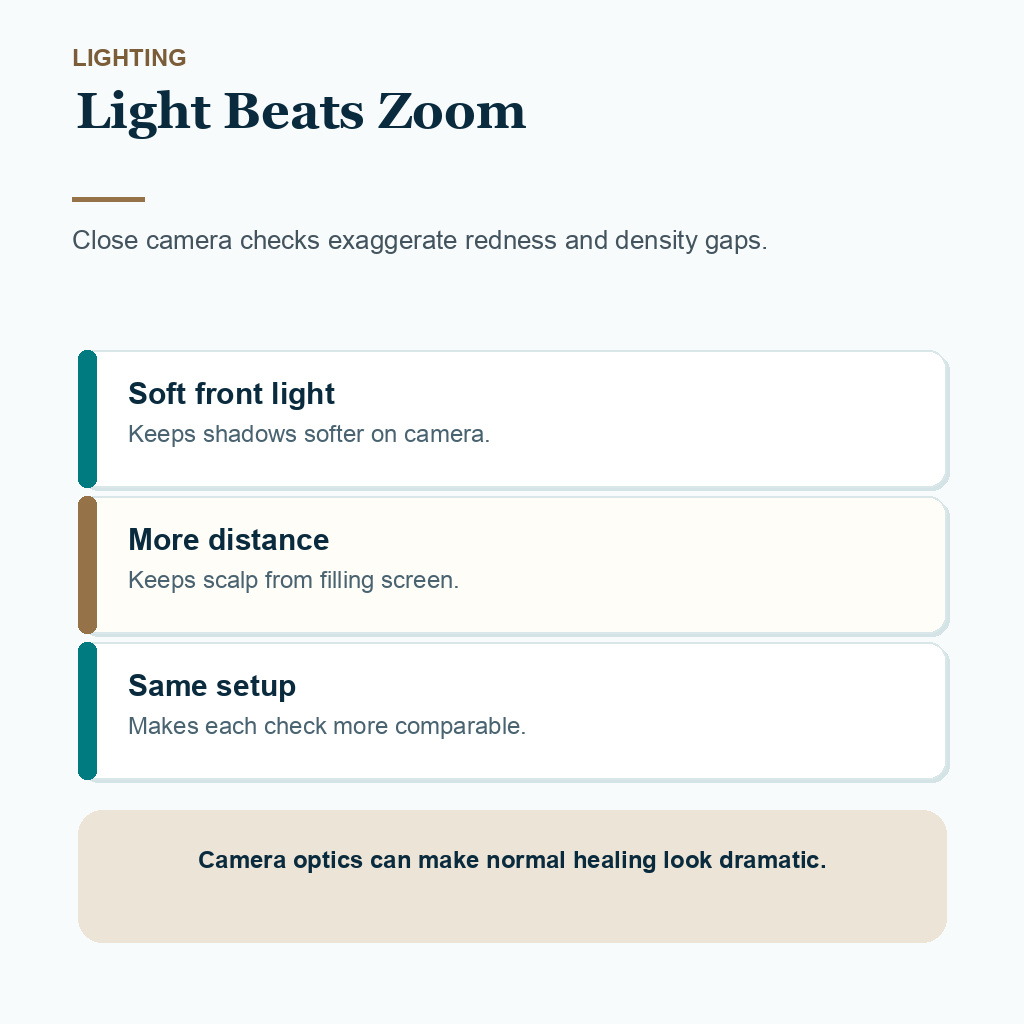
Harsh light from above can make scabs and pinkness look stronger. Backlighting can make the top look sparse. A close phone camera can turn a normal healing pattern into a panic. The same problem appears with early review photos when light, distance, and angle keep changing.
Use soft light from the front, sit a little farther from the camera, and keep the camera near eye level. Do not lean forward and inspect yourself during the call. If you start zooming into one corner of the hairline between meetings, you are no longer planning a work call. You are doing the same loop described in mirror checking after hair transplant.
I am not trying to make the transplant invisible here. I am trying to avoid a setup that makes normal recovery look dramatic and then pushes you into unsafe fixes. A virtual background, softer light, or camera off setting is usually safer than touching the recipient area to look better for one meeting.
The webcam can turn healing signs into panic
On camera, redness and scabs after hair transplant, small pimples, shedding, and short shaved hair can all affect how you feel. Some signs are expected at certain stages. Some signs need review. The webcam does not decide that by itself.
A short video call should not lead you to pick scabs, rub the hairline, or hide irritation with unapproved products. If the scalp is hot, increasingly painful, draining fluid, bleeding, or rapidly worsening, the camera question should pause.
That is a review question first. Appearance can wait when the skin is changing in the wrong direction.
There is also a privacy question. If the meeting is with close colleagues, a temporary shaved look may be enough of an explanation. If it is a client call, sales call, job interview, webinar, or recorded presentation, you may need more days, camera off permission, or a shorter appearance window.
Use framing before products
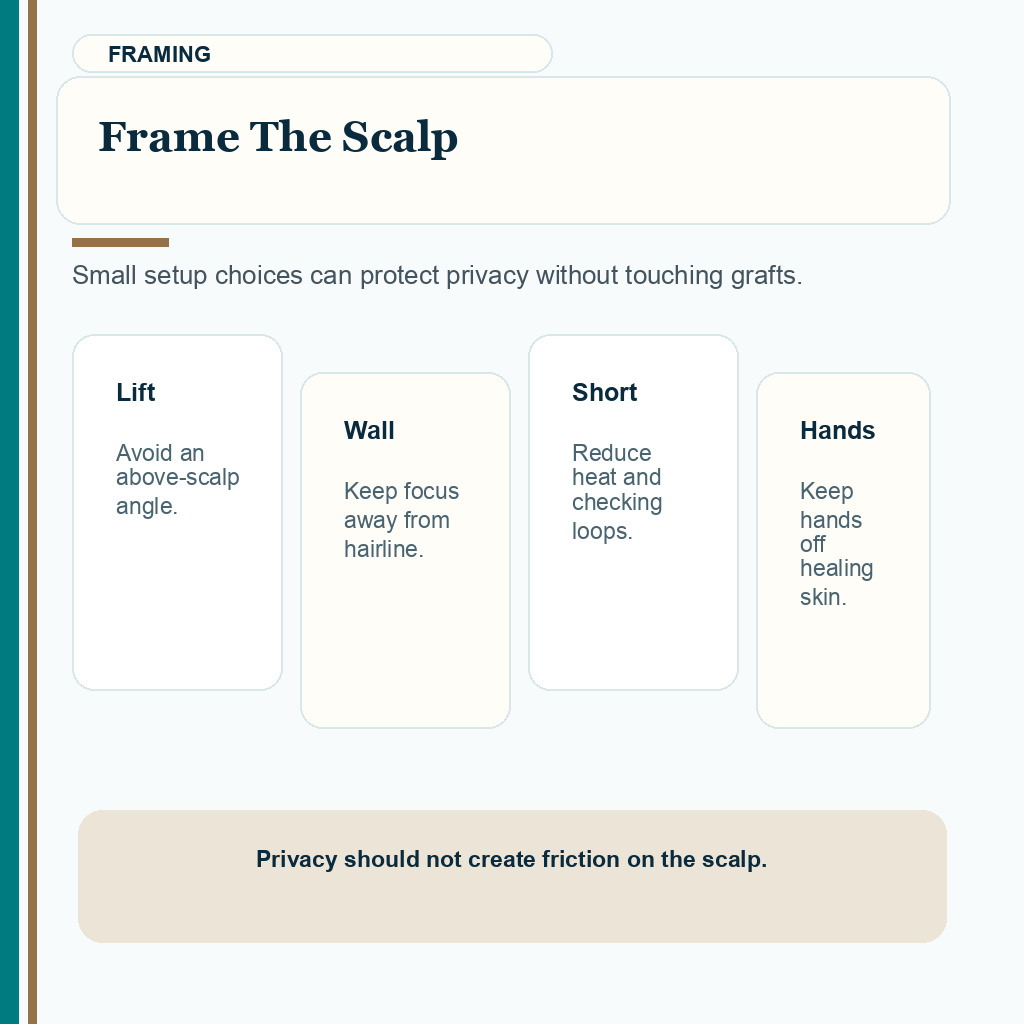
Framing is safer than touching. Raise the camera slightly so it does not look down onto the scalp. Use a neutral background. Sit at a natural distance. Keep the meeting shorter if possible.
These changes do not touch the grafts, do not irritate the scalp, and do not create a cleanup problem afterward. A virtual background or camera off setting can also solve the problem without touching the scalp. A beauty filter is less risky than makeup on healing skin, but it should not become another reason to inspect yourself every few minutes.
If you use soft headwear after a hair transplant, the timing, fit, and cleanliness must be appropriate. It should not press on grafts or become a reason to ignore the clinic’s instructions.
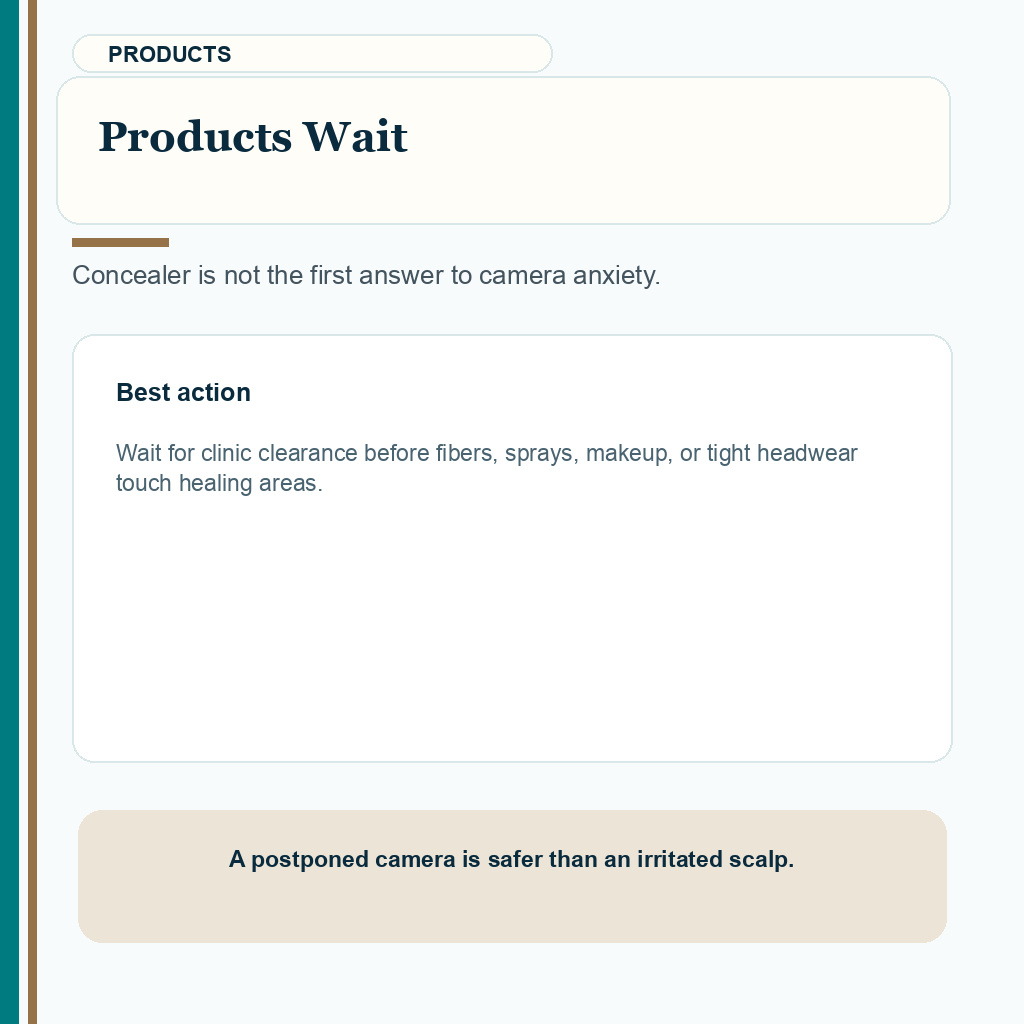
Hair fibers, powders, sprays, or makeup should not be used just because a webcam makes you nervous. If the recipient area is still healing, the wrong product can irritate the skin or become hard to clean. The safer timing issue is hair fibers and concealer after hair transplant, not whether one video call feels embarrassing.
Headsets need a pressure check. Earbuds are usually easier if they do not make you touch the donor area or adjust the scalp. A tight headset over the ear or a microphone band across the head can press, rub, or create a reason to keep moving the headgear during the call.
Video Call Readiness Planner
Choose the closest meeting type. The answer changes when the call is optional, short, client facing, recorded, or happening while warning signs are present.
Keep it audio when possible
Working from home does not require proving anything on camera. Use audio, messages, or a postponed video if the meeting does not need your face.
- Protect the first healing days.
- Avoid repeated scalp checking.
- Save camera use for unavoidable meetings.
Test one short camera setup
Use soft front light, eye-level framing, and a little distance. If the setup looks acceptable once, stop checking and join the call.
- Do not use harsh bathroom light.
- Keep hands away from grafts.
- Do not zoom into the hairline mid-call.
Give client and recorded calls more margin
Client calls, interviews, webinars, and recorded presentations need a more conservative plan. If privacy matters, schedule later, request audio, shorten the call, or use safe headwear only when cleared.
- Do not rely on early fibers.
- Avoid tight hats or repeated adjustments.
- Plan around swelling and scab timing.
Review comes before camera
If symptoms are worsening, the meeting plan is secondary. Take clear photos, note the day after surgery, and ask for medical review.
- Increasing pain or swelling matters.
- Drainage, fever, bleeding, or trauma should not be hidden.
- Do not cover an irritated area just to appear on camera.
Camera timing often improves after the washing stage settles
Camera readiness often improves after the first washing stage, but washing should follow the clinic plan. Do not rush the first wash to look better on a call. Do not scrub scabs so the camera sees less. The reason is simple. The first washing after hair transplant protects grafts before it helps you look ready on camera.
Once scabs are softening and the scalp is cleaner, a short call may feel easier. Still, that does not mean every product is allowed or every haircut looks settled. A cleaner scalp is one part of the decision, not full social normality.
I also look at what the meeting requires. A quick team update can tolerate more visible healing than a recorded presentation, sales call, or interview. If the call will be saved, shared, or replayed, give the scalp more time and keep the setup simple. The first camera appearance should not be the most important meeting of the month. A private test with the same laptop, room, and time of day is more useful than guessing from the mirror.
Review should come before the video call
Some patients try to solve medical worry with visibility tricks. That is backwards. If pain is increasing, swelling is worsening, redness is spreading, discharge appears, bleeding restarts, fever develops, or you hit the grafts, the question is not whether the camera hides it.
The question is what your clinic or a doctor needs to see. Do not use a hat, filter, concealer, or camera angle to hide a symptom that is getting worse.
Useful review photos should be calm, consistent, and separate from camera angles chosen for work calls. Use the same room, same light, same distance, and clear front, side, top, and donor views when relevant. Do not send ten panic zooms of one corner. Clear photos help the medical team compare the pattern. They are not meant to prove that every dot has meaning.
One video call should not disturb recovery
The safest video call plan after FUE is usually small. Use audio when you can. If video is necessary, soften the light, raise the camera, keep the meeting short, and avoid products, tight headwear, or headset pressure until your timing is safe.
The video call is not the real problem. What matters is what the call makes you do. If it makes you rub the hairline, rush scab removal, wear tight headwear, use concealer too early, or explain more than you want to explain, keep the camera off or move the meeting.
If you can work, work quietly. If you need to be seen, plan the frame. If symptoms are worsening, stop planning the call and ask for review. That separation keeps the recovery decision clear.
Read this review excerpt
First wash completed and visual instructions given to my daughter.