


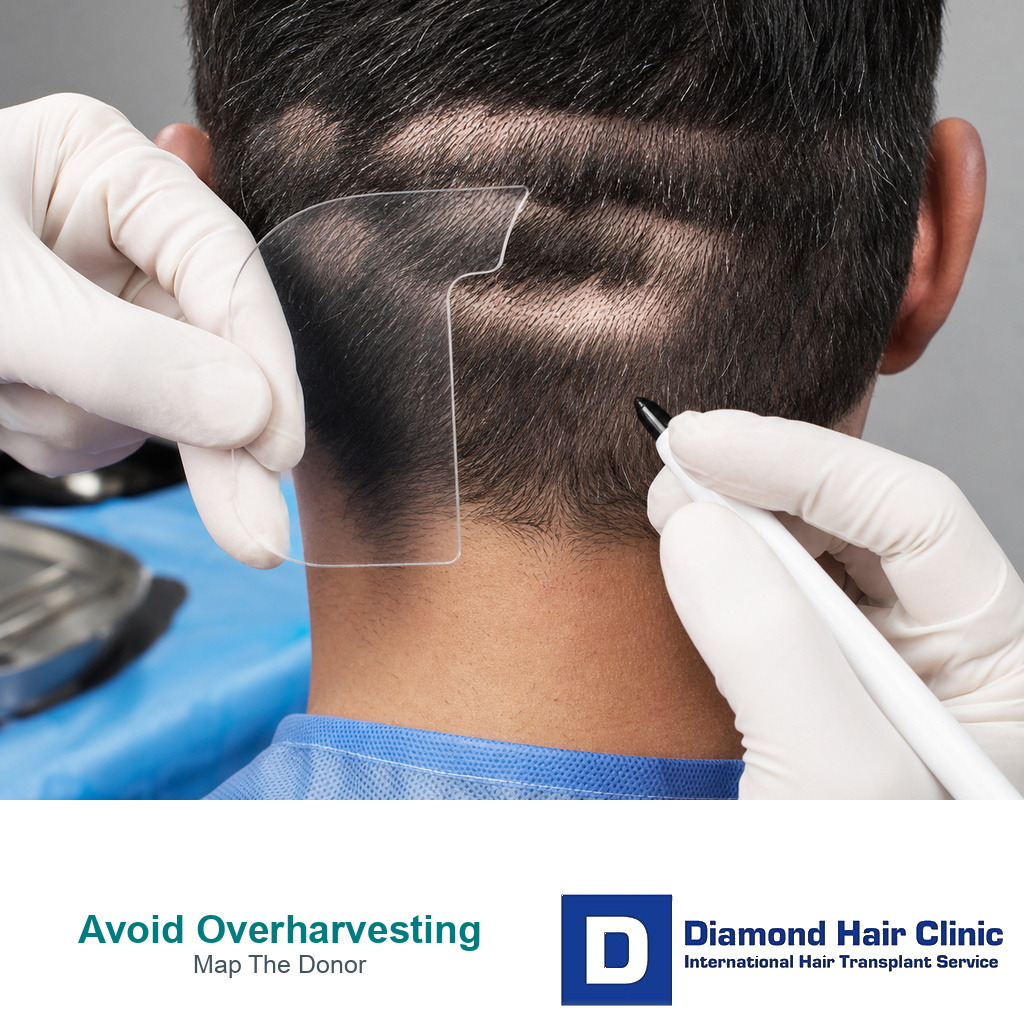
Donor Area Overharvesting Risk Before Surgery
Donor area overharvesting is usually easier to prevent than to repair. The clearest warning sign is not simply a high graft number. It is a high graft number without a serious explanation of donor density, safe extraction zones, spacing, miniaturization risk, haircut preference, and future reserve. A weak donor and high graft quote conflict should be slowed down before it becomes donor damage.
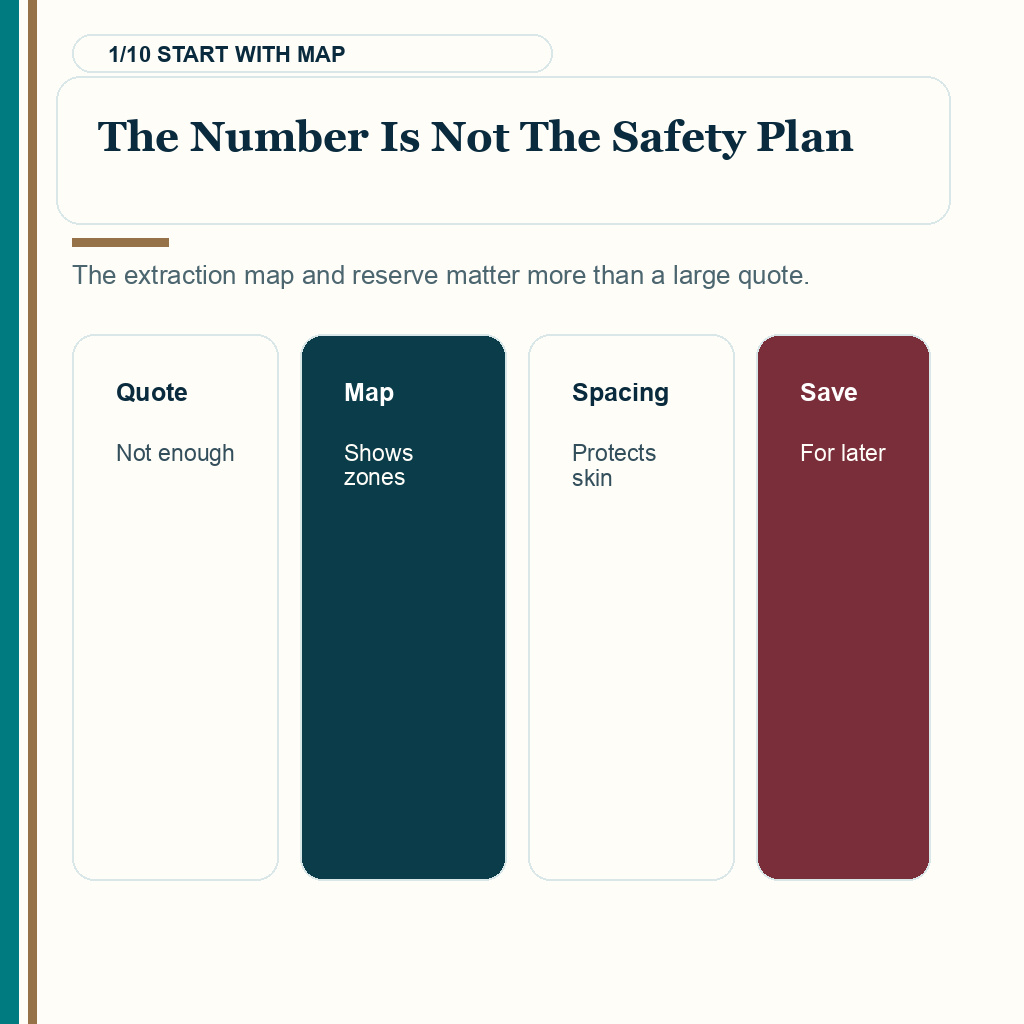
A small session can still be careless if the grafts are taken from the wrong place or too tightly from one zone. A larger session can be reasonable in the right donor, but only when the plan explains why that donor can tolerate it. The graft number is not the safety plan. The extraction map, the remaining reserve, and the long-term hair loss pattern are the safety plan.
Before surgery, the number should be tied to a real extraction plan. If the graft number still feels unexplained, second thoughts before hair transplant surgery are a reason to slow down and ask for the donor plan in plain language. I need to know how it was calculated, where the grafts will be taken from, which areas will be avoided, and what will remain if hair loss continues. The haircut question also matters. A donor that looks acceptable with longer hair may look exposed with a skin fade or very short buzz cut.
Donor planning cannot be treated like a package size. Donor supply is a limited lifetime resource. Once follicular units are removed from one part of the donor, they do not grow back there. This is the practical reason I explain that donor hair does not grow back after FUE. If too much is spent for one dramatic first year promise, repair becomes narrower, harder, and less predictable later. For research claims around donor return, verteporfin hair transplant claims explains why I still budget the donor as limited until controlled evidence is stronger. If overharvesting has already happened, donor SMP camouflage limits can help separate visual shading from true donor repair.

Donor warning signs visible before surgery
Many overharvesting risks are visible before the operation starts. The consultation may focus on selling a large graft package. The donor examination may be brief. The clinic may promise 5,000, 6,000, or more grafts without showing the measurements behind that decision. The patient may never hear what will be left untouched.
A serious donor review looks at hair caliber, natural density, scalp contrast, curl, age, family history, donor miniaturization risk, retrograde thinning, previous surgery, and preferred haircut. These details change how many grafts can be taken safely and how visible the donor may look later.
Technical details matter too. FUE punch size, extraction angle, spacing, extraction density, and surgeon fatigue can all affect whether the donor looks even after healing. None of these details should be hidden behind a simple package number.
The warning becomes stronger when the graft number increases on surgery day without a new donor explanation. A change from the original plan may sometimes be reasonable, but only if the donor is reassessed and the reason is clear. A same day increase without explanation is not planning. It is pressure.
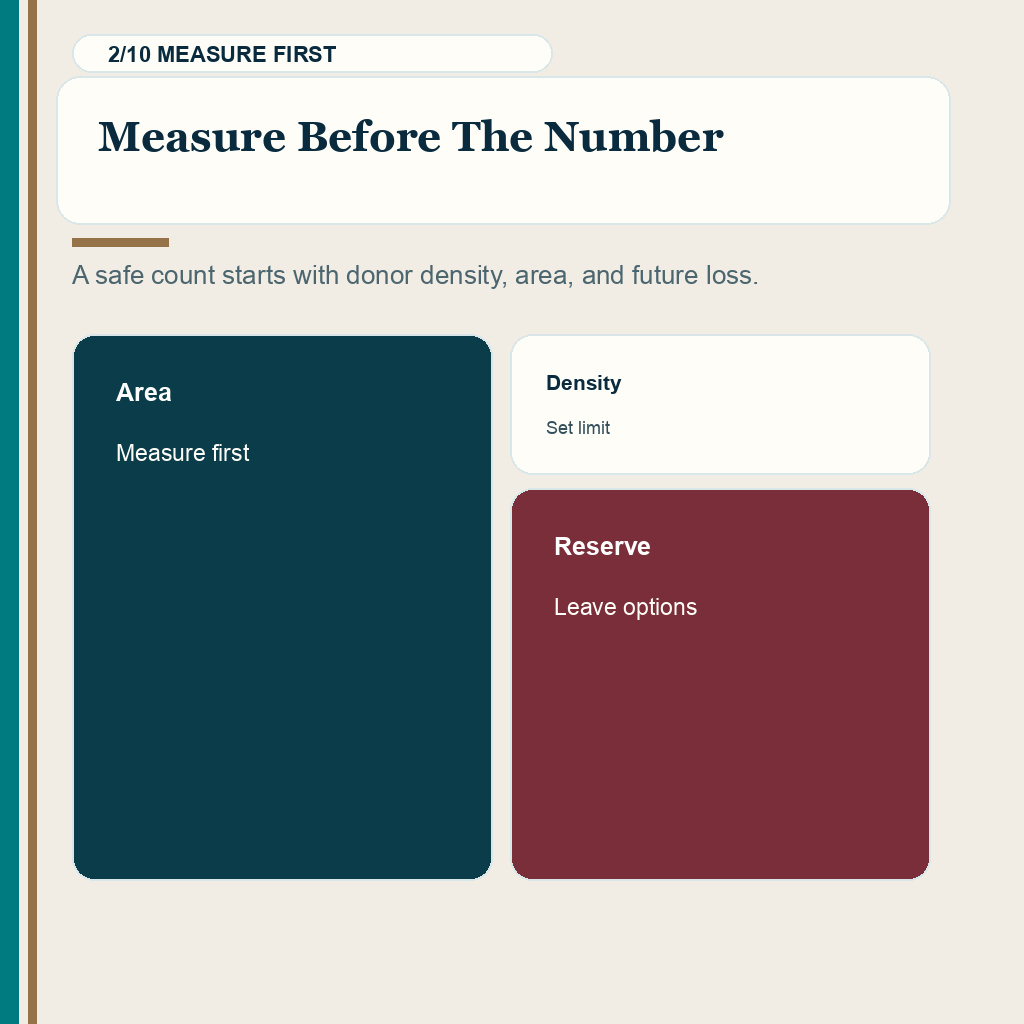
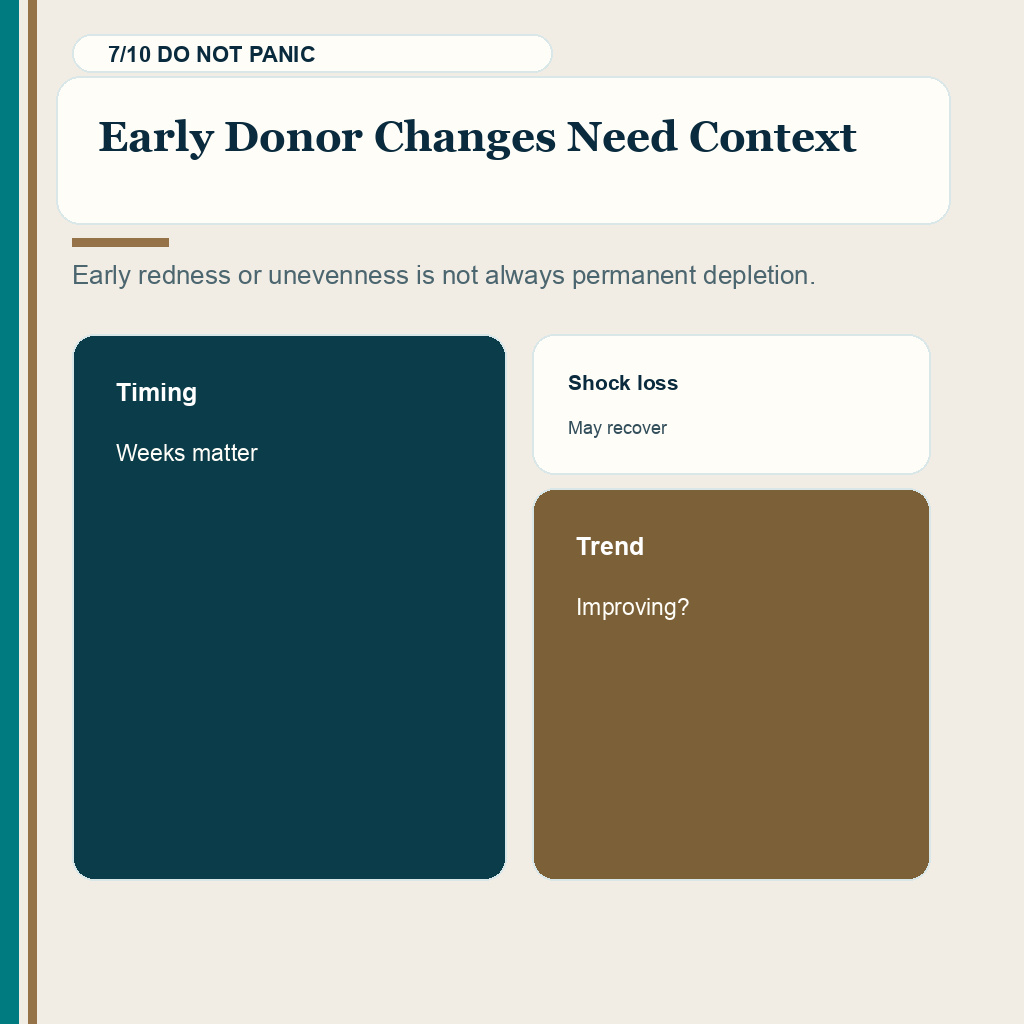
The 10 slides here show how overharvesting risk starts with extraction planning, not only the final donor appearance. Swipe sideways, use the arrows for one slide at a time, or choose a number below the image.


Early donor weakness is not always overharvesting
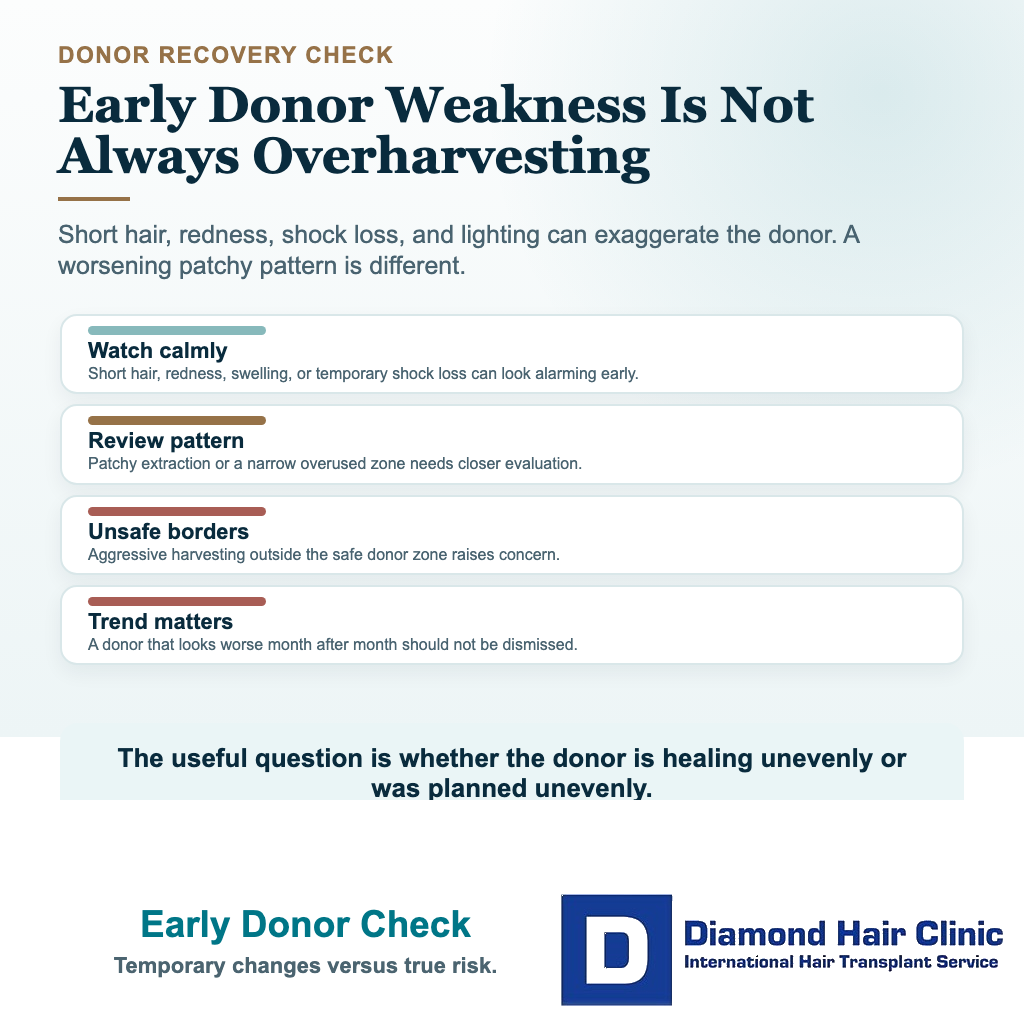
No. At three weeks, one month, or even two months, the donor can look lighter, red, uneven, or thin under harsh light. Short hair length, healing inflammation, shock loss, swelling, and haircut contrast can all make the donor look worse than it will later.
I separate temporary appearance from permanent depletion. If the donor looks patchy early, I look at the pattern, timing, extraction distribution, and whether the area is improving or worsening. I have written separately about when the donor area can look uneven at one or two months.
True overharvesting is different. It is more concerning when too many grafts are taken from a narrow band, when the lower neck or unstable zones are harvested aggressively, when extraction density is visibly uneven, or when the donor keeps looking thinner month after month instead of settling.
Temporary donor shock is a timeline problem. True depletion is a reserve problem. They can look similar in a frightening photo, but the next decision is not the same.
A responsible donor plan should explain limits
A photo can start the discussion, but it cannot replace the donor plan. The plan should explain the safe zone, donor density, hair shaft thickness, miniaturization risk, areas to avoid, and how the extraction will be spread so one region is not visibly thinned.
A safe donor plan should explain what stays untouched. If a clinic can say how many grafts it wants today but cannot explain what must remain available for later, the plan is incomplete. The consultation should become more specific at this point, not more emotional.
The method used to calculate the graft number should start with the whole patient, not the bald area alone. Visible loss, crown demand, donor density, caliber, family history, medication tolerance, and the chance of another session all matter.
Here is the test I use before trusting the number. If you ask where the grafts will be taken from and what will remain, the answer should become clearer, not vaguer.
Large graft sessions become unsafe when donor limits are ignored
There is no universal graft number that is safe for every donor. For one patient, 3,500 grafts may be reasonable. For another, 2,500 may already be aggressive if density is low, hair caliber is fine, or future loss looks unstable.
A large session becomes unsafe when the number is chosen before the donor has been measured, when the safe zone is stretched too far, when extraction is concentrated in one visible area, or when the plan leaves no realistic reserve for future loss.
Very large sessions need a stricter explanation. A 5,000 graft FUE session can be reasonable in the right donor, but it should pass a donor reserve test. Can the donor still look natural after extraction? Is the safe zone respected? What happens if the crown or mid scalp needs work later? Is the visible benefit worth the donor cost?
Hearing “your donor is very good” is not enough. The clinic should be able to explain how that judgment was made, which areas will be left alone, and why the proposed session size is appropriate for this specific case.
What would make me reduce or refuse extraction
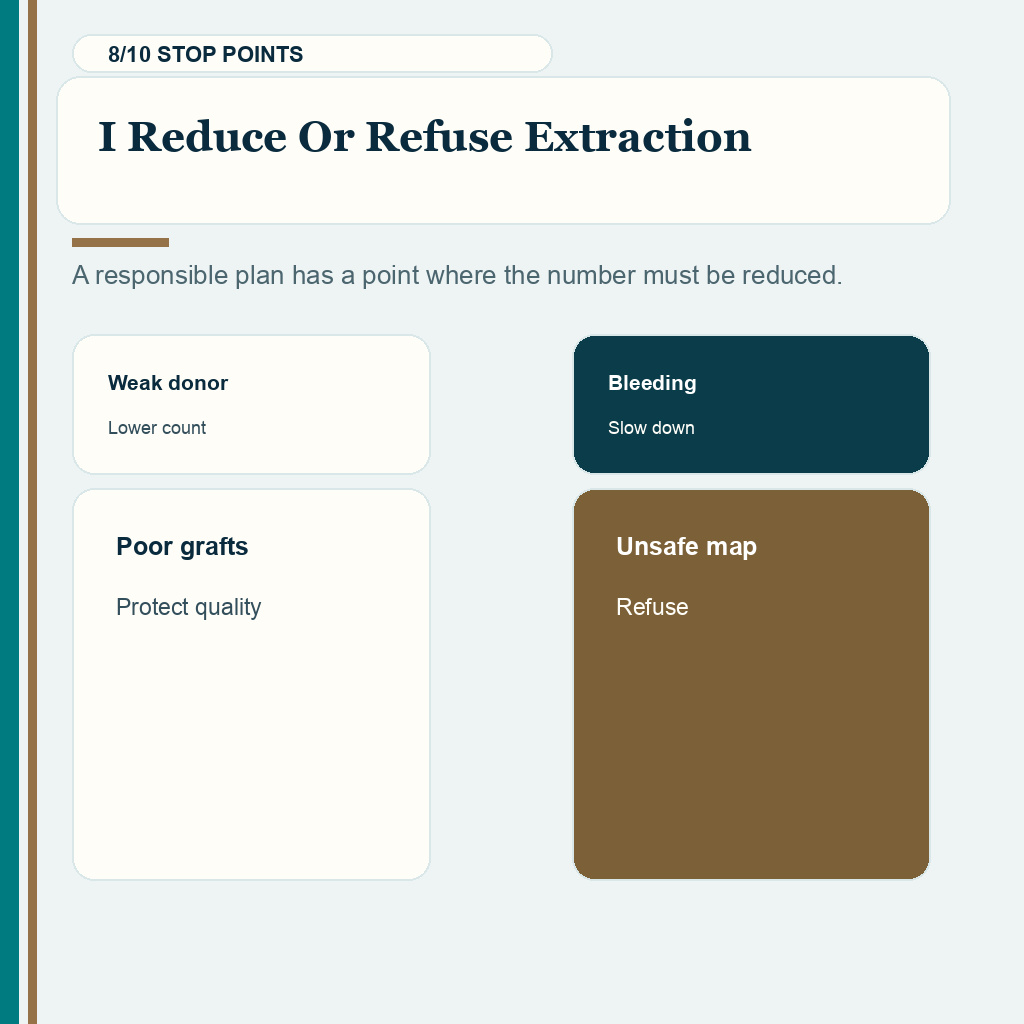
I reduce extraction when the safe donor zone is narrower than expected, the hair is finer than the photos suggested, miniaturization appears under close review, or the patient’s preferred haircut would make even moderate thinning visible.
I refuse aggressive extraction when the plan needs unstable zones, when the crown would consume reserve without enough visual gain, when previous surgery already weakened the donor, or when the patient expects full coverage that the donor cannot safely support.
I want the record to explain these limits before surgery. It should show the extraction map, the areas to avoid, the maximum range, and why a smaller or staged plan may protect the patient better than one impressive number.
Lifetime donor reserve matters more than one impressive year
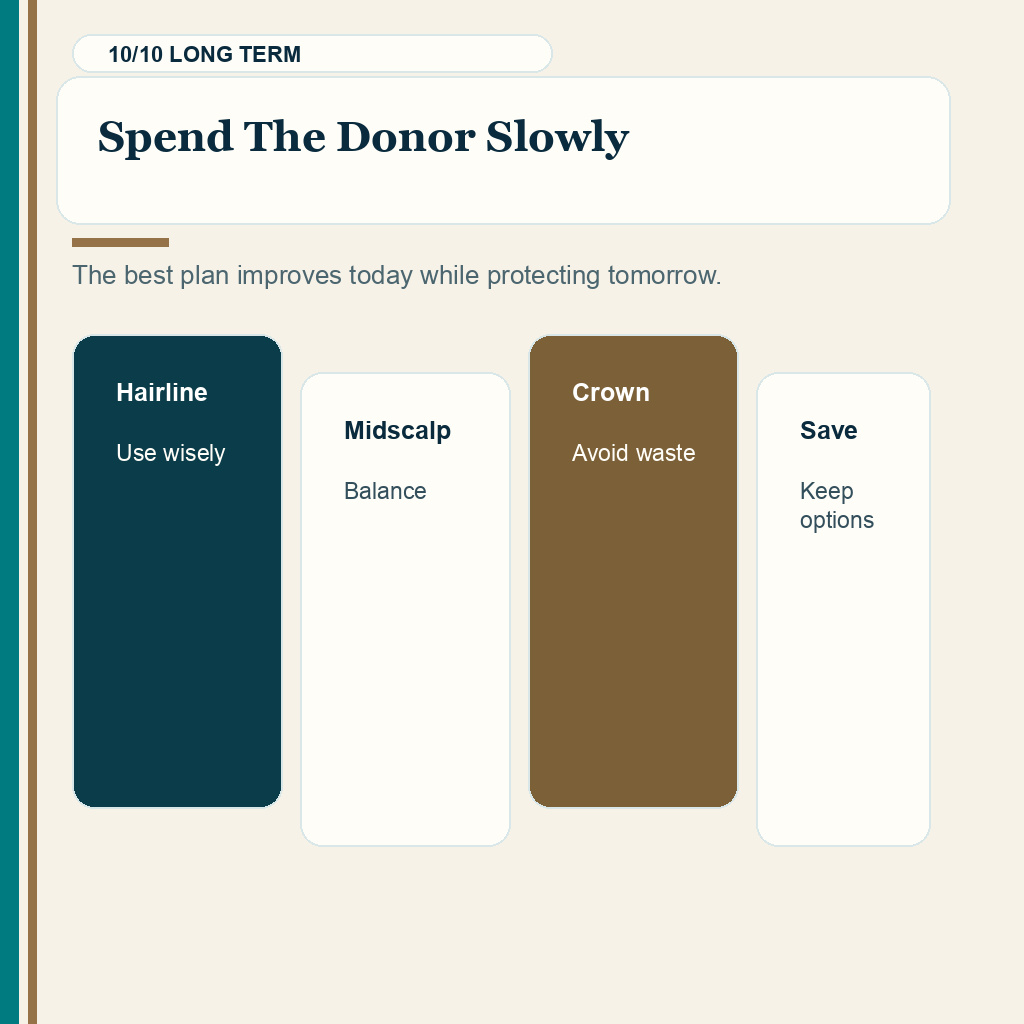
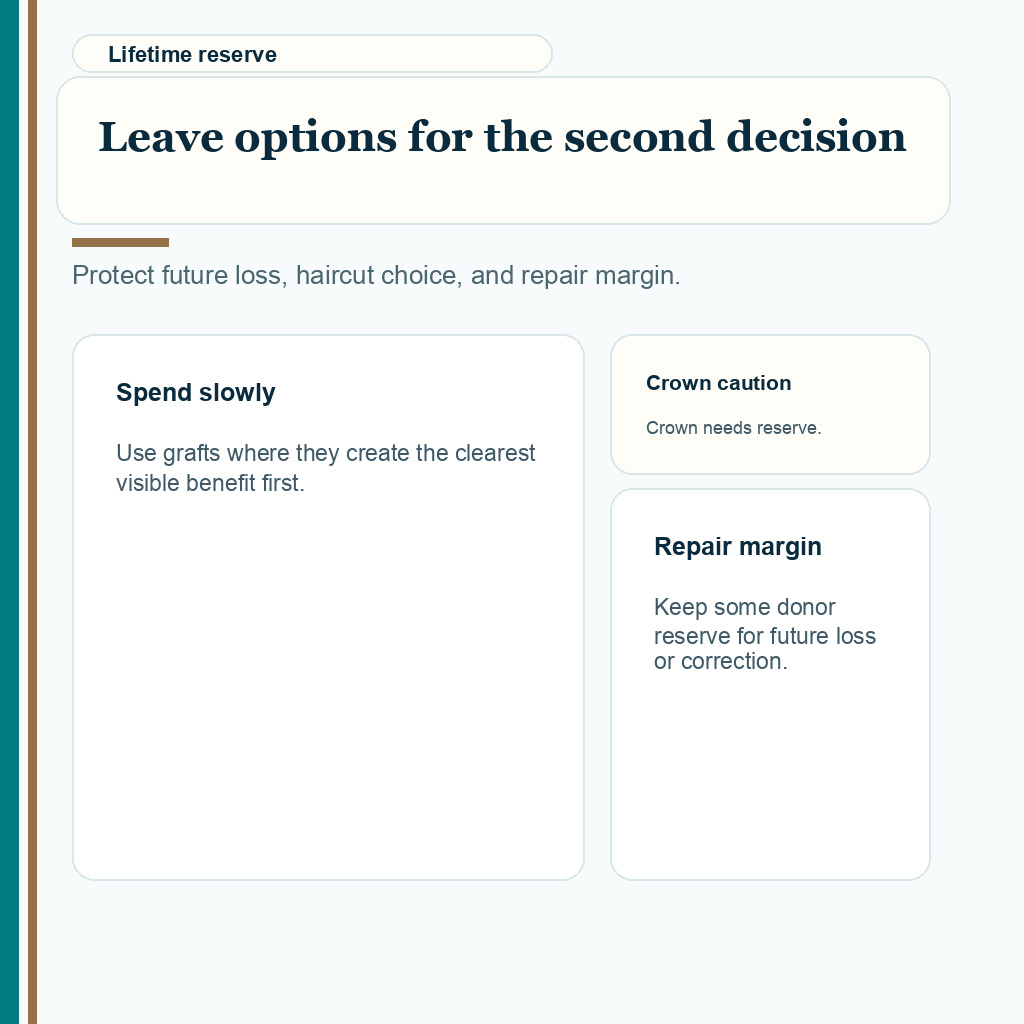
Lifetime donor reserve protects the second decision. Hair loss can continue, expectations can change, and a result that looks acceptable in the first year may need reinforcement later.
This matters most in advanced baldness. A patient may want the hairline, mid scalp, and crown restored at once, but the donor may not support convincing density everywhere. The front often gives the strongest visual change, while the crown can consume many grafts and still look thin because of its surface area and circular growth pattern.
If too much reserve is spent on the wrong priority, the patient may later have a thin hairline, an exposed crown, and limited repair options. Overharvested donor area repair may still be possible in selected cases, but repair uses fewer options than a careful first operation.
A mature hairline, a staged crown plan, or lower first session density can feel disappointing during consultation. Sometimes that careful planning is exactly what keeps future options open, especially when there is limited donor supply or the patient strongly prefers very short hair.
Clinic red flags that should slow the decision
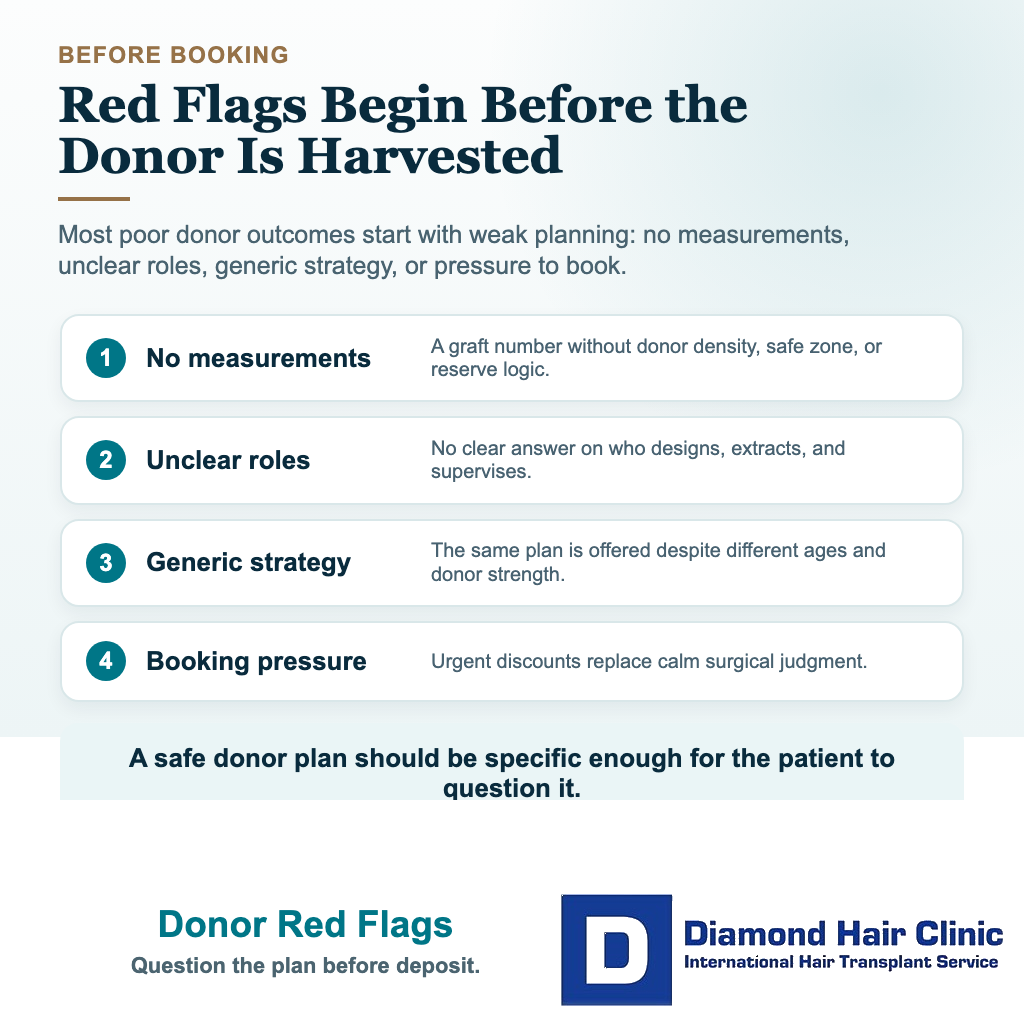
A clinic should be able to explain what it refuses. The first red flag is a large graft promise without donor measurements. The second is a consultation that treats the biggest package as the best medical answer. The third is unclear responsibility for who will perform the critical surgical steps.
Donor management depends on extraction pattern, punch choice, spacing, angle, safe zone judgment, and knowing when to stop. These decisions cannot be reduced to a package name.
Another warning sign is sameness. A young patient with aggressive loss, a middle aged patient with stable frontal recession, and a repair patient after two previous surgeries need different donor strategies. If every patient receives the same explanation, the plan is not individualized enough.
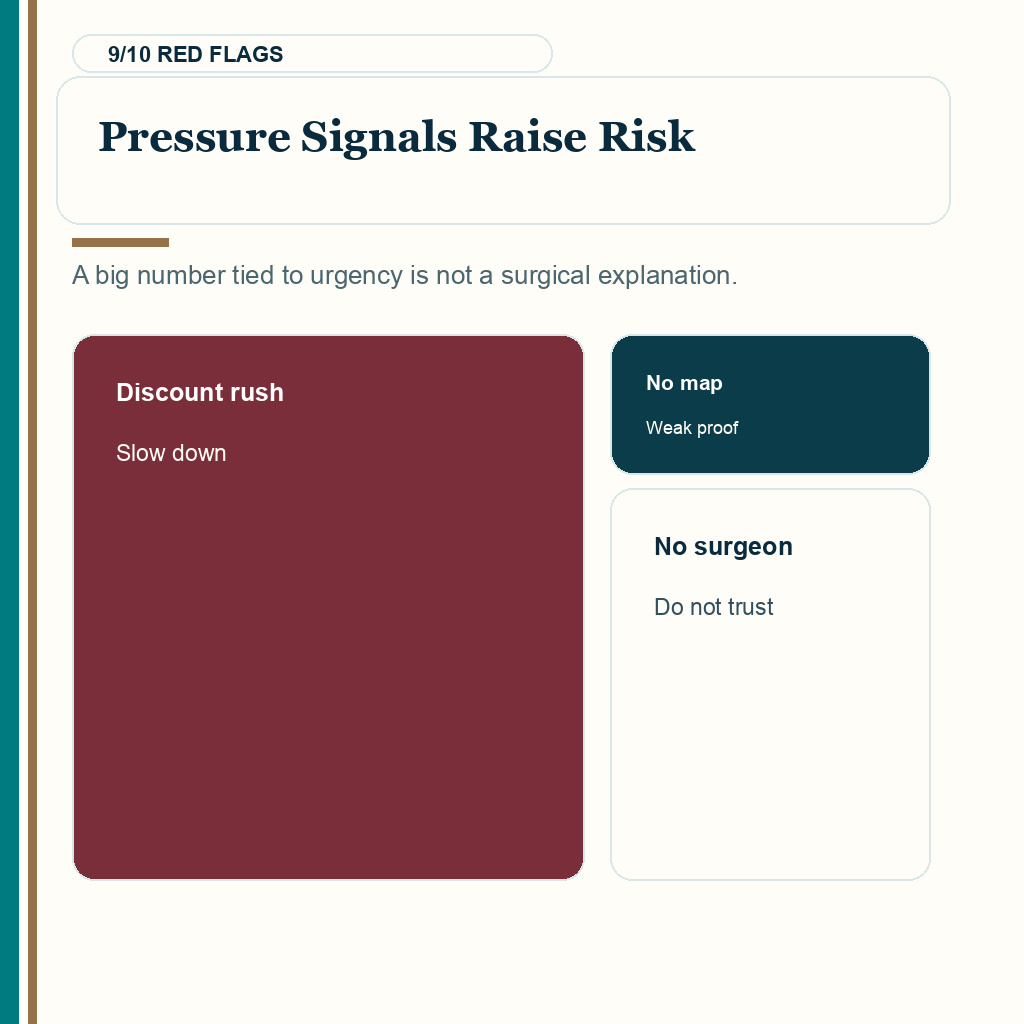
Pressure is also a warning. A high graft number tied to a discount, short booking deadline, or hotel and transfer package can distract from the surgical question. The red flags of hair mill clinics matter because donor damage often begins with the system the patient chooses, not only with the punch on surgery day.
Beard or body hair cannot rescue an unsafe donor plan by itself
Beard and body hair can support selected cases, but they should never be used as permission to damage the scalp donor. Beard and body hair as donor sources behave differently from scalp hair. Texture, growth cycle, caliber, curl, and visual blending are not identical.
I may consider beard or body hair in advanced baldness or repair cases when the indication is sensible. It may support the mid scalp, soften a crown, or reduce pressure on a limited scalp donor. But if the main donor is already damaged, body hair cannot fully replace the original density, texture, and distribution that were lost.
The safer mindset is to protect the scalp donor first. Additional donor sources are supporting tools, not a rescue plan for careless extraction.
Donor safety shapes natural hairline design
The donor plan and hairline design are connected. A hairline that is too low, too flat, or too dense can consume grafts that may be needed later. A slightly more mature design can still frame the face naturally while protecting reserve.
Density has to be planned the same way. The front should create the strongest visual improvement, but it still has to match the available donor supply. A very dense front with a weak mid scalp or exposed crown can become unbalanced as hair loss progresses.
Technique alone does not solve this. Better instruments can help the surgeon work precisely, but instruments do not decide donor capacity. Technique serves the plan. It does not replace it.
When I plan a case, I think first about what should remain untouched. Then I decide where grafts will create the strongest visual change, where density can be realistic, and where future options need to stay open.
Stronger promises should slow the decision
If graft estimates differ dramatically and nobody explains why, slow down. If advanced hair loss is presented as easy full coverage, slow down. If a clinic promises a high number but cannot describe safe zones, reserve, spacing, donor miniaturization, or future loss, slow down.
Convenience, hotel arrangements, airport transfer, social media images, and price can influence the experience, but they are not donor protection. If you are researching surgery in Turkey, read carefully about how to choose a hair transplant clinic in Turkey. The aim is not to become afraid of surgery. The aim is to become harder to mislead.
My position is direct. If I cannot protect the donor area, I should not chase a dramatic graft number. If the available reserve cannot support a natural plan, I should explain that before surgery rather than hide it behind a bigger quote.
A hair transplant is not only about filling bald skin. It uses a limited donor supply with judgment. When donor reserve is protected, the patient keeps more options, the result can age more naturally, and the operation is less likely to become a repair problem later.