


Risks and Tradeoffs of Hair Transplant Without Finasteride
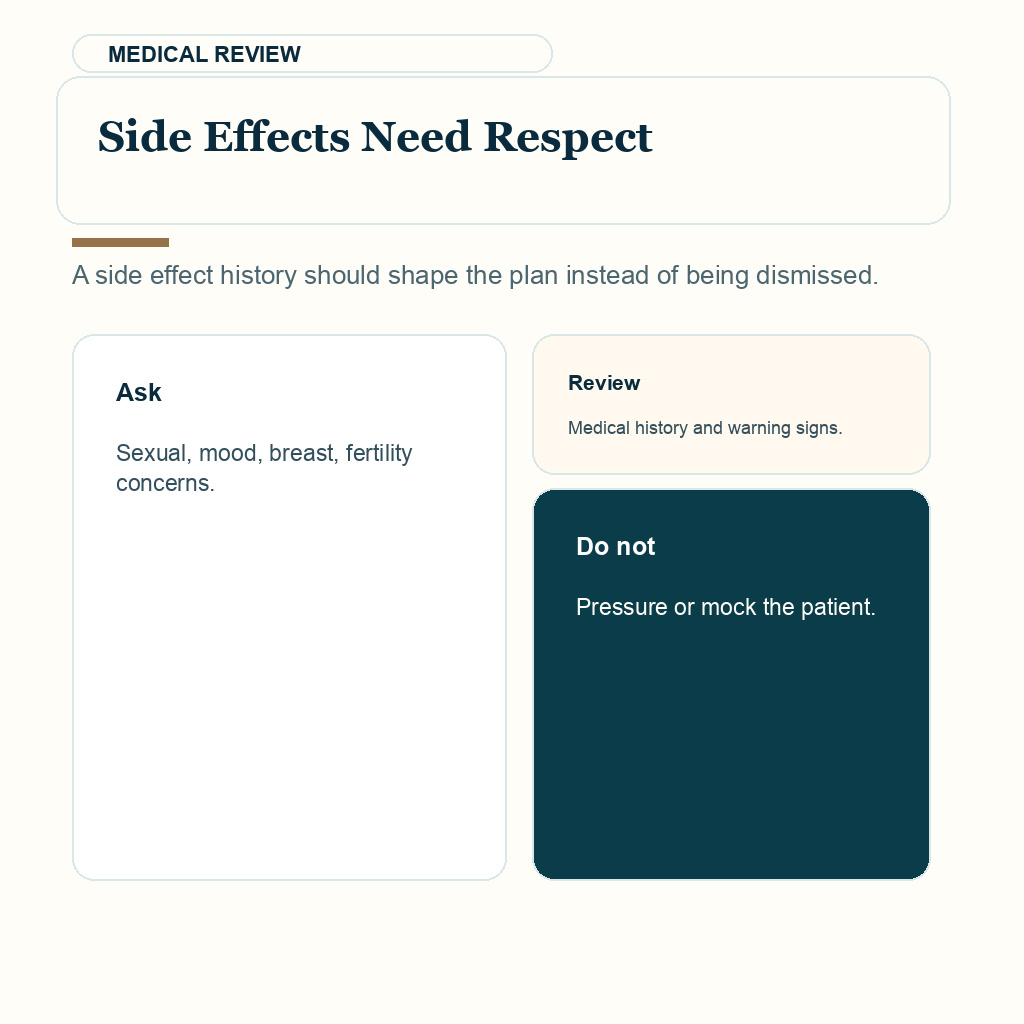
Many men ask whether they can have a hair transplant without finasteride because the question is personal, not theoretical. Some have had hormone related side effects. Some worry about sexual function, mood, fertility, breast tenderness, or long term medication use. With previous hormone sensitivity, I review finasteride after gynecomastia or hormone sensitivity before I design the transplant.
Medication choice does not replace diagnosis
Choosing surgery without finasteride makes the diagnostic pathway more important, not less important. In hair loss diagnosis before hair transplant, I want to know whether the pattern is readable, whether the donor is reliable, and whether the design can age well if native hair keeps thinning.
I understand why the subject feels emotional. Some men have already tried finasteride and stopped. Some have read frightening stories online. Others simply do not want a daily medication for hair. If this uncertainty is one reason you are hesitating before a booked operation, second thoughts before hair transplant surgery should be reviewed before the plan is locked. If side effects have already happened, the transplant should be planned around finasteride tolerance, not by ignoring that history.
A transplant without finasteride can work, but it has to be planned around future native hair loss. A related situation is using treatment but still seeing loss. Still losing hair on medication before a hair transplant needs a separate timing review. The same native hair logic matters in testosterone therapy and hair transplant planning, where the design should not depend on perfect future control.
The broader medicine first decision belongs before the hairline is drawn. When a man wants to avoid daily treatment, I separate the area that truly needs grafts from native hair that may still be worth protecting.
When a patient does not want finasteride, I keep the hairline more cautious. A low or aggressive front can look acceptable early, but it can age poorly as the midscalp or crown keeps thinning. The better surgical choice is often a conservative hairline that does not spend donor hair on a design that needs constant chasing later. Without finasteride, the first surgery should be easier to live with if thinning continues, not more dependent on future repairs.
When finasteride is replaced with an herbal DHT product, I keep saw palmetto and hair transplant planning in the same cautious category because the surgical design cannot depend on a weaker substitute.
An injection, serum, or supplement is not an easy substitute for finasteride unless its purpose is clear. The surgical plan still has to make sense without the extra treatment, because add ons should not hide an unstable donor or hair loss plan.
A hair transplant moves donor hair into thinning areas. It does not freeze native hair in time. If a man chooses surgery without medical maintenance, the surgical plan needs more donor reserve, not more aggression.
In my consultations, I try to remove pressure from the conversation. I avoid pressuring someone into medication, and I also avoid pretending medication is irrelevant. The responsible position is between those two extremes.
We have to consider age, pattern, donor area, family history, crown risk, expectations, and willingness to accept future changes. If the front is only mildly changing, I also check whether it is a mature hairline or receding hairline before deciding how much risk exists without maintenance.

If someone tells you the transplant is simply wasted without medication, that is pressure, not planning. Medication can help some vulnerable native hair, but it does not decide every transplanted graft by itself. I still need to judge age, speed of loss, crown risk, donor reserve, side effect history, and whether the design can age sensibly if native hair keeps thinning. The consultation should record side effect history before hairline height or density is chosen.
Finasteride belongs in the surgical conversation
Finasteride is discussed because male pattern hair loss is usually progressive. Transplanted grafts are generally taken from a more resistant donor region, but the surrounding native hairs may continue to miniaturize. This matters especially in the mid scalp, behind the hairline, and in the crown.
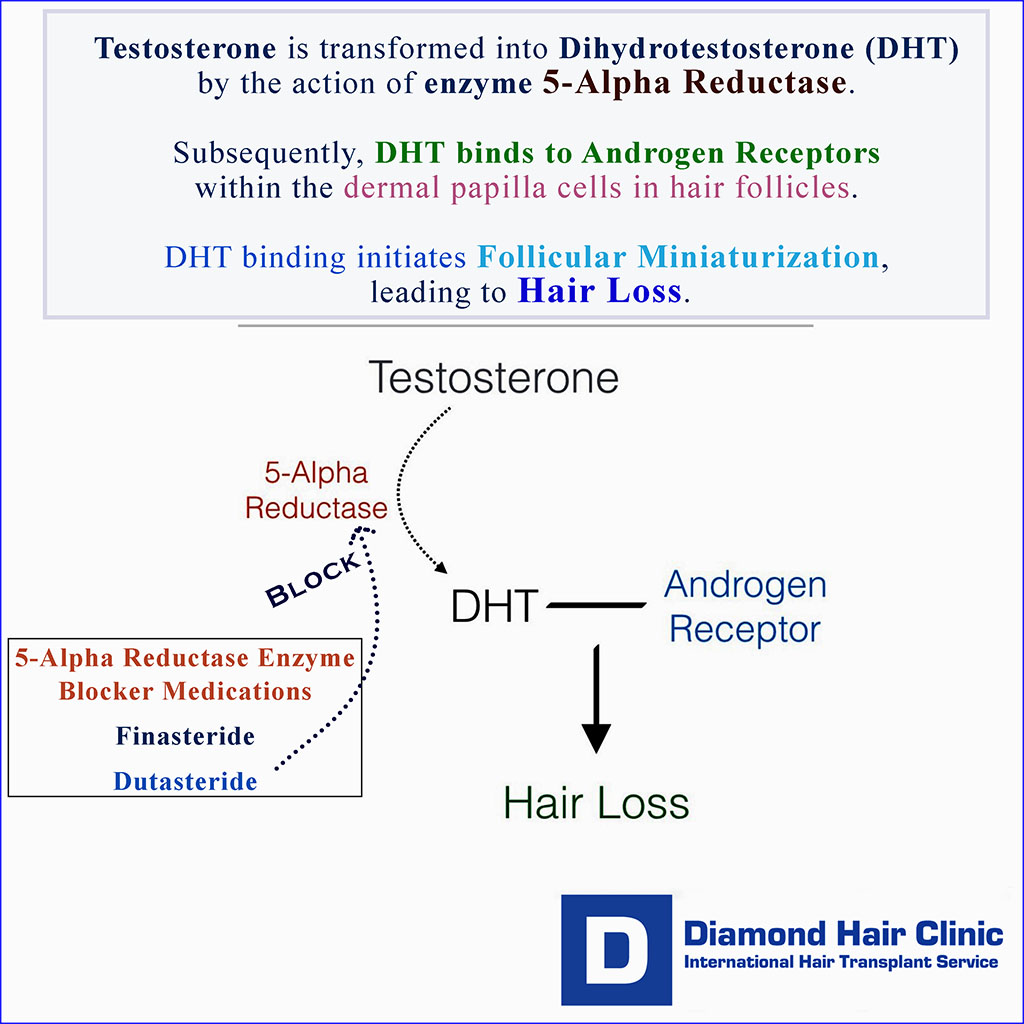
Finasteride reduces the effect of DHT on susceptible follicles. For many men, this can slow ongoing hair loss and help protect existing hair. I do not read that as proof that every man must take it. It means the medication question belongs inside the long term surgical plan, not as a rushed decision after the operation. If the reason for avoiding medication is trying for a baby, the plan should also include fatherhood planning with finasteride or dutasteride before hair transplant.
I explain the difference in simple terms. Surgery relocates hair. Medication protects existing vulnerable hair.
A transplant can rebuild a hairline or add coverage, but it cannot make surrounding miniaturizing native hairs immune to future DHT sensitivity. Once this distinction is clear, the decision becomes more realistic. I also see patients comparing finasteride with other options, including dutasteride. That comparison has to be medical, not casual, because dutasteride and finasteride after a hair transplant are not identical decisions.
Transplanted hair can grow while native hair keeps thinning
Often, transplanted hair can grow even without finasteride. The idea that the whole transplant will disappear without finasteride is too simplistic.
The transplanted graft may survive while the surrounding native hair continues to thin. Someone may look good after the first year, then notice that the hair behind the transplanted zone is losing density. He may think the transplant failed, but sometimes the transplanted grafts are still there and the native hair around them has changed.
Hair loss can continue after a hair transplant, so I include that risk in the plan from the beginning. Finasteride has also been studied in relation to hair transplant surgery, but the practical benefit is not that it magically improves every graft. The benefit is that it may help preserve or improve surrounding miniaturized native hair, which can make the result look fuller and more stable.
When I design a transplant for someone who does not want medication, I think about this future picture. Updates from men several years after surgery can show why the question matters, but they cannot predict your donor reserve, crown risk, family pattern, or native hair stability. The key question is whether today’s design will still make sense if the native hair behind it becomes weaker.
Better candidates without finasteride
Surgery without finasteride is easier to consider when the hair loss pattern is easier to read. This often means older age, slow progression, a strong donor area, realistic expectations, and acceptance that future surgery may be needed.
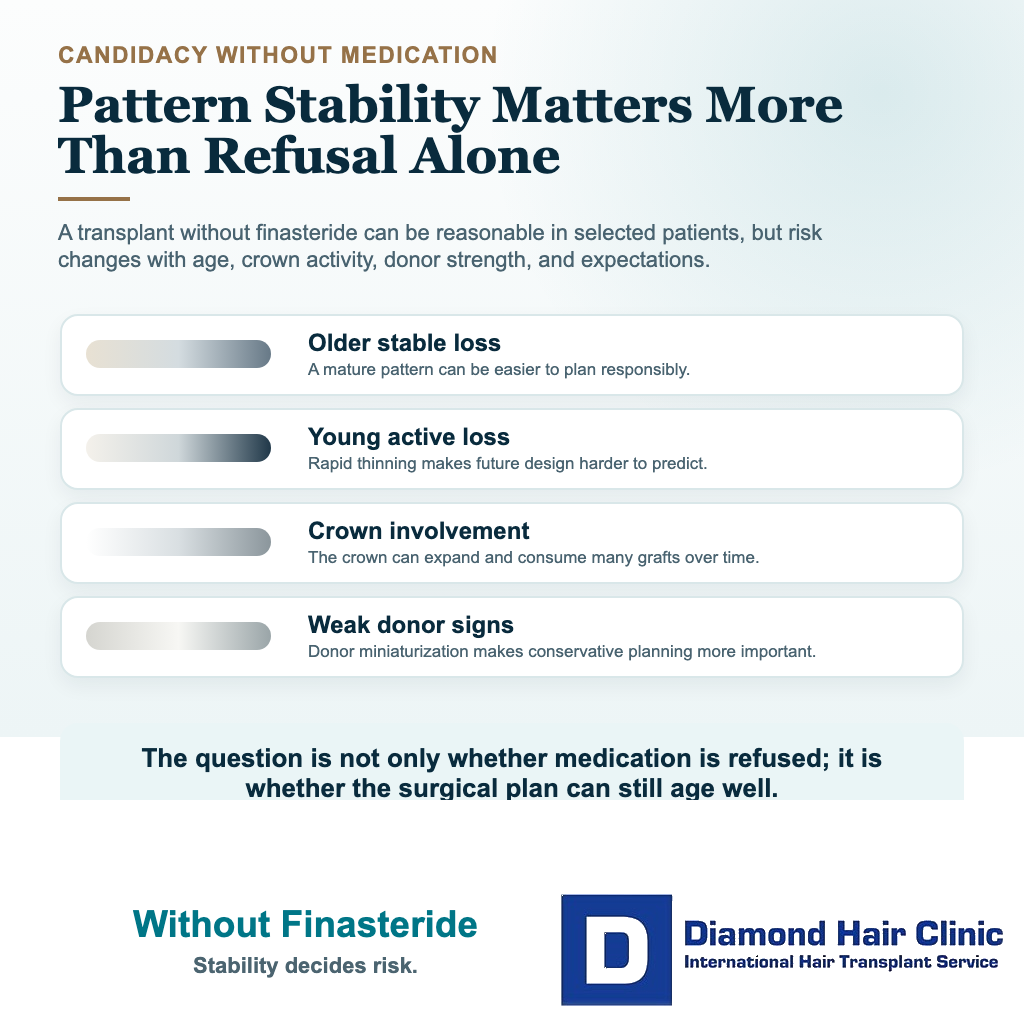
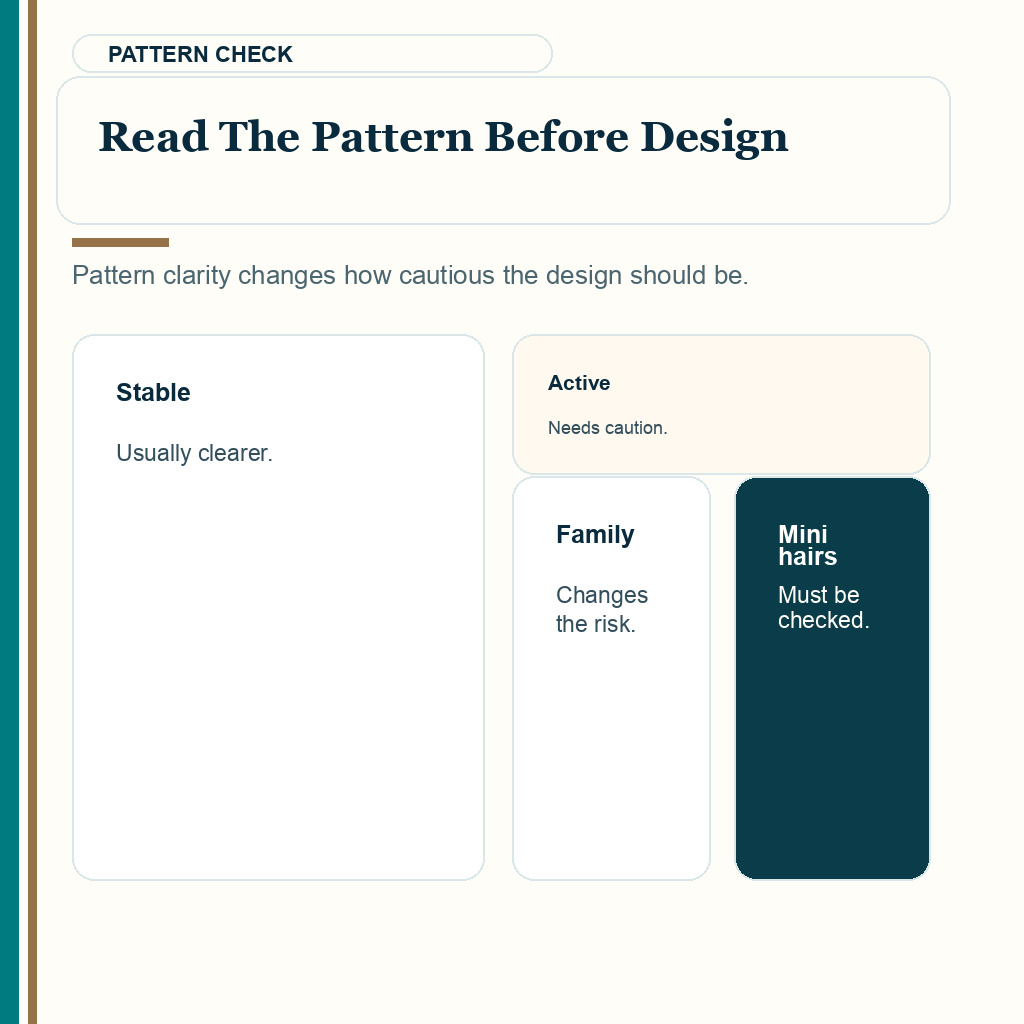
A mature Norwood pattern is different from early, fast, unpredictable thinning. I never judge based on a single photo. I look at age, family history, miniaturization, donor quality, crown involvement, and whether the requested design is restrained or aggressive.
A man with stable recession in his forties is not the same as a man in his early twenties with rapid thinning and a strong family history of advanced baldness. If suitability is uncertain, the question is broader than medication. He needs to ask whether he is genuinely a good candidate for a hair transplant. When medication is refused, candidacy must be judged more strictly because there is less protection for native hair.
Higher risk cases without finasteride
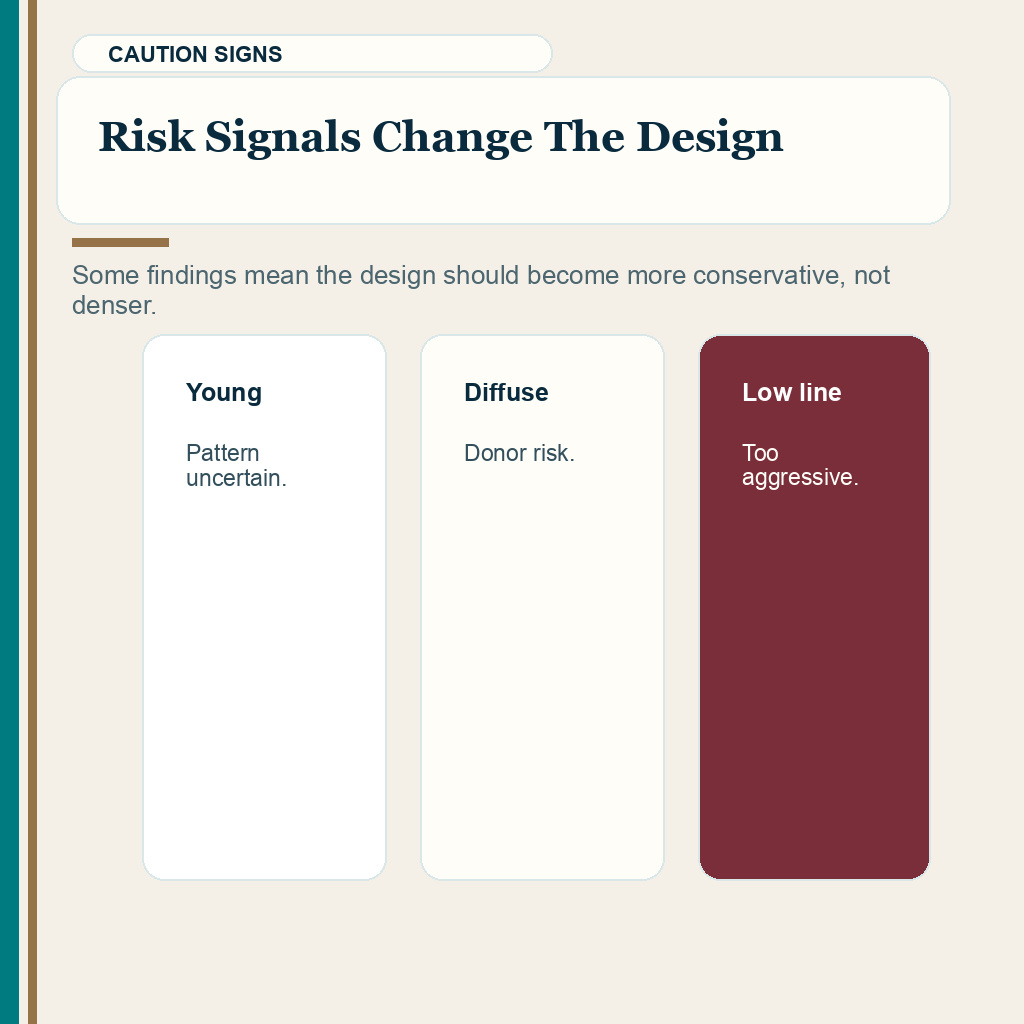
I become more cautious with young age, active hair loss, diffuse thinning, crown involvement, a weak donor area, or a requested hairline that is too low. I am also cautious when someone wants maximum density now while refusing any future medication. That combination can be risky.
Donor hair is limited, so the first plan must leave room for the future. Once grafts are used, they cannot be reused elsewhere. If the first surgery consumes too many grafts too early, there may be fewer options when future hair loss appears.
Here, the quality over quantity principle becomes very practical. A restrained design that ages naturally is better than a dramatic first year transformation that may be difficult to manage later.
Age makes the pattern easier or harder to read
Age matters because it helps me estimate how readable the pattern is. A young man may not yet show the final direction of his hair loss. The recession may look small today, but the crown, mid scalp, or donor borders may reveal a more aggressive future later.
A receding hairline makes this caution more important. A young man may focus only on the temples, but I have to look beyond the temples. If I rebuild a low dense hairline too early and the rest of the scalp continues to thin, the result can become unnatural.
Sometimes the most ethical advice is to wait. Waiting is not the same as doing nothing. It can mean documenting the pattern, checking miniaturization, trying tolerated medical options if appropriate, or allowing the hair loss to declare itself more clearly before using donor grafts.
A man around 50 can be easier to judge than a much younger patient, but age is not the same as stability. I still look for miniaturization behind the hairline, crown movement, family pattern, and donor quality before deciding whether a plan without finasteride is sensible.
The crown needs extra discipline
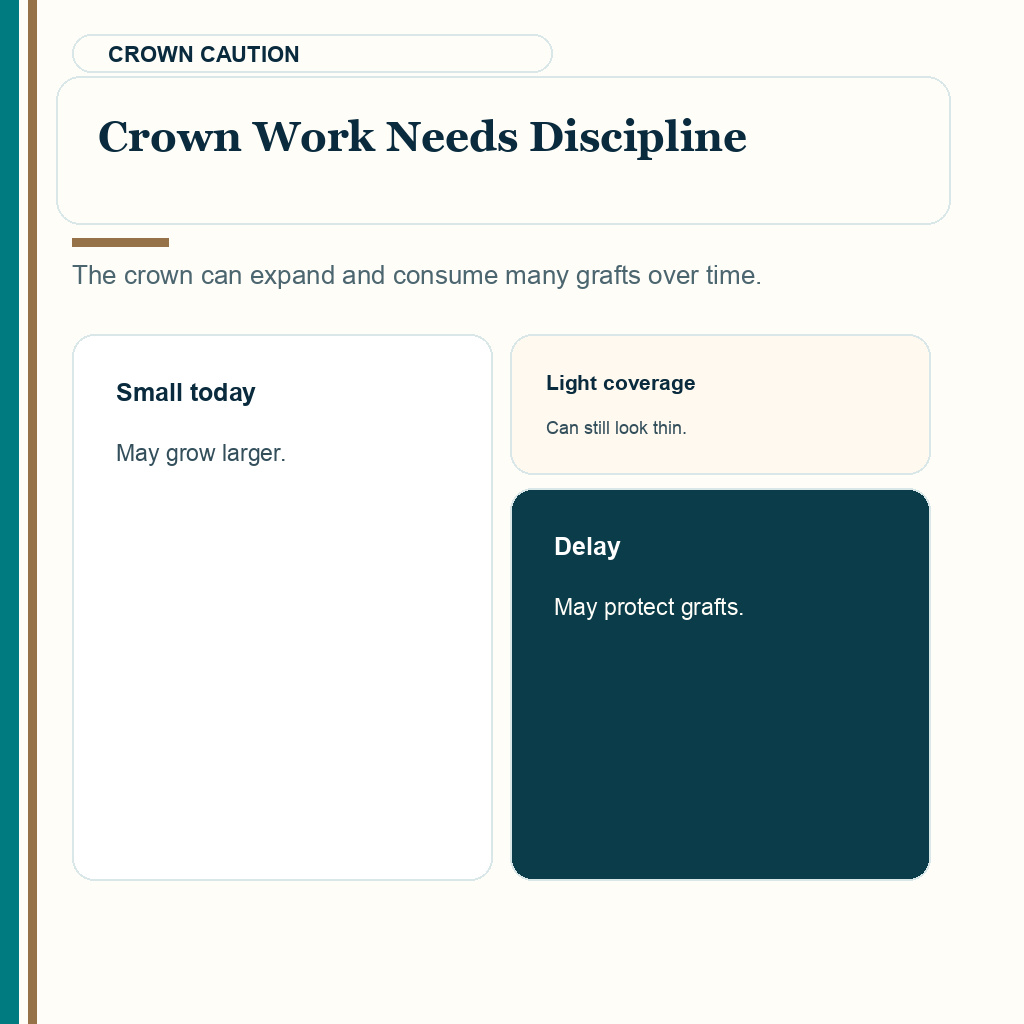
The crown is one of the areas where I am most cautious when medication is refused. The crown can expand over time, it often needs many grafts, and it rarely gives the same visual density as the frontal hairline. A small crown may become a larger crown. A patient can spend many grafts and still feel that the area looks light under strong light.
I may prioritize the frontal frame and delay the crown hair transplant. This can disappoint someone who wants every thinning area corrected immediately, but it often protects the long term plan.
The crown should not become a graft sink. Without finasteride, every graft has to be used with even greater discipline because future progression may require those grafts later.
Donor reserve shapes the whole decision
The donor area is the reserve. I often describe it as a bank, because a surgeon can withdraw from it but cannot pretend it is unlimited. Without medication, the donor strategy becomes even more important.
When minoxidil is the only treatment a patient can tolerate, I still judge the surgery around native hair that may keep thinning without finasteride. The design has to survive crown movement, mid scalp thinning, and a higher need for future grafts.
A strong donor area gives more flexibility, but it does not give permission to be careless. A weak donor area, visible miniaturization in the donor borders, or a family pattern of advanced baldness makes me much more cautious.
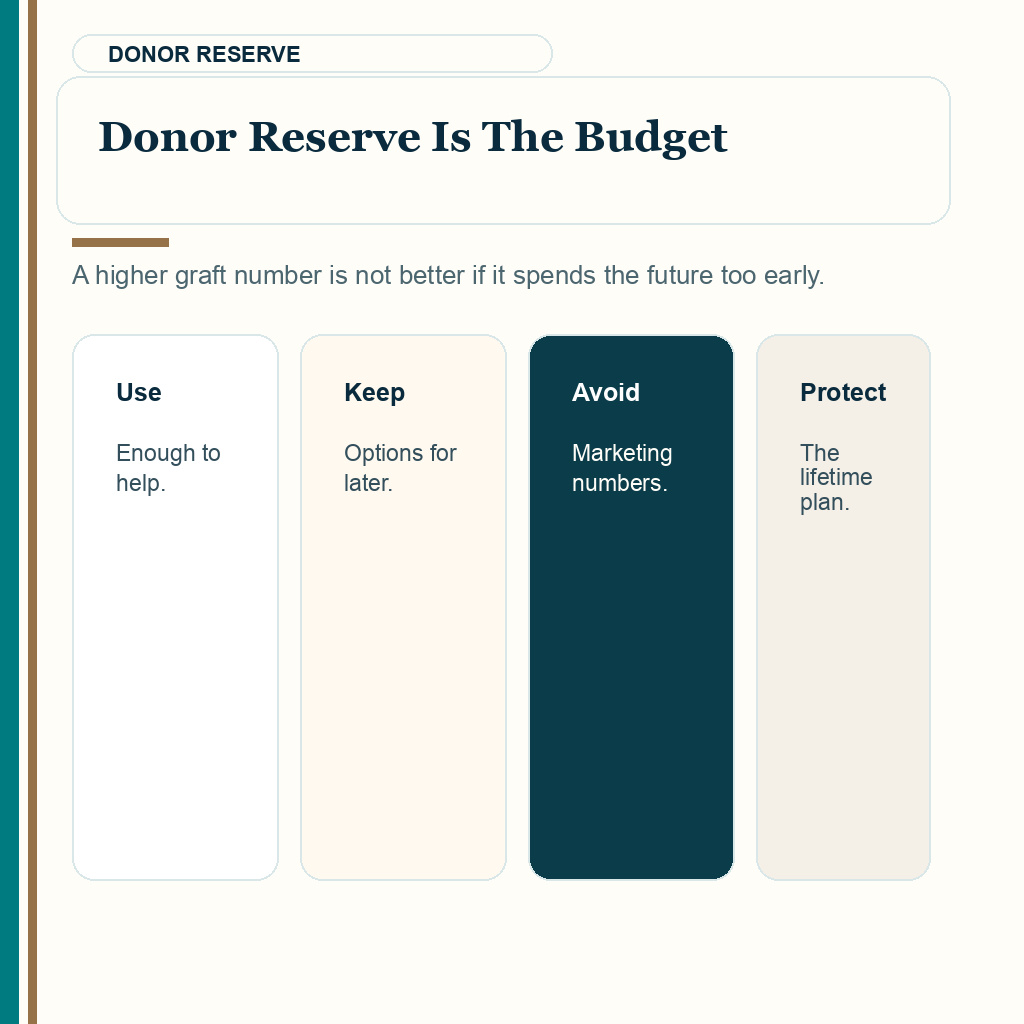
Graft numbers also have to be discussed responsibly. A high graft number can sound impressive in marketing, but the decision depends on whether that number is safe for the lifetime plan. If the patient wants to understand that logic, how a surgeon calculates the required graft number is closely related.
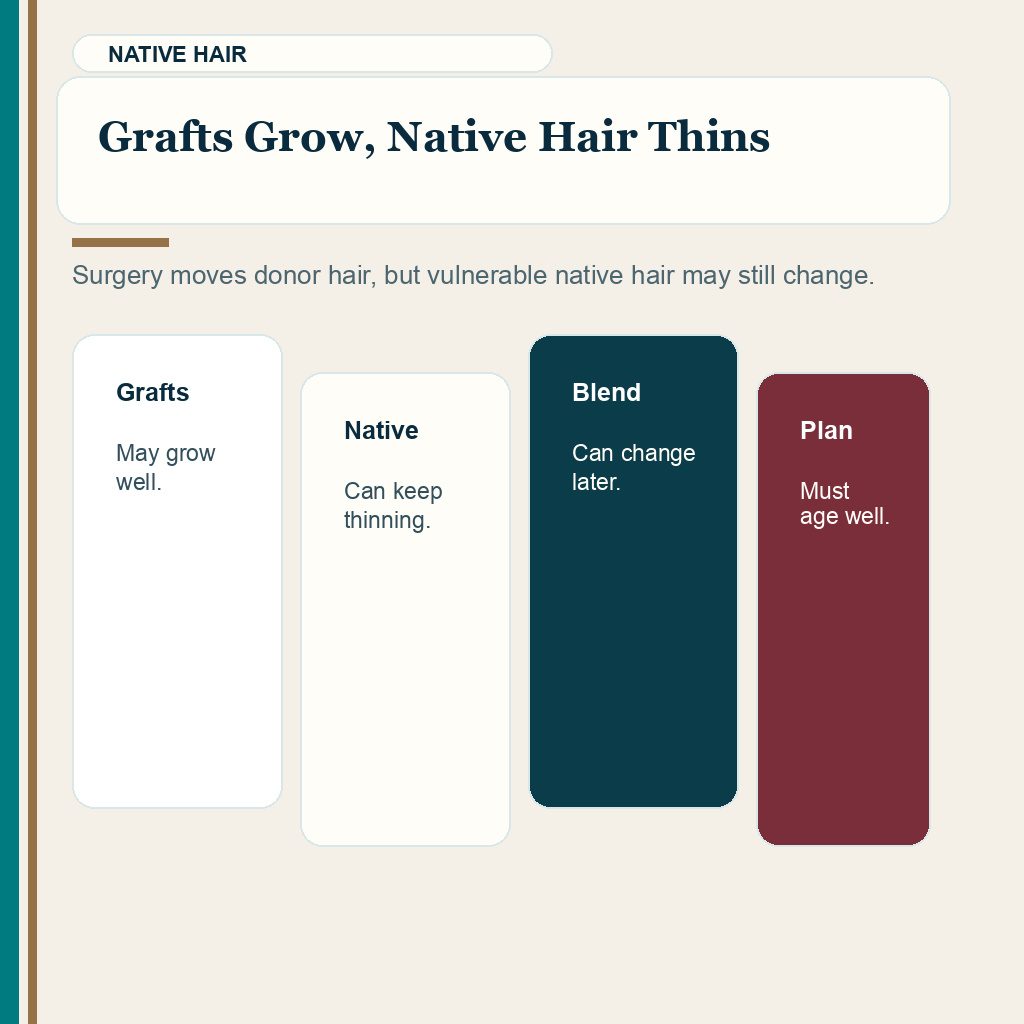
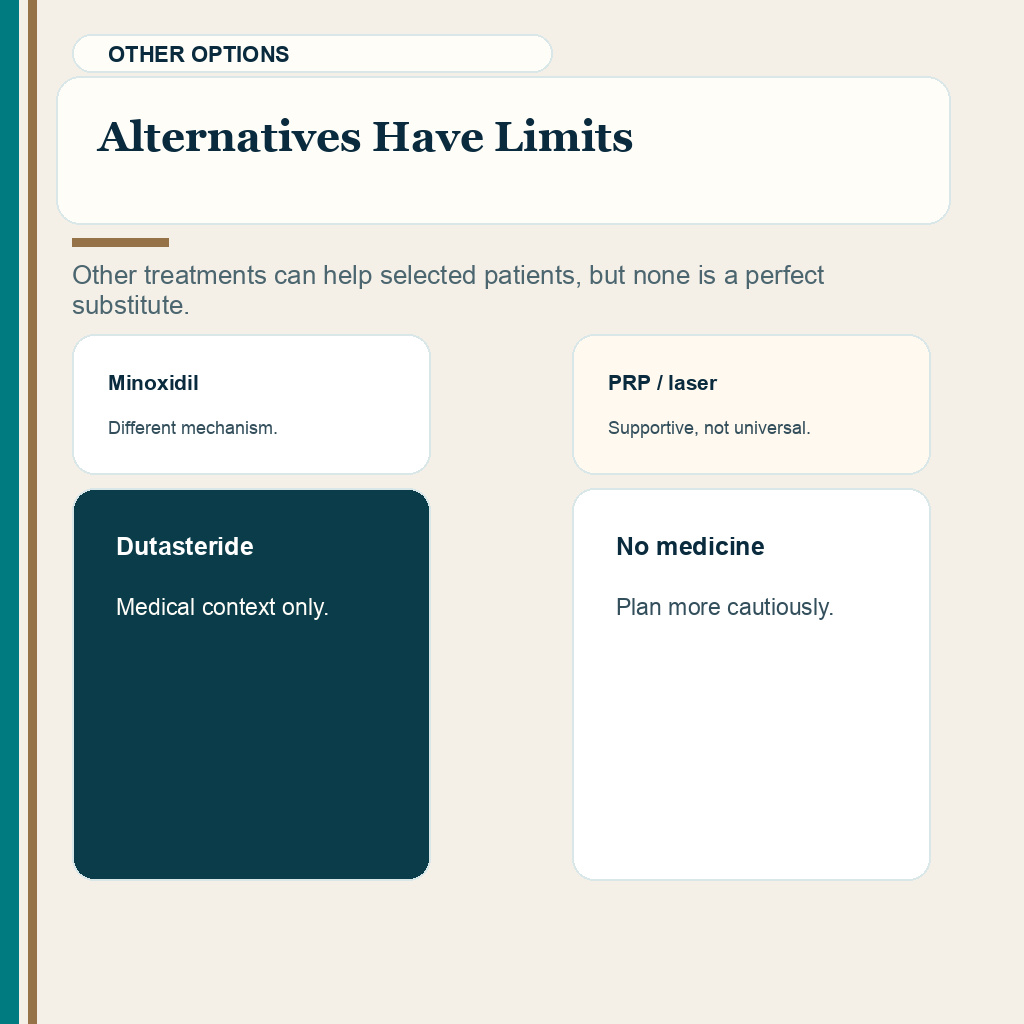
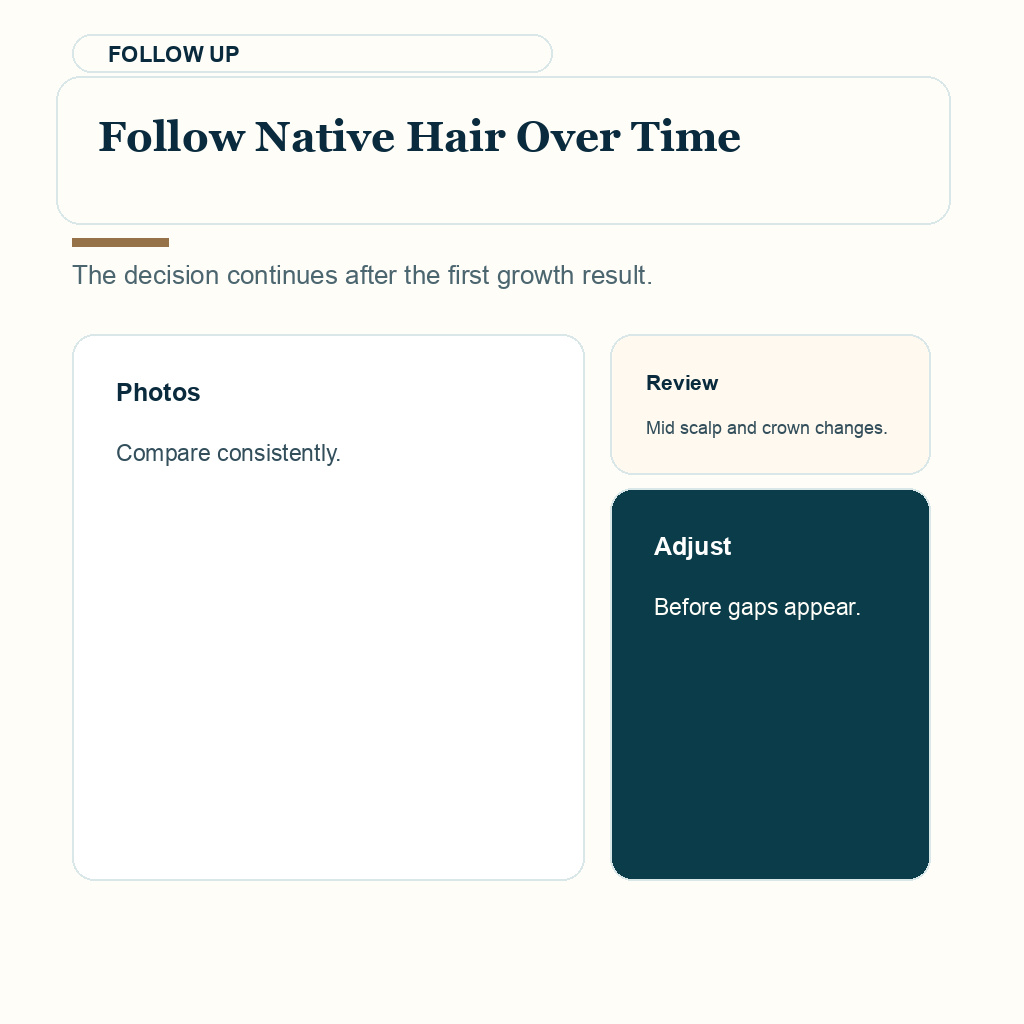
These 10 planning slides show how native hair loss, age, crown risk, donor reserve, side effect history, topical options, alternatives, and follow-up change the transplant plan when finasteride is not used. Swipe sideways, use the arrows one slide at a time, or choose a number below the image.

Native hair loss can change a good first result
If native hair continues to thin after surgery, the result can gradually change even when the transplanted grafts grow well. The front may still have transplanted hair, but the zone behind it may lose density.
The crown may expand. The mid scalp may become weaker. This can create gaps, islands, or a result that appears less blended than in the first year.
Months or years later, some men question whether surgery without finasteride was the right choice. Some do well. Some accept the risk. Some later wish they had planned more cautiously. The lesson is not that every man must take medication. The lesson is that surgery without medication requires a future loss strategy.
A natural result is more than graft survival. It depends on proportion, transition, hairline height, density distribution, and how the result ages. I connect this decision with hair transplant result quality, not only with whether the first growth phase succeeds.
Side effects need a real medical conversation
Side effects are the reason many men hesitate, and I take that seriously. Sexual side effects, mood concerns, breast tenderness, testicular discomfort, fertility concerns, and other symptoms can come up in the medical discussion. Some men tolerate finasteride well. Some men do not. No one deserves to be mocked for asking careful questions.
Finasteride should be an informed medical decision, not a loyalty test. The decision needs clear discussion of possible benefits, possible side effects, pregnancy related handling warnings, medical history considerations, and what to do if concerning symptoms appear.
That boundary also matters when scalp sun exposure enters the conversation. I discuss finasteride for native hair preservation, not as UV protection or a substitute for dermatology checks. If the scalp is exposed, the answer is sun protection and skin review, not pressure to take a medication he may not tolerate.
PSA monitoring and prostate history belong in this conversation too. Finasteride and dutasteride can change how PSA blood tests are interpreted. If you have prostate cancer follow up, a urologist, an oncologist, or active PSA monitoring, the doctor following that condition needs to know before any DHT blocking medication is started, stopped, or used as part of a hair plan.
From the surgery side, that does not mean the transplant is automatically impossible. It means the design should not depend on medication that may be medically unsuitable. I make the hairline, crown plan, and donor reserve more conservative instead of hiding a prostate or PSA issue inside a cosmetic decision.
It also matters that finasteride is a maintenance treatment. If it is stopped, the native hairs that were being protected may gradually return to their previous thinning pattern. In other words, stopping finasteride can allow vulnerable hair to start miniaturizing again, even if transplanted grafts continue to grow.
I also advise against learning about side effects only from anonymous arguments. Online discussions can show real fear, real regret, and real success stories, but they can also magnify panic. Marketing can minimize risk, and anonymous arguments can amplify risk. The safer path is a careful medical conversation between those two forces.
Planning without finasteride as an option
If finasteride is clearly not acceptable, I do not force the decision. I change the surgical plan. That may mean a more mature hairline, fewer grafts in unstable zones, delayed crown work, stronger donor preservation, and clearer acceptance that native hair may keep thinning.
Refusing finasteride does not by itself make surgery wrong, but it removes one possible tool for protecting native hair. This discussion has to happen before the hairline is drawn, not after the operation. The transplant plan has to respect that missing tool from the beginning.
Topical finasteride is still a medicine
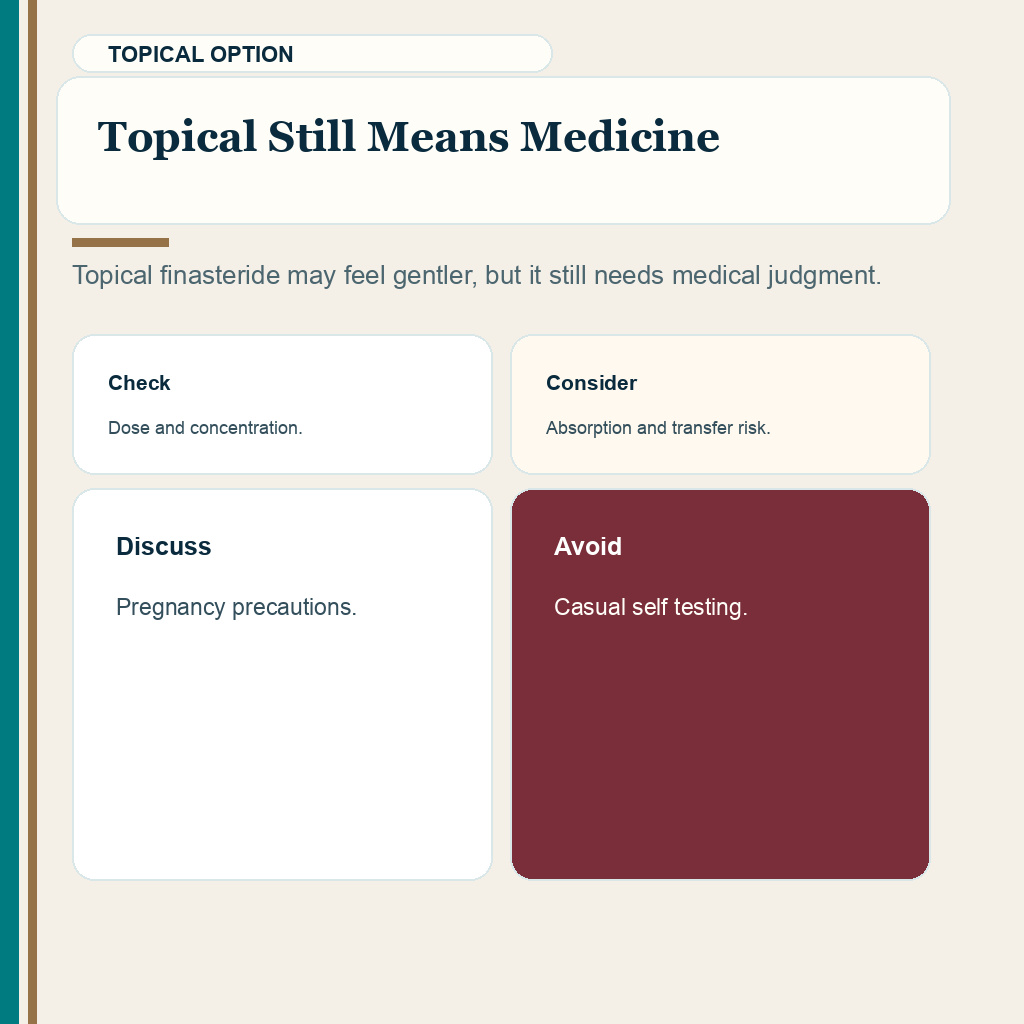
Topical finasteride is often discussed by men who want less systemic exposure. I understand the appeal. But I do not treat the word topical as a guarantee of harmlessness. A topical medication can still be absorbed, and compounded formulas can vary in concentration, quality, and instructions.
For that reason, topical finasteride still belongs in a discussion with a qualified doctor. The discussion should cover dose, application area, side effects, transfer risk to partners, pregnancy related precautions, and whether the product is regulated or compounded. Topical does not mean casual.
For the same reason, subscription sprays, compounded formulas, or research chemical style products should be listed before surgery. Online hair loss topicals before FUE can affect scalp readiness, side effect interpretation, and whether the operation month should stay stable.
If someone is using or considering finasteride before or after surgery, the timing should be stable and understood. I avoid random experimentation during healing because the first months after surgery are already emotionally sensitive.
Alternatives have limits
There may be alternatives, but none is a perfect substitute for every case. Depending on the diagnosis and medical suitability, the discussion may include minoxidil, topical approaches, PRP for hair loss, low level laser therapy, dutasteride in selected medical contexts, or no medication at all. Each option has limits.
Minoxidil and finasteride are often discussed together because they work differently. Minoxidil can support hair growth and hair cycling, while finasteride works on the DHT pathway. For some patients, using them together may make sense, but minoxidil is not a full substitute for DHT control when the main problem is androgen driven miniaturization.
A minoxidil only plan still has to be reviewed over time. If texture improves but the pattern keeps moving, I do not treat that as proof that the scalp is controlled. The design still has to leave room for native hair that may continue to thin.
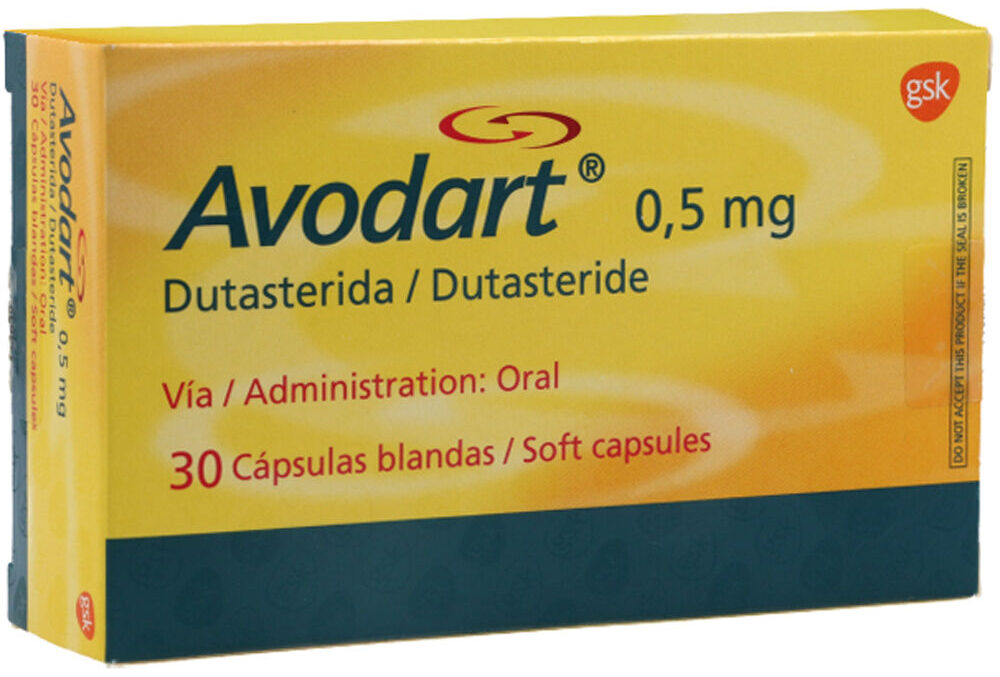
Dutasteride is one medical alternative to finasteride, and it may be discussed when the goal is stronger DHT suppression. I do not present it as a simple replacement. Dutasteride should be considered only after a proper medical discussion about suitability, dose, expected benefit, side effects, and long term monitoring.
Some men choose no medication. That is their right. Then the surgical design should become more protective. This may mean a slightly higher hairline, softer density transitions, fewer grafts in uncertain areas, and a more cautious crown plan.
If finasteride and dutasteride are both medically unsuitable, I treat that as a stricter planning condition, not as a reason to pretend the risk has disappeared. Another patient’s good or bad result without medication does not become a rule for your scalp. I look at age, speed of loss, crown and mid scalp pattern, donor strength, hair caliber, family history, and active miniaturization before deciding whether surgery, a smaller plan, delayed crown work, or follow-up photos should come before any second operation is discussed.
In other words, the alternative to finasteride is not simply more grafts. Finasteride, minoxidil, and dutasteride can shape native hair planning, but they do not move misplaced grafts, change poor angles, remove a visible row pattern, or restore an overused donor area. When those are the concern, the right discussion is repair planning, not medication pressure. If medication is refused, the plan should become smarter, not louder.
Avoiding finasteride or dutasteride does not explain an overharvested donor area by itself. Donor overuse comes from extraction planning, density, spacing, safe zone choice, and surgical judgment. Medication mainly changes the risk around native hair on top, so a no finasteride plan needs more conservative design and donor reserve rather than blame after the fact.
A shampoo, vitamin, PRP bundle, laser cap, or post-op product kit is also not the same as a plan for native hair stability. Supportive products may have a place in selected routines, but they should not be used to make an aggressive transplant sound safe when progressive hair loss has not been addressed.
Future treatments are not a donor plan
Some men tell me they want a transplant now, avoid finasteride, and rely on a new topical androgen blocker, stem cell treatment, or hair cloning option later if the native hair keeps thinning. I understand the hope, but I do not build a surgical plan on a treatment date that has not arrived.
A product can be promising in trials and still be years away from normal use, or it may be approved later with limits that do not fit the patient in front of me. Regenerative treatment claims also need careful medical judgment because a marketed stem cell or exosome offer is not the same as an approved, proven hair loss treatment.
I treat hair cloning and donor planning as a future planning topic, not as grafts I can spend today. Future treatments may become useful, but I do not count them as donor reserve today. If the first operation only makes sense because another treatment might arrive soon, it is too dependent on hope.
I use that uncertainty differently. I keep the present design conservative, protect grafts, avoid a hairline that needs perfect long term control, and leave room for later choices if better treatment options become real.
Conservative design without finasteride
I begin with a diagnosis. I check whether the patient has typical androgenetic alopecia, diffuse thinning, crown involvement, retrograde signs, donor miniaturization, or another condition. Then I evaluate the donor area and the likely future pattern.

Without medication, the design must become more restrained, not more aggressive. I may keep the hairline more mature. I may avoid dense packing in unstable zones. I may delay crown work. I may explain that a second operation could be needed later. These are protective decisions, not excuses.
At that point, the graft range has to become more cautious around hairline lowering, crown coverage, and future thinning. A larger range can be reasonable for selected men, but the design should leave donor reserve if native hair continues to weaken.
I also warn patients about the visual reality of density. Even a technically successful transplant can look lighter in harsh light, with wet hair, or with short hairstyles. If native hair continues to thin, the result may look thinner than expected.
Aftercare and follow up matter more
Follow-up matters especially after surgery without finasteride. Do not disappear after the first growth result. Monitor native hair, compare photos consistently, and ask for review if the mid scalp or crown begins to change.
The early healing period also matters. Washing, scratching, exercise timing, sun exposure, and product use should follow the clinic’s instructions. A good long term plan still needs good short term discipline, which is why hair transplant aftercare remains important even when the main question is medication.
I also avoid clinics that use fear or pressure. A clinic should explain the risks of refusing medication, but it should not shame the patient. The opposite is also true. A clinic should not promise that a huge graft session can solve progressive hair loss forever. Both extremes are warning signs, and patients should recognize red flags of poor hair transplant planning.
My surgical position without finasteride
I separate the decision into two questions. The first is personal and medical. Does he feel comfortable taking finasteride after a proper discussion with a doctor? The second is surgical. If he does not take it, can the transplant still be designed responsibly?
Sometimes the answer is yes, but only with a restrained plan. Sometimes waiting is safer. A smaller plan can protect the donor area better than adding more grafts too early. A good consultation should be realistic enough to say that.
If medication is chosen, consistency and follow-up matter. Irregular use makes the result less reliable to interpret, because I cannot know whether poor stability comes from the medication not working or from the medication not being used consistently. Regular follow-ups help monitor benefits, side effects, photographs, and whether the plan still aligns with the long term pattern. When that medication comes from an online service, the online hair loss pill record helps separate poor response from irregular or unclear use.
I do not believe in forcing every man into the same answer. I believe in matching the surgery to the biology, the donor area, the future risk, and personal values.
A hair transplant without finasteride can be reasonable for specific cases, but it needs planning with discipline rather than wishful thinking. That is the position I trust most. No fear, no pressure, and no exaggerated promises. Just careful planning for the scalp in front of us today and the scalp that may exist five or ten years from now.