- Written by Dr.Mehmet Demircioglu
- Estimated Reading Time 14 Minutes
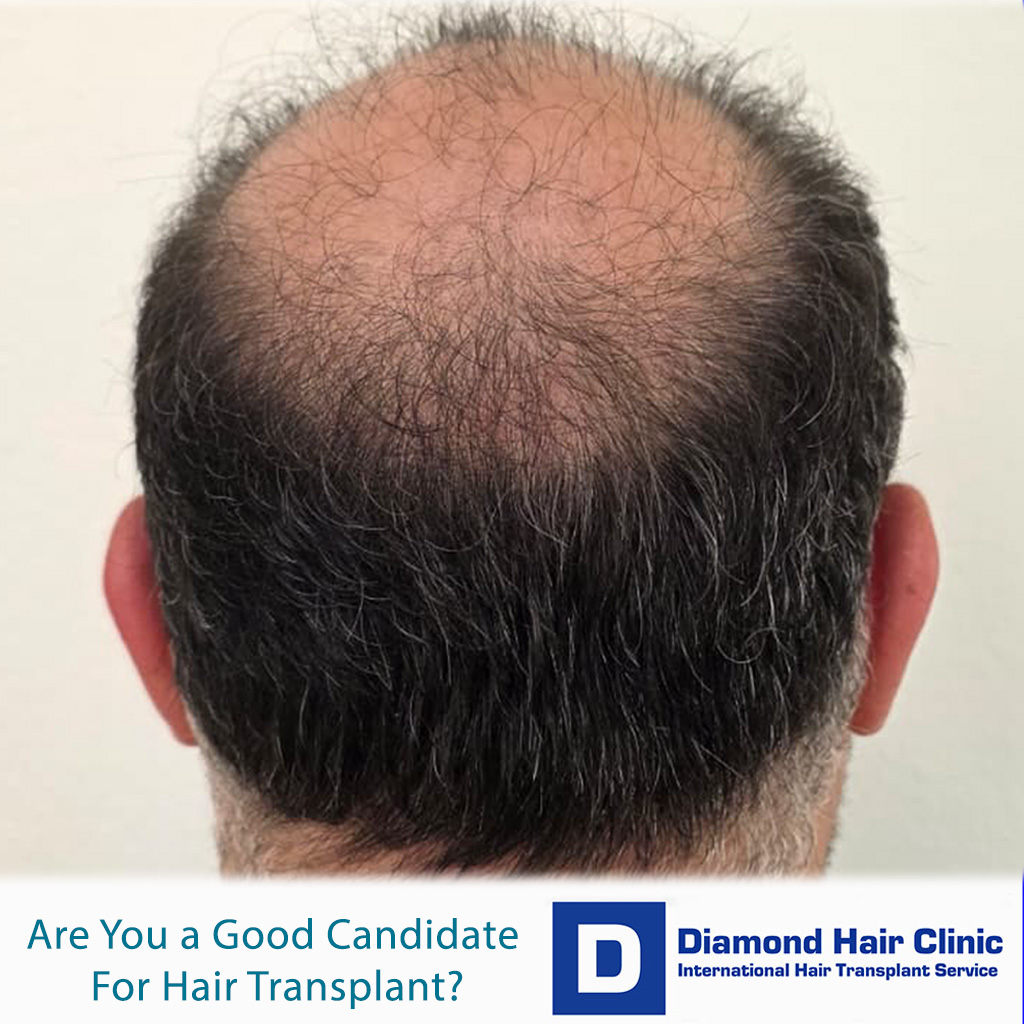
Are You Really a Good Candidate for a Hair Transplant?
One of the most common misunderstandings I see in hair transplantation begins very early, often before a patient has even had a proper consultation with an experienced surgeon.
He starts with the wrong question.
He asks, “How many grafts do I need?”
At first, that may sound like a sensible question.
In fact, it is one of the most common questions in this field. Patients see graft numbers online patient forums and Reddit, compare themselves to other men, look at before and after photos, and naturally begin to think that the whole subject can be reduced to a number.
But in my opinion, that is usually not the right place to begin.
Before talking about graft numbers, coverage, or density, I think a more important question must be answered first:
Are you actually a good candidate for a hair transplant?
That question matters much more than many people realize, because hair transplantation is not simply a matter of moving grafts from one place to another. It is not a mechanical procedure in which the same formula works for everyone. It is a matter of diagnosis, donor management, timing, long-term planning, hair characteristics, expectation management, and understanding what surgery can and cannot honestly achieve.
A person may want surgery very badly. I understand that completely. Hair loss does not affect only the scalp. It affects confidence, self-image, social comfort, and how a man sees himself in the mirror. For some men, it becomes a constant mental burden. So when they finally begin researching hair transplantation, it is very natural that they focus on the visible part of the problem and want a direct answer as quickly as possible.
But wanting surgery and being a good candidate for surgery are not always the same thing.
That is a very important distinction.
In real life, not every patient who wants a transplant is suitable for the same type of plan. Some patients are strong candidates. Some are reasonable candidates, but only with a more conservative design. Some may need medical treatment first before surgery should be considered seriously. And some, in my opinion, should not be having surgery at all, at least not under the plan they currently imagine.
This is exactly why I believe candidacy should be judged much more carefully than many clinics judge it.
If a patient does not have one of the favorable characteristics I mentioned in this article, that does not automatically mean he cannot have a hair transplant. But it may mean the case is more difficult, the margin for error is smaller, the planning must be more cautious, or the expectations need to be adjusted.
And that is precisely why I wrote this article.
Because in hair transplantation, the real first question is often not how many grafts.
The real first question is whether the surgery truly makes sense for you, your donor area, your hair loss pattern, your age, your long-term future hair loss, and what can realistically be achieved naturally without forcing healthy limits.
That is where a proper discussion should begin.
At Diamond Hair Clinic, this is how I believe hair transplant candidacy should be evaluated from the beginning.
At a Glance
A strong candidate usually has:
a stable diagnosis, a reasonably strong donor area, manageable future progression, and realistic expectations.
A weaker candidate often has:
active or unstable hair loss, poor donor quality, unrealistic goals, or a plan that does not make long-term sense.
Why Do I Think the Candidate Question Comes First?
Because the donor area is limited. That single fact shapes almost everything in hair transplantation.
This is the reality behind every hair transplant, no matter how attractively the procedure may be presented online. We are not creating new hair. We are not increasing the total number of grafts a patient has. We are working with a finite supply, and the entire logic of hair transplantation depends on how that limited supply is understood, respected, and used.
The back and sides of the scalp give us the donor reserve. That reserve is valuable, but it is not endless. If it is used intelligently, a patient can achieve a very meaningful and natural improvement. If it is used carelessly, the patient may gain some short-term coverage but lose something far more important in return: donor strength, future flexibility, and the ability to make better decisions later.
That is why I do not like simplistic thinking in this field.
I never like to look only at the bald area and say, “Yes, we can put grafts there.”
That is too superficial.
Because the real question is not only whether grafts can be placed in the thinning area. The real question is whether doing so makes sense when the entire scalp is considered as one long-term picture.
Before I consider how many grafts may be needed, I want to understand what lies behind that bald area. I want to know how strong the donor really is, whether the donor looks stable, whether there are signs of miniaturization, how aggressive the hair loss pattern seems to be (Norwood 1-7), how old the patient is, how likely the hair loss is to progress further, and what the patient is actually hoping to achieve.
These details matter because a hair transplant is not just a technical act. It is a decision about how to spend a limited biological resource, donor grafts.
And that resource must be spent with judgment.
A patient may have a bald frontal area and still be a weak candidate if the donor is poor, the loss is progressing quickly, or the expectations are unrealistic. Another patient may have a larger bald area and still be a better candidate because the donor is stronger, the pattern is more stable, and the goal is more reasonable. This is why I do not believe candidacy can be judged solely by the bald area.
In my opinion, hair transplant surgery candidacy should always be judged by the balance between the area needing help (graft implantation) and the donor reserve (graft extraction) that will be asked to provide them.
That balance is everything.
Because once grafts are taken from the donor reserve, they are taken. Once the donor is unnecessarily weakened, there is no way to restore the lost donor reserve. And once a patient has been pushed into a plan that used too much donor capacity too early, the problem is not only what was done today, but what will no longer be possible tomorrow.
This is why I believe the candidate question comes before the question of how many grafts.
Not because graft numbers do not matter, but because graft numbers only become meaningful after the larger question has been answered properly.
Does this patient truly have the donor quality, the hair loss pattern stability, the long-term outlook, and the realistic expectations for surgery to make sense?
Is the Diagnosis Even Correct?
Before I talk about graft numbers, density, or coverage, I first want to understand a much more basic question:
What kind of hair loss am I actually looking at?
This is extremely important because, in hair transplantation, a good plan can only begin with an accurate diagnosis. If the diagnosis is wrong, everything built on top of it can be wrong as well, including the decision to operate, the hairline design, the graft distribution on the scalp areas, and the expectations.
Many patients assume that every thinning scalp is simply male pattern baldness. Very often, that is true. In daily practice, most men who come for consultation do have androgenetic alopecia, meaning the typical patterned form of hair loss that affects the temples, frontal area, mid-scalp, and sometimes the crown (vertex).
But not always.
And this is where caution matters.
Not every patient with visible thinning should go directly toward surgery. Sometimes the thinning is more diffuse, more unstable, or less predictable than it first appears. Sometimes the scalp may show signs of inflammation or another underlying condition that changes the entire meaning of the case. Sometimes the donor area itself may already be showing weakness, miniaturization, or instability. In some patients, this may even suggest DUPA (Diffuse Unpatterned Alopecia).
And sometimes the patient’s photos may create a much simpler impression than the real scalp examination does.
This is exactly why I do not like to make fast, superficial judgments.
A hair transplant makes the most sense when the patient has a type of hair loss that is compatible with surgery, when the pattern is stable enough to plan responsibly, and when the donor area is strong enough to support the work. But if the real problem has not been properly understood, surgery can become a very poor answer to the wrong question.
That is why a proper consultation matters so much.
I do not want to look only at a few photographs and say yes or no too quickly. I want to understand the pattern, distribution, progression rate, donor quality, scalp condition, and the likely future direction of the case. I want to know whether I am looking at a straightforward surgical case or one that requires greater caution, additional medical management, or more time.
Because a patient is not a good candidate simply because he is losing hair.
He is a good candidate only if the type of hair loss, the stability of the situation, and the quality of the donor area all support surgery in a sensible way.
In my opinion, this is one of the biggest differences between a serious medical assessment by a surgeon and a sales-driven assessment by call center staff.
A sales-driven approach sees hair loss and quickly moves to graft numbers.
A proper medical approach first asks, what exactly is happening on this scalp, and does surgery truly make sense here?
That is the right order.
Because when the diagnosis is clear, the rest of the plan becomes more intelligent. And when the diagnosis is unclear, rushing toward surgery can create problems that were avoidable from the beginning.
Why Do Some Patients Look Like Candidates Online but Not in Reality?
Because the internet is a very incomplete way to judge hair.
Online photos can be useful. They help create a first impression. They may show the general pattern of loss, the frontal recession, the crown involvement, or the broad appearance of the donor area. For an initial conversation, that can be helpful.
But they never show the whole reality.
A patient may appear to be a strong candidate in a few photos, but once properly examined, the case may look very different. The donor area may be weaker than it appeared. The side zones may be thinning more than expected. The scalp may show subtle inflammation or signs that the situation is less straightforward than the photos suggest. The level of miniaturization may be more advanced. And the apparent density may be helped by hair length, styling, lighting, fibers, or simply the angle from which the photos were taken.
All of these things can change how a case looks.
This is why I am always cautious about judging candidacy too quickly from online images alone.
A photograph can make a patient look simpler than he really is.
And sometimes it can make a weak situation look deceptively strong.
For example, a donor area may appear dense in a few routine photos, but on close examination, the density may be lower than expected, the caliber may be finer, or the donor may show early signs of instability. A thinning frontal area may appear to be a straightforward case for surgery, but in reality, it may be part of a more diffuse, active process that requires a more careful approach. Even something as basic as bright light, longer hair, or careful combing can make a patient seem like a better candidate than he actually is.
This is also one of the reasons I often tell patients not to judge hair transplant results too quickly based on random online images.
The same problem exists on the result side as well.
A photo may make a result look extremely dense, but the image may reflect ideal lighting, dry hair, styling tricks, or angles that hide what the scalp looks like from other directions. In the same way, a patient may appear to be a strong candidate in a few consultation photos, but that impression may not hold up under closer examination.
So yes, photos are useful.
But they can also create false confidence.
They can make a patient believe the case is more straightforward than it really is. They can make the donor look stronger than it really is. And they can make the likely result seem easier to achieve than it really is.
That is why, in my opinion, candidacy should never be judged too casually from internet images alone.
A patient who looks simple online may turn out to be a much more delicate case in reality.
And that is exactly why proper examination, careful assessment, and real medical judgment matter so much in hair transplantation.
Why Can Two Patients With the Same Norwood Level Be Completely Different Candidates?
This is a very important point, because many patients look at the Norwood scale and assume it tells the whole story.
It does not.
The Norwood scale is useful, of course. It helps describe the pattern and extent of visible hair loss in a general way. It gives us a common language. When I say a patient is Norwood 3, 4, or 5, that communicates something meaningful.
But it does not tell me everything I need to know to judge whether that patient is actually a good candidate for surgery.
And that distinction matters a lot.
Two patients may both be Norwood 4, but one may be a very reasonable candidate, and the other may be a much more difficult case. On paper, they may appear similar. In reality, they may be completely different from a surgical standpoint.
Why?
The Norwood scale only tells me how hair loss looks in a broad visual sense. It does not fully tell me the donor density, the hair caliber, the curl, the texture, the contrast between the hair and the scalp, the degree of miniaturization, the strength of the side zones, whether there is retrograde thinning, how aggressive the future progression may be, or whether the patient’s expectations are realistic.
And all of those things matter.
One Norwood 4 patient may have thick, wavy hair, low scalp-hair contrast, strong donor density, and a stable pattern that has progressed slowly over the years. Another Norwood 4 patient may have fine hair, high contrast between hair and skin, donor miniaturization, retrograde hair loss, weak side support, and aggressive, ongoing thinning.
These are not the same cases.
Not even close.
The first patient may achieve a very satisfying visual improvement with relatively efficient use of grafts because his hair characteristics work in his favor. The second patient may need a much more cautious discussion because, even with surgery, the same number of grafts may produce a weaker visual effect, the donor may be less reliable, and the long-term outlook may be more uncertain.
This is why I never like simplistic comparisons between patients.
A patient may say, “I saw somebody online who was Norwood 4 like me, and he had 3,500 grafts, so I should need the same.”
But that is not how real hair transplantation works.
Because two men can share the same Norwood level and still have very different biology, donor strength, and surgical outcomes.
This is also why I do not like judging candidacy only from the front-facing appearance of baldness. The visible recession is only one part of the case. What matters just as much is the quality of the remaining hair, the donor’s character, and how the case is likely to evolve over time.
In my opinion, the Norwood scale is a useful starting point, but only one.
It helps describe the map, but it does not tell me how strong the roads are, how much fuel is available, or whether the journey is actually safe.
That is why I never judge candidacy by the Norwood level alone.
I judge it by the full picture.
And the full picture is always more important than the label.
Why Do I Look So Carefully at the Donor Area?
Because the donor area is the budget.
That is still the simplest and most honest way to explain it.
In hair transplantation, everything depends on what the donor area can safely give. The back and sides of the scalp are not just another part of the head. They are the reserve of “DHT-Resistant Hair Grafts” that make the entire procedure possible. So before I think seriously about what can be built in the front, I first want to understand what stands behind it.
If the donor area is strong, dense, and stable, then we have more freedom. We can usually plan with greater confidence, use the grafts more intelligently, and still preserve room for the future. But if the donor is weak, sparse, miniaturized, or otherwise questionable, then every decision becomes more delicate because the margin for error is much smaller.
Many patients naturally focus only on the front. That is understandable, because that is the part they see in the mirror every day. They see the recession, the thinning, the change in framing around the face. But in hair transplantation, the front is only half of the story.
The other half is this: What was spent behind to create what you see in front?
That question matters enormously.
A result may look attractive in a photo taken from the right angle, but if too much donor was consumed to create it, then the long-term logic of that result may be poor. The patient may be left with a thinner donor area, reduced future flexibility, and a much weaker position if the native hair continues to thin later.
This is exactly why I do not like aggressive and careless approaches.
Some clinics behave as if the donor area is an endless field that can be harvested freely. It is not. The donor is a limited biological resource. Once grafts are removed, they are removed. Once the donor is weakened unnecessarily, that loss is not easy to undo. And if the donor is handled poorly during the first surgery, the patient may continue paying for that mistake years later.
This is why, in my opinion, donor management is not just a technical detail. It is one of the central signs of whether a clinic is thinking responsibly.
When I assess candidacy, one of the first questions I ask myself is this:
Does the donor truly support the plan, or is the patient asking the donor to do more than it can safely do?
That is a very important distinction.
Because sometimes the visible bald area creates pressure for a large plan, but the donor simply does not justify that plan. In those cases, the honest answer is not to force the donor to comply with the patient’s wishes. The honest answer is to respect the donor’s limit and build the strategy around reality.
I also look carefully at the donor because not all donor areas are equal. Two patients may appear similar from the front, but once I examine the donor more closely, the difference may become very clear. One may have stronger density, better caliber, and better long-term reliability. The other may already show weakness, reduced density, or signs that the safe reserve is narrower than it first seemed.
That is why I never judge a case only by how bald the recipient area looks.
In my opinion, a hair transplant should always be planned as a balance between what is needed and what can be safely supplied. And that balance can only be judged properly when the donor area is examined with great care.
Because in the end, the success of a hair transplant is not determined only by what is implanted.
It is also determined by what was preserved.
What If the Donor Area Itself Shows Weakness?
This is a very important red flag.
When I evaluate a patient, I do not look at the donor area only in terms of how full it appears from a distance. I also want to understand how stable it truly is. Because a donor area can look acceptable at first glance and still contain a deeper problem underneath.
If the donor area itself shows miniaturization, the case changes immediately.
Why?
Because then the donor may not be as secure as it first appears. And once that becomes part of the picture, the question is no longer only how much hair can I extract? The question also becomes how reliable is that donor hair over the long term?
That distinction matters a great deal.
Hair transplantation relies on the premise that donor hair is relatively more resistant and dependable. But if the donor itself is beginning to show weakness, then the long-term value of the surgery becomes more questionable. In practical terms, I may be taking hairs that look usable today, but that may themselves already be on the path toward thinning later.
And if that happens, the patient may go through surgery, use part of his donor reserve, and still not receive the stable long-term benefit he expected.
That is why this issue matters so much.
Because a weak donor is not just a matter of quantity.
It is also a quality problem.
In other words, the concern is not only whether I can extract a certain number of grafts. The concern is whether those grafts are truly worth extracting in the first place.
This is why I like to examine the donor area carefully and not judge it casually. It is not enough for the donor to look simply “full enough” in ordinary photographs. Photos can be misleading. Hair length can hide weakness. Lighting can flatter the area. Styling can make density look stronger than it really is.
I want to know how strong the donor really is.
I want to understand whether the density is genuinely supportive, whether the caliber is strong enough, whether the pattern looks stable, and whether there are signs that the so-called donor zone is not as safe as it may appear at first glance.
Because once I begin extracting from a weak or unstable donor, I am not just risking a thinner donor appearance later. I may also be building the surgery on a less reliable foundation from the beginning.
And in my opinion, that is a dangerous way to plan a case.
This is one of the biggest differences between a superficial assessment and a serious one.
A superficial assessment may say, “The back looks fine, so let’s use it.”
A serious assessment asks, “Does this donor actually have the long-term strength to support surgery responsibly?”
That is the better question.
Because if the donor area itself shows weakness, then I have to become much more cautious. Sometimes that means the plan needs to be made more conservative. Sometimes it means the patient needs further observation or medical treatment first. And sometimes it means the surgery should not be pushed at all.
So yes, donor weakness is a very important red flag.
Not because it automatically makes surgery impossible.
But because it changes the case from something straightforward into something that demands much more restraint, much more judgment, and much more honesty about what surgery can realistically offer.
Why Does Retrograde Hair Loss Matter So Much?
Because it affects both the supply and the design, and that makes it much more important than many patients realize.
A lot of men think about hair loss only in terms of what is happening on the scalp. They focus on the temples, the frontal recession, the mid-scalp, or the crown. That is understandable, because those are the areas that usually attract the most attention.
But in some patients, the story is broader than that.
When hair loss begins extending lower on the sides, receding toward the ears, or moving upward from the nape, the case changes in a very important way. This is what makes retrograde hair loss such a significant finding.
The first reason is practical.
If hair loss is progressing into areas that would normally help define or support the donor zone, the safe donor reserve may become smaller. That means the surgeon may have fewer truly reliable grafts available for extraction. In other words, the supply side of the equation becomes weaker.
And that alone is already important.
But that is only one part of the problem.
The second part is aesthetic, and in my opinion, this is where many patients underestimate the issue.
If the side support is weakening and the surgeon tries to rebuild only the front, the result may start to look disconnected. A frontal hairline does not exist in isolation. It is not just a line drawn across the forehead. It has to connect naturally with the rest of the scalp, the temporal areas, the side profile, and the overall frame of the face.
If that support is missing, the result can begin to look artificial, even if many grafts were used.
A patient may technically have a reconstructed front, but if the lateral areas have receded too far and the overall frame is broken, the transplant can start to look incomplete or unnatural. In some cases, it may create a strange visual impression that the front has been rebuilt, while the rest of the scalp no longer supports it properly.
That is exactly why I do not assess hair loss only from the front-facing angle.
The side profile matters too.
The transitions matter too.
The overall frame matters too.
This is one of the reasons I believe a hair transplant should never be judged solely by whether hair can be implanted in the frontal zone. The real question is whether the result will look coherent as a whole.
And coherence depends on more than a hairline.
It depends on how the frontal work relates to the temples, the sides, the parietal transition, and the visual support that surrounds the face.
Retrograde hair loss also matters because it can subtly complicate planning. Sometimes the patient focuses only on the front and does not realize that the side zones are gradually weakening. But if those areas continue changing, then a plan that looked acceptable at one stage may look much less balanced later.
That is why I take this finding seriously.
Because when retrograde thinning is present, the surgeon has to think more carefully about how much donor tissue truly exists, how stable it is, and whether the intended design will still look natural if the side support continues to weaken over time.
In other words, retrograde hair loss is not just a side detail.
It changes the whole case.
It changes how much of the donor reserve can be safely extracted.
It changes how the frontal work should be judged.
And it changes how honestly the long-term picture must be discussed.
So yes, retrograde hair loss matters a great deal.
Not because it automatically makes surgery impossible.
But because it makes the case more complex, it narrows the margin for error and reminds us that a natural result is not built only from the front. It is built from the entire frame.
Why Is Donor Management a Lifetime Issue Rather Than a One Day Issue?
Because hair transplantation should never be planned for only one operation day.
That is one of the most important principles in this field.
A patient may come to consultation thinking mainly about his current photos, his current bald areas, and how he wants to look a few months after surgery. That is understandable. Most patients naturally think about the problem they see today.
But as the surgeon, I have to think much further than that.
I also have to think about what may happen in the next five, ten, or even fifteen years.
Will the native hair continue thinning?
Will the patient’s hair loss pattern progress into a more advanced stage?
Could he need another hair transplant procedure later?
Will the donor still look natural after extraction?
Will there still be enough reserve left if the crown worsens, the mid-scalp opens further, or the frontal work ever needs reinforcement?
These questions matter enormously because the donor area should not be judged solely by what it can give today. It must also be judged by what it may still need to provide tomorrow.
That is why I believe donor management is a lifetime issue, not a one day issue.
In my opinion, one of the clearest differences between a thoughtful surgeon and a hair mill mentality is exactly this. A thoughtful surgeon manages the donor with a long future in mind. He does not ask only, “How many grafts can I extract today?” He also asks, “What will remain after today, and will this patient still be in a good position later?”
A hair mill often behaves as if today is the only day that matters.
The patient wants a large number.
The hair mill clinic wants to satisfy the patient and close the case.
A high graft number is presented as if it is automatically something impressive.
But that way of thinking is very dangerous, because donor depletion usually does not reveal its full consequences immediately. Sometimes the problem becomes more obvious later, when the donor begins to look thinner, when the patient needs another surgery, or when the balding pattern progresses and there is no longer enough reserve left to respond intelligently.
This is why I do not agree with treating the donor reserve as a disposable resource.
A donor area should be respected like a limited reserve.
It should be handled with restraint, planning, and an understanding that the patient may continue to change over time. A man who looks acceptable with one pattern of loss at age 30 may look very different at 40 or 45. If too much donor reserve was spent too early, then the surgeon may have solved one problem in the short term while creating a bigger problem for the future.
And in my opinion, that is not good surgery.
Good donor management is not just about extracting grafts safely on the day of surgery. It is about preserving the donor’s long-term value. It is about avoiding unnecessary overharvesting. It is about leaving the donor looking natural. It is about maintaining flexibility for future progression, possible second sessions, and the uncertainties that hair loss can bring over time.
So when I assess a patient, I do not ask only, “Can I take this many grafts?”
I also ask, “Should I?”
That is a much more important question.
Because once grafts are taken, they are gone from that donor zone. Once the reserve is weakened without sufficient justification, the patient cannot easily regain it. And once a poorly planned first surgery has consumed too much donor too early, the options later may become much narrower than the patient ever expected.
This is why I see donor management as more than a technical step.
I see it as a long-term responsibility.
And I believe that any surgeon who takes hair transplantation seriously should think the same way.
Do Hair Characteristics Matter More Than Patients Think?
Yes, absolutely.
In fact, I think many patients underestimate this point quite a lot.
A lot of people look at hair transplantation too numerically. They focus almost entirely on graft count, as if the final result could be predicted by a single number. They see another patient online, notice that 3,000 or 3,500 grafts were used, and naturally assume that if their own graft count is similar, their result should look similar as well.
But in real life, it does not work that way.
The visual result depends on much more than the number of grafts alone. It also depends on the hair’s character. And sometimes that difference is very significant.
Hair caliber matters. Curl matters. Texture matters. The contrast between scalp and hair color matters. Even the way the hair catches and reflects light can matter. All of these factors influence how much visual coverage a patient can achieve with a given number of grafts.
This is one of the reasons why simple graft comparisons between patients can be very misleading.
Two patients may both receive 3,000 grafts, but one may appear much denser than the other because his hair is thicker, coarser, more wavy, or simply more closely matched to his scalp tone. Another patient may have finer hair, straighter hair, or a stronger contrast between dark hair and light skin, and that alone can make the scalp appear more visible even when the surgery itself was properly performed.
So when I assess candidacy, I never ask only how much hair is missing.
I also ask a second question that is just as important:
What kind of hair do I have to work with?
Because the answer to that question changes the whole visual mathematics of the case.
For example, a patient with thicker-caliber hair usually gets more visual value from each graft. Individual hairs occupy more visual space, so the coverage tends to appear denser. A patient with wavy hair may also benefit, because waves and movement can help interrupt scalp visibility and soften the see-through effect. On the other hand, a patient with very fine, very straight, or very high-contrast hair may require more careful planning, because even a technically good transplant may still look lighter under certain conditions.
That does not mean the patient is a bad candidate.
But it does mean the case must be judged more realistically.
This is why I do not like making promises based only on numbers. A graft count may sound impressive, but if the hair characteristics are working against the case, the final visual effect may still be more limited than the patient expected. And the opposite can also be true: sometimes a patient with favorable hair characteristics can achieve a very satisfying appearance without needing the extreme graft numbers that people often chase online.
In my opinion, this is one of the reasons why experienced judgment matters so much in hair transplantation.
Because surgery is not performed on numbers.
It is performed on real hair on a real scalp, with all the biological and visual details specific to that individual patient.
So yes, hair characteristics matter a great deal.
Sometimes they matter far more than patients expect.
And when I judge whether somebody is a good candidate, I do not look only at the amount of loss. I also look very carefully at the quality of the material available to rebuild it.
Does Scalp-Hair Contrast Change How Dense a Result Can Look?
Yes, it definitely does.
In my opinion, this is one of the most underestimated parts of hair transplantation.
Many patients think density is determined mainly by the number of grafts implanted. Of course, graft count matters. But the final visual effect depends on more than that. One of those important factors is the contrast between scalp and hair color.
When the contrast between the scalp and hair is low, it is generally easier to create the illusion of density. The scalp tends to show through less, especially under bright light, because the eye does not separate the hair and skin as sharply. The transition looks softer, which usually improves the overall impression of coverage.
When there is high contrast, the situation changes.
For example, when a patient has very dark hair and very fair skin, the scalp can become more visually noticeable. Even if the transplant is technically well done, the grafts grow well, and the planning was reasonable, the scalp may still appear more visible in certain lighting conditions. This is not always a sign of a poor result. Very often, it is simply a sign of the patient’s natural visual characteristics.
That is why I think this subject deserves to be understood properly.
High contrast does not make somebody a bad candidate. But it does mean that the same graft count may produce a different visual result than in another patient whose hair blends more easily with his scalp.
This is something many patients underestimate.
They look at another man online and think, “He had this many grafts, so I should look the same.”
But that comparison can be very misleading.
If the other patient has lower scalp-hair contrast, thicker hair, more favorable texture, or a different lighting situation in his photos, then the final appearance may naturally look denser than what another patient can achieve with the same number of grafts.
This is one of the reasons why I do not like making overly simple visual comparisons between different patients. The number may be the same, but the visual mathematics of the case may be completely different.
Scalp-hair contrast becomes even more important when the patient expects a very dense look with a limited graft supply. In a lower-contrast patient, a moderate number of grafts may still produce a strong cosmetic improvement. In a higher-contrast patient, the same graft number may still meaningfully improve appearance, but the scalp may remain more noticeable under strong light, with wet hair, in short haircuts, or at certain viewing angles.
That is why I always prefer to discuss candidacy and expectations with this point in mind.
Because sometimes the question is not only, “Will the grafts grow?”
Sometimes the more important question is, “How dense is this likely to look on this specific patient?”
And those are not exactly the same thing.
In my opinion, one of the marks of a thoughtful consultation is understanding this difference early. It helps the patient think more realistically. It also helps explain why two technically successful transplants can still look quite different from one another.
So yes, scalp-hair contrast matters a great deal.
Not because it decides everything by itself, but because it strongly influences how the eye perceives coverage, density, and see-through effect after surgery.
And in real life, perception matters a lot.
Why Does Hair Caliber Matter So Much?
Because thicker hair creates more visual coverage.
This is one of the simplest truths in hair transplantation, but it is also one of the most important. Many patients focus almost entirely on graft count, but the eye does not see graft numbers. The eye sees coverage, fullness, shadow, and how much of the scalp remains visible through the hair.
And hair caliber plays a major role in that.
When a patient has coarser, thicker-caliber hair, each individual hair shaft usually contributes more to the overall impression of density. In practical terms, that means each graft can do more visual work. The transplanted area may appear fuller and stronger, sometimes even with a lower graft count, simply because the hair itself has greater presence.
When the hair is finer, softer, or naturally has a lower visual impact, the situation is different. The grafts may still grow well. The surgery may still be technically successful. But the same number of grafts may create less visual fullness, because each individual hair shaft covers less and produces a lighter overall effect.
This is why two patients can receive similar numbers of grafts and still end up with noticeably different visual impressions.
One patient may achieve a very satisfying appearance with a relatively moderate number of grafts because his hair caliber works strongly in his favor. Another patient may require more grafts to create the same impression of fullness, not because the surgery is worse, but because the hair itself is finer and gives less visual support.
That distinction matters a great deal.
It also helps explain why I do not like to discuss graft numbers in isolation. A number by itself does not tell me how strong the final impression is likely to be. It only tells me part of the story. I also need to know what kind of hair those grafts contain and how much visual value each graft is likely to offer.
In my opinion, this is one of the reasons why candidacy is more complex than many patients expect.
A patient with stronger hair caliber may be a better candidate for achieving good-looking coverage with a limited donor budget. A patient with finer hair may still be a candidate, but the planning often needs to be more careful, and expectations need to be discussed more honestly.
Because the question is not only how many grafts can be placed?
The question is also, how much visual impact can those grafts realistically create?
And hair caliber is one of the main factors that determines that answer.
So yes, hair caliber matters enormously.
Not because it changes everything by itself, but because it strongly affects how much density, coverage, and fullness the eye will actually perceive after surgery. In real life, that makes a very big difference.
Is Diffuse Thinning a Different Situation?
Yes, very often it is.
In my opinion, diffuse thinning is one of the situations that deserves much more caution than many patients realize.
When the bald area is clearly defined, for example, in the temples, the frontal corners, or a more obvious area of recession, planning is usually more straightforward. There is often a clearer target. The surgeon is working in an area where the loss is easier to define, and the surrounding native hair may be relatively more stable.
Diffuse thinning is different because the scalp is not truly empty.
There is still hair there, sometimes quite a lot of it at first glance. But much of that hair may be miniaturized, weak, or still in the process of disappearing. So the challenge is no longer just how to add new grafts. The challenge is also how to work within an area that is already unstable.
That changes the case significantly.
Because in these patients, I am not simply placing grafts into an open bald scalp. I may be working among existing native hairs that are still present, but not necessarily strong. Some may continue thinning later. Some may be more vulnerable than they appear in photographs. Some may still be contributing visually today but may not continue to do so in the years ahead.
This is exactly why diffuse thinning often makes me more cautious.
Not because surgery is automatically impossible.
But because the situation is less straightforward and the future is often less predictable.
When I look at a diffuse thinner, I do not ask only, “Where can I place grafts?”
I also ask:
How stable is the native hair that is still there?
How much of the current appearance depends on hair that may continue miniaturizing?
Will the patient still look balanced if that ongoing loss continues after surgery?
Should medical treatment come first before surgery is considered more seriously?
These questions matter a lot.
Because one of the frustrations in diffuse thinning is that a patient may technically have a successful transplant, the grafts may survive, and yet later he may still feel that the area looks thin. Why? Because the issue may not be the transplanted hair. The issue may be that the surrounding native hair kept weakening.
That can lead to disappointment if the patient does not fully understand the situation from the beginning.
This is why diffuse thinning is often not just a surgical question. It is also a timing question and sometimes a medical stabilization question. In some patients, it may be wiser to first strengthen the existing hair as much as possible, observe the pattern more closely, and only then decide whether surgery is sensible.
Another important point is that diffuse thinning can be visually deceptive.
A patient may look as if he still has “a lot of hair,” but when that hair is miniaturized and weak, the real usable density may be much poorer than it seems. So, judging these cases casually, especially from ordinary photos alone, can be very misleading.
That is why I do not treat diffuse thinning the same way I treat a more clearly demarcated bald area.
In a more defined recession, the planning is often more direct.
In diffuse thinning, the planning usually has to be more thoughtful, more conservative, and more honest.
So yes, diffuse thinning is a different situation.
Not necessarily.
But certainly a situation that, in my opinion, deserves more caution, more analysis, and often a more careful discussion about what surgery can realistically achieve.
Can Medical Treatment Turn a Borderline Candidate Into a Better Candidate?
Yes, sometimes it absolutely can.
This is a very important point, because not every patient who looks borderline today is a poor candidate forever. Sometimes the real issue is not that surgery will never make sense. The real issue is that the timing is wrong today.
A patient may come with active thinning, weak native hair, or a picture that still looks too unstable for me to feel comfortable rushing into surgery. The frontal area may still be changing. The mid-scalp may still be losing support. The native hairs around the planned transplant zone may be too vulnerable. In that kind of situation, going directly to surgery is not always the wisest step.
Because sometimes the scalp needs more stability first, not more grafts.
This is where medical treatment can become very important, including medications such as Finasteride or Dutasteride to help reduce ongoing hair loss, Minoxidil to stimulate and maintain hair growth, and procedures like PRP (platelet-rich plasma), which may help improve hair thickness and support weaker follicles.
In suitable patients, medical treatment may help slow progression, support vulnerable native hairs, reduce the speed of ongoing miniaturization, and make the long-term picture easier to understand. It may not solve everything. It may not eliminate the need for surgery. But it can sometimes improve the foundation on which the surgical plan will later be built.
And when that foundation improves, the whole case can look different.
A patient who seemed too unstable for surgery at one stage may become a much more reasonable candidate later, once the existing hair is better supported and the overall direction of the hair loss becomes clearer. That is why I do not see medical treatment and surgery as competing ideas.
In many patients, they should be seen as part of the same long-term strategy.
Sometimes medication should come before surgery.
Sometimes it should continue alongside surgery.
Sometimes it is exactly what turns a borderline case into a more sensible one.
This is especially important in patients whose current appearance still depends partly on native hairs that are weak but not yet gone. If those hairs continue to thin quickly, then surgery done too early may later look less impressive than expected, not because the grafts failed, but because the surrounding native hair keeps disappearing. In those cases, medical stabilization can make a major difference in how wisely the surgery is timed.
It also changes the consultation itself.
Because when I look at a borderline case, I am not only asking, “Can I operate?”
I am also asking, “Would it be smarter to stabilize first and operate later?”
That is a much better question.
In my opinion, one sign of a thoughtful approach is being able to say that a patient is not ready yet without treating it as bad news. Sometimes waiting is not a delay in the plan. Sometimes it is part of the plan.
So when I say a patient is “not now,” that does not always mean “never.”
Very often, it simply means I want the case to become clearer, stronger, and safer before I commit the donor to surgery. And in the right patient, that kind of patience can lead to a much better long-term outcome.
Does Age Change My Thinking?
Yes, it definitely does.
Younger patients can absolutely be candidates for a hair transplant. I am not saying otherwise. But when the patient is younger, especially when the hair loss is still actively progressing, the future becomes harder to predict.
And that, in my opinion, is the real issue.
The challenge with age is not simply the number itself. It is what age often tells me about the pattern’s stability and the clarity of the future direction. In an older patient, the hair loss pattern has usually become more pronounced. I can more easily understand where the recession is likely to remain, where future thinning may still continue, and how the overall picture may evolve over time.
That makes long-term planning easier.
In younger patients, the situation is often more delicate. The visible hair loss today may be only one stage of a much larger process that has not yet fully declared itself. A patient may look like a reasonable candidate at the moment, but if the loss continues aggressively over the coming years, the plan that looked attractive today may look much less sensible later.
This is exactly why I have become more careful with younger patients.
Not because youth automatically means no.
But because youth often means more uncertainty.
And uncertainty matters greatly in a procedure meant to create a permanent result.
In younger patients, the temptation is often to recreate the hairline of the past. Many men still remember how they looked before the recession began, and naturally, they want that exact version of themselves back. They may want a lower, flatter, more youthful hairline because that is what they associate with their “real” appearance.
I understand that emotionally.
But surgically, that is not always wise.
If the hair loss continues aggressively behind a newly transplanted low hairline, the patient may later be left with a design that no longer matches the rest of the scalp. The front may remain while the surrounding areas continue to change. And when that happens, what looked appealing in the short term can begin to look unnatural in the long term.
That is why I usually prefer mature, age-appropriate, and future-oriented planning rather than overly aggressive, youthful designs.
In my opinion, the goal is not to create the youngest-looking hairline possible.
The goal is to create a hairline that looks natural, fits the patient’s face, respects the donor area, and remains sensible if the native hair continues to thin over time.
This is also why age affects not only design, but sometimes timing as well.
A younger patient may still become a very good candidate, but sometimes the wisest approach is to be more conservative, to think more seriously about medical stabilization, or to avoid making permanent design decisions too aggressively while the pattern is still evolving.
Because I do not like to design only for today’s mirror.
I also like to design for the patient’s future.
And in hair transplantation, I think that makes a very big difference.
Why Do I Care So Much About the Future Pattern?
Because a hair transplant is permanent, but hair loss often continues.
In my opinion, this is one of the most important things a patient must understand before deciding on surgery.
A transplant moves hair from one area to another, but it does not stop the underlying biology of ongoing hair loss. It does not freeze time. It does not protect the native hair from future miniaturization. It does not guarantee that the surrounding scalp will remain as it appears on the day of the consultation.
That is exactly why I care so much about the future pattern.
Because if I plan a transplant only around what I see today, without thinking seriously about what may happen tomorrow, then the surgery may look sensible in the short term but much less sensible later.
This is especially relevant in younger patients and in men whose hair loss appears more aggressive. In these cases, the visible recession or thinning that we see today may be only one stage of a pattern that is still unfolding. The frontal area may continue receding. The mid-scalp may continue opening. The crown may expand. The side support may weaken. And if those things are not taken seriously from the beginning, the plan can go badly.
That is why I do not like to think only in terms of what can be done surgically right now.
I also want to think about what is likely to happen if the native hair continues to thin over the next several years.
Will the transplanted design still look natural?
Will it still fit the patient’s face if the surrounding hair becomes weaker?
Will the donor still be strong enough if a second procedure becomes necessary later?
Will the first surgery still look intelligent if the pattern advances beyond what the patient imagined today?
These are very important questions.
One of the biggest mistakes in hair transplantation is treating the scalp as if it were a static picture. It is not. In many patients, it is a moving story. And if the surgeon ignores that story and designs only for the moment, the patient may end up with a result that solves one problem temporarily but creates another one later.
This is why I often think not only about surgery, but also about stabilization, timing, and long-term management.
Sometimes the best next step is surgery.
Sometimes the best next step is a more serious conversation about medical treatment and preserving the remaining native hair.
Sometimes the wisest plan is not to rush.
That does not mean the patient is a bad candidate forever.
Sometimes, he is simply not the right candidate yet.
And that distinction matters a great deal.
Because “not now” is very different from “never.”
“Not now” may mean that the pattern is still too active, the future is still too unclear, or the native hair is still too vulnerable for me to feel comfortable committing the donor too early. In those situations, patience is not a weakness in the plan. It is often part of the plan.
In my opinion, this is one of the clearest differences between a thoughtful consultation and a superficial one.
A superficial consultation looks at the current bald area and asks, “How can we fill this today?”
A thoughtful consultation also asks, “What will this scalp likely look like in the future, and will today’s decision still make sense when that future arrives?”
That is the better question.
Because hair transplantation should not be designed only for the excitement of the early result.
It should be designed so that it still looks natural, balanced, and defensible years later.
And that is exactly why I care so much about the future pattern.
Why Does a Patient’s Goal Matter Almost as Much as His Donor?
Because candidacy is not only about what the surgeon can do.
It is also about what the patient wants done.
And in my opinion, this is one of the most important parts of consultation.
A patient may have a donor area that could support a very good, very natural frontal restoration. He may have enough grafts for a balanced, age-appropriate plan that meaningfully improves his appearance while still protecting his future options. But that same patient may become a much poorer candidate for the specific plan he has in mind if he insists on something too aggressive, too low, too dense, too broad, or simply out of proportion to what his donor can safely support.
That distinction matters a great deal.
Because a hair transplant is not judged only by whether something is technically possible.
It is judged by whether the plan is wise.
A patient may technically be able to have grafts placed into a very low hairline. He may technically be able to chase stronger density across a wider surface area. He may technically be able to ask for both the front and crown to be addressed aggressively. But technical possibility and good judgment are not the same thing.
That is why I always pay attention not only to the scalp, but also to the goal.
I want to understand what the patient is really hoping for. Is he looking for a natural improvement that suits his age, face, and likely future? Or is he trying to recreate the exact hairline he had years ago, without accepting how his donor, his pattern, and his future progression change the situation?
Those are very different mindsets.
A realistic goal can make a case very workable.
An unrealistic goal can make the same case much more dangerous.
That is one of the reasons I do not like to think of candidacy as a simple yes-or-no issue. Sometimes the patient himself is not the problem. The real problem is the plan he wants. He may be a good candidate for one type of restoration, but a poor candidate for another.
For example, a patient may be a very good candidate for a conservative frontal restoration with sensible density and a mature hairline. But if that same patient insists on a flat, juvenile design, maximum density, and wider coverage than his donor should be asked to provide, then the case changes immediately.
Not because the donor changed.
But because the goal changed.
And once the goal becomes unrealistic, the risk of poor judgment increases very quickly.
This is why I always listen carefully during consultation. The patient’s expectations, priorities, and aesthetic preferences are not mere details. They are part of the medical planning itself. Because if the goal is misaligned with reality, even a technically clean surgery can become the wrong surgery.
In my opinion, one of the signs of a proper consultation is that it not only answers the question, “Can this be done?”
It also answers the more important question, “Should this be done in this way?”
That is where real judgment begins.
Because a donor area does not exist in isolation. It only has meaning in relation to what is being asked of it. A strong donor paired with a sensible goal can produce a very strong plan. The same donor, paired with an unrealistic goal, can be pushed into a poor plan very easily.
So yes, the patient’s goal matters enormously.
Not because the patient should dictate the surgery without guidance, but because the success of the case depends on whether the desired result, the biological reality, and the long-term logic all fit together.
And when they do fit together, the case becomes much safer, much more natural, and much more defensible over time.
Can a Patient Be a Good Candidate for One Hairline Design but Not Another?
Yes, absolutely.
And in my opinion, this is a very important way of thinking because candidacy is not always a simple yes-or-no.
Sometimes the truth is more specific than that.
A patient may be a very reasonable candidate for one hairline design but a poor candidate for another. He may have a donor area that can support a conservative, mature, and intelligent restoration very well, while at the same time being a poor candidate for the very low, flat, and overly youthful hairline he has in mind.
That difference matters enormously.
Because a proper consultation is not only about deciding whether surgery should happen. It is also about deciding what kind of surgery actually makes sense. The same donor, the same patient, and the same scalp can support one design beautifully but another very poorly.
This is exactly why design judgment is such a critical part of candidacy.
A lot of patients think candidacy means only one thing: whether they have enough hair to transplant.
But in real life, that is not enough.
The more important question is whether they have sufficient donor strength, pattern stability, and long-term safety to support the specific design they want.
That is a very different question.
For example, a patient may be a good candidate for a hairline at a more natural, age-appropriate level, with sensible density and a shape that suits his face and future. That same patient may become a poor candidate the moment the requested design becomes too aggressive. If he wants the hairline lowered too much, flattened too much, widened too much, or packed too densely across an area his donor cannot responsibly support, then the case changes immediately.
Not because the scalp changed.
Not because the donor changed.
But because the design logic changed.
And this is where many mistakes begin.
A patient may think he is asking only for a different style. But from the surgeon’s point of view, that style may completely change the donor burden, the case’s future flexibility, the naturalness of the result, and the risk of the transplant aging poorly over time.
This is why I never think of hairline design as just an artistic preference.
It is also a medical decision.
Because the hairline is not simply drawn for the next six months. It is drawn for the coming years. It has to make sense not only on the day the crusts come off but also later, if the native hair continues to thin and the patient’s appearance continues to mature.
That is why I often say that a patient may be a good candidate for one plan, but not for the plan he first imagined.
And in my opinion, that is not a contradiction.
That is simply careful planning.
A proper consultation should be able to say:
Yes, surgery may make sense. But not in that form.
Yes, your donor can support improvement. But not that design.
Yes, you can have a hair transplant. But the right version of it is more conservative than what you had in mind.
That kind of distinction is very important.
If a surgeon treats every design request as equally acceptable, candidacy becomes superficial. In that approach, the consultation ceases to be a process of judgment and becomes one of approval.
I do not think that is the right way to approach hair transplantation.
In my opinion, a patient is not truly a good candidate unless the design, the donor, the pattern, and the future all fit together in a sensible way.
And when they do not, the answer should not be to force the scalp to obey the drawing.
The answer should be to change the drawing.
That is why I believe a patient can absolutely be a good candidate for one hairline design and a poor candidate for another.
Because in hair transplantation, the question is not only: “Can I build a hairline here?”
The more important question is what kind of hairline can be built here responsibly, naturally, and in a way that will still make sense later?
Why Can Realistic Expectations Make or Break the Case?
Because unrealistic expectations can damage even a technically decent result.
This is one of the most important parts of hair transplantation, and in my opinion, one of the most underestimated.
Many patients come to consultation carrying a very strong image in their mind. They remember how they looked five, ten, or even fifteen years ago, and naturally, they want that exact version of themselves back. Emotionally, I understand that very well. Hair loss is personal. It affects confidence, self-image, and the way a man sees his own face. So, of course, many patients do not just want improvement. They want restoration of the past.
But surgically, that is not always realistic.
A hair transplant can create a very meaningful and natural improvement, but it usually cannot recreate the exact original density that existed before hair loss began. It also should not always recreate the same very low, very youthful hairline that the patient had many years earlier. What was natural at age 20 is not always natural at 35, 45, or later. And what may be emotionally attractive to the patient is not always biologically or aesthetically wise.
That is why I believe a good candidate is not only someone with enough donor hair.
A good candidate is also someone who can accept a natural, balanced, age-appropriate improvement instead of chasing a fantasy that the scalp and donor cannot responsibly support.
This matters enormously.
Because the patient’s mindset shapes the whole case. A patient who comes in with a realistic understanding is usually much easier to plan for. He understands that surgery is about improvement, not perfection. He understands that the donor is limited. He understands that naturalness matters more than trying to force the scalp to look like it did years ago. And because of that, the plan usually becomes safer, more honest, and more stable over time.
On the other hand, the patient who wants everything at once often creates the most dangerous type of situation.
He may want a very low hairline, maximum density, full crown coverage, one session only, and no real compromise anywhere. He may compare himself to selected online results without understanding the donor quality, hair characteristics, lighting, or long-term reality behind those cases. He may focus on what looks exciting in the short term, without appreciating what will still look natural years later.
Real surgery does not work well with that kind of thinking.
Because hair transplantation is always a matter of limits, priorities, and trade-offs. The donor is limited. The surface area may be large. The native hair may continue changing. The future may require reserve. When those realities are ignored, even a technically clean surgery can turn into a disappointing case, not necessarily because the work was poor, but because the expectations were misaligned with what surgery could realistically deliver.
This is why I pay close attention to expectations during consultation.
I want to understand not only what the patient is losing, but also what he is imagining.
Does he want to look natural, or does he want to look unnaturally young again?
Does he want a plan that respects the future, or a plan that spends too much donor for immediate emotional satisfaction?
Does he want a great and sensible improvement, or is he still mentally attached to a version of himself that surgery cannot truly recreate?
These questions matter.
In my opinion, unrealistic expectations do not just create disappointment after surgery. They can distort the plan before surgery. They can push the discussion toward lower hairlines, broader coverage, excessive graft demand, and poor long-term judgment. In that sense, unrealistic expectations are not only a communication problem. They are also a planning problem.
This is why I believe realistic expectations can truly make or break the case.
Not because the patient must think negatively.
But because he must think honestly.
When the patient’s expectations, the donor’s capacity, the pattern of loss, and the long-term design all fit together, the case becomes much stronger. The surgery becomes more defensible. The result is more likely to look natural not only when it first grows but also years later.
And in my opinion, that is exactly the kind of expectation framework a good hair transplant should be built on.
Why Do I Not Like Promising Everything in One Surgery?
Because in many patients, that would simply be dishonest.
This is one of the most important realities in hair transplantation, and I think patients deserve to hear it clearly. Once the hair loss becomes more advanced, the surface area that needs attention grows very quickly. The frontal zone widens, the mid-scalp opens, the crown may start demanding grafts, and sometimes the side support becomes weaker as well.
But the donor area does not expand in the same proportion.
That is the problem.
The demand keeps growing, but the supply remains limited.
And once that imbalance becomes clear, the surgeon has to make decisions. He has to prioritize. In my opinion, this is where thoughtful surgery separates itself from careless surgery. Good hair transplantation is often not about trying to do everything. It is about deciding what matters most, what can realistically be achieved, and what should be preserved for the future.
Trying to give every area equal attention can sometimes mean that nothing receives enough attention.
That is a very important point.
If the donor is limited and the surgeon spreads the grafts too thinly across the front, mid-scalp, and crown all at once, the result may look disappointing everywhere. The patient may feel that everything was “touched,” but nothing was truly restored with enough strength. In those situations, what sounded generous in the consultation can become weak in the mirror.
That is why I often believe the frontal zone deserves the most respect in planning.
The front frames the face. It is the area that most strongly shapes a person’s appearance. It is the zone that usually gives the greatest visual return for the grafts used. If the frontal framing is improved properly, the patient often looks significantly better, even if every area has not been treated equally.
This is why, when the donor is limited, that fact must be acknowledged, not ignored.
I do not think honesty in consultation means telling every patient what he hopes to hear. I think honesty means explaining that once hair loss becomes more advanced, it is often impossible to rebuild the entire scalp to a comparable density in a single session while also responsibly protecting the donor.
Sometimes one surgery is enough for a very satisfying improvement.
Sometimes the bald area is modest enough, the donor strong enough, and the goal realistic enough that a single session can work very well.
But sometimes that is not the case.
Sometimes a staged approach is more honest.
Sometimes it makes more sense to properly restore the frontal zone first, use the donor intelligently, and then reassess later whether a second stage is sensible. And sometimes the most responsible decision is to avoid promising a level of coverage that the donor simply cannot support naturally.
This is also why I do not like consultations built solely on excitement.
The phrase “we can do everything in one surgery” may sound attractive, but attraction and wisdom are not the same thing. In some patients, promising too much in one sitting is not ambitious. It is poor judgment.
Because the question is not only, can grafts be spread across all these areas?
The more important question is, will the final result actually look strong enough where it matters most, and will the donor still be respected afterward?
That is the question I care about.
In my opinion, one of the marks of a thoughtful surgeon is the ability to resist the temptation to overpromise. A serious surgeon understands that sometimes restraint yields better results than excess. Sometimes doing less, but doing it properly, is much more valuable than trying to do everything at once and leaving the patient with a weak outcome everywhere.
So when I say I do not like promising everything in one surgery, I do not mean that multiple sessions are always necessary.
I mean that the plan should be built around biology, priorities, and long-term logic, not around wishful thinking.
Because in hair transplantation, a promise is only meaningful if the donor can truly support it.
Why Is Crown Baldness So Often a Poor Place to Spend Grafts First?
Because the crown can consume grafts very quickly, and in many patients, the visual return is not as efficient as people expect.
A lot of patients look at the crown and think, “It is just another bald area.”
But in real life, the crown is usually not just another bald area.
It is often one of the most demanding parts of the scalp to treat properly.
The first reason is simple: the crown usually needs a large number of grafts. Even when the bald spot does not seem very dramatic in the mirror, the actual surface area can be wider than patients realize. And once you begin trying to create enough coverage there, the demand for grafts increases very quickly.
The second problem is that the crown often yields a less pronounced cosmetic effect than the frontal zone.
This matters a lot.
When grafts are placed in the front, they help frame the face. They change the way a person looks almost immediately from a conversational distance. The frontal area has a strong visual impact because it defines the face itself.
The crown works differently.
Even when it improves, it often does not change the patient’s appearance as strongly as a good frontal restoration does. In other words, the crown can ask a lot of the donor while delivering less visible impact than patients expect.
That is one of the main reasons why I am usually more careful with it.
There is also a third issue, and that is the geometry of the crown.
The crown is not a flat, simple surface. It usually has a whorl pattern, changing directions, and a shape that naturally makes dense-looking coverage harder to create. On top of that, the crown is often exposed to strong overhead light, which makes scalp visibility more noticeable. So even after grafts are placed, the patient may still see more scalp there than he had imagined, especially under bright light or when the hair is wet.
That can create disappointment if the case was not explained honestly from the beginning.
And then there is the long-term issue.
In many patients, the crown is one of the areas that may continue progressing over time. So if a large number of donor grafts are committed too early for the crown, the surgeon may later regret how much was spent on a zone that either needed more grafts than expected or continued to expand afterward.
This is why I often think more carefully before committing major donor resources to the crown, especially if the frontal zone still needs work or if the donor reserve is not generous.
The first responsibility is not to touch every area.
The first responsibility is to use the donor where it makes the most sense.
That does not mean the crown should never be treated.
It simply means the crown should be treated when the mathematics of the case justify it.
If the donor is strong, the frontal work is already adequate, the patient understands the limitations, and the crown fits into a sensible long-term plan, then yes, treating it can be reasonable.
But if the donor is limited, the frontal framing is still weak, or the patient expects the crown to be transformed cheaply in graft terms, then I think caution is much wiser.
In my opinion, one of the most common planning mistakes is to treat the crown too casually. It is often the kind of area that looks easy from a distance, but becomes much more expensive and much less rewarding once you begin doing the real graft mathematics.
That is why I do not like spending hair grafts there automatically just because it is bald.
I want to know whether treating it is truly the best use of the donor, both for the patient’s appearance today and for his future options.
Because sometimes the crown deserves grafts.
But very often, the front deserves them first.
Can Beard Hair Really Rescue a Weak Scalp Donor?
It can help, but the word “rescue” is too strong.
This is a subject that should be understood carefully, because patients sometimes hear about alternative donor sources and begin to think that a weak scalp donor can simply be compensated for by taking hair from somewhere else. In real life, it is not that simple.
In selected advanced cases, additional donor sources are sometimes discussed to expand what is surgically possible. But this subject should always be approached with caution, because hair taken from outside the scalp does not behave exactly like scalp hair. Its texture, caliber, and overall visual character can be different, which means it cannot be treated as a simple replacement for scalp donor hair.
So yes, alternative donor sources may sound attractive in theory.
But no, they do not magically turn a poor candidate into an ideal one.
And in my opinion, this is where honesty matters. When the scalp donor is weak, the real answer is not always to search for more hair elsewhere. Sometimes, the more important question is whether the overall plan still makes sense in a natural, balanced, and long-term way.
As a hair transplant surgeon, I prefer not to use beard or chest grafts in my cases.
That is simply part of my own surgical judgment and planning philosophy.
So when I assess a patient with limited donor capacity, I do not try to solve the whole problem by looking outside the scalp. I focus instead on whether the case can still be approached in a way that is honest, responsible, and consistent with a natural result.
How Do I Personally Judge Whether a Patient Is a Good Candidate?
I usually think through the case in a fairly simple but very disciplined order.
I do not like to judge candidacy based on a quick impression. I do not like to reduce it to a yes-or-no reflex. And I certainly do not think it should be handled like a sales decision where the goal is simply to approve the patient and move as quickly as possible toward surgery.
That is not how I approach it.
In my opinion, deciding whether a patient is a good candidate requires balancing biology, aesthetics, safety, and long-term responsibility. So when I assess a case, I try to move through it in a clear sequence.
First, I want to understand the diagnosis.
Before anything else, I want to know exactly what kind of hair loss I am looking at. Is this a straightforward pattern of androgenetic alopecia? Is the picture stable enough to make surgical planning meaningful? Or are there signs that the situation is more diffuse, more active, or more medically uncertain than it first appears?
That is where the case begins for me.
Then I look carefully at the donor area.
I want to know how strong it really is, not just how it looks from a casual distance. I think about density, caliber, overall donor quality, and whether the donor appears stable enough to support the kind of work the patient may need. Because no matter how much hair is missing in front, the case can only be built on what the donor can safely and responsibly provide.
After that, I assess the pattern of loss and the likely future progression.
This is a very important step. I do not want to judge only what the scalp looks like today. I also want to think about what it is likely to look like later. Is the hair loss relatively mature and understandable, or is it still progressing in a way that makes the future picture uncertain? Could the patient’s current appearance change significantly in the coming years? Because if the likely future is ignored, even a technically decent surgery can age badly.
Then I think about the patient’s age.
Not because age alone decides the case, but because it often tells me something about how clearly the pattern has declared itself and how much uncertainty still remains ahead. In younger patients, I usually think more carefully about progression, timing, and how the design will hold up if the loss continues.
Then I think about the patient’s goal and whether it is realistic.
This part matters a great deal. A patient may have a donor area that can support a very good, natural restoration, but still become a poor candidate for the exact plan he has in mind if that plan is too aggressive, too low, too broad, or too demanding for what his scalp can safely support. So I pay close attention not only to the hair loss, but also to what the patient is actually hoping to achieve.
And then I ask myself one final question:
Will the proposed design still make sense in the coming years, not just on the day after surgery?
That question is very important to me.
Because a hair transplant is not designed only for the excitement of the early result. It should also remain natural, balanced, and defensible as the patient continues to age and the native hair continues to change. If a design looks good only in the short term but is likely to age poorly, I do not think it is a good design.
So that is how I personally like to judge candidacy.
Not as a quick approval process.
Not as a numerical exercise.
And not as a reflex answer to the question, “Can we do it?”
I prefer to judge it as a balance between what the patient wants, what the biology allows, what the donor can safely support, and what will still make sense later.
In my opinion, that is the right way to assess whether a patient is truly a good candidate for hair transplant surgery.
Who Is Usually a Strong Hair Transplant Candidate?
In simple terms, the stronger candidate is usually someone whose case has enough harmony between the main factors.
That word matters.
In my opinion, a good candidate is not defined by a single feature alone. It is not only about having a bald area. It is not only about being unhappy with hair loss. It is not only about having enough budget. And it is not even only about having a donor area that looks reasonably good at first glance.
A strong candidate is usually someone in whom the important parts of the case fit together sensibly.
He has a donor area that is reasonably strong, stable, and capable of supporting the plan without being pushed beyond what is safe. His hair loss pattern is understandable enough that the surgery can be planned with some confidence. His scalp condition is suitable. The likely future progression seems manageable enough that the design can be built with some long-term logic. And just as importantly, his expectations are realistic.
That combination makes a great difference.
Because when those elements are in harmony, the case usually becomes much more straightforward. The surgeon is not fighting against instability, poor donor strength, unrealistic goals, or a design likely to age poorly. Instead, the biology, the aesthetic plan, and the patient’s mindset all support the same direction.
And that is usually where the best work becomes possible.
A strong candidate does not need to be a perfect case.
He does not need to have the thickest donor in the world, the easiest pattern, or ideal hair characteristics in every category. Real life is not like that. Most patients are not perfect textbook examples.
But there needs to be enough balance between donor supply, balding demand, age, pattern, and expectation for surgery to make sense in a responsible way.
That balance is what matters.
For example, a patient may have only moderate donor strength, but still be a good candidate because the area needing restoration is limited, the pattern is stable, and the goal is realistic. Another patient may have higher donor density but still be a weaker candidate because the loss is aggressive, the requested design is too ambitious, or the future picture is too uncertain.
This is exactly why I think the idea of a “good candidate” should be understood as a relationship among factors, not as a single isolated quality.
The donor and the demand must fit.
The design and the future must fit.
The patient’s expectations and the biology must fit.
When that fit is present, surgery can often be planned in a way that is natural, safe, and sustainable. When that fit is missing, the case becomes more fragile, no matter how attractive it may sound at first.
So when I think about who is usually a strong candidate, I do not imagine a perfect scalp.
I imagine a case where the main variables work together, not against each other.
That is what usually makes the difference.
And in my opinion, that balance is what truly makes a good candidate.
Who Should Be Very Careful Before Having a Hair Transplant?
In my opinion, some patients should approach the decision to have a hair transplant with much more caution than others.
That does not automatically mean they should never have surgery.
But it does mean the answer should be approached more carefully, more critically, and with much more respect for the long-term consequences.
One group that always deserves extra caution is very young patients, especially those with aggressive ongoing hair loss. In these cases, the visible problem today may be only the beginning of a much larger future pattern. A design that looks attractive right now may stop making sense a few years later if the native hair continues disappearing behind it.
Another important group is patients with weak donor areas. If the donor is already limited, sparse, or questionable, then the whole case becomes more delicate. In those situations, the problem is not only whether surgery can be done. The problem is whether surgery can be done in a way that still leaves the patient with a natural donor appearance, enough reserve for the future, and a result worth the biological cost.
I am also much more careful with diffuse thinners. These patients often still have hair across the scalp, but much of that hair may be weak, miniaturized, and still in the process of declining. That makes the case less straightforward than it may seem in photos, because the scalp is not simply bald. It is unstable. Unstable situations require more caution.
The same is true when the donor area itself shows miniaturization. That is a very important warning sign. Because if the donor is not truly strong and stable, then the long-term reliability of the transplanted hair becomes more questionable as well. In those cases, I do not think the donor should be judged casually just because it looks acceptable from a distance.
Another group that should be very careful is patients with unrealistic expectations about density. Some people come in hoping for the exact fullness they had years ago, or wanting a result that sounds ideal in conversation but does not fit the reality of their donor, their pattern, or their future progression. A patient who expects maximum density everywhere, full crown coverage, a very low hairline, and all of it in a single surgery is often not approaching the procedure realistically.
I am also cautious with patients who insist on a very low, juvenile hairline. In my opinion, that kind of request often ignores the most important parts of good planning: maturity, naturalness, donor conservation, and how the transplant will age over time. A hairline should not be designed only to satisfy the emotional memory of the past. It should also make sense for the patient’s face, age, and likely future pattern.
There is another type of patient who warrants caution: the person who is not only losing hair but is also trying to emotionally recreate his former self exactly as he was. I understand that feeling very well. But surgery works much better when the goal is natural improvement, not a perfect return to an earlier version of life. When motivation becomes overly emotional, planning can become distorted.
And finally, I think patients should be very careful when they are too focused on quick promises and not focused enough on the long-term logic of the surgery. When somebody is drawn mainly to high graft numbers, instant approval, or the promise that every problem can be solved at once, that usually worries me more than it reassures me.
In my opinion, hair transplantation should not be approached with the mindset of “how quickly can this be done?”
It should be approached with the mindset of, “Does this truly make sense, and will it still make sense later?”
That is the real question.
When a patient belongs to one of these groups, the answer should not become more casual.
It should become more thoughtful, more honest, and more careful.
Because the patients who need the most caution are often the very ones who can be harmed the most by a superficial yes.
When Is the Answer “Not Now” Rather Than “No”?
This is a very important distinction, and in my opinion, one of the marks of a responsible consultation.
Sometimes the correct answer is not permanent rejection.
Sometimes the correct answer is simply to wait.
That may sound disappointing to a patient in the moment, especially if he has already been thinking about surgery for a long time. But in some cases, waiting is not a loss of opportunity. It is exactly what protects the quality of the opportunity.
A patient may be too young, and the pattern may still be evolving, making long-term planning less reliable. He may have active, ongoing hair loss, where the native hair is still changing too quickly for me to feel comfortable committing the donor immediately. The diagnosis may not yet be clear enough. Or the patient’s expectations may still be too far from what surgery can honestly deliver.
In all of these situations, the problem is not always that surgery will never make sense.
The problem is that surgery may not make sense yet.
And that difference matters a lot.
Because “not now” leaves room for a better decision later. It leaves room for the pattern to declare itself more clearly. It leaves room for medical stabilization. It leaves room for the patient to understand the donor’s limitations more realistically. It leaves room for the consultation itself to become more honest and more mature.
Very often, that is far better than rushing into a permanent procedure too early.
I think this kind of honesty is extremely important.
A responsible surgeon should not feel pressure to say yes too quickly. He should not feel that every consultation must end in immediate approval. In some cases, the most responsible answer is to slow the whole process down and say, in effect, “This may become a better case later, but I do not think this is the right time.”
That is not indecision.
That is judgment.
Because once surgery is done, it cannot be undone easily. Once donor reserves are used, they are used. Once a design has been created too early or too aggressively, the future has to live with that decision. So if the case is still too unstable, too unclear, or too emotionally driven, then waiting may be the decision that best protects the patient.
In my opinion, one of the dangers in modern hair transplantation is that too many people are encouraged to think only in terms of immediate action. They are told that if they want surgery and can pay for it, then they should simply proceed.
I do not agree with that way of thinking.
Sometimes the right consultation does not accelerate the patient.
Sometimes it slows him down.
And sometimes that is exactly what good medicine should do.
So when is the answer “not now” rather than “no”?
It is when the case still has the potential to make sense later, but does not yet have enough clarity, stability, or realism to justify surgery today.
In those situations, patience is not a weakness in the plan.
It is part of the plan.
What Is My Honest View on Hair Transplant Candidacy?
My honest view is this:
A hair transplant candidate is not simply someone who is bothered by hair loss.
He is not simply someone who wants surgery.
He is not simply someone who can afford surgery.
And he is certainly not simply someone to whom a clinic can promise a high graft number.
A true candidate, in my opinion, is someone whose diagnosis, donor area, hair loss pattern, likely future progression, and expectations all align to support a plan that is natural, safe, and sustainable.
That is the keyword for me: sustainable.
Because a hair transplant should not be judged only by how it looks in the first few months or years after growth begins. It should also be judged by whether the plan still makes sense as the patient continues to age, as the native hair continues to change, and as the donor area lives with the consequences of what was taken from it.
This is why I think candidacy should always be judged as a long-term decision, not a short-term reaction.
Sometimes the answer is yes.
Sometimes the answer is yes, but conservatively.
Sometimes the answer is not now.
And sometimes the correct answer should be no.
I think all of these are legitimate medical answers.
Because not every patient needs approval. Some patients need caution. Some need stabilization. Some need a more mature plan. And some need to be protected from a decision that sounds attractive in the short term but does not make enough sense in the long term.
That is why I do not believe candidacy should be judged by urgency, by emotion alone, or by how many grafts a clinic is willing to promise.
In my opinion, it should be judged by whether the surgery still makes sense when you think not only about today, but also about the coming years.
Will the donor still look acceptable?
Will the design still look natural?
Will the patient still be in a reasonable position if the hair loss continues?
Will the plan still look intelligent later, not just exciting now?
These are the kinds of questions that matter to me.
Because the real purpose of a consultation is not to create enthusiasm at any cost.
It is to create clarity.
It is to determine whether surgery truly fits the patient’s biology, goals, and future. And if it does not, then I believe the consultation should be honest enough to say that clearly.
That is the kind of planning that protects the patient.
And I believe that is exactly what a proper hair transplant consultation should do.
If you are trying to understand whether you are truly a good candidate for a hair transplant, I do not think that decision should be made simply by counting grafts in photos or comparing yourself to other men online. In my opinion, a proper evaluation with Dr. Mehmet Demircioglu should be based on your diagnosis, donor area, hair loss pattern, likely future progression, and whether the plan still makes sense not only today, but also in the years ahead.