- Written by Dr.Mehmet Demircioglu
- Estimated Reading Time 5 Minutes
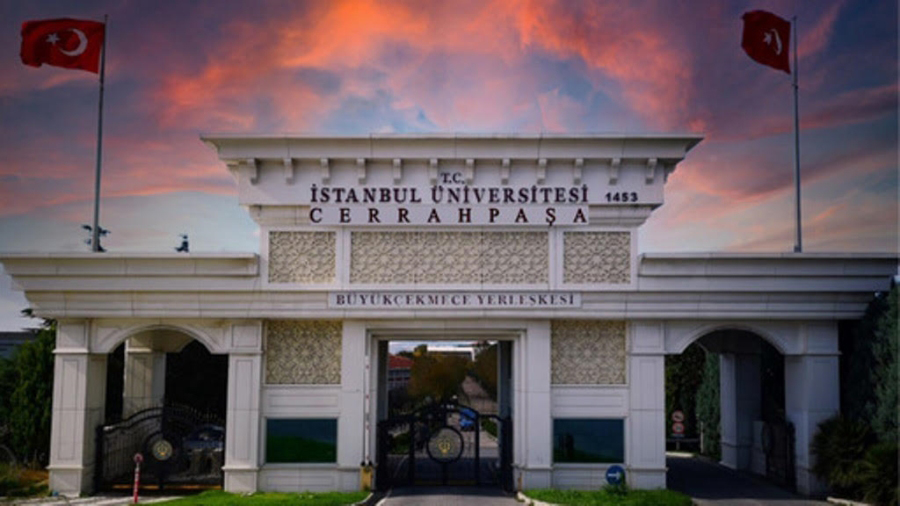
Dr. Mehmet Demircioglu, Cerrahpaşa Medical Faculty, and Istanbul University
Why I Share This Part of My Background?
When patients research a hair transplant surgeon, they usually begin with the visible side of the work.
They look at before and after results, hairline design, donor area management, graft numbers, and online patient reviews of clinics and surgeons from hair transplant forums such as Reddit.
That is natural.
But I believe another question matters as well.
Where did the surgeon study medicine, and what academic foundation shaped his thinking?
That is why I prefer to share this part of my background openly. I do not think a surgeon’s education should remain vague or be reduced to a single line hidden inside a larger biography.
Especially for international patients, names such as Cerrahpaşa Medical Faculty or Istanbul University may not mean much at first, so I think it is better to explain them properly.
Cerrahpaşa Medical Faculty and My Medical Degree
I received my medical degree from Cerrahpaşa Medical Faculty in 2011, when the faculty was part of Istanbul University.
For anyone familiar with Turkish medical education, Cerrahpaşa is not an ordinary name. It has long been regarded as one of the most respected and selective medical faculties in the country.
Every year, roughly two and a half million students sit for Turkey’s nationwide university entrance examination, yet only a very small fraction can gain admission to a highly selective medical faculty. To give one concrete example, in 2025, there were 2,560,649 exam candidates, while the medicine program at Cerrahpaşa Medical Faculty was listed with just 65 general-quota seats. That gives some idea of how narrow the gate really is.
For me, mentioning Cerrahpaşa is not a decorative detail. It says something real about the academic path that began my medical training.
There is also an institutional point that should be stated clearly. I graduated from the Istanbul University period. Today, Cerrahpaşa Medical Faculty continues as part of Istanbul University-Cerrahpaşa, which was established in 2018 during the reorganization of Istanbul University’s faculties and units.
A Medical Tradition with Real Historical Weight
I also think the medical tradition at Istanbul University cannot be properly understood without remembering an important historical period.
In the 1930s, after the rise of Hitler’s regime in Germany, many Jewish professors and other persecuted academics were expelled from German universities. Some of them came to Turkey during the university reform era, and Istanbul University benefited greatly from their presence. Their contribution was not symbolic. They helped modernize teaching, strengthen academic standards, and deepen the university’s scientific culture.
In my view, this was one of the developments that significantly enhanced the quality of medical education at Istanbul University in that era.
Cerrahpaşa later developed its own distinct identity within that broader tradition. I mention this history because institutions are shaped not only by buildings or titles, but also by standards, habits of thought, and scientific discipline built over generations.
What My Medical Education Shaped in Me?
A medical school gives more than a diploma. At least in my view, it should shape the way a doctor approaches responsibility.
My years in medical education taught me to think clinically before thinking cosmetically. They taught me to respect anatomy, to understand the limits of tissue, to pay attention to healing, to evaluate risk before intervention, and to remember that every procedure has consequences beyond the immediate result.
That way of thinking matters greatly in hair transplantation.
A patient may come asking for the lowest hairline possible, the highest graft number possible, or the fastest visible transformation possible. But a surgeon should not think only in terms of what can be done in one day. He should consider donor preservation, scalp characteristics, future hair loss, healing capacity, medication history, and how today’s decision may look like years later.
That kind of restraint is not separate from medical education. It grows directly out of it.
And this is exactly where the difference between clinics begins to show.
Why a Surgeon-Led Approach Matters in Hair Transplantation?
Today, many patients compare clinics mainly through social media images, package prices, and short videos. But those things do not always show the most important difference.
One of the biggest differences in this field is the difference between a surgeon-led approach and a technician-based commercial system, also known as hair mill clinics.
In a proper surgeon-led clinic, the doctor does not simply appear briefly at the beginning and then disappear. The surgeon evaluates whether the patient is suitable, whether the plan is safe, whether the donor can tolerate the extraction, whether the scalp shows anything unusual, whether the expectations are realistic, and whether the long-term trade-offs are acceptable.
Hair transplantation is not only about extracting follicles and placing them into empty areas. It is also about judgment.
That is one reason I believe medical background matters so much. A surgeon should be trained not only to perform, but also to evaluate, question, and sometimes say no.
One of the most important lessons serious medical training gives a doctor is not simply what he can do, but when he should reduce, postpone, modify, or refuse a procedure. In my view, that judgment is one of the clearest differences between responsible surgery and commercial overuse.
A simple example explains this well.
Imagine a prospective patient with advanced hair loss, visible miniaturization even in the donor area, poorly controlled diabetes, and a heavy smoking history. He wants an aggressive surgery with a very low hairline and a very high graft count because he is focused only on the immediate visual change.
A careful and ethical doctor should not look at that case only as a sale. He should ask whether the patient is medically fit for an elective procedure, whether healing may be impaired, whether complication risk is increased, whether the donor area is truly strong enough, and whether the requested design is realistic for the patient’s age, facial structure, and likely future progression of hair loss.
In some cases, the correct decision may be to postpone the surgery until the medical condition is better controlled. In other cases, the correct decision may be to reject the requested plan entirely, or even to refuse surgery altogether.
A commercial hair mill may accept the same patient with far less hesitation. If the system is built mainly on volume, the pressure is to keep the package moving, keep the operating room full, and keep the daily flow uninterrupted. In that environment, medical caution can gradually be replaced by commercial convenience.
That is where the danger begins.
The patient may still undergo surgery, but with higher medical risk, weaker healing, poorer long-term planning, greater donor damage, and a result that may be compromised both medically and aesthetically.
For that reason, I do not think the real question is only whether a clinic can perform a hair transplant. The more important question is whether the person leading that procedure has the training, independence, and ethical discipline to know when surgery should be limited, changed, delayed, or declined.
What Medical School Cannot Teach?
At the same time, patients should understand something equally important.
Medical school, even one of the strongest in a country or one of the most prestigious in the world, including Harvard Medical School, does not automatically give a doctor the aesthetic judgment required for hair transplantation.
A medical degree is essential, but it is not the whole story.
Medical school teaches anatomy, physiology, pathology, wound healing, sterile technique, and disciplined clinical thinking. It teaches responsibility toward the human body. All of that is indispensable.
But it does not fully teach proportion, softness, visual balance, age-appropriate design, or the instinct to stop before a result becomes artificial.
Those things develop later.
They develop through years of observation, experience, honesty about one’s own results, learning from imperfections, and gradually refining one’s sense of what looks natural and what does not. In aesthetic work, that part cannot be replaced by technology, titles, or textbook knowledge.
Hair Transplantation as a Combination of Science and Art
That is why I see hair transplantation as a unique combination of science and art.
The scientific side is obvious. Without anatomy, surgical planning, tissue handling, healing knowledge, and proper medical judgment, there is no solid foundation.
But the artistic side is equally important.
Recreating a lost hairline is not a mechanical act. It changes the face’s frame, the expression, and often how the entire result will be perceived. A technically correct procedure can still produce an unnatural outcome if the hairline is too low, too straight, too sharp, too dense in the wrong places, or disconnected from the patient’s age, facial proportions, hair characteristics, and likely future pattern of hair loss.
This is where aesthetic maturity becomes decisive.
The best results do not come from simply moving the maximum number of follicles. They come from knowing how to distribute grafts with judgment, how to create soft transitions, how to preserve realism, and how to make the result look as if it belongs naturally to that person rather than having been surgically imposed on him.
In my experience, the strongest results appear when scientific knowledge, surgical precision, and artistic judgment work together in balance.
Why This Matters for Patients?
For that reason, I do not think patients should choose a hair transplant surgeon solely by asking whether he is a doctor or uses modern instruments. Those things matter, but they are not enough.
Patients should also ask how the surgeon approaches the case.
Does he understand when not to push the donor area? Does he plan with the future in mind? Does he know that a hairline must suit the face, the age, and the likely progression of hair loss? Does he have the restraint to protect naturalness rather than chase a dramatic but short-sighted result?
In my own case, I see my background in two layers. The first is the medical foundation I received at the Cerrahpaşa Medical Faculty during my time at Istanbul University. The second is the specialized training that came afterward in hair restoration, where science alone was not enough, and aesthetic maturity had to be built carefully over time.
That is why I believe patients deserve more than marketing language. They should know the surgeon’s name, his role, where he studied medicine, and what kind of judgment stands behind his work.
A university name alone does not guarantee quality.
But serious medical education, honest transparency, surgical restraint, and developed aesthetic judgment together form the basis of responsible work in hair transplantation.