Hair Dye Timing for a Healing FUE Scalp
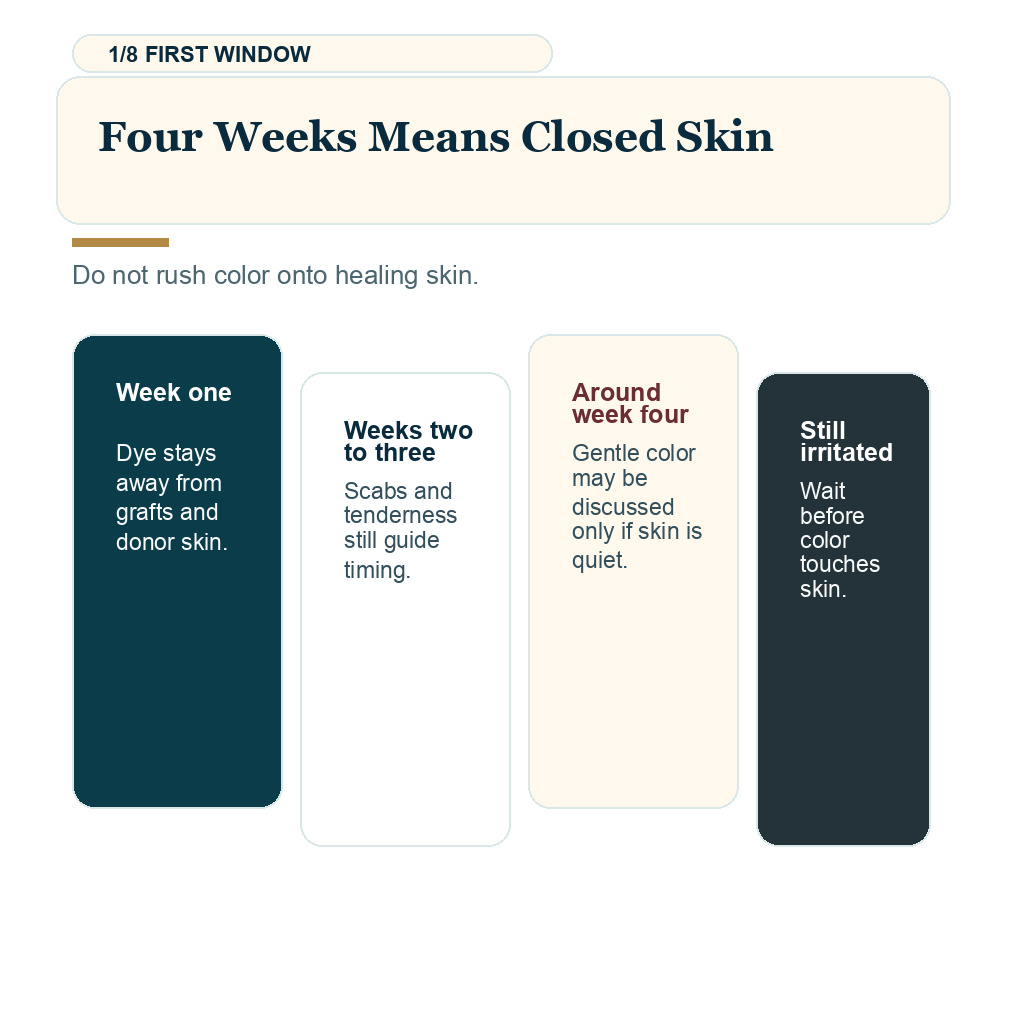
In my routine, I avoid hair dye touching the donor or recipient area during the first 4 weeks after a hair transplant. If the scalp is fully closed, scabs are gone, washing is normal, and there is no significant redness or tenderness, gentle dyeing may be discussed after 4 weeks.
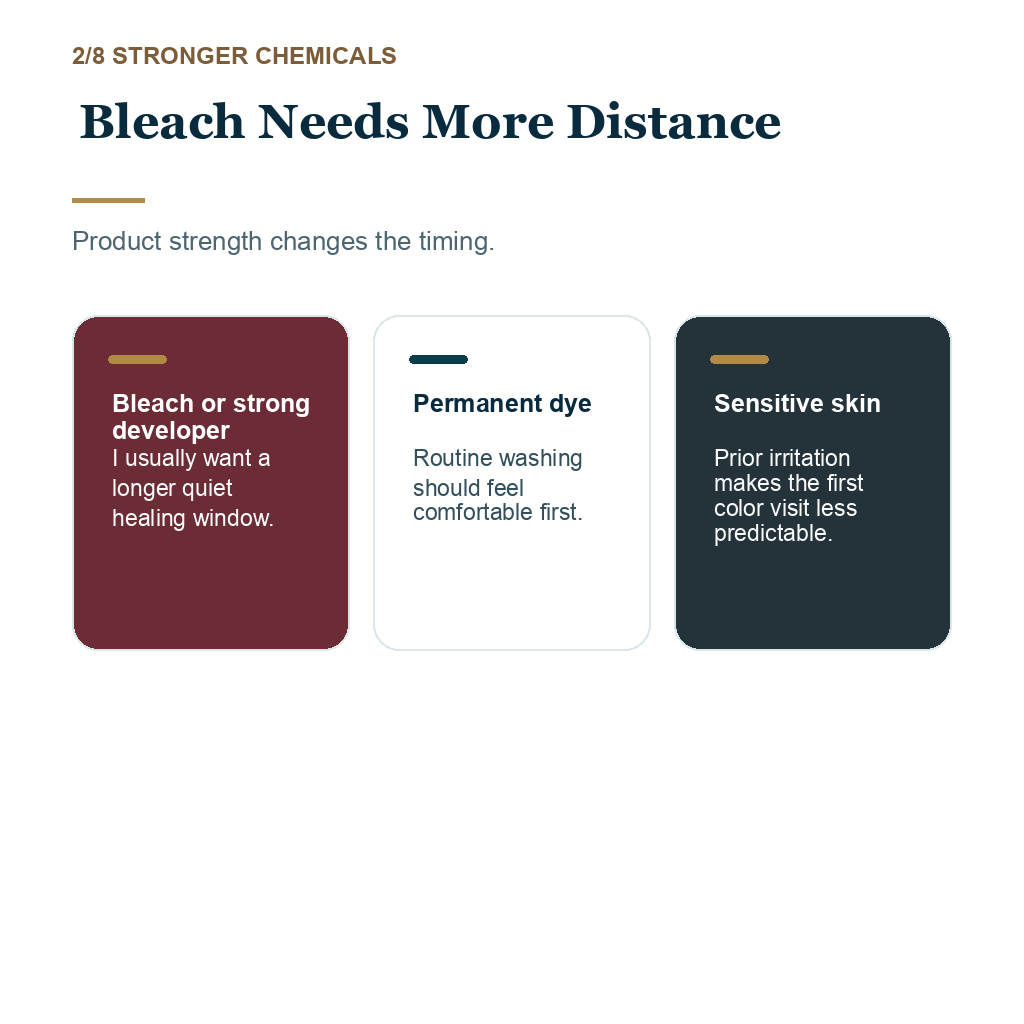
Permanent dye, bleach, strong developer, or sensitive skin usually pushes the timing to at least 6 weeks. A careful color refresh on healed hair shafts is a different decision from bleach or strong developer sitting on a healing scalp. Chemical smoothing after FUE has its own timing issue because product strength, heat, and scalp distance matter together. If the service is specifically a relaxer, I would first check whether the scalp is calm before and after FUE. See chemical relaxers and hair transplant timing for that specific timing question.
This timing is not only about graft security. Even when grafts are secure, the skin may still be dry, pink, reactive, or easy to irritate. Hair dye can trigger itching, burning, contact dermatitis, and redness that can obscure whether recovery is calm.
Covering gray hair, bleaching roots, and using a color shampoo are separate decisions because only some of them place chemicals on healing skin.
Patients usually ask because they want to look normal again, cover gray hair, return to work without a visible color mismatch, or prepare for an event. But cosmetic timing should not create a medical problem. It is easier to wait a little longer than to manage a scalp irritated by dye. If you are still before surgery, hair dye before hair transplant explains the safer timing question from the pre-op side.
When color mismatch is only a short event problem, styling or waiting is usually safer than rushing dye. Dye should solve a real healed scalp need, not a temporary social worry.
I wait at least 4 weeks before hair dye
In the first weeks, the scalp needs undisturbed healing. The skin is closing, scabs are separating, redness is settling, and the patient is learning how to wash without rubbing. Hair dye adds chemicals at the same time the scalp is trying to recover from surgery.
If dye is used too early, the patient may develop burning, itching, dryness, scaling, or redness. Those symptoms are unpleasant on normal skin. On a recent recipient area, they are also emotionally stressful because the patient may think the grafts are in danger.
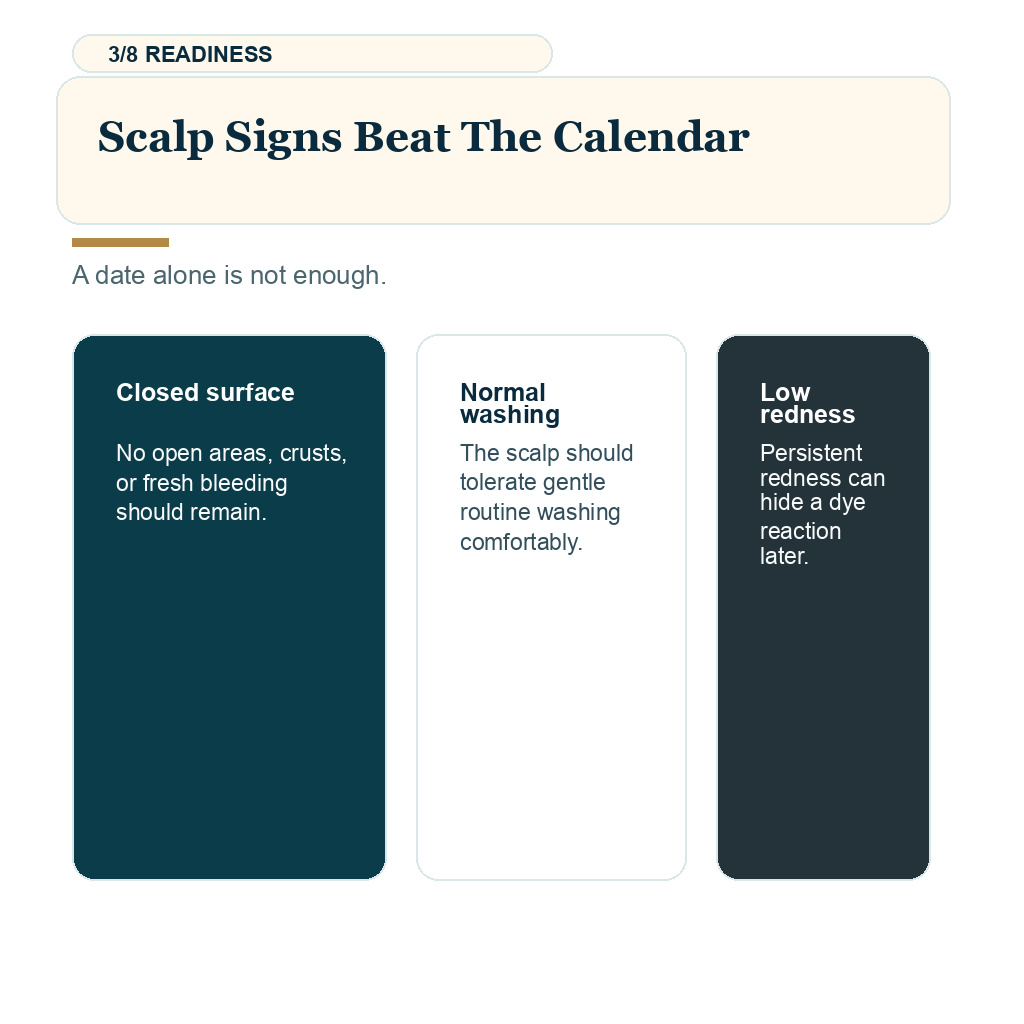
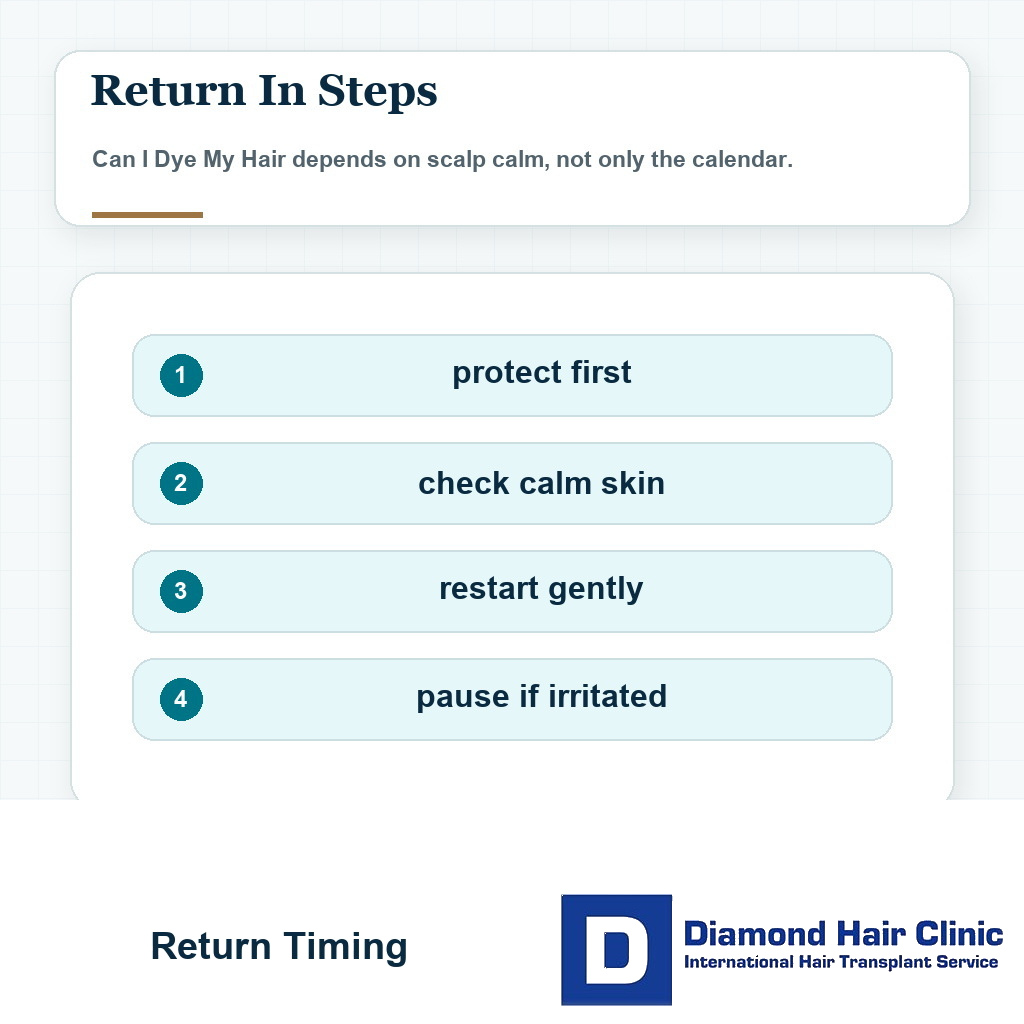
By 4 weeks, many patients have a more settled scalp, but not all. I do not use the calendar alone. Four weeks is the earliest discussion point, not permission for everyone.
Stronger dye or bleach usually needs 6 weeks
A root color refresh kept mostly on the hair shaft is not the same as bleach or repeated color correction on the scalp. Permanent dye, bleach, strong developer, and repeated color correction are more irritating than a very gentle color refresh. They can dry the scalp, sting, trigger dermatitis, or make the patient scratch.
For these stronger chemical processes, wait at least 6 weeks, and sometimes longer if the scalp is still red, itchy, flaky, or sensitive. Bleach deserves special caution because it can be harsh even on a scalp that never had surgery.
I am not making patients wait for no reason. I am trying to avoid turning a normal recovery into a reactive scalp problem.
Healing signs before dye touches the scalp
The scalp should be closed, clean, comfortable, and free of scabs before dye touches it. There should be no open areas, significant redness, burning, infection, active scratching, or painful bumps. If the skin reacts easily, I wait longer.
I also focus on the donor area. Some patients focus only on the front and forget that dye can touch the back and sides too. If FUE extraction points are still sensitive, dye should not be rushed.
Normal washing should already feel comfortable. If the scalp still feels too delicate to wash properly, it is too early to add dye. The ability to wash hair normally after a hair transplant returns gradually, not suddenly. Hair dryer heat after a hair transplant returns in stages for the same reason.
Hair dye and transplanted graft safety
Later, when the scalp is healed and the hair is growing, careful dyeing usually does not destroy transplanted grafts. The graft is not fragile forever. The early risk is mainly the skin environment, not the idea that hair color itself removes grafts.
Still, harsh products can irritate the scalp and damage hair shafts. A dry and inflamed scalp is not a good environment during recovery. Gentle products, professional application, and avoiding strong chemical procedures are safer until the patient is clearly out of the early healing phase.
This distinction matters. I do not tell patients that dye will ruin a mature transplant. Healing skin should not be irritated too early.
Dye can confuse recovery signs
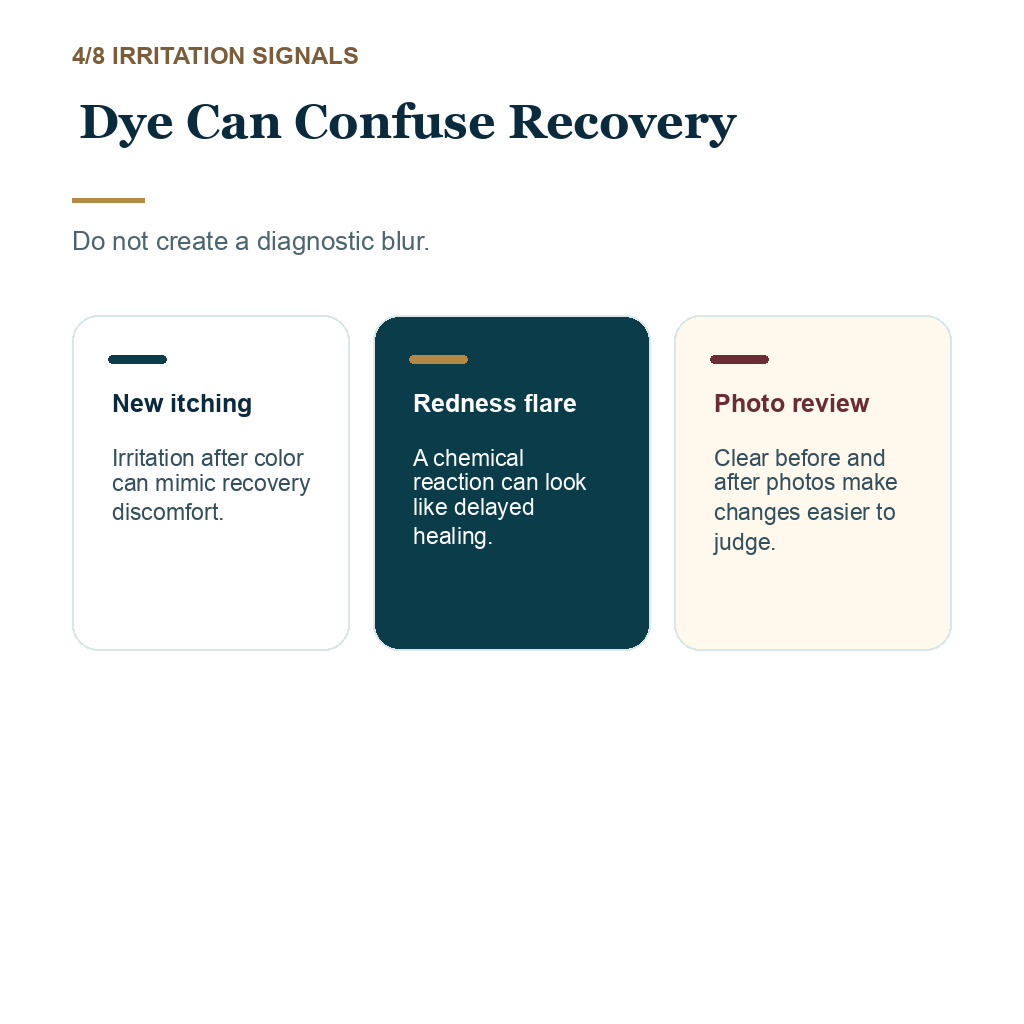
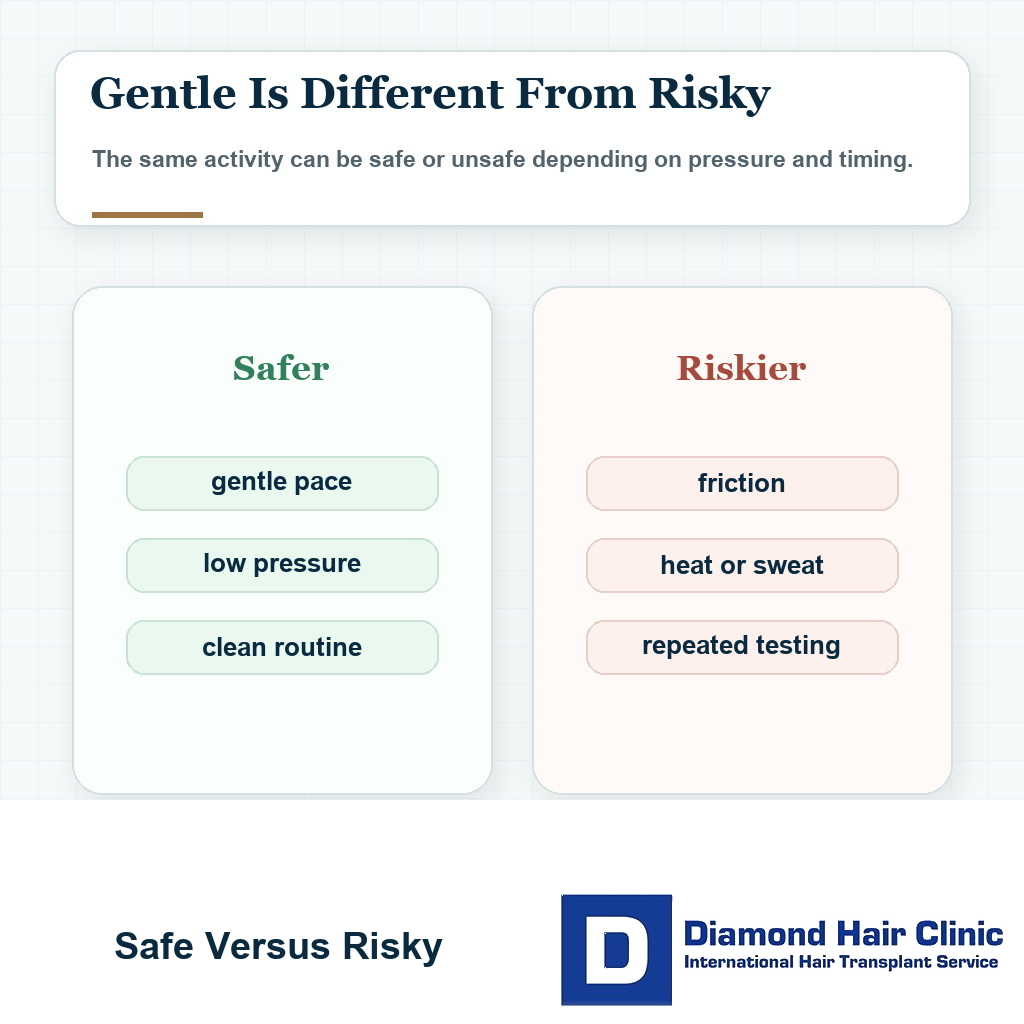
Dye can cause redness, dryness, itching, burning, flaking, and swelling even in people who never had surgery. After a hair transplant, those symptoms appear in the same area where grafts were placed, so the patient may panic.
If irritation appears after dye, it becomes harder to know whether the scalp is reacting to the product, healing, seborrheic dermatitis, folliculitis, washing mistakes, or allergy. A quiet baseline is safer before adding chemicals.
The direction of redness, scabs, and pimples after a hair transplant matters. Dye can make that direction harder to read.
Patients who should wait longer than 6 weeks
Patients with sensitive skin, seborrheic dermatitis, psoriasis, folliculitis, slow healing, significant redness, active itching, or a history of dye allergy should wait longer and contact the clinic before color treatment. A reaction in these patients can become more than a cosmetic inconvenience.
If a patient is still struggling with itching after a hair transplant, that needs to settle first. Scratching and irritation deserve respect during recovery.
If the scalp has active dandruff, oily scale, or dermatitis, the answer may not be dye. It may be scalp control first. When seborrheic dermatitis and hair transplant planning overlap, inflammation should be quiet before cosmetic products return.
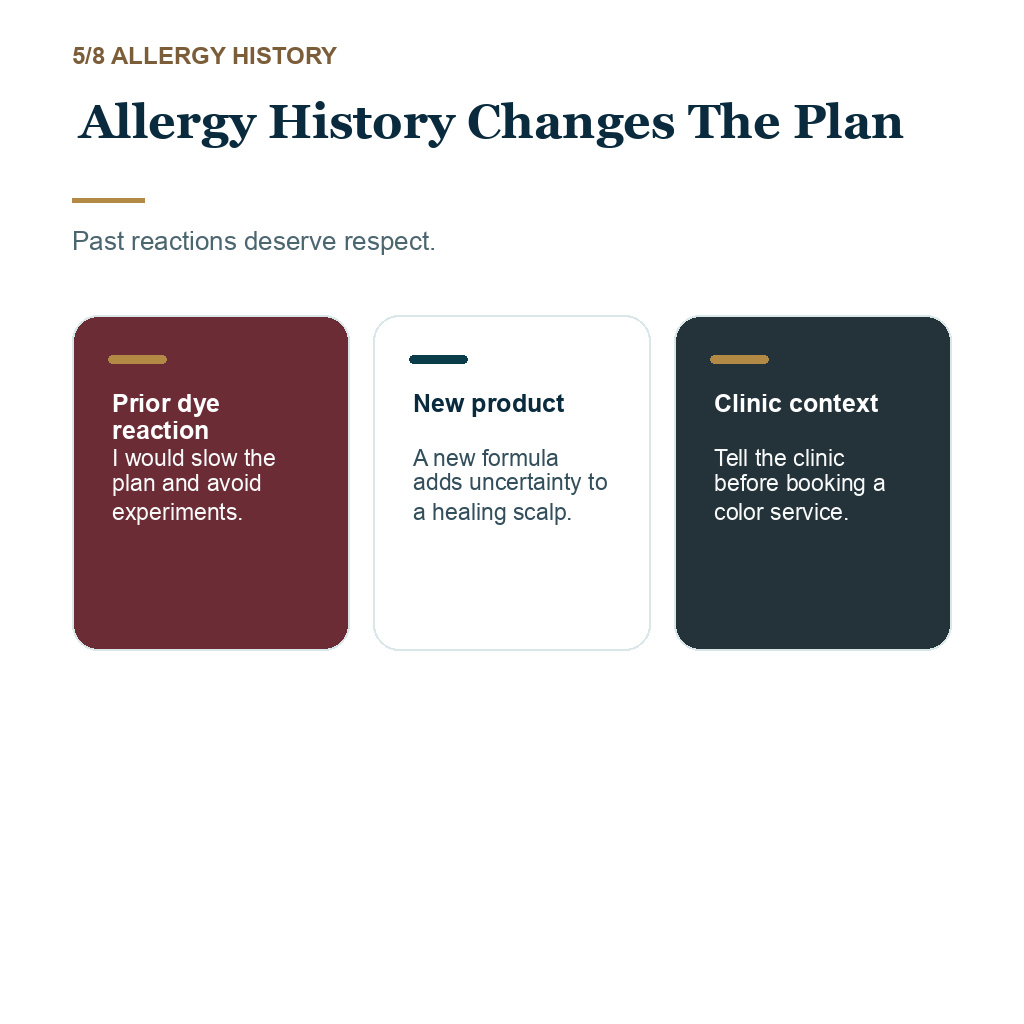
Allergy history deserves careful attention
Hair dye reactions can be dramatic in sensitive patients, especially with permanent darker dyes that contain PPD and other irritating hair product ingredients. A product sold as free of PPD can still irritate some scalps, so the label does not replace a cautious plan. If someone has had itching, swelling, rash, burning, eyelid swelling, facial swelling, or scalp pain after dye in the past, that history needs review before dye touches the scalp again.
Graft survival is only one part of the decision. Patient safety and comfort matter too. A transplant recovery is already demanding enough without adding a preventable skin reaction.
Patch testing can be useful when there is doubt, but it answers only part of the question. It may reduce allergy uncertainty. It does not make early dyeing wise while the transplanted scalp skin is still healing.
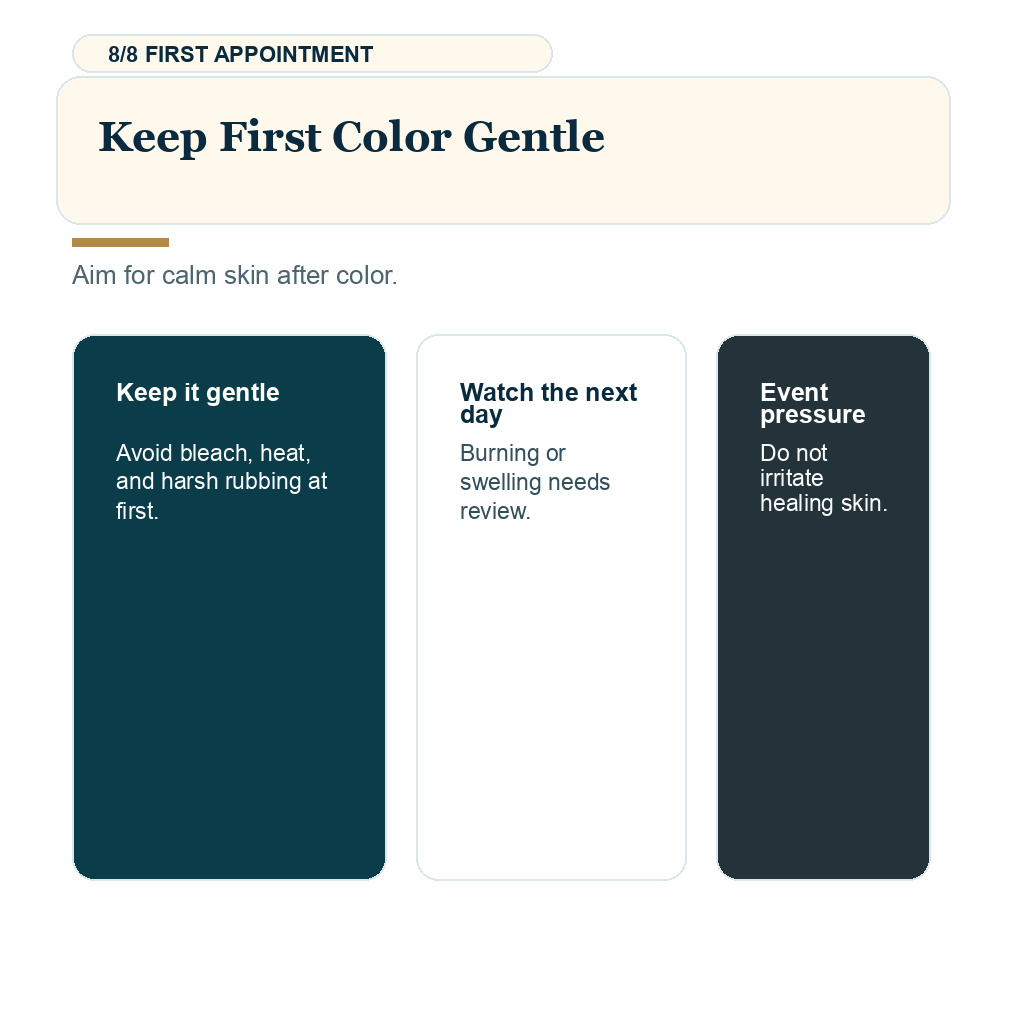
Reducing risk at the first dye appointment
When dye returns, keep the first session cautious. Choose a professional who understands that the scalp has recently been through surgery. Avoid harsh rubbing, scratching with a comb, strong heat, tight foils against the recipient area, and leaving product on longer than needed.
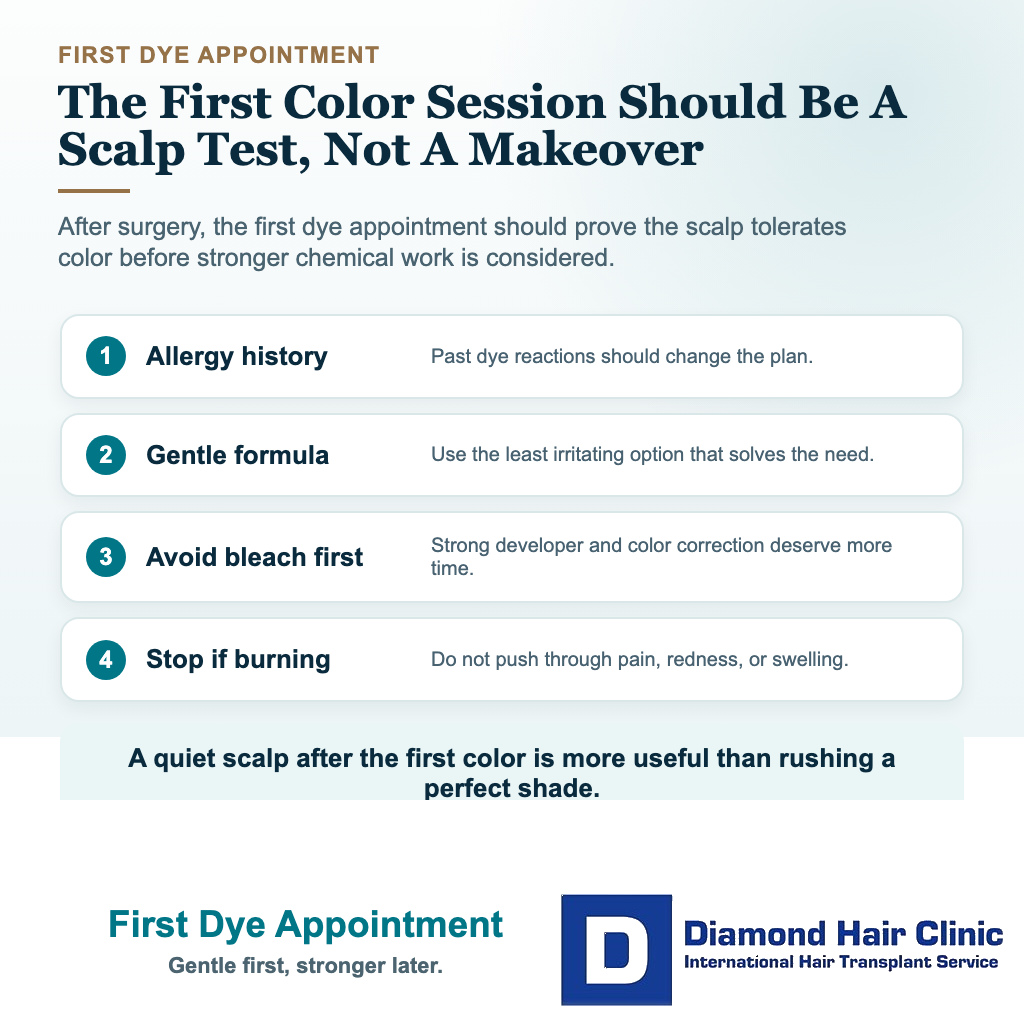
Ask the hairdresser to work as if the scalp is still medically relevant, not just cosmetically ready. Keeping color mainly on the hair shafts, avoiding unnecessary scalp contact, and using the shortest sensible processing time are more important than making the appointment complicated.
Keep the first session simple. Do not combine dye, bleach, toner, keratin treatment, scalp scrub, and styling heat in one appointment. If the scalp reacts, it should be easy to understand what caused the reaction.
If the purpose is only to blend gray hair after a transplant, the patient may not need aggressive full scalp color. Sometimes a softer approach is enough until the transplant area has fully matured.
Dyeing only the donor area earlier
Some patients want to dye only the back and sides because the donor area looks gray or uneven. I still stay cautious. Dye can touch extraction points, sensitive skin, and the surrounding scalp, especially if the product is spread quickly in a salon.
If the donor area is fully healed, not tender, and not scabbing, it may tolerate dye earlier than the recipient area in some patients. Still, waiting at least 4 weeks is safer, and longer if there is redness, itching, bumps, or sensitivity.
The donor area is still part of the surgery, even though it is at the back of the head. Dye does not use donor reserve, but irritated donor skin can make recovery unnecessarily uncomfortable and the skin picture less clear. The skin should be settled before chemical irritation is added.
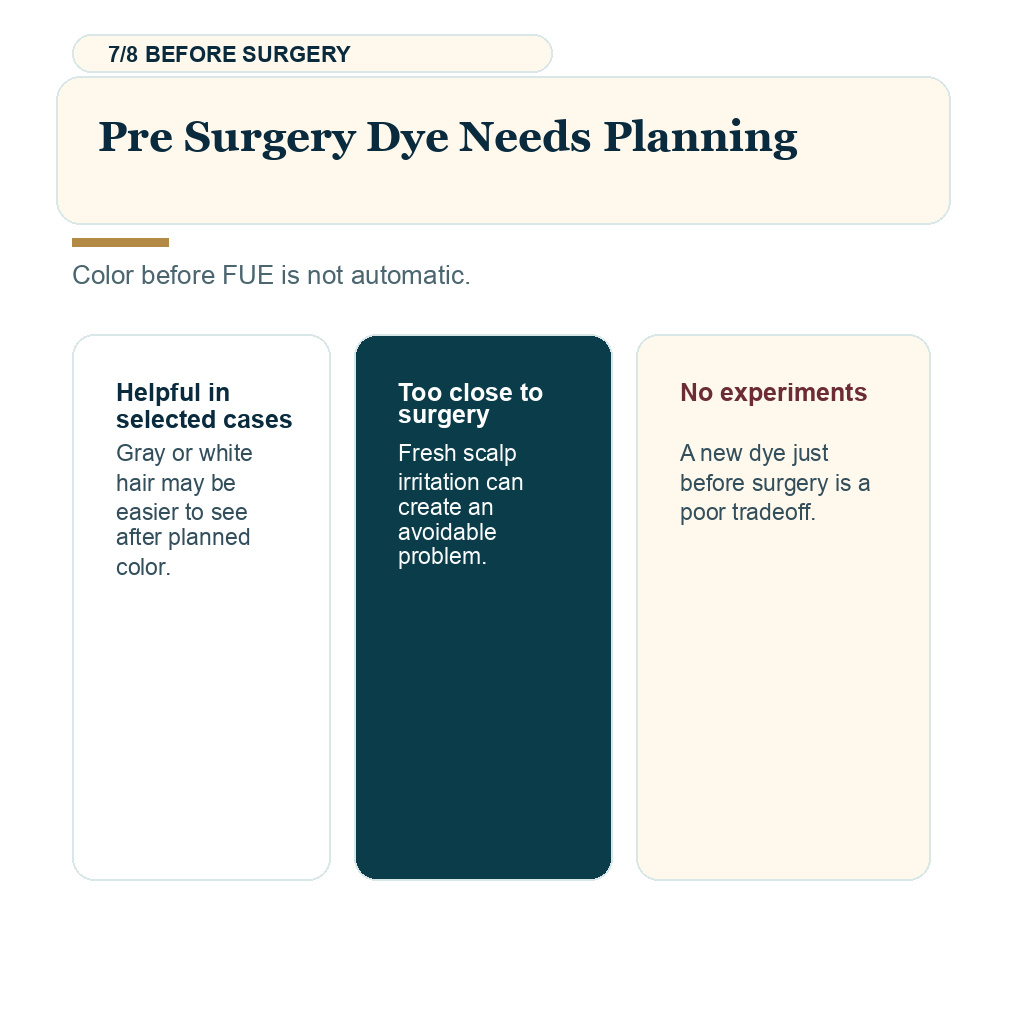
Use the 8 hair dye timing slides below to separate the first 4 weeks, stronger dye or bleach, scalp readiness, irritation signals, allergy history, donor area timing, dye before surgery, and the first color appointment after FUE. Swipe the carousel, use the arrows one step at a time, or choose a number below the image to jump to that point.