Temple Point Restoration With Hair Transplant Surgery
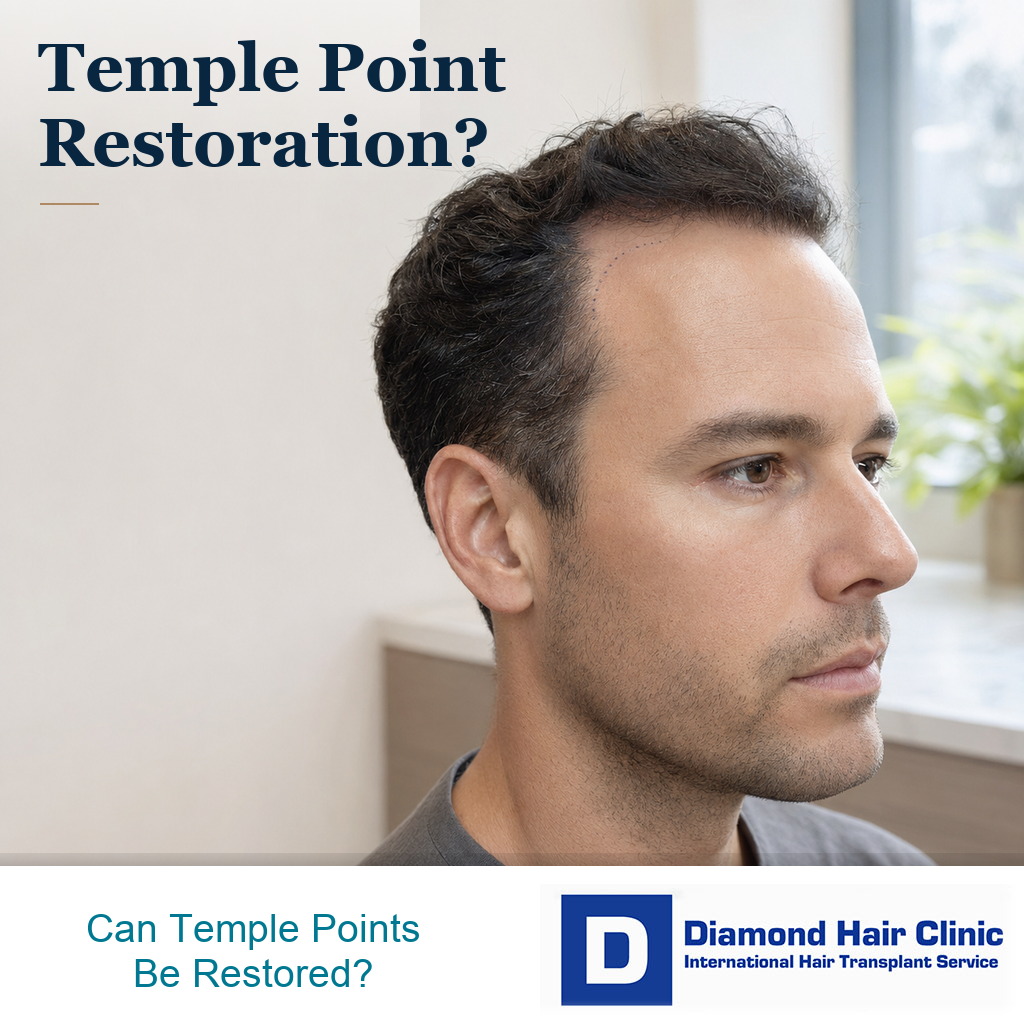
temple points can be restored with a hair transplant, but this area needs more caution than many patients expect. It is a small area, but it sits directly beside the face. If the design is too sharp, if the grafts are too thick, or if the angle is wrong, the result can look more noticeable than the original recession.
A central widow’s peak can make the temple corners look more exposed, but that does not mean the temple points should automatically be lowered. I still judge the corner, the point, and the donor cost separately.
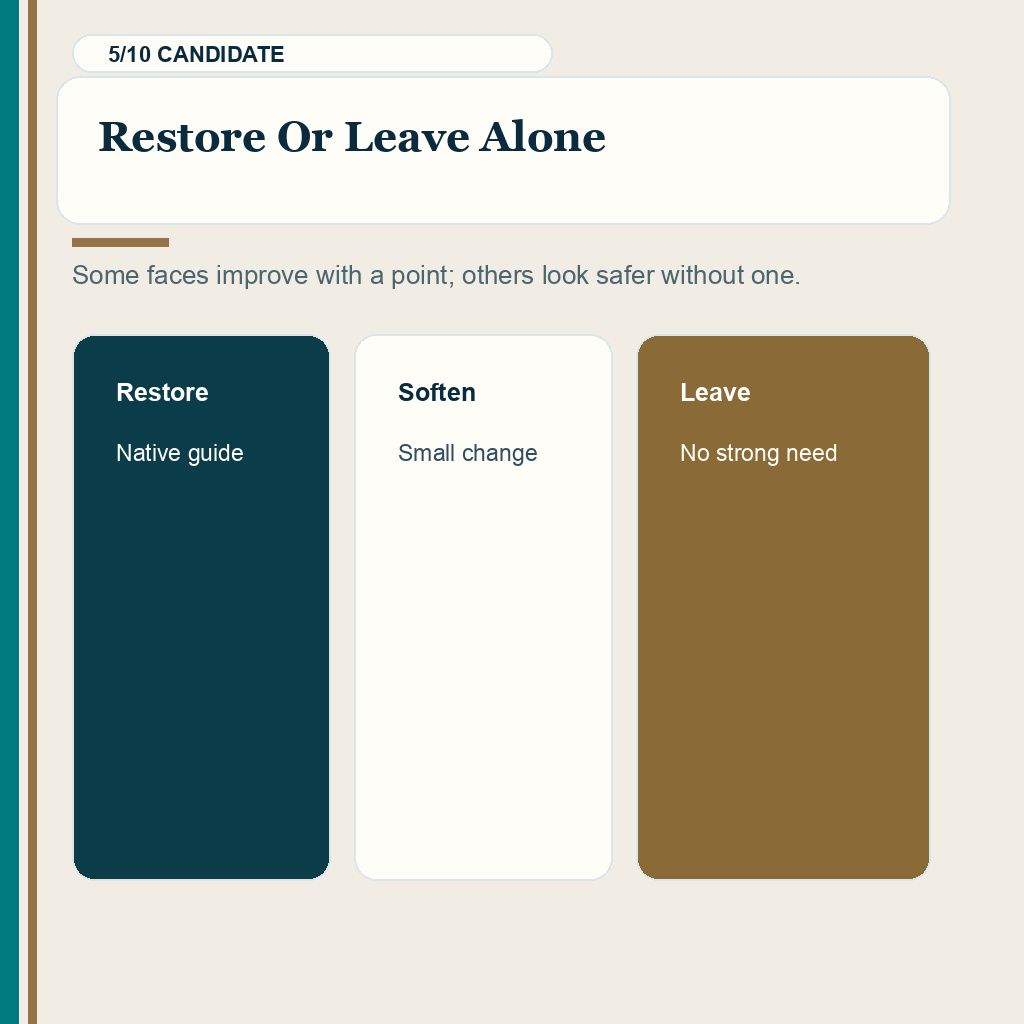
Before restoring temple points, I examine the remaining side hair, donor quality, hair caliber, age, future hair loss risk, and the shape the patient is asking for. If there is still some native temple structure, careful reinforcement may help the face look more balanced. If the area is completely gone, the donor hair is coarse, or the requested outline is too low and sharp, leaving the temple points alone may be the better surgical decision.
The usual concern is an open side frame that makes the forehead look wider, especially after the front hairline has been restored. But temple point restoration should not be done just to make the outline stronger. It should only be done when it helps the whole face look natural.
A small improvement that blends quietly is usually stronger than a dramatic point that attracts attention. The aim is not to create a side frame that looks newly built. The purpose is a face that looks more balanced without creating a new problem.
One angle can make temple point work look acceptable, while another can show a side frame that is too sharp. I judge it with the eyebrows, cheek width, remaining side hair, donor hair caliber, and future recession risk in the same conversation.
Ask to see the temple point with the head turned slightly, not only in a front selfie. The side frame should soften the face, not look like a separate outline beside it.
First decision about the side frame
Temple point restoration is possible, but it is not always the right move. The decision is not whether grafts can be placed there. The decision is whether those grafts will still look natural beside the face after they grow.
If the front hairline is being restored, the side frame has to be planned together with it. The profile, parietal area, density above the ear, existing side hair direction, and future hair loss risk all matter. A temple point should not look like a separate triangle attached to the face. It has to belong to the rest of the natural hairline design. That same face frame judgment matters when a patient feels the transplanted hairline is too high, because the front and temples need to be read together.
Some patients call this area the temple point. Some call it the temporal point or temple peak. The wording is less important than the planning. The detail that matters is whether this small side frame can be improved without spending donor grafts in a way the patient may regret later.
A small, soft improvement is often better than a dramatic point. The patient may notice the sharper outline in one photo, but other people notice whether the hair sits naturally on the face.
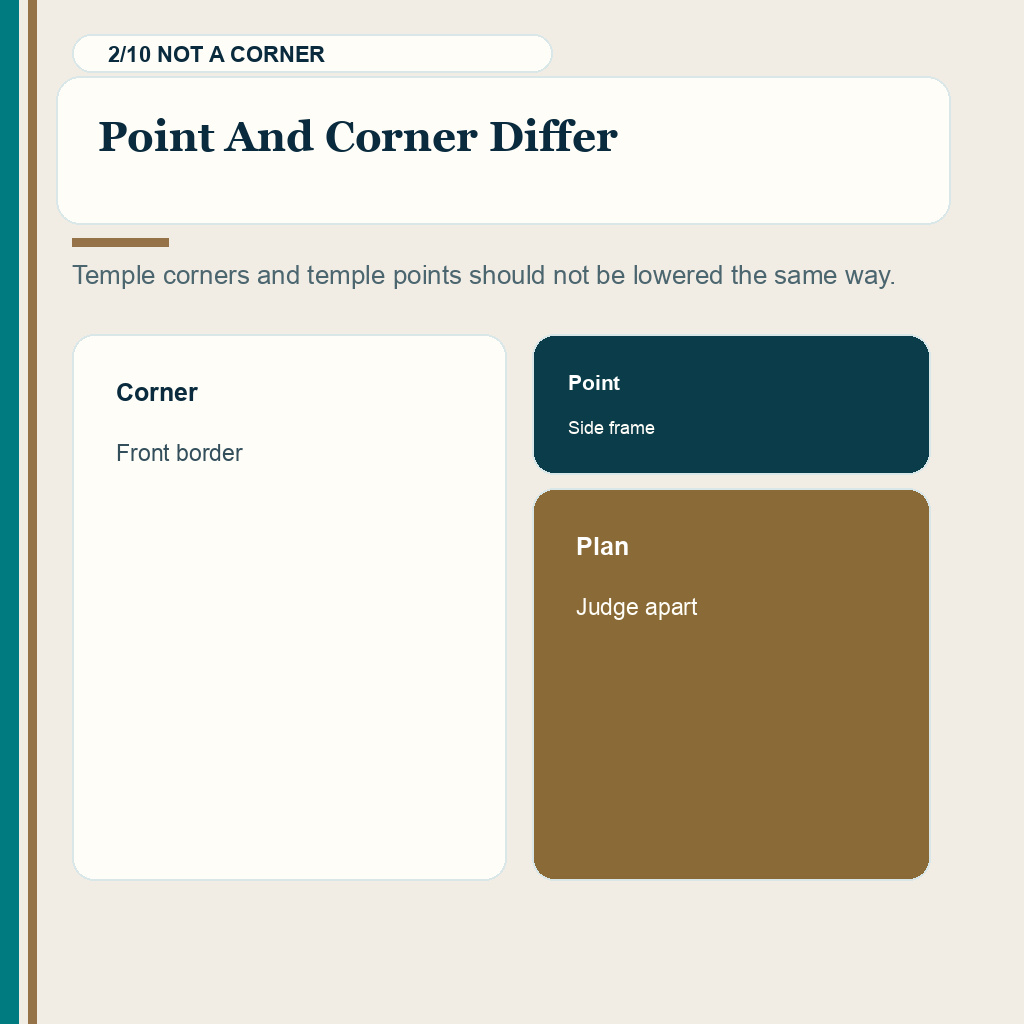
Temple points and temple corners are different
Many patients use the word temples for several different areas. The temple corner is usually the front corner of the hairline where recession creates an M shaped pattern. The temple point is different. It is the side projection that comes forward from the side hair and helps connect the forehead, cheek, and sideburn area. For the front corners, the mature hairline or receding hairline distinction should be made before temple point work is added to the plan.
This difference matters because the surgical logic is different. A front corner can often be softened as part of ordinary hairline restoration. A temple point sits on the side of the face, where the hair must lie flatter and follow a different direction. If these two areas are planned as if they are the same, the result can look heavy, wide, or artificial.
Assessment should not stop at the frontal recession. The whole facial frame matters. Sometimes the frontal corners need work, but the temple points should be left alone. Sometimes a small temple point adjustment is exactly what makes the restored hairline look connected.
The correct answer depends on the face, the donor, the hair type, the remaining side hair, and the future hair loss pattern. Temple point planning should never be reduced to a graft number in the temples.

The side frame is less forgiving than the front hairline
Temple points sit directly beside the face. The eye catches them quickly because they affect the outline between the forehead, cheek, and side hair. A small error in angle, thickness, or shape can become visible every time the patient turns his head.
The front hairline has some room for softness and irregularity. The temple point has less room. Native temple hairs are often finer, flatter, and angled close to the skin. If coarse donor grafts are placed too upright, the area can look wiry even when the grafts grow well.
Temple point work has to be judged by more than survival. A patient may think the question is only whether the grafts will grow. But growth is not enough. The direction, caliber, spacing, and outline all decide whether the result looks natural.
A growing but unnatural temple point can be harder to accept than a slightly weak temple that still looks normal.

This small area can improve selected results
Temple point work can help when the side frame is weak enough to disturb facial balance. This is clearest when the front hairline is being restored but the sides remain too open. When that happens, the new hairline can look a little separate from the rest of the face.
The strongest cases usually still have some native temple structure. That remaining hair gives a guide for angle, direction, density, and shape. It also helps the transplanted hairs blend instead of standing alone.
This is very different from trying to recreate a strong side frame from nothing. When there is no guide, the risk of making the area too sharp, too low, or too heavy becomes higher.
This is part of what makes a natural hair transplant result. Graft growth alone is not enough. The new hair needs to sit quietly enough that it does not draw attention to itself.
Restoring the side frame during the same surgery
Sometimes yes, but only if it is planned from the beginning. Temple point work should not be added casually after the main graft number has already been decided. It changes the donor calculation, the graft selection, the incision angles, and the way the front hairline is judged from the side.
If the front hairline needs most of the donor capacity, the main frame usually comes first. A weak frontal result with newly created temple points is not balanced. In a FUE hair transplant, even a small visible area still spends grafts from a limited donor supply.
When the side frame is included, the patient needs to understand exactly why it is being treated. This decision belongs in the plan before surgery, not as an add on because the area looks tempting on the day of the procedure.
Temple point work should support the main result. It should not steal grafts from the frontal hairline, mid scalp, or future needs only to make the outline look sharper for the first year.

Photos needed before temple point decisions
For temple point planning, front photos alone are not enough. The face should be assessed from the front, both sides, both oblique angles, and preferably with the hair pulled back gently. If the patient wears short sides or a fade, that haircut also needs to be seen because the temple point becomes much less forgiving when the side hair is very short.

Old photographs can also be useful, but I do not copy them blindly. A photo from ten years ago may show the patient’s natural direction and facial frame, but the current donor supply, age, hair loss pattern, and future risk still decide what is safe today.
Both sides do not need to be mathematically identical. Natural temple points are often slightly asymmetric. The detail that matters is whether the asymmetry looks normal on the face, not whether every millimeter matches a drawing.
One attractive front view is not enough for a temple point decision. The side frame belongs to the whole face. It has to be judged from the angles where people actually see it in daily life.
During photo assessment, I am not asking only whether grafts can be added. The case depends on whether those grafts can sit there quietly without looking like transplanted hair.
Leaving temple points alone can be wiser
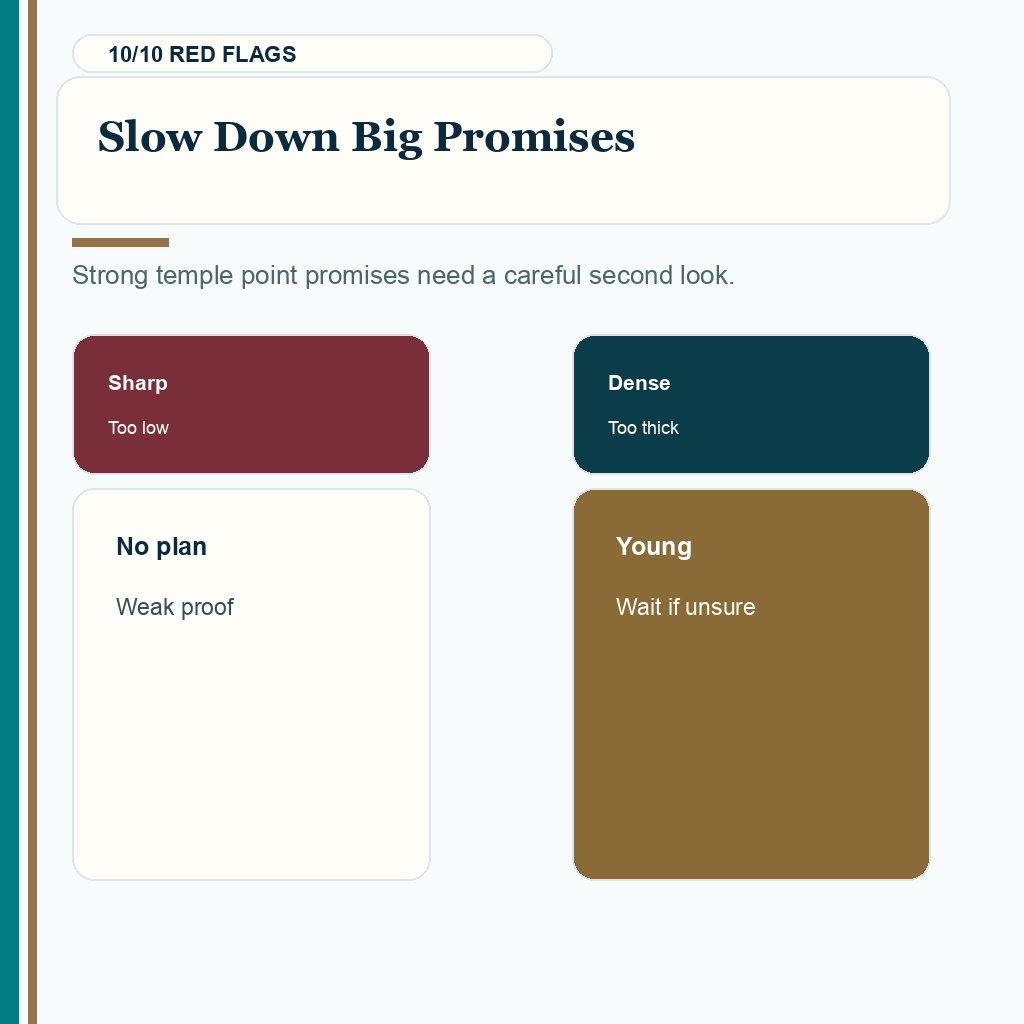
It is wiser to leave the temple points alone when the request is driven mainly by perfectionism. If a patient already has a balanced facial frame, adding surgery to a tiny visible area can create a new problem that did not exist before.
Extra caution is needed when the patient is very young, the hair loss pattern is still moving, the donor area is limited, or the side hair is much finer than the available donor hair. A very low, sharp, youthful outline can also be risky when the rest of the scalp suggests future recession.
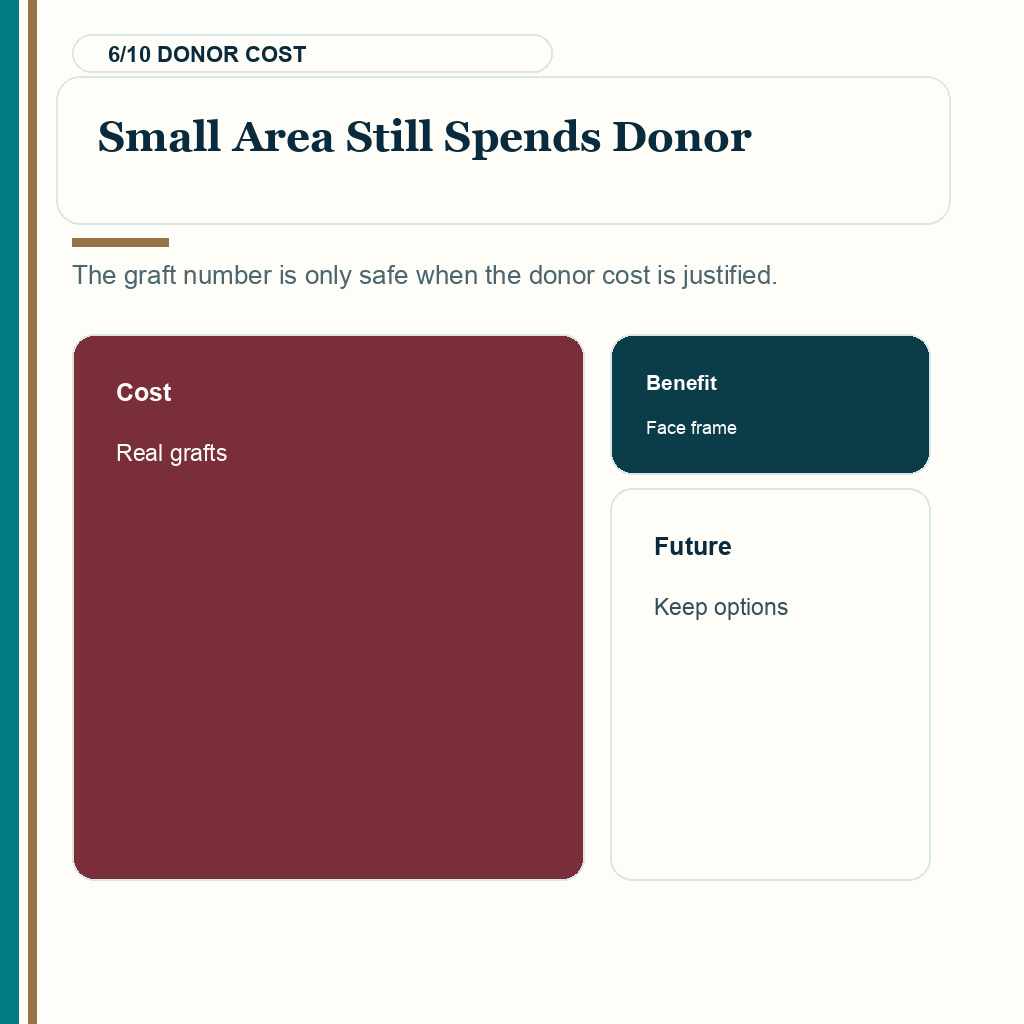
The donor area is not an unlimited supply. It is a limited lifetime resource. Even a small number of grafts matters when the patient may need future work on the frontal zone, mid scalp, or crown.
An area that should not be operated on is not a missed opportunity. Sometimes it is a protected future result. Saying no to a small request can be the correct surgical decision if the concern is greater than the benefit.
Good candidates for temple point restoration
A good candidate is usually not the patient asking for the sharpest temple point. It is the patient whose side frame is weak enough to disturb facial balance, but stable enough to be improved safely.
When there is some remaining native temple structure, suitable fine donor hair, a realistic age appropriate request, and a frontal hairline plan that already makes sense, temple point reinforcement can be considered. In these cases, the aim is not to create a new identity. It is to reconnect the front hairline with the side of the face.
The decision becomes more conservative when the patient is very young, the hair loss is still moving quickly, the donor area is limited, the available donor hair is coarse, or the requested shape is very low and sharp. In those cases, I am not asking only whether grafts can grow. The result also has to make sense five or ten years later.
This is closely related to the larger question of whether someone is a good candidate for a hair transplant. A patient may be suitable for frontal restoration but not suitable for aggressive temple point work. These are not always the same decision.
Hair direction matters strongly in this area
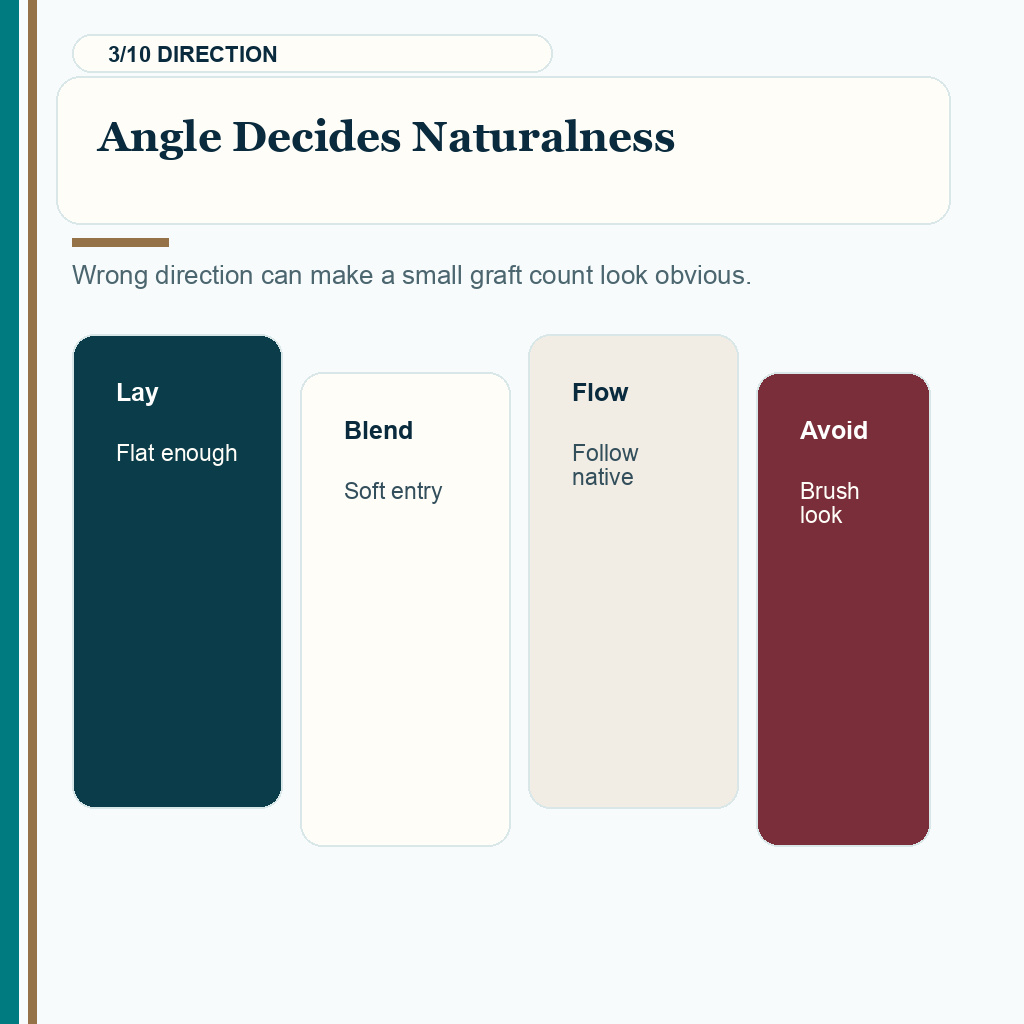
Hair direction matters because temple hair does not grow like the central frontal hairline. It lies flatter, changes direction subtly, and follows the contour of the side of the face. If the recipient area incisions are too upright or too forward, the hair can point away from the face in an unnatural way.
This work should not be treated as a technician led detail. The incision angle is not mechanical. It is a design decision. The person creating the recipient area has to understand how the area will look when the hair is short, wet, brushed back, or seen from the side.
Patients who already have wrong hair direction after a hair transplant often learn this lesson painfully. Direction is easier to protect in the first surgery than to repair later. Along this side border, that truth is even stronger.
Here, Sapphire FUE planning is meaningful only when the incision judgment is right. The blade is a tool. Depth, angle, direction, density, and distribution must all match the area being treated.
If the angle is wrong, simply adding more grafts can make the problem more visible. The answer is not to fill every empty space. It is to place a small number of suitable grafts in the right direction, with enough softness to avoid a hard edge.
Temple point work can affect short haircuts and fades
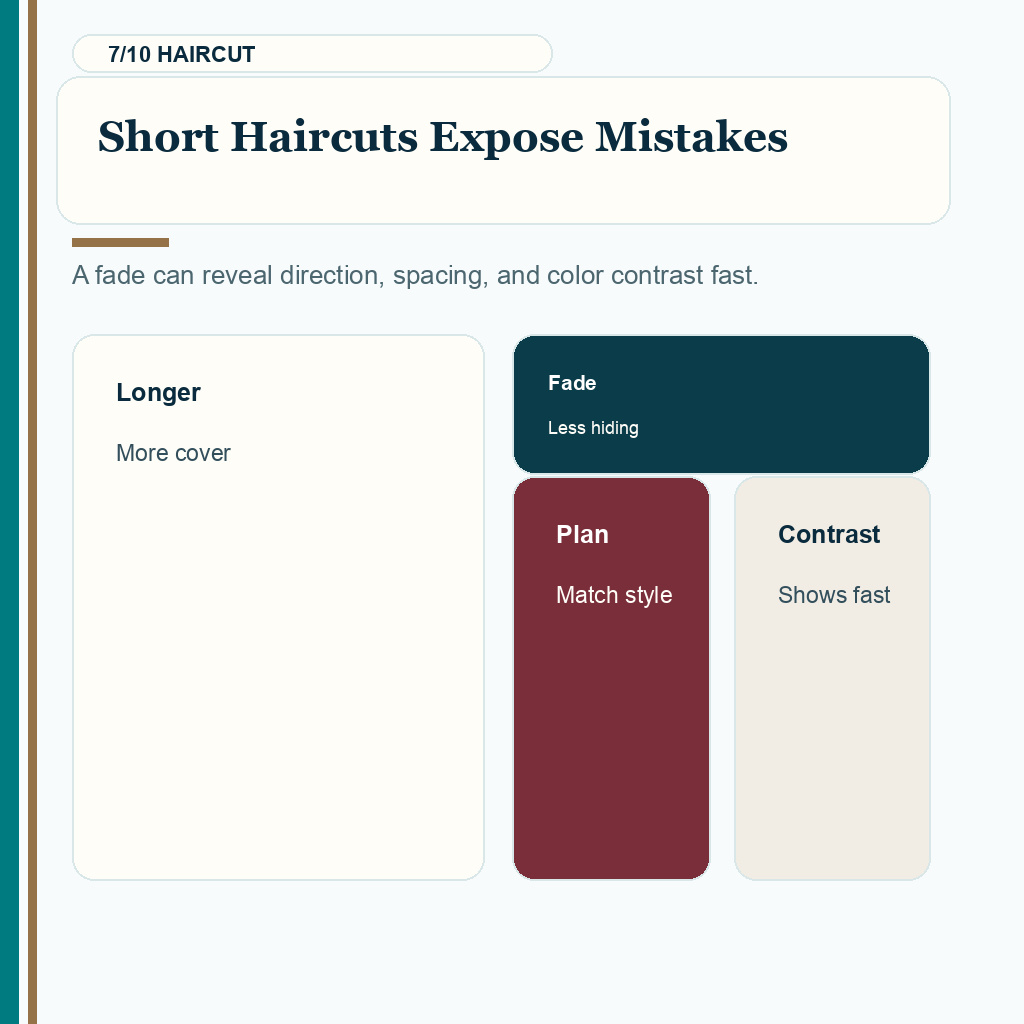
These are the details patients often think about only after surgery. If the transplanted hair is thicker than the native temple hair, or if it grows in a slightly different direction, a very short fade can reveal the mismatch more easily.
A patient who keeps the side hair slightly longer may hide a small difference without difficulty. A patient who prefers a skin fade has much less forgiveness. The temple point is exposed, and even a small problem in angle or caliber can become visible.
Temple point work can still be possible for patients who like short haircuts. The design needs to be softer, graft selection more careful, and the patient needs to know that this area may need more grooming than the central hairline.
A softer transition may be better than building a strong point, especially when the plan still has to work with realistic hairstyles.
Women and feminizing hairline work need a different review
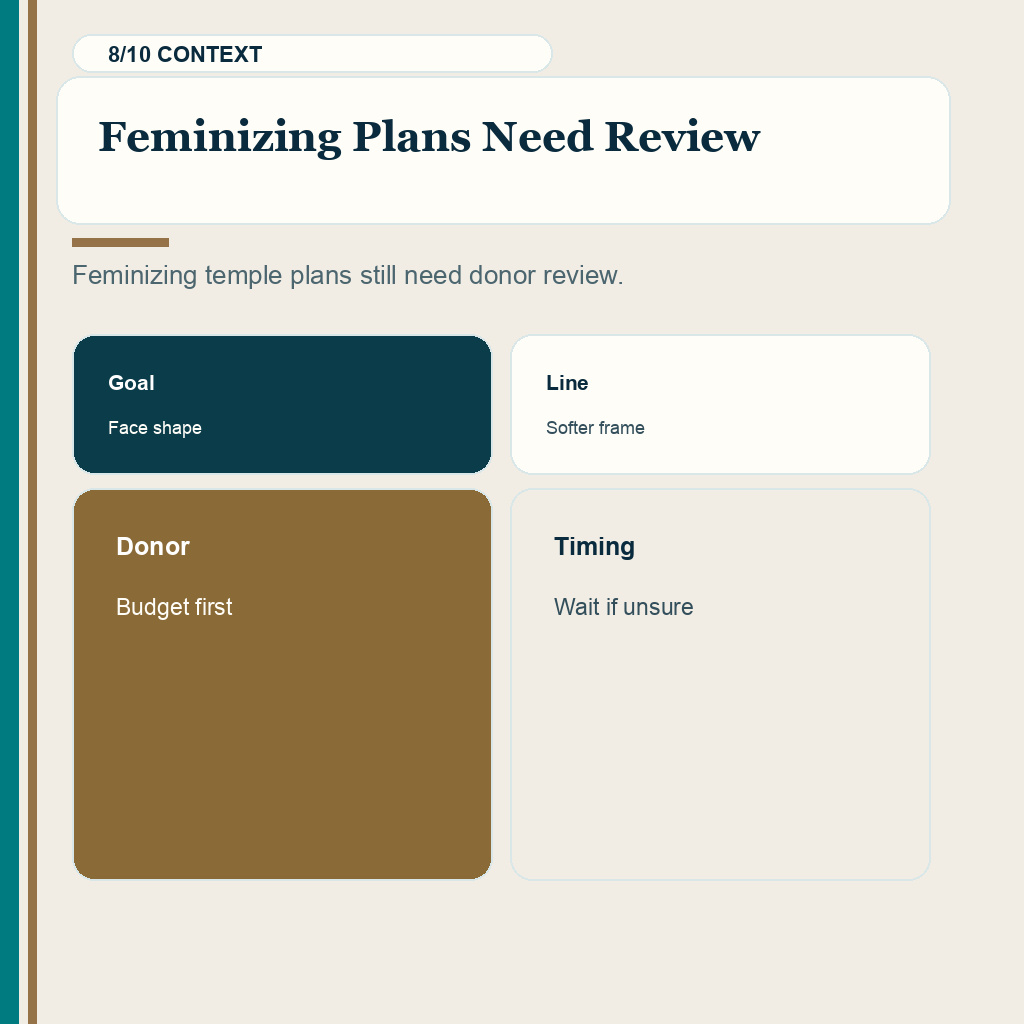
The logic changes. In women, and in patients who want a softer feminine frame, the plan should not copy a male temple point. Forehead width, sideburn position, temporal recession, styling habits, and the goal of a rounded or softer frame all matter. When the sideburn position changed after a facelift, the review also has to account for scar tissue and tissue stability, not only temple point shape.
Here, female hairline transplant planning and a feminine hairline plan need their own judgment. Closing the sides can help carefully chosen patients, but making the point too sharp can look wrong beside the face. The design should soften the frame, not force a shape that belongs to another patient.
Body or beard hair is rarely ideal for temple points
Body or beard hair near the facial border needs very careful judgment. The reason is practical. This is a fine hair zone, and beard hair is usually thicker, stronger, and visually different from scalp hair. It may survive, but survival is not the same as naturalness.
Body hair can sometimes have a finer character than beard hair, but it can also have a different growth length, curl, color, and texture. That makes it unpredictable in a highly visible facial border. Extra donor supply is not a good reason to take unnecessary risk in the temples.
For patients with limited scalp donor supply, I discuss using beard or body hair in the temples very carefully. Commonly, if body hair is considered at all, it belongs more safely in less visible support areas than at the most exposed edge of the face.
Patients sometimes ask whether nape hair is better because it can be finer. Sometimes finer lower donor hair can help, but permanence still has to be judged. Hair close to the nape may be less stable in some patients, and a graft should not be chosen only because it looks thin today. A temple point needs hair that matches the area and still makes sense for the future.
Near the face, the margin for mismatch is small. A graft that looks acceptable behind the hairline may look too thick or too restless at the temple point. A donor source should not be chosen only because it gives more grafts. In this area, the graft has to behave like temple hair.
Typical graft numbers for temple point restoration
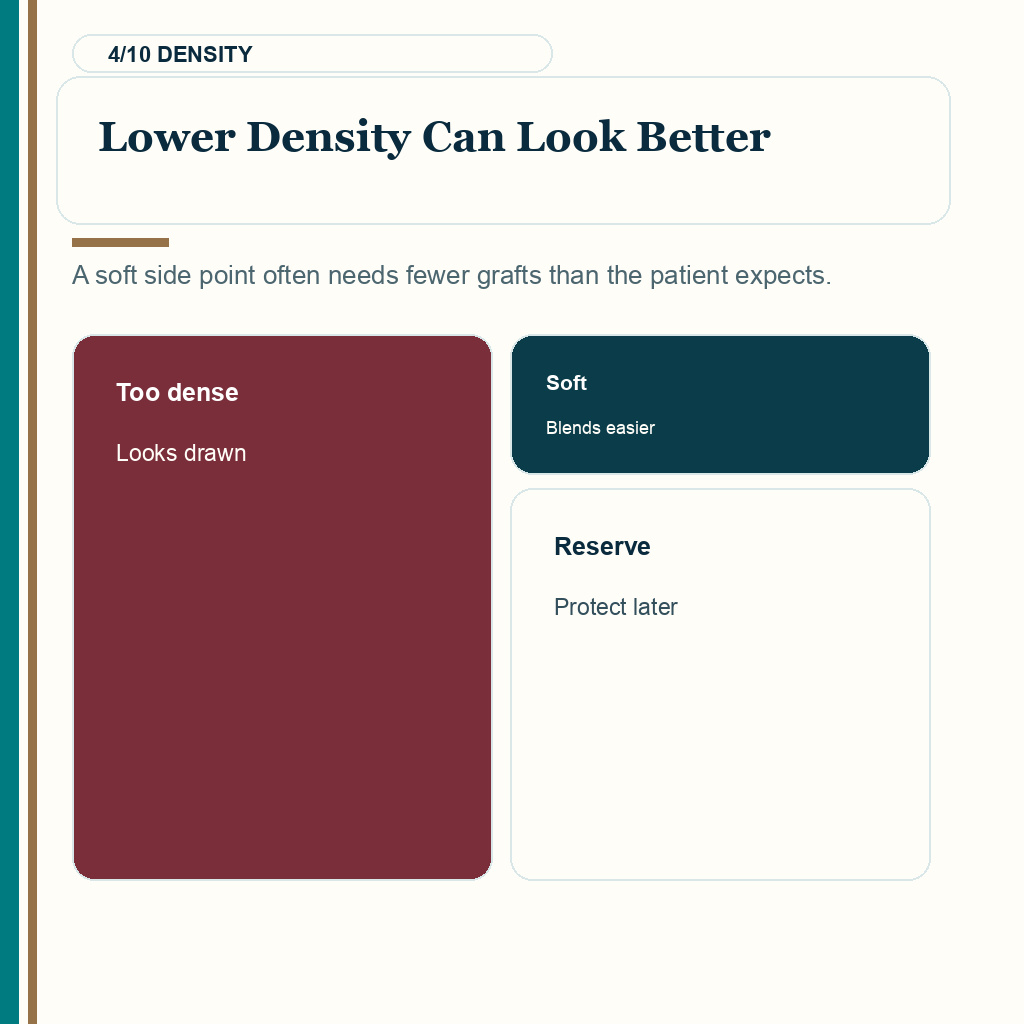
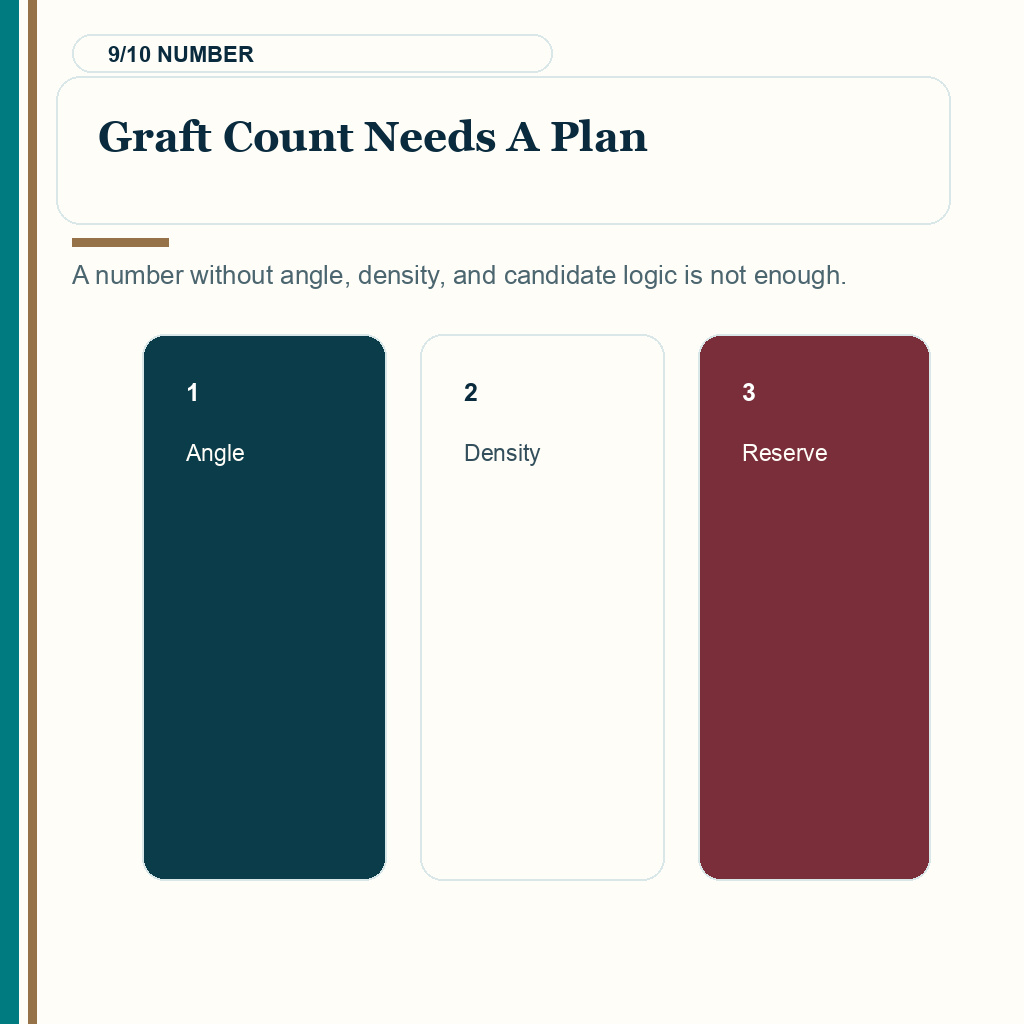
There is no universal number, but for a small refinement, the common working range is usually around 100 to 300 grafts per side. A larger reconstruction can need more, but that kind of plan needs a more conservative decision because the risk also increases as the design becomes more ambitious.

Patients should not judge this area by graft count alone. A clinic can make 300 grafts look too dense, too sharp, or too coarse if the design is wrong. Another surgeon may use fewer grafts and create a softer, safer result because the angle and distribution are better.
Graft numbers only make sense inside a real surgical plan. A smaller number used with surgical judgment can be stronger than a bigger number used without good judgment.
A number given before hair caliber, donor quality, age, hair loss pattern, and side hair direction are examined should not be treated as serious planning. It may be a sales estimate, not a surgical decision.
Temple point planning needs restraint, angle control, and enough donor reserve before any graft number sounds credible. Swipe sideways, use the arrows for one slide at a time, or choose a number below the image.