


Minoxidil Belongs Only When the Scalp Can Tolerate It
Most patients do not need minoxidil automatically after a hair transplant. I consider it when there is vulnerable native hair that still needs support, but the transplanted grafts should not depend on minoxidil to survive.
I decide from your native hair, scalp irritation risk, medication history, and long term plan, not from a fixed rule.
If you have already paused it, restarted it, or missed a few applications after surgery, do not panic and start experimenting. The safer question is whether your scalp is healed enough and whether the medication is being used for a clear reason. Laser cap timing also depends on whether the scalp is calm enough after transplant. If the product is an online antiandrogen or other experimental topical, see research topicals after FUE because the uncertainty is higher than with standard minoxidil.
The hair around the transplant may be a different story. If there is miniaturization in the frontal area, mid scalp, or crown, the medication may help support those weaker hairs. There is no single fixed rule. The answer depends on the patient’s age, hair loss pattern, donor area, scalp condition, medication history, and the surgical plan.
Some patients start or stop minoxidil out of panic, especially in the first weeks after surgery. Early recovery needs steady decisions, not experiments driven by fear after one shedding photo.
If shedding follows a minoxidil pause or restart, I first separate native hair shedding, product irritation, and the normal transplant timeline. Formula and dose changes can make the recovery record harder to interpret. Before changing the routine again, note whether the product, dose, formula, scalp redness, or point in recovery changed.
Most patients do not need it as a routine
Most patients should not think of minoxidil as a compulsory part of the transplant. It can be useful, but it is not the reason a well handled graft grows.
With minoxidil after surgery, the real concern has to be separated. Transplanted graft growth and support for weak native hair around the recipient area are different issues, so I review them separately before changing the routine.
If tretinoin is mixed into a minoxidil formula, topical tretinoin after FUE becomes a scalp healing and irritation question, not only a growth question.
If the donor hair is strong and the grafts were handled correctly, minoxidil is not the central factor for graft survival. The more serious question is whether the native hair around those grafts will keep thinning over the next few years.
Medical treatment can matter here. A transplant can improve the visible frame, but it does not stop genetic hair loss in the untreated native hair. If that part is ignored, the patient may later feel that the transplant became thin, even when the transplanted grafts are still present.
It also matters whether the patient can use minoxidil consistently and comfortably. If it creates constant itching, flaking, irritation, or anxiety, then it may not be the best choice for that person. A treatment has to fit the patient’s scalp and routine, not only the theory. That also applies to red light therapy after a hair transplant. For topical residue or flaky skin after restarting treatment, compare the pattern with white flakes after hair transplant before increasing product use.

Minoxidil may help when native hair is still at risk
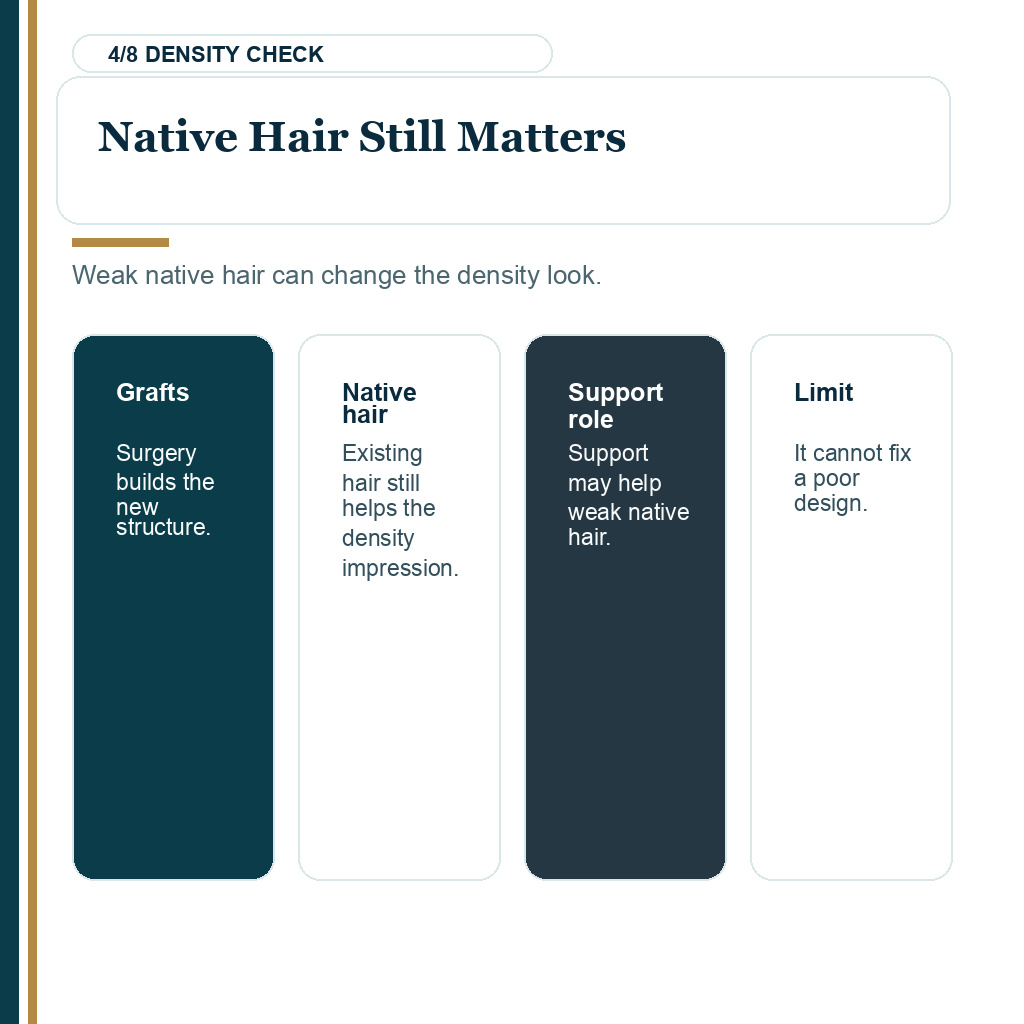
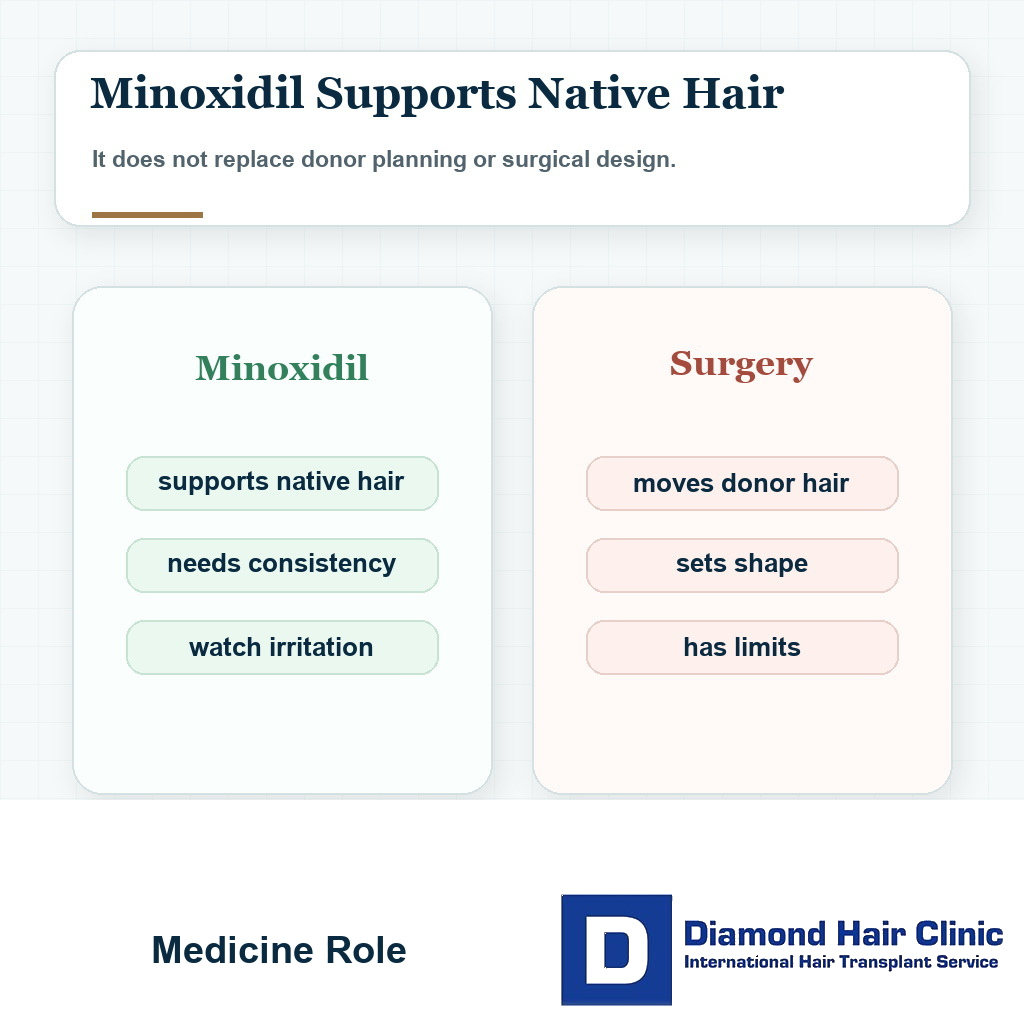
The medication can support hairs that are still alive but becoming weaker. These are usually native hairs, not the transplanted grafts themselves. In some patients, this can improve the overall look of density because the existing hair becomes more useful visually.
This is especially relevant in patients who still have thin native hair between transplanted grafts or in the crown. The transplant creates a new structure, but the native hair still contributes to the final appearance. If those native hairs weaken, the result can look less full even if the grafts have grown.
Minoxidil cannot repair a weak surgical plan. It cannot correct wrong hairline design, poor graft distribution, aggressive donor extraction, or unnatural recipient area angles. If the transplant was planned badly, it cannot turn it into a refined result.
When I review medication, I also look at the density factors behind why some hair transplant results look thin. Density is not only about graft numbers. It depends on donor capacity, native hair quality, placement strategy, and long term planning.
Minoxidil may reduce the visible impact of shedding in some patients, and it may support weak existing hair. But it should not be presented as a graft survival guarantee. A good transplant still depends on careful extraction, safe graft handling, accurate recipient area incision creation, and disciplined aftercare.
A topical or oral routine should not be blamed or credited for the donor area after FUE. It can support vulnerable native hairs when the scalp tolerates it, but it does not place extracted follicles back into the donor. A thin looking donor after a large session should be reviewed through donor planning, haircut length, healing, scarring, and miniaturization before it is treated as a minoxidil problem.
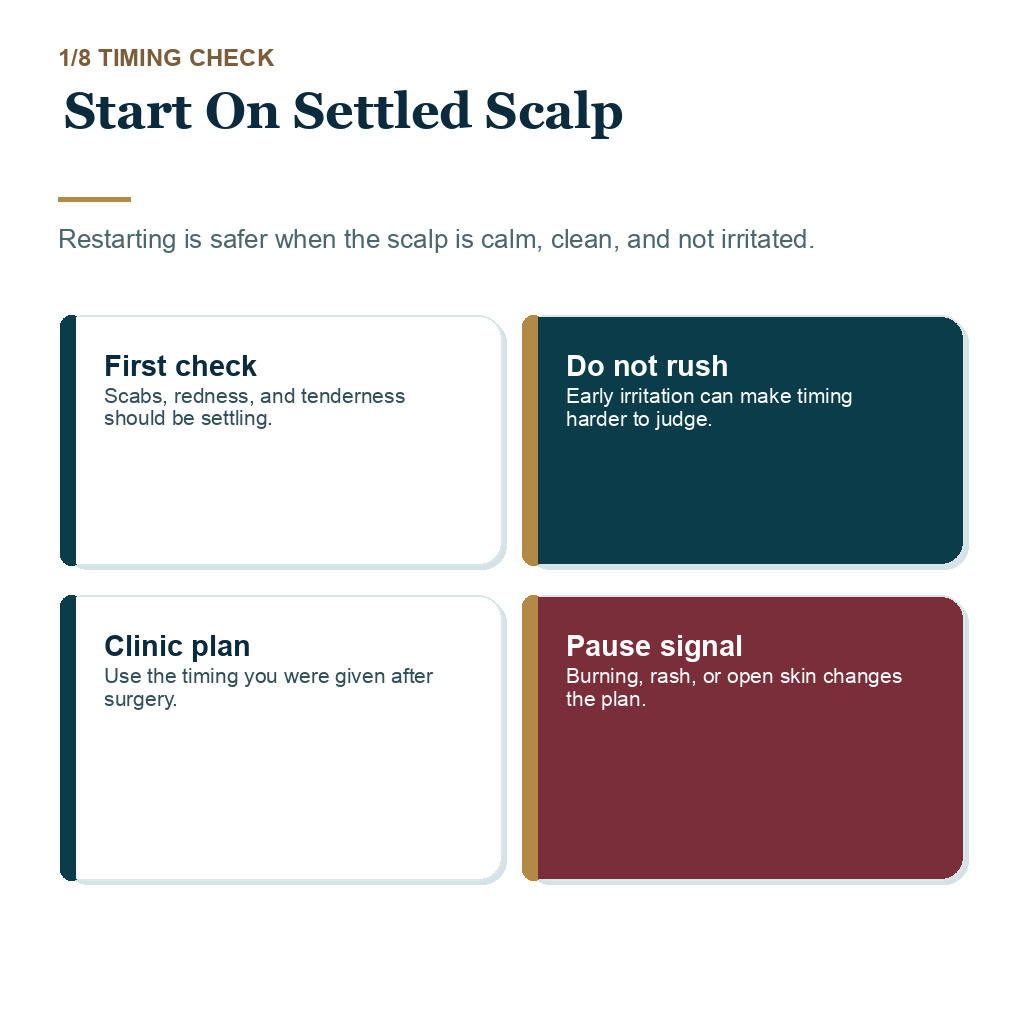
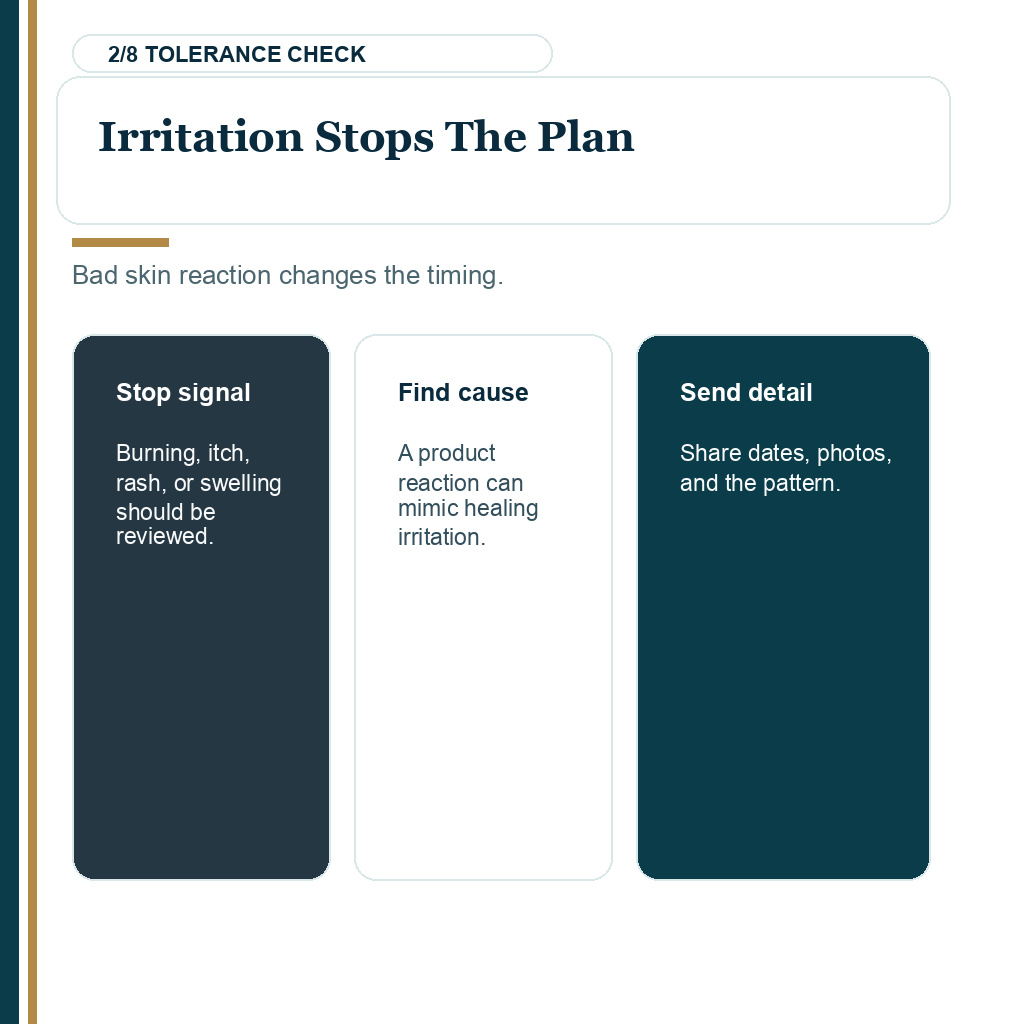
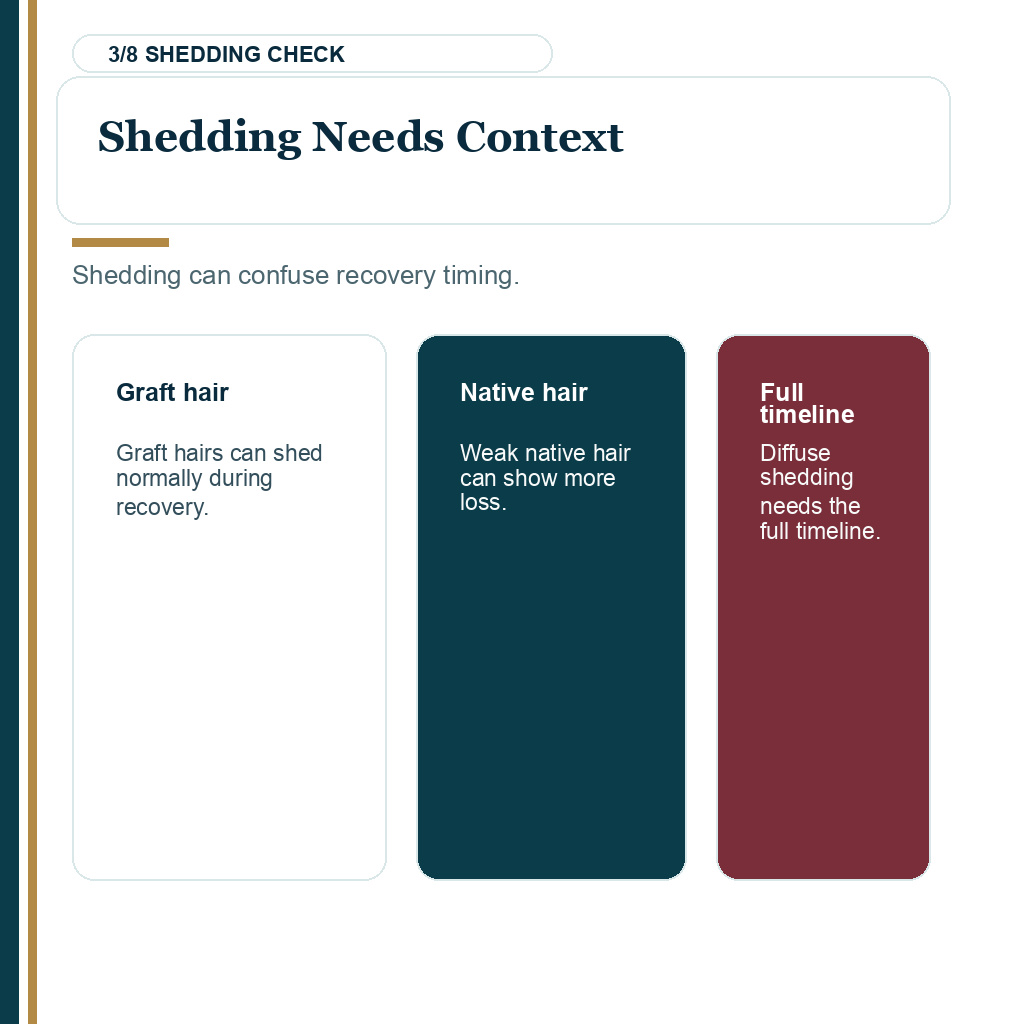
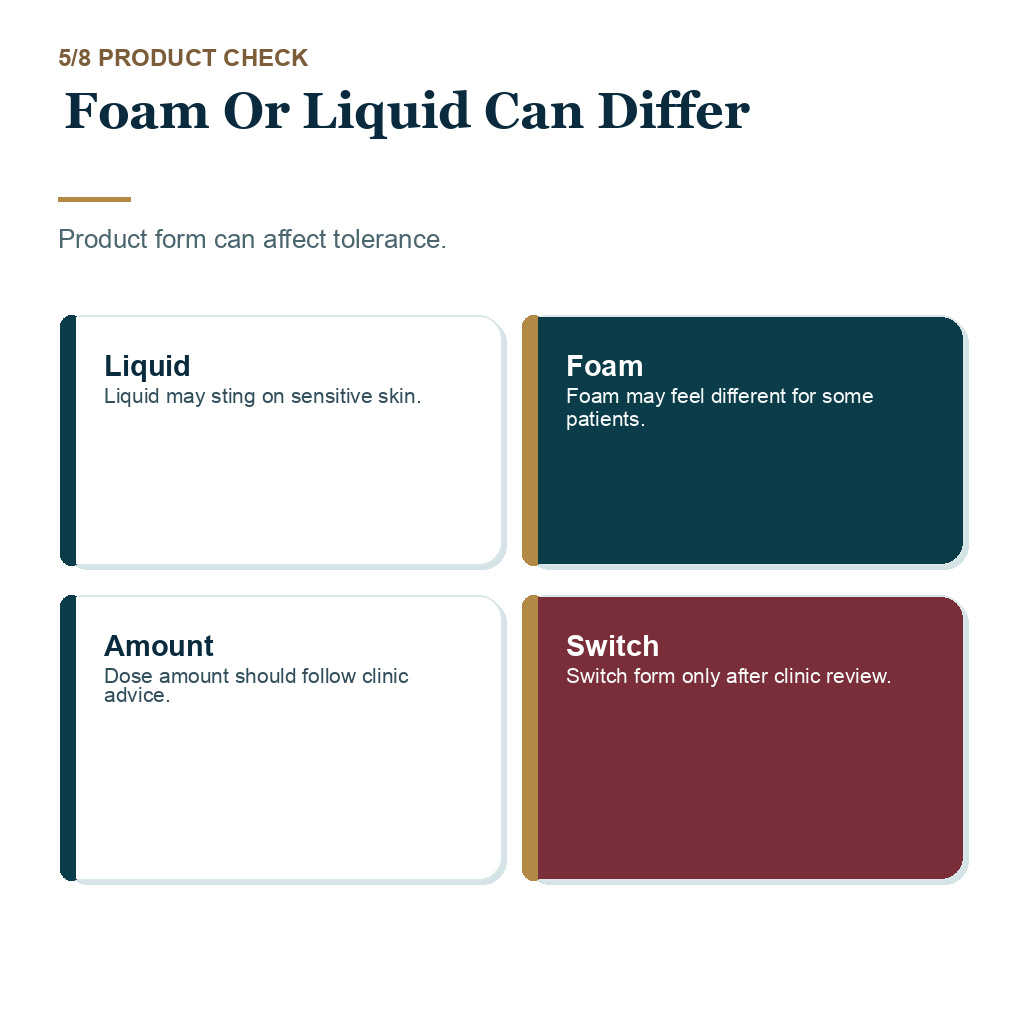
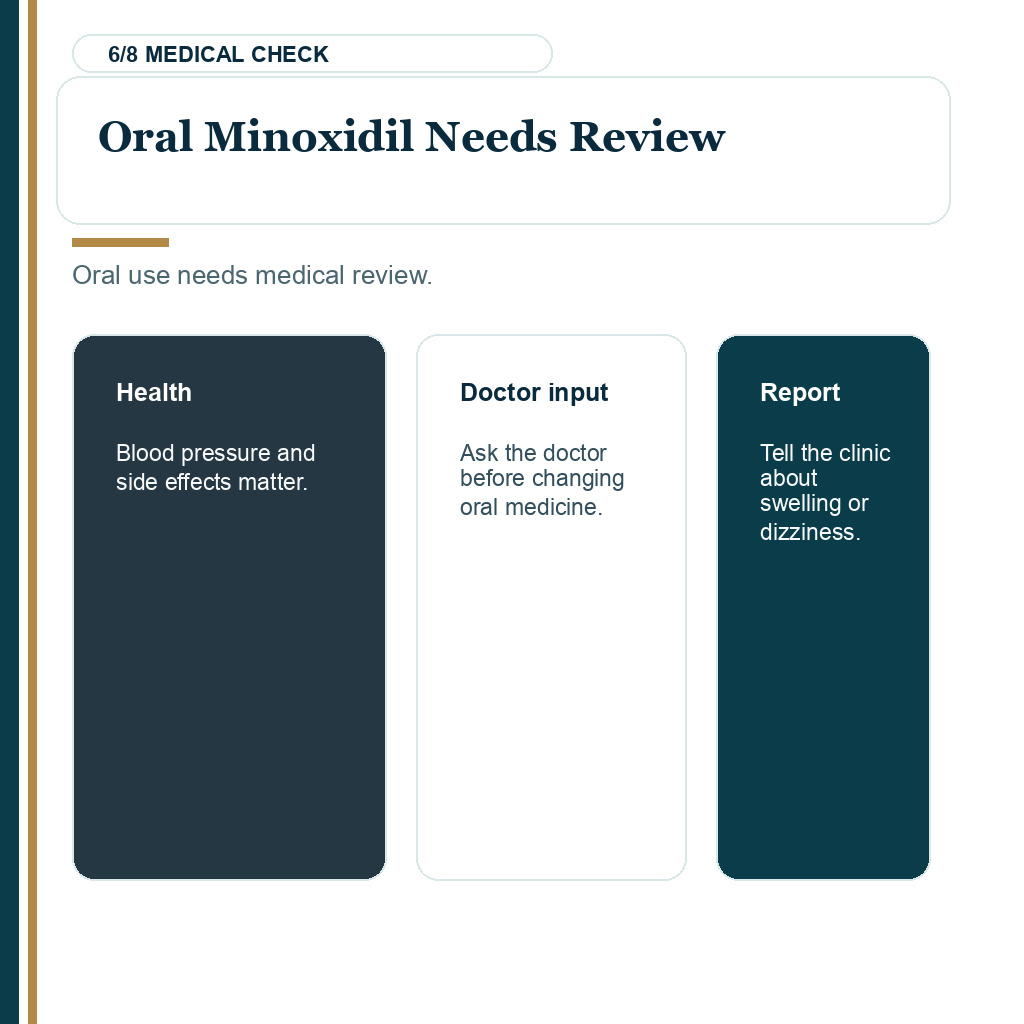
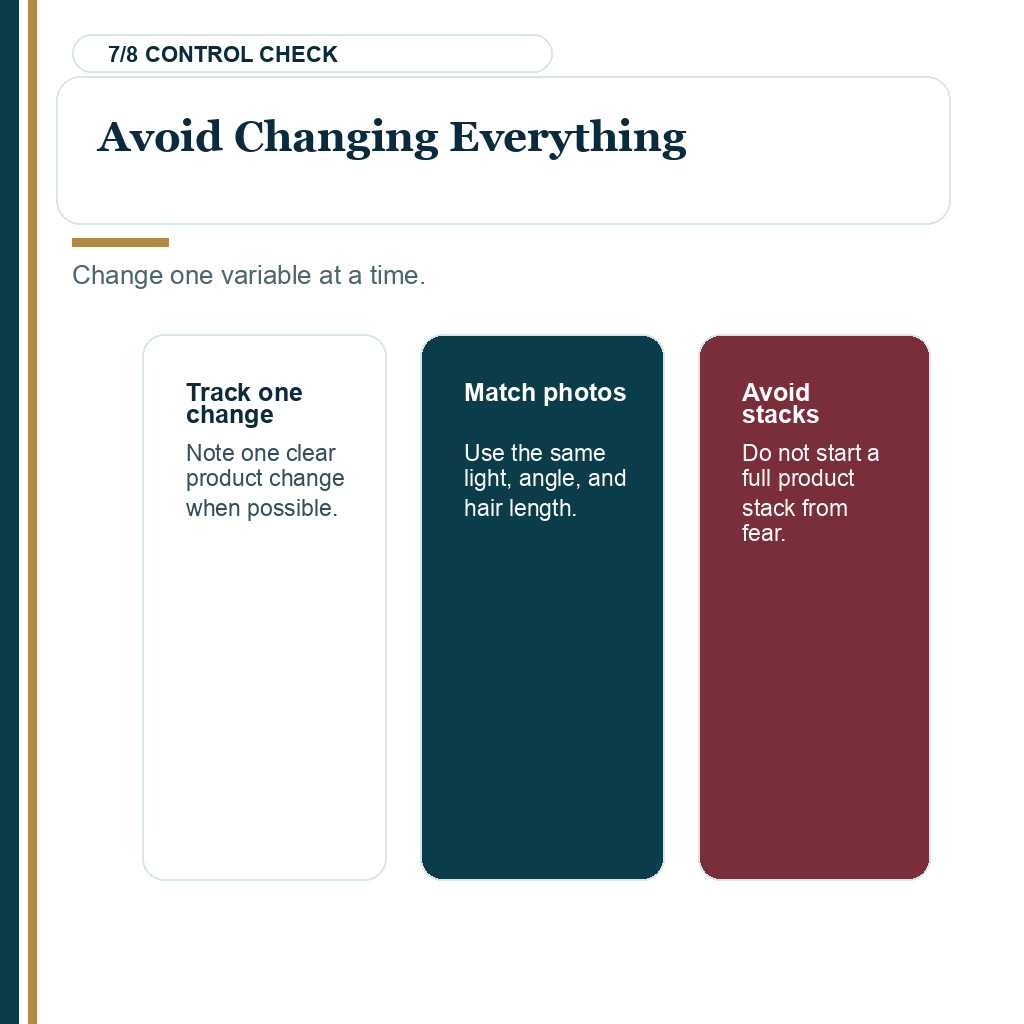
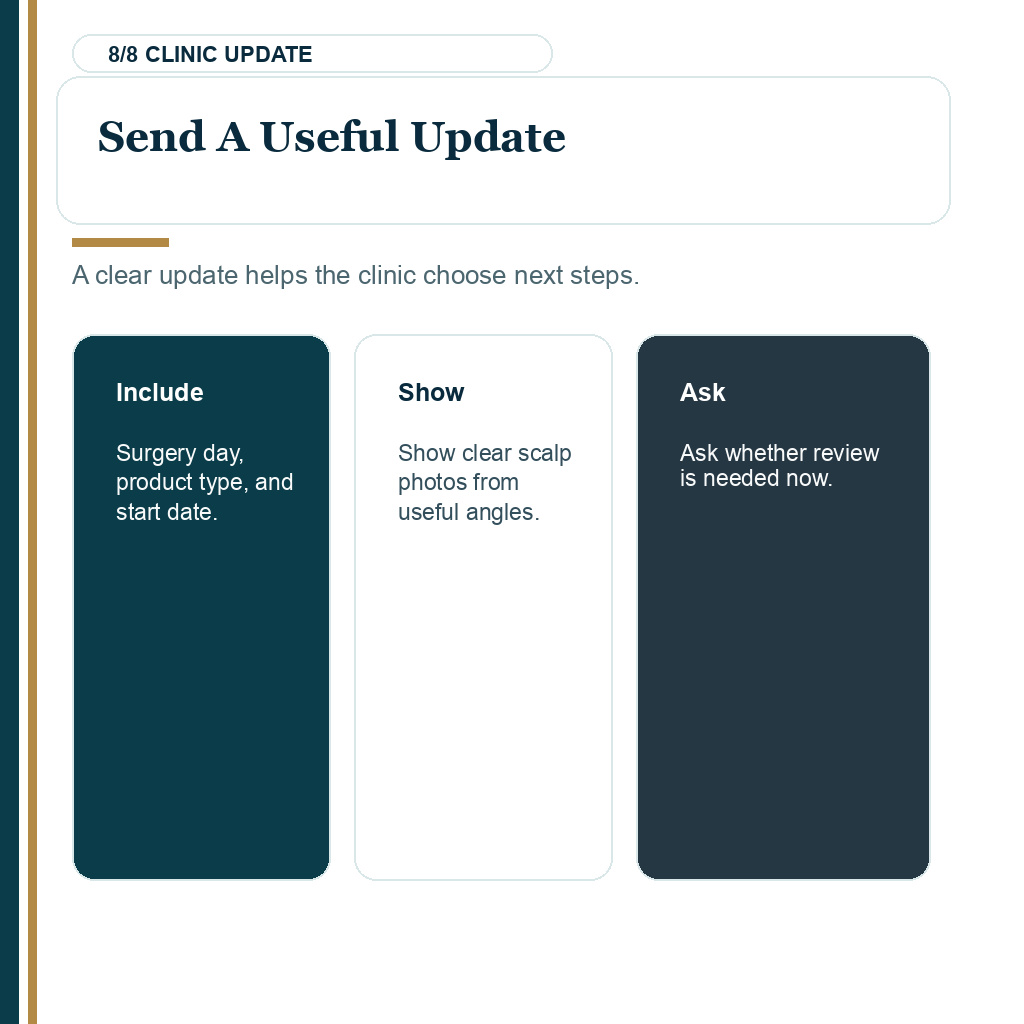
Use the 8 minoxidil recovery slides below to separate scalp tolerance, irritation, shedding context, native hair support, product form, oral medication review, treatment changes, and what to send the clinic. Swipe the carousel, use the arrows one step at a time, or choose a number below the image to jump to that point.
Transplanted grafts are usually a separate question
In many male pattern hair loss cases, transplanted grafts are taken from the safer donor area. They are generally more resistant to the hair loss pattern than weak native hair on the top of the scalp. Minoxidil is usually not needed to keep transplanted grafts alive. If topical minoxidil irritates the scalp during the months 6 to 8 shedding window, the answer is not to force more product onto angry skin. I would first check whether the scalp reaction, medication timing, and transplant timeline are being mixed into one confusing story.
That point should not be taken to mean the whole result is protected. The transplanted grafts may grow, while the native hair around them continues to miniaturize. When that happens, the result can look thinner, separated, or less balanced later.
That patient experience is what I discuss in my article on why hair loss can continue after a hair transplant. The surgery moves resistant hair. It does not change the biology of every native hair left on the scalp.
A transplant plan should not be judged only by the number of grafts. The future around those grafts matters too. The medication may help some surrounding native hair, but it should not be used to hide poor planning.
Transplanted hair dependency is often misunderstood
This fear is very common. Patients worry that if they start minoxidil after surgery, the transplanted hair will become dependent on it and fall out later if they stop.
In a properly planned male pattern hair loss case, the transplanted grafts should not become dependent on minoxidil in the same way weak native hairs may depend on it. The transplanted hairs usually come from a more resistant donor zone.
The risk after stopping is different. If minoxidil was helping weak native hair around the transplant, those native hairs may gradually weaken again after stopping. The patient may then think the transplant has failed, when actually the surrounding native hair has changed.
During follow up, these areas need to be separated carefully. Is the thinning in the transplanted hairline, the mid scalp behind it, the crown, or the native hair mixed between grafts? Without that distinction, patients often blame the wrong cause.
Missed applications and later restart timing
Missing a few applications after surgery is usually not an emergency. It is safer for a patient to restart late on a calm scalp than apply minoxidil early onto crusted, irritated, or sensitive skin.
One missed dose is rarely the issue. Repeated stop and start behavior driven by panic is the bigger concern, especially if the patient changes the formula, dose, frequency, and application area at the same time. That makes shedding and irritation harder to interpret.
If you paused minoxidil for surgery, restart only when the recipient area is ready and the reason for using it is clear. If you have been off it for several weeks and your native hair was relying on it, discuss the timing with your clinic instead of doubling the dose to catch up.
Topical restart timing after surgery
For topical minoxidil, the recipient area should be calm before restarting. The crusts should be gone, the washing routine stable, the skin closed, and the scalp free from significant irritation. For some patients, this means around 10 to 14 days, but the timing is not identical for every scalp. The same timing logic applies to topical finasteride after a hair transplant when the formula touches healing skin. If you live with a cat, add a separate minoxidil pet safety plan before you restart topical treatment at home.
If your own surgeon told you to wait one month before using minoxidil on the new hairline, do not shorten that instruction because you plan to avoid the grafted line. An unoperated crown can be a separate area, but the routine still needs control. The product should not run forward, drip toward the recipient area, require rubbing near new grafts, or transfer from your hands, pillow, hat, or sweat.
Temple points need even more caution because they may sit close to the frontal recipient area, and sometimes they are part of the transplant plan. If a temple point was implanted or sits next to fresh grafts, I treat it like the recipient area until your clinic gives clearance. Send your clinic the product name, foam or liquid form, concentration, where you want to apply it, and clear scalp photos before restarting earlier.
If the skin is red, itchy, flaky, swollen, painful, or still sensitive, waiting is usually safer. A few extra days without minoxidil is usually less concerning than irritating the recipient area too early.
The first weeks are not the time to rub products aggressively into the scalp. The grafts need protection from friction, scratching, pressure, and unnecessary inflammation. Restart timing should be connected with proper hair transplant aftercare. Mesotherapy serums or rollers after hair transplant need a timing and irritation review too.
The question of whether to pause minoxidil before a hair transplant matters because timing before and after surgery should be part of one plan. Restarting it should not be a nervous reaction to seeing temporary shedding in the mirror.
Foam and liquid can affect the scalp differently
The formula matters because the scalp can be sensitive after surgery. Some liquid minoxidil preparations can feel harsh, especially if they contain ingredients that dry or irritate the skin. The liquid can also run across the scalp, and some patients rub too much while applying it.
Foam may be easier for some patients because it can be less messy and less irritating. But foam is not better for everyone by default. The scalp reaction matters more than the label.
If a patient restarts minoxidil and develops burning, strong itching, flaking, persistent redness, or new irritation in the recipient area, continuing just to prove discipline is not helpful. The scalp is already recovering from surgery. Forcing a product onto irritated skin is not intelligent aftercare.
The next step may be simple. You may need to wait longer, change the formula, or stop and reassess. The decision should be based on what the scalp is showing, not on a fixed routine copied from another patient.
Recipient area irritation needs a pause
If the product irritates the recipient area, take it seriously. Mild dryness can happen, but persistent redness, burning, crusting, swelling, pain, or worsening itching should not be ignored.
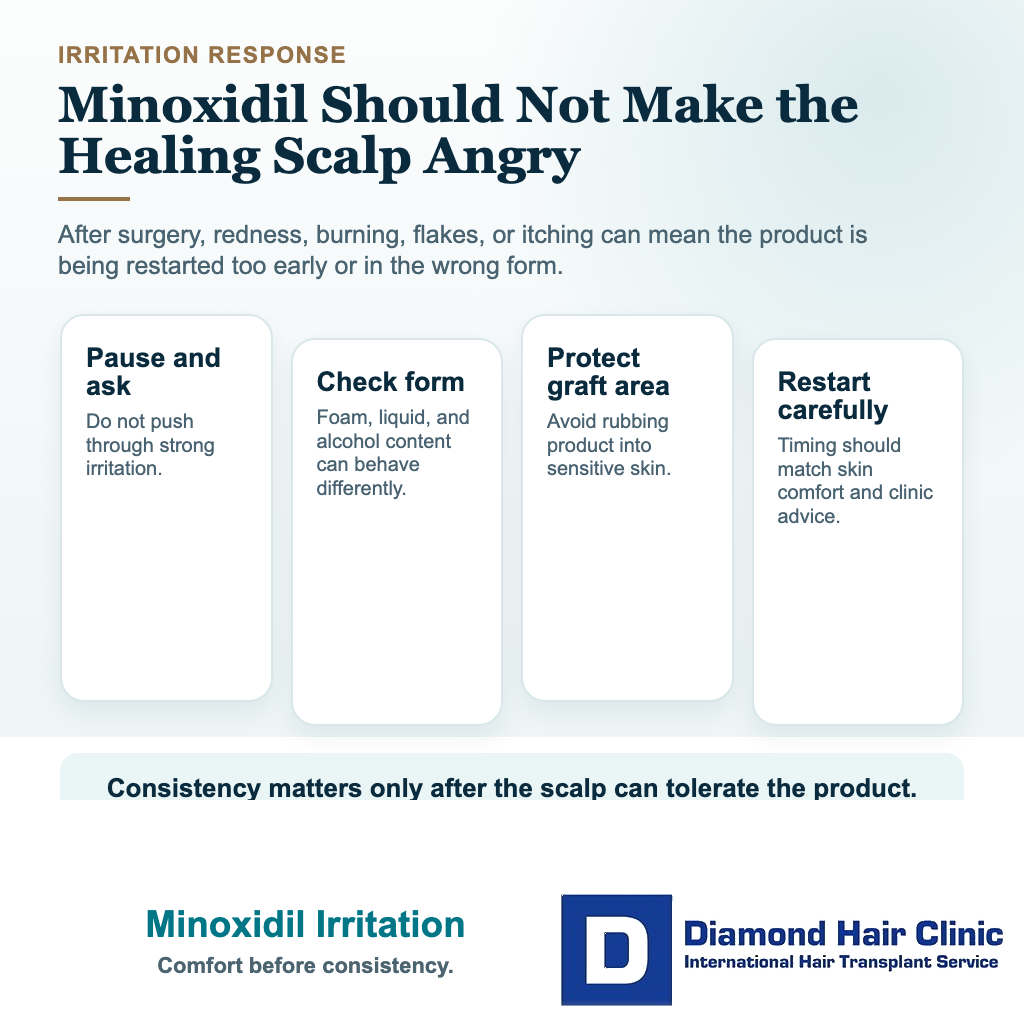
The first details to review are timing and technique. A restart before crusts were fully gone, rubbing, excess product, a switch from foam to liquid, or a higher frequency can all explain irritation better than the transplant itself.
These details matter because the problem may not be minoxidil itself. It may be the formula, the application method, the timing, or the patient’s skin sensitivity.
Pausing the topical product temporarily is safer than continuing to irritate a healing scalp. Missing it for a short period usually does not destroy a transplant. In the early phase, protecting the grafts, avoiding trauma, following the washing instructions, and keeping the skin settled matter more.
Oral minoxidil is a different decision
Oral minoxidil is different because it is a systemic medication. It does not touch the recipient area, so it does not create the same local irritation problem as topical minoxidil. But that does not make it casual.
If a patient has already used oral minoxidil for months, tolerated it well, and has no blood pressure, heart rhythm, swelling, dizziness, or relevant medical concerns, the conversation is different. Starting it for the first time right after surgery needs more caution.
For that reason, oral minoxidil belongs in a medical plan, especially if there is any history of low or high blood pressure, heart rhythm symptoms, ankle or facial swelling, dizziness, chest symptoms, kidney disease, pregnancy or breastfeeding, or medication that affects blood pressure. The fact that it does not touch the grafts does not make it harmless.
If oral minoxidil causes chest symptoms, fainting, shortness of breath, marked swelling, or a racing heartbeat, that is not a hair transplant question. It needs medical review.
After surgery, the body is already going through healing. There can be swelling, sleep disruption, anxiety, temporary shedding, and normal after surgery changes. If a new systemic medication is started during this period, it can become harder to understand what is causing what.
For patients considering tablets, a medically supervised plan is safer. This connects with my page about oral minoxidil before or after a hair transplant. It may be useful for patients whose case fits, but it should not be started casually because someone read that it is stronger.
Previous minoxidil use changes the discussion
If you were using minoxidil before surgery and it was helping your native hair, stopping it permanently may allow those supported hairs to weaken again. This does not usually mean the transplanted grafts disappear. It means the native hair that responded to minoxidil may slowly return toward its previous pattern.
A short surgical pause is different from abandoning the treatment for months. Missing a few applications while the scalp heals should not push a patient into rubbing product onto irritated skin too early.
The useful details are how long you used it, where you applied it, whether you actually saw benefit, and whether you had side effects. A patient who used minoxidil for years and maintained the crown needs a different discussion from a patient who started it two weeks before surgery out of panic.
Limited benefit before surgery is still useful history. If topical minoxidil did not change the area much, tell me whether the crown, middle scalp, or hairline behaved differently, because the answer helps me judge which native hairs still deserve medical support after FUE.
It also matters whether the patient uses finasteride, dutasteride, or no DHT blocking treatment. Minoxidil and DHT focused medication do different jobs. In many male patients, the DHT side of the plan has more influence on long term preservation, which is why I discuss finasteride before and after a hair transplant separately.
Avoiding minoxidil can still fit some plans
Not wanting to use it does not make you a bad candidate by itself. Some patients cannot tolerate it. Some dislike the daily routine. Some develop scalp irritation. Some are not suitable for the oral form.
Sensitive skin and a routine the patient will not realistically continue both matter. The plan is better when it admits those limits instead of asking a patient to rub topical minoxidil onto irritated skin or keep stopping and restarting it out of guilt. If finasteride is already tolerated, the question becomes whether native hair risk still needs more support, not whether every patient must use minoxidil.
I look at how much your future result relies on native hair that may keep thinning. If your hair loss is stable, your donor area is strong, and the plan is conservative, surgery may still be reasonable without minoxidil.
If you are young, thinning quickly, losing crown hair, and showing diffuse miniaturization, the decision becomes more serious. In that case, refusing medication does not make surgery impossible, but it may mean the design has to be more conservative.
Stopping finasteride after a hair transplant needs planning rather than a quick decision. Medication decisions and surgical design are connected. If medical support is limited, the hairline, density plan, crown strategy, and donor use must be planned with more caution.
The consultation should not force every patient into the same routine. It should explain the consequences clearly, then design the surgery around reality.
Medication shedding can make the result look worse temporarily
Minoxidil related shedding can make the scalp look worse temporarily, and patients can become frightened after surgery.
Minoxidil should not be started only to force normal transplanted hair shedding to stop. That shedding is often part of the hair cycle after surgery, not proof that grafts are dying.
The difficulty is that several types of shedding can overlap. A patient may see normal transplanted hair shedding, native hair shock loss, medication related shedding, stress related shedding, or ongoing genetic hair loss. These can look similar in the mirror, especially during the first months.
One anxious photograph is not enough for a diagnosis. Timing matters. If a patient started minoxidil, stopped it, changed the dose, or changed the formula, I review exactly when that happened.
A switch from one form of minoxidil to another can make the recovery record noisy. A thinner view at this stage may reflect shedding, irritation, native hair behavior, hair length, or lighting, so I do not use one photo from months 4 to 6 to decide whether the medication helped or harmed the transplant.
If shedding is active before surgery, the surgical map may also be unclear. This sequence is discussed in more detail in the article about having a hair transplant during a minoxidil shed. After surgery, the same careful sequence applies. We need to understand which hair is shedding before we decide what it means.
Native hair after the transplant still matters
Native hair is often the hidden part of the result. The transplanted grafts are easier to count and discuss, but the native hair around them often decides whether the final appearance looks full, thin, separated, or natural over time.
If the native hair is strong, the transplant blends more easily. If the native hair is miniaturized, the surgeon has to be more careful. Placing grafts too densely among weak native hairs may not solve the long term problem, and it can make the plan less flexible for the future.
Graft numbers alone can mislead patients. A large number may sound impressive, but the donor area has a limited lifetime supply. If too many grafts are used early without respecting future loss, the patient may have fewer options later.
Minoxidil may help some native hair stay visually useful, but it does not make weak hair permanent. It also does not remove the need to understand native hair shock loss after a hair transplant, because shock loss and medication response can look similar during recovery.
Minoxidil and finasteride are not interchangeable
These medications are not interchangeable. Minoxidil mainly supports the growth cycle and thickness of existing hair. Finasteride works on the DHT side of male pattern hair loss.
That difference matters. A patient may feel that minoxidil is enough because the hair looks better for a while. But if DHT sensitive hair continues to miniaturize, the underlying pattern may still progress.
Some patients can use one medication but not the other. Some use both. Some use neither. This decision should not be reduced to a simple formula because the concern is not the same in every scalp.
A young patient with aggressive thinning and crown involvement needs a different conversation from an older patient with stable frontal recession. The medication plan and transplant design should be built together, not treated as two separate decisions.
For a broader view, medications after a hair transplant can help before making the entire decision around one product.
Judging a clinic recommendation about minoxidil
A clinic should be able to explain why minoxidil is being recommended for your specific scalp. The answer should connect to your native hair, miniaturization, crown risk, age, tolerance, and long term plan.
Patient response tests or enzyme discussions can be interesting, but they should not replace a medical plan. A test that claims to predict topical minoxidil response does not tell me whether your scalp can tolerate the product after surgery, whether oral minoxidil is safe for you, or whether the transplant design is conservative enough if medication is stopped later. If a test is unavailable or unclear, do not jump to tablets just to bypass uncertainty.
If the explanation is simply “everyone should use it,” that is not enough. If it is presented as a product that guarantees density, that is a reason to be more careful. Minoxidil can support a good plan, but it cannot replace diagnosis.
It deserves scrutiny when medication is used to make an aggressive surgery sound safer. If the hairline is placed too low, the donor area is used too heavily, or the crown is filled without long term planning, medication does not protect the patient from those decisions.
Sometimes medication can delay surgery. Sometimes surgery is still reasonable even when medication helps. That balance is covered in the discussion of when medication can delay a hair transplant.
Patients should leave with a clearer plan, not a feeling that they are dependent on a bottle, tablet, or package.
Minoxidil should restart only when the scalp is ready
After surgery, the minoxidil question is mainly about timing and skin tolerance. Redness, crusting, open spots, irritation, or burning mean the scalp is not ready for a topical product, even if you used it comfortably before.
Once the recipient area has settled, minoxidil can be reviewed again against the diagnosis, the crown and central scalp risk, previous medication history, and any side effects. Oral minoxidil needs medical suitability. Topical minoxidil needs a calm surface and clear instructions about where it should go.
Medication can support a well designed transplant, but it should not rescue an aggressive graft plan. The hairline, crown, and donor reserve should still make sense if treatment has to be paused, changed, or stopped for a medical reason.