


How Soon After COVID Can I Have a Hair Transplant?
COVID needs to be inactive before surgery or travel. I would not plan a hair transplant within the first two weeks after infection, or while fever, strong cough, chest symptoms, shortness of breath, worsening fatigue, or an unreviewed recent positive test is still present. If this happens after booking, report the medical change before travel.
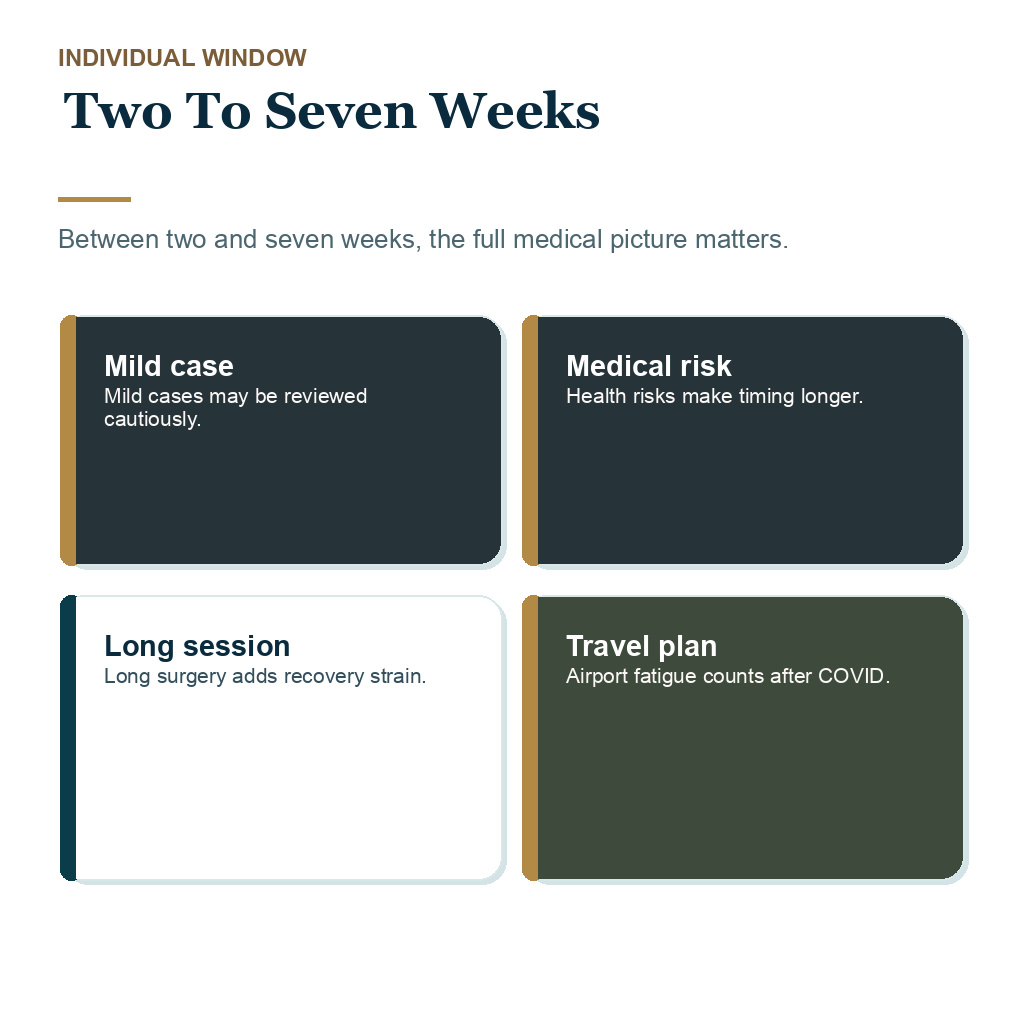
A patient who still feels breathless, exhausted, or unwell with normal daily activity should not treat a negative test as the whole answer. Between two and seven weeks, I review symptom severity, breathing, fatigue, medical history, procedure length, travel, medicines, and whether the hair loss pattern is stable enough to plan.
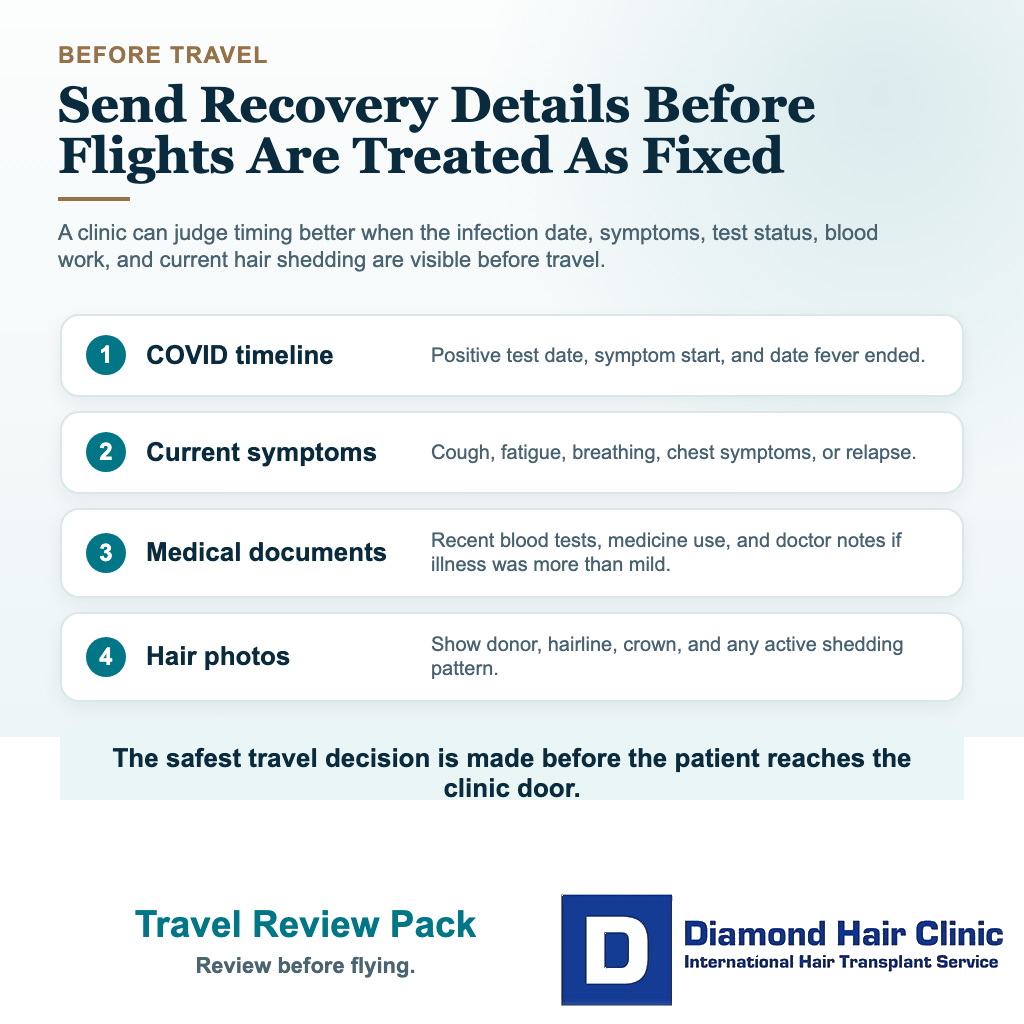
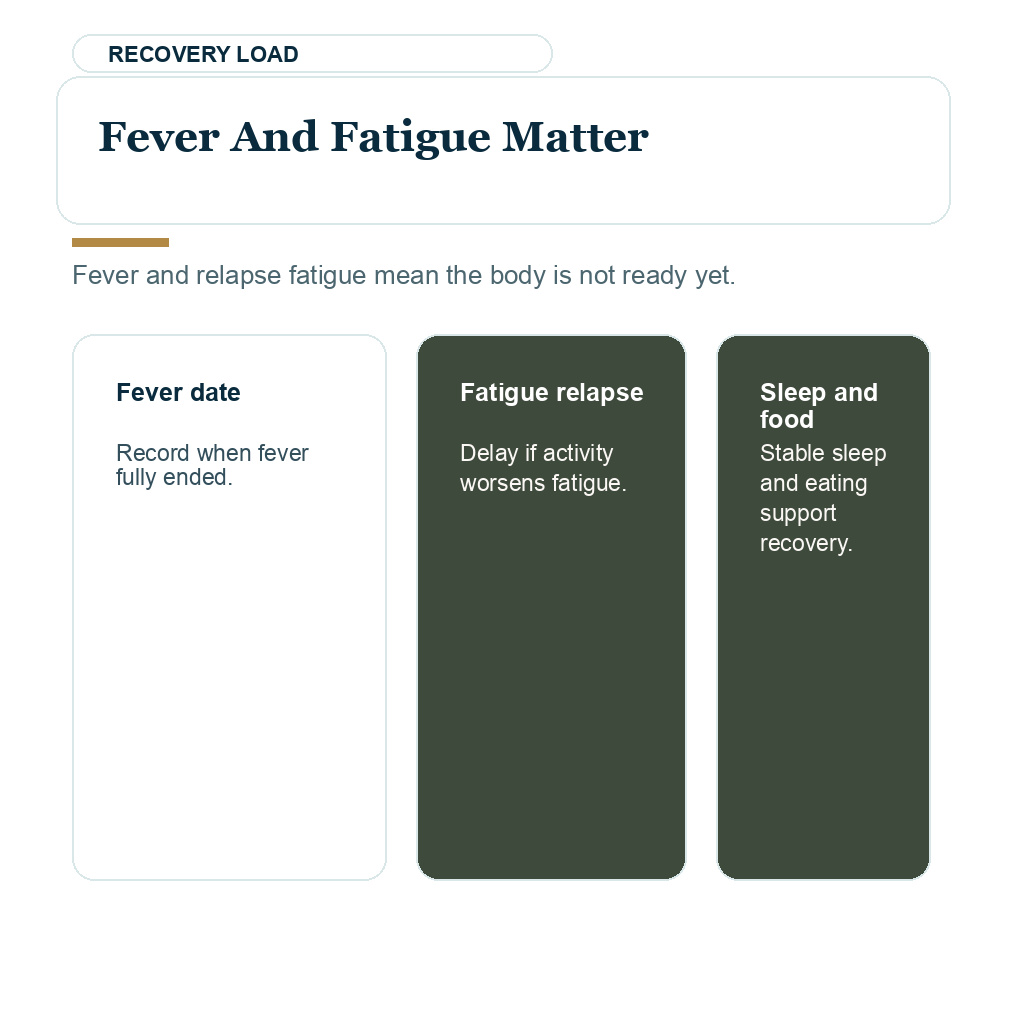
If you are already booked, send the positive test date, symptom start date, the date fever ended, current cough or breathing symptoms, medicines used, and whether walking, stairs, packing, or walking through the airport still feels difficult. Also say whether sleep, appetite, and normal daily activity have returned, because the test date does not show stamina by itself.
A past COVID infection by itself does not mean the grafts will fail. The risk is doing surgery while your body is still recovering, while breathing or fatigue is unstable, or while shedding after COVID makes the donor and recipient pattern harder to read. The same early reporting habit also matters with a cold or flu before a hair transplant.
General advice about returning to normal activities after a respiratory virus is not the same as clearance for international travel and a long elective procedure. A hair transplant adds local anesthesia, procedure length, graft handling, swelling, sleep position, and several days of aftercare. Even without general anesthesia, local anesthetic planning, possible adrenaline use, cough control, hydration, blood pressure, pulse stability, and long positioning still matter. If another operation is near the FUE date, I use the same careful timing logic explained in major surgery around a hair transplant.
Changing the date from home is usually better than discovering on surgery day that your body is still recovering. Hair transplant surgery is elective. The donor area is limited. Travel can be tiring. The date should protect the patient and the hair plan, not only the booking.
The earliest review point after COVID
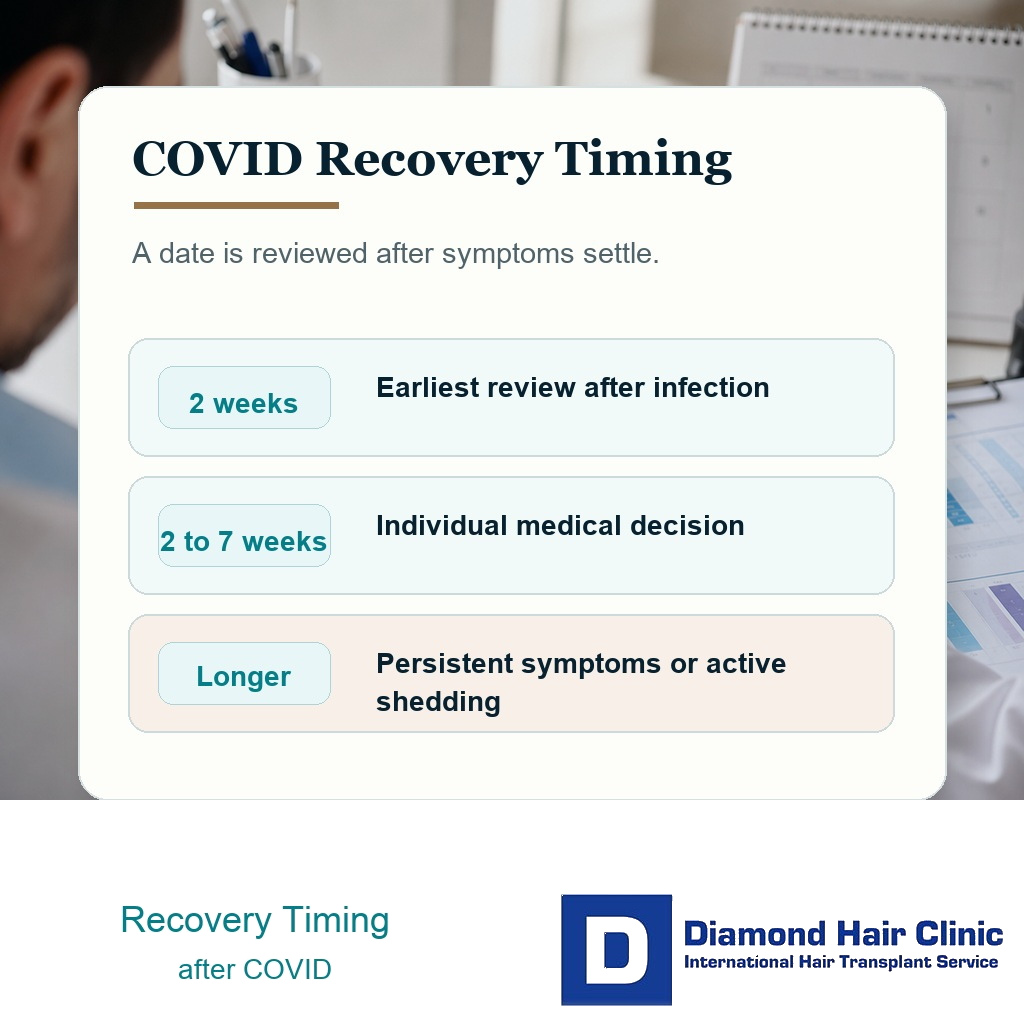
The timing is not one fixed calendar rule. A patient who had mild COVID, recovered quickly, has no fever, no chest symptoms, no breathing difficulty, and feels back to normal may be reviewed after two weeks. That does not guarantee surgery, but it can be a reasonable earliest review point.
From two to seven weeks after COVID, the decision has to come from the whole picture. A mild infection three or more weeks ago, with normal walking, no fever, no cough, and no breathing symptoms, is very different from COVID four weeks ago with breathlessness on stairs or fatigue that returns after a busy day.
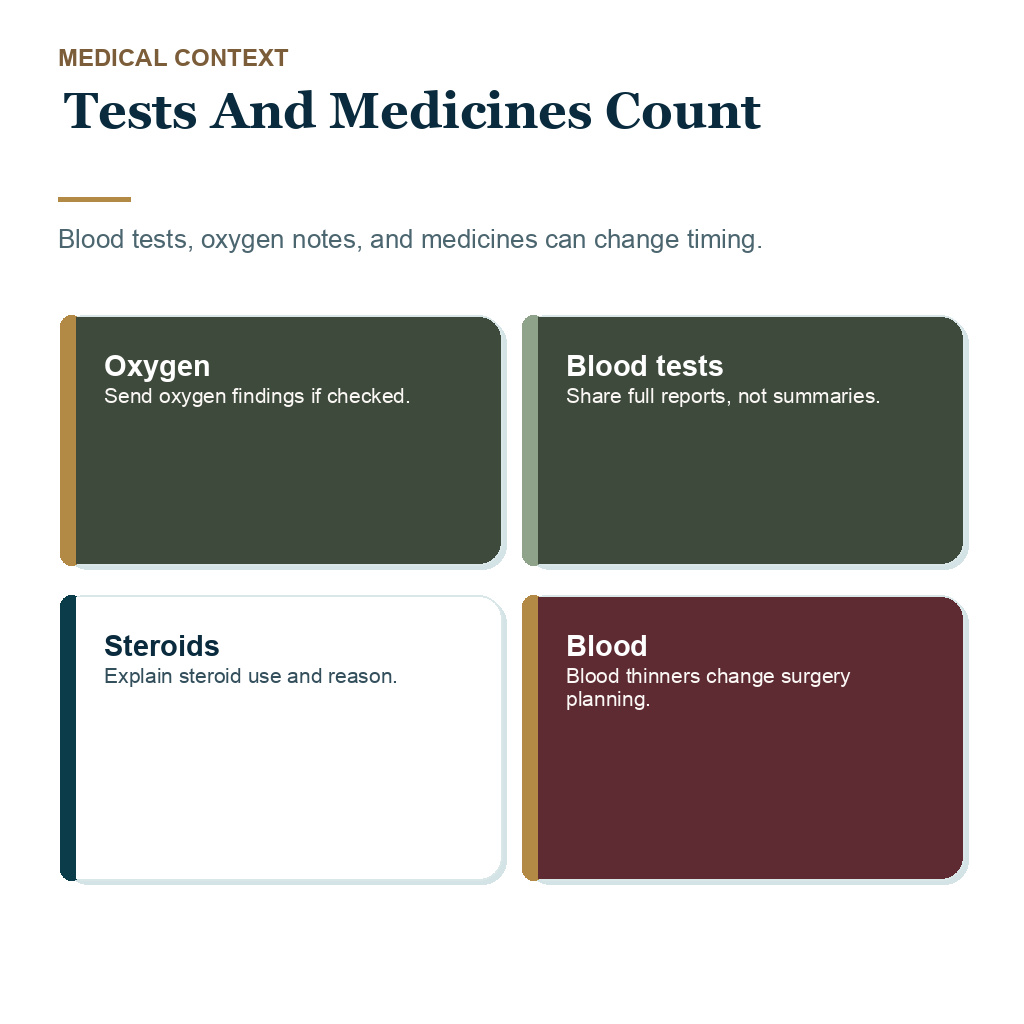
If a doctor checked oxygen saturation, chest findings, ECG, blood clot markers, or prescribed steroids, antivirals, inhalers, anticoagulants, or antibiotics, send that information. Also tell me if you needed emergency care, oxygen treatment, abnormal chest imaging, hospital care, or follow up that is still pending. It helps me understand whether COVID was a brief upper respiratory illness or a wider medical event.
If COVID was severe, hospital treatment was needed, shortness of breath or chest discomfort is still present, or ordinary activity still feels difficult, waiting longer is more responsible. The calendar alone cannot decide the surgery date. The decision depends on whether your body is stable enough for an elective procedure and predictable healing.
Prescribed medicine changes should come from your treating doctor or the surgical team, not from pressure to keep the surgery date. Share the medicine name, dose, reason for use, start date, and any side effects so the plan can be reviewed safely.
A smaller transplant does not remove COVID timing
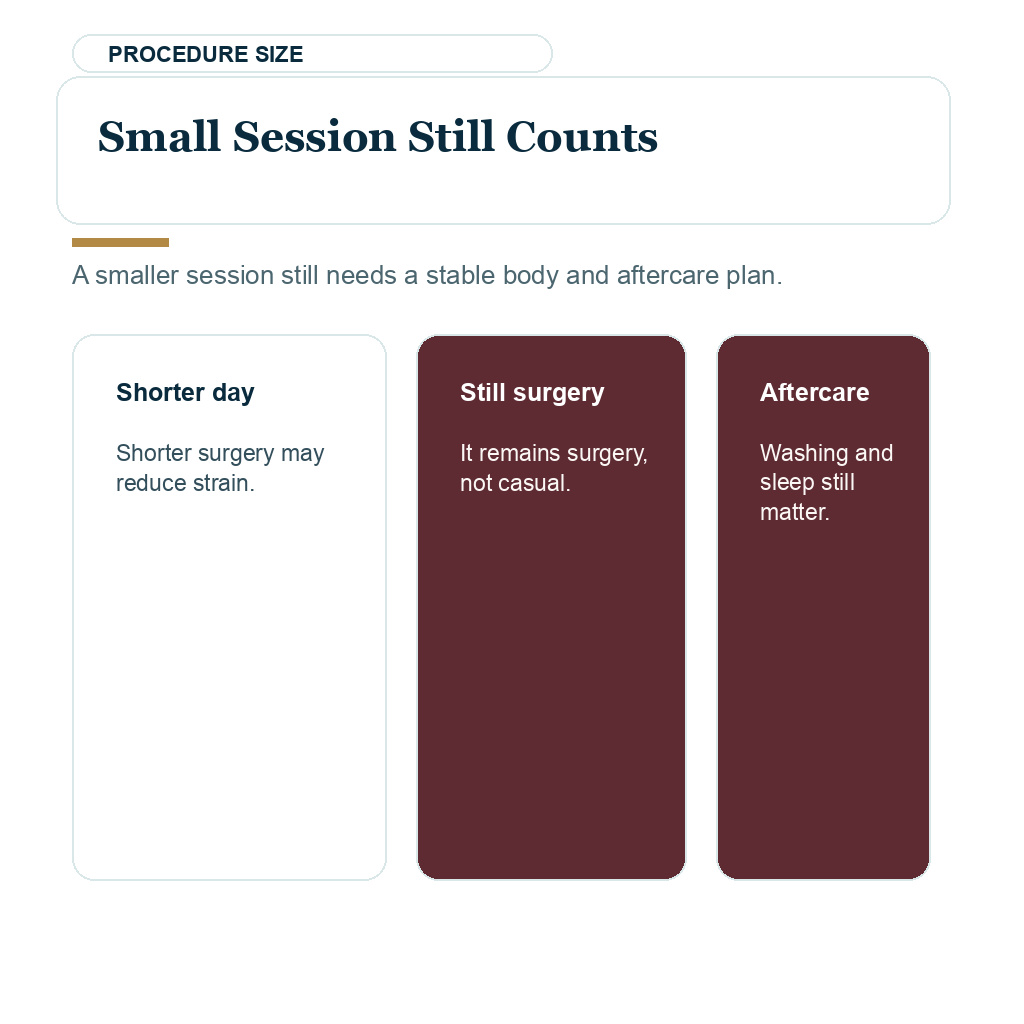
A smaller hair transplant can make the decision easier, but it does not make recent COVID irrelevant. A limited touch up is generally shorter than a large session, yet you still need local anesthesia, scalp preparation, donor area extraction, recipient area work, airport travel, sleep recovery, washing, medication timing, and several days of sensible activity.
Graft number alone does not decide timing after COVID. A low graft session after mild COVID and complete recovery may be reviewed differently from a long repair case, a large crown session, or a case involving asthma, diabetes, heart disease, clot history, immune suppression, or ongoing fatigue.
If the procedure is small but coughing, shortness of breath, fever, exhaustion, or a positive test with symptoms is still present, the answer is still to wait. The smaller plan may reduce surgical strain, but it does not remove the need for a stable body before elective scalp surgery.
COVID can change the surgical plan
COVID can affect a hair transplant plan in two main ways. First, recent infection can make the procedure less safe or less comfortable. Fever, dehydration, strong coughing, poor sleep, breathlessness, and fatigue can make a long day of surgery much harder. Even when the grafts are handled well, you still have to tolerate the day and recover steadily afterward.
Second, COVID can trigger temporary diffuse shedding. This can appear weeks after the infection and may look frightening. During active shedding, the donor and recipient pattern may be less reliable for planning. A transplant planned during unstable shedding can chase the wrong area, use grafts before the real pattern is clear, or make the result look worse while the body is still shedding from illness.
A useful practical split helps here. Recovered COVID with a stable hair pattern is mainly a timing question. Heavy new shedding after COVID is also a diagnosis question.
For coughing after surgery, sneezing or coughing after a hair transplant is judged differently because one cough does not normally dislodge grafts. The question before surgery is different. Before surgery, a strong cough can show that the infection has not settled enough for a long elective procedure.
A positive test still needs disclosure
A positive test with recent symptoms needs to be taken seriously. A positive test without symptoms also needs to be reported before travel, because the question includes infection control, clinic attendance, anesthesia planning, and whether enough time has passed.
One test result cannot settle the timing by itself. A negative test does not help much if your body still feels unwell, and a positive test close to travel still needs clinic review even if symptoms are mild.
A negative test is not the same as normal stamina. If stairs, packing, or a short walk still brings heavy fatigue, the operation day should not be judged by the test alone.
Send the test date, test type, symptom start date, current symptoms, medicines used, and any medical advice you received. If the clinic asks you to delay, that is not punishment. It is a safer way to protect the operation and avoid a late cancellation after you arrive.
Close exposure at home matters too. A negative test is less reassuring when symptoms are still developing around you during the surgery week, especially before international travel and a long elective procedure.
Being free of fever, breathing comfortably, returning to normal daily activity, and having a clear hair loss pattern matter more than trying to protect a booking date. The useful details are when fever ended, whether fever medicine was used, whether cough or chest symptoms remain, and whether ordinary walking, stairs, or walking through the airport still feels difficult.
COVID is also not the same as a mild runny nose after surgery. Once surgery has already happened, cold or flu after a hair transplant becomes a recovery question rather than a scheduling question. Here the focus is timing before an elective procedure, when we can still choose a medically sensible date instead of reacting after surgery has already happened. If COVID happens after surgery, report fever, dehydration, heavy coughing, missed medicine, or missed washing before judging the grafts from the test result alone.
Waiting longer than two weeks can be safer
I slow the plan down when COVID was more than a short mild illness. Expect a longer delay after fever for several days, chest pain, shortness of breath, pneumonia, hospitalization, blood clots, severe fatigue, fainting, dehydration, or a relapse after seeming to recover.
A longer delay may also be needed when the medical background already raises surgical risk. Someone with asthma and hair transplant planning may need breathing symptoms reviewed with more caution after COVID. Someone with diabetes before a hair transplant needs good general stability because infection and stress can disturb glucose control. For someone with heart disease or a stent before hair transplant surgery, recent chest symptoms are not a small detail.
Blood results can also change the decision. COVID, medicines, dehydration, or another illness around the same time can affect the preoperative review. If the full blood count shows low white blood cells before a hair transplant, infection timing and immune recovery need extra attention. If recent illness or medication is linked with high liver enzymes before hair transplant surgery, that result has to be understood before travel and post surgery medication are planned.
Ongoing cough, fatigue, or breathlessness should delay surgery
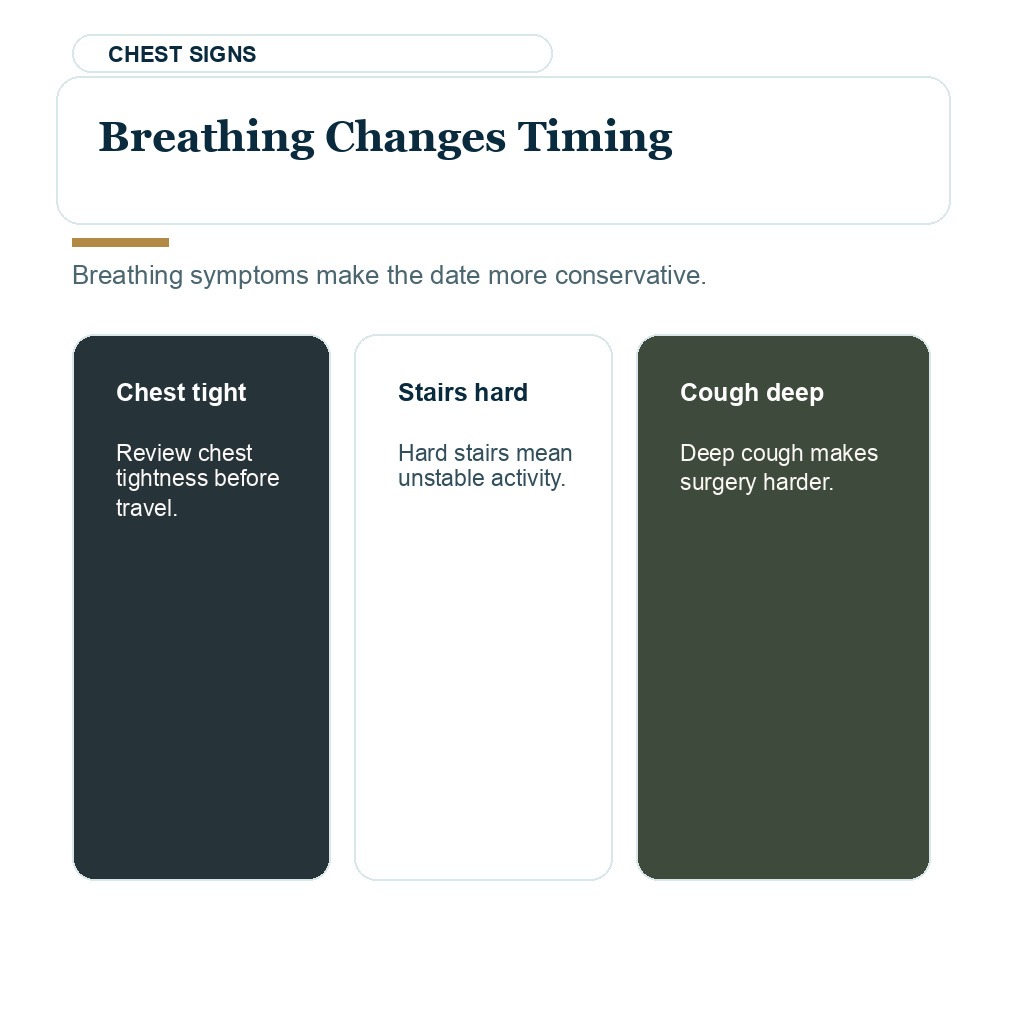
A light leftover cough that is clearly improving is different from a deep cough, wheezing, chest tightness, shortness of breath, or fatigue that makes normal activity difficult. Hair transplant surgery can be controlled and quiet, but it is still a long procedure. Lying still, keeping the head in position, eating and drinking at the right times, and following the aftercare plan all require basic physical resilience.
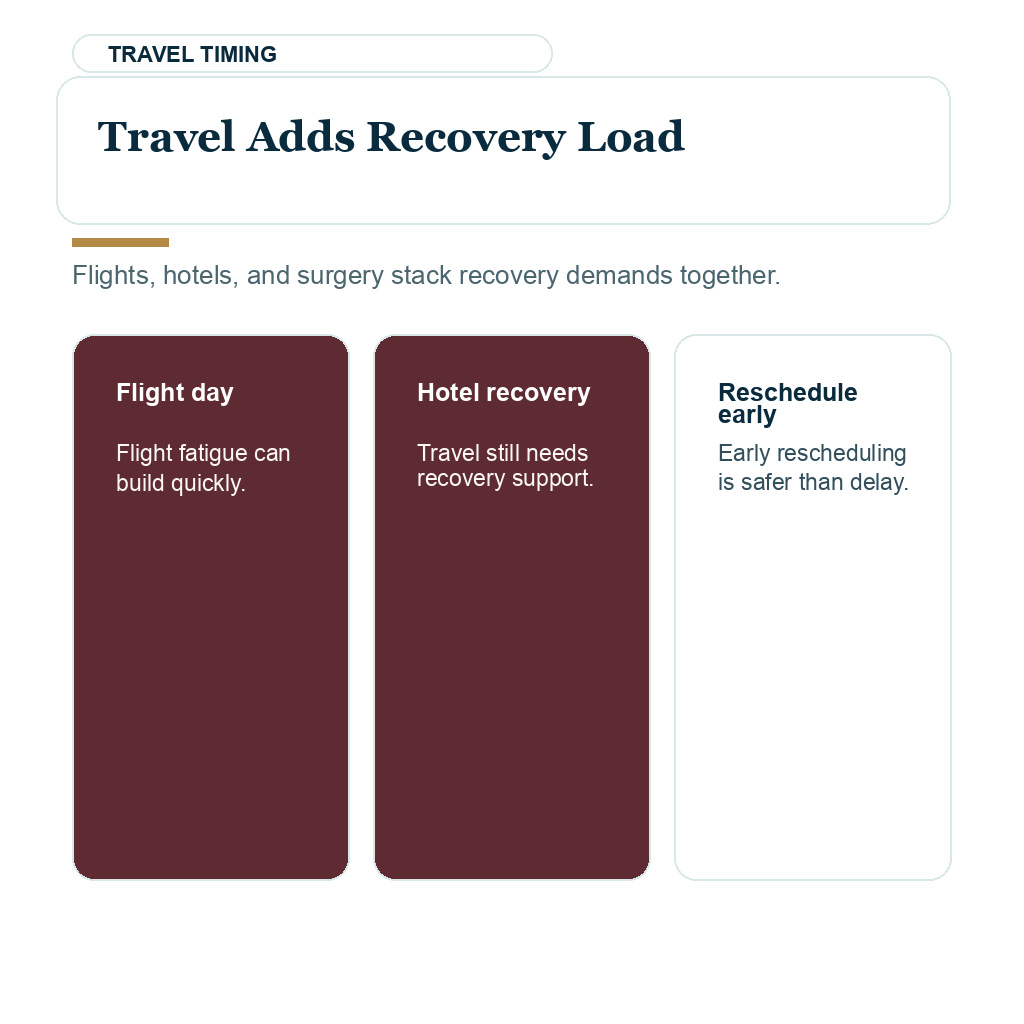
If you still become short of breath on stairs, still need frequent rest, still have chest discomfort, or still feel worse day by day, the date needs to wait. Travel makes this more serious because the flight, airport, hotel, operation day, and early recovery are stacked close together. It is better to reschedule from home than to arrive in Istanbul and learn that the safer medical choice is postponement.
Improving symptoms and several days without fever, without medicine that lowers temperature, are good signs. They are still only part of the decision. Hair transplant timing also has to account for procedure length, medications, blood tests, and whether recovery can happen without unnecessary strain.
Activity tolerance is one of the main checks after COVID. If a short walk, stairs, packing a suitcase, or one busy day brings back heavy fatigue, breathlessness, palpitations, dizziness, or chest discomfort, the operation date should not be judged from the calendar alone. This is especially important after low oxygen, oxygen treatment, abnormal chest imaging, emergency care, or hospital care.
COVID shedding can make surgery poorly timed
COVID can trigger telogen effluvium, which is a diffuse shedding pattern after physical stress, fever, infection, surgery, or other body stress. It often appears after the illness rather than during the illness. You may feel better, then suddenly notice heavy shedding in the shower or on the pillow.
Heavy shedding after COVID may mean diagnosis needs to come before surgery. A transplant is best planned when the pattern is stable enough to separate permanent pattern hair loss from temporary shedding. The same concern appears with hair transplant during telogen effluvium, because active shedding can make timing unreliable.
Diffuse loss also needs a different clinical eye than a stable hairline recession. If the whole scalp looks thinner after COVID, diffuse thinning and hair transplant planning must account for the donor area, recipient area, and future loss pattern before grafts are used.

Details to send before travelling
Send the date of the positive test or first symptoms, the date fever ended, current symptoms, recent medicines, vaccination status if relevant, medical conditions, and any doctor note if the illness was more than mild. If a doctor checked oxygen level, chest findings, or prescribed medicine, send that context too. If blood tests were done after COVID, send the full report, not only one screenshot of a single value.
Include whether you were treated at home, in an urgent clinic, or in hospital, whether oxygen was low, whether imaging or blood tests were abnormal, and whether any follow up visit is still pending. A completed recovery with no follow up needed is different from a case where the doctor is still investigating symptoms.
Blood tests before a hair transplant show why the clinic needs context rather than isolated numbers. A full report can show anemia, low white cells, platelet issues, liver enzyme changes, or other clues that affect timing, medication, or whether another doctor should review you first.
For the hair loss side, share daylight photos from the front, temples, mid scalp, crown, donor area, and sides. If you are shedding, say when it started and whether it is still active. Do not try to make the photos look better. The plan is stronger when the surgeon sees the real pattern.
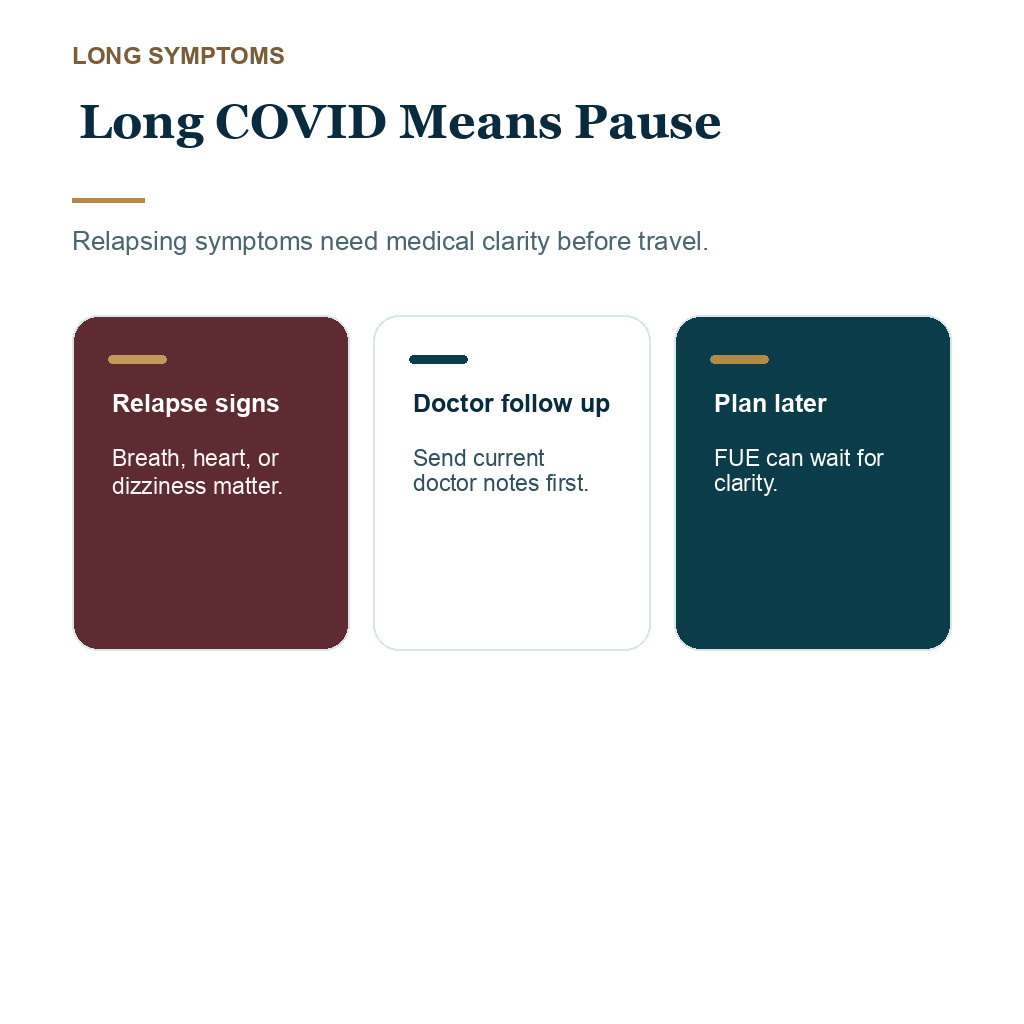
These 10 COVID timing slides separate infection status, earliest review, breathing symptoms, fatigue, blood tests, shedding, travel, and long COVID caution before you choose a surgery date. Swipe sideways or use the arrows one slide at a time.



Vaccination timing is separate from infection recovery
Vaccination timing is a separate question from recent infection. A vaccine can cause temporary fever, arm pain, fatigue, or swelling in some people. Recent COVID can involve infection, contagiousness, respiratory symptoms, inflammation, fatigue, and sometimes shedding after illness. These are separate rules.
If your question is about a vaccine appointment rather than infection recovery, getting a vaccine after a hair transplant is the better match. If your question is about a recent positive COVID test, fever, cough, or long symptoms, the surgical timing decision needs to be based on recovery from infection.
Flying to Turkey should follow medical readiness
The flight should follow medical readiness. Plan the trip around that. If you are still feverish, newly positive, short of breath, or exhausted, travelling for surgery is not sensible. The operation day is only one part of the trip. You still need airport movement, sleep, hydration, medication, swelling control, and follow up.
After the clinic confirms you are fit to travel, return flight planning still has to follow flying after a hair transplant. Recent illness also means you need enough margin when deciding how many days to stay in Turkey for a hair transplant, instead of creating an overly compressed schedule.
For many international cases, the decision belongs before flights are changed or paid again. A remote review cannot replace local medical help when symptoms are serious, but it can prevent a predictable mistake. If the clinic sees a clear reason to wait, postponing before travel is less stressful than cancelling after arrival.
COVID just before the appointment should be reported immediately
Report it immediately. Do not arrive hoping the problem will disappear. If you are within the first two weeks after COVID, the standard answer for elective surgery is to wait. If you are between two and seven weeks, I need to review symptoms, severity, risk factors, and travel plans before giving a surgical date. Tell the clinic again if fever, cough, breathlessness, or heavy fatigue returns before a new surgical date or flight plan is confirmed after COVID. The earlier clearance may no longer match the day you fly.
If the operation is postponed, it is not a failure. It protects you and it protects the donor area. Surgery can be rescheduled. Donor capacity cannot be replaced once used poorly. A sensible delay is better than forcing a procedure when recovery is still uncertain.
If you already travelled and then test positive, avoid exposing others and contact the clinic before coming in. A hair transplant clinic is still a medical environment. Staff, drivers, hotel workers, your companion, and anyone else involved in your procedure logistics all deserve a responsible decision.
Long COVID needs a cautious timing review
Long COVID needs a more cautious review because the issue is not only the old positive test. The practical distinction is normal tiredness after an illness versus symptoms that keep returning or worsen after ordinary activity. Ongoing fatigue, breathlessness, palpitations, dizziness, chest discomfort, brain fog, poor exercise tolerance, or repeated relapse after exertion can make a long elective procedure and international travel poorly timed. Tell the clinic if ordinary stairs, walking, or a short errand still leaves you unusually breathless or exhausted.
A hair transplant can wait until your health is clearer. The surgeon needs to know whether you can tolerate the day, follow aftercare, sleep properly, and recover without worsening symptoms. If another doctor is following your long COVID symptoms, send that information before travel.
Worsening after exertion is especially important. If symptoms flare after normal activity and then settle only with rest, a long surgery day, airport travel, hotel recovery, and early washing routine can become too much. The hair plan should wait until the health pattern is more predictable.
There is no benefit in rushing a cosmetic elective procedure while the body is still unstable. The right timing is the timing that allows the hair plan to be accurate and recovery to be safe.
Safe timing depends on recovery evidence
COVID needs to be handled before travel, not on the surgery morning. Wait at least two weeks after infection before elective hair transplant review. Between two and seven weeks, decide case by case. Wait longer if symptoms persist, the illness was severe, medical risk is higher, blood tests are abnormal, or hair shedding is still active.
If you recovered quickly, feel well, have no fever or respiratory symptoms, have stable hair loss, and your medical review is clear, surgery may be reasonable after the early waiting period. If you still feel unwell or your hair is shedding heavily after COVID, the better decision is to pause, diagnose, and plan later.
Moving the date is better than using limited donor hair on a day when your body or hair pattern is not ready. A hair transplant is ready to be scheduled when your health is stable, the donor area can be protected, the hair loss pattern is readable, and recovery will not be forced. That is the standard I use before advising travel for surgery after COVID.

Read this review excerpt
Every single one of my questions was answered and they made sure I had all the details I needed to make an informed decision.