Coffee Before Surgery Needs Clinic Guidance
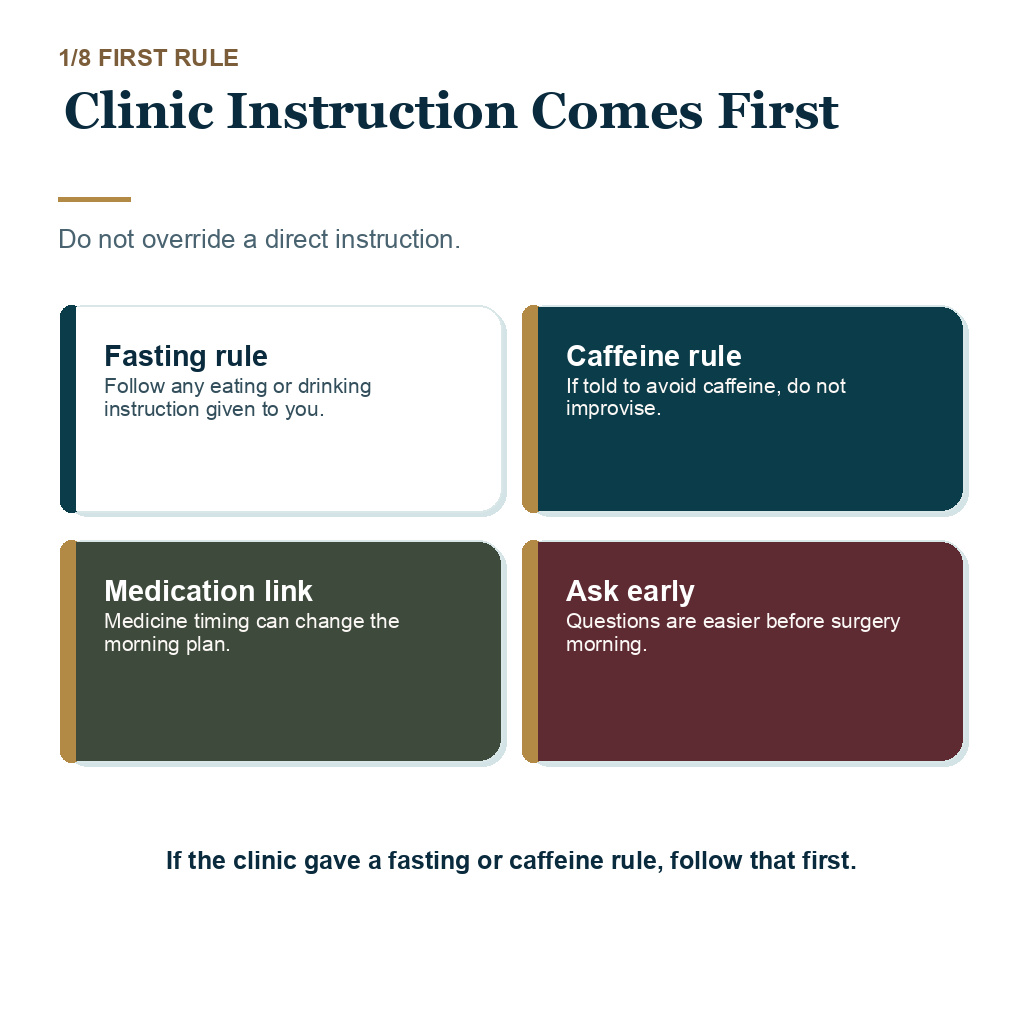
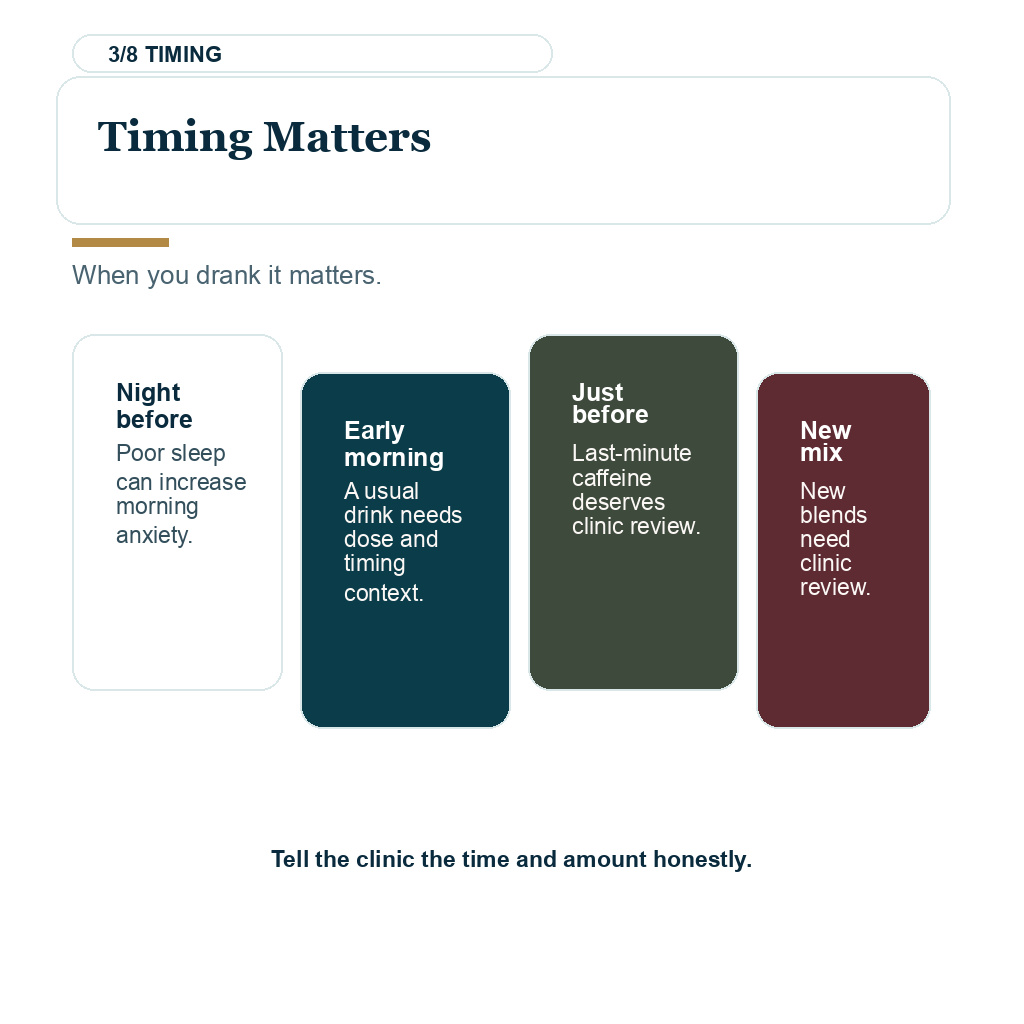
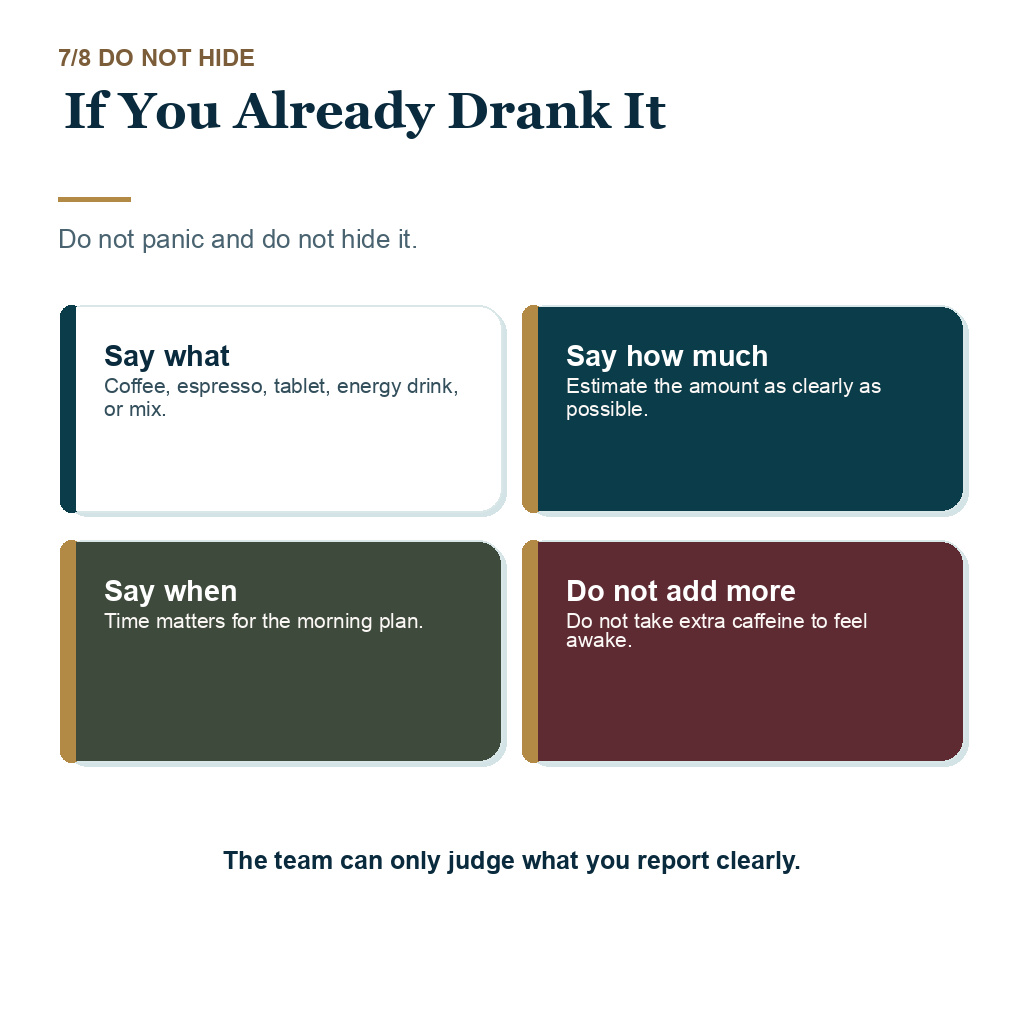
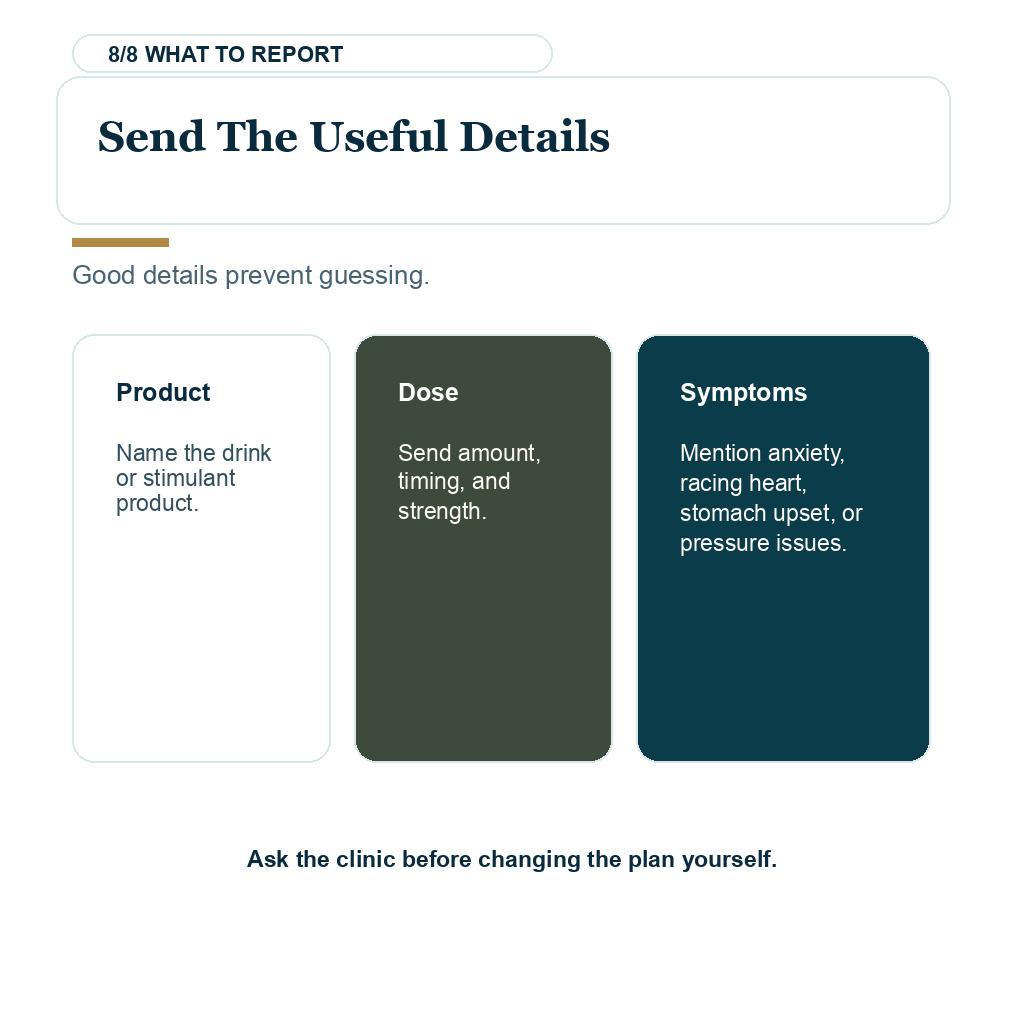
A small usual coffee rarely ruins a hair transplant plan by itself, but surgery morning is not the time for a new or heavy caffeine dose. If the clinic has told you to avoid caffeine or follow a fasting instruction before hair transplant surgery, follow that instruction first. The bigger concern is a high caffeine dose, a new stimulant product, an energy drink, a workout stimulant mix, poor sleep, palpitations or a racing heartbeat, or blood pressure that is already difficult to control. Tell the team what you drank, the amount, the timing, and whether it was your usual coffee or a stronger dose than normal. Do not add extra caffeine to feel more awake before the procedure.
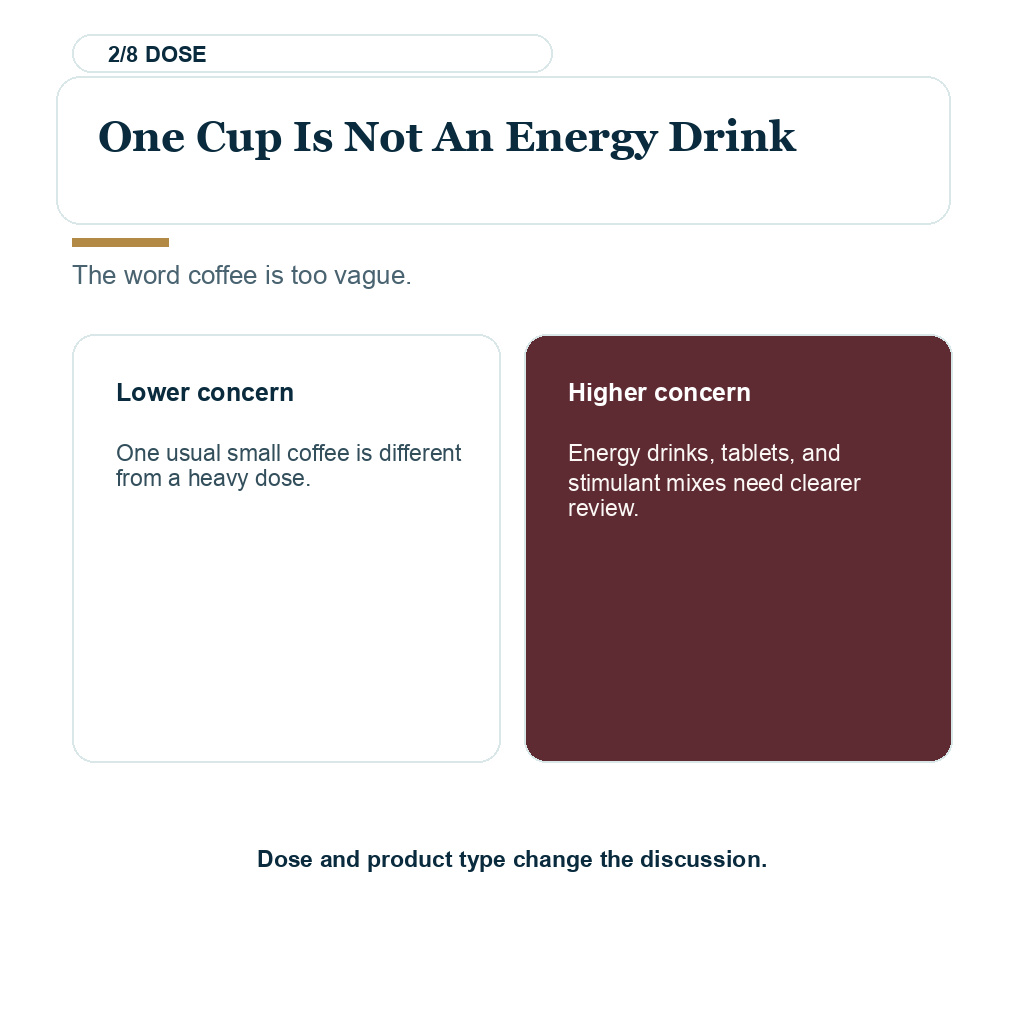
Coffee is not one fixed situation on surgery morning. One ordinary cup, a double espresso, two energy drinks, caffeine tablets, fat burner pills, and gym stimulant mixes are different situations. On surgery morning, what matters is whether your blood pressure, pulse, anxiety, stomach, and fasting instructions are still predictable. Exact ingredient review also matters with decongestants before FUE, where the active ingredient matters more than the simple phrase cold medicine.
If you are worried about caffeine withdrawal, plan that before surgery morning. A headache from suddenly stopping coffee is different from arriving after energy drinks, caffeine tablets, or a much heavier dose than usual. If stopping coffee usually gives you a headache, tell the clinic before the day starts so the answer is planned instead of improvised.
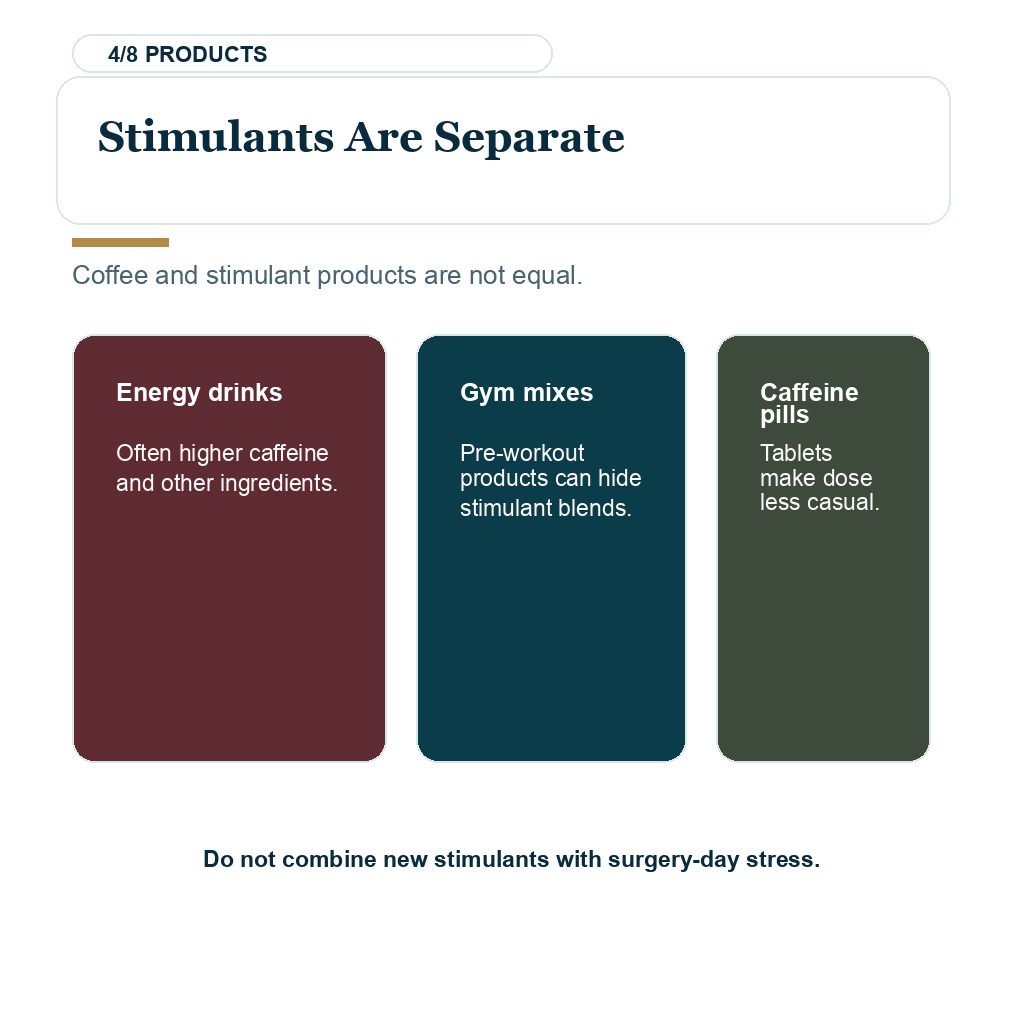
Tell the team if coffee was not the only stimulant. Energy drinks, caffeine tablets, fat burners, and workout powders can change the morning review even when ordinary coffee is familiar.
Coffee on surgery morning needs clinic guidance
Clinic instructions differ because caffeine is not a single fixed dose. Half a cup taken every morning by someone who feels normal is not the same as two energy drinks after a sleepless night. The second situation changes what the team has to check before surgery starts.
Some clinics give strict rules because simple instructions are easier to follow. Others look at your usual caffeine intake, blood pressure, heart rhythm history, anxiety level, medication list, and whether any sedation is planned. At Diamond Hair Clinic, the practical question is not whether coffee kills grafts. It does not work like that. The question is whether caffeine makes surgery day harder to monitor or control.
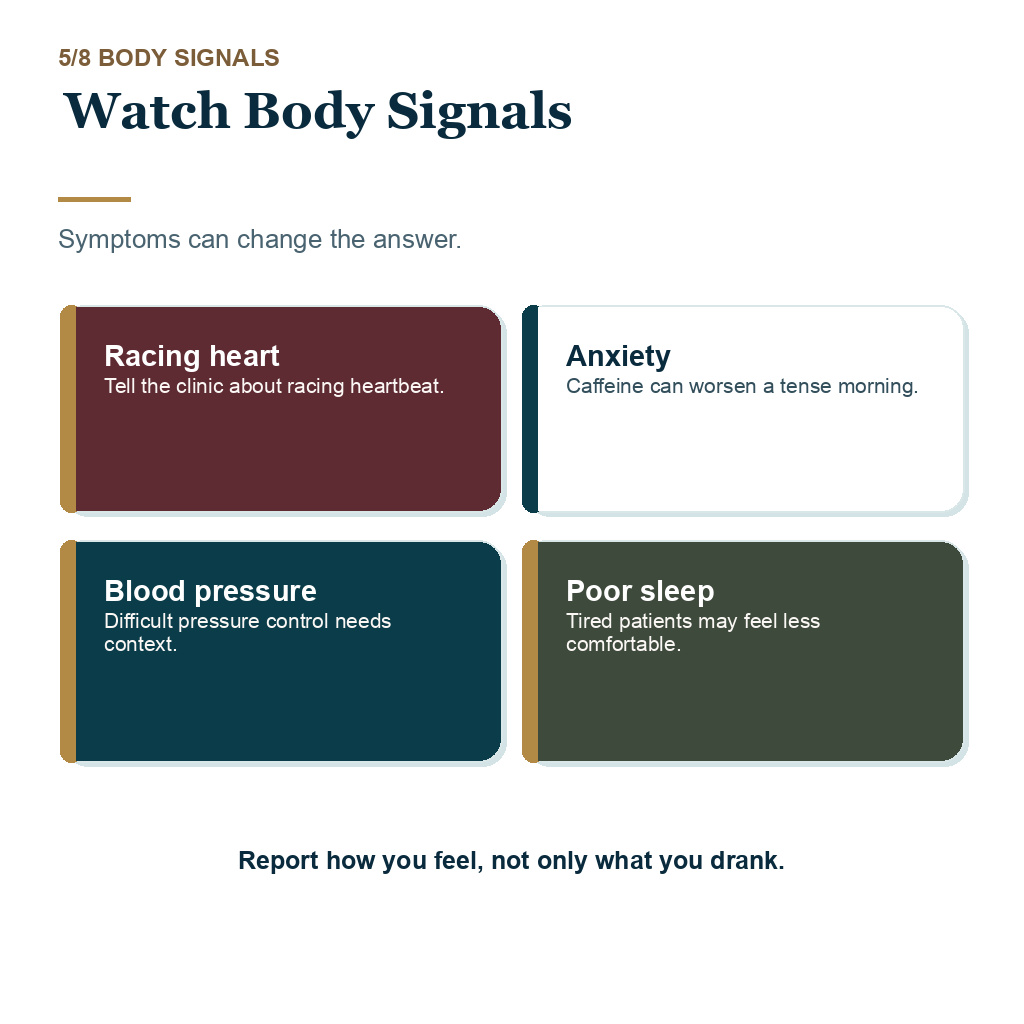
The answer can also change if you have high blood pressure before hair transplant surgery, palpitations, panic symptoms, poor sleep, or a heart history. The same cup of coffee may be a minor detail in one situation and a relevant warning sign in another.
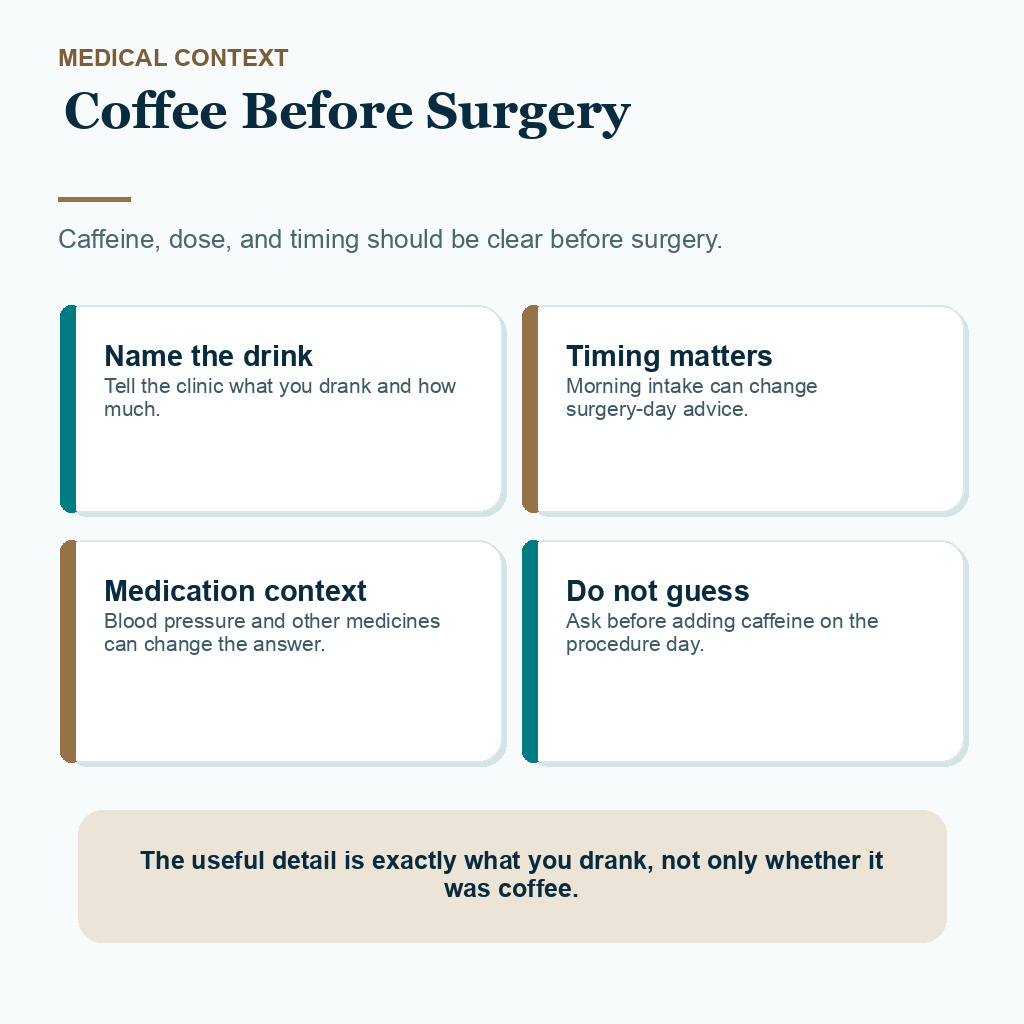
Caffeine risk depends on dose, timing, blood pressure, sleep, and whether other stimulants were added.
One coffee is different from an energy drink
A small usual coffee is different from an energy drink, a caffeine tablet, a strong workout stimulant mix, or a fat burner supplement. The dose may be higher, the label may be unclear, and the product may contain other stimulants such as guarana or synephrine. The clinic cannot plan safely if you only say, “I had caffeine,” without explaining the source.
Energy drinks before hair transplant also create a separate problem. They can combine caffeine, sugar, herbal stimulants, and dehydration from poor sleep or travel. If you then feel shaky, sweaty, anxious, or lightheaded, it becomes harder to tell whether the symptom is caffeine, anxiety, low food intake, blood pressure, or a medical problem.
Do not test a new stimulant product for the first time near surgery. If a product is not part of your normal life, surgery morning is the wrong time to learn how your body reacts to it.
Tell the clinic if you already drank coffee
Do not hide it. Tell the medical team before the procedure starts. Give the time, amount, and type, such as one small coffee, double espresso, energy drink, tablet, or workout stimulant mix. Also mention nicotine, decongestants, alcohol from the night before, anxiety medication, ADHD medication, or any heart or blood pressure medicine taken the same morning.
If it was one familiar coffee and your blood pressure, pulse, stomach, and anxiety are stable, the procedure may still continue normally. If you took a high dose, feel your heart racing, have chest discomfort, feel faint, vomit, or have unusually high blood pressure, the team needs to slow down and assess you properly. A delay is better than pushing ahead while the body is giving warning signs.
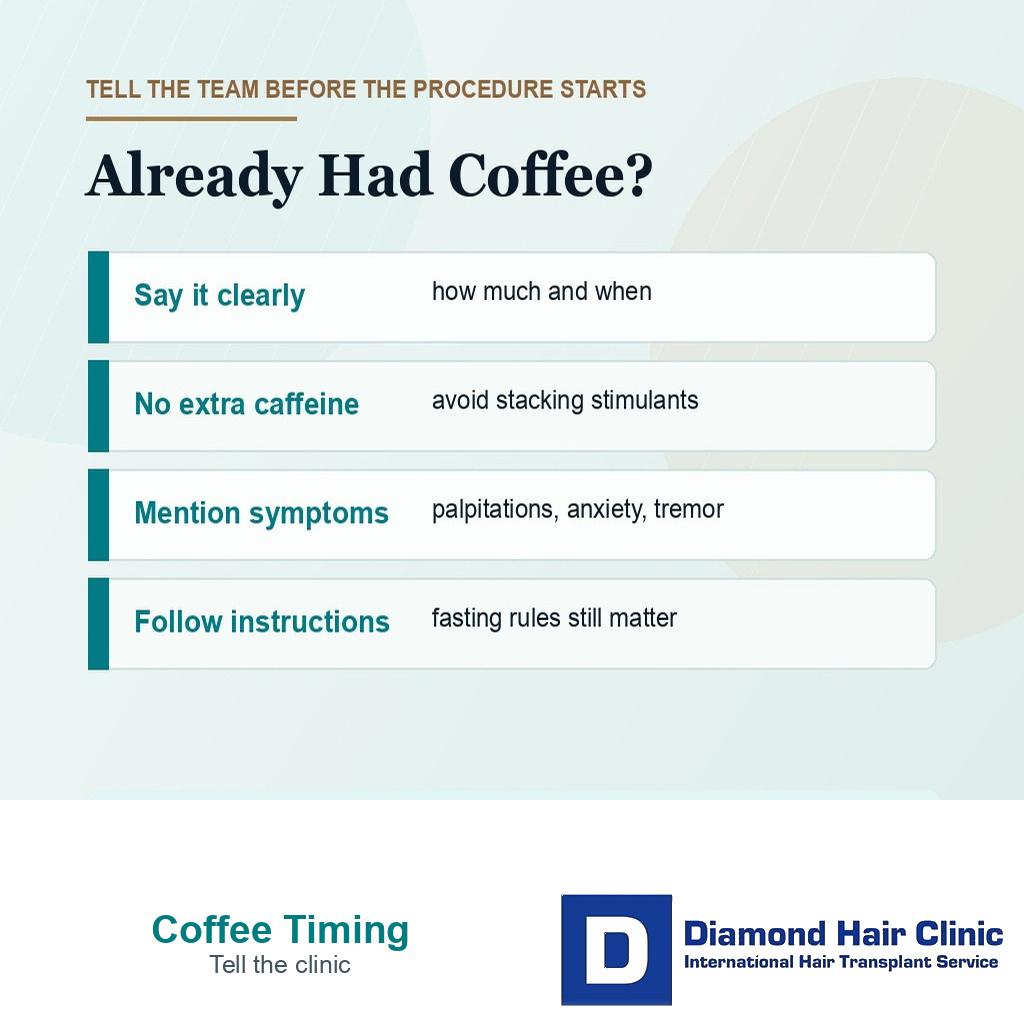
If you already had caffeine, tell the clinic directly instead of hiding it or taking more stimulants.
If you feel faint or dizzy around hair transplant surgery, the symptom matters more than embarrassment.
Caffeine reduction before surgery
If your clinic tells you to avoid caffeine for a specific period, follow that instruction. If you drink a lot of caffeine every day, do not create a withdrawal headache by stopping suddenly on your own the night before. Reduce it gradually over a few days when there is time, and ask the clinic what they prefer for surgery morning.
For most people, the most sensible plan is to avoid heavy caffeine and stimulant supplements for at least the final day before surgery, sleep properly, eat as instructed, and arrive without adding new products. If you drink a lot of caffeine every day, do not make surgery morning your first complete caffeine stop unless the clinic specifically told you to. Withdrawal headache and irritability can also disturb the day. A small familiar coffee may be acceptable in some clinics, but that decision belongs inside the clinic’s medical instructions, especially if sedation or fasting rules apply.
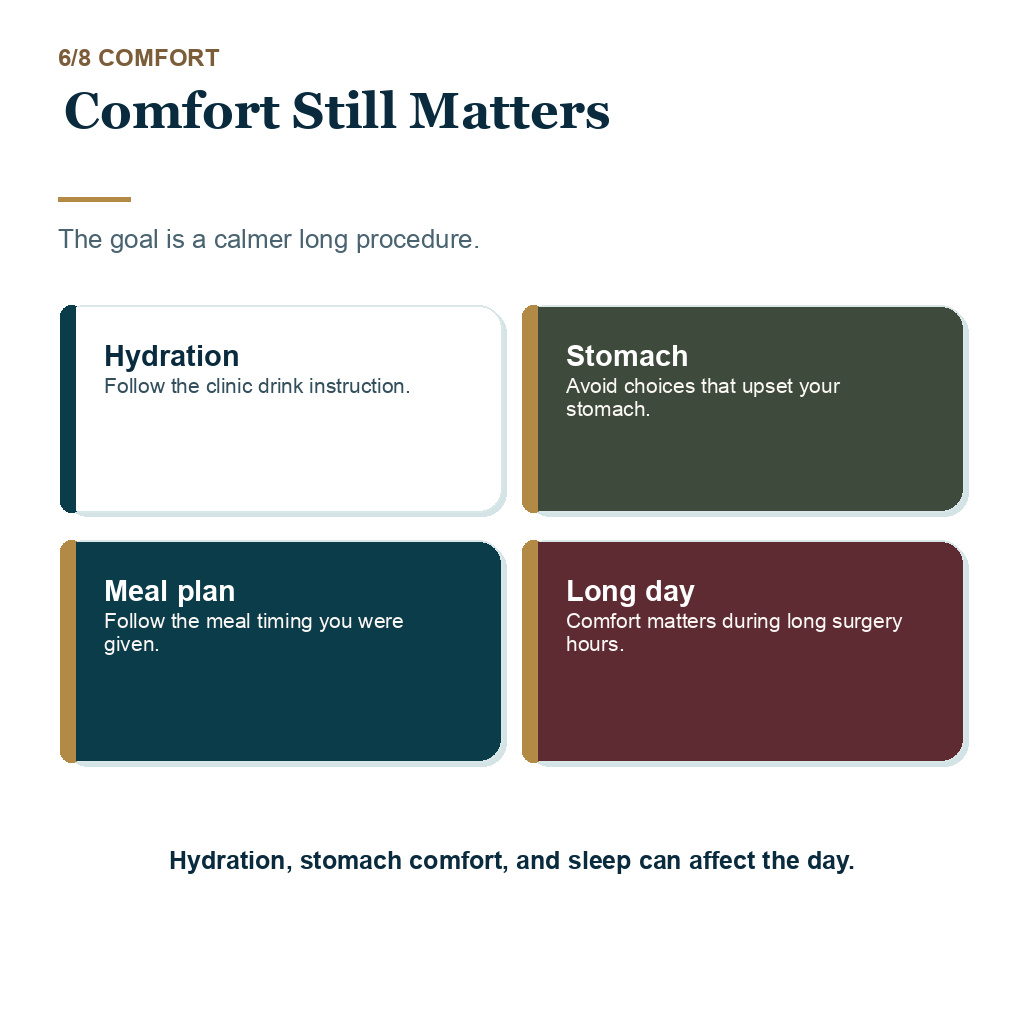
Black coffee, coffee with milk, and coffee before sedation are not the same instruction. Plain black coffee may be treated as a clear liquid in some anesthesia fasting instructions, but that does not make it automatically allowed in every hair transplant plan. Milk, cream, sugar, and a full coffee drink can change how fasting instructions are interpreted. If sedation, deep sedation, or general anesthesia is planned, your clinic’s fasting rule overrides your normal coffee habit. Ask in advance rather than guessing on the morning of surgery.
Milk, cream, and sugar can change fasting instructions
Black coffee is different from coffee with milk, cream, protein powder, butter, or a large sweet drink when fasting instructions apply. If the clinic says clear liquids only, do not assume a latte or milky coffee counts as the same thing.
This matters most when sedation is planned, but even local anesthesia clinics may give their own surgery morning rules. If your written preoperative instructions are unclear, ask before drinking it. Do not solve the uncertainty by arriving with a partly explained fasting history.
If you already drank coffee with milk, cream, or another added ingredient, tell the team before the procedure starts. The practical question is not blame. It is whether stomach contents, caffeine dose, blood pressure, nausea, or sedation plans change the timing. An incomplete fasting history is more dangerous than a clearly explained delay.
Caffeine can complicate local anesthesia monitoring
Hair transplant surgery is usually performed with local anesthesia. Local anesthesia can include adrenaline, which helps reduce bleeding and prolong numbness. Caffeine can also make some people feel more alert, shaky, anxious, or aware of their heartbeat. That combination is often manageable, but it can make you feel worse if you are already nervous.
When I review someone for surgery, I want the blood pressure and pulse to be readable signals. If you arrive after stimulants, poor sleep, and anxiety, those numbers can become harder to interpret. The question becomes whether we are seeing normal nerves, caffeine effect, medication effect, dehydration, or a real cardiovascular concern.
Adrenaline in hair transplant anesthesia matters more when caffeine has already made you shaky, anxious, or aware of your heartbeat. The practical point here is disclosure. The clinic can adjust monitoring and timing only when it knows what has entered the body.
Workout stimulants and caffeine tablets are different
These deserve more caution than ordinary coffee. Workout stimulant products can contain high caffeine doses plus other stimulants. Fat burners may include ingredients that affect heart rate, blood pressure, sleep, appetite, or anxiety. Caffeine tablets can make it easy to take a larger dose than intended. If you used one, show the product label or ingredient list instead of describing it only as a supplement.
Do not treat these products as harmless because they are sold as supplements. Around surgery, the body is already dealing with travel, sleep changes, local anesthesia, long procedure time, and emotional stress. A strong stimulant can add noise to the medical picture.
For gym supplements, workout stimulant use after hair transplant recovery raises the same ingredient concern. The timing question is different before surgery, but the principle is similar. Dose, ingredients, blood pressure, and symptoms matter more than the marketing name on the container.
Daily coffee drinkers should not stop suddenly without guidance
A sudden stop can cause headache, irritability, sleepiness, nausea, or poor concentration. Those symptoms can make surgery morning more uncomfortable and may increase anxiety. If you usually drink several coffees every day, planned reduction is safer than a dramatic sudden stop.
For a heavy caffeine user, the practical approach is to share the habit early. The plan may be to reduce the dose before surgery, avoid energy drinks and stimulant pills, keep the morning simple, and use only what the clinic allows. Withdrawal and overuse can both disturb the procedure day. The better answer is planned moderation.
This is especially relevant when caffeine is combined with prescription stimulants. If you take medication for attention or wakefulness, review caffeine together with the same medication plan used for ADHD medication and hair transplant surgery.
These 8 caffeine guidance slides separate clinic instructions, dose, timing, stimulant products, body signals, comfort, what to do if you already drank coffee, and what to report. Swipe sideways, use the arrows one slide at a time, or choose a number below the image.